
REVIEW · ANNAPURNA BASE CAMP TREKS
Annapurna base camp -9 days
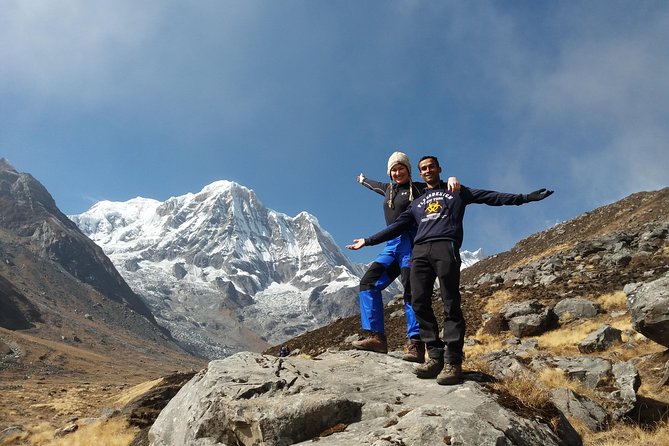
The mountains begin with a long walk. This 9-day Annapurna Base Camp trek combines high Himalayan views with Gurung and Magar villages, forest trails, hot springs, and the dramatic Annapurna Sanctuary. I especially like the clear focus on Mt Fishtail, Annapurna South, and Himchuli, along with the practical inclusion of permits, meals, guide services, a sleeping bag, and a down jacket.
I also like that this is a private trip, so your group can discuss small changes with the guide. Past guests specifically praised guides such as Binod, Sona, and Shiva, plus porters including Rajendra, Rahul, and Bikash. The main drawback is the pace: nine days leaves limited room for bad weather, tired legs, or altitude problems, and the advertised itinerary contains a few confusing details that you should confirm before paying.
In This Review
- Key points to know before you book
- What the $693.34 price really covers
- Day 1: Kathmandu arrival and the itinerary puzzle
- Day 2: Phedi to Dhampus and the first mountain views
- Day 3: Landrung, Jhinudanda, and a demanding rhythm
- Day 4: Chhomrong, Sinuwa, and the Seti River country
- Day 5: Machhapuchhre Base Camp and the sacred valley
- Day 6: Entering the Annapurna Sanctuary
- Day 7: Sunrise at Annapurna Base Camp and the long descent
- Day 8: Sinuwa, Chhomrong, and Jhinu hot springs
- Day 9: Nayapul, Pokhara, and the return journey
- Guides, porters, and the private-group advantage
- Comfort, meals, and what you should budget for
- Who should book this 9-day trek?
- Booking details and cancellation
- Should you book the Annapurna Base Camp trek?
- FAQ
- How long does the Annapurna Base Camp trek take?
- Where does the experience begin?
- Is airport pickup included?
- Is transport between Kathmandu and Pokhara included?
- Are meals included?
- Is a porter included in the price?
- Are permits and guide services included?
- What level of fitness is required?
Key points to know before you book
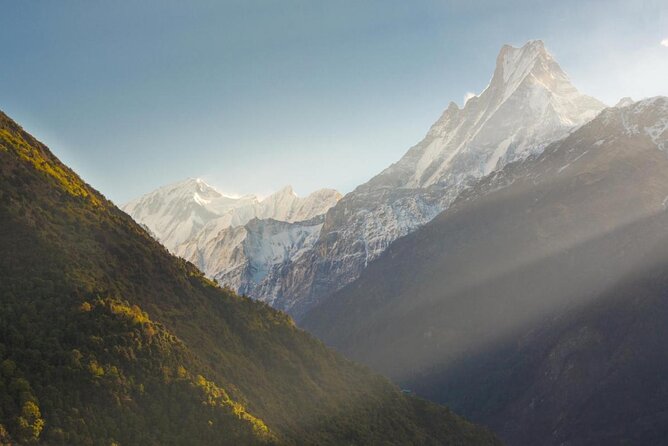
- The trek reaches Annapurna Base Camp at about 4,130 meters, after the route passes through Machhapuchhre Base Camp and the Annapurna Sanctuary.
- The scenery changes often, from terraced hills and oak forests to rhododendron woodland, river valleys, and a treeless mountain basin.
- The cultural side matters, with nights and walking sections through Gurung and Magar villages such as Dhampus and Landrung.
- Meals, permits, guide costs, and nine nights of lodging are included, but Kathmandu food and accommodation are not.
- A porter costs an extra $220 per person, an important addition if you do not want to carry your own main bag.
- The price is $693.34 per person, which is strong value if you use the included guide, meals, transport, permits, and mountain gear.
What the $693.34 price really covers
At $693.34 per person, this trek is not just a guiding service. The package includes airport pickup and drop-off in a private vehicle, transport between Kathmandu and Pokhara by tourist bus, a licensed English-speaking trekking guide, required permits, food and lodging during the trek, and the guide’s transport, meals, accommodation, and insurance.
You also receive breakfast, lunch, and dinner for nine days, plus nine nights of accommodation. A down jacket and sleeping bag are supplied for the trek and returned afterward. There is also a welcome or farewell dinner at a cultural restaurant in Kathmandu.
That package gives you a useful base price. You still need to budget for international flights, a Nepal visa, personal insurance, hot showers, laundry, phone use, drinks, snacks, shopping, and tips. A porter is not included and costs $220 per person. Add that before comparing this trek with other Annapurna packages.
The included meals matter more than they may first appear. On a multi-day mountain walk, stopping to arrange every meal can become tiring and expensive. Here, your daily food is part of the plan, though you should still expect personal purchases such as drinks, snacks, and optional services.
Transport is another value point. Tourist bus travel between Kathmandu and Pokhara is included, while an optional flight costs extra. The bus keeps the price down, but it also takes longer and may feel tiring after an international flight. If you value time more than savings, ask for the current flight supplement before booking.
More Annapurna Base Camp treks:
- Annapurna base camp trek 5 Days
★ 5.0 · 252 reviews - Annapurna Base Camp Trek
★ 5.0 · 111 reviews - Kathmandu to Annapurna Base Camp (ABC) 5-Day Trek
★ 5.0 · 102 reviews
Day 1: Kathmandu arrival and the itinerary puzzle
The first day includes airport pickup from Tribhuvan International Airport and a transfer to your hotel. The package itself begins on the second day after arrival, so you need to allow an extra arrival night in Kathmandu. Food and accommodation in Kathmandu are not included.
The schedule labels Day 1 with Poon Hill and gives a six-hour duration, but the written details describe airport arrival and hotel transfer instead. That mismatch is worth clearing up directly with the operator. Poon Hill is not otherwise developed in the later schedule, and the main route described is the Annapurna Base Camp trail.
This is not a reason to reject the trip. It is simply a reason to request a day-by-day confirmation before departure. Ask where you sleep each night, how the Kathmandu to Pokhara transfer fits into the schedule, and whether Poon Hill is included or appears by mistake.
Your booking confirmation requires each participant’s passport name, number, expiry date, and country. Confirmation is provided at booking, and pickup begins at Tribhuvan Airport at 6:30 am according to the supplied details.
Day 2: Phedi to Dhampus and the first mountain views
After reaching Pokhara, you drive to Phedi and begin walking toward Dhampus. The trek takes about four hours, which makes this a sensible introduction to the route after the transfer from Kathmandu.
Dhampus is a Gurung village with views toward Himchuli, Annapurna South, and Mt Fishtail, also called Machhapuchchhre. This first walking day gives you a taste of village life and mountain scenery without immediately demanding a long, high-altitude effort.
The main practical issue is the transport timing. The day description starts with a drive from Pokhara to Phedi, while the package also includes Kathmandu to Pokhara transport. Confirm if you reach Pokhara the same morning or spend a night there before starting the walk.
Day 3: Landrung, Jhinudanda, and a demanding rhythm
The trail heads through oak woodland and terraced fields toward Landrung, a village associated with Gurung, Magar, and Brahmin communities. The route then continues downward toward Jhinudanda, with Chhomrong Cottage shown as the day’s stop.
This five-hour section gives you a good blend of scenery and local settlement. Terraces show how people farm steep hillsides, while the villages offer a more human scale than the high mountain basin you reach later.
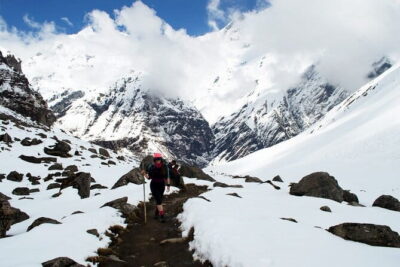
Do not assume that a downhill day is easy. Descending stone steps can work your knees, especially early in a trek when your legs are still adjusting to repeated climbs and descents. Walking poles would be sensible, though the package does not state that they are provided.
A short list of alternatives around Kathmandu
- Everest Base Camp Trek – 14 Days
★ 5.0 · 1,499 reviews - Private Kathmandu Sightseeing Tour | UNESCO World Heritage sites
★ 5.0 · 756 reviews - Everest Base Camp Helicopter Tour landing at Everest View Hotel
★ 5.0 · 668 reviews - Half day cooking class in Thamel kathmandu
★ 5.0 · 607 reviews
Day 4: Chhomrong, Sinuwa, and the Seti River country
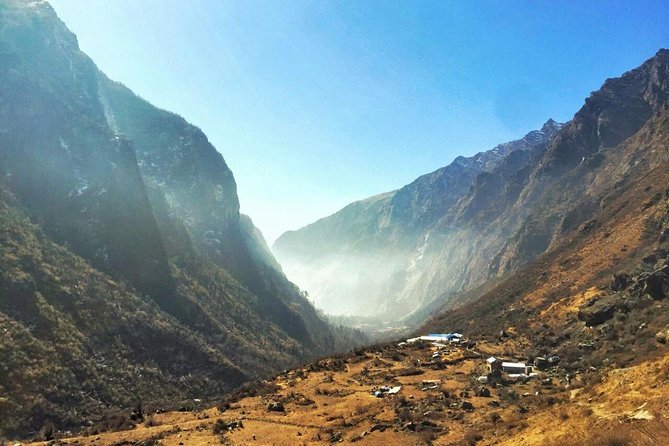
From Chhomrong, you cross a bridge and climb to Sinuwa Danda. The path then enters thick rhododendron forest before reaching Khuldighar, followed by a long and steep stone descent.
This is one of the more varied days. You get a village departure, a river crossing, forest walking, and a serious staircase section. The five-hour estimate may feel reasonable to a fit trekker, but the stone steps and repeated changes in height can make the day feel longer.
The forest is part of what makes Annapurna appealing. The region supports many native plant species, and the wider area is known for birds including the colorful Impeyan and blood pheasant. Sightings are never guaranteed, but the route offers more than mountain photographs.
Day 5: Machhapuchhre Base Camp and the sacred valley
The trail follows the Madi River through a sacred valley, gradually gaining height toward Machhapuchhre Base Camp. The day takes about six hours and passes bamboo woodland before the trees begin to thin.
A notable rule applies in this section: no meat or fish is allowed in the sacred area, in keeping with local Buddhist and Hindu beliefs. This is a small but meaningful part of the route. You are not simply walking through scenery; you are passing through a place with religious customs that shape daily life.
Machhapuchhre Base Camp is a major moment because the route is now close to the high mountain basin. The name refers to Mt Fishtail, one of the best-known peaks in the region. At this point, the air is thinner and the cold more serious, so the supplied down jacket and sleeping bag become useful rather than decorative extras.
Day 6: Entering the Annapurna Sanctuary
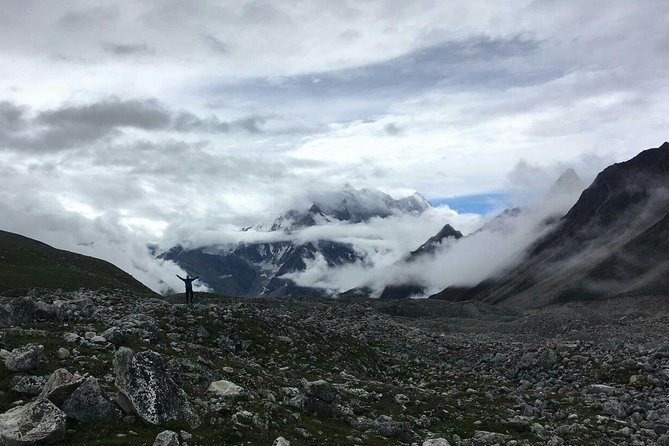
After leaving Machhapuchhre Base Camp, you walk beyond the tree line and enter the Annapurna Sanctuary, described here as a treeless, desert-like wilderness surrounded by high peaks. The walk to Annapurna Base Camp takes about five hours.
This is the central reward of the trek. The valley opens into a dramatic mountain setting, with the Annapurna range surrounding the route. The experience is less about reaching a single sign or viewpoint and more about the gradual change from forest trail to open alpine basin.
The altitude deserves respect. The itinerary provides no separate acclimatization day, and the route reaches a high elevation within a compact schedule. You should discuss symptoms such as headache, unusual breathlessness, or severe fatigue with your guide immediately. Travel and medical insurance are not included, and emergency helicopter costs are specifically excluded.
The guide carries a first-aid medical kit, which is reassuring, but it does not replace personal insurance or careful pacing. A private group may help here because your guide can focus on your pace instead of managing a large mixed group.
Day 7: Sunrise at Annapurna Base Camp and the long descent
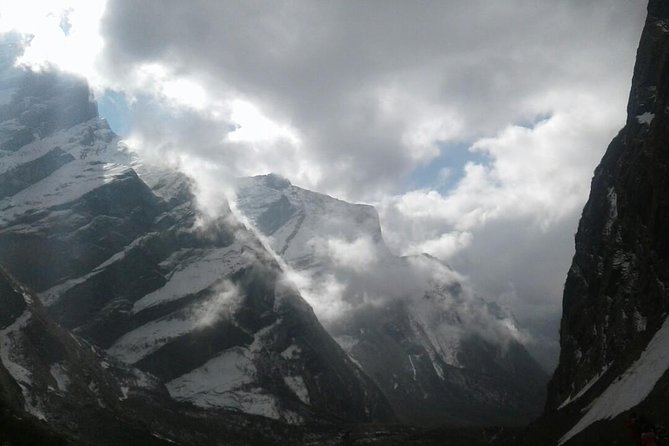
The day begins with an early wake-up call for sunrise views across the Annapurna Sanctuary. Morning light is one of the strongest reasons to accept the early start. You then descend beside the Modi Khola River toward Bamboo Hut, with about six hours of walking.
The descent reverses much of the previous route. That can feel easier on your breathing, but it may be tougher on your knees and feet. Good socks, steady foot placement, and short breaks will help.
The route’s wildlife setting is another quiet benefit. The wider Annapurna region supports rare animals such as snow leopards and blue sheep, as well as many birds, butterflies, and insects. You should not book this trek expecting guaranteed wildlife sightings, but the protected mountain environment adds depth to the walk.
Day 8: Sinuwa, Chhomrong, and Jhinu hot springs
You climb to Sinuwa, descend to the Chomrong Khola River, climb again to Chhomrong, and then make the final descent to Jhinu. The day takes about six hours and is notable for its repeated up and down pattern.
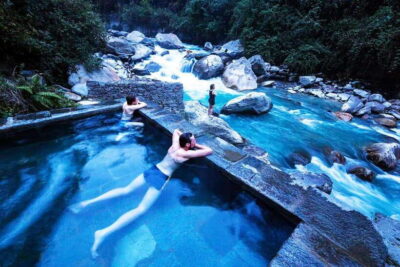
Jhinu is the place to ask about visiting the natural hot springs. One guest specifically arranged to stay a night there after adjusting the itinerary from eight days, showing that the private format may allow some flexibility. Do not assume every change is included, but it is worth asking your guide early.
This is also a good day to slow down and enjoy the village setting. The route is not only a race to the road at Nayapul. Jhinu can give the final mountain night a more relaxed feel, especially after the high-altitude section.
Day 9: Nayapul, Pokhara, and the return journey
The final trekking day follows an easy descent to the Modi Khola River and continues to Nayapul. The walking portion takes about five hours, followed by a private car transfer of about one and a half hours back to Pokhara.
The itinerary then says you are transferred to your hotel, while the package includes transport back to Kathmandu by tourist bus. Confirm the exact final transfer, since the written schedule does not spell out the Pokhara to Kathmandu timing on this day.
The last day is not a grand mountain finale, and that is normal. It is a practical exit from the trail. You move from footpaths to road transport, with time to wash up, rest, and reconnect with city comforts.
Guides, porters, and the private-group advantage
The strongest praise attached to this trek concerns the human side. Guides named in the supplied feedback include Binod, Sona, and Shiva. Porters named include Rajendra, Rahul, and Bikash. Binod was praised for adapting an itinerary, helping a solo trekker feel cared for, and bringing humor to long walking days.
That personal attention is a real benefit of a private trip. Only your group participates, so the experience should feel less like being moved through a fixed procession. You can discuss pace, rest stops, and possible changes more easily than in a large group.
Still, you should ask what the guide-to-porter arrangement will be for your booking. The $220 porter charge is separate, and tips are also excluded. Carrying your own heavy bag for nine days can change the difficulty of the trek considerably.
Comfort, meals, and what you should budget for
The package includes accommodation during the trek, but it does not describe room types or the exact tea houses used. Past feedback praised guesthouses as clean, comfortable, and safe, but conditions can vary by village and altitude.
You receive three meals daily for nine days. Personal expenses remain your responsibility, including bar bills, hot showers, phone calls, laundry, snacks, and shopping. Keep some money available for these small costs, since they are easy to overlook when a package appears nearly all-inclusive.
The returnable sleeping bag and down jacket reduce the need to buy or rent bulky cold-weather equipment. You should still ask about available sizes and condition before leaving Kathmandu.
Who should book this 9-day trek?
This trip suits you if you want a private guided Himalayan trek with a clear goal, strong mountain views, and cultural walking through Gurung and Magar villages. It is also a good fit if you prefer having meals, permits, guide costs, and basic mountain equipment arranged in one package.
You need moderate physical fitness. The route includes long stone staircases, repeated climbs and descents, six-hour walking days, and a high-altitude finish. It is not a sightseeing tour with occasional short walks.
Solo trekkers may find the private format especially appealing. The experience can be arranged for one person, and the feedback includes a solo trekker who felt well supported by Binod and Rajendra. Families or friends may also appreciate being able to discuss changes with one guide.
You should think twice if you want a slow acclimatization schedule, extra rest days, or a luxury lodge experience. The nine-day design is efficient, but it leaves less spare time than a longer Annapurna itinerary.
Booking details and cancellation
Pickup is offered, and you receive a mobile ticket. Service animals are allowed, and confirmation is received at booking. The experience is private, with only your own group participating.
Free cancellation is available if you cancel at least 24 hours before the local start time. Changes or cancellations within 24 hours are not accepted for a refund.
Should you book the Annapurna Base Camp trek?
I would recommend this trek if you want strong value and do not mind a brisk schedule. The combination of mountain scenery, villages, included meals, permits, guide services, transport, and loaned cold-weather gear makes $693.34 a persuasive price before adding the optional $220 porter.
Book it after confirming the itinerary oddities, especially the Poon Hill reference, the Kathmandu to Pokhara timing, and the final return to Kathmandu. If you are fit, properly insured, and ready for long stair sections, this trip gives you a direct route into one of Nepal’s most famous mountain sanctuaries without forcing you to organize every detail yourself.
FAQ
How long does the Annapurna Base Camp trek take?
The experience is scheduled for nine days, with about nine nights of accommodation included.
Where does the experience begin?
The listed meeting point is Tribhuvan International Airport in Kathmandu, Nepal, with a stated start time of 6:30 am.
Is airport pickup included?
Yes. Airport pickup and drop-off are provided in a private vehicle.
Is transport between Kathmandu and Pokhara included?
Yes. Tourist bus transport from Kathmandu to Pokhara and back to Kathmandu is included. An optional flight is available at an extra cost.
Are meals included?
Yes. Breakfast, lunch, and dinner are included for nine days.
Is a porter included in the price?
No. Porter service costs an additional $220 per person.
Are permits and guide services included?
Yes. Required permits and paperwork are included, along with a licensed English-speaking trekking guide.
What level of fitness is required?
The tour requires a moderate level of physical fitness. The route includes several walking days lasting about four to six hours, with steep stone steps and high-altitude sections.
New in the Kathmandu listings
- Traditional Momo Making Class★ 5.0 · 10 reviews
- Kathmandu: Ancient City Kirtipur & Pharping Monastery Tour★ 5.0 · 2 reviews
- Kathmandu to Pokhara Premium sofa bus ticket★ 4.0 · 17 reviews
- Women Empowerment Project(Nepali cooking class & jewelry workshop★ 5.0 · 15 reviews
- Yoga Experience Day Trip with Private Transfer From Kathmandu★ 4.0 · 2 reviews
- 7-Day Langtang Valley Trek from Kathmandu★ 5.0 · 1 review
- Kathmandu 2 Nights 3 Days Chitwan Jungle Safari Tour★ 5.0 · 9 reviews
- Wildlife Adventure in Chitwan Nepal★ 4.0 · 4 reviews
Annapurna Base Camp Treks, compared.
Kathmandu to Annapurna Base Camp (ABC) 5-Day Trek
Read our review →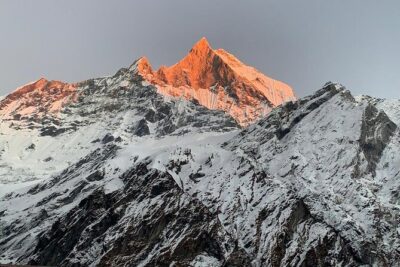
Kathmandu/Pokhara: 5-Day Annapurna Base Camp (ABC) Trek
Read our review →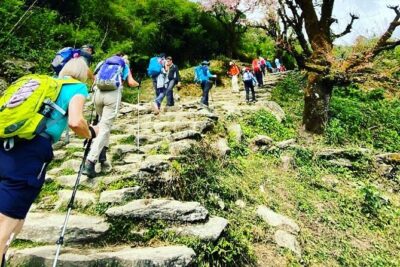
11-Day Hike Tour to Annapurna Base Camp Bliss in Kathmandu
Read our review →Browse the lists this tour appears in