
REVIEW · MANASLU CIRCUIT TREKS
Dancing in the Manaslu Circuit Trek
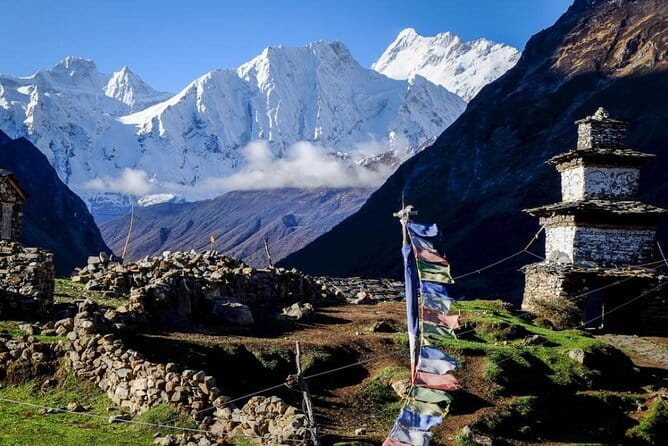
The Himalayas get wilder here. Dancing in the Manaslu Circuit Trek takes you around Mount Manaslu through river gorges, stone villages, monasteries, glaciers, and the high Larkya La Pass. I like the quieter setting and the strong Tibetan influence, especially the prayer flags, Mani walls, local music, and village life. I also like that the price includes permits, meals, transport, a guide, and twin-share rooms.
The main caution is the physical demand. Days are listed at up to 12 hours, the route reaches about 5,100 meters, and the schedule includes rough ground, icy streams, and a major pass crossing. The plan also leaves porters, insurance, bottled water, hot water, laundry, and tips to you.
In This Review
- Key points to know before you book
- Why Manaslu feels different from Nepal’s busiest routes
- What the $1,390 price really covers
- Day 1: Kathmandu to Maccha Khola by road
- Day 2: Maccha Khola, Tatopani, and Jagat
- Day 3: Jagat to Deng through the Budhi Gandaki valley
- Day 4: Prok village, Mani walls, and Namrung
- Day 5: Namrung to Shyala
- Day 6: Shyala to Samagaun and Pungyen Gompa
- Day 7: Acclimatization at Manaslu
- Days 8 and 9: Glaciers, Larke Bazaar, and Dharmasala
- Day 10: Crossing Larkya La Pass
- Day 11: Descending through forests to Dharapani
- Day 12: Dharapani to Besisahar and Kathmandu
- Guides, private groups, and the human side
- Who should book this trek?
- Booking details and cancellation terms
- FAQ
- How long is the Manaslu Circuit Trek?
- What is the price per person?
- Is hotel pickup available in Kathmandu?
- What meals are included?
- Is transportation included?
- Is a guide included?
- Is a porter included?
- What fitness level is required?
- Can I cancel for a refund?
- Should you book Dancing in the Manaslu Circuit?
Key points to know before you book
- Larkya La reaches roughly 5,100 meters, making acclimatization and steady pacing essential.
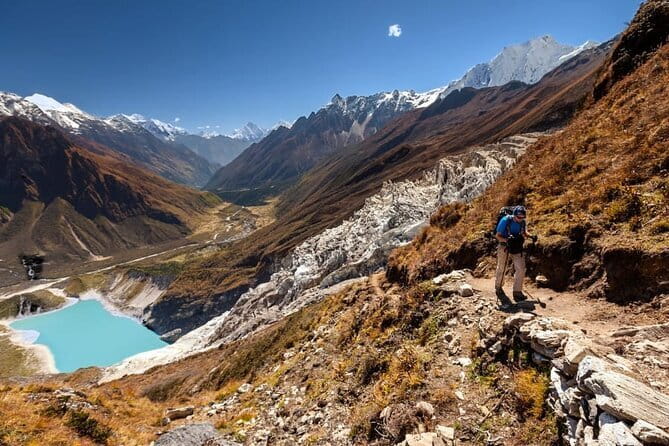
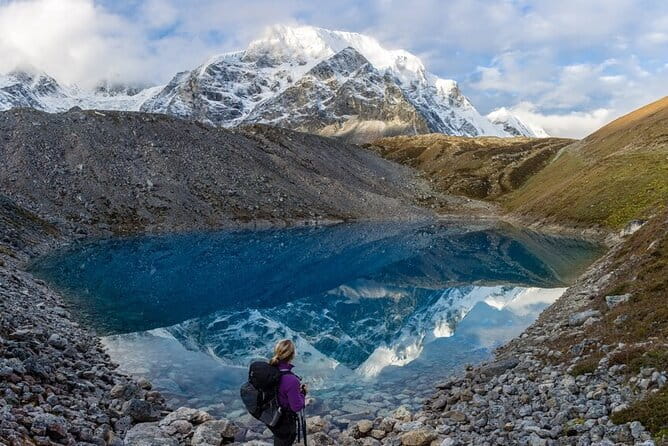
- The route changes dramatically, from green lower valleys and hot springs to glaciers, frozen lakes, and high mountain terrain.
- Samagaun gives you an acclimatization day, with an optional hike to Manaslu Base Camp and Birendra Lake.
- Tibetan-influenced villages and monasteries provide more than scenery, with prayer flags, Mani walls, and local customs along the way.
- The $1,390 price covers major trek costs, including meals, permits, transfers, guide service, and twin-share rooms.
- A private group format means only your own party takes part, with a government-certified English-speaking guide.
Why Manaslu feels different from Nepal’s busiest routes
Mount Manaslu is Nepal’s eighth-highest peak, and the circuit takes you through a region with restricted access. That restriction helps keep the route quieter than Nepal’s best-known trekking corridors. You still get the classic Himalayan pleasures, but with fewer signs of mass tourism and more contact with small villages.
The cultural shift is just as important as the scenery. Lower down, you follow the Budhi Gandaki River through rural settlements and forest. Higher up, Tibetan influence becomes clearer in the stone buildings, monasteries, Mani walls, prayer flags, and mountain customs.
The title includes dancing for a reason. Music and dance can become part of village life and local celebration, giving the trek a human side that photographs cannot capture. The exact timing of these moments is not guaranteed, but the route is designed around places where tradition remains part of daily life.
More Manaslu Circuit treks:
- Manaslu Circuit Trek (15 Days)
★ 5.0 · 50 reviews - 16 Day Private Manaslu Circuit Trek from Kathmandu
★ 5.0 · 42 reviews - Manaslu Circuit Trek 13 Days
★ 5.0 · 30 reviews
What the $1,390 price really covers
At $1,390 per person, this is not a bare-bones walk. The cost includes three meals each day during the trek, required permits and government taxes, a deluxe bus from Kathmandu to Sotikhola, shared Jeep transport from Dharapani to Besisahar, and the return transfer from Besisahar to Kathmandu.
You also get a government-certified English-speaking guide, twin-share private rooms, a first aid kit, and a farewell dinner. Breakfast is included on 11 days, lunch on all 12 days, and dinner on all 12 days according to the supplied details.
That bundle gives the price real value. Permits and transport can become costly and confusing when arranged separately, and a guide is especially useful on a restricted mountain route. The price is less attractive if you expect a porter, premium rooms, bottled water, hot showers, or personal services to be included. Those costs are extra.
Insurance is your responsibility, and you should treat it as essential for a high-altitude trek. The plan also excludes phone charging, laundry, mineral water, hot water, and tips.
Day 1: Kathmandu to Maccha Khola by road
The first day is mainly a long approach by road. You drive from Kathmandu through rural villages and green hillsides toward Maccha Khola, with a possible vehicle change at Soti Khola.
The listed travel time is about 12 hours, so this is not a gentle sightseeing drive. Road conditions in Nepal can make mountain transfers tiring, and you should expect the day to feel more like an endurance test than a holiday outing. The benefit is that you reach the trailhead without adding extra walking days.
Pickup is offered, and the meeting point is at P897+443 in Kathmandu. Confirm the pickup time and exact vehicle arrangements before setting out, especially because the plan allows for a change of transport.
Day 2: Maccha Khola, Tatopani, and Jagat
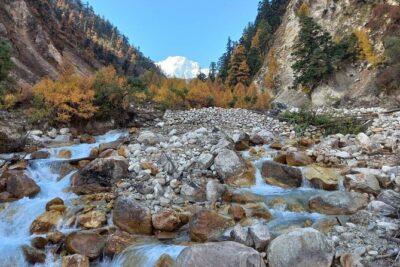
After breakfast, you begin walking along the Budhi Gandaki River. The river is your guide through the lower valley, with changing views of forest, cliffs, and village life.
A stop at Tatopani’s natural hot spring adds a welcome change to the day. It is one of those simple trail moments that helps break up a demanding route. You then continue into the restricted region and reach Jagat, known for its stone houses and rural character.
The schedule again lists about 12 hours, which seems ambitious for a walking day and may reflect the full day’s activity rather than continuous trekking. Ask the operator for the expected walking time, elevation gain, and lodge location before departure.
More walking in the hills of Kathmandu:
- Everest Base Camp Trek – 14 Days
★ 5.0 · 1,499 reviews - Everest Base Camp Trekking
★ 5.0 · 485 reviews - Nagarkot Sunrise View and Day Hiking from Kathmandu
★ 5.0 · 471 reviews - Annapurna Circuit Trek with Tilicho Lake
★ 5.0 · 368 reviews
Day 3: Jagat to Deng through the Budhi Gandaki valley
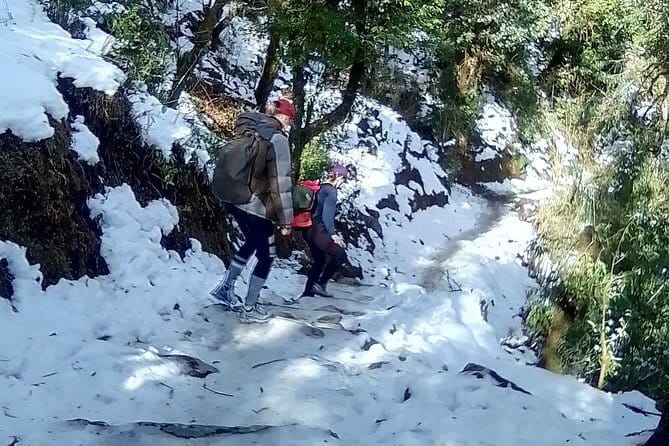
The route continues from Jagat toward Deng. You remain close to the Budhi Gandaki, with the valley gradually becoming more remote and the mountain environment more pronounced.
Deng is a useful point in the journey because the route begins to feel less like a village-to-village walk in the lower hills and more like a serious Himalayan trek. You should pay attention to your body here. Early fatigue can become a problem later, when the air gets thinner and the days grow colder.
The plan names Salleri as the stop heading into Deng, but the day description simply says Jagat to Deng. That wording is unclear, so confirm whether Salleri is a lunch stop, an overnight stop, or a route label.
Day 4: Prok village, Mani walls, and Namrung
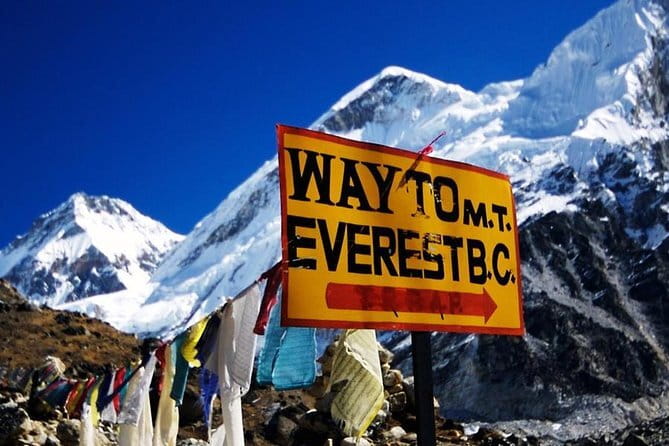
This day brings you to Prok village and its surrounding forest. Mani walls are a recurring feature on the Manaslu route. These stone structures carry carved Buddhist prayers, and walking past them offers a quiet reminder that the trail is also a religious and cultural path.
Namrung marks another change in the surroundings. The village is associated with the Tibetan-influenced upper section of the circuit, where architecture, prayer flags, and mountain traditions become more visible.
Take your time around Prok and Namrung. The strength of this trek is not only reaching the next lodge. It is seeing how religion, farming, trade, and mountain geography shape village life.
Day 5: Namrung to Shyala
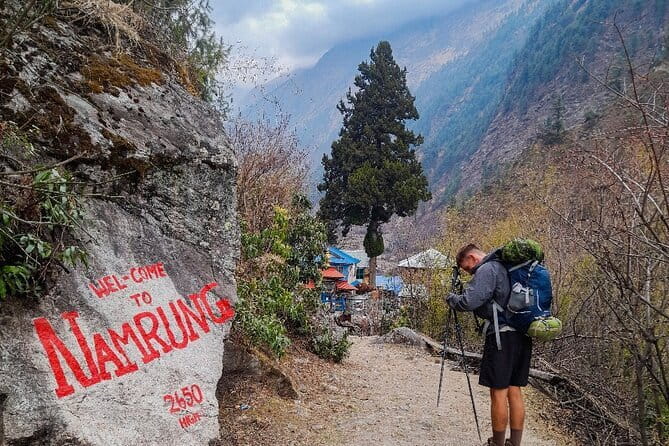
From Namrung, you continue toward Shyala. The route moves higher, and the scenery becomes more open, with bigger mountain views and less dense forest.
Shyala is a good place to notice the effect of altitude. Even if you feel fit, the air is thinner than it was in the lower valley. Walk at a calm pace, drink regularly, and let your guide know if you develop a headache, unusual tiredness, or other symptoms.
Twin-share rooms are included, but mountain lodging is still simple. You should think of the accommodation as a clean base for rest rather than a hotel stay. Hot water and bottled water are not included, so budget for them if you want them.
Day 6: Shyala to Samagaun and Pungyen Gompa
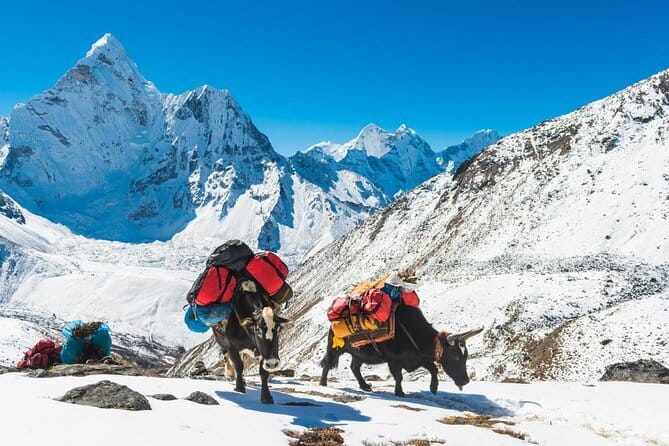
The trek continues to Samagaun, one of the most important settlements on the circuit. From here, you also hike to Pungyen Gompa, an additional cultural and mountain-view stop.
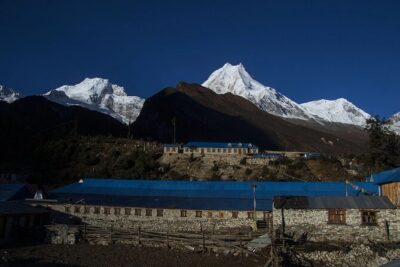
Samagaun is valuable because it gives you a stronger sense of the high valley communities. The surrounding scenery opens toward major peaks and glacial terrain, while the village retains a clear Tibetan Buddhist character.
This is a long day on paper, listed at about 12 hours. You may find the added hike tiring after several consecutive walking days. Ask your guide how much time is planned at Pungyen Gompa and how the group will adjust the pace.
Day 7: Acclimatization at Manaslu
The seventh day is set aside for acclimatization. This is one of the best features of the schedule. Rather than racing upward every day, you get time for your body to adjust before the highest part of the route.
You can optionally hike to Manaslu Base Camp and Birendra Lake. Both options add effort, so your choice should depend on how you feel, not on pressure to collect every viewpoint. If you are tired, a shorter outing and extra rest may be the smarter decision.
This day also lets you explore Samagaun at a slower pace. Use it to check clothing, water, snacks, and personal gear before the most demanding section.
Days 8 and 9: Glaciers, Larke Bazaar, and Dharmasala
The schedule describes a descent toward the Budhi Gandaki, a wooden bridge crossing, and views of the Larkya Glacier. It also includes icy streams, Larke Bazaar, monasteries, Mani walls, and the climb toward Dharmasala.
The order of these descriptions is not perfectly clear. One section labels Larkya La Pass on Day 8, while the next places the approach to Dharmasala before the pass. In practical terms, you should expect these days to form the high-altitude approach, with increasingly cold conditions and rougher ground.
Dharmasala is an important staging point before the pass. Lodging here may feel basic, and the day can be physically demanding. Keep your evening simple: eat, hydrate, organize your layers, and rest.
The glacier views are a major reward, but do not let the scenery distract you from footing. Icy streams and uneven trail surfaces require care, especially if you are carrying your own pack because a porter is not included.
Day 10: Crossing Larkya La Pass
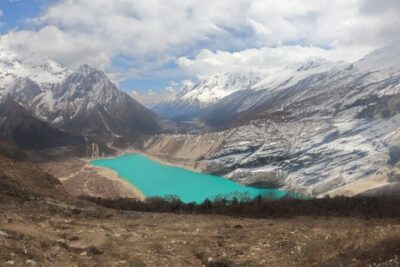
The pass day is the physical centerpiece of the trip. You climb through challenging terrain to Larkya La, at approximately 5,100 meters, with views toward Cho Danda, Larkya Peak, and four frozen lakes.
This is where preparation matters most. The route is not suitable for someone who only takes occasional easy walks. You need a moderate level of fitness, patience with slow progress, and a willingness to walk for many hours in cold, high-altitude conditions.
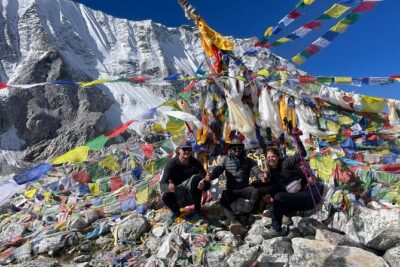
The reward is a dramatic change in scenery and the satisfaction of crossing one of Nepal’s notable high passes. Your guide’s role is particularly important here. Keep the group together, follow pacing advice, and report symptoms early.
Because the supplied schedule places the pass on both Day 8 and Day 10, ask for the final day-by-day version before booking. The overall route clearly includes the Larkya La crossing, but the exact sequence deserves confirmation.
Day 11: Descending through forests to Dharapani
After the high pass, the route descends through greener surroundings. You cross the Dudh Khola, pass through Karche village, and continue to Dharapani.
This change is welcome. Lower elevation brings back forest and a softer feel after the exposed high country. The day is still listed at about 12 hours, so do not assume the descent will be easy. Long downhill walking can be hard on knees and ankles.
Dharapani is also where the walking portion ends. Shared Jeep transport to Besisahar is included, so you do not need to arrange this transfer yourself.
Day 12: Dharapani to Besisahar and Kathmandu
The final day begins with a Jeep drive from Dharapani to Besisahar. From Besisahar, you continue by road to Kathmandu, with the full day listed at about eight hours.
This is another long transport day, but it closes the circuit efficiently. The return bus is included, along with the deluxe bus transfer back toward Kathmandu. The activity ends at the original meeting point.
A farewell dinner is included to mark the end of the trek. It is a small but welcome touch after nearly two weeks of walking, shared meals, road travel, and mountain lodges.
Guides, private groups, and the human side
The tour is private, meaning only your own group participates. That gives you more control over walking speed and rest, although the demanding schedule still needs sensible pacing.
Guide assignments can vary. Past bookings have specifically praised guides including Bijaya, Lakpa, Laajin, Krishna, and Tenji, along with porters such as Nema. Bijaya was appreciated for sharing useful information about the Himalayas, while Lakpa was described as experienced and eager to explain Nepalese life and culture.
Tenji and Nema received especially warm praise for their care, conversation, and good humor. One family group also valued the chance to learn some Nepali along the way. These details matter because a guide can turn a hard walk into a more rewarding cultural experience.
Still, you should not assume a particular guide will be assigned. Ask who will lead your group and how porter arrangements work. Porters are not included, though you can hire one in Kathmandu or at Sotikhola.
Who should book this trek?
This trek suits you if you want a quieter Himalayan route with strong cultural content and serious mountain scenery. It is a good match for people who enjoy long days outdoors, simple lodging, and the satisfaction of crossing a high pass.
You should be comfortable with a moderate fitness requirement, but the listed 12-hour days suggest that a stronger level of preparation would be wise. Build up with long walks, hills, and time carrying a daypack before you arrive.
This is not the right choice if you want short walking days, resort-style rooms, guaranteed hot showers, or a flexible sightseeing holiday. The route is remote, the transport days are long, and several personal costs sit outside the $1,390 fee.
Booking details and cancellation terms
Confirmation is normally provided at booking. If you book within one day of departure, confirmation depends on availability and may arrive later.
You can cancel for a full refund up to 24 hours before the start time. Cancellations within 24 hours are not refunded, and changes during that period are not accepted. Poor weather or failure to reach the minimum number of participants can lead to a different date, another experience, or a full refund.
FAQ
How long is the Manaslu Circuit Trek?
The trek lasts approximately 12 days, including road transfers from Kathmandu to the trail area and back.
What is the price per person?
The price is $1,390 per person.
Is hotel pickup available in Kathmandu?
Pickup is offered. The listed meeting point is P897+443, Kathmandu 44600, Nepal.
What meals are included?
Breakfast, lunch, and dinner are included during the trek. The supplied details specify 11 breakfasts, 12 lunches, and 12 dinners.
Is transportation included?
Yes. The package includes a deluxe bus from Kathmandu to Sotikhola, shared Jeep transport from Dharapani to Besisahar, and transport from Besisahar back to Kathmandu.
Is a guide included?
Yes. A government-certified, English-speaking guide is included.
Is a porter included?
No. You are responsible for arranging and paying for a porter if you want one. Porters can be hired in Kathmandu or at Sotikhola.
What fitness level is required?
The activity requires a moderate physical fitness level. The route includes long walking days, challenging terrain, icy streams, and the Larkya La Pass at about 5,100 meters.
Can I cancel for a refund?
You can receive a full refund if you cancel at least 24 hours before the start time. Cancellations within 24 hours are not refunded.
Should you book Dancing in the Manaslu Circuit?
I would recommend this trek if you want a demanding but culturally rewarding Himalayan route and you value organized transport, meals, permits, and guide support in one price.
The strongest reasons to book are the quieter setting, the Tibetan-influenced villages, the acclimatization day at Samagaun, and the major crossing of Larkya La. The strongest reasons to pause are the long days, high altitude, basic lodging, extra porter and personal costs, and unclear ordering in parts of the day-by-day schedule.
Before paying, ask for the confirmed route sequence, expected walking hours, guide assignment, porter rates, and current vehicle plan. If those details suit your fitness and budget, this is a fine choice for seeing a less crowded side of Nepal with a local team and plenty of time on foot.
New in the Kathmandu listings
- Traditional Momo Making Class★ 5.0 · 10 reviews
- Kathmandu: Ancient City Kirtipur & Pharping Monastery Tour★ 5.0 · 2 reviews
- Kathmandu to Pokhara Premium sofa bus ticket★ 4.0 · 17 reviews
- Women Empowerment Project(Nepali cooking class & jewelry workshop★ 5.0 · 15 reviews
- Yoga Experience Day Trip with Private Transfer From Kathmandu★ 4.0 · 2 reviews
- 7-Day Langtang Valley Trek from Kathmandu★ 5.0 · 1 review
- Kathmandu 2 Nights 3 Days Chitwan Jungle Safari Tour★ 5.0 · 9 reviews
- Wildlife Adventure in Chitwan Nepal★ 4.0 · 4 reviews
Manaslu Circuit Treks, compared.
16 Day Private Manaslu Circuit Trek from Kathmandu
Read our review →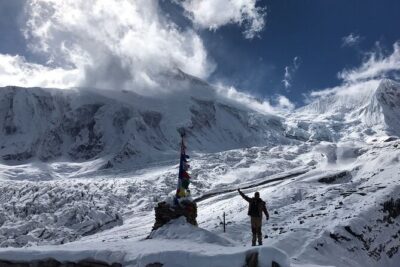
10 Days Manaslu Circuit Trek in Larke La Pass
Read our review →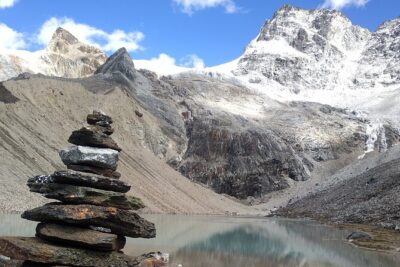
Manaslu Circuit Trek 8th Highest in the World
Read our review →
Manaslu Circuit Trek to the Beauty of 8th Highest Mountain
Read our review →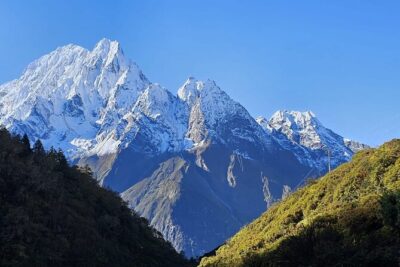
Manaslu Circuit Trek – 14 days of Himalayan Adventure
Read our review →Browse the lists this tour appears in