
REVIEW · MANASLU CIRCUIT TREKS
Manaslu Circuit Trek – 14 days of Himalayan Adventure
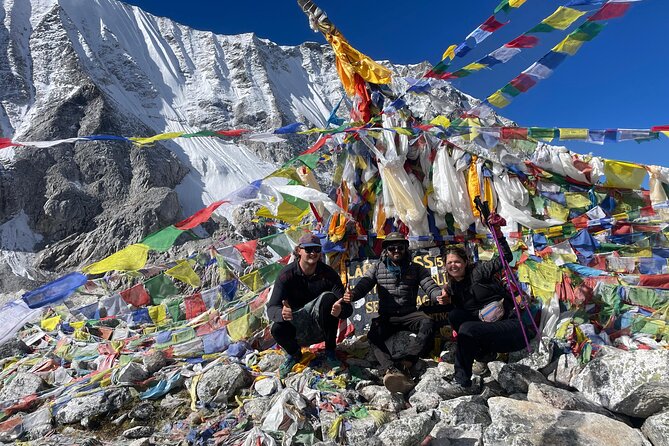
Mountain adventure starts long before the summit. This 14-day Manaslu Circuit Trek gives you close views of Mt. Manaslu, a 8,163-meter peak, while leading you through the Budhi Gandaki valley, Tibetan-influenced villages, Buddhist monasteries, and the high Larkya La Pass. I especially like the quieter feel of this route and the care built into the trip, including an oxygen monitor, trekking poles, a sleeping bag, and an experienced guide.
I also like the strong human side of the experience. Guides such as Santosh and Pradip receive especially warm praise for staying with slower walkers, checking on the group, and helping solo trekkers feel looked after. The main drawback is the road travel and the demanding mountain schedule. Day 2 and Day 13 involve long, rough public or shared transport, while the pass day calls for a full day of serious effort.
In This Review
- Key Points at a Glance
- Why the Manaslu Circuit Feels Different
- Day 1: A Gentle Start in Kathmandu
- Day 2: The Long Road to Maccha Khola
- Day 3: Maccha Khola to Jagat Along the Budhi Gandaki
- Day 4: Forest Trails, Bridges, and Rhododendrons
- Day 5: Deng to Namrung and a Stronger Tibetan Influence
- Day 6: Namrung to Shyala Under the Manaslu Massif
- Day 7: Shyala to Sama Gaon
- Day 8: Acclimatization at Sama Gaon
- Day 9: Sama Gaon to Samdo
- Day 10: Higher Trails and Preparation for the Pass
- Day 11: Crossing Larkya La Pass to Bhimtang
- Day 12: Forest Descent From Bhimtang
- Day 13: Jeep to Besisahar, Then Back to Kathmandu
- Day 14: Airport Transfer and Farewell
- What the $1,099 Price Covers
- Guide Support and the Human Side of the Trek
- Who Should Book This Trek?
- Should You Book the Manaslu Circuit Trek?
- FAQ
- How long is the Manaslu Circuit Trek?
- What is the price of the trek?
- Is airport pickup included?
- What permits are included?
- Are meals included?
- Is transport included?
- How fit do I need to be?
Key Points at a Glance
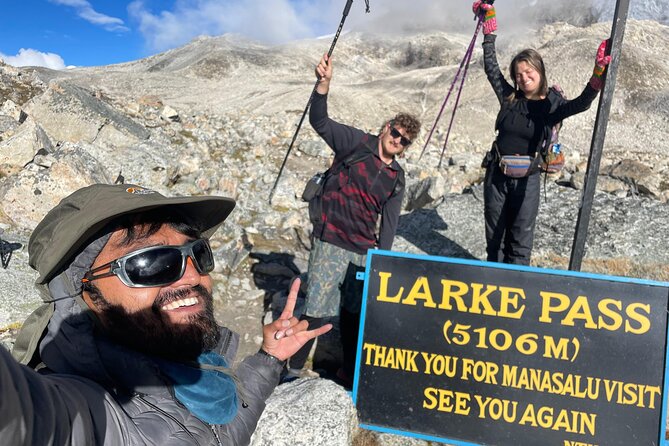
- Larkya La Pass is the physical high point: The route crosses this major Himalayan pass before dropping toward Bhimtang.
- Manaslu views arrive in stages: Forest trails gradually give way to open ridges and close views of the Manaslu massif.
- Sama Gaon provides useful acclimatization: The rest day includes a hike to Birendra Taal and a visit to a local monastery.
- Tibetan culture shapes the upper route: Mani walls, chortens, prayer flags, monasteries, and traditional villages add meaning beyond the mountain views.
- The $1,099 price covers major essentials: Permits, guide, listed meals, public transport, sleeping bag, and walking poles are included.
- This is a private trip for your group: You are not placed into a larger shared tour, though the exact group size is not specified.
Why the Manaslu Circuit Feels Different
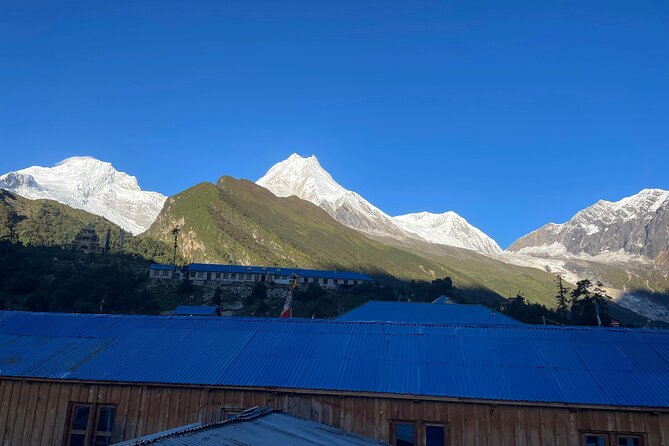
Nepal has famous trekking routes, but the Manaslu Circuit offers a particularly broad change of scenery. You begin near Kathmandu and follow river valleys through lower forests. By the upper section, the trees thin out, the air gets colder, and the mountains fill the horizon.
The route circles Mt. Manaslu inside the Manaslu Conservation Area. That matters because this is not only a mountain walk. You may see signs of Himalayan wildlife such as Himalayan tahrs, blue sheep, and, with luck, the much more elusive snow leopard. Wildlife sightings are never guaranteed, but the protected setting gives the trek a stronger sense of place.
The cultural shift is just as important. In the lower valleys, the route passes through subtropical forest and riverside settlements. Higher up, Tibetan influence becomes more visible in Bihi, Namrung, Sama Gaon, and Samdo. You will see prayer flags, Buddhist mani walls, chortens, monasteries, and traditional architecture.
I would describe the physical level as moderate overall, but that word needs some care. A person with reasonable fitness can complete the trek, yet the route includes long walking days, steep climbs, rocky trails, high altitude, and a pass crossing. You should not treat moderate as easy.
More Manaslu Circuit treks:
- Manaslu Circuit Trek (15 Days)
★ 5.0 · 50 reviews - 16 Day Private Manaslu Circuit Trek from Kathmandu
★ 5.0 · 42 reviews - Manaslu Circuit Trek 13 Days
★ 5.0 · 30 reviews
Day 1: A Gentle Start in Kathmandu
Your arrival at Tribhuvan International Airport is met by a representative from Wonder Himalaya. A name or company sign helps you find the pickup, which is useful after a long flight and a busy airport arrival.
The first day is mainly about getting settled. Since the trek begins with a long drive the following day, use this time to organize your bags, confirm the meeting details, and make sure you have the personal items not covered by the trip.
The experience is private, meaning only your group participates. The exact group size is not stated, so ask before booking if that detail affects your decision.
Day 2: The Long Road to Maccha Khola
The journey begins with an early breakfast and a drive from Kathmandu toward Maccha Khola. You will see the Trishuli and Budhi Gandaki rivers along the way, with views changing from the Kathmandu area to rougher mountain roads.
This is an important practical point. The transport is listed as public transportation, not private transport. That helps keep the $1,099 cost down, but it also means less control over comfort, stops, and timing. The road portion may feel tiring before you even begin walking.
You pass through rural areas and river valleys, and the road itself becomes part of the story. Still, this is not a polished transfer. If you prefer a private jeep, that can be arranged for an additional cost.
Day 3: Maccha Khola to Jagat Along the Budhi Gandaki
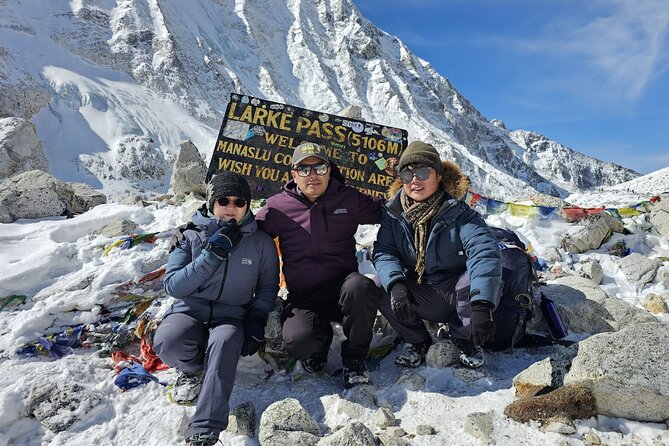
The official trek starts after breakfast in Maccha Khola. The trail follows the Budhi Gandaki River through lush subtropical forest, giving you a softer introduction to the route than the high mountain sections later on.
You can expect river sounds, forest shade, and suspension bridges over rushing water. These bridges are a recurring feature of the Manaslu route, and they add a little drama to what might otherwise be a steady walking day.
Jagat marks a change in the trip. The route begins to feel more like a high mountain journey, even though the vegetation remains thick. This section is a good reminder that the Manaslu Circuit is not just a series of mountain viewpoints. The valleys, waterways, and village life are part of its appeal.
More walking in the hills of Kathmandu:
- Everest Base Camp Trek – 14 Days
★ 5.0 · 1,499 reviews - Everest Base Camp Trekking
★ 5.0 · 485 reviews - Nagarkot Sunrise View and Day Hiking from Kathmandu
★ 5.0 · 471 reviews - Annapurna Circuit Trek with Tilicho Lake
★ 5.0 · 368 reviews
Day 4: Forest Trails, Bridges, and Rhododendrons
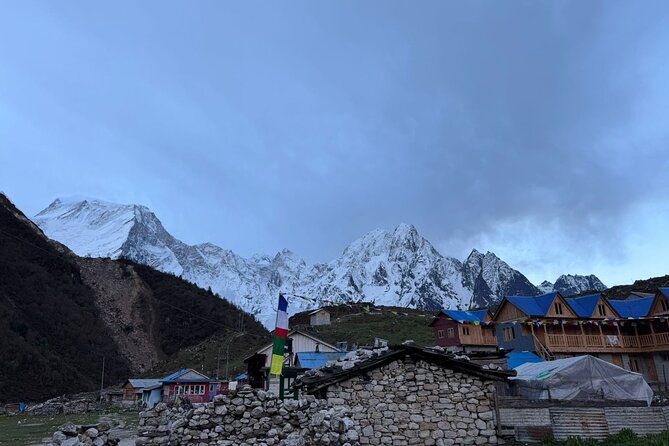
From Jagat, you walk through dense forest filled with tall trees and colorful rhododendrons. You also cross more suspension bridges above rivers and small streams.
The route is visually varied, but the repeated climbs and descents can test your legs. Pay attention to your footing on damp or uneven sections, especially around the bridges and stream crossings.
This day helps build the rhythm of the trek. You walk, stop, eat, cross a bridge, climb again, and gradually adjust to the pace. A guide is valuable here because the trail is not only about staying on the path. You also need someone who watches how the group is handling the effort.
Day 5: Deng to Namrung and a Stronger Tibetan Influence
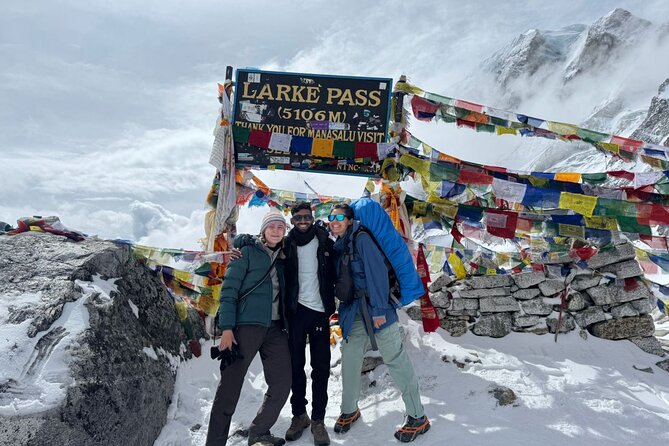
The walk from Deng toward Namrung takes you through Bihi Phedi and Bihi. These villages bring a clearer Tibetan influence, and the cultural character of the route becomes more pronounced.
The trail continues through forest, but the scenery begins to open as you gain height. The transition is gradual, which is one reason the Manaslu Circuit feels so rewarding. You do not move from city to snow overnight. You watch the environment change day by day.
Namrung is an important stop because it signals the approach to the upper Manaslu region. The route is becoming more alpine, and the mountain views begin to carry greater weight.
Day 6: Namrung to Shyala Under the Manaslu Massif
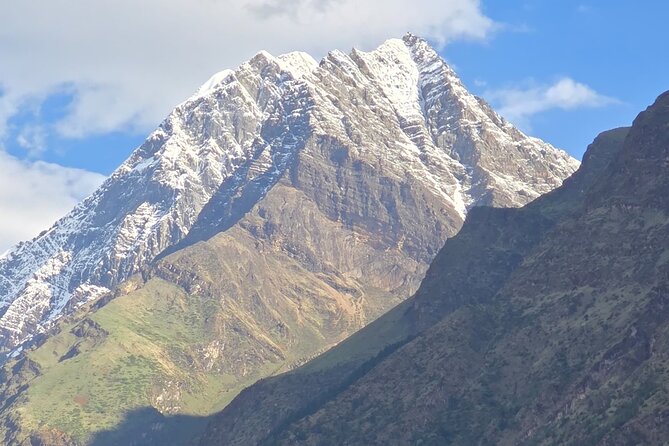
From Namrung, the trail climbs through rhododendron and pine forest toward Shyala. Along the way, you pass Buddhist mani walls, chortens, and other religious markers.
These details make the walk feel connected to local life rather than designed only for scenery. Take time to notice the carved stones and the arrangement of prayer features. The route asks you to move slowly, and that slower pace gives these places room to register.
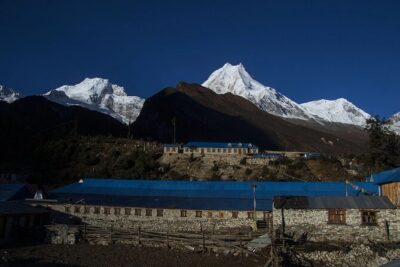
Shyala is known here for open mountain views and a closer look at the Manaslu massif. After several days of forest and river travel, the appearance of broad mountain walls feels like a real turning point.
Day 7: Shyala to Sama Gaon
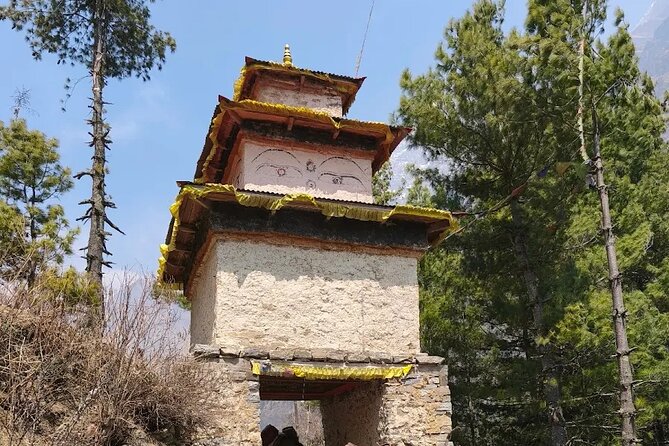
The walk from Shyala to Sama Gaon continues through alpine forest and open ridges. The Manaslu massif remains the main attraction, but the route also includes traditional mani walls and Buddhist features.
Sama Gaon is one of the most important villages on the circuit. It is a cultural center of the upper route and a practical place to pause before the higher sections toward Samdo and Larkya La Pass.
The views here are not limited to one peak. You can expect close mountain scenery involving the Manaslu group, with wider views toward the Ganesh Himal and Annapurna massifs at different points of the route.
Day 8: Acclimatization at Sama Gaon
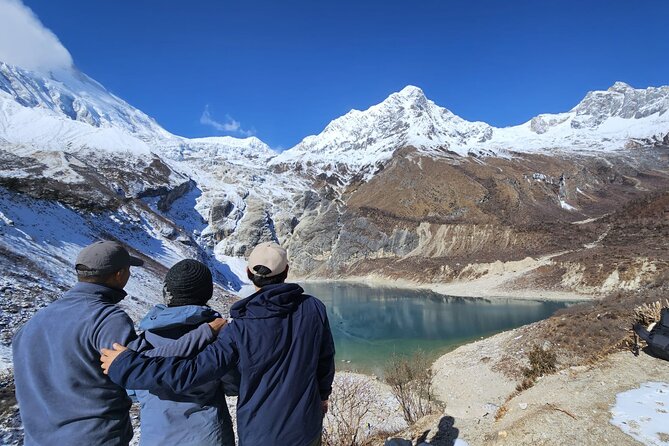
The rest day in Sama Gaon is not a day of doing nothing. The planned outing goes to Birendra Taal, a lake named after the late King Birendra of Nepal. The short hike takes about two hours, and admission is free.
You will also visit Labrang Gompa or Kargya Chholing monastery, where blessing ceremonies may take place. This gives the rest day a useful balance. You make a modest effort to help your body adjust, but you also have time for culture and reflection.
Acclimatization is one of the most valuable parts of the schedule. The route climbs steadily, and taking a rest day before heading higher is sensible. Use it to drink enough water, check your equipment, and tell your guide if you feel unwell.
The tour provides an oximeter to check heart rate and oxygen saturation. That is helpful, but it is not a substitute for speaking up about symptoms or following your guide’s advice.
Day 9: Sama Gaon to Samdo
After the rest day, the trail climbs toward Samdo with Mt. Manaslu watching over the route. The terrain becomes more open and less sheltered, and the air feels more like high mountain country.
The trail is increasingly rocky, with fewer trees and more exposed sections. Prayer flags provide bright color against the muted surroundings, while the mountain views become more immediate.
Samdo is a key stage before the pass. This is not the place to rush. The steady pace matters more than speed, particularly because the next section takes you higher and closer to the most demanding day of the trek.
Day 10: Higher Trails and Preparation for the Pass
The walk continues along rockier trails toward the high section of the circuit. Manaslu and other nearby peaks fill the view, while prayer flags mark the spiritual character of the route.
The schedule does not give a detailed stop name for this day, so you should ask the operator for the exact overnight point and expected walking time before departure. That information can help you plan layers, snacks, and battery use.
This is also the right time to review your gear. The package includes a down-filled sleeping bag and walking poles, but you still need to bring personal clothing, water, snacks, insurance, and any charging funds. Coffee and tea are not included, and electronic device recharging costs extra.
Day 11: Crossing Larkya La Pass to Bhimtang
The pass day is the main physical challenge. You start early and walk for about two to three hours before reaching Larkya La Pass, crossing small streams and moving through rocky high mountain terrain.
The pass itself is listed as a free stop, so there is no extra admission cost. The real price is effort. Weather, cold, altitude, and footing can all shape the day, and the schedule is not one to underestimate.
After the pass, you descend for another four to five hours through rocky paths and open valleys toward Bhimtang. Reaching the village is a major moment because the hardest section is behind you, but your legs will likely feel the day.
Bhimtang provides a striking place to spend the night, with snow-capped mountain views surrounding the settlement. The descent also gives you a change of scenery after the exposed upper route.
Day 12: Forest Descent From Bhimtang
The descent continues after breakfast, leading into lower elevations and forests of pine and rhododendron. Distant mountain views appear between the trees.
Downhill walking can sound easy, but long descents often place stress on knees and ankles. Use the walking poles included with the trip, and keep your pace controlled.
This day offers a softer finish to the trekking section. After the high pass and rocky valleys, the return of thicker forest feels like a clear sign that the circuit is winding down.
Day 13: Jeep to Besisahar, Then Back to Kathmandu
The final full day is mostly transport. You take a jeep from Tilije to Besisahar, with the rough road taking about two to three hours according to the schedule, then continue toward Kathmandu.
The road offers window views of the countryside, but comfort and timing may vary. Public transportation is included, and private transport costs more. If you have a flight or other firm plan after the trek, allow plenty of flexibility because road conditions can affect the journey.
This is not a sightseeing day in the usual sense. It is the practical link between the mountains and the capital. You may be tired, dusty, and ready for a shower, which is a perfectly fair response after nearly two weeks on the route.
Day 14: Airport Transfer and Farewell
On the final day, Wonder Himalaya arranges your transfer to Tribhuvan International Airport. The simple advice is useful: pack carefully and check your room, transport, and bags before leaving.
The arrival and departure transfers add convenience, especially if you are traveling alone. Confirm the pickup arrangements and timing with the company, since the exact meeting point is not specified in the information provided.
What the $1,099 Price Covers
At $1,099 per person, the trip offers good value if you want the main logistics handled without paying for a luxury trek. The included items are substantial:
- Public transport from Kathmandu to Maccha Khola, Tilche to Besisahar, and Besisahar to Kathmandu
- Manaslu Conservation Area Permit
- Annapurna Conservation Area Permit
- Restricted Area Permit
- Government-registered trekking guide
- Breakfast for 13 days
- Lunch and dinner for 11 days
- Down-filled sleeping bag
- Walking poles
- Route map
- Oxygen monitor
The permit costs matter. The Manaslu route requires more paperwork than a simple local walk, and having the Manaslu, Annapurna, and Restricted Area permits included makes budgeting easier.
The meal count also tells you something about the schedule. Arrival and departure days do not include the same meal coverage as the trekking days, so check the daily plan if you want exact meal details.
You pay extra for coffee, tea, alcohol, bottled water, snacks, personal expenses, electronic charging, travel insurance, and medical evacuation. Those are not minor details on a mountain trip. Budget for them before you decide the headline price is your final cost.
Guide Support and the Human Side of the Trek
The strongest praise goes to the guides. Santosh is described as attentive to anyone falling behind, waiting for them or going back to check on them. That kind of patience matters more than a fast pace on a route with changing altitude and difficult footing.
Pradip is also singled out for making the journey smooth and safe. If you are booking alone, this personal support can make a major difference. Niranjan, who helps arrange trips around individual preferences, is another name connected with the positive service experience.
The company describes its guides as experienced and government registered, with porters and support crew available. The information does not specify porter limits, crew numbers, or baggage rules, so ask those questions before booking.
Who Should Book This Trek?
I would recommend this trek to you if you want:
- A quieter alternative to Nepal’s busiest routes
- Strong mountain views without a technical climbing program
- A route that combines nature with Tibetan Buddhist culture
- A private trip with guide support
- A moderate but serious physical challenge
- A package that includes permits, meals, basic trekking equipment, and transport
I would hesitate if you dislike rough roads, shared transport, basic mountain conditions, or long walking days. The itinerary has no easy shortcut around the pass day, and the route is not designed for a relaxed sightseeing holiday.
You also need travel insurance that covers trekking and medical evacuation. Insurance is not included, and high-altitude trekking can carry risks that ordinary holiday cover may exclude.
Should You Book the Manaslu Circuit Trek?
Book it if your priority is a full Himalayan experience with Manaslu views, Buddhist culture, fewer crowds, and a useful package of permits and equipment at $1,099. The itinerary gives you time to adjust at Sama Gaon, and the guide support receives especially strong praise for patience and care.
Before paying, ask for the exact group size, daily walking times, porter arrangements, transport details, and what happens if weather or road conditions change the schedule. If you are comfortable with those unknowns and have moderate fitness, this is a strong-value route with real variety.
Cancellation is free if you cancel at least 24 hours before the local start time. Inside that period, the amount paid is not refunded.
FAQ
How long is the Manaslu Circuit Trek?
The experience lasts approximately 14 days, including arrival in Kathmandu, the trek, return transport, and airport transfer.
What is the price of the trek?
The listed price is $1,099 per person.
Is airport pickup included?
Pickup is offered, and the first day includes a representative meeting you at Tribhuvan International Airport. An airport transfer is also arranged on the final day.
What permits are included?
The price includes the Manaslu Conservation Area Permit, Annapurna Conservation Area Permit, and Restricted Area Permit.
Are meals included?
Breakfast is included for 13 days, while lunch and dinner are included for 11 days. Coffee, tea, alcohol, bottled water, snacks, and personal expenses are not included.
Is transport included?
Public transportation is included from Kathmandu to Maccha Khola, from Tilche to Besisahar, and from Besisahar to Kathmandu. Private transport costs extra.
How fit do I need to be?
The trek is described as suitable for people with moderate physical fitness. It includes long walking days, rocky trails, high-altitude terrain, and the crossing of Larkya La Pass.
New in the Kathmandu listings
- Traditional Momo Making Class★ 5.0 · 10 reviews
- Kathmandu: Ancient City Kirtipur & Pharping Monastery Tour★ 5.0 · 2 reviews
- Kathmandu to Pokhara Premium sofa bus ticket★ 4.0 · 17 reviews
- Women Empowerment Project(Nepali cooking class & jewelry workshop★ 5.0 · 15 reviews
- 7-Day Langtang Valley Trek from Kathmandu★ 5.0 · 1 review
- Kathmandu 2 Nights 3 Days Chitwan Jungle Safari Tour★ 5.0 · 9 reviews
- Yoga Experience Day Trip with Private Transfer From Kathmandu★ 4.0 · 2 reviews
- Wildlife Adventure in Chitwan Nepal★ 4.0 · 4 reviews
Manaslu Circuit Treks, compared.
16 Day Private Manaslu Circuit Trek from Kathmandu
Read our review →
10 Days Manaslu Circuit Trek in Larke La Pass
Read our review →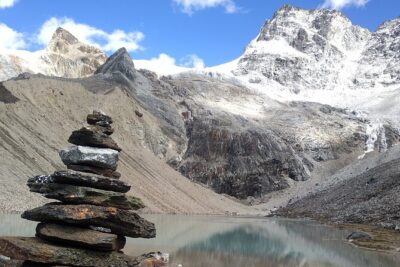
Manaslu Circuit Trek 8th Highest in the World
Read our review →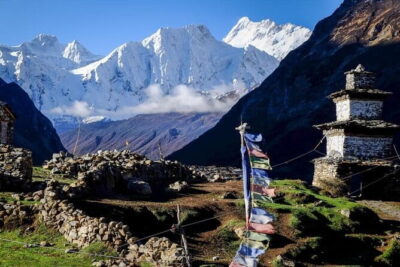
Manaslu Circuit Trek to the Beauty of 8th Highest Mountain
Read our review →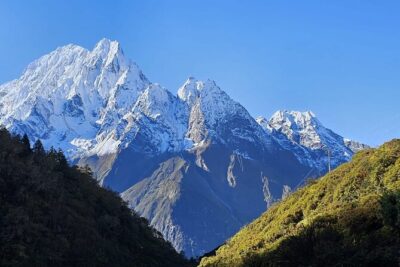
Browse the lists this tour appears in