
REVIEW · ANNAPURNA BASE CAMP TREKS
From Pokhara: 10-Day Poon Hill and Annapurna Base Camp Trek
The mountains reveal themselves slowly. This 10-day private trek links two of Nepal’s finest viewpoints, Poon Hill and Annapurna Base Camp, while taking you through Gurung villages, terraced fields, rhododendron forests, and the Annapurna Sanctuary. I like the thoughtful pace, usually three to six hours of walking a day, and the personal care provided by guides such as Biru, Arjun, and Bikram. The main drawback is simple: the route is physically demanding, and mountain weather can hide the very peaks you came to see.
I also like that the trek does not rush straight to base camp. You first earn sunrise views from Poon Hill at 3,210 meters, then continue gradually toward Annapurna Base Camp at 4,130 meters. Food, drinks, hot showers, WiFi, charging, and heater use are extra, so you should plan for daily spending at higher elevations.
In This Review
- Key points to know before you book
- Why this 10-day route works so well
- Day 1: Pokhara to Tikhedhunga through Nayapul
- Day 2: Ulleri’s stone steps and the forests near Ghorepani
- Day 3: Poon Hill sunrise and the trail to Tadapani
- Day 4: From Tadapani to the Gurung village of Chhomrong
- Day 5: Suspension bridges, Sinuwa, and Bamboo
- Day 6: Bamboo to Deurali beside the Modi Khola
- Day 7: Deurali to Machhapuchhre Base Camp and Annapurna Base Camp
- Day 8: Sunrise at base camp and the long return to Bamboo
- Day 9: Chhomrong and the hot springs at Jhinu Danda
- Day 10: Walking to Nayapul and returning to Pokhara
- Guides, pace, and practical support
- Weather, altitude, and what to pack
- Should you book this Annapurna trek?
- FAQ
- How long does the Poon Hill and Annapurna Base Camp trek take?
- Where does the trek start?
- What is the highest point on the trek?
- Is Poon Hill included?
- Is Annapurna Base Camp included?
- Is transport from Pokhara included?
- Are meals included in the price?
- What languages can the guide speak?
- Is this a private tour?
- Can I cancel the booking?
Key points to know before you book
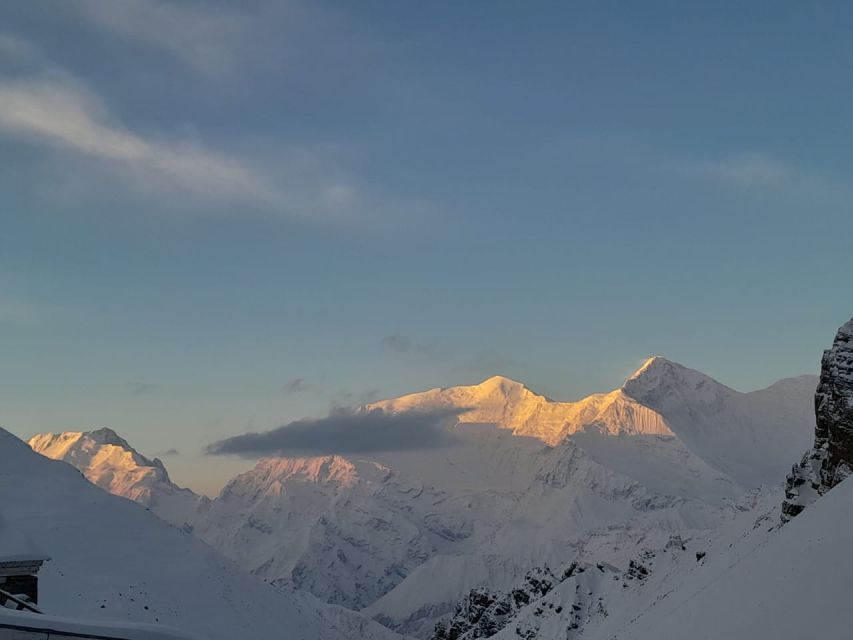
- Two major Himalayan viewpoints: Poon Hill provides a wide sunrise panorama, while Annapurna Base Camp places you inside a dramatic mountain sanctuary.
- A private 10-day schedule: The slower plan allows your guide to adjust the walking speed and, if needed, change the route for altitude concerns.
- Strong guide support: Guides such as Biru and Bikram have been praised for patience, route planning, safety, and help with accommodation.
- Authentic village walking: Tikhedhunga, Ulleri, Ghorepani, Tadapani, Chhomrong, and Jhinu Danda give the trek a strong local character.
- Extra costs at altitude: Budget for food and drinks, charging, WiFi, hot showers, and heater use, with one estimate suggesting $30 to $40 per day at higher elevations.
- Best in spring and autumn: March to May and September to November generally offer the clearest conditions, though rain and cloud can still arrive.
Why this 10-day route works so well
Many Himalayan treks are reduced to a race between roadheads and viewpoints. This one gives you time to notice the places between the famous stops. You walk past small settlements, stone stairways, farm terraces, forest trails, suspension bridges, and tea-house villages before reaching the high mountain bowl at Annapurna Base Camp.
The route also has a useful rhythm. You climb, descend, climb again, and spend nights at different elevations rather than gaining height in one giant push. That does not make the trek easy, but it gives your body more time to adapt.
Your package is priced at $310 per person and includes a private English-speaking guide, trekking permits, official documents, guest-house accommodation, hotel pickup and drop-off within the Lakeside area, private transport between Pokhara and Nayapul, an emergency first-aid kit, and the Poon Hill entrance fee. For a 10-day private trip, that is a strong starting price.
Still, $310 is not the final amount you will spend. Meals and drinks are not included, and mountain villages charge more as supplies travel farther uphill. At higher elevations, WiFi, battery charging, hot showers, and heater use can add up quickly. I would treat the advertised price as the cost of the trekking service, not as an all-inclusive holiday budget.
More Annapurna Base Camp treks:
- Kathmandu/Pokhara: 5-Day Annapurna Base Camp (ABC) Trek
★ 4.9 · 72 reviews - Private 7 – Day Annapurna Base Camp Trekking
★ 5.0 · 50 reviews - Annapurna Base Camp Trek (8 days)
★ 5.0 · 45 reviews
Day 1: Pokhara to Tikhedhunga through Nayapul
The morning begins with a private drive from Pokhara to Nayapul, taking about an hour and a half. This transfer matters because it removes the stress of arranging a local connection before the hike begins.
From Nayapul, the trail passes villages, terraced fields, and sections beside the Modi Khola. The first day finishes at Tikhedhunga, at 1,577 meters. It is a sensible opening stage, giving you a chance to settle into the walking rhythm before the route becomes steeper.
Your overnight accommodation is in a guest house. Do not expect city comforts here. The appeal is the setting and the gradual shift from Pokhara’s lakeside ease to the practical mountain life of the trail.
Day 2: Ulleri’s stone steps and the forests near Ghorepani
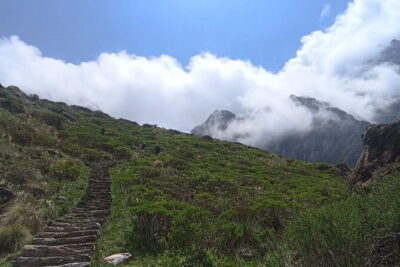
Day two is one of the first real tests. From Tikhedhunga, you climb the famous stone steps toward Ulleri. The ascent is steep and repetitive, so a slow pace is not a weakness. It is the smart way to handle the morning.
After Ulleri, the route continues through rhododendron and marigold forests, with village sections along the way. Ghorepani sits at 2,874 meters and offers broad views toward the Annapurna and Dhaulagiri ranges when the air is clear.
This is a good example of why the 10-day format has value. You are not trying to reach base camp in the shortest possible time. You have room to walk steadily, stop when needed, and let your guide watch how you are handling the climb.
Day 3: Poon Hill sunrise and the trail to Tadapani
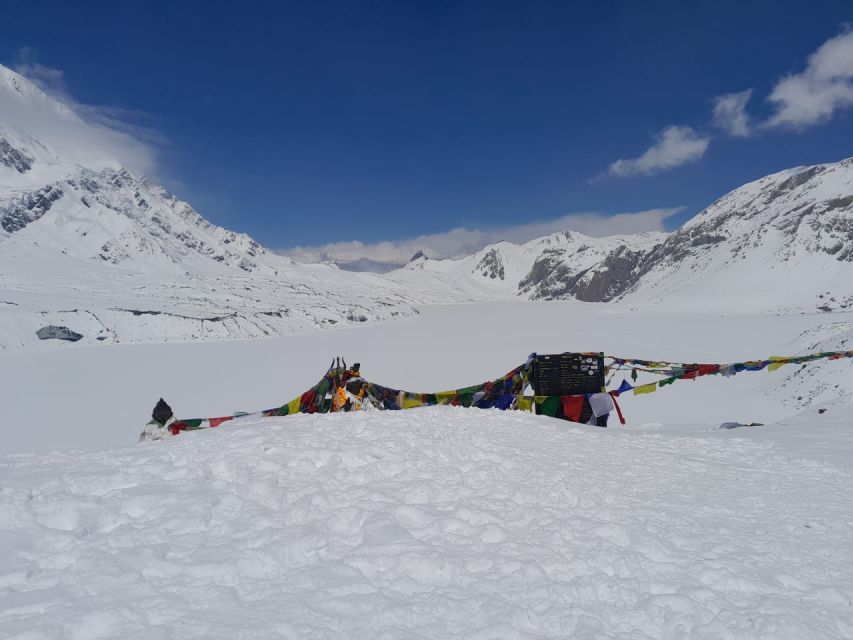
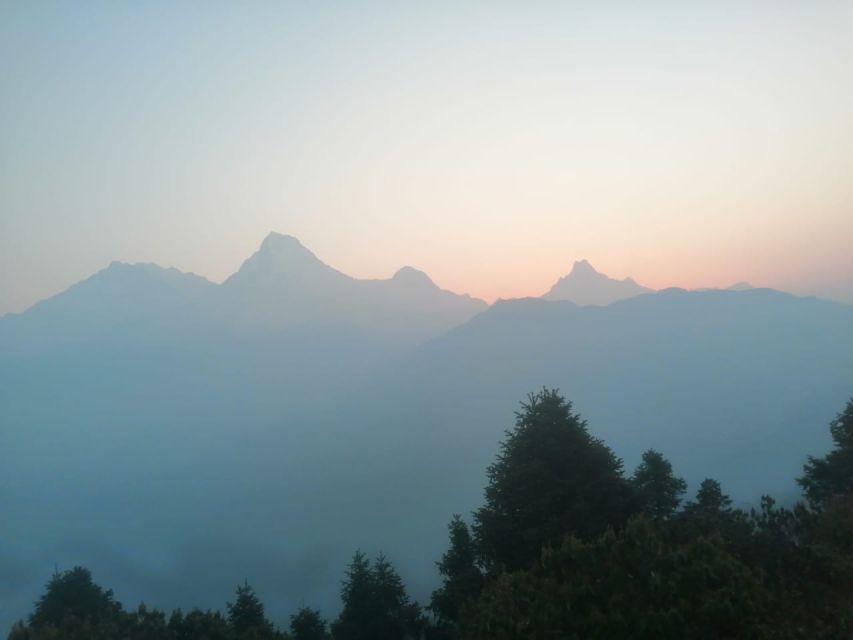
The early start for Poon Hill is the first major highlight. At 3,210 meters, the viewpoint opens toward a line of Himalayan peaks, including Annapurna, Dhaulagiri, Nilgiri, Machhapuchhre, and others. Sunrise is the reason for the pre-dawn walk, but the changing light across the snow peaks is the real reward.
You return to Ghorepani for breakfast, then continue toward Tadapani at 2,630 meters. The route passes through forests and rhododendron-filled valleys. In spring, flowering rhododendrons can add color to the walk, though the mountain views may appear and disappear behind cloud.
Tadapani is more than a place to sleep. It breaks up the route and keeps the schedule manageable. You also get another chance to enjoy a forest setting before the trail turns toward the Annapurna Sanctuary.
More Poon Hill treks:
- Poon hill Trek 3 days
★ 5.0 · 176 reviews - Pokhara: 4-Day Ghorepani, Poonhill & Ghandruk Mountain Trek
★ 5.0 · 132 reviews - Ghorepani – Poon Hill Trek 3N-4D
★ 5.0 · 125 reviews - From Pokhara: 3-Day Ghorepani Poon Hill Trek with Guide
★ 4.9 · 68 reviews
Day 4: From Tadapani to the Gurung village of Chhomrong
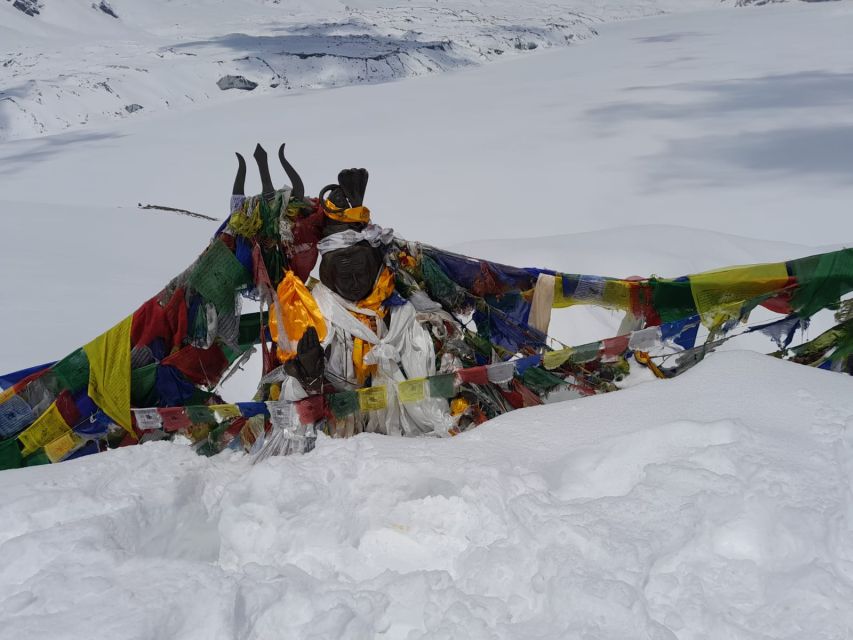
The path from Tadapani descends through forest toward Gurjung village. You then continue downhill to the Kimrong Khola before climbing again to Chhomrong at 2,170 meters.
This up and down pattern can surprise you. A lower overnight stop does not mean an easy day, because the descent is followed by a climb. The reward is Chhomrong itself, a large Gurung village with striking views of Annapurna South and Machhapuchhre, also called Fishtail.
I especially value this part of the trek because the village stops give the route a human scale. You are not simply ticking off peaks. You are walking through inhabited mountain country, where terraces, homes, and local paths are part of the scenery.
Day 5: Suspension bridges, Sinuwa, and Bamboo
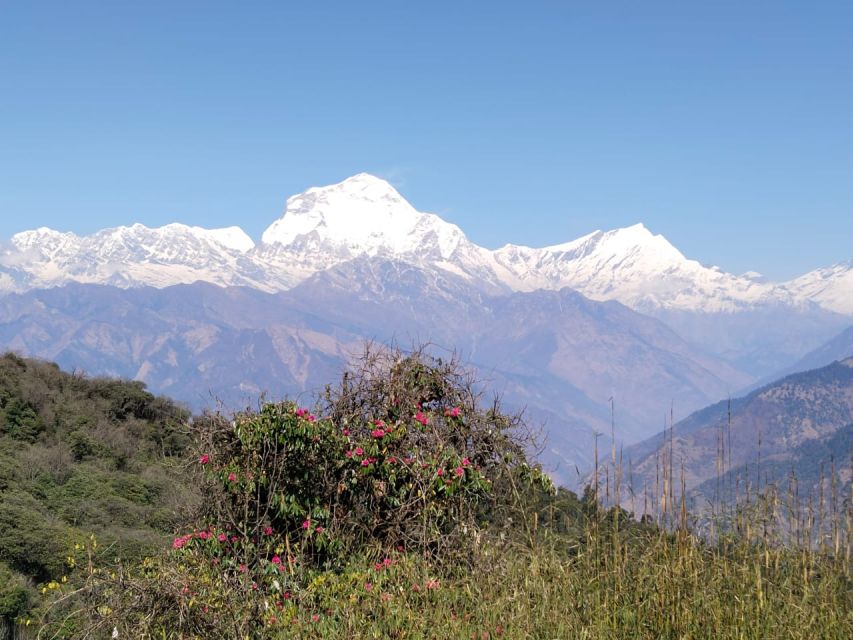
From Chhomrong, the trail drops to the Chhomrong Khola. You cross a suspension bridge, climb toward Sinuwa, and then continue through bamboo and rhododendron forest to Bamboo at 2,310 meters.
The day brings another change in mood. The broad village views give way to thicker forest and a narrower route. The climb can feel tiring after the previous day, but the distance is kept within the trip’s generally moderate daily pattern.
Bamboo is a practical overnight stop. It also marks your progress toward the higher valley. From here, the Modi Khola valley becomes the main visual thread of the route.
Day 6: Bamboo to Deurali beside the Modi Khola
The trail continues through bamboo forest and along the Modi Khola valley. You pass the Himalayan Hotel and Hinku Cave before making the steady ascent to Deurali at 3,230 meters.
This is where altitude deserves more attention. You are not yet at base camp, but the air is thinner and the climbing is sustained. Tell your guide early if you have a headache, unusual fatigue, nausea, or trouble walking comfortably. The strongest part of this service is the guide’s ability to adjust the pace and plan when your body needs more time.
One trek was extended by three days after altitude sickness became a concern. That is a useful reminder that the schedule is not more important than your health. A guide such as Arjun may be able to modify the plan, but you still need travel insurance that covers trekking and emergency evacuation.
Day 7: Deurali to Machhapuchhre Base Camp and Annapurna Base Camp
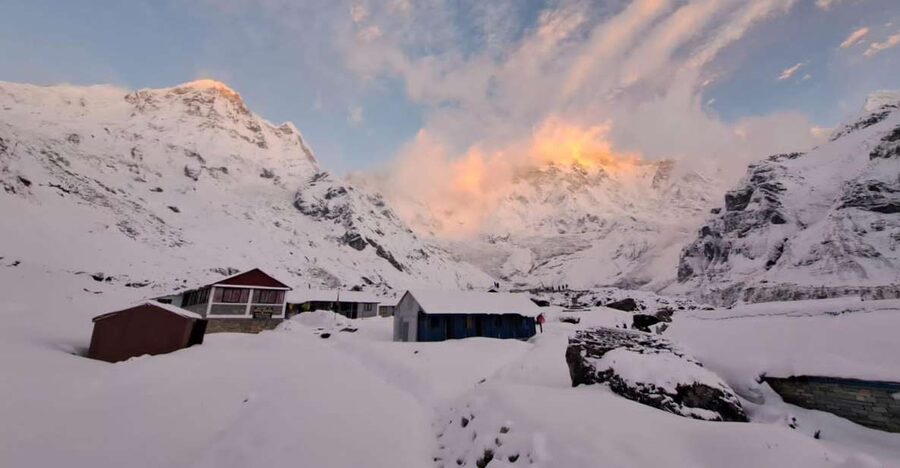
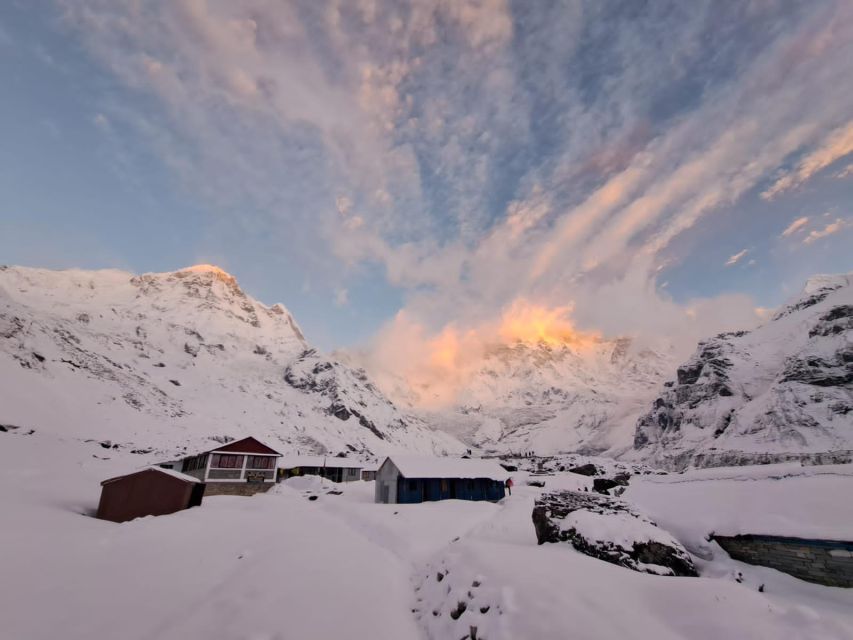
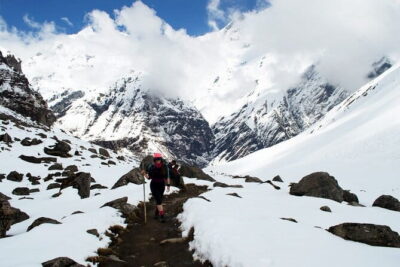
This is the day you have been walking toward. From Deurali, the trail enters a narrow valley that gradually opens into the Annapurna Sanctuary. You pass Machhapuchhre Base Camp at 3,700 meters before continuing to Annapurna Base Camp at 4,130 meters.
The setting changes quickly. Towering peaks surround the route, with Annapurna I rising to 8,091 meters, along with Annapurna II, III, and IV, Hiunchuli, Nilgiri, and Machhapuchhre. The scale is hard to grasp from a photograph because the mountains rise so close around the high basin.
The final approach is demanding. At more than 4,000 meters, even a moderate path can feel slow. Your guide’s job here is not to push you for a dramatic arrival time. It is to help you reach the camp safely and sensibly.
You spend the night at Annapurna Base Camp. That overnight stay is important. You get time to take in the setting instead of arriving, taking one picture, and immediately turning around.
Day 8: Sunrise at base camp and the long return to Bamboo
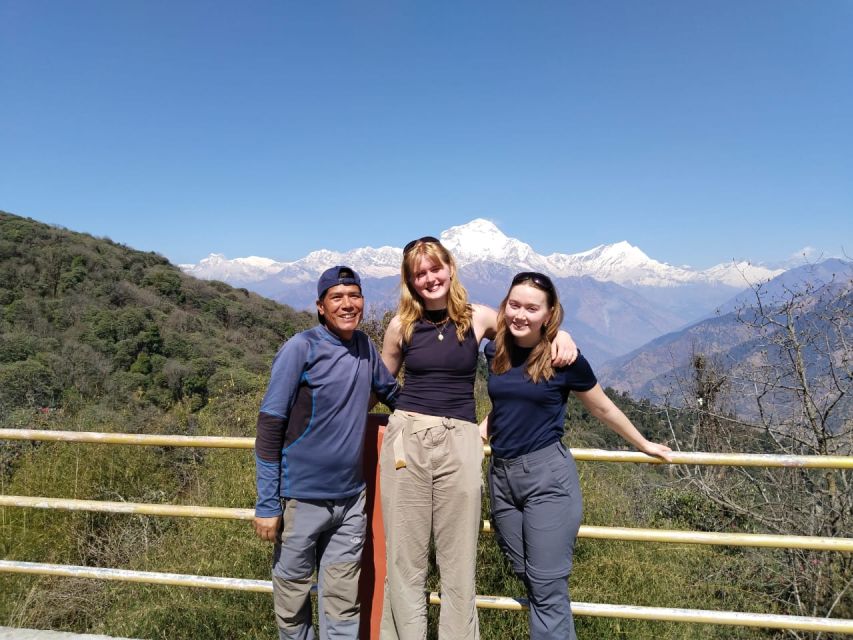
An early morning at base camp gives you another chance to watch light move across the peaks. Mountain conditions can change overnight, so clear skies are never guaranteed, but the sunrise stop is worth keeping in the plan.
The return route follows the valley back through Deurali to Bamboo. Descending is easier for breathing, but it can be hard on knees and thighs after several days of climbing. Trekking poles, comfortable shoes, and a controlled pace can make this part much easier.
The return is also a reminder that Annapurna Base Camp is not the end of the effort. You still have two days of walking before Pokhara, so save some energy.
Day 9: Chhomrong and the hot springs at Jhinu Danda
You continue downhill through the forest, reach Chhomrong for lunch, and then descend farther to Jhinu Danda at 1,780 meters. The lower elevation feels welcome after the high sanctuary.
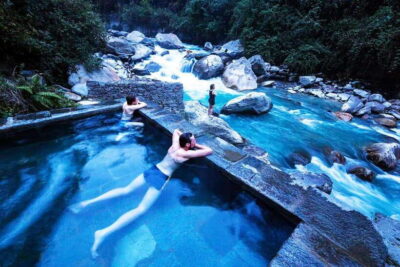
Jhinu Danda is famous on this route for its natural hot springs. Soaking there after the long descent is a practical pleasure, not just a sightseeing stop. Your legs have worked hard, and the warm water gives the day a comfortable finish.
Do not confuse Jhinu Danda with the end of the trek. One useful piece of advice is to complete the route on foot rather than leaving from Jhinu by jeep. The final walking section is part of the experience and keeps the journey connected from mountain trail to road.
Day 10: Walking to Nayapul and returning to Pokhara
The final day takes you from Jhinu Danda to Nayapul, followed by the private drive back to Pokhara. After nine days of walking, the road transfer is a welcome finish.
Hotel pickup and drop-off within the Lakeside area are included. That makes the beginning and end easier, especially if you have trekking bags, tired legs, or a late arrival in Pokhara.
Guides, pace, and practical support
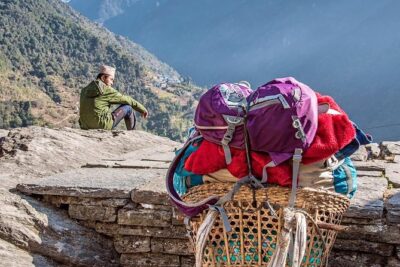
The guide is the most important part of a private trek. You are not joining a large group with one fixed speed, so the quality of communication matters. Biru has been praised for patience, organization, safety, and steady support. Bikram has also been singled out for adjusting the pace, explaining local people and nature, and helping with practical problems such as a shortage of cash.
The listed guide languages are Nepali, English, and Hindi. English communication with porters may be more limited, so keep your key questions and needs clear. The porter service can be extremely helpful, but you should confirm exactly what baggage support is included before departure.
The route is private, and that gives you more control than a fixed large-group schedule. A slower hiker should say so from the start. One of the best features of this trip is that the pace can be adapted instead of forcing everyone to keep up with the fastest person.
Weather, altitude, and what to pack
Spring, from March through May, and autumn, from September through November, usually offer the best mix of clearer skies and more stable weather. Even then, mountain conditions can shift quickly.
September can bring several rainy days and heavy cloud. That may hide Annapurna for long stretches. The guide can point out peaks when clouds break, but no guide can order the weather to cooperate. If mountain views are your only reason for booking, build some flexibility into your expectations.
Bring:
- Passport or ID card
- Passport-sized photo
- Comfortable, well-fitting walking shoes
- Travel insurance that covers trekking and emergency rescue
- Clothing for changing temperatures and weather
Plastic bottles and pets are not allowed on the activity. Food and drinks are available for purchase, but you pay separately. At high elevations, prepare extra money for charging, WiFi, hot showers, heater use, and other basic comforts. One practical estimate is $30 to $40 per day if you use several of these services.
This trek is not suitable for pregnant women or wheelchair users. It also requires enough fitness for repeated climbs, descents, stone stairs, and a high point above 4,000 meters.
Should you book this Annapurna trek?
I would recommend this tour if you want the Annapurna Base Camp route with an extra viewpoint, village walking, and a private guide who can adjust the pace. The strongest reasons to book are the 10-day schedule, the Poon Hill sunrise, the overnight at base camp, and the careful guide support reported with Biru, Arjun, and Bikram.
I would hesitate only if you want guaranteed clear mountain views, dislike basic guest-house accommodation, or do not want to pay separately for meals and mountain services. Rain and cloud can limit the scenery, and the route is still strenuous despite its measured pace.
For $310, the included transport, permits, guide, accommodation, first-aid kit, and private format make this good value. Add a realistic food and extras budget, insure yourself properly, and choose spring or autumn if your dates allow. If you want two of the Annapurna region’s best viewpoints in one connected trek, this is a sensible and rewarding choice.
FAQ
How long does the Poon Hill and Annapurna Base Camp trek take?
The trek lasts 10 days, beginning and ending in Pokhara.
Where does the trek start?
The tour includes a morning private drive from Pokhara to Nayapul, taking about one and a half hours. The walking begins at Nayapul.
What is the highest point on the trek?
Annapurna Base Camp is the highest overnight destination at 4,130 meters. Poon Hill reaches 3,210 meters, and Machhapuchhre Base Camp is at 3,700 meters.
Is Poon Hill included?
Yes. The route includes an early morning walk to Poon Hill on day three, followed by breakfast back at Ghorepani.
Is Annapurna Base Camp included?
Yes. You trek from Deurali through Machhapuchhre Base Camp to Annapurna Base Camp on day seven and stay overnight there.
Is transport from Pokhara included?
Yes. Private car transport from Pokhara to Nayapul and from Nayapul back to Pokhara is included. Hotel pickup and drop-off within the Lakeside area are also included.
Are meals included in the price?
No. Food and drinks are available to purchase during the trek but are not included.
What languages can the guide speak?
The available guide languages are Nepali, English, and Hindi.
Is this a private tour?
Yes. The activity is organized as a private group experience.
Can I cancel the booking?
You can cancel up to 24 hours in advance for a full refund. The activity also allows you to reserve now and pay later.
New in the Pokhara listings
- Pokhara: Pokhara Highlights Tour by Bus★ 3.6 · 10 reviews
- Discover Pokhara in Style: Private Vehicle Service with Driver★ 5.0 · 5 reviews
- Multi-Day Tour from Pokhara, Poon Hill and Mulde Trek★ 5.0 · 1 review
- Pokhara in 5 Hours: Lake, Museum, Cave, Falls & Pagoda Hill★ 4.5 · 16 reviews
- Private 4 Day Poon Hill Trek from Pokhara★ 5.0 · 16 reviews
- 4 Day Mardi Himal Base Camp Trek from Pokhara★ 5.0 · 18 reviews
- From Pokhara Full Day Entire Pokhara Tour with Guide★ 5.0 · 1 review
- Ultralight Flight: Into The Heart Of The Mountains (90 min)★ 5.0 · 1 review
Annapurna Base Camp Treks, compared.
Kathmandu to Annapurna Base Camp (ABC) 5-Day Trek
Read our review →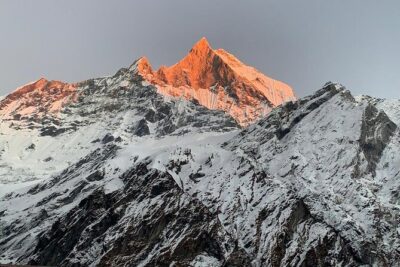
Kathmandu/Pokhara: 5-Day Annapurna Base Camp (ABC) Trek
Read our review →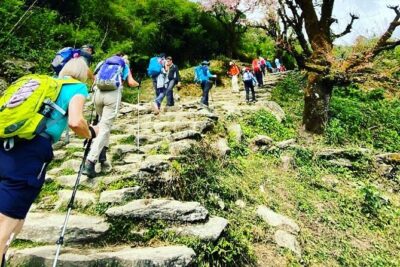
11-Day Hike Tour to Annapurna Base Camp Bliss in Kathmandu
Read our review →Browse the lists this tour appears in