
REVIEW · WALKING TOURS
Gentle walking tour of Royal palaces and old bazaars of Kathmandu
Palaces and bazaars tell Kathmandu’s story. This roughly four-hour private walk links Kathmandu Durbar Square, Indra Chowk, and Narayanhiti Palace Museum, giving you a clear look at both Nepal’s older royal world and its recent past. I like the route because it mixes grand courtyards with working city streets, and I like that a licensed English-speaking guide brings the history to life without turning the walk into a dry lecture.
The main drawback is that entrance fees are extra at Kathmandu Durbar Square and Narayanhiti Palace Museum. At $37.80 per person, the tour offers good value for a private guide, but you should budget beyond the advertised price if you plan to enter both palace sites.
In This Review
- Key points to know before booking
- What this Kathmandu walking tour is really about
- Kathmandu Durbar Square: royal power in courtyards and temples
- Indra Chowk: where the royal route meets daily commerce
- Narayanhiti Palace Museum: Nepal’s recent royal past
- How good is the guide likely to be?
- Is $37.80 per person a fair price?
- Walking, pickup, and the practical side of the day
- Who will get the most from this experience?
- Small drawbacks worth weighing
- Should you book the Royal Palaces and Old Bazaars tour?
- FAQ
- How long does the tour last?
- Is the tour private?
- Are entrance fees included?
- Is food or drink included?
- Is pickup available?
- Can I cancel for a full refund?
Key points to know before booking
- Three very different sights: You move from royal courtyards to an old trade junction and then to a former palace turned museum.
- A private four-hour walk: Only your group participates, so the experience is more personal than a large group tour.
- The guide is the heart of the tour: The strongest praise goes to the guide’s clear explanations and ability to keep the story interesting.
- Two admission fees are separate: Kathmandu Durbar Square and Narayanhiti Palace Museum require additional payment.
- Good city access: Pickup is offered, and the route is near public transportation.
- Best for curious walkers: Most people can participate, but you should be comfortable spending much of four hours on foot.
What this Kathmandu walking tour is really about
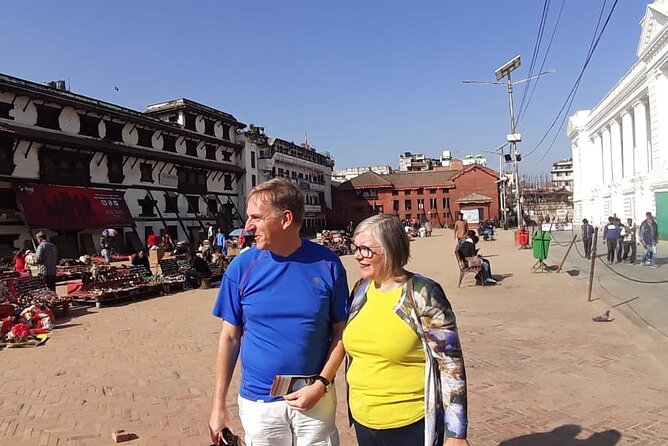
This experience is less about checking off three sights and more about seeing how Kathmandu’s royal, religious, and commercial life fit together. The route begins with the old royal center, passes through a historic market junction, and ends at the palace connected to Nepal’s modern political tragedy.
I like that contrast. Many city tours stay inside one period, but this one moves from ancient architecture to a palace used until the monarchy ended in Nepal. You get a useful timeline without needing a full day or a long ride between distant attractions.
The tour lasts about four hours. The listed stops account for roughly two hours and twenty minutes, leaving the rest of the time for walking, explanations, and movement between sites. That pacing should feel manageable for most people, though it is not a seated sightseeing trip. Wear practical shoes and expect the city itself to be part of the experience.
Because this is a private activity, your group will not be combined with strangers. That matters in Kathmandu, where narrow streets, crowded junctions, and busy public spaces can make it hard to hear a guide. You can also ask questions as you go instead of waiting for a large group to catch up.
More Walking Tours in Kathmandu
- Kathmandu Food and Drink Walking Tour
★ 5.0 · 266 reviews - Kathmandu: Food and Drink Walking Tour
★ 4.9 · 119 reviews - Walking Street Food Tour in Kathmandu
★ 5.0 · 111 reviews
Kathmandu Durbar Square: royal power in courtyards and temples
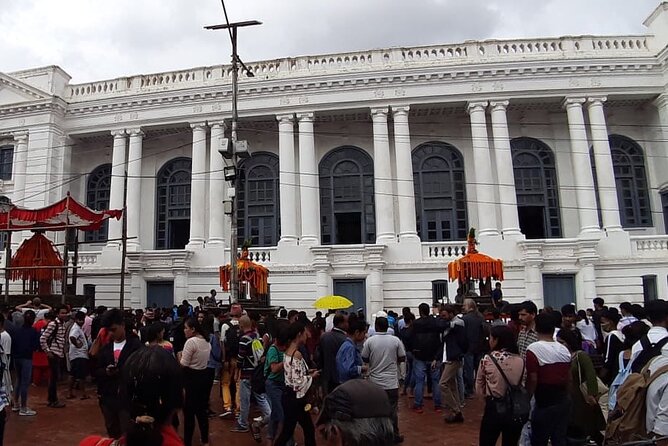
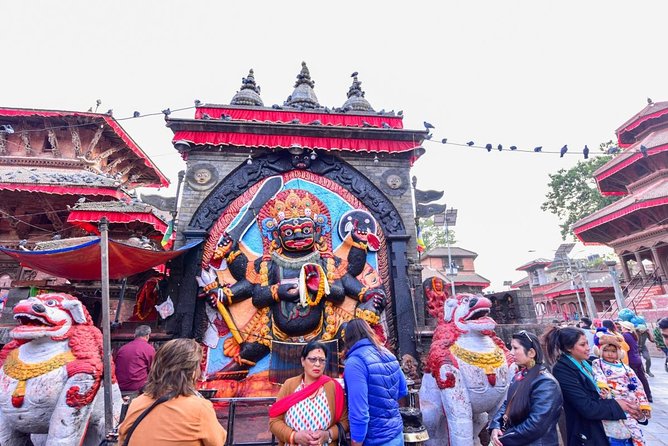
The first major stop is Kathmandu Durbar Square, the former palace area of Nepal’s Shah dynasty. This is the grandest part of the walk, with temples, courtyards, palace buildings, carved details, and works of traditional art gathered in one historic center.
Your guide’s role here is especially important. A palace square can look like a collection of beautiful buildings if you do not know what you are seeing. The guide can explain how the courtyards worked, why the temples mattered, and how the palace connected to Nepal’s royal past.
I would allow yourself time to look upward and around corners. The appeal is not only the largest temple or most impressive facade. The smaller details, layered architecture, and relationship between religious spaces and royal buildings help you understand how Kathmandu developed as a cultural center.
The stop lasts about one hour. That is long enough for an introduction and a focused walk, but not enough for every corner of the square. If you are deeply interested in architecture or Nepalese art, you may wish you had more time here. For a four-hour city tour, though, the limit keeps the day moving.
Admission is not included at this stop. That is the most important cost detail to remember before you book. The tour price covers the licensed English-speaking guide, not entry to the palace square.
Indra Chowk: where the royal route meets daily commerce
From the palace area, the tour continues to Indra Chowk, a famous junction that once served as a center for trade and art. The stop lasts about twenty minutes, so this is a brief visit rather than a long market exploration.
That short pause makes sense. Indra Chowk is valuable because it shows the city beyond palace walls. Here, the story shifts from rulers and courtyards to movement, trade, craft, and the public life of Kathmandu. You get a look at the kind of urban setting that helped make the old city an economic center.
I like this part of the route because it keeps the tour grounded. A palace can make history feel distant. A market junction brings it back to ordinary city life, even when you are mainly listening to an explanation rather than shopping.
Admission is included at Indra Chowk. Since the stop is short, do not expect an extended shopping session or a detailed food tour. The value is in the setting and the context. Listen closely as your guide connects the junction to the city’s past, then use your free time later if you want to return for a longer look.
Narayanhiti Palace Museum: Nepal’s recent royal past
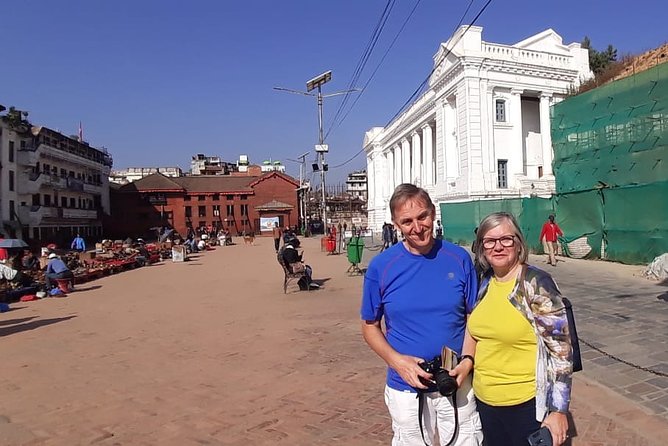
The final major stop is Narayanhiti Palace Museum, the former royal residence used until the fall of Nepal’s monarchy. Unlike Kathmandu Durbar Square, which belongs mainly to an older royal era, Narayanhiti helps explain the country’s more recent political story.
The palace combines newer and older Nepalese architectural styles. That makes it a useful counterpoint to the first stop. You are not simply seeing another palace with similar courtyards and decorations. You are comparing different periods of royal life and seeing how the country’s political center changed over time.
Narayanhiti is also connected to the royal massacre, a national tragedy that left Nepal in shock. This part of the visit deserves a respectful tone. The museum is not just a display of rooms and objects. It is tied to a painful event and to the end of a system that had shaped Nepal for generations.
The scheduled stop is about one hour. That gives you enough time for a serious introduction to the palace and its significance, though the exact depth of the visit will depend on how the guide organizes the hour and how much time is available inside.
Admission is not included here either. Add this fee to your budget before deciding how much the tour will cost in practice. Even with that extra expense, the museum adds real value because it gives the walk a modern historical finish rather than ending with ancient architecture alone.
A completely different way to spend the day:
- Everest Base Camp Trek – 14 Days
★ 5.0 · 1,499 reviews - Private Kathmandu Sightseeing Tour | UNESCO World Heritage sites
★ 5.0 · 756 reviews - Everest Base Camp Helicopter Tour landing at Everest View Hotel
★ 5.0 · 668 reviews - Half day cooking class in Thamel kathmandu
★ 5.0 · 607 reviews
How good is the guide likely to be?
The guide is the part of this experience that can make or break the day. The licensed English-speaking guide is not simply there to lead you from one address to another. The route depends on explanations, connections between sites, and answers to your questions.
The clearest praise for this experience focuses on a guide who explained the sights well and kept the subject interesting. That is exactly what you want in Kathmandu, where a short walk can pass through centuries of religious, royal, and commercial history.
I would use the private format to your advantage. Ask about the difference between the two palaces, the role of Indra Chowk, or the changes that followed the end of the monarchy. Since your group is traveling on its own, you should have more freedom to pause for clarification than you would on a large scheduled walk.
No guide name is provided, so you cannot request a particular person based on the available information. Still, the guide’s language ability and licensing offer useful reassurance, especially if this is your first visit to Kathmandu and you want historical context rather than a simple procession between landmarks.
Is $37.80 per person a fair price?
At $37.80 per person, this tour is priced for a guided private experience rather than a basic self-guided walk. The fee includes a licensed English-speaking guide, and only your group participates. That private setup is the main reason the price can make sense.
You are paying for interpretation and convenience, not for a package that includes every cost. Entrance fees are separate at Kathmandu Durbar Square and Narayanhiti Palace Museum, and food and drinks are also excluded. Pickup is offered, but the supplied details do not say that transportation costs or private vehicle service are included, so confirm the pickup arrangement when booking.
Group discounts are available. That may improve the value if you are traveling with family or friends, though the exact discount is not specified. For a solo participant, the per-person rate is naturally less attractive than it may be for a small private group.
I would compare the price with your priorities. If you only want directions and a few facts, you can explore parts of the old city on your own. If you want a guide to connect the royal sites, explain the cultural setting, and help you make sense of a complicated past, the private format gives the fee a stronger purpose.
Walking, pickup, and the practical side of the day
The experience is designed as a gentle walking tour, but gentle does not mean entirely effortless. You will spend about four hours moving through historic parts of Kathmandu, with the city streets forming part of the experience between the formal stops.
Most people can participate, and the tour is near public transportation. Pickup is offered, which can simplify the start of the day, especially if you are still learning your way around Kathmandu. The exact pickup details are not provided, so check the meeting arrangement carefully after booking.
Mobile tickets are available, making the booking simple to keep on your phone. Confirmation is received at the time of booking, another useful feature if you are arranging several activities around a short stay.
Bring water, wear shoes that you can comfortably walk in, and keep your schedule flexible enough for the full four hours. Food and drinks are not included, so plan those separately. You may also want to carry small personal essentials without expecting the tour itself to provide refreshments.
The route is private, but it is not described as wheelchair accessible or suited to every mobility level. The information says most people can participate. If you have specific mobility needs, ask the provider before booking rather than assuming that gentle walking means step-free access.
Who will get the most from this experience?
I would recommend this tour to a first-time visitor who wants a strong introduction to Kathmandu’s old center without committing to a full-day program. The route gives you royal architecture, a historic commercial junction, and a former palace with recent political importance.
It also suits anyone who prefers a guide’s explanation to reading signs or wandering without a clear plan. The best part of the tour is the connection between places. You are not only seeing buildings, you are learning how royal authority, trade, art, and national memory shaped the city.
History-minded visitors should especially appreciate the final stop at Narayanhiti Palace Museum. People interested only in temples or photography may find the museum’s political subject matter less appealing, but it gives the route a wider scope.
Families and small groups can benefit from the private format and possible group discount. The tour may be less suitable if you want a relaxed cafe break, a food-focused outing, or a long shopping session. The schedule is built around cultural sights and guided walking.
Small drawbacks worth weighing
The biggest issue is the extra admission cost. The advertised price is not the full amount if you plan to enter both ticketed palace sites. You should also remember that food and drinks are excluded.
The stop at Indra Chowk is only twenty minutes. That is enough to understand its place in Kathmandu’s story, but not enough to explore the junction at leisure. If markets are your main interest, you may want to return independently.
The tour also covers serious material, including the royal massacre and the end of the monarchy. That is valuable context, but it may feel heavy compared with a tour focused only on temples and pretty streets.
Finally, the available feedback is limited, so there is little information about how the tour handles unusual weather, exact pickup timing, or specific accessibility needs. Those details are worth confirming directly.
Should you book the Royal Palaces and Old Bazaars tour?
Book this tour if you want a private, guide-led introduction to Kathmandu’s royal and commercial past in about four hours. The route is well chosen, the guide receives strong praise for keeping the history engaging, and the contrast between Kathmandu Durbar Square and Narayanhiti Palace Museum gives you more than a single-period sightseeing walk.
Skip it if you want entrance fees, meals, or extensive market time included in the price. You should also look elsewhere if you prefer a completely self-guided outing or have mobility needs that require confirmed step-free access.
For most first-time visitors, the tour offers a useful balance of structure and local context. Just budget for the two separate admission fees, wear comfortable shoes, and treat the private guide as the main value of the experience.
FAQ
How long does the tour last?
The tour lasts approximately four hours.
Is the tour private?
Yes. Only your group participates in the activity.
Are entrance fees included?
Entrance fees are not included for Kathmandu Durbar Square or Narayanhiti Palace Museum. Admission at Indra Chowk is included.
Is food or drink included?
No. All food and drinks are separate.
Is pickup available?
Yes, pickup is offered. The tour is also near public transportation.
Can I cancel for a full refund?
Yes. You can cancel at least 24 hours before the experience start time for a full refund. Cancellations made within 24 hours are not refunded, and changes within that period are not accepted.
New in the Kathmandu listings
- Traditional Momo Making Class★ 5.0 · 10 reviews
- Kathmandu: Ancient City Kirtipur & Pharping Monastery Tour★ 5.0 · 2 reviews
- Kathmandu to Pokhara Premium sofa bus ticket★ 4.0 · 17 reviews
- Women Empowerment Project(Nepali cooking class & jewelry workshop★ 5.0 · 15 reviews
- 7-Day Langtang Valley Trek from Kathmandu★ 5.0 · 1 review
- Kathmandu 2 Nights 3 Days Chitwan Jungle Safari Tour★ 5.0 · 9 reviews
- Yoga Experience Day Trip with Private Transfer From Kathmandu★ 4.0 · 2 reviews
- Wildlife Adventure in Chitwan Nepal★ 4.0 · 4 reviews
Walking Tours, compared.


Walking Food Tour in Hidden Local Eateries of Kathmandu
Read our review →
Old Kathmandu Walking Tour, Historic World Heritage Durbar Square
Read our review →
Browse the lists this tour appears in