REVIEW · KATHMANDU TOURS
Gurkha Knife Making
Metal, fire, and a real keepsake. This four-hour Gurkha knife-making experience gives you a hands-on look at the kukri, the famous curved blade linked with Nepal’s Gurkha soldiers, while letting you help make one yourself. I like the small group size, limited to four people, and I like that you leave with a useful object rather than a quick craft-shop trinket. The possible drawback is that this is an early morning activity, with sessions listed between 7:15 AM and 10:15 AM, so it may not suit late starters.
I also like the personal touches: you can use Indian rosewood for the handle and stamp your initials onto the blade. The hosts add tea and cookies, and guides such as Aachal and Aayam have been praised for keeping the mood relaxed and friendly. Just remember that this is a working forge, not a polished museum visit. You are there to take part in metalwork, and the setting may feel simple and local.
In This Review
- Key points at a glance
- Why the kukri makes a better souvenir than another statue
- Meeting at Garden of Dreams
- The first stage: meet the guide and hear the story
- Inside the small forge
- Shaping the handle with Indian rosewood
- Stamping your initials on the blade
- Tea, cookies, and an easygoing pace
- What the $66 price gives you
- Who will enjoy this most
- Booking, timing, and cancellation advice
- My verdict on this Kathmandu craft experience
- FAQ
- Where does the Gurkha Knife Making experience begin?
- Where does the experience end?
- How long does the experience last?
- What time is the activity available?
- How many people can join?
- Is pickup available?
- What will I make during the activity?
- Does the knife come with a guarantee?
- Can I cancel for a full refund?
Key points at a glance
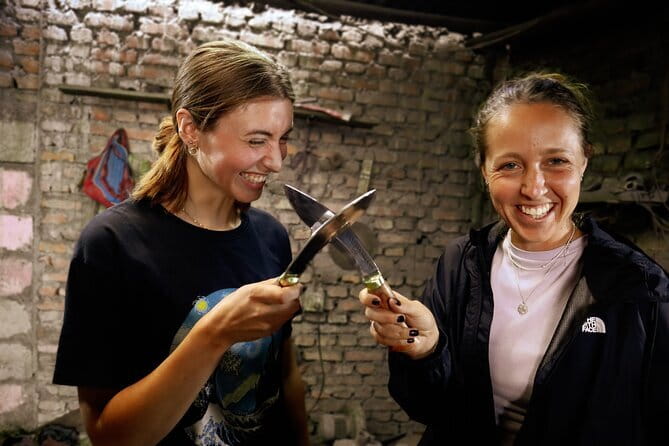
- Make a real Gurkha kukri: You take part in the process of creating your own knife rather than simply buying one.
- Small groups of up to four: This gives the blacksmith more time to guide each person.
- Work with a local craftsman: Indra, the knife maker named by several participants, is praised for his skill and patient teaching.
- Add a personal mark: The handle uses Indian rosewood, and you can stamp your initials onto the blade.
- A practical Kathmandu souvenir: Each knife comes with a 100-year guarantee, according to the supplied details.
- Easy morning meeting point: The experience begins at Garden of Dreams on Tridevi Sadak and finishes back there.
Why the kukri makes a better souvenir than another statue
Kathmandu is full of things you can buy and carry home. Many are attractive, but they can blur together after a few days of shopping. Making a kukri gives you a story to carry with the object.
The Gurkha knife is tied to the history and reputation of Nepal’s Gurkha warriors. Its curved form is instantly recognizable, and the experience gives you some context about the blade’s origins, strength, and place in stories of resistance. You are not simply handed a finished knife with a short sales pitch. You spend time seeing how a local smith works and help shape an item connected with Nepal.
That personal involvement matters. You will remember the small forge, the people who helped you, the feel of the rosewood handle, and the moment you stamp your initials. The finished kukri becomes a souvenir with a clear beginning, not just something picked up during a hurried walk through Thamel.
The experience also supports a local craft tradition. The knife maker works with an apprentice or family member, according to the information supplied, and the atmosphere is described as warm and welcoming. There is also a social purpose here, since Queermandu, the provider, presents the activity as part of its work supporting Nepal’s queer community.
A short list of alternatives around Kathmandu
- Everest Base Camp Trek – 14 Days
★ 5.0 · 1,499 reviews - Private Kathmandu Sightseeing Tour | UNESCO World Heritage sites
★ 5.0 · 756 reviews - Everest Base Camp Helicopter Tour landing at Everest View Hotel
★ 5.0 · 668 reviews
Meeting at Garden of Dreams
Your meeting point is Garden of Dreams, at Tridevi Sadak, Kathmandu 44600. Pickup is offered, so check the exact arrangements when you book, but the listed starting point gives you a clear place to begin.
This is a sensible meeting location in central Kathmandu. Garden of Dreams is easy to recognize, and starting there lets you get organized before heading to the forge. The activity ends back at the meeting point, which keeps the morning simple. You do not need to arrange a second way back from an unknown neighborhood.
The schedule is the main practical detail to note. The listed hours are Monday through Sunday, from 7:15 AM to 10:15 AM, while the experience lasts about four hours. Because the time window and duration do not line up perfectly on paper, confirm the exact start time with the provider. You should plan for a morning appointment and avoid booking something tight immediately afterward.
A mobile ticket is offered, and confirmation is sent at booking. That makes the arrangement easy, especially if your Kathmandu plans are changing from day to day.
The first stage: meet the guide and hear the story
The experience begins with an introduction to the Gurkha knife and the people associated with it. This part gives the hands-on work some meaning. You learn why the kukri is famous and hear stories linked with Gurkha soldiers before getting involved with the making process.
The guide plays an important role here. Aayam is praised for being funny and attentive, while Aachal is described as friendly, patient, and helpful with questions. One person also singled out the guide who translated between the visitor and the knife maker. That detail matters because a good interpreter can turn a technical demonstration into a conversation.
Do not expect a long academic lecture. The useful point is the connection between the blade, local craft, and Gurkha identity. The storytelling helps you understand why a hand-forged knife carries more meaning than a generic souvenir.
The provider also aims to create an inclusive setting. One person specifically valued the chance to support Nepal’s queer community while taking part in the activity. If you prefer experiences that connect sightseeing with local social enterprise, this adds another reason to consider it.
Inside the small forge
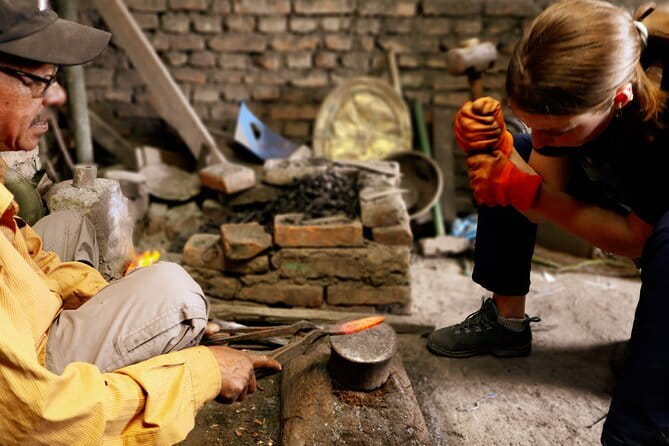
The forge is described as small, local, and active. That is part of the appeal. You are not watching a large production line with identical knives moving past you. You are working alongside a long-time knife maker in a setting where the craftsperson’s hands and judgment remain central.
The supplied accounts describe making the knife from scrap metal. Seeing that material become a finished, high-quality blade is one of the strongest parts of the morning. The process shows how much skill goes into shaping, balancing, and finishing a knife, even when the raw material looks ordinary.
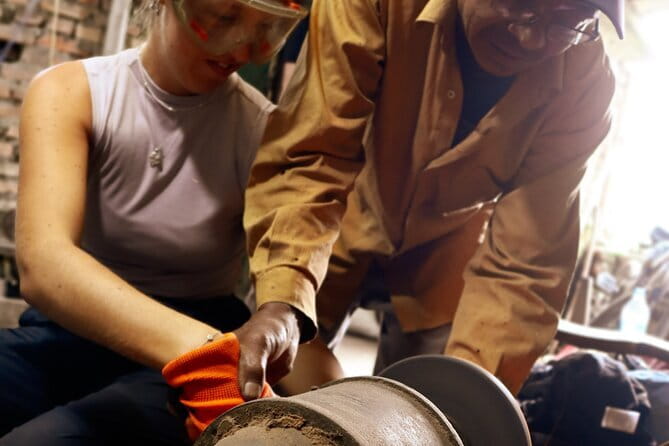
You should expect to help with the knife-making process under instruction. The exact amount of work may depend on the group and the blacksmith, but the experience is designed as active participation rather than a demonstration only. The teacher guides you while handling the parts that require greater skill.
That distinction is important. You are not signing up for a professional blacksmithing course, and four hours is not enough to master knife making. You are getting a carefully guided introduction, with the chance to contribute to a real object. The master’s involvement is a strength, not a weakness. It helps protect the quality of the final knife.
The group limit of four makes a real difference. With only a few people present, you have more opportunity to ask questions and take part. A larger class could turn this into a viewing exercise, but the small format should feel more personal.
A completely different way to spend the day:
- Half day cooking class in Thamel kathmandu
★ 5.0 · 607 reviews - Everest Base Camp Trekking
★ 5.0 · 485 reviews - Nagarkot Sunrise View and Day Hiking from Kathmandu
★ 5.0 · 471 reviews - Kathmandu: Full Day 7 UNESCO Tour with Lunch – Private/Group
★ 5.0 · 415 reviews
Shaping the handle with Indian rosewood
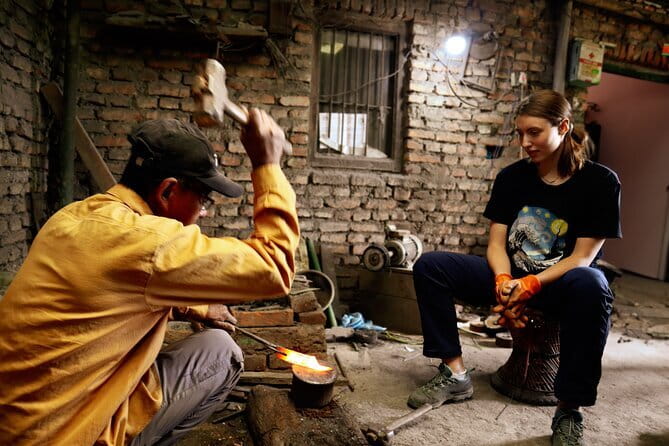
The handle is made with quality Indian rosewood. This gives the finished knife a warmer, more distinctive feel than a plain industrial handle.
The handle stage is where the kukri starts to feel like your own. The blade connects the piece with Gurkha tradition, while the wood adds the personal and tactile side. You can expect the blacksmith and guide to help you understand how the handle fits into the final knife, though the supplied details do not specify every tool or step used.
Rosewood also gives the finished item a clear visual character. It is not just a blade wrapped for transport. The handle helps make the knife a display piece as well as a practical souvenir.
The quality claim should still be read sensibly. A 100-year guarantee is a strong promise from the maker, but you should ask what the guarantee covers before booking if long-term warranty terms matter to you. The supplied information confirms the guarantee, but it does not list the exact conditions.
Stamping your initials on the blade
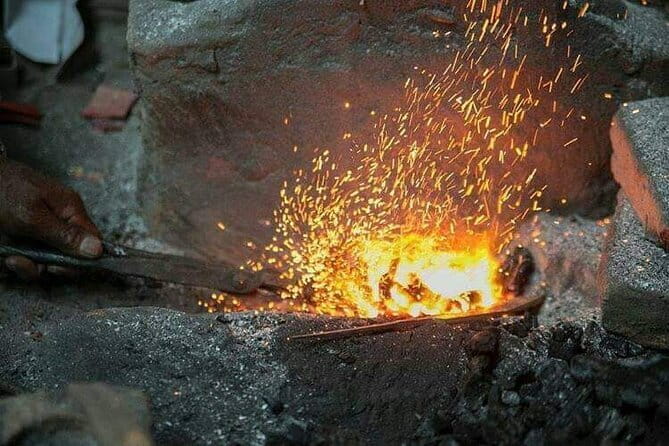
Near the end, you can stamp your initials onto the blade. This is a small feature, but it may be the moment that turns a handmade knife into a personal memento.
A name or set of initials gives you an easy way to identify the piece later. It also marks your role in the process. You did not choose a finished item from a shelf. You helped create it and left a permanent sign that connects it to your time in Kathmandu.
This step may also be the most appealing part for families, couples, and friends who want matching or related souvenirs. The group size is small enough that each person can make an individual choice, rather than receiving a mass-produced object.
The blade remains a knife, so treat it as a serious item during the rest of your trip. The information supplied does not explain packing, airline, or customs rules. You should check those requirements yourself before flying home, especially if you plan to place the kukri in checked baggage.
Tea, cookies, and an easygoing pace
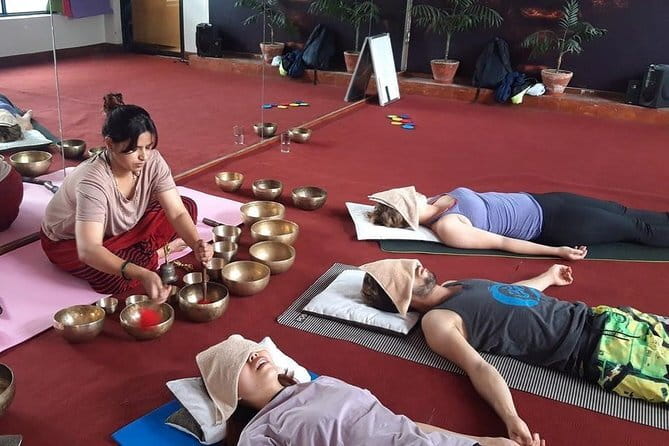
Tea and cookies are included while you work. This sounds minor, but it helps set the tone. Blacksmithing can be unfamiliar and a little intimidating, particularly if you have never worked around a forge. A cup of tea and a relaxed break make the session feel more like a friendly workshop than a test.
The atmosphere is repeatedly described as fun, welcoming, and supportive. The hosts are praised for being affable, and the guide is credited with keeping the morning light. That matters because hands-on activities work best when you can ask basic questions without feeling foolish.
You should still expect the setting to be practical rather than luxurious. This is a small working forge, not a spa or a formal cooking school. The charm comes from the direct contact with the craft and the people doing it. If you want polished facilities and a highly staged presentation, this may feel too simple.
If you enjoy learning by doing, the simple setting is an advantage. You see the craft close up, hear explanations as the work happens, and can watch the relationship between the knife maker and apprentice. It feels connected to daily skill and local work, not just to tourism.
What the $66 price gives you
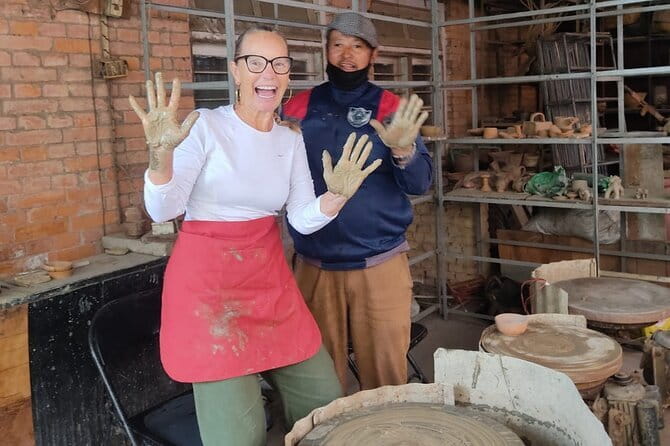
At $66 per person, this is not the cheapest way to spend a morning in Kathmandu. You could buy a ready-made souvenir for much less. The value comes from the four-hour instruction, the small group, the personal making process, the finished knife, and the story attached to it.
I consider the price reasonable for someone who truly wants a handmade kukri and a meaningful activity. The final object is included in the experience, and it comes with a stated 100-year guarantee. You are also paying for time with a skilled blacksmith and a guide who helps explain the work.
The value is less convincing if you only want a knife. In that case, shopping for one may be faster and cheaper. This experience makes sense when you want the memory of helping produce it.
The four-person limit strengthens the price. Personal instruction is hard to provide in a large class. Here, the group remains small enough for the blacksmith to give direct attention, although the exact amount of individual work can vary.
Who will enjoy this most
I would recommend this to people who like practical cultural activities. It suits anyone curious about metalwork, knife design, Nepal’s Gurkha connection, or traditional craft.
It is also a good choice if you prefer a souvenir with a story. The initials on the blade and the rosewood handle give the finished kukri a personal edge. Couples and friends may enjoy making their knives during the same session, while solo participants should still have company because the group can include up to four people.
The activity may appeal especially to people looking for an LGBTQ-friendly experience in Kathmandu. Queermandu is the provider, and the activity has been presented as a way to support the local queer community.
You should think twice if you dislike early starts, working in a forge, or spending several hours on one object. This is not a quick photo stop. The craft is the point, and the pace is likely to feel slower than a standard city tour.
Most people can participate, according to the supplied information, but the activity involves practical work in a forge. If you have specific mobility, sensory, or other access needs, contact the provider before booking so you can confirm that the setting will work for you.
Booking, timing, and cancellation advice
The activity is commonly booked about nine days ahead, so I would reserve it before arriving if it is important to your Kathmandu schedule. Confirmation comes at the time of booking, and you receive a mobile ticket.
Free cancellation is available when you cancel at least 24 hours before the start time. Cancellations made within 24 hours are not refunded, and changes inside that window are not accepted. The cut-off follows Kathmandu local time, so keep that in mind if you are booking from another country.
Because pickup is offered but the meeting point is also listed at Garden of Dreams, check the exact pickup instructions. You want to know whether you should wait at the garden or expect collection elsewhere.
My verdict on this Kathmandu craft experience
Book the Gurkha Knife Making experience if you want more than a souvenir purchase. The best parts are the small group, the direct help from a skilled local smith, the chance to work with scrap metal, the Indian rosewood handle, and the initials stamped on your blade.
The $66 price makes sense when you count the four-hour activity and the finished kukri. It is less suitable for anyone who wants a low-cost shopping stop or a polished attraction with formal facilities.
For an early morning in Kathmandu, this offers a memorable change of pace. You learn about Gurkha knife traditions, meet friendly local hosts, and leave with an object you helped make. That is a strong combination, provided you are comfortable with the early schedule and the practical nature of a small forge.
FAQ
Where does the Gurkha Knife Making experience begin?
It begins at Garden of Dreams, Tridevi Sadak, Kathmandu 44600, Nepal.
Where does the experience end?
The activity ends back at the meeting point.
How long does the experience last?
The session lasts approximately four hours.
What time is the activity available?
The listed opening hours are Monday through Sunday, from 7:15 AM to 10:15 AM, for dates from March 22, 2024, through December 15, 2026. Confirm the exact start time when booking because the stated duration is about four hours.
How many people can join?
The activity has a maximum of four participants.
Is pickup available?
Yes. Pickup is offered, although Garden of Dreams is also listed as the meeting point.
What will I make during the activity?
You will take part in making an authentic Gurkha knife, also called a kukri. The supplied details state that you can use Indian rosewood for the handle and stamp your initials on the blade.
Does the knife come with a guarantee?
Yes. Each knife is backed by a 100-year guarantee. The specific terms of that guarantee are not provided, so ask the provider if you need details.
Can I cancel for a full refund?
Yes, if you cancel at least 24 hours before the experience starts. Cancellations made less than 24 hours before the start time are not refunded, and changes within that period are not accepted.
New in the Kathmandu listings
- Traditional Momo Making Class★ 5.0 · 10 reviews
- Kathmandu: Ancient City Kirtipur & Pharping Monastery Tour★ 5.0 · 2 reviews
- Kathmandu to Pokhara Premium sofa bus ticket★ 4.0 · 17 reviews
- Women Empowerment Project(Nepali cooking class & jewelry workshop★ 5.0 · 15 reviews
- 7-Day Langtang Valley Trek from Kathmandu★ 5.0 · 1 review
- Kathmandu 2 Nights 3 Days Chitwan Jungle Safari Tour★ 5.0 · 9 reviews
- Yoga Experience Day Trip with Private Transfer From Kathmandu★ 4.0 · 2 reviews
- Wildlife Adventure in Chitwan Nepal★ 4.0 · 4 reviews
Kathmandu Tours, compared.

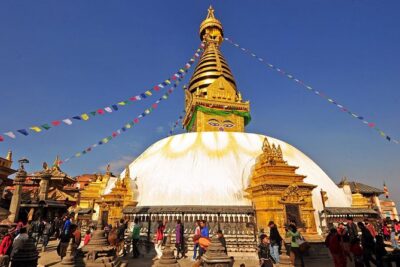
Private Kathmandu Sightseeing Tour | UNESCO World Heritage sites
Read our review →
Everest Base Camp Helicopter Tour landing at Everest View Hotel
Read our review →
Nagarkot Sunrise View and Day Hiking from Kathmandu
Read our review →
Full Day 7 UNESCO Tour with Lunch – Private/Group
Read our review →