
REVIEW · WALKING TOURS
Kathmandu: Guided Walking Tour of Thamel Neighborhood
Kathmandu rewards curious walkers. This four-hour private tour links Thamel, Kathmandu Durbar Square, and Swayambhunath Stupa, giving you temples, old palaces, street life, and wide views in one outing. I like the clear route: you begin in the city’s busy tourist quarter, move into its historic core, then finish at the hilltop Monkey Temple.
I also like the personal scale of a private group and the chance to ask questions as you go. Guide Eka Dev Bashyal has been praised for excellent English, broad knowledge of Nepal’s history, current affairs, and major religions, plus a considerate pace with regular short rests. The main drawback is physical: four hours on foot, including steps up to the stupa, will not suit everyone, and monument tickets cost about $18 extra.
In This Review
- Key points to know before you book
- What this Kathmandu walking tour really covers
- Starting among the shops and cafés of Thamel
- Kathmandu Durbar Square and its carved wooden details
- Walking between the monuments
- Swayambhunath Stupa and the climb to the Monkey Temple
- What the guide adds to the experience
- Is $25 good value after the extra fees?
- Who should take this walking tour?
- Practical advice for a smoother four hours
- Should you book this Kathmandu tour?
- FAQ
- How long does the Kathmandu walking tour last?
- What places are included on the route?
- Is the tour private?
- Which languages are available?
- Are monument entrance fees included?
- Does hotel pickup and drop-off come with the tour?
- What should I bring?
Key points to know before you book
- Three very different sides of Kathmandu: You move from Thamel’s shops and eateries to royal courtyards, then to a hilltop Buddhist shrine.
- A private four-hour walk: You get a guide for your own group rather than joining a large crowd.
- Kathmandu Durbar Square is the historical centerpiece: Expect ancient palaces, temples, and finely carved Newari woodwork.
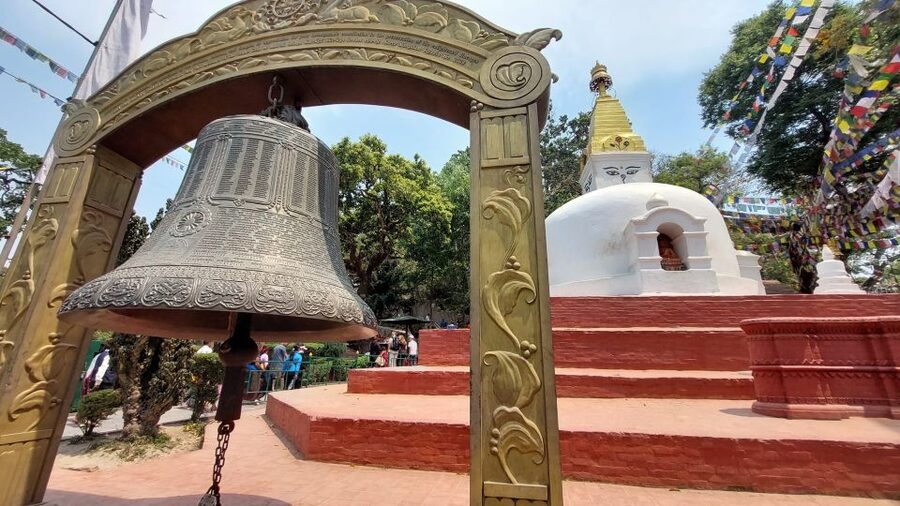
- Swayambhunath requires an uphill climb: Prayer flags, Buddha’s painted eyes, monkeys, and valley views reward the effort.
- Budget beyond the $25 tour price: Monument entrance fees are approximately $18 per person and are not included.
- Best for reasonably fit walkers: Comfortable shoes, a daypack, and light clothing are essential.
What this Kathmandu walking tour really covers
At $25 per person, this tour offers a useful introduction to central Kathmandu, especially if you have only a short time in the city. You are not simply driven between famous sights. The route connects them on foot, letting you notice the changes in architecture, street activity, and religious life along the way.
The tour lasts four hours and is offered as a private group experience. That matters in Kathmandu, where a question about a temple, a carved window, or a religious practice can quickly lead to a much better understanding of what you are seeing. You can ask for clarification, pause for a short rest, and set a more comfortable pace than you might manage in a large group.
The advertised cost is $25 per person, but remember the separate monument fees of about $18. That brings the practical sightseeing budget to roughly $43 per person before anything else you buy. For a private guide, hotel pickup, bottled water, and a focused introduction to three important parts of the city, that can be fair value.
Still, the value depends on what you want. If you prefer to wander without a plan, the organized route may feel a little structured. If you want context and help finding your way through Kathmandu’s busy streets, it is more useful.
More Walking Tours in Kathmandu
- Kathmandu Food and Drink Walking Tour
★ 5.0 · 266 reviews - Kathmandu: Food and Drink Walking Tour
★ 4.9 · 119 reviews - Walking Street Food Tour in Kathmandu
★ 5.0 · 111 reviews
Starting among the shops and cafés of Thamel
The meeting point is in Thamel, Kathmandu’s main visitor district. This is a practical place to begin because it puts you close to shops, restaurants, markets, and many hotels. The guide picks you up at your hotel in the Thamel area, and you should wait in the lobby about 10 minutes before the scheduled time.
Thamel is not the quietest part of Kathmandu. Its streets have a constant flow of pedestrians and local activity, with the kind of visual clutter that makes a guided walk worthwhile. You may see traditional details beside modern businesses, and the contrast helps explain how Kathmandu serves both local life and international visitors.
I like starting here because the tour does not pretend Kathmandu is a museum. You begin amid the active city, then gradually move toward its older monuments. That transition gives the day a natural rhythm.
Your guide can also help you get oriented. Kathmandu is easy to enjoy but not always easy to read at first. A local guide can point out what matters, explain religious customs, and put unfamiliar buildings into a larger Nepali context.
Kathmandu Durbar Square and its carved wooden details
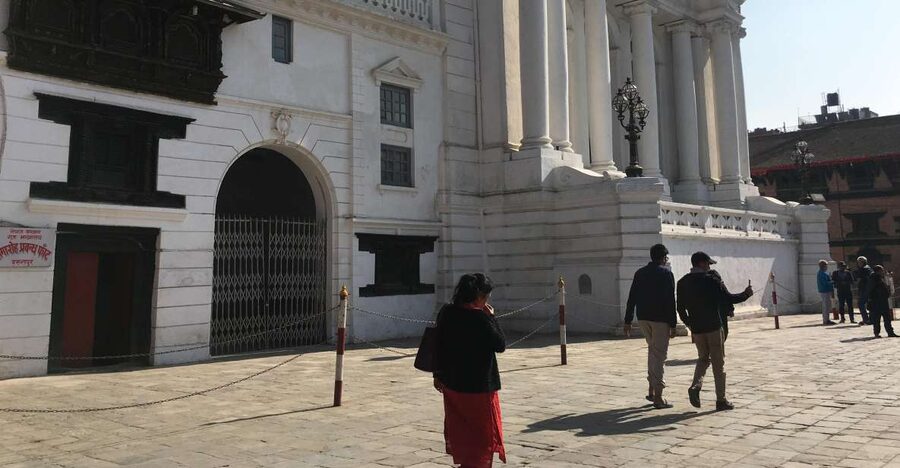
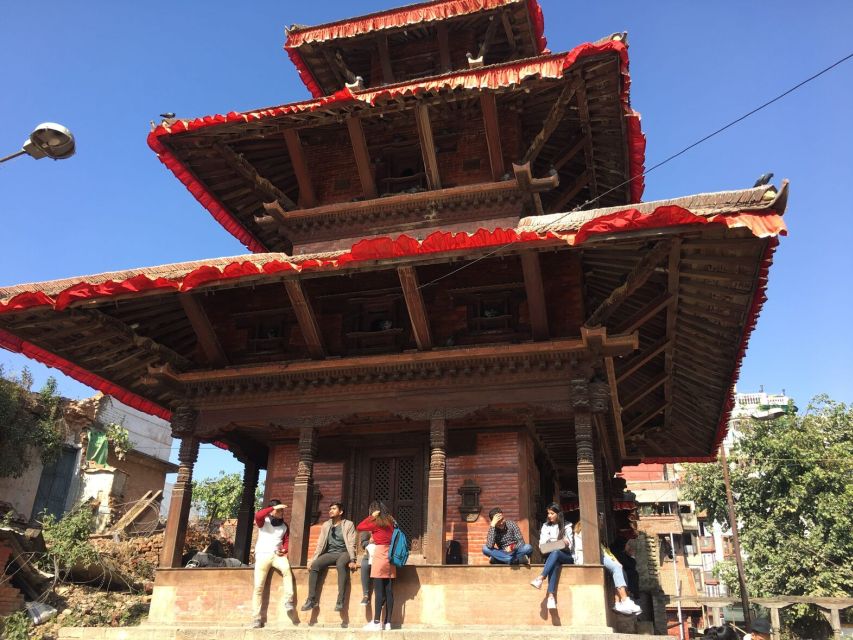
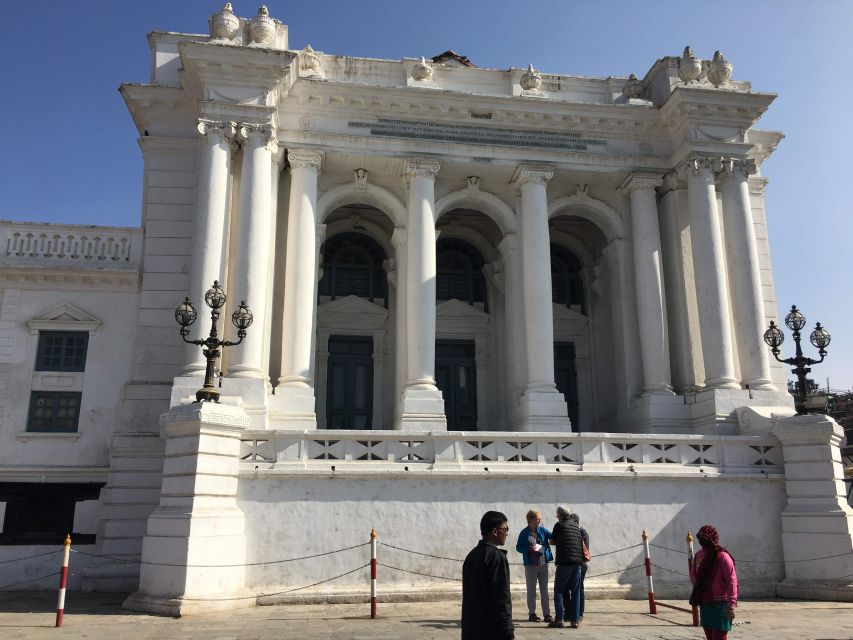
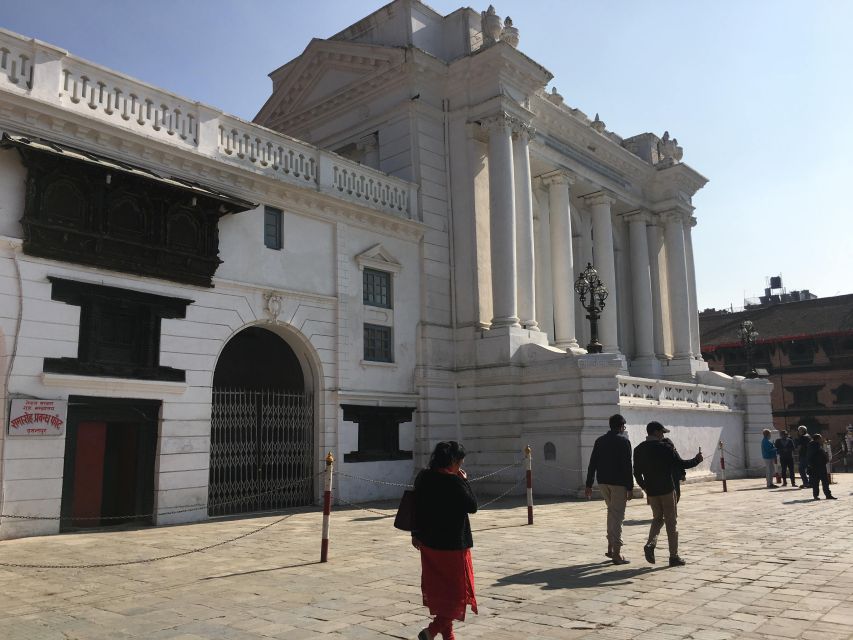
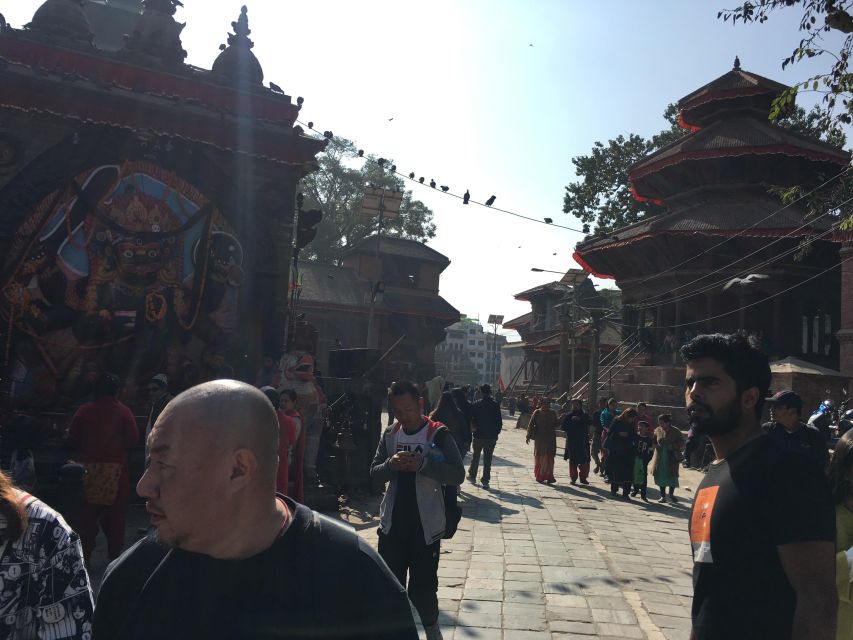
Kathmandu Durbar Square is the first major stop. This historic square contains ancient palaces, temples, and wooden architecture, making it the strongest place on the tour for seeing Kathmandu’s royal and religious past gathered in one area.
Do not rush this stop. Look upward at the carved windows and doorways. The wooden details are not background decoration. They are part of the artistic language of the Kathmandu Valley, and your guide can explain the stories and cultural meaning connected to the structures.
The square also helps you understand the close relationship between government, worship, and daily life in older Kathmandu. Palaces and temples share the same space, so the setting feels less like a single monument and more like a working center of culture.
You should expect entrance charges here and at the other monument areas. Approximately $18 per person is not included in the tour price, so keep extra money available. Since the exact amount can depend on the sites covered and current local charges, confirm the fee when booking.
A guide is especially useful at Durbar Square because many buildings can look similar if you do not know what to look for. The value comes from the explanation: why a temple has a certain form, what the carvings represent, and how Nepal’s major religions have shaped the city.
Walking between the monuments
The route continues through Kathmandu’s streets rather than shifting immediately to a vehicle. This is one of the better features of the experience. Walking gives you time to notice traditional Newari architecture, street scenes, and the small details between the headline attractions.
I prefer this kind of connection when visiting a city because the spaces between sights often tell you as much as the sights themselves. You can see how old architectural forms sit beside modern Kathmandu, and you have a chance to interact with local people along the way.
The walk may feel more demanding than the itinerary sounds. Four hours is a long time to be on your feet, particularly in warm weather or after a flight. The operator recommends comfortable shoes, hiking shoes, comfortable clothes, and a daypack. Those suggestions are practical rather than decorative.
The supplied information does not give a precise distance or specify how much of the route is uphill before Swayambhunath. I would plan for a full walking outing, not a gentle neighborhood stroll. Bring water, although mineral water is included, and avoid carrying large bags or suitcases.
One useful detail is the guide’s pace. Eka Dev Bashyal has been praised for allowing short rests and adjusting the day’s rhythm sensibly. That is important here. A good walking guide should help you see more without turning the tour into a race.
A completely different way to spend the day:
- Everest Base Camp Trek – 14 Days
★ 5.0 · 1,499 reviews - Private Kathmandu Sightseeing Tour | UNESCO World Heritage sites
★ 5.0 · 756 reviews - Everest Base Camp Helicopter Tour landing at Everest View Hotel
★ 5.0 · 668 reviews - Half day cooking class in Thamel kathmandu
★ 5.0 · 607 reviews
Swayambhunath Stupa and the climb to the Monkey Temple
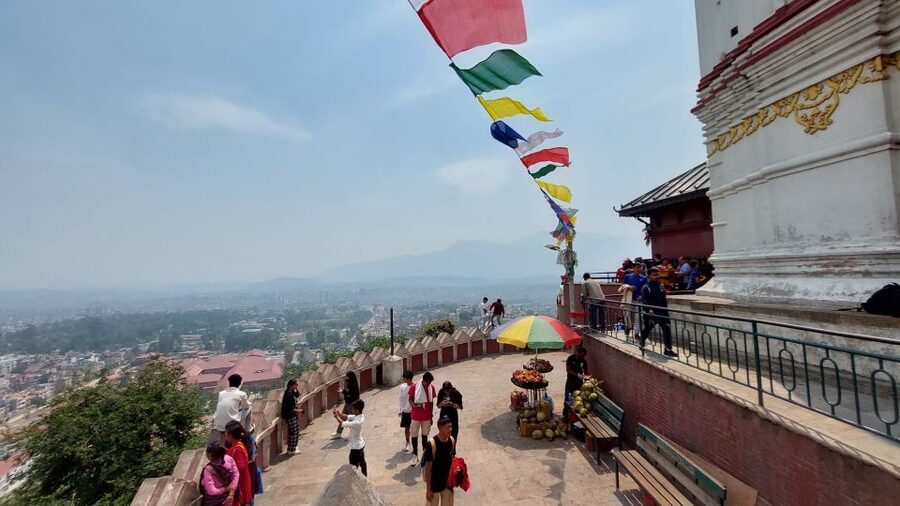
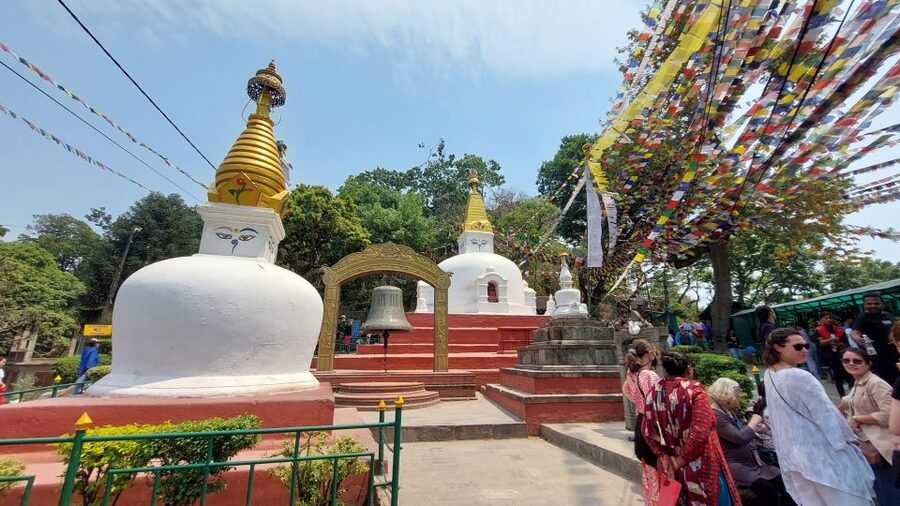
The final major stop is Swayambhunath Stupa, also called the Monkey Temple. It sits on a hill, reached by steps decorated with colorful prayer flags. The climb is part of the experience, but it is also the point where the tour becomes physically challenging.
At the top, the stupa is known for the Buddha’s painted eyes. The site has a clear spiritual character, and the prayer flags add movement and color around the shrine. Monkeys live in the area, which explains the familiar nickname, though you should treat them as wild animals and keep your belongings secure.
The hilltop setting gives you panoramic views over the Kathmandu Valley. After the streets and courtyards below, the open outlook offers a welcome change. It is a good place to pause, take photographs, and think about how the city’s religious sites sit within the wider valley.
The climb means this stop is not suitable for pregnant women, wheelchair users, or people with mobility impairments, according to the activity information. Even if you are generally active, take the steps at your own pace. Hiking shoes or sturdy walking shoes are a sensible choice.
Swayambhunath also adds balance to the route. Kathmandu Durbar Square focuses more on royal architecture and carved buildings. The stupa brings Buddhist worship, prayer flags, religious symbols, and a hilltop setting into the same four-hour picture of the city.
What the guide adds to the experience
A walking tour rises or falls on the guide. The route itself is worthwhile, but the guide determines whether you simply see old buildings or understand why they matter.
Eka Dev Bashyal is specifically noted for clear spoken and written English, along with strong knowledge of Nepal’s history, present-day affairs, and major religions. Those are useful strengths for this route because it moves across several subjects rather than focusing on one monument.
You can also choose a guide who speaks Hindi. English and Hindi are the listed tour languages. If your group has particular interests, such as architecture, religion, or modern Nepal, ask about that when arranging the tour.
The private format should make questions easier. You do not have to wait for a large group to catch up or worry about interrupting a fixed presentation. The guide can spend more time on the places that interest you and shorten explanations where you are ready to move on.
The best guide behavior is often simple: clear explanations, a manageable pace, and attention to rest. That is exactly the kind of support you want on a walking route with historic sites and an uphill finish.
Is $25 good value after the extra fees?
The base price is appealing, but the separate entrance fees change the calculation. At about $18, the monument charges represent a large addition to the advertised $25. You should compare the total cost, not just the headline price.
Even so, the package includes an experienced guide, mineral water, private group service, and pickup from a hotel in the Thamel area. You also finish with a drop-off at your Thamel hotel, which saves you the trouble of finding your own way back after the climb and city walk.
For a first day in Kathmandu, the tour can be good value because it combines orientation with major cultural sights. You receive more than transportation and admission. You get someone who can explain what you are seeing and help connect the locations.
For repeat visitors who already know the square and stupa, the value may be lower. In that case, you might prefer spending the same time exploring independently or focusing on a narrower subject.
The reserve-now, pay-later option may help if your schedule is still changing. Free cancellation is available up to 24 hours before the start for a full refund. These terms make it easier to keep the tour in your plans without committing too early.
Who should take this walking tour?
I would recommend it most strongly to first-time visitors who want a structured introduction to Kathmandu without joining a large group. It also suits solo visitors and couples who want a guide’s attention and the freedom to ask plenty of questions.
It is a good match if you enjoy architecture, religion, photography, and walking through a city rather than viewing it through a vehicle window. The combination of carved Newari buildings, temples, prayer flags, monkeys, and valley views gives you a broad first look at Kathmandu.
It is less suitable if you have limited walking ability, dislike stairs, or want a slow café-and-shopping day in Thamel. The tour is also not designed for large luggage. Leave suitcases and oversized bags at your hotel and carry only what you need in a small daypack.
Families should judge the route by the fitness of each member. The private format may make the outing easier to adjust, but the hilltop steps remain a real consideration.
Practical advice for a smoother four hours
Wear shoes with good grip. The tour calls for comfortable or hiking shoes, and that advice makes sense for a route through city streets followed by steps to a hilltop shrine.
Dress for walking and carry a small daypack. Comfortable clothing will make the long outing easier, while a large bag is specifically not allowed.
Keep the extra entrance money separate from the tour fee. About $18 per person is not included, and you do not want the additional cost to catch you by surprise at the monuments.
Wait in your hotel lobby 10 minutes before pickup. The service includes hotel pickup and later drop-off in the Thamel area, but the provided information does not specify an exact pickup time. Check the available start times when you reserve.
Expect the tour to finish back near your Thamel hotel. That gives you a convenient choice afterward: rest, find something to eat, continue through the markets, or visit another cultural site at your own pace.
Should you book this Kathmandu tour?
Book it if you want an efficient first look at Kathmandu with a private English or Hindi-speaking guide. The route is well chosen, moving from Thamel to Kathmandu Durbar Square and then to Swayambhunath, while the guide adds the historical and religious context that can be hard to gain on your own.
The strongest reason to book is the guide quality, especially if you are matched with Eka Dev Bashyal. His clear communication, broad subject knowledge, and attention to rest make the long walking route more approachable.
Think twice if stairs or extended walking are difficult for you, and budget for the additional $18 monument fees. For fit visitors who want history, architecture, religion, and city views in one private outing, this is a sensible way to begin exploring Kathmandu.
FAQ
How long does the Kathmandu walking tour last?
The tour lasts four hours.
What places are included on the route?
The route starts in Thamel, visits Kathmandu Durbar Square, continues through Kathmandu’s streets, and finishes at Swayambhunath Stupa, also called the Monkey Temple.
Is the tour private?
Yes. The experience is offered for a private group.
Which languages are available?
The live guide is available in English and Hindi.
Are monument entrance fees included?
No. Monument entrance fees are separate and cost approximately $18 per person.
Does hotel pickup and drop-off come with the tour?
Yes. Pickup is included from a hotel in the Thamel area, and you should wait in the lobby 10 minutes before the scheduled pickup. The tour also ends with drop-off at your Thamel-area hotel.
What should I bring?
Bring comfortable shoes or hiking shoes, comfortable clothing, and a daypack. Oversize luggage and large bags are not allowed.
New in the Kathmandu listings
- Traditional Momo Making Class★ 5.0 · 10 reviews
- Kathmandu: Ancient City Kirtipur & Pharping Monastery Tour★ 5.0 · 2 reviews
- Kathmandu to Pokhara Premium sofa bus ticket★ 4.0 · 17 reviews
- Women Empowerment Project(Nepali cooking class & jewelry workshop★ 5.0 · 15 reviews
- 7-Day Langtang Valley Trek from Kathmandu★ 5.0 · 1 review
- Kathmandu 2 Nights 3 Days Chitwan Jungle Safari Tour★ 5.0 · 9 reviews
- Yoga Experience Day Trip with Private Transfer From Kathmandu★ 4.0 · 2 reviews
- Wildlife Adventure in Chitwan Nepal★ 4.0 · 4 reviews
Walking Tours, compared.

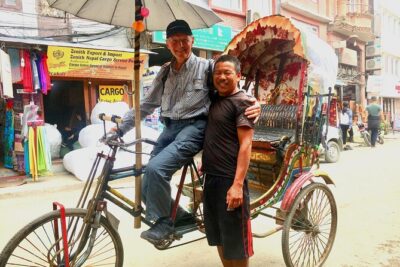

Walking Food Tour in Hidden Local Eateries of Kathmandu
Read our review →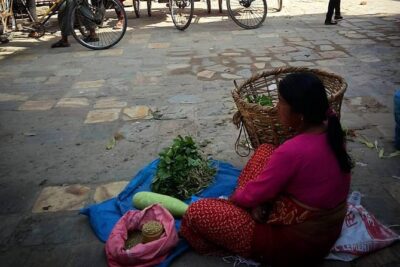
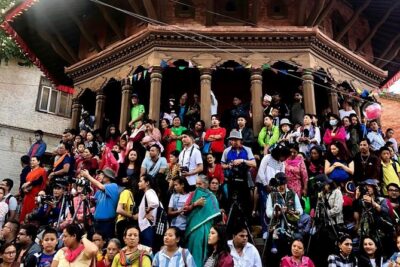
Old Kathmandu Walking Tour, Historic World Heritage Durbar Square
Read our review →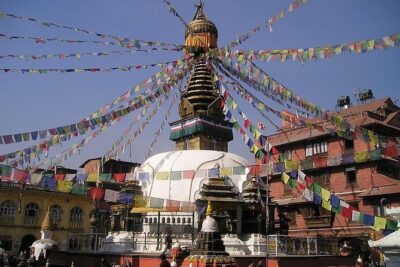
Browse the lists this tour appears in