REVIEW · KATHMANDU TOURS
Kathmandu: Melodies of the Divine, A Hari Kirtan Experience
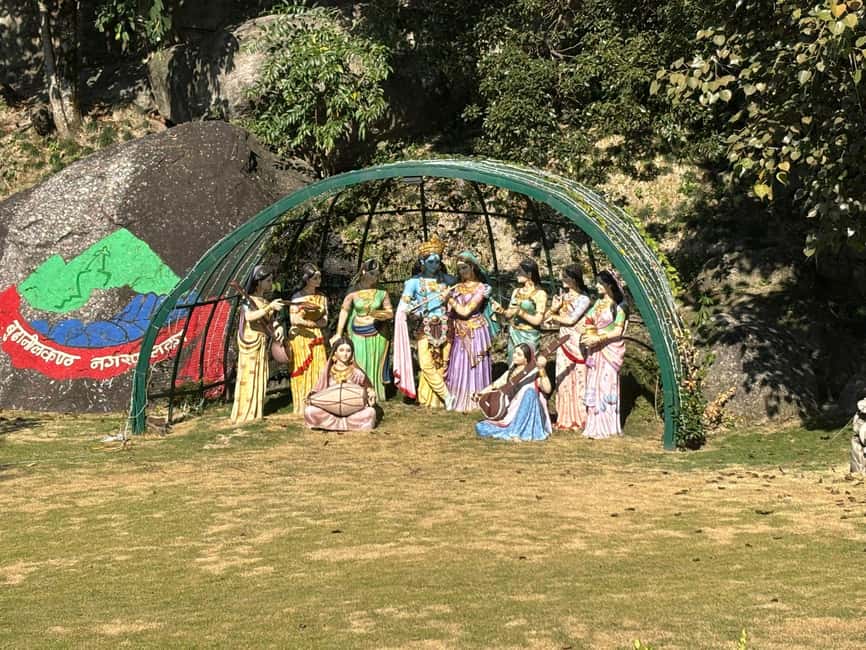
Feel the chant before you know the words. This 3.5-hour visit to the ISKCON temple in Budanilkantha brings you into a lively Hindu devotional setting, with Hare Krishna kirtans, the Arati lamp ritual, and stories of Lord Krishna. I especially like the chance to join the singing instead of only watching, and the way the guide explains the meaning behind the chants and offerings. The main consideration is that this is a worship experience, not a standard sightseeing stop, so the music, ritual, and religious focus may feel intense if you prefer quiet temple visits.
I also like the practical pickup from Kathmandu or Lalitpur, with transport back to your hotel or chosen location. Aarya, the guide praised in the available feedback, was kind, friendly, and well-informed, and the visit included a chance to speak with a monk. Expect color, sound, and joyful devotion, with about two hours devoted to Budanilkantha itself.
In This Review
- Key Things to Know Before You Go
- Why This ISKCON Visit Feels Different
- From Kathmandu or Lalitpur to Budanilkantha
- Entering the Temple and Meeting the Prabhujis
- Joining the Hare Krishna Kirtan
- The Radha Krishna Deities and the Meaning of Devotion
- Lord Krishna’s Mischievous Childhood Stories
- Arati: Lamps, Flowers, and Shared Worship
- Speaking With a Monk
- What $43 Includes and What It Means
- Who Will Enjoy This Experience Most
- Simple Ways to Get More From the Visit
- Should You Book the Hari Kirtan Experience?
- FAQ
- How long does the experience last?
- Where can pickup and drop-off take place?
- Is transportation included?
- What happens at the ISKCON temple?
- Which languages are available for the live guide?
- Can I cancel the booking?
Key Things to Know Before You Go
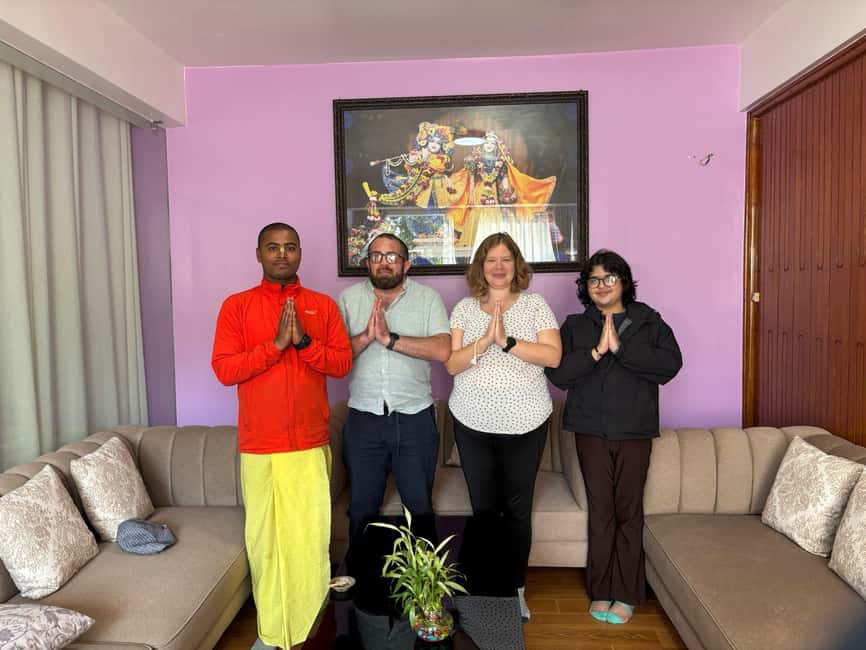
- Hare Krishna kirtan is the heart of the visit: You join rhythmic chanting led by resident priests, known here as prabhujis.
- Arati adds a strong ritual moment: Lamps, flowers, and mantras turn the temple visit into shared worship.
- Lord Krishna’s stories make the music easier to understand: Your guide explains his playful childhood and the spiritual lessons connected with his life.
- Pickup is available in two areas: You can begin in Kathmandu or Lalitpur and return to either area.
- The experience is personal rather than purely visual: You are invited to take part in a living practice of bhakti yoga.
- The price includes useful services: At $43 per person, the cost covers an English-speaking guide, round-trip transfers, staff support, and government taxes.
Why This ISKCON Visit Feels Different
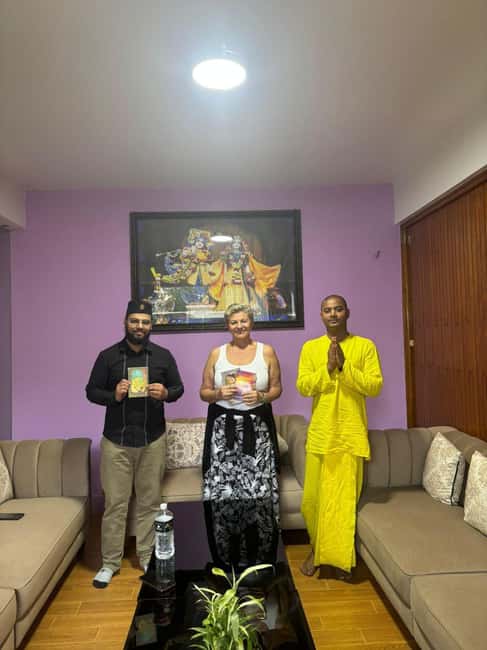
Kathmandu offers many temples, shrines, and religious sites, but this experience asks you to listen and participate. At the ISKCON temple in Budanilkantha, the main attraction is not a long list of monuments. It is the combination of chanting, ritual, storytelling, and community.
The temple belongs to the International Society for Krishna Consciousness, commonly called ISKCON. Its worship centers on devotion to Krishna, often expressed through music, repeated mantras, offerings, and service. You do not need to know the prayers before arriving. The guide helps you follow what is happening and explains why the words and gestures matter.
That makes this a useful choice if you want more than photographs of a religious building. You get a window into a faith tradition through sound and action. The visit can feel peaceful, but it is not silent or restrained. The available feedback describes the atmosphere as full of noise, color, and joy, which is a fair warning and also part of the appeal.
A short list of alternatives around Kathmandu
- Everest Base Camp Trek – 14 Days
★ 5.0 · 1,499 reviews - Private Kathmandu Sightseeing Tour | UNESCO World Heritage sites
★ 5.0 · 756 reviews - Everest Base Camp Helicopter Tour landing at Everest View Hotel
★ 5.0 · 668 reviews
From Kathmandu or Lalitpur to Budanilkantha
Your day begins with pickup in either Kathmandu or Lalitpur. Round-trip transportation is included, so you do not have to arrange a separate taxi for the temple visit or work out the return trip after the ceremony.
That convenience matters in Kathmandu Valley, where a short distance on a map can take longer by road than expected. The exact pickup time depends on the selected start time, so check availability when booking. The activity lasts 3.5 hours in total, while the Budanilkantha portion is listed at about two hours.
The transfer also gives you a simple beginning and end to the experience. You can focus on the temple rather than navigation. At the end, drop-off is available in Kathmandu or Lalitpur.
Entering the Temple and Meeting the Prabhujis
At Budanilkantha, your guide introduces you to the temple setting and helps you understand the role of the resident priests, or prabhujis. These priests lead the devotional singing and guide the rituals that shape the visit.
The first impression is likely to come through sound. Hare Krishna chanting is repetitive by design. The same words return again and again, carried by rhythm and group participation. You might find the repetition calming, energizing, or unfamiliar, depending on your comfort with religious music.
Your guide is especially important here. Without explanation, a visitor could see people singing, offering flowers, lighting lamps, and bowing without grasping the meaning. With a guide, those actions become part of a coherent religious practice. You can ask questions and pay attention to the difference between observing a ceremony and respectfully taking part.
Aarya received particular praise for being kind, friendly, and well-informed. That combination matters in a setting where tone is everything. You want someone who can explain Hindu traditions clearly without turning worship into a lecture or treating the temple like a museum display.
Joining the Hare Krishna Kirtan
The kirtan is the central musical experience. You join the prabhujis in rhythmic Hare Krishna chanting, with the group carrying the words together. The description of this practice as soulful meditation makes sense because the focus comes from repetition, listening, and shared attention rather than from a formal performance.
You do not need musical skill. The point is not to sing beautifully. It is to participate at a level that feels respectful and comfortable. You can follow the rhythm, listen closely, or join in with the words as they become familiar.
This is one of the strongest reasons to book the experience. Many religious sites give you a view from the edge of the room. Here, the format gives you a role, even if your role is simply to listen and learn. That personal element can make the visit more memorable than another quick stop for photographs.
The possible drawback is volume and intensity. The chanting is described as rhythmic and joyful, not hushed. If you are seeking a quiet retreat, the kirtan may feel too active. If you enjoy music, group ritual, and cultural participation, it may be the part you remember longest.
A completely different way to spend the day:
- Half day cooking class in Thamel kathmandu
★ 5.0 · 607 reviews - Everest Base Camp Trekking
★ 5.0 · 485 reviews - Nagarkot Sunrise View and Day Hiking from Kathmandu
★ 5.0 · 471 reviews - Kathmandu: Full Day 7 UNESCO Tour with Lunch – Private/Group
★ 5.0 · 415 reviews
The Radha Krishna Deities and the Meaning of Devotion
The temple’s Radha Krishna deities provide a visual focus for the worship. They are presented as serene and graceful, while the surrounding chanting brings movement and energy to the space.
Your guide connects the images and rituals to Hindu ideas about devotion. In this tradition, love of the divine is not limited to private thought. It can be expressed through song, flowers, lamps, mantras, and community worship.
This explanation helps you avoid a common mistake at religious sites: looking for a single definition or a quick label. The point is not simply that Krishna is a god in Hindu mythology. The experience presents Krishna through stories, relationships, devotion, and spiritual teaching.
You will also hear about Radha and Krishna as a central devotional pair. The focus is less on memorizing names and more on seeing how religious stories shape prayer, music, and daily practice.
Lord Krishna’s Mischievous Childhood Stories
A highlight of the guided portion is the storytelling. Krishna is introduced not only as a divine figure but also as a playful and mischievous child. Those stories give the religious tradition a human and approachable side.
The childhood tales are paired with deeper lessons about love, duty, faith, and spiritual awareness. That contrast is part of what makes Krishna such a compelling figure. He can appear in stories as playful and troublesome, yet his life also carries serious teachings.
Your guide acts as a bridge between the story and the ritual. You learn why the chants refer to Krishna, how the stories relate to devotion, and why the temple community continues these practices. The result is more useful than hearing a list of myths without context.
If you already know some Hindu traditions, you may appreciate the chance to connect familiar ideas to ISKCON practice. If this is new to you, the guide’s explanations should help you follow the experience without needing previous religious knowledge.
Arati: Lamps, Flowers, and Shared Worship
The Arati is another major part of the visit. This devotional ritual uses lamps, flowers, and mantras, bringing a concentrated sense of ceremony to the temple.
Arati is not a stage show. It is a moment of collective worship, and that distinction matters. You are watching a meaningful practice carried out by people who follow it as part of their faith. The guide helps you understand the sequence and symbolism so you can behave respectfully.
The lamps add warmth and movement. The flowers bring another sensory element. The mantras keep the ritual tied to sound, just as the kirtan does. Together, these details create a ceremony that feels intimate despite the group setting.
For some people, this will be the most moving section of the visit. For others, it may feel unfamiliar or emotionally strong. Both reactions are reasonable. You do not need to force a spiritual response. Pay attention, ask questions when appropriate, and allow the ritual to be what it is.
Speaking With a Monk
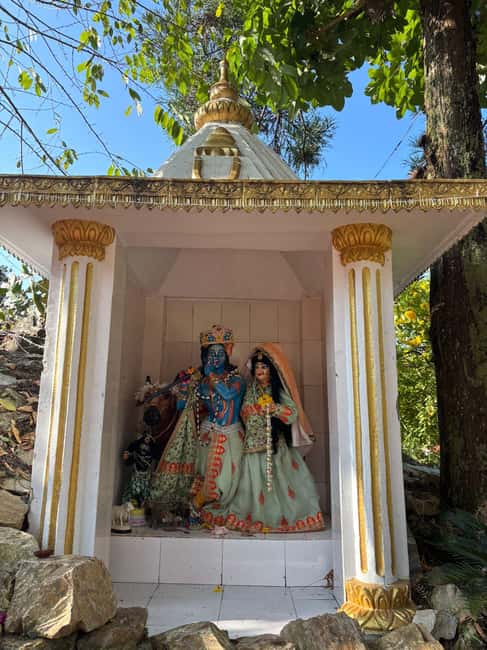
The experience can include an opportunity to speak with one of the monks. This is valuable because it lets you move beyond what can be explained during a walking tour or ceremony.
A conversation with a monk may help you connect the temple’s music and rituals with everyday religious practice. The available feedback singled out this conversation as interesting, and I can see why. Even a short exchange can add a human voice to what might otherwise seem like a formal ceremony.
The exact content of the conversation is not specified, so you should not expect a fixed lecture or guaranteed topic. Treat it as a chance to ask respectful questions about the chants, Krishna, the temple, or the meaning of devotion.
What $43 Includes and What It Means
The price is $43 per person. That is not the cost of a simple temple entrance, and it should not be judged that way. You are paying for a guided cultural and religious experience, round-trip transportation, English-speaking staff, and government taxes.
The guide is the key part of the value. Religious music and ritual can be difficult to interpret from the outside. A guide who explains the stories and customs helps you take away an understanding rather than only a set of images.
Transport adds practical value, too. Pickup and drop-off are available in Kathmandu and Lalitpur, and the service covers the trip to and from your hotel or desired location. That can make the price reasonable if you would otherwise need to arrange a separate car and guide.
Private groups are available. The activity also offers live guides in English, German, French, and Spanish. If language support or a more personal format matters to you, check those options before confirming.
The experience has a five out of five rating from one verified booking, dated October 24, 2025. That is a positive signal, but the sample is small. I would treat it as encouraging rather than as proof that every visitor will respond the same way.
Who Will Enjoy This Experience Most
I would recommend this tour to you if you like understanding a place through living traditions. It suits people who enjoy music, religious ceremonies, cultural explanation, and a chance to take part rather than simply stand nearby.
It is also a good fit if you want a gentler spiritual experience during a busy Kathmandu visit. The repeated chanting and shared ritual may leave you feeling peaceful, inspired, or spiritually uplifted, even if you approach the temple from a cultural rather than religious viewpoint.
Families and first-time visitors to Hindu worship may benefit from the guide’s explanations, though the suitability for young children is not specifically stated. You should decide based on your child’s comfort with a three-and-a-half-hour guided activity and a loud musical setting.
I would hesitate to recommend it if you want a silent temple, a photography-focused outing, or a broad tour of several Kathmandu landmarks. The Budanilkantha visit is focused. Its strength is depth of attention, not the number of stops.
Simple Ways to Get More From the Visit
Before you arrive, keep an open mind about participation. You do not need to pretend to hold beliefs that are not your own, but you should be ready to listen, observe, and follow the guide’s direction.
Ask your guide about the meaning of the Hare Krishna chant and the role of Arati. Those questions connect the sound, movement, and objects you see inside the temple.
Pay attention to the change in mood between the kirtan and the Arati. The singing creates a steady communal rhythm, while the lamps, flowers, and mantras bring a more formal ritual focus.
Give yourself time to notice the people as well as the ceremony. The experience is built around community and devotion, not only architecture. A conversation with a monk, when available, can help you see the practice from inside its own tradition.
Finally, remember that the temple is a place of worship. Your guide is there to help you take part respectfully, and the best approach is to follow that lead.
Should You Book the Hari Kirtan Experience?
Book it if you want a focused encounter with Hindu devotion, especially one built around music, storytelling, and ritual. The combination of Hare Krishna kirtan, Arati, Krishna’s stories, a possible conversation with a monk, and round-trip transport gives the $43 price practical value.
Choose it with the right expectations. This is not a quiet sightseeing circuit, and the available feedback specifically points to noise, color, and joy. If that sounds engaging, Aarya’s friendly guidance and the temple’s welcoming devotional setting could make this one of the more personal cultural experiences in Kathmandu.
Skip it if you prefer only monuments, photographs, and a flexible schedule. The tour asks you to give attention to a religious practice. For the right reader, that is exactly why it is worth booking.
FAQ
How long does the experience last?
The experience lasts 3.5 hours. The guided visit and sightseeing at Budanilkantha are listed as taking about two hours.
Where can pickup and drop-off take place?
Pickup is available from Kathmandu or Lalitpur. Drop-off is also available in Kathmandu or Lalitpur.
Is transportation included?
Yes. Round-trip transfers from your hotel or desired location are included.
What happens at the ISKCON temple?
You take part in Hare Krishna kirtans led by resident priests, learn stories and teachings connected with Lord Krishna, see the Radha Krishna deities, and join or observe the Arati ritual with lamps, flowers, and mantras.
Which languages are available for the live guide?
Live guides are available in English, German, French, and Spanish.
Can I cancel the booking?
You can cancel up to 24 hours in advance for a full refund. Reserve now and pay later is also available.
New in the Kathmandu listings
- Traditional Momo Making Class★ 5.0 · 10 reviews
- Kathmandu: Ancient City Kirtipur & Pharping Monastery Tour★ 5.0 · 2 reviews
- Kathmandu to Pokhara Premium sofa bus ticket★ 4.0 · 17 reviews
- Women Empowerment Project(Nepali cooking class & jewelry workshop★ 5.0 · 15 reviews
- 7-Day Langtang Valley Trek from Kathmandu★ 5.0 · 1 review
- Kathmandu 2 Nights 3 Days Chitwan Jungle Safari Tour★ 5.0 · 9 reviews
- Yoga Experience Day Trip with Private Transfer From Kathmandu★ 4.0 · 2 reviews
- Wildlife Adventure in Chitwan Nepal★ 4.0 · 4 reviews
Kathmandu Tours, compared.

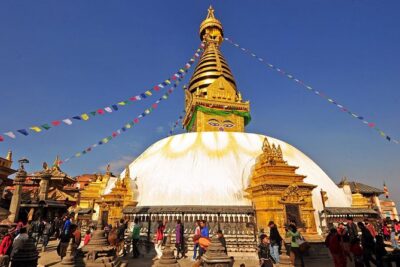
Private Kathmandu Sightseeing Tour | UNESCO World Heritage sites
Read our review →
Everest Base Camp Helicopter Tour landing at Everest View Hotel
Read our review →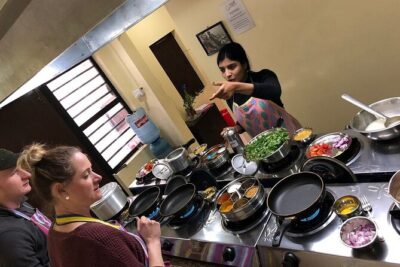
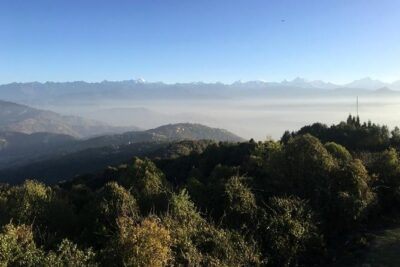
Nagarkot Sunrise View and Day Hiking from Kathmandu
Read our review →
Full Day 7 UNESCO Tour with Lunch – Private/Group
Read our review →