
REVIEW · LANGTANG VALLEY TREKS
Langtang Valley Trek – 10 Days Trip
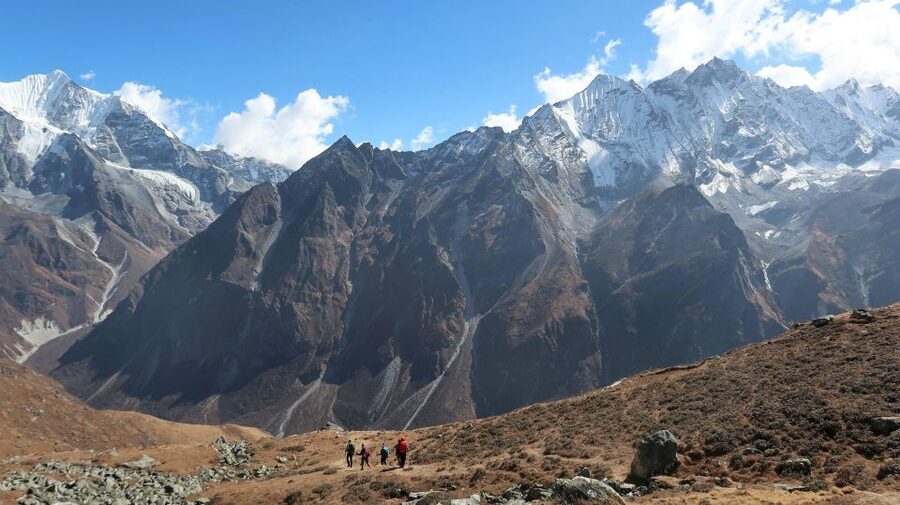
The mountains arrive slowly, then all at once. This 10-day Langtang Valley Trek takes you from Kathmandu through Langtang National Park, rhododendron forests, river valleys, Tamang villages, and high Himalayan viewpoints. I like the mix of wild scenery and local culture, and I also like that the private itinerary can be adjusted to match your walking pace.
The best feature is the pair of summit choices from Kyanjin Gompa: Tserko Ri at 5,000 meters or Kyanjin Ri at 4,700 meters. You should also know the main drawback: the route includes a long road journey to Syabrubesi, followed by several demanding walking days at altitude. The teahouses are cozy, but this is still a proper mountain trek, not a soft hotel-based tour.
In This Review
- Key points before you book
- What $675 covers on the Langtang route
- Day 1: Kathmandu arrival and a simple start
- Day 2: The seven-hour road to Syabrubesi
- Day 3: Forest walking to Lama Hotel
- Day 4: From Lama Hotel to Langtang Village
- Day 5: The short climb to Kyanjin Gompa
- Day 6: Choose Tserko Ri or Kyanjin Ri
- Days 7 and 8: Returning through the valley
- Day 9: Seven hours back to Kathmandu
- Day 10: Departure from Nepal
- Teahouses, meals, and daily comfort
- How demanding is this 10-day trek?
- Private guiding and the value of flexibility
- Drones, permits, and sensible packing
- Who should book this trek?
- Should you book the Langtang Valley Trek?
- FAQ
- How long is the Langtang Valley Trek?
- What is the price per person?
- Is the trek private or shared?
- What are the main high viewpoints?
- How long is the drive from Kathmandu to Syabrubesi?
- Are meals included during the trek?
- Where do you sleep during the walking portion?
- Are WiFi, hot showers, and charging included?
- Can the itinerary be changed?
Key points before you book
- Kyanjin Gompa is the high point of the trip: Spend an exploration day here and choose between Tserko Ri and Kyanjin Ri.
- The walking pace can be adjusted: One guest from Spain, Javier, reached Kyanjin Gompa a day early and climbed both viewpoints because the schedule was adapted to his pace.
- You get a strong culture-and-nature combination: Tamang and Tibetan communities, mountain villages, forests, rivers, glaciers, and high peaks all appear on one route.
- The price covers most major trek costs: At $675 per person, the package includes meals, lodging, permits, guide, transport, and trekking equipment loans.
- Road travel is part of the bargain: The drive between Kathmandu and Syabrubesi takes about seven hours each way, so expect a full day in a local Jeep.
- This is a private guided trip: An English-speaking, Nepal government-authorized guide accompanies you throughout the trek.
What $675 covers on the Langtang route
At $675 per person, this trek offers solid value for a 10-day Himalayan trip. The price includes two nights in a three-star hotel in Kathmandu, seven nights in teahouses, three daily meals during the trek, airport transfers, local Jeep transport, permits, an authorized guide, taxes, and company service charges.
It also includes a first aid kit, a trip achievement certificate, seasonal fresh fruit after dinner, and the use of a company duffel bag and sleeping bag if you need them. Those small extras matter on a trek, especially when you are trying to keep your own luggage light.
The price does not include your Nepal entry visa, international airfare, porter service, phone calls, laundry, WiFi, hot showers, charging, or other personal expenses. You should also budget for cash during the walking portion, since the package specifically advises carrying it and several services are paid separately.
I see this as a good package for someone who wants the main arrangements handled in advance. You are not paying only for a guide and a bed. You are also paying for permits, transport, meals, airport pickup, and equipment support. The main question is not the listed price, but whether you are comfortable with basic teahouse facilities and a long road transfer.
More Langtang treks:
- Trekking in Annapurna/Langtang/Everest/Upper Mustang regions
★ 5.0 · 161 reviews - Langtang Valley Trek
★ 5.0 · 140 reviews - Private 8 – Day Langtang Trekking
★ 5.0 · 29 reviews
Day 1: Kathmandu arrival and a simple start
Your trip begins at Tribhuvan International Airport in Kathmandu. A company representative meets you at the arrival terminal with a placard bearing your name, then takes you to your hotel by private vehicle.
Kathmandu sits at about 1,400 meters, so the first day gives you time to recover from your flight without asking your legs to do much. Your two hotel nights include breakfast, while the trek portion includes breakfast, lunch, and dinner each day.
Keep this first evening practical. Check your warm clothing, medication, reusable water bottle, waterproof bag, and power bank. If you need a trekking item, ask about the company duffel bag and sleeping bag before leaving the city.
Day 2: The seven-hour road to Syabrubesi
The journey from Kathmandu to Syabrubesi takes about seven hours by local Jeep. Syabrubesi sits at roughly 1,550 meters, making it a sensible starting point for the walking route.
This is not a sightseeing drive with a quick transfer at the end. It is a full travel day, and road conditions may make the ride feel longer than the mileage suggests. Bring snacks, water, a towel, and any personal medication you need close at hand.
The benefit is that the trek begins at a relatively moderate altitude. You do not start by walking from a high pass or landing directly in thin air. The cost is comfort: a local Jeep is useful and practical, but you should expect a more rugged road journey than a private tourist coach.
Day 3: Forest walking to Lama Hotel
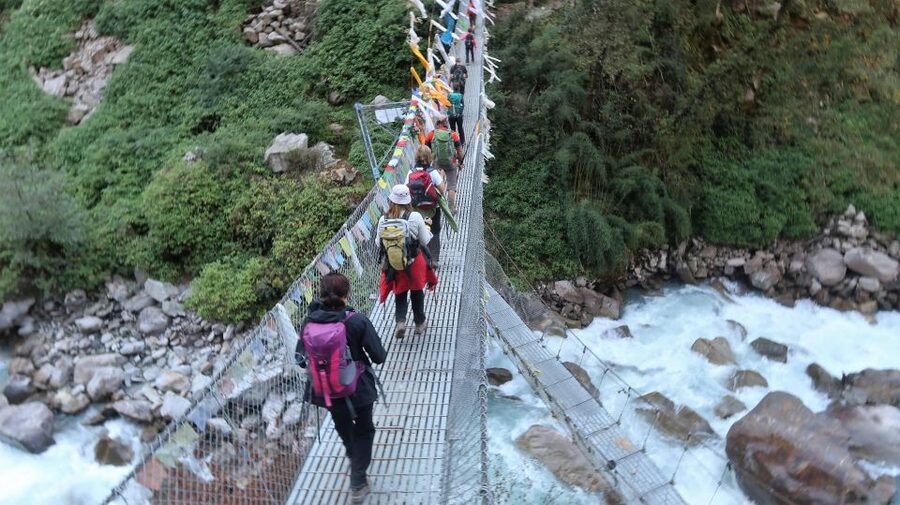
The first major walking day leads from Syabrubesi to Lama Hotel, at about 2,500 meters. The trek takes around six to seven hours and introduces the rhythm of the route: steady climbing, forest sections, river crossings, and mountain villages.
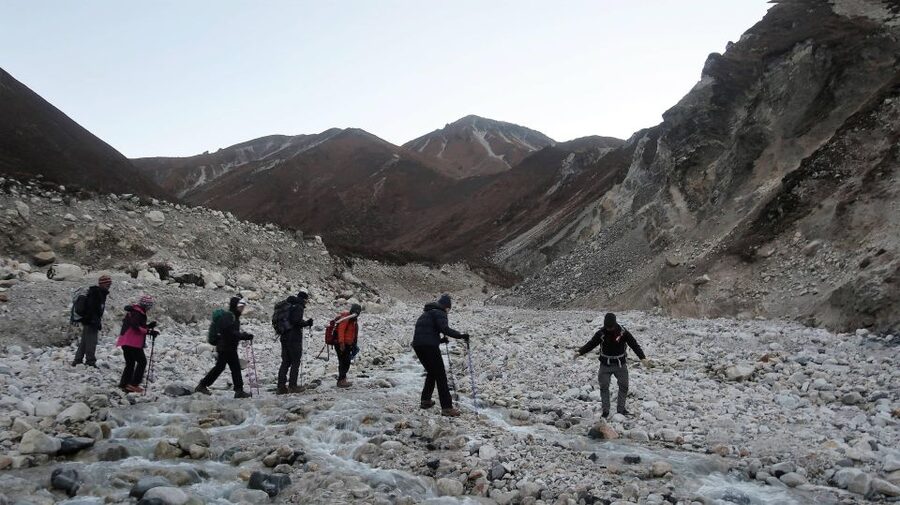
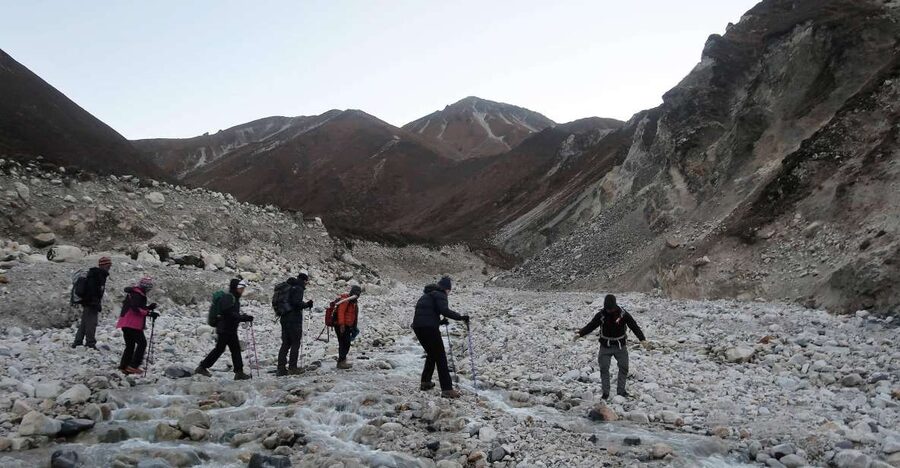
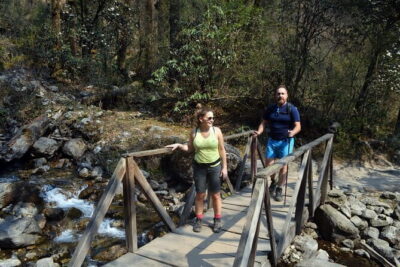
Rhododendron forests are one of the natural highlights here. The route also follows meandering rivers, giving the day a changing soundscape instead of one long silent climb.
Lama Hotel is a useful overnight stop because it breaks the climb toward Langtang Village into manageable stages. Still, six or seven hours on foot is a serious day. Good hiking pants, waterproof shoes, a sun hat, sunscreen, and a daypack are more useful here than extra casual clothes.
More walking in the hills of Nepal:
- Everest Base Camp Trek – 14 Days
★ 5.0 · 1,499 reviews - Everest Base Camp Trekking
★ 5.0 · 485 reviews - Nagarkot Sunrise View and Day Hiking from Kathmandu
★ 5.0 · 471 reviews - Annapurna Circuit Trek with Tilicho Lake
★ 5.0 · 368 reviews
Day 4: From Lama Hotel to Langtang Village
You continue uphill to Langtang Village, at about 3,430 meters. The walking time remains around six to seven hours, so this is one of the days when an adjustable pace matters.
The change in scenery becomes clearer as you gain altitude. Forest gives way to more open mountain surroundings, and the route begins to feel like a true high valley rather than a forest hike. Langtang Lirung is one of the major peaks to watch for during this part of the trip.
The altitude deserves respect. You are gaining nearly 1,000 meters from Lama Hotel to Langtang Village, and the next overnight stop is higher again. Walk steadily, drink regularly, and tell your guide if you feel unwell. The trip is fully guided, so you are not expected to manage altitude concerns alone.
Day 5: The short climb to Kyanjin Gompa
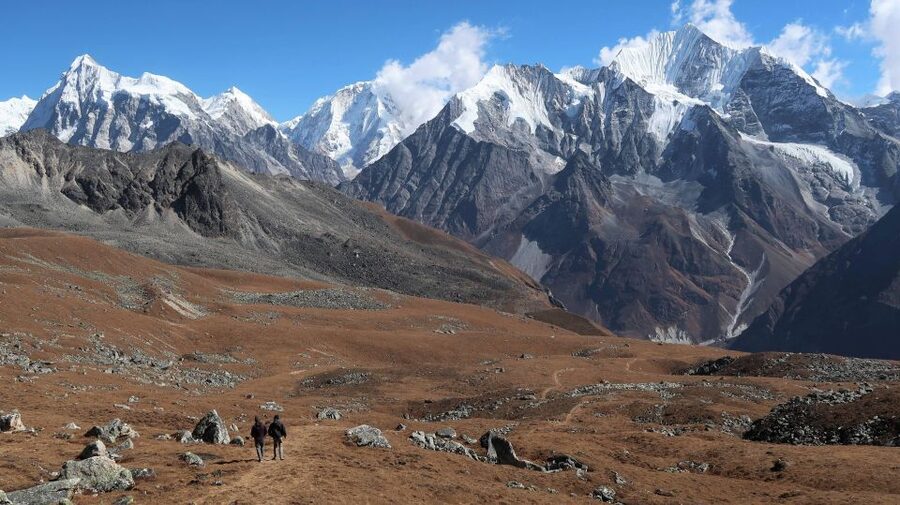
The walk from Langtang Village to Kyanjin Gompa takes only two to three hours, reaching about 3,870 meters. This shorter day is important because it brings you to the base for the trek’s biggest mountain views without adding another long push.
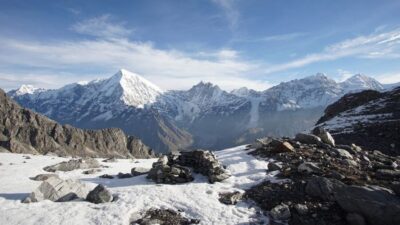
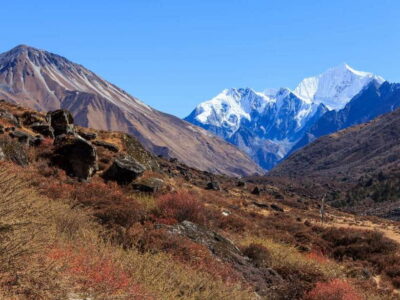
Kyanjin Gompa is the natural center of the high valley. From here, you can see glaciers and high Himalayan peaks, including the impressive Langtang Lirung. The setting also gives you a closer look at the Tibetan and Tamang cultural influence found throughout the region.
The short walking time can be used in two ways. You can arrive early, rest, and prepare for the next day. Or, if your guide agrees and your energy is good, you can use the extra time to look around the area. Do not confuse a short walking day with an easy high-altitude day. At 3,870 meters, your body is still adjusting.
Day 6: Choose Tserko Ri or Kyanjin Ri
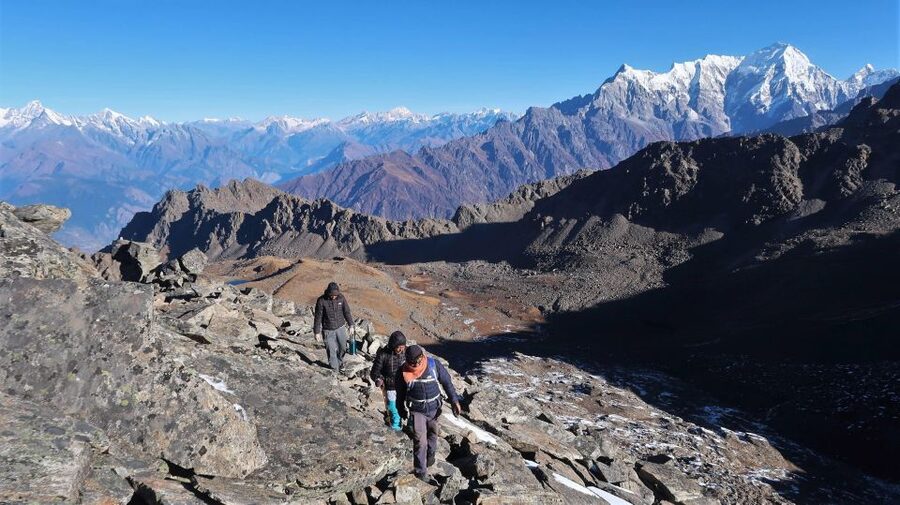
This is the trip’s headline day. From Kyanjin Gompa, you can choose a climb to Tserko Ri at 5,000 meters or Kyanjin Ri at 4,700 meters.
Tserko Ri is the higher option and offers a demanding ascent. Kyanjin Ri is lower but still a serious climb at nearly 4,700 meters. Both are designed for wide mountain views, with glaciers, snow-capped peaks, and the Langtang Valley spread around you.
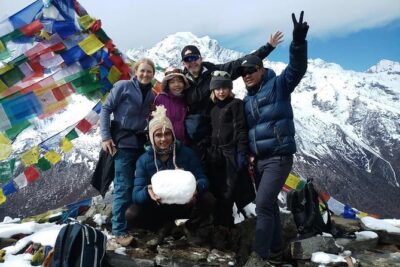
The material for this trek describes a 360-degree glacier view from Kyanjin Gompa, while the two ridges provide the main high viewpoints. This is where warm clothing, gloves, thermal layers, sunglasses, a sun hat, and weatherproof gear stop being optional. Conditions can change quickly at altitude, so bring your jacket and waterproof layer even if the morning looks calm.
The itinerary is flexible enough to choose the viewpoint that suits your condition. That flexibility is more than a marketing detail. Javier from Spain had the schedule adjusted to his walking pace, arrived at Kyanjin Gompa a day early, and managed to climb both Tserko Ri and Kyanjin Ri. You should not assume you will duplicate that result, but it shows what a private schedule can allow when your fitness, weather, and guide’s advice line up.
If you feel strong, Tserko Ri gives you the higher challenge. If you want a shorter or more conservative option, Kyanjin Ri may be the better call. The wise choice is the one that lets you enjoy the views rather than suffer through a summit for the sake of a number.
Days 7 and 8: Returning through the valley
Day 7 takes you from Kyanjin Gompa back to Lama Hotel, a long seven-hour descent. Day 8 continues from Lama Hotel to Syabrubesi, taking about six hours.
Downhill walking is often easier on the lungs but harder on tired knees. Trekking poles, if you use them, can help. Your guide can also adjust the pace, which is especially useful after the high climb on Day 6.
The return route gives you a second look at the valley from a different direction. You may notice forest detail, villages, and river sections that passed quickly during the uphill journey. The teahouses remain basic but are described as common, cozy, and warm enough for resting. WiFi, hot showers, and charging are not included, so a power bank and some cash are sensible additions to your daypack.
Day 9: Seven hours back to Kathmandu
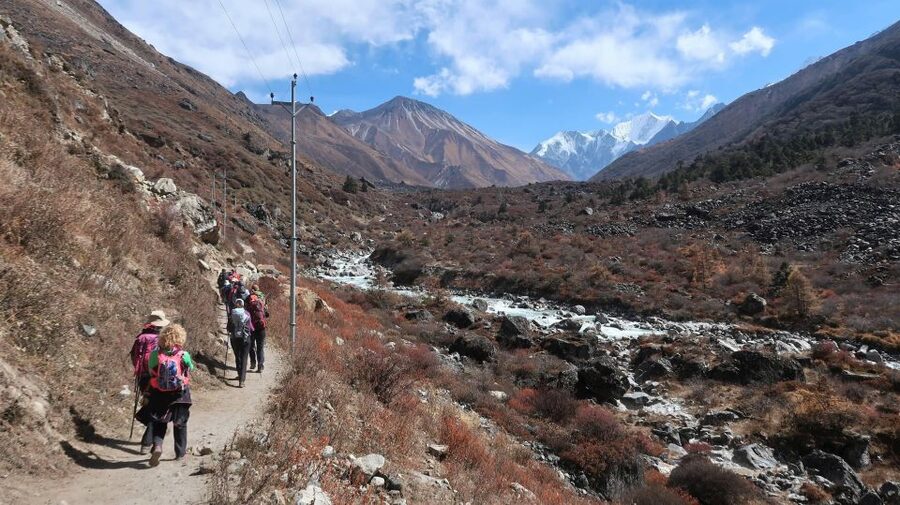
The return drive from Syabrubesi to Kathmandu takes about seven hours. After several days on foot, this can feel like an awkward final hurdle, but it completes the route without requiring another flight or a separate transport arrangement.
Keep one change of clothes accessible rather than buried in your duffel. You will likely appreciate a shower, a proper hotel bed, and the return to city comforts. Your second Kathmandu hotel night includes breakfast.
Day 10: Departure from Nepal
The final day is reserved for farewell and departure arrangements. The airport and hotel shuttle service is included, which makes the end of the trip simple.
Keep your passport, visa documents, phone, and remaining cash in your daypack. The company provides a trip achievement certificate, a small but fitting souvenir after a route that reaches 5,000 meters.
Teahouses, meals, and daily comfort
Seven nights are spent in teahouses rather than standard hotels. That means you should expect basic mountain lodging, shared practical facilities, and a warmer, simpler atmosphere than you would find in Kathmandu.
The accommodation is described as cozy and warm enough for resting. Hot showers, WiFi, and charging are not included, so you should not book this expecting full hotel service every night. A towel, sandals, toiletries, sleeping bag, and power bank will help you manage the change in comfort.
Three meals are included every day during the trek: breakfast, lunch, and dinner. Seasonal fresh fruit is served after dinner, which is a pleasant touch after a long day of walking. Snacks are not included, so carry your own supply for the road trip and higher sections.
How demanding is this 10-day trek?
The route is demanding because of its altitude and long walking days, not because every day is extreme. The hardest elements are the six to seven-hour walks, the rise to Langtang Village, the high overnight at Kyanjin Gompa, and the optional climb to 5,000-meter Tserko Ri.
The itinerary gives you one exploration day at Kyanjin Gompa, which helps. The private format also allows a guide to adjust the schedule to your pace. That said, flexibility does not remove the need for preparation.
You should be comfortable walking for several hours on consecutive days. Warm layers, gloves, waterproof shoes, rain gear, sunscreen, sunglasses, personal medication, and a reusable water bottle are all useful. Travel insurance is specifically recommended, and you should carry your own medication.
The trip is not suitable for children under 10, pregnant women, wheelchair users, visually impaired people, people with kidney problems, people over 80 or over 95 years, or anyone over 309 pounds, or 140 kilograms. The age limits are presented separately, but the practical point is clear: this is best for fit adults who can handle remote mountain walking.
Private guiding and the value of flexibility
An English-speaking local guide accompanies you throughout the trek. The guide is described as trained and authorized by the Nepal government, and the trip is arranged as a private group rather than a large shared departure.
That format suits you if you want to walk at your own pace, pause for photographs, or choose between the two high viewpoints without being tied to strangers. It also makes the cultural side more personal, since you can ask questions about Tamang and Tibetan communities as you pass through villages.
There is one important limit. The advertised languages list English only, so you should not expect guided service in another language unless you confirm it before booking. No guide’s personal name is provided, so you will receive the assigned guide’s details through the operator rather than choosing a named guide in advance.
Drones, permits, and sensible packing
Langtang National Park requires special permits if you want to use a drone. Do not pack one assuming you can fly it freely. Ask the operator about the permit process before arrival.
You should pack for changing weather, not just the forecast in Kathmandu. The recommended list includes warm and thermal clothing, a jacket, gloves, rain gear, waterproof shoes, hiking pants, long trousers, socks, a headscarf, and weather-appropriate layers.
The list also includes a passport or ID card, visa if required, credit card, cash, camera, snacks, sunscreen, toiletries, towel, sandals, waterproof bag, daypack, power bank, and trekking gear. You do not need to carry every item in your daypack. Use the provided duffel bag if needed and keep daily essentials close.
Who should book this trek?
I would recommend this route to you if you want a relatively short Himalayan trek with both scenery and culture. Ten days is long enough to reach a serious high valley but short enough to fit into a larger Nepal trip.
It suits hikers who want a guided private trip and do not mind teahouse accommodation. It is also a good choice if you value flexibility, since the walking schedule can be adjusted and the summit day offers two choices.
I would hesitate if you want luxury lodging, reliable internet, hot showers, or very short travel days. I would also hesitate if you have kidney problems, limited mobility, are pregnant, or are not prepared for high-altitude walking.
The score of 5 comes from one verified booking, Javier from Spain, who specifically valued the pace adjustment and reached both Tserko Ri and Kyanjin Ri. That is useful evidence for the private format, though it is still a very small sample. I would treat the strong rating as encouraging rather than as proof that every departure will run identically.
Should you book the Langtang Valley Trek?
Book it if your priorities are glacier views, Tamang culture, flexible pacing, and a serious but compact Himalayan trek. The $675 price covers the expensive basics, including guide, permits, meals, transport, and lodging, so the value is good for a package of this length.
Before paying, confirm the expected teahouse facilities, personal spending needs, and how the guide will decide between Tserko Ri and Kyanjin Ri. If you accept the long Jeep rides and basic mountain lodging, this trek gives you a strong look at Langtang without requiring a much longer expedition.
FAQ
How long is the Langtang Valley Trek?
The trip lasts 10 days, including arrival and departure days in Nepal.
What is the price per person?
The listed price is $675 per person.
Is the trek private or shared?
It is a private group trip with an English-speaking guide.
What are the main high viewpoints?
You can choose to hike to Tserko Ri at 5,000 meters or Kyanjin Ri at 4,700 meters during the exploration day at Kyanjin Gompa.
How long is the drive from Kathmandu to Syabrubesi?
The drive takes about seven hours by local Jeep.
Are meals included during the trek?
Yes. Breakfast, lunch, and dinner are included every day during the trek. Seasonal fresh fruit is also served after dinner.
Where do you sleep during the walking portion?
You spend seven nights in teahouse accommodations. Two additional nights are in a three-star standard hotel in Kathmandu, with breakfast included.
Are WiFi, hot showers, and charging included?
No. Use of WiFi, hot showers, and charging during the trek is not included.
Can the itinerary be changed?
Yes. The itinerary is customizable, and the walking pace can be adjusted. One stated example had the schedule changed so the guest reached Kyanjin Gompa a day early and climbed both Tserko Ri and Kyanjin Ri.
New in the Nepal listings
- Traditional Momo Making Class★ 5.0 · 10 reviews
- Kathmandu: Ancient City Kirtipur & Pharping Monastery Tour★ 5.0 · 2 reviews
- Pokhara: Pokhara Highlights Tour by Bus★ 3.6 · 10 reviews
- Day Walk(8-10h.) inside Chitwan National Park.★ 5.0 · 1 review
- One Day Tour inside Chitwan National Park★ 5.0 · 2 reviews
- Night Stay in Chitwan National Park, 2 Nights 3 Days Package★ 5.0 · 1 review
- Private Jeep Safari (8-10 hrs.)inside Chitwan National Park.★ 5.0 · 3 reviews
- Jungle Towernight Stay: 4-Day Tour in Chitwan National Park★ 5.0 · 4 reviews
Langtang Valley Treks, compared.
Trekking in Annapurna/Langtang/Everest/Upper Mustang regions
Read our review →
Browse the lists this tour appears in