
REVIEW · PASHUPATINATH TEMPLE TOURS
Pashupatinath Aarati and Bouddhanath Spiritual Tour
Kathmandu reveals itself through ritual. This four-hour outing links Pashupatinath Temple and Boudhanath Stupa, two major religious sites where Hindu and Buddhist traditions remain part of daily life. I like the contrast between the Bagmati River ceremonies and the quiet, circular rhythm around Boudhanath. I also like that hotel pickup, a driver, fuel, parking, and an English-speaking guide are included.
The main consideration is timing. Four hours is enough for a useful first look, but not enough for a slow, detailed visit to every temple, monastery, shrine, and courtyard. The entrance fees, food, and drinks are extra, and the exact start time matters if witnessing the Pashupati Aarati is your priority.
Guide Sobit has earned special praise for his friendly, passionate approach and for making an effort to meet a visitor’s needs. If he is available, he sounds like a fine choice. Either way, this tour works best when you want clear cultural context, simple transport, and two very different sacred places in one afternoon or evening.
In This Review
- Key Points at a Glance
- Why These Two Places Belong Together
- Starting in Thamel and Reaching Boudhanath
- What Makes Boudhanath More Than a Photo Stop
- Entering the Pashupatinath Temple Precinct
- Seeing the Pashupati Aarati
- The Value of $32
- Who Will Get the Most From This Tour
- Practical Ways to Improve the Experience
- Should You Book It?
- FAQ
- How long does the Pashupatinath and Boudhanath tour last?
- What sites are included?
- Is hotel pickup and drop-off included?
- Is an English-speaking guide provided?
- Are entrance fees included in the price?
- Can I cancel or pay later?
Key Points at a Glance
- Pashupati Aarati beside the Bagmati: Watch priests perform a Hindu ceremony honoring Lord Shiva on the riverbank.
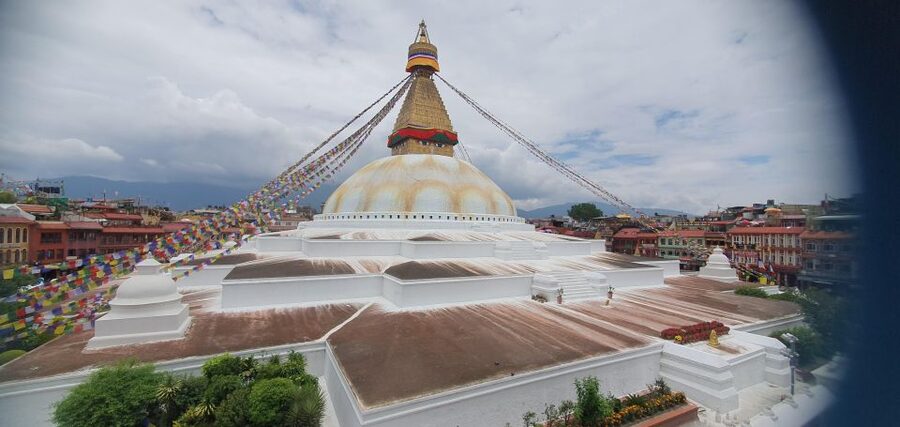
- Boudhanath’s giant Buddhist stupa: Walk around one of Kathmandu’s most important Buddhist sites and take time for photographs.
- Hindu and Buddhist traditions together: See how two faiths shape architecture, prayer, funeral customs, and everyday practice.
- About four hours from Thamel: The compact schedule suits a first visit or a free half-day in Kathmandu.
- Private transport details included: Hotel pickup and drop-off, driver, fuel, and parking are covered in the $32 price.
- A guide adds meaning: An English-speaking guide and English audio guide help explain symbols, rituals, festivals, and local beliefs.
Why These Two Places Belong Together
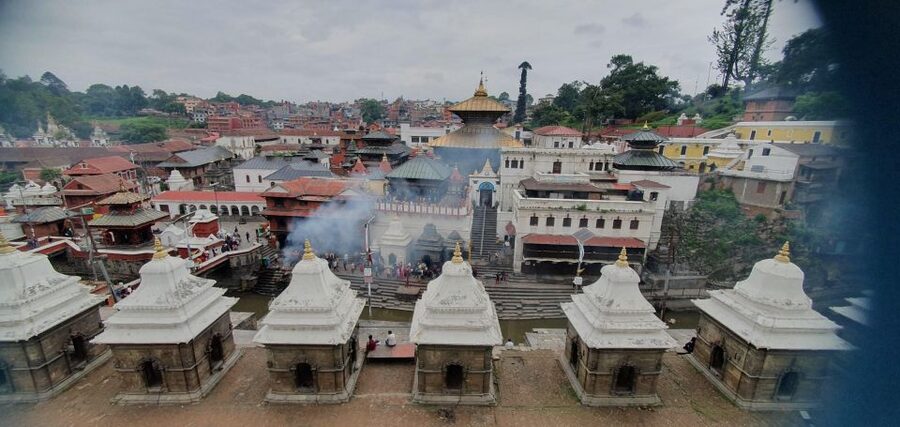
Pashupatinath and Boudhanath are close to one another, yet they offer sharply different experiences. Pashupatinath is a Hindu temple complex connected to Lord Shiva, the Bagmati River, cremation rites, sadhus, ashrams, and sacred images.
Boudhanath is centered on a large Buddhist stupa. Its power comes from repetition and movement: you walk around the stupa, observe Buddhist customs, and see Tibetan monasteries in the surrounding area. More than 50 monasteries are associated with the Boudhanath area, giving the neighborhood a strong Tibetan Buddhist character.
I like this pairing because it avoids treating Kathmandu as a collection of old buildings. You see living religion instead. Prayer, ceremony, death, devotion, symbols, and community all have a place here.
The tour also gives you a useful lesson in religious geography. The sites are only about a five-minute drive apart, but their visual language changes quickly. One stop centers on a Hindu temple and river ritual. The other centers on a Buddhist monument and the act of circumambulation, or walking around a sacred object in a respectful direction.
More visits to Pashupatinath:
- Kathmandu Spiritual Sites: Bodhnath & Pashupatinath Tour
★ 5.0 · 185 reviews - Kathmandu: Pashupatinath Temple Evening Aarati Tour
★ 5.0 · 36 reviews - Kathmandu: Pashupatinath Temple Aarti Night Tour
★ 4.8 · 29 reviews
Starting in Thamel and Reaching Boudhanath
Pickup is arranged from Thamel, Kathmandu’s main visitor district, and hotel drop-off is included at the end. That removes one of the small headaches of Kathmandu sightseeing: finding a taxi, agreeing on a fare, and navigating to two separate sites on your own.
The itinerary begins at Boudha Stupa. The listed time there is about 45 minutes, including a guided visit, a photo stop, walking, free time, sightseeing, and possible shopping. That is a short visit, so you should arrive ready to focus.
Your guide can explain the basic meaning of the stupa, its Buddhist symbols, and the beliefs connected with the site. Boudhanath is also believed to contain the remains of Kassapa Buddha, an important part of its spiritual importance. You may have time to walk around the stupa and take in the surrounding views, but the schedule does not promise a long monastery visit or an extensive shopping stop.
I recommend keeping your first circuit around the stupa unhurried. Notice how the monument guides movement and attention. Look at the ancient carvings and the painted details, then allow a little time for the surrounding Buddhist culture to register. A camera is useful, but this is a place where simply walking and observing can be more rewarding than rushing from one photograph to the next.
The shopping element is optional and should not become the main event. With only 45 minutes here, you will get more from the stop by seeing the stupa properly first. If you already know you want more time at Boudhanath, ask about the schedule before departure.
What Makes Boudhanath More Than a Photo Stop
Boudhanath is not simply a large monument placed in a city square. It is a sacred focus for Buddhist practice, surrounded by monasteries and places connected with Tibetan culture.
The tour includes time for a guided explanation and free walking. That combination matters. A guide can tell you what the structure represents, while your own walk lets you experience the calm pattern of circling the stupa. The two parts work better together than either one alone.
You may also observe everyday rituals performed by Tibetan monks. The information provided does not guarantee a particular ceremony at a specific time, so keep your expectations flexible. The value is in seeing how Buddhist practice fits into ordinary life, not in waiting for a staged show.
For you, Boudhanath may be the more immediately approachable stop. You can walk, look, take photographs, and absorb the setting without needing to enter a Hindu temple restricted to certain worshippers. It is also a good place to ask questions about Buddhist symbols and customs while the guide is nearby.
Entering the Pashupatinath Temple Precinct
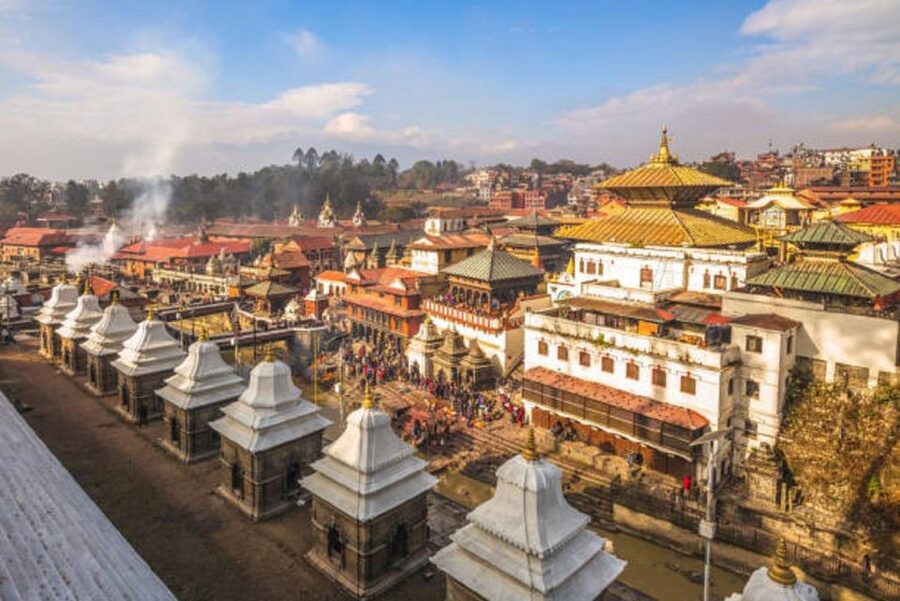
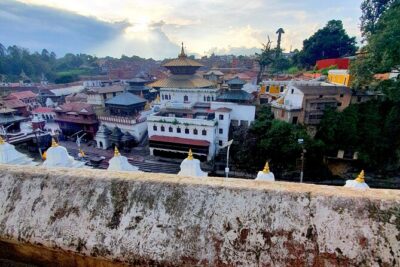
The tour then continues to Pashupatinath Temple, with about one hour set aside for the visit. The complex sits along the Bagmati River and includes temples, ashrams, sacred images, and spaces connected with Hindu worship.
This is the more intense of the two stops. Pashupatinath is not only an architectural site. It is an active religious complex where people come to pray, perform rituals, meet sadhus, and carry out funeral customs.
Your guide is expected to explain the temple’s significance, Hindu beliefs, major festivals, and the story of Pashupatinath. That context can help you read the site with respect rather than treating it as a backdrop. The guide can also explain why Lord Shiva is central here and how the temple precinct functions within Hindu life.
The information provided says you may observe Hindu funeral rituals. These are private and deeply important moments, so you should follow your guide’s instructions about where to stand, when photography is appropriate, and how closely to approach. A respectful distance is essential.
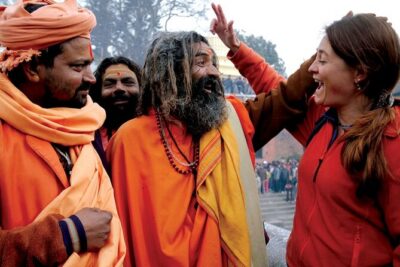
You may also encounter sadhus, Hindu ascetics devoted to spiritual practice. Their colorful appearance can attract attention, but they are not performers. Ask your guide before taking photographs or approaching anyone.
The one-hour visit gives you a useful introduction, though it will feel brief if you want to explore every corner. Pashupatinath includes many temples and religious spaces, and the tour is designed as a focused visit rather than an exhaustive architectural survey.
More visits to Boudhanath:
- Sacred Pashupatinath: Aarati,Cremation Rites & Boudha Stupa
★ 5.0 · 18 reviews - PashupatiNath and BoudhaNath – Private/Small Group
★ 5.0 · 18 reviews - Kathmandu City in One Day with Bodhnath Stupa
★ 5.0 · 10 reviews - Private Half-Day Tour of Boudhanath and Pashupatinath Temples in Kathmandu
★ 4.5 · 9 reviews
Seeing the Pashupati Aarati
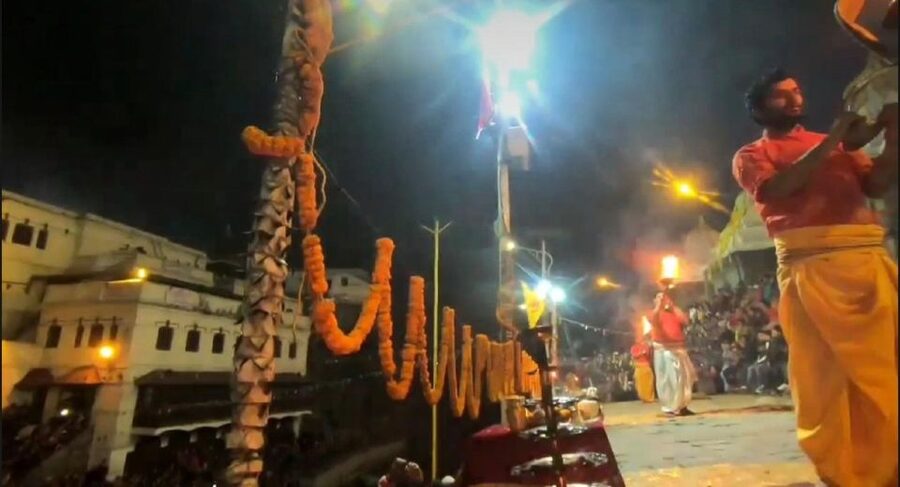
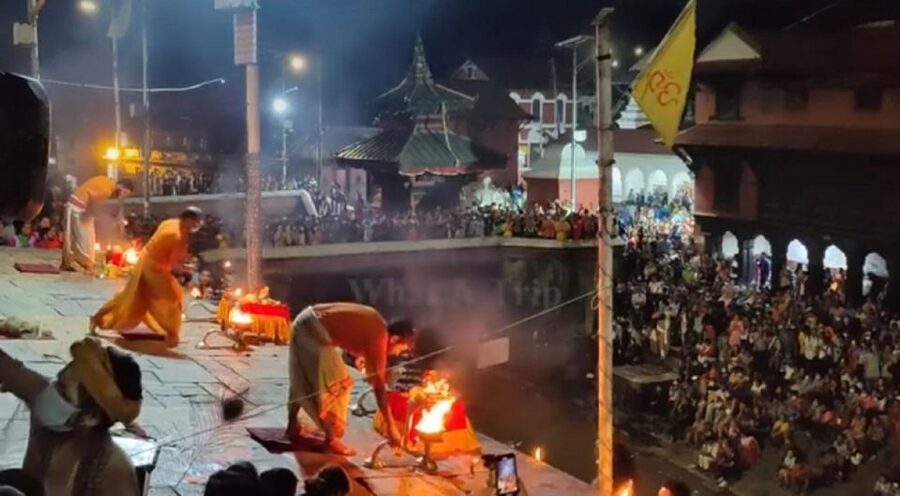
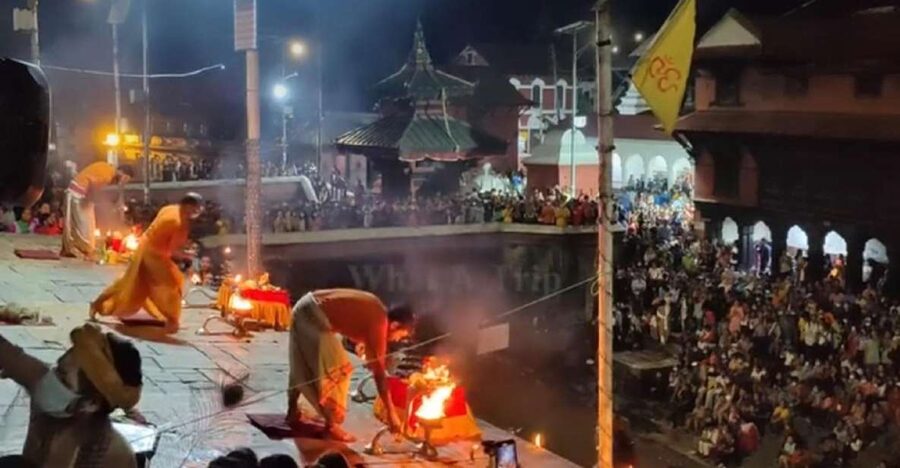
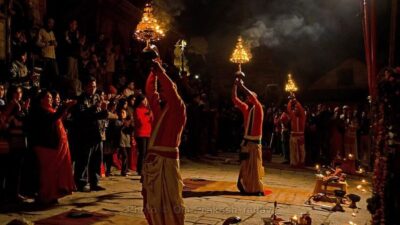
The central ritual feature is the Pashupati Aarati, performed on the banks of the Bagmati River. During the ceremony, priests conduct special acts of worship honoring Lord Shiva. Light, movement, prayer, and the river setting give this part of the visit a strong sense of occasion.
The exact starting time is not stated, so you should confirm availability before booking if the aarati is the main reason you are going. A four-hour tour can include it only when the departure time matches the ceremony. This is the most important planning point in the entire experience.
I like the way the aarati connects several parts of Pashupatinath at once. You are not watching an isolated performance. The river, the temple complex, Hindu devotion, and the cycle of life and death all meet in the same place.
Do not expect a private or quiet ceremony arranged for your group. The appeal lies in witnessing a public religious ritual in its proper setting. Your guide’s job is to explain what you are seeing and help you behave appropriately, not to turn the ceremony into entertainment.
The Value of $32
At $32 per person, this tour offers solid value if you want transport and interpretation handled for you. The price includes hotel pickup and drop-off, an English-speaking guide, a driver, the driver’s salary, fuel, and parking fees.
That package matters in Kathmandu. You avoid arranging separate rides between Thamel, Boudhanath, and Pashupatinath, and you have someone available to explain what you are seeing. For a short tour with two major sites, the included transport makes the price easier to justify.
You still need to budget for entrance fees, since they are not included. The price also excludes food and drinks. No entrance amount is supplied, so check the current fee when you book or ask the provider before setting out.
The tour includes an English audio guide as well as a live English-speaking guide. The human guide should be your first resource for questions and local context, while the audio guide may help reinforce information during independent viewing.
Who Will Get the Most From This Tour
I would choose this experience if you have a limited amount of time in Kathmandu and want more than a simple sightseeing drive. It suits first-time visitors who want an introduction to both Hindu and Buddhist traditions without arranging every detail themselves.
It is also a good fit if you are especially interested in religious architecture, ritual, sacred art, funeral customs, or the way faith shapes urban life. The contrast between the two sites gives you plenty to think about in a short period.
The tour may be less suitable if you want long periods of quiet reflection or detailed photography. Forty-five minutes at Boudhanath and one hour at Pashupatinath leave little room for lingering. The schedule includes walking and free time, but the experience remains a compact overview.
It is also not the best choice if your main goal is shopping or food. Both may be possible in small amounts, but neither is the focus. The purpose is spiritual and cultural discovery.
Practical Ways to Improve the Experience
Confirm the departure time before paying, especially if you want to see the Pashupati Aarati. The ceremony is the part most dependent on timing.
Wear clothing suitable for religious sites and be ready to walk. The itinerary includes walking at both locations, and Pashupatinath requires a respectful approach to worshippers, sadhus, and funeral activity.
Keep your camera ready at Boudhanath, but do not let photographs take over the visit. At Pashupatinath, ask before photographing people or rituals. Your guide can help you understand local expectations.
Use the guide actively. Ask about Lord Shiva, major Hindu festivals, the meaning of the stupa, Tibetan monasteries, and the belief that Kassapa Buddha’s remains are connected with Boudhanath. The tour’s value rises sharply when you treat it as a conversation rather than a transfer between two monuments.
If your needs are specific, mention them after booking when you provide your preferred pickup location. One booking praised Sobit for going out of his way to meet a visitor’s needs, so it is worth explaining any priorities early.
The activity allows cancellation up to 24 hours before departure for a full refund, and you can reserve now and pay later. Those terms are useful if your Kathmandu schedule is still shifting, but they do not remove the need to confirm the aarati timing.
Should You Book It?
Book this tour if you want an efficient, guided introduction to Kathmandu’s Hindu and Buddhist sacred sites. The strongest reasons are the Pashupati Aarati, the chance to see the Bagmati River setting, the visit to Boudhanath, and the convenience of included hotel transport.
I would skip it only if you already know both sites well or want a slower, full-day exploration. For a first visit, $32 is a fair price for the transport, guide, and cultural explanation, provided you confirm that your chosen departure includes the aarati.
FAQ
How long does the Pashupatinath and Boudhanath tour last?
The tour lasts four hours, including pickup from Thamel, visits to Boudhanath and Pashupatinath, and return to Thamel.
What sites are included?
The tour includes Boudhanath Stupa and the Pashupatinath Temple precinct, including the opportunity to witness the Pashupati Aarati when the timing matches the ceremony.
Is hotel pickup and drop-off included?
Yes. Pickup and drop-off are included, and you should provide your preferred pickup location after booking.
Is an English-speaking guide provided?
Yes. The experience includes a live English-speaking guide and an English audio guide.
Are entrance fees included in the price?
No. Entrance fees are not included. Food and drinks are also separate.
Can I cancel or pay later?
You can cancel up to 24 hours in advance for a full refund. The tour also offers reserve now and pay later booking.
New in the Kathmandu listings
- Traditional Momo Making Class★ 5.0 · 10 reviews
- Kathmandu: Ancient City Kirtipur & Pharping Monastery Tour★ 5.0 · 2 reviews
- Kathmandu to Pokhara Premium sofa bus ticket★ 4.0 · 17 reviews
- Women Empowerment Project(Nepali cooking class & jewelry workshop★ 5.0 · 15 reviews
- 7-Day Langtang Valley Trek from Kathmandu★ 5.0 · 1 review
- Kathmandu 2 Nights 3 Days Chitwan Jungle Safari Tour★ 5.0 · 9 reviews
- Yoga Experience Day Trip with Private Transfer From Kathmandu★ 4.0 · 2 reviews
- Wildlife Adventure in Chitwan Nepal★ 4.0 · 4 reviews
Pashupatinath Temple Tours, compared.
Kathmandu Spiritual Sites: Bodhnath & Pashupatinath Tour
Read our review →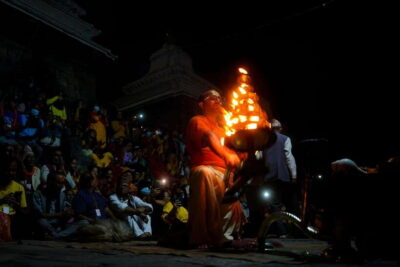
Pashupatinath Temple, Hindu Crematorium and Aarati in-depth Tour
Read our review →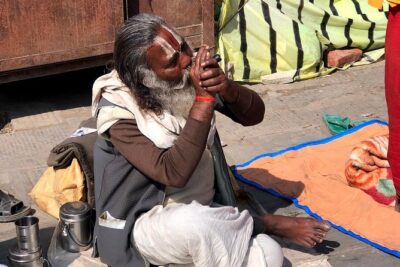
Pashupatinath Evening Aarati: Few Divinely Hours in Kathmandu
Read our review →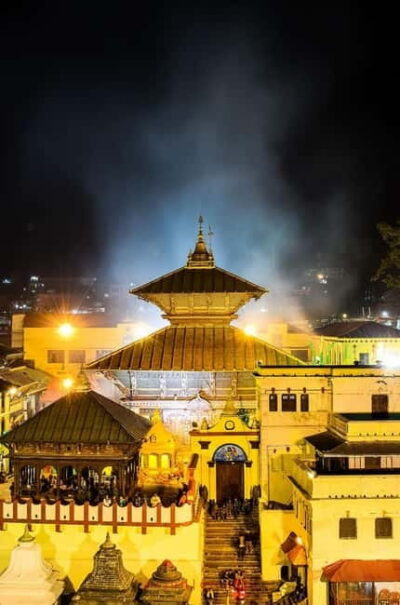
Sacred Pashupatinath: Aarati,Cremation Rites & Boudha Stupa
Read our review →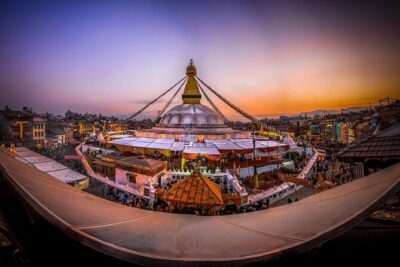
PashupatiNath and BoudhaNath – Private/Small Group
Read our review →Browse the lists this tour appears in