
REVIEW · PASHUPATINATH TEMPLE TOURS
Pokhara: Tal Barahi Temple Evening Aarati Ceremony
Let the lake set the evening’s rhythm. This two-hour Pokhara experience pairs the Tal Barahi Temple Aarati ceremony with a guided walk beside Fewa Lake, giving you both a sacred Hindu ritual and a calm outdoor setting. I like the personal hotel pickup and the English-speaking guide, and I like that the tour explains the temple’s myths instead of asking you to watch in silence without context. The main drawback is that the ceremony can draw a crowd, and the temple area may not suit anyone with limited mobility.
The $38 price is easiest to justify if you value a private experience, transport, and clear commentary in one short outing. You should also plan for a cool evening by the lake, wear proper walking shoes, and treat the Aarati as a religious service rather than a stage show.
In This Review
- Key points at a glance
- Why the Tal Barahi Aarati is worth your evening
- Starting in Pokhara with a simple hotel pickup
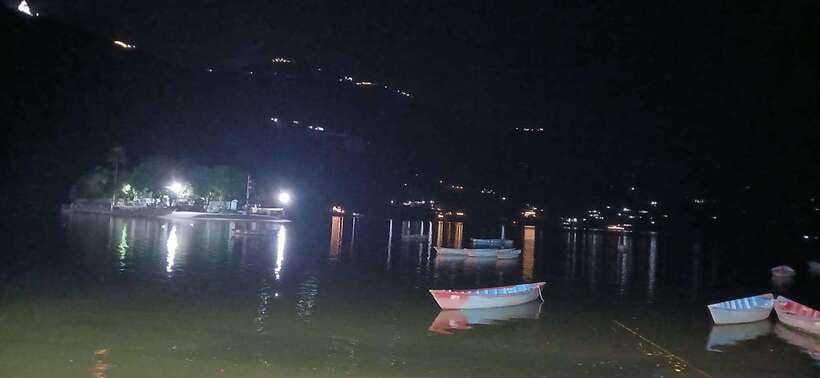
- The fifteen-minute walk along Fewa Lake
- Arriving at Tal Barahi Temple
- Watching the lamps and hearing the hymns
- The guide’s role and the value of context
- Returning through the lakeside evening
- Is $38 a fair price?
- Who will enjoy this evening most?
- Practical advice for a respectful visit
- Should you book the Tal Barahi evening Aarati?
- FAQ
- Where does the Tal Barahi evening Aarati take place?
- How long does the experience last?
- Is hotel pickup included?
- Is the tour private?
- What language is the tour conducted in?
- What should I bring?
- Is the activity suitable for wheelchair users?
Key points at a glance
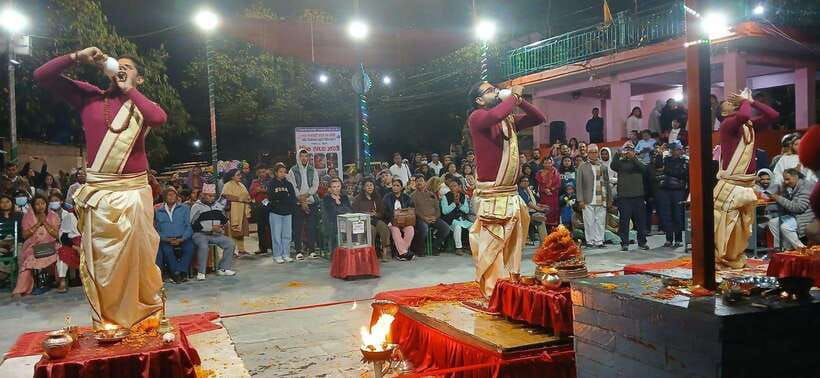
- Lamp ritual beside Fewa Lake: Priests circle lamps while chanting mantras during the evening Aarati.
- Traditional music and hymns: Musicians provide a live religious soundtrack with Hindu instruments.
- Private English-speaking guide: You receive personal commentary about Hinduism, temple myths, and local tradition.
- Hotel pickup in Pokhara: Pickup and return are included, with a name card used to find you.
- Fifteen-minute lakeside walks: The route includes a guided walk along the Fewa Lake foot trail before and after the temple visit.
- Short, focused evening outing: The total duration is two hours, with about 1.5 hours at Tal Barahi Temple.
Why the Tal Barahi Aarati is worth your evening
Pokhara is often treated as a base for mountain views and outdoor trips. This experience gives you a different side of the city. Instead of spending the entire evening around restaurants and shops, you spend it near a revered Hindu temple, listening to hymns and watching priests work with flame, movement, and prayer.
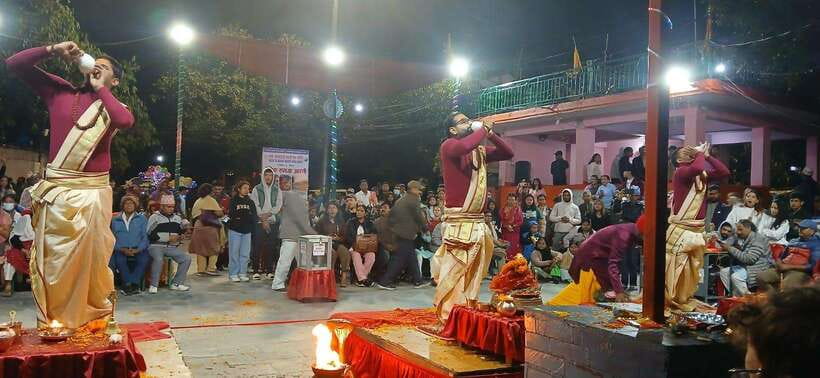
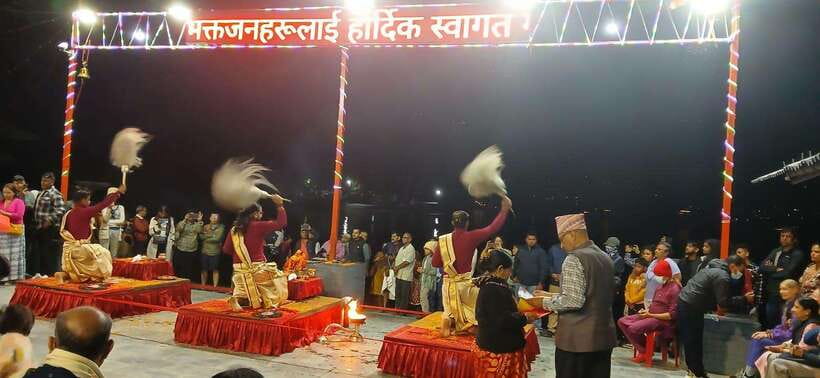
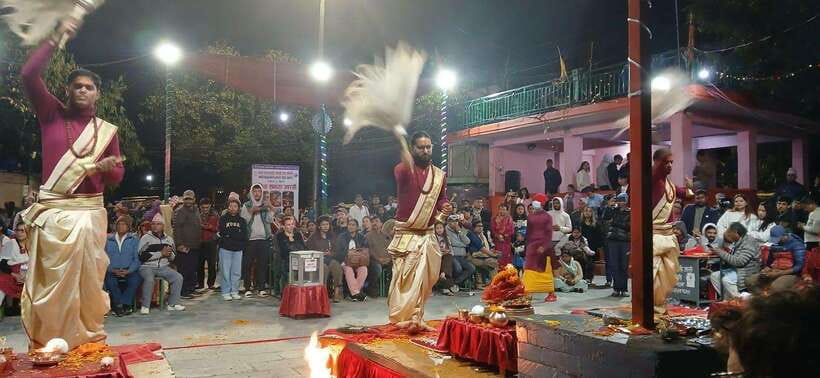
Aarati is a ritual in which priests move lit lamps in a circular motion while chanting mantras. The light is the visual center of the ceremony, but the sound matters just as much. Hymns from musicians playing traditional Hindu instruments help create a steady rhythm, and the lake adds an open, reflective setting around the worship.
You do not need to be Hindu to appreciate the ceremony. You do need to approach it with respect. This is not a performance arranged only for visitors. It is a religious event, so keep your voice low, follow your guide’s advice, and avoid treating the lamps or chanting as a photo opportunity first and a ritual second.
The experience is especially useful if your time in Pokhara is limited. In two hours, you get transport, a guided walk, temple commentary, and an evening ceremony. It will not replace a full cultural tour of Nepal, but it offers a clear and manageable introduction to one part of local religious life.
More visits to Pashupatinath:
- Pokhara: Tal Barahi Temple Aarati Ceremony with Hotel Pickup
★ 5.0 · 1 review - Kathmandu Spiritual Sites: Bodhnath & Pashupatinath Tour
★ 5.0 · 185 reviews - Kathmandu: Pashupatinath Temple Evening Aarati Tour
★ 5.0 · 36 reviews
Starting in Pokhara with a simple hotel pickup
The outing begins with pickup from your hotel in Pokhara. The provider says the guide will meet you with a name card, which is a small detail but a helpful one in a city where several hotels can have similar names.
Since transport is included both ways, you do not need to arrange a taxi for a short evening trip. That matters most after dark, when you may prefer to return directly to your accommodation rather than work out your own ride near the lake.
The tour is set up as a private group, with a personal English-speaking guide. That makes the commentary more useful than a large group briefing. You can ask about the temple, Hindu beliefs, or the meaning of the ritual as the evening develops.
The pickup timing depends on the selected start time. Check availability when booking, since the ceremony is tied to the evening schedule and is not simply a daytime temple visit.
The fifteen-minute walk along Fewa Lake
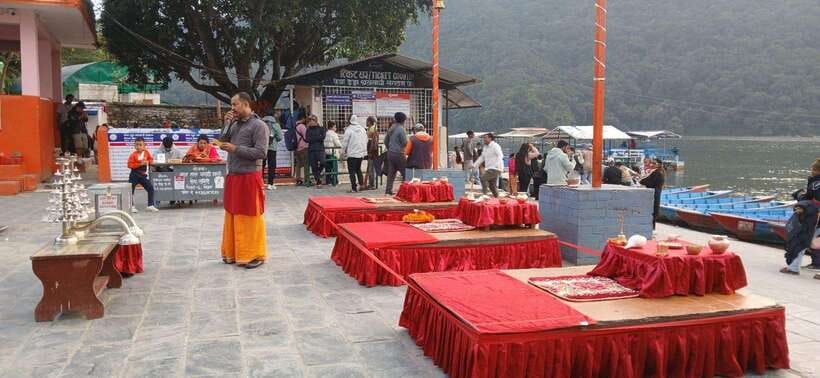
After pickup, the route includes a walk of about 15 minutes. This is not a long hike, but it is more than a transfer from a vehicle to a temple. The foot trail gives you time to notice the lake setting and settle into the slower pace of the evening.
The walk is also one of the best parts of the arrangement because it connects the temple visit to Pokhara itself. You are not sealed inside a vehicle and delivered to a religious site with no sense of place. You move on foot along the water, with the guide providing live commentary and pointing out details connected to the area.
Bring comfortable shoes. The tour is not suitable for wheelchair users or people with mobility impairments, and the walking portions may be difficult if you have trouble standing or walking for extended periods.
You should also bring warm clothing. Even if the afternoon felt mild, evenings near Fewa Lake can turn chilly. A light jacket or warmer layer will make it easier to focus on the ceremony instead of wishing you had packed one.
Arriving at Tal Barahi Temple
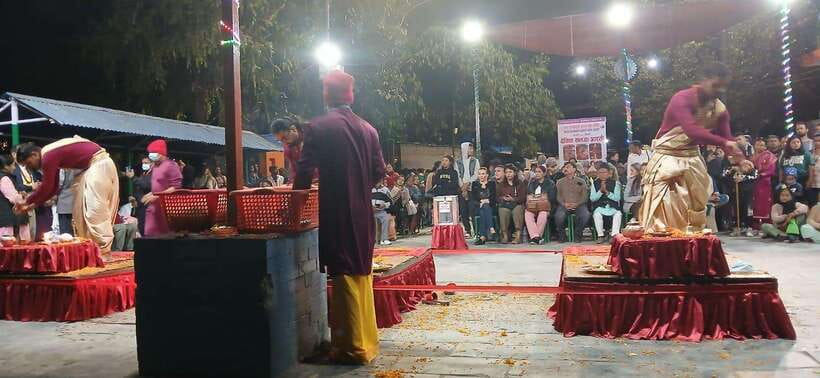
The main guided visit lasts about 1.5 hours. The Tal Barahi Temple is located near Fewa Lake, and the setting gives the ceremony its special character. The temple visit is not presented as an isolated religious stop. It is explained through its place in Pokhara, its myths, and the wider beliefs of Hinduism.
Your guide can help you understand what you are seeing before and during the Aarati. That context is valuable because Hindu rituals often use gestures, sounds, objects, and repeated movements that may not be obvious to someone visiting from another religious tradition.
Expect the temple area to be busy. The ceremony is popular with local people and tourists, so you may not have a quiet, empty space around you. A crowd is part of the practical reality here, and it can make viewing or photography less easy than expected.
The best approach is to accept that you are joining a public religious moment, not receiving a private viewing of the ritual itself. A private guide does not mean a private ceremony. It means your explanation and movement through the experience can be more personal.
A short list of alternatives around Pokhara
- ZipFlyer Nepal – The World’s Steepest Zip-line
★ 5.0 · 608 reviews - Bungee Pokhara by HighGround Adventures
★ 5.0 · 366 reviews - From Pokhara: Sarangkot Sunrise Himalayas Tour
★ 4.7 · 218 reviews - ATV Adventure Tour in Pokhara, Nepal
★ 5.0 · 194 reviews
Watching the lamps and hearing the hymns
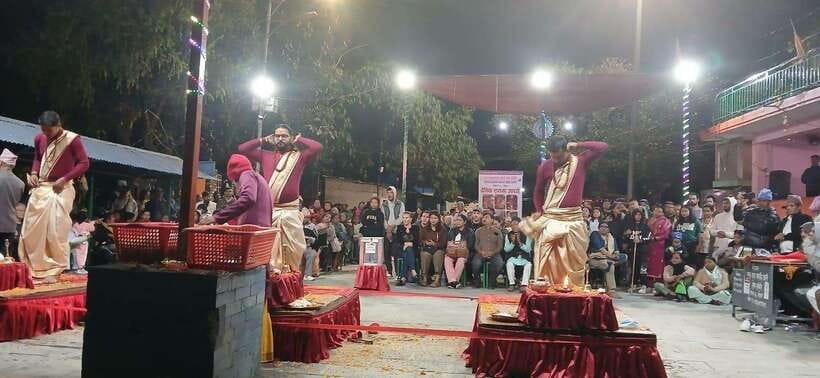
The Aarati begins with priests moving lamps in a circle while chanting mantras. The motion is simple but powerful, especially as the lamps become the visual focus in the growing evening darkness.
Musicians sing hymns and play traditional Hindu instruments. The result is a ceremony led by sound as much as sight. If you enjoy religious music, ritual, or quiet cultural observation, this may be the part that stays with you longest.
A verified booking from Megumi of Japan described the chanting, lights, and view of Fewa Lake as creating a peaceful atmosphere. That assessment points to the real strength of the experience: the elements work together. The lamps alone might be brief, and the lake alone might be familiar, but the combination gives the evening a clear mood and purpose.
You should keep your camera ready if photography matters to you, but use it carefully. The tour information specifically lists a camera among the useful things to bring, while also stressing decorum. Take photographs only when appropriate, and do not block people who have come to worship.
Smoking, alcohol, and drugs are not allowed. These rules are straightforward, but they matter more here than they would during a casual sightseeing walk. Dress and behave as you would for a place of worship.
The guide’s role and the value of context
A good guide makes the difference between seeing a ritual and understanding it. Here, the guide provides live English commentary about Hinduism, the temple’s history, and its myths.
The supplied information does not name the individual guide, so you should not expect a particular person by name. The provider is My Dream Adventure, and Megumi’s verified booking praised the company’s smooth arrangements and kind guidance.
That feedback is useful because the tour depends on small moments of organization. The pickup must work, the walking route must be clear, and the guide must explain when to observe quietly. The strongest praise was directed at the calm atmosphere and the way the arrangements were handled.
Do not expect an academic lecture. The outing lasts only two hours, and its purpose is to make the ceremony understandable and accessible. If you want detailed study of Hindu theology or an extensive tour of Pokhara’s religious sites, you will need a longer program. If you want a friendly introduction before or during the Aarati, this format makes sense.
Returning through the lakeside evening
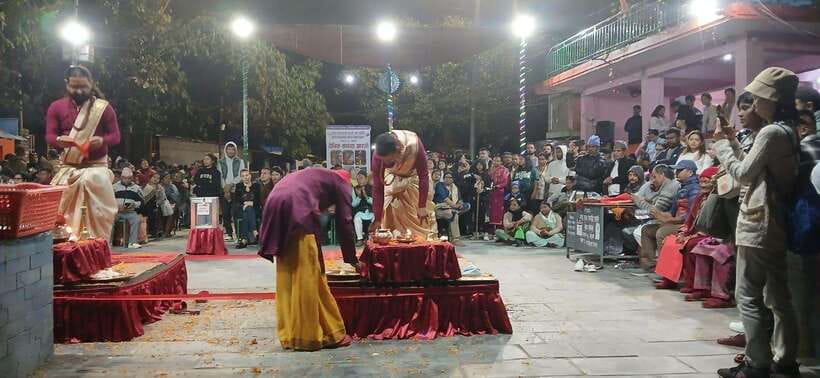
After the temple visit, you walk back along the Fewa Lake foot trail for roughly 15 minutes before returning to Pokhara and your hotel. The return walk gives you a second chance to enjoy the water after the ceremony.
This part is modest, but it helps the outing feel complete. You begin with a walk toward the temple, observe the ceremony, then leave on foot rather than ending abruptly at the temple entrance. The lake view remains part of the experience from beginning to end.
The route is not described as a major hike or demanding excursion. Still, you should be comfortable walking for the two short sections and standing during the temple visit. If that sounds difficult, this is not the right activity for you.
Is $38 a fair price?
At $38 per person, the tour is not the cheapest way to watch an evening ceremony. You are paying for more than admission, though. The price includes hotel pickup and drop-off in Pokhara, a private English-speaking guide, the guided lakeside walk, and live commentary about the temple and Hinduism.
That bundle has real value if you are new to Pokhara or prefer not to manage local transport at night. It also suits anyone who wants to ask questions privately rather than keep up with a large group.
The value is weaker if you only want to see the Aarati and are comfortable arranging your own way to the lake. The ceremony itself is the central attraction, not a long list of included activities. You are paying for ease, interpretation, and a planned cultural encounter.
The free cancellation window of up to 24 hours and the option to reserve now and pay later add flexibility. Those terms are useful when your Pokhara schedule depends on weather or changing plans, but they should not be the main reason to book. The real decision is whether the private guidance and transport are worth the cost to you.
Who will enjoy this evening most?
I would recommend this outing to you if you want a gentle cultural activity after a day of sightseeing. It is short enough to fit around other Pokhara plans, and it does not require a full day away from town.
It suits first-time visitors who want help understanding a Hindu ceremony. The guide can explain the temple’s myths and religious setting, which gives the chanting and lamp ritual more meaning.
It also suits photographers who care about atmosphere, especially the meeting of lamp light, music, and the lake. Photography is allowed as a practical matter because a camera is listed among the suggested items, but you must place respect before getting the perfect image.
You may want to skip it if you dislike crowds or prefer quiet, empty heritage sites. The Aarati is popular, and the ceremony takes place in a public setting.
You should also skip it if walking or standing is hard for you. The activity is not suitable for wheelchair users or people with mobility impairments, and there is no suggestion of an adapted route.
Families and couples may find the private format comfortable, but the supplied details do not specify a minimum age or child policy. If you are booking with children, confirm those points directly before paying.
Practical advice for a respectful visit
Wear comfortable shoes and bring a warm layer. These are the two most useful preparations because the tour includes two short walks and takes place beside the lake after sunset.
Carry a camera if you want one, but keep it secondary. Do not use flash or move into people’s way without checking that it is appropriate.
Arrive ready for a religious event. Keep conversation quiet during the chanting, follow the guide’s instructions, and avoid smoking, alcohol, or drugs.
Because crowds are expected, do not assume you will have an unobstructed view at every moment. Staying close enough to hear your guide may matter more than standing in the front.
The tour is conducted in English. If you need another language, the stated offering does not provide one, so confirm before booking rather than assuming interpretation will be available.
Should you book the Tal Barahi evening Aarati?
Book this experience if you want a well-organized, two-hour introduction to Pokhara’s Hindu culture, with a private guide and hotel transport included. The best reasons are the lamp ceremony, the live hymns, the lakeside setting, and the chance to learn what the ritual means while you watch it.
The strongest praise centers on the peaceful mix of chanting, lights, and Fewa Lake, along with the kind and smooth service provided by My Dream Adventure. That combination gives the evening a clear sense of place.
Skip it if your main goal is a completely quiet visit, if you dislike crowds, or if you cannot manage the walking portions. For everyone else, $38 is a reasonable price for a focused cultural outing that adds substance to a night in Pokhara without taking over your whole schedule.
FAQ
Where does the Tal Barahi evening Aarati take place?
The ceremony takes place at Tal Barahi Temple in Pokhara, near Fewa Lake.
How long does the experience last?
The total duration is two hours. The guided temple visit lasts about 1.5 hours, with roughly 15 minutes of walking before and after it.
Is hotel pickup included?
Yes. Pickup and drop-off are included from hotels in Pokhara. The guide will use a name card to identify you.
Is the tour private?
Yes. The experience is offered as a private group with a personal English-speaking guide.
What language is the tour conducted in?
The live tour guide speaks English.
What should I bring?
Bring comfortable shoes, warm clothing, and a camera if you would like to take photographs.
Is the activity suitable for wheelchair users?
No. The activity is not suitable for wheelchair users or people with mobility impairments.
New in the Pokhara listings
- Pokhara: Pokhara Highlights Tour by Bus★ 3.6 · 10 reviews
- Discover Pokhara in Style: Private Vehicle Service with Driver★ 5.0 · 5 reviews
- Multi-Day Tour from Pokhara, Poon Hill and Mulde Trek★ 5.0 · 1 review
- Pokhara in 5 Hours: Lake, Museum, Cave, Falls & Pagoda Hill★ 4.5 · 16 reviews
- Private 4 Day Poon Hill Trek from Pokhara★ 5.0 · 16 reviews
- 4 Day Mardi Himal Base Camp Trek from Pokhara★ 5.0 · 18 reviews
- From Pokhara Full Day Entire Pokhara Tour with Guide★ 5.0 · 1 review
- 7-Day Trek to Annapurna Base Camp from Pokhara★ 5.0 · 12 reviews
Pashupatinath Temple Tours, compared.
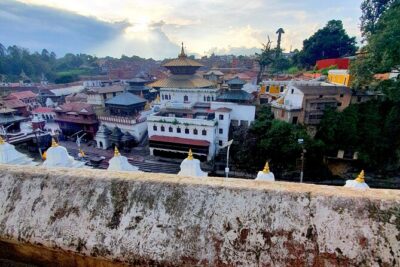
Kathmandu Spiritual Sites: Bodhnath & Pashupatinath Tour
Read our review →
Pashupatinath Temple, Hindu Crematorium and Aarati in-depth Tour
Read our review →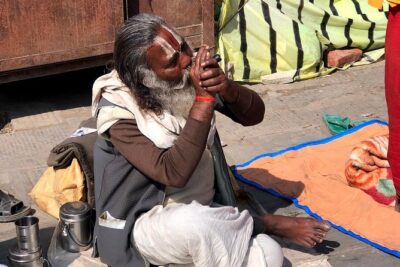
Pashupatinath Evening Aarati: Few Divinely Hours in Kathmandu
Read our review →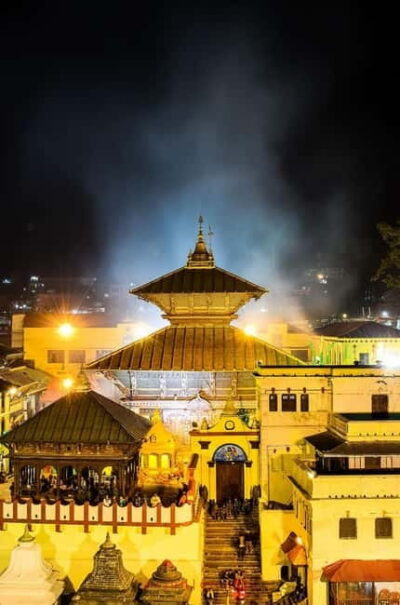
Sacred Pashupatinath: Aarati,Cremation Rites & Boudha Stupa
Read our review →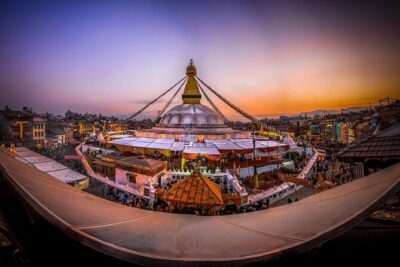
PashupatiNath and BoudhaNath – Private/Small Group
Read our review →Browse the lists this tour appears in