REVIEW · KATHMANDU TOURS
Spiritual Journey to Kailash Manasarovar 16 Days Overland Trip
Sacred peaks demand patience. This 16-day Kailash Manasarovar journey combines Kathmandu’s Hindu and Buddhist sites with the long overland route into Tibet, the holy waters of Lake Manasarovar, and the three-day Kailash Kora. I like the small group limit of 10 and the practical care built into the trip, including daily blood pressure and oxygen checks, an oxygen cylinder, private transport, and full-board vegetarian meals. The main concern is the pace: long road days and a demanding trek over Dolma La Pass leave little room for a slow, easy holiday.
I also like the thoughtful cultural beginning. Evening worship at Pashupatinath, Bhaktapur’s old squares, Doleshwor Mahadev, and the great Shiva statue at Sanga give you a spiritual setting before the high-altitude pilgrimage begins. The drawback is that some Kathmandu admission fees, roughly $30, are extra, and the route includes several seven-to-nine-hour driving days.
In This Review
- Key points at a glance
- What the $3,999 price really covers
- Kathmandu starts the pilgrimage with Shiva and stupas
- Bhaktapur and Sanga add a strong cultural day
- The road to Syabrubesi and the Tibetan border
- Lake Manasarovar brings the journey into focus
- Darchen at 4,575 meters is no ordinary trailhead
- The three-day Kailash Kora is the physical heart of the trip
- Returning through Saga and Kyirong
- Food, hotels, health checks, and guide support
- Who should book this Kailash journey?
- Should you book it?
- FAQ
- How long is the Kailash Manasarovar overland trip?
- What is the price per person?
- Where does the trip begin?
- How many people can join the group?
- How far in advance should I book?
- What passport requirements apply?
- Are Tibet visa and permit fees included?
- Are meals included?
- Are horse and pony fees included during the Kora?
- What is the cancellation policy?
Key points at a glance
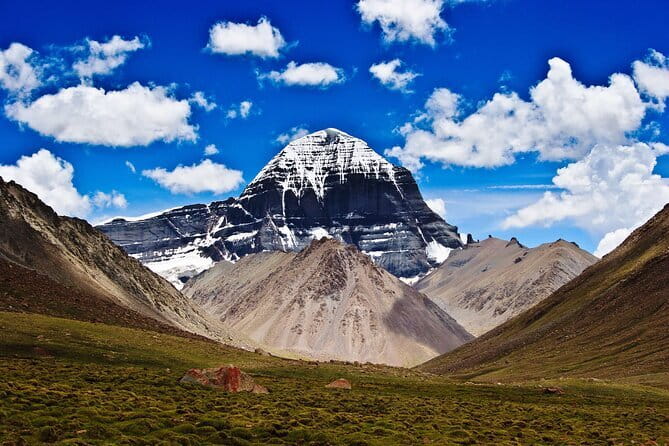
- The Kailash Kora takes three days: You walk from Darchen to Dirapuk, cross Dolma La Pass to Zuthulphuk, then return to Darchen.
- Altitude is the real challenge: Darchen sits at about 4,575 meters, with the highest point reached on the Dolma La crossing.
- Kathmandu provides valuable preparation: Pashupatinath, Boudhanath, Swayambhunath, Patan, Bhaktapur, and Sanga’s huge Shiva statue frame the journey in Nepal’s religious traditions.
- Health support is built in: Daily blood pressure and blood oxygen checks, plus an oxygen cylinder for altitude sickness, are included.
- Meals and transport reduce daily hassle: Private transportation, 15 breakfasts, 15 dinners, 11 lunches, and full-board pure vegetarian food are covered.
- Advance planning is essential: You need to book at least 20 days ahead, send a passport photo within two days of confirmation, and carry a passport valid for at least six months.
What the $3,999 price really covers
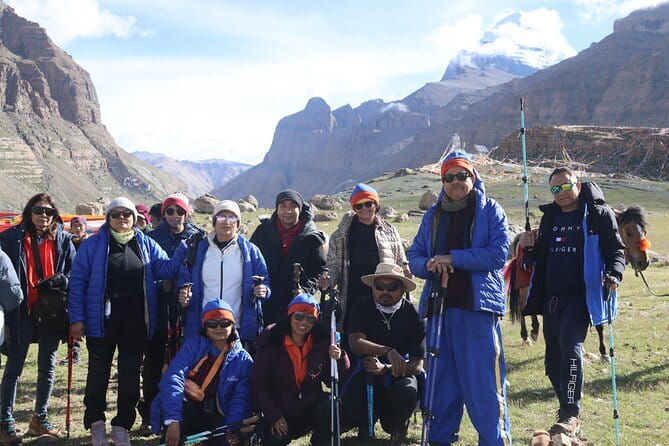
At $3,999 per person, this is not a casual sightseeing package. You are paying for a complex cross-border journey that includes private transportation, Tibet visa and permit fees, hotels in Kathmandu, the best available accommodation during the Kora, meals, sightseeing, health checks, and support at high altitude.
That package can offer fair value if you would otherwise have to arrange transport, permits, hotels, food, and mountain support separately. The price also includes the administrative work needed for a Tibet entry permit, which is why the operator requires early booking.
Still, you should budget for extras. Horse and pony fees during the Kora are not included. Personal spending and tips are also separate, as are entry fees for Kathmandu monuments, estimated at about $30. The phrase best possible accommodation during Parikrama is worth noting. Conditions during the pilgrimage may be simpler than the three-star hotels used in Kathmandu.
The group size is capped at 10 people, and private departures can be arranged for groups larger than five. A small group matters here. On a high-altitude route, you want clear communication, attention when someone feels unwell, and less waiting at each stop.
A short list of alternatives around Kathmandu
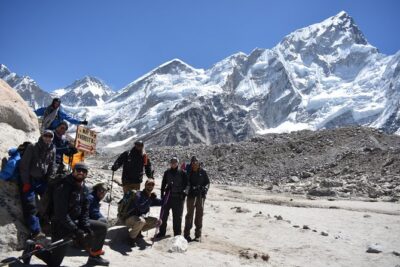
- Everest Base Camp Trek – 14 Days
★ 5.0 · 1,499 reviews - Private Kathmandu Sightseeing Tour | UNESCO World Heritage sites
★ 5.0 · 756 reviews - Everest Base Camp Helicopter Tour landing at Everest View Hotel
★ 5.0 · 668 reviews
Kathmandu starts the pilgrimage with Shiva and stupas
The journey opens at Pashupatinath Temple, where you attend the evening aarti beside the Bagmati River. Oil lamps, bells, hymns, and prayers create a powerful introduction to the worship of Shiva. The ceremony lasts about two hours, and admission is listed as free.
This is more than a quick photo stop. Pashupatinath establishes the religious connection between Kathmandu and Kailash, a mountain sacred to Shiva devotees. You can expect a ceremonial setting rather than a quiet museum visit, so respectful clothing and behavior matter.
Day two includes a visit to the Chinese Visa Centre to complete Tibet visa formalities, followed by a trip to Chandragiri Hills after breakfast. The hill visit takes about three hours and gives you a break from the city. Admission is not included, so ask your guide about the current fee.
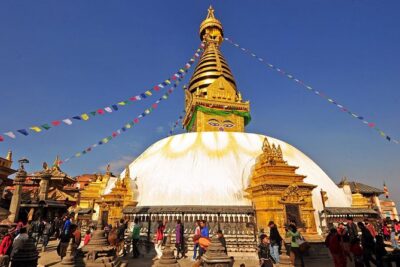
The schedule then returns to central Kathmandu for a five-hour visit to major UNESCO-listed sites. Swayambhunath, often called the Monkey Temple, sits above the city and is known for its Buddhist symbolism and broad views. Boudhanath Stupa offers a different mood, with its large circular form and strong Tibetan Buddhist connections.
Pashupatinath appears again in the Kathmandu sightseeing day, even though it was visited on the first evening. That may mean the schedule allows a second look, or it may be a repeated itinerary entry. Ask for clarification before departure if you want every sightseeing hour clearly assigned.
Bhaktapur and Sanga add a strong cultural day
The fourth day focuses on Bhaktapur and nearby religious sites. Bhaktapur Durbar Square is valued for its medieval buildings, carved woodwork, 55-Window Palace, and Nyatapola Temple. Five hours gives you enough time to see the main monuments without making the stop feel rushed.
Doleshwor Mahadev adds a more devotional setting. It is regarded as one of the Kedarnath temples and is associated with Lord Shiva. The stop is useful for understanding how the Kailash pilgrimage fits into a wider network of Shiva worship in Nepal.
You also visit the Kailashnath Mahadev statue at Sanga, described as 143 feet, or 43.5 meters, high. The enormous standing Shiva figure is set on a hill above Kathmandu Valley and makes a memorable visual link to the mountain pilgrimage ahead.
The Kathmandu and Bhaktapur portion is not filler. It lets you see living religious practice before the route moves into Tibet. It also provides several lower-altitude days to adjust to the rhythm of the group before the long mountain drives.
The road to Syabrubesi and the Tibetan border
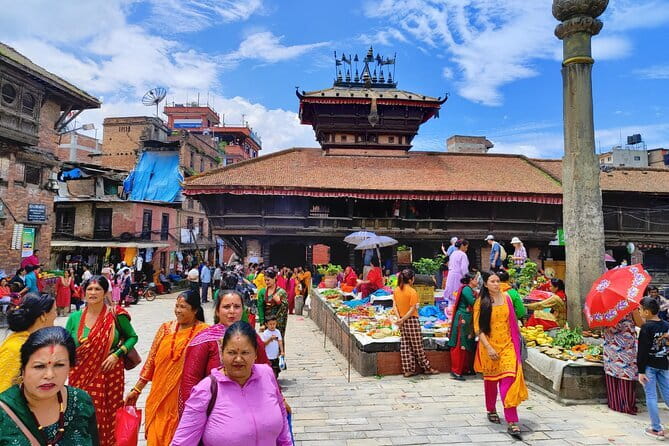
On day five, you collect the Tibet visa and drive from Kathmandu to Syabrubesi, a village at about 1,550 meters. The drive takes around seven hours and passes through Himalayan foothill scenery.
This is the first clear shift from city touring to expedition travel. You will spend much of the day in the vehicle, and road conditions can make the journey tiring. Pack water, snacks if desired, medication, and something warm within easy reach rather than buried in your main luggage.
Day six brings the border crossing at Rasuwa Gadhi and entry into Tibet, followed by a drive to Kyirong, also written as Gyirong. The town is surrounded by steep mountain scenery and valleys. The seven-hour day is also the start of altitude adjustment, so do not treat it as an ordinary transfer.
The next day takes you to Saga County in about six hours. The route crosses broad Tibetan scenery, with chances to see traditional villages, nomadic herders, and wide-open views. There is little sightseeing structure here. The value lies in watching the setting change as you move toward the high plateau.
A completely different way to spend the day:
- Half day cooking class in Thamel kathmandu
★ 5.0 · 607 reviews - Everest Base Camp Trekking
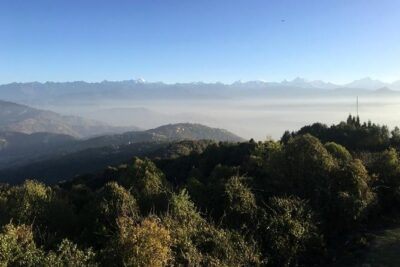
★ 5.0 · 485 reviews - Nagarkot Sunrise View and Day Hiking from Kathmandu
★ 5.0 · 471 reviews - Kathmandu: Full Day 7 UNESCO Tour with Lunch – Private/Group
★ 5.0 · 415 reviews
Lake Manasarovar brings the journey into focus
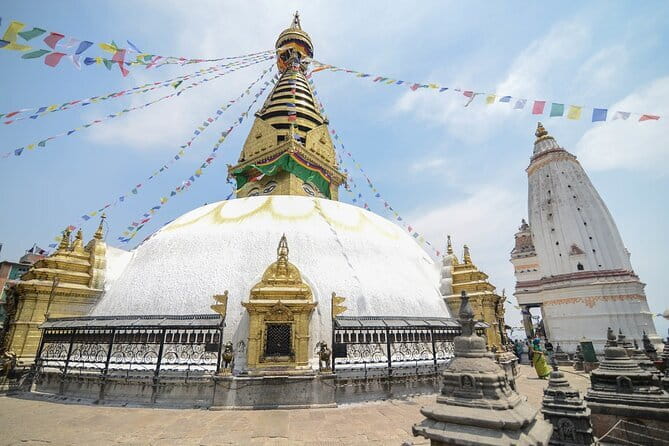
Day eight takes you to Manasarovar Wetland and Lake Mansarovar, one of the world’s highest freshwater lakes. The program includes a puja on the shore, with views toward Mount Kailash.
For many people, this is the emotional center of the trip. The lake is sacred in both Hindu and Buddhist traditions, and the ritual gives you a formal moment of prayer before the physical test of the Kora. The listed activity time is about four hours, but the road to the lake is part of the day’s effort.
You should approach this stop with patience. High altitude can make even standing and walking feel harder than expected. Keep your pace gentle, follow the daily health checks, and tell the team promptly if you feel dizzy, breathless, or unusually weak.
Darchen at 4,575 meters is no ordinary trailhead
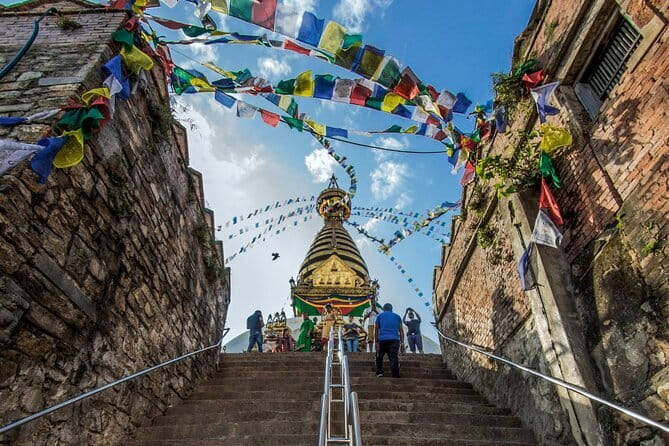
On day nine, you drive to Darchen, the starting point for the Kailash Kora. The drive takes about seven hours, and the town sits at approximately 4,575 meters.
That elevation is a serious consideration. The trip asks for moderate physical fitness, but the Kora is more demanding than a normal day hike. Your experience will depend on how your body handles altitude, not only on your walking ability.
Darchen is described as a pilgrimage base, so expect a practical staging point rather than a resort town. Use this time to check clothing, footwear, water, and personal medication. Horse and pony support is available at an additional cost, but those fees are not part of the $3,999 package.
The three-day Kailash Kora is the physical heart of the trip
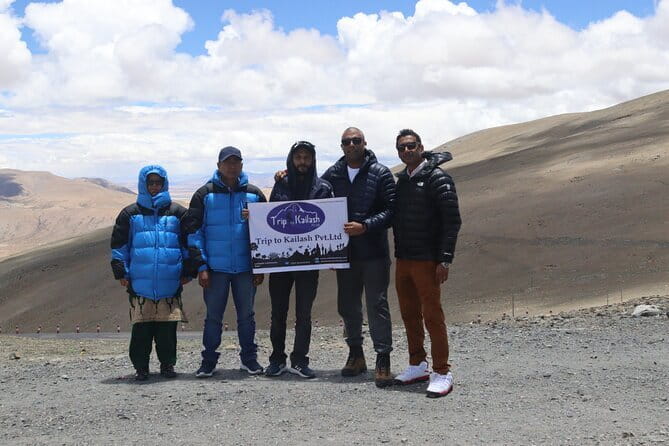
Day ten begins the walk from Darchen to Dirapuk Monastery. The trek takes about seven hours and brings you closer to Mount Kailash through rugged mountain terrain.
The route is important for both its religious meaning and its views. Circumambulating Kailash is a sacred act, and the first day gives you the time to settle into a slower walking rhythm. Do not judge your condition by the first hour. Altitude fatigue can build gradually.
Day eleven is the toughest section. You walk from Dirapuk to Zuthulphuk, cross Dolma La Pass, and spend around nine hours on the trail. This is the highest point of the Kora and the part that demands the most from your legs, lungs, and concentration.
The exact difficulty will vary with weather and individual condition, but you should treat this as a serious mountain crossing. The included oxygen cylinder and daily monitoring are helpful safeguards, not a guarantee that altitude problems cannot occur. Your guide’s support and your willingness to stop or adjust your pace matter more than trying to keep up with the fastest person in the group.
The final Kora day runs from Zuthulphuk back to Darchen and takes around seven hours. It is still a substantial walk, but completing the circuit gives the pilgrimage a clear sense of purpose. The return to Darchen is a time to rest, eat, and recognize what you have managed.
The experience is not designed for someone seeking a soft adventure. You need to accept basic mountain conditions, long walking hours, and the possibility that the high-altitude setting will dictate the day.
Returning through Saga and Kyirong
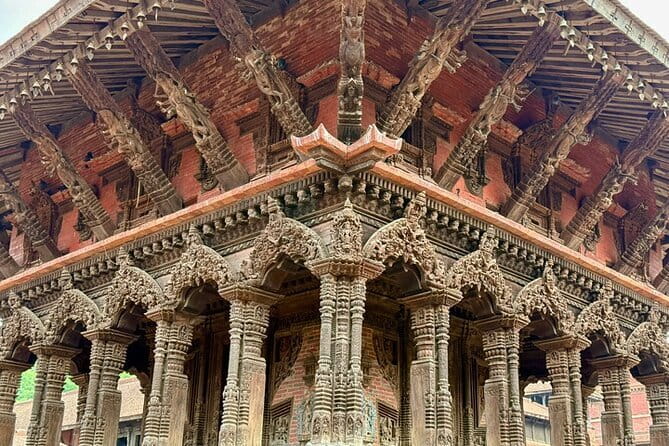
After the Kora, day thirteen retraces the route to Saga County in about six hours. This is a recovery day in practical terms, though it remains a long drive. The wide Tibetan scenery gives you space to reflect on the pilgrimage.
Day fourteen takes you back to Kyirong for an overnight stay, with about five hours of driving. The team helps with necessary arrangements, which is useful after several demanding days.
On day fifteen, you complete immigration formalities at the Rasuwa Gadhi border and drive to Kathmandu. The stated drive is about nine to eleven hours over 265 kilometers, while the activity duration is listed as eight hours. Either way, plan for a very long road day.
The final morning includes breakfast and departure to Tribhuvan International Airport, with about two hours allocated. Do not schedule a tight onward flight without checking the exact pickup and airport timing with the operator.
Food, hotels, health checks, and guide support
The trip includes pure vegetarian meals, with 15 breakfasts, 15 dinners, and 11 lunches. That covers most of the route, though you should confirm which meals are not included and carry any personal snacks you rely on.
Kathmandu accommodation is in three-star hotels. During the Kora, the operator provides the best available accommodation, which signals that facilities may be more basic. You should pack for changes in comfort rather than expecting hotel standards throughout.
Private transportation is included for the road sections. That matters because the itinerary contains repeated long drives, and a private vehicle can make stops and timing easier than a large public group transfer.
Daily blood pressure and blood oxygen monitoring is one of the strongest practical features. The support team also includes a guide, chef, and porter. Kashyap is specifically praised for being attentive, encouraging, and careful about individual needs. That kind of personal support is especially valuable during the Kora, when people in one group may react very differently to altitude.
The team’s care is a major reason this trip may work well for someone making the journey from abroad or joining in Kathmandu. You are not simply handed a route and left to manage every detail yourself.
Who should book this Kailash journey?
I would recommend it to a spiritually motivated person who accepts physical discomfort as part of the experience. It suits someone who wants Nepalese temples, Tibetan scenery, a formal puja at Lake Mansarovar, and a supported attempt at the Kailash Kora in one organized trip.
It is less suitable if you dislike long drives, vegetarian food, basic mountain accommodation, or fixed schedules. It is also a poor match for anyone who expects a standard sightseeing tour with short walks and plenty of spare time.
The fixed departures are useful for planning, but they limit flexibility. The listed dates are May 12, June 10, July 8, August 11, and September 9, 2024. Since the permit process takes time, you must book at least 20 days ahead and send a passport photo within two days of confirmation. Your passport must be valid for at least six months.
The cancellation terms are strict close to departure. Cancel at least six full days before the start for a full refund, two to six days before for a 50 percent refund, and less than two days before for no refund. Changes inside those same cutoffs are not accepted.
Should you book it?
Book this trip if the Kailash Kora is your main goal and you value support, health checks, permits, meals, and a small group more than luxury. The route is long and demanding, but it connects major sacred sites in Nepal with one of the world’s most important pilgrimage circuits.
Before paying, confirm the exact departure date, the Tibet permit timing, the accommodation expected during the Kora, and the plan for horses or ponies. If you are physically prepared, comfortable with altitude, and willing to travel at the pace of the mountain, this offers a well-supported way to approach Kailash. If you need an easy holiday, choose something gentler.
FAQ
How long is the Kailash Manasarovar overland trip?
The trip lasts approximately 16 days, beginning in Kathmandu and ending at Tribhuvan International Airport.
What is the price per person?
The listed price is $3,999 per person.
Where does the trip begin?
The meeting point is Tribhuvan International Airport in Kathmandu, Nepal. The stated start time is 10:15 am.
How many people can join the group?
The activity has a maximum of 10 travelers. A private tour can be organized for groups larger than five people.
How far in advance should I book?
You need to book at least 20 days before departure because the Tibet entry permit must be arranged.
What passport requirements apply?
After confirmation, you must send a passport photo within two days. Your passport must be valid for at least six months.
Are Tibet visa and permit fees included?
Yes. Tibet visa fees and permit fees are included in the tour price.
Are meals included?
Yes. The package includes pure vegetarian meals, with 15 breakfasts, 15 dinners, and 11 lunches.
Are horse and pony fees included during the Kora?
No. Horse and pony fees during the Kora are not included and must be paid separately.
What is the cancellation policy?
You can receive a full refund when canceling at least six full days before the start time. A cancellation two to six full days before departure receives a 50 percent refund. Canceling less than two full days before the start time receives no refund.
New in the Kathmandu listings
- Traditional Momo Making Class★ 5.0 · 10 reviews
- Kathmandu: Ancient City Kirtipur & Pharping Monastery Tour★ 5.0 · 2 reviews
- Kathmandu to Pokhara Premium sofa bus ticket★ 4.0 · 17 reviews
- Women Empowerment Project(Nepali cooking class & jewelry workshop★ 5.0 · 15 reviews
- 7-Day Langtang Valley Trek from Kathmandu★ 5.0 · 1 review
- Kathmandu 2 Nights 3 Days Chitwan Jungle Safari Tour★ 5.0 · 9 reviews
- Yoga Experience Day Trip with Private Transfer From Kathmandu★ 4.0 · 2 reviews
- Wildlife Adventure in Chitwan Nepal★ 4.0 · 4 reviews
Kathmandu Tours, compared.
Private Kathmandu Sightseeing Tour | UNESCO World Heritage sites
Read our review →
Everest Base Camp Helicopter Tour landing at Everest View Hotel
Read our review →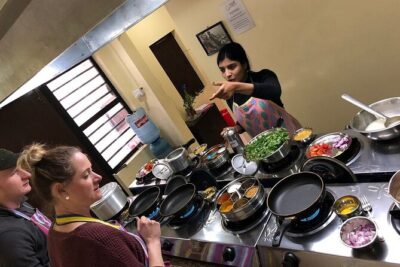
Nagarkot Sunrise View and Day Hiking from Kathmandu
Read our review →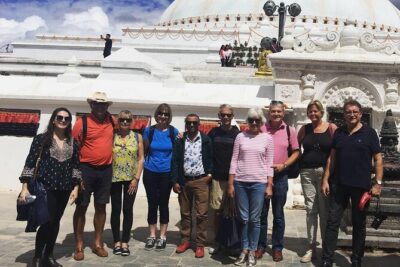
Full Day 7 UNESCO Tour with Lunch – Private/Group
Read our review →