REVIEW · KATHMANDU TOURS
Spiritual Nepal: Expert insight into Multifaith Journey
Sacred Kathmandu comes alive in two powerful places. This four-hour tour pairs Boudhanath, Nepal’s great Buddhist stupa, with Pashupatinath, the country’s most important Hindu pilgrimage site. I like the clear contrast between the two faiths, and I like having an English-speaking Nepali guide explain customs that can be hard to read on your own.
I also appreciate the small private group, capped at 12 people, which gives you a better chance to ask questions and stay close to your guide. The main caution is time: traffic can make the afternoon feel rushed, and one reported experience found the Sadhu interaction less guided than expected.
In This Review
- Key points to know before you book
- Why these two sacred sites work well together
- Starting at Hotel Marshyangdi and heading to Boudhanath
- Walking or driving toward Pashupatinath
- Entering Pashupatinath and meeting the Sadhus
- Watching cremations along the Bagmati River
- Seeing Aarati, the evening offering of light
- How good is the guide service?
- Clothing, children, and practical preparation
- Who will get the most from this four-hour tour?
- Should you book Spiritual Nepal?
- FAQ
- How long does the Spiritual Nepal tour last?
- Where does the tour start and finish?
- Which sites are included?
- Is transportation included?
- How many people are in the group?
- Are Sadhu offerings and palm readings included?
- What should I wear?
- Can children join the tour?
Key points to know before you book
- Two UNESCO-listed religious sites: Boudhanath and Pashupatinath give you a useful look at Nepal’s Buddhist and Hindu traditions in one outing.
- Join the local rhythm at Boudhanath: You can turn the prayer wheels and walk the Kora around the white dome with worshippers.
- Pashupatinath is a serious place: You may see Sadhus, cremations along the Bagmati River, and the evening Aarati ceremony.
- Small-group attention: The private group format is limited to 12 people, with guides such as Rozit, Bini, Subash, and Bidhya praised for their care and explanations.
- Bring extra cash if you want to participate: Sadhu offerings, palm reading, and butter lamps cost extra and are not part of the $150 price.
- Plan for modest clothing and about 2 kilometers of walking: Cover your shoulders and knees, and wear comfortable shoes.
Why these two sacred sites work well together
This tour makes sense because Boudhanath and Pashupatinath show two different sides of Kathmandu’s spiritual life. You begin with Tibetan Buddhist practice, then move to a major Hindu temple complex on the Bagmati River.
You do not need to be especially religious to enjoy the visit. One strong feature of the experience is its focus on daily practice rather than just architecture. You turn prayer wheels, walk in a clockwise circle, observe offerings, listen to explanations, and see how worship fits into ordinary life.
The $150 price is not bargain sightseeing, but it includes admission to both UNESCO Heritage Sights, an English-speaking Nepali guide, and transportation at the beginning and end. For a private group of up to 12, that can be fair value, especially if you want context rather than a quick look and a few photographs.
Still, you should know what the price does not cover. Food and drinks are extra. So are offerings to monks or Sadhus, butter lamps at Boudhanath, and palm reading. Palm readings are listed at about $7.50 to $9 per person, while interacting with or photographing Sadhus may cost about $7.50.
A short list of alternatives around Kathmandu
- Everest Base Camp Trek – 14 Days
★ 5.0 · 1,499 reviews - Private Kathmandu Sightseeing Tour | UNESCO World Heritage sites
★ 5.0 · 756 reviews - Everest Base Camp Helicopter Tour landing at Everest View Hotel
★ 5.0 · 668 reviews
Starting at Hotel Marshyangdi and heading to Boudhanath
The meeting point is Hotel Marshyangdi. From there, transportation takes you to Boudhanath, so you do not need to arrange a taxi between the starting point and the first site.
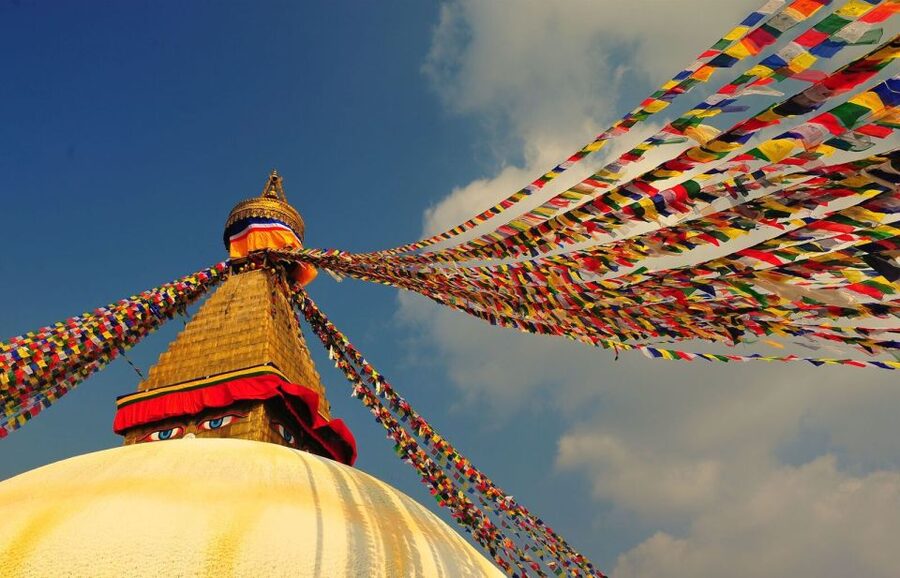
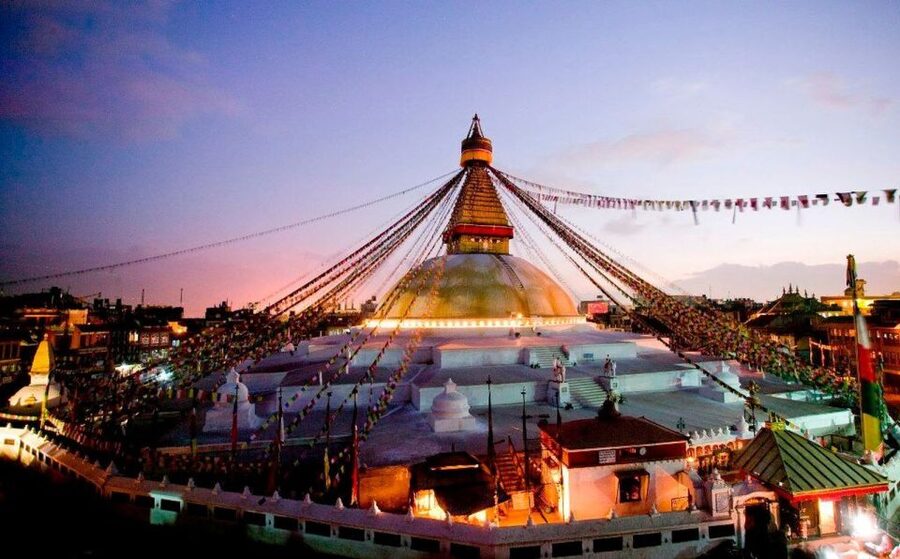
Boudhanath is a major Buddhist center and the largest Buddhist stupa in Nepal. Its huge white dome and watchful painted eyes make it one of Kathmandu’s most memorable sights, but the real pleasure comes from seeing the site used for worship.
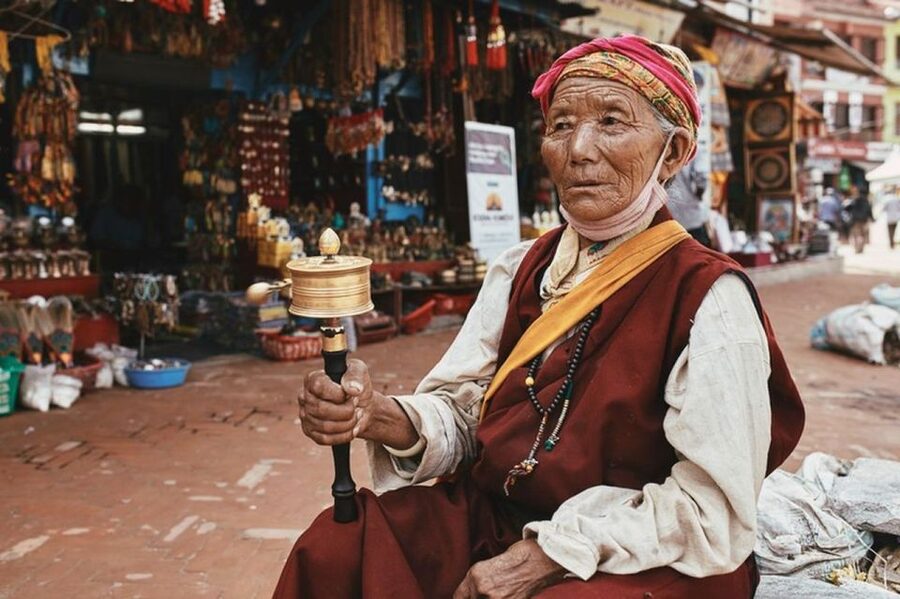
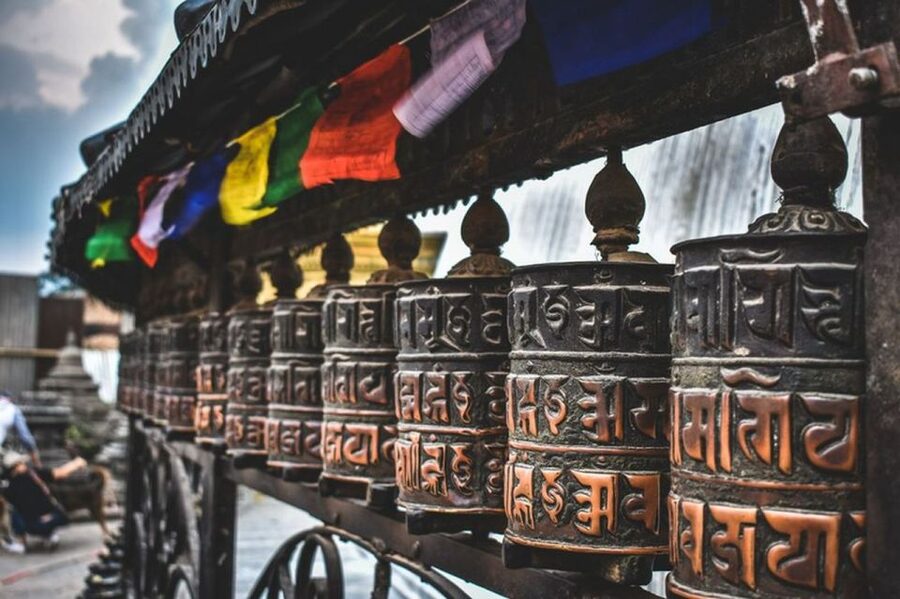
Your guide can show you how to rotate the prayer wheels as you walk. Keep the movement clockwise, following the practice of the local Buddhist community. You can also join the Kora, the walking circuit around the stupa. This is a simple action, but it helps you understand that Boudhanath is not merely a monument to inspect. It is a living place of prayer.
The visit here lasts about two hours. That gives you time to walk the circuit, watch worshippers, ask questions, and take in the details around the dome. If you choose to offer butter lamps, the guide can help you understand the custom. The fee is extra, so decide before you arrive how much you want to spend on optional activities.
One useful detail from a past visit is that the guide may be able to add flexibility when the group is small. A guide once included a rooftop restaurant stop with a view of the stupa and a visit to a traditional mandala painting school. These additions are not guaranteed, and they should not be treated as part of the fixed program, but a small group can make it easier to ask about local options if time allows.
Walking or driving toward Pashupatinath
The two sites are close enough for a walk of about 15 minutes, though the precise choice depends on the group and local conditions. The full walking distance for the tour is approximately 2 kilometers.
That distance is manageable for most people, but this is not a ride-up, step-out, step-back-in excursion. You will be walking around religious compounds and along the river area. Comfortable shoes are a wise choice, especially if you want to keep up with the group and avoid losing time.
Traffic is the main practical worry. One highly positive account still noted that the tour felt rushed because of traffic, even though everything scheduled was completed. The guide and driver may need to adjust the order or pace, so keep your schedule afterward open rather than booking something immediately after the four-hour finish.
Entering Pashupatinath and meeting the Sadhus
Pashupatinath is Nepal’s largest Hindu pilgrimage site and the second major stop. The setting beside the Bagmati River gives the visit a different mood from Boudhanath. Here, you see a major Hindu sacred center, religious figures, river rituals, and funeral ceremonies in one place.
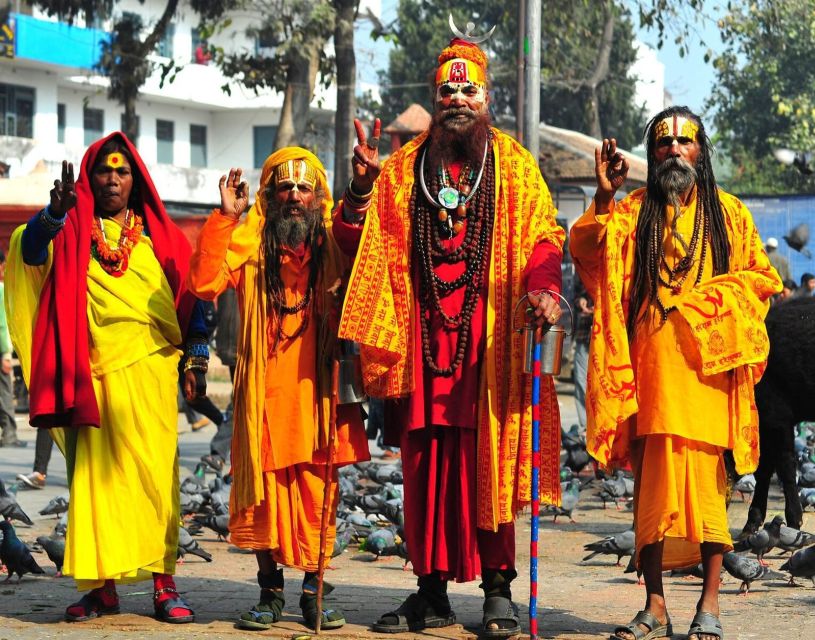
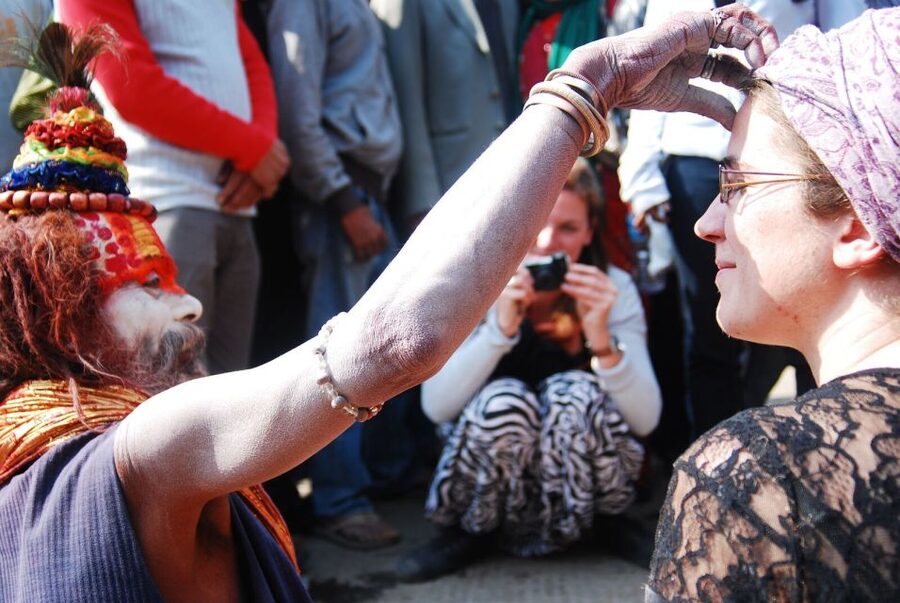
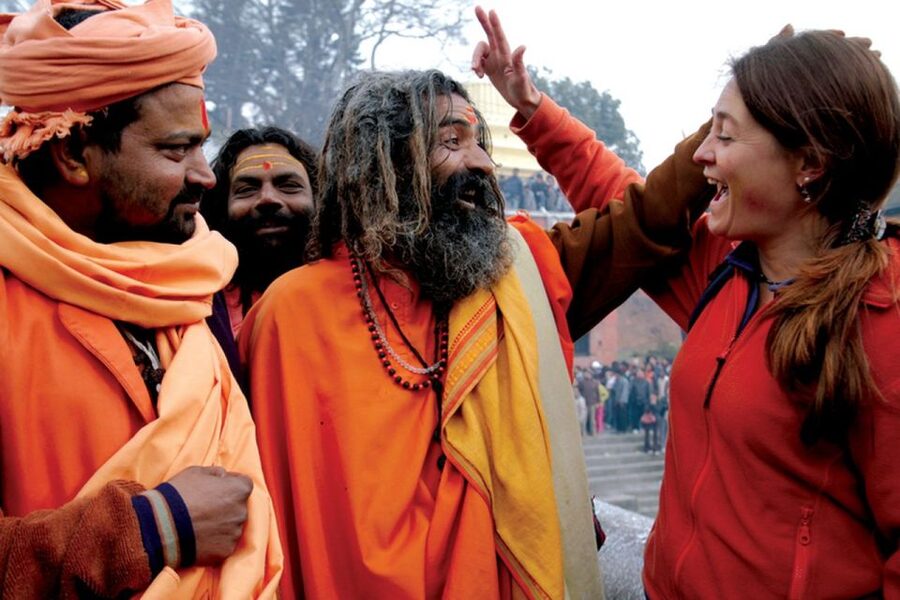
The Sadhus are Hindu holy men who have rejected ordinary household life. Their appearance and way of life can be striking, but this is not a staged cultural show. If you want to speak with one, your guide can help explain the situation and negotiate the expected payment.
That last point matters. An offering or payment is not included, and interaction or photographs are listed at about $7.50. You should not assume that every Sadhu will want to talk, pose, or explain his life. One less favorable experience found that the guide did not provide enough help with this part, leaving the person to seek out a Sadhu alone. I would treat the interaction as optional, keep your expectations modest, and stay with your guide.
The tour description also notes that alms can help support Sadhus who otherwise have little access to tourist income. That gives the payment a local purpose, but it does not remove the need for respect. Ask before taking photographs, listen if the answer is no, and avoid treating a religious figure like a costume display.
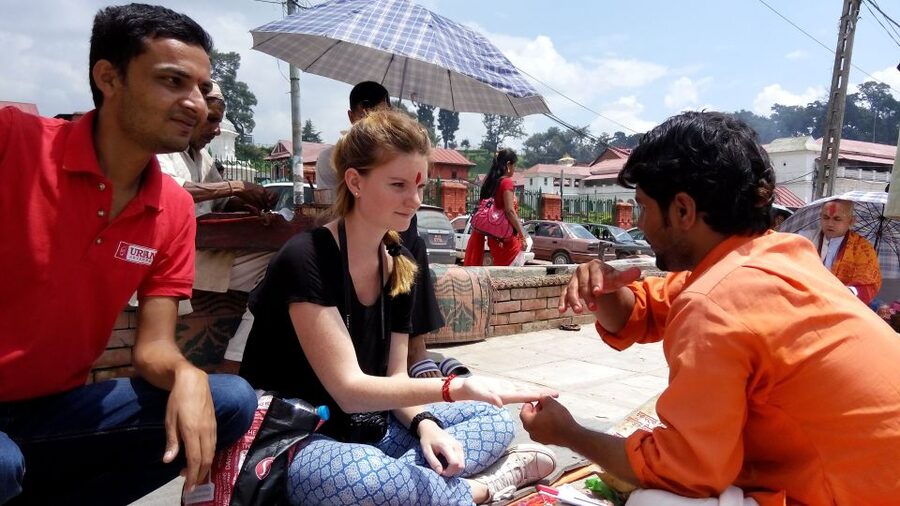
You may also choose a palm reading during the visit. The guide can help negotiate with local palm readers, and the stated fee ranges from $7.50 to $9 per person. This is best approached as a cultural encounter, not as a promise about your future.
A completely different way to spend the day:
- Half day cooking class in Thamel kathmandu
★ 5.0 · 607 reviews - Everest Base Camp Trekking
★ 5.0 · 485 reviews - Nagarkot Sunrise View and Day Hiking from Kathmandu
★ 5.0 · 471 reviews - Kathmandu: Full Day 7 UNESCO Tour with Lunch – Private/Group
★ 5.0 · 415 reviews
Watching cremations along the Bagmati River
Pashupatinath can include views of cremation ceremonies along the Bagmati River. This is one of the most serious parts of the tour and requires care.
You are seeing a real Hindu funeral rite, not a performance arranged for sightseeing. Keep your voice low, follow your guide’s instructions, and ask before taking photographs. You may find the scene emotionally difficult, particularly if you have never witnessed a cremation ceremony.
The value of having a local guide is clearest here. A guide can explain the broad religious meaning without turning the ceremony into a spectacle. Guides named Rozit, Bini, Subash, and Bidhya received especially warm praise for answering questions, explaining the two religions clearly, and paying attention to individual needs. Guide assignments can change, but those comments suggest that the quality of the experience depends heavily on who leads your group.
Seeing Aarati, the evening offering of light
The final major ritual is Aarati, an offering of light to Lord Pashupatinath along the river. Local people gather for this daily ceremony, and the movement of lamps gives the riverfront a strong visual focus.
Aarati is worth understanding as a devotional act, not simply a photo opportunity. You will get more from it if you watch how people participate and let your guide explain what the lights mean.
Stay close to the group. Pashupatinath can become difficult to navigate, and the instructions specifically warn you to remain near your guide and fellow group members. A small group helps here, since the guide can keep track of everyone more easily than on a large coach excursion.
The exact flow of the day can be affected by traffic and the timing of local rituals. The planned visit gives about two hours to Pashupatinath, but you should allow some flexibility. If the tour reaches the temple later than planned, the pace may quicken.
How good is the guide service?
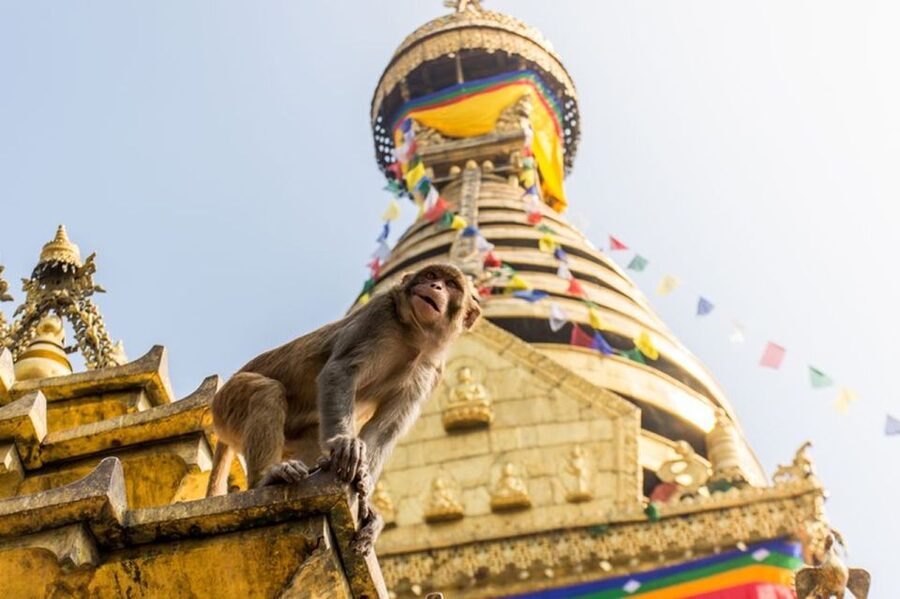
The strongest part of this experience is the human guidance. Several accounts praised the guides for being attentive, well organized, and able to explain basic religious ideas to people with little background.
Subash was praised for making complex subjects easy to understand and for taking the group’s needs seriously. Bidhya was described as highly involved and attentive. Rozit was called an excellent guide, while Bini was praised for answering questions and helping the group complete the planned visits despite time pressure.
That pattern matters because the sites can be confusing without context. A guide can tell you what the prayer wheels mean, how to walk around Boudhanath, why Sadhus receive offerings, and how Aarati fits into worship.
The service is not guaranteed to be perfect. One account raised a basic concern about a guide coughing without covering her mouth and also felt the Sadhu section was not explained well enough. I would not ignore that criticism. If you value close instruction about the Sadhu tradition, ask questions early and tell your guide what you hope to learn.
Clothing, children, and practical preparation
Modest clothing is important at both religious sites. Wear clothing that covers your shoulders and knees. Men should be prepared to wear long trousers, while women may want a long skirt or sarong available for temple visits.
This is a child-friendly tour. Children under six can join free of charge. The four-hour length may suit families better than a full-day religious tour, though parents should prepare children for the serious nature of the cremation area.
You should also carry water and some Nepalese currency or suitable cash for optional offerings, palm reading, or Sadhu interaction. Food and drinks are not included, so plan accordingly.
The tour is listed as carbon neutral and is operated by a B Corp certified company that presents travel as a force for good. That is a useful value point for people who care about the wider effect of their booking. It does not change what you see on the day, but it adds a responsible operating standard to the experience.
Who will get the most from this four-hour tour?
I would choose this tour if you want a guided introduction to Kathmandu’s main Buddhist and Hindu sites without giving up a full day. It is especially useful for a first visit, since the guide supplies the cultural framework that signs and rituals alone cannot provide.
It also suits you if you prefer a small private group. The limit of 12 people gives you more room to ask questions and may allow some flexibility if traffic and timing permit.
This is less suitable if you want a slow photographic walk, extensive time with Sadhus, or a quiet private meditation experience. Four hours covers a lot, and traffic may reduce the time available for conversation. It is also not the right choice if you are uncomfortable seeing funeral rites.
The overall rating is strong at 4.7 from 24 ratings, with repeated praise for the guides and the chance to understand how Buddhism and Hinduism shape life in Nepal. The weaker experience is a useful warning: guide quality and your own willingness to ask questions will shape the Sadhu portion.
Should you book Spiritual Nepal?
Book it if you want two major sacred sites, clear local explanation, and a compact schedule with transportation and entrance fees handled. I especially recommend it for first-time visitors who want more than photographs but do not have the time or confidence to visit Boudhanath and Pashupatinath alone.
Before paying $150, make sure you are comfortable with the extra costs and the serious nature of Pashupatinath. Bring modest clothes, allow for traffic, stay close to your guide, and treat palm reading, Sadhu contact, cremations, and Aarati with respect.
If you do that, this can be a thoughtful and efficient introduction to Kathmandu’s religious life, with the best moments likely to come from the questions you ask along the way.
FAQ
How long does the Spiritual Nepal tour last?
The tour lasts four hours, with about two hours at Boudhanath and two hours at Pashupatinath.
Where does the tour start and finish?
It starts at Hotel Marshyangdi in Kathmandu and returns to Hotel Marshyangdi.
Which sites are included?
The tour visits Boudhanath Stupa and Pashupatinath Temple. Both are UNESCO Heritage Sights.
Is transportation included?
Transportation from the meeting point to Boudhanath and from Pashupatinath Temple to the endpoint is included. The transfer between the two sites may be a walk of about 15 minutes or a drive.
How many people are in the group?
The activity is offered as a private group and is limited to 12 people.
Are Sadhu offerings and palm readings included?
No. Alms for Sadhus and monks, palm reader fees, butter lamps, and Sadhu interaction or photography cost extra. Palm reading is listed at about $7.50 to $9 per person, and Sadhu interaction is listed at about $7.50.
What should I wear?
Wear modest clothing that covers your shoulders and knees. Men often need long trousers, and women may need a long skirt or sarong at religious sites.
Can children join the tour?
Yes. The tour is child-friendly, and children under six are allowed to join free of charge.
New in the Kathmandu listings
- Traditional Momo Making Class★ 5.0 · 10 reviews
- Kathmandu: Ancient City Kirtipur & Pharping Monastery Tour★ 5.0 · 2 reviews
- Kathmandu to Pokhara Premium sofa bus ticket★ 4.0 · 17 reviews
- Women Empowerment Project(Nepali cooking class & jewelry workshop★ 5.0 · 15 reviews
- 7-Day Langtang Valley Trek from Kathmandu★ 5.0 · 1 review
- Kathmandu 2 Nights 3 Days Chitwan Jungle Safari Tour★ 5.0 · 9 reviews
- Yoga Experience Day Trip with Private Transfer From Kathmandu★ 4.0 · 2 reviews
- Wildlife Adventure in Chitwan Nepal★ 4.0 · 4 reviews
Kathmandu Tours, compared.
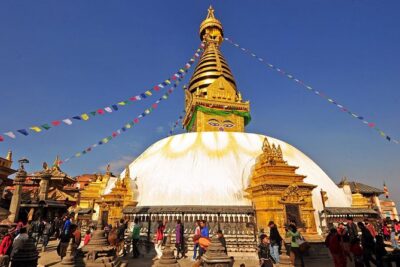
Private Kathmandu Sightseeing Tour | UNESCO World Heritage sites
Read our review →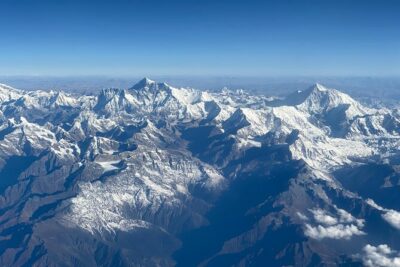
Everest Base Camp Helicopter Tour landing at Everest View Hotel
Read our review →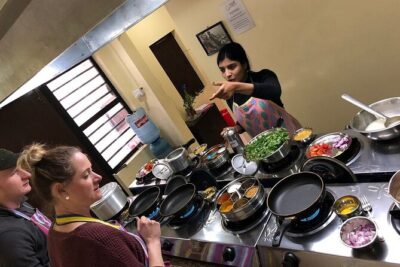
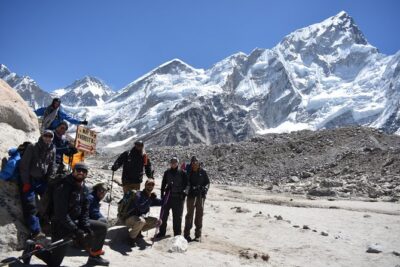
Nagarkot Sunrise View and Day Hiking from Kathmandu
Read our review →
Full Day 7 UNESCO Tour with Lunch – Private/Group
Read our review →