
REVIEW · WALKING TOURS
Walking tour of real Kathmandu through back streets.
Kathmandu reveals itself one lane at a time. This private walk takes you through Ason bazaar, a traditional open-air market where vegetables and groceries fill the city’s oldest shopping quarter. I also like that your small group can move at its own pace, with up to 10 people sharing one licensed guide instead of following a large crowd.
The route gathers several major sights in one walk: Kathmandu Durbar Square, Kumari Temple, Hanuman Dhoka Palace, Indra Chowk, and Freak Street. Guide Anil Manandhar has 32 years of experience, and his strongest asset appears to be the local context he adds to temples, courtyards, markets, and palace buildings. The main drawback is simple: entrance fees are not included, and a three-hour walk through central Kathmandu may feel full if you prefer a slow visit at each monument.
In This Review
- Key points about the Kathmandu back-streets walk
- Why this walk shows more than postcard Kathmandu
- Starting at the Garden of Dreams
- Ason bazaar, Kathmandu’s old shopping quarter
- Indra Chowk and the old city lanes
- Kathmandu Durbar Square and Hanuman Dhoka Palace
- Kumari Temple and Kathmandu’s living traditions
- Freak Street and a different side of central Kathmandu
- What Anil Manandhar adds to the walk
- Is $68 a fair price?
- Who should book this Kathmandu walk?
- My verdict on the real Kathmandu walking tour
- FAQ
- How much does the walking tour cost?
- How long does the tour last?
- Where does the tour start?
- Where does the tour end?
- Is this a private tour?
- Can I cancel for a full refund?
Key points about the Kathmandu back-streets walk
- Ason bazaar gives you daily Kathmandu life, with traditional vegetable and grocery stalls rather than a tour-only shopping stop.
- The route combines ordinary streets with major monuments, including Indra Chowk, Durbar Square, Kumari Temple, and Hanuman Dhoka Palace.
- Anil Manandhar brings 32 years of guiding experience, with a focus on explaining local culture and religious sites.
- The private format suits couples, families, and small groups, since only your party joins the activity.
- The $68 group price can be strong value for a full party of 10, but it is less economical for one person or a couple.
- Admission fees are separate, so you should allow extra money for Kathmandu Durbar Square and any other paid entry on the day.
Why this walk shows more than postcard Kathmandu
Kathmandu is easy to reduce to a short list of famous sights. See Durbar Square, take a few photographs, visit a temple, and move on. This tour takes a better route. It links the grand places to the lanes and markets that give central Kathmandu its daily rhythm.
That connection matters. A palace makes more sense when you have just passed through a market used for ordinary shopping. A temple feels less like an isolated monument when you see it woven into courtyards, shops, shrines, and narrow city streets.
You spend about three to four hours on foot, with the main itinerary described as roughly three hours. The route is not built around one single monument. It is a compact look at Kathmandu as a living city, where religious buildings, public spaces, commerce, and old royal architecture sit close together.
I would choose this walk early in a Kathmandu visit. It can help you get your bearings before you tackle the city alone. It also gives you a useful base for deciding which places deserve a longer return visit.
More Walking Tours in Kathmandu
- Kathmandu Food and Drink Walking Tour
★ 5.0 · 266 reviews - Kathmandu: Food and Drink Walking Tour
★ 4.9 · 119 reviews - Walking Street Food Tour in Kathmandu
★ 5.0 · 111 reviews
Starting at the Garden of Dreams
The meeting point is the Garden of Dreams on Tridevi Sadak. This gives the walk a clear starting place near the central part of Kathmandu and puts you within reach of the older quarters on foot.
The tour is offered Monday through Sunday, with listed operating hours from 9:15 AM to 2:15 PM. The exact start time should be confirmed when you book, but the stated schedule makes a morning or early afternoon walk possible.
I like the timing for two reasons. A morning start leaves the rest of your day open, and a daytime walk makes it easier to see the market activity and architectural details along the route. The tour ends back at the meeting point, so you do not need to arrange a separate ride from an unfamiliar neighborhood.
The operator describes this as a walking tour, not a vehicle tour with quick stops. Wear shoes you can walk in for several hours. The route passes through markets, courtyards, temples, and city streets, so the point is to move through Kathmandu rather than simply look at it from a roadside.
Ason bazaar, Kathmandu’s old shopping quarter
Ason bazaar is likely the most distinctive part of the tour. It is described as an ancient traditional market and an open supermarket for the city, with vegetable and grocery markets at its core.
That comparison helps explain what makes Ason useful to see. This is not just a place arranged for photographs. It is a working market, where the focus is on the goods people buy and the routines that keep the old city supplied.
I would pay attention to the details here rather than hurry toward the next monument. Look at how the market fits into the surrounding streets. Notice the mix of religious and commercial life. A guide can explain what you are seeing, which is especially helpful when a market first appears to be a blur of stalls, signs, movement, and unfamiliar products.
Ason also gives the walk a sense of place that a standard monument circuit can miss. You see Kathmandu as a home and workplace, not only as a former royal center.
The trade-off is that a functioning market is not arranged for comfort or quiet sightseeing. The tour information does not promise a calm route, special tastings, shopping discounts, or a set list of vendors. Go for the atmosphere and the explanation, not for a packaged shopping session.
Indra Chowk and the old city lanes
Indra Chowk is another important stop on the route. Together with Ason, it helps show how Kathmandu’s old center works as a connected urban district rather than a collection of separate attractions.
This part of the walk is where the back-street idea matters most. Instead of spending the whole tour inside formal museum grounds, you pass through public spaces and working lanes. I like that approach because it makes the city feel legible. You can see how a religious site, market area, palace quarter, and public courtyard relate to one another.
The guide’s role becomes important here. Without local explanation, it can be hard to know which building matters, how a courtyard is used, or why a small shrine receives attention. Anil has been praised for sharing information in an insightful way, and that is the sort of guidance this route needs.
Do not expect every stop to receive the same amount of time. The route covers a lot in one outing, and the walk is designed to connect places. If you want long, quiet visits inside each temple or palace building, you may need to return independently.
A completely different way to spend the day:
- Everest Base Camp Trek – 14 Days
★ 5.0 · 1,499 reviews - Private Kathmandu Sightseeing Tour | UNESCO World Heritage sites
★ 5.0 · 756 reviews - Everest Base Camp Helicopter Tour landing at Everest View Hotel
★ 5.0 · 668 reviews - Half day cooking class in Thamel kathmandu
★ 5.0 · 607 reviews
Kathmandu Durbar Square and Hanuman Dhoka Palace
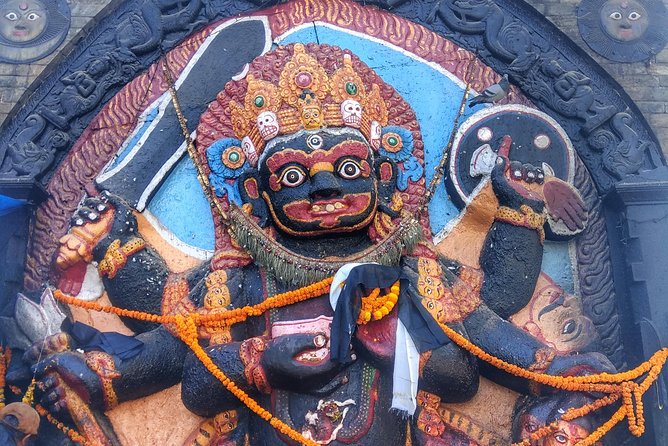
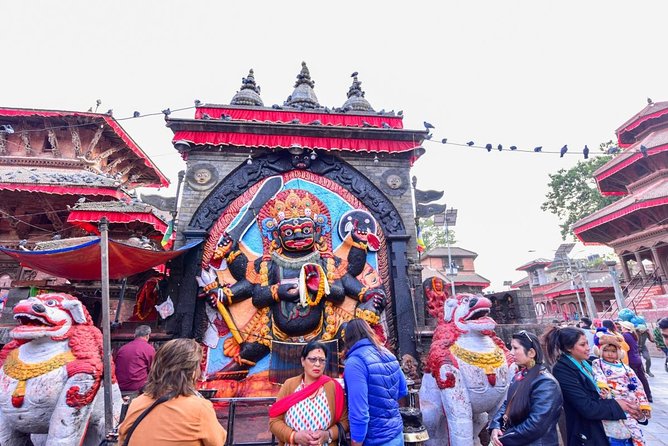
Kathmandu Durbar Square is the tour’s main historic center. It brings together temples, palace buildings, courtyards, and public spaces in one concentrated area.
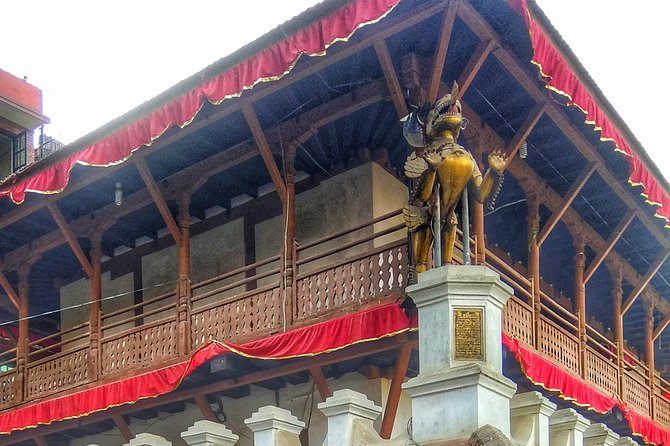
The itinerary includes Hanuman Dhoka Palace, a former royal complex. The value here is not only the architecture. The palace helps explain Kathmandu’s political and ceremonial past, while the surrounding square shows how that history remains part of the city’s present-day setting.
A good guide should help you read the square in layers. Look up at the carved woodwork, but also look around at how people use the surrounding spaces. Public courtyards are part of the route, and they help connect the formal monuments with neighborhood life.
Admission is not included in the $68 price. The exact fee is not provided, so you should check the current charge before the tour and carry enough local currency or an accepted payment method. This is the one cost issue I would sort out in advance, since the advertised tour price does not cover entry.
One intriguing detail linked to this route is Pachali Bhairav dance at the palace. That sounds like a memorable cultural moment, but it should not be treated as a guaranteed scheduled feature. Ask Anil when booking or at the start of the walk if any ceremony or performance is taking place during your visit.
Kumari Temple and Kathmandu’s living traditions
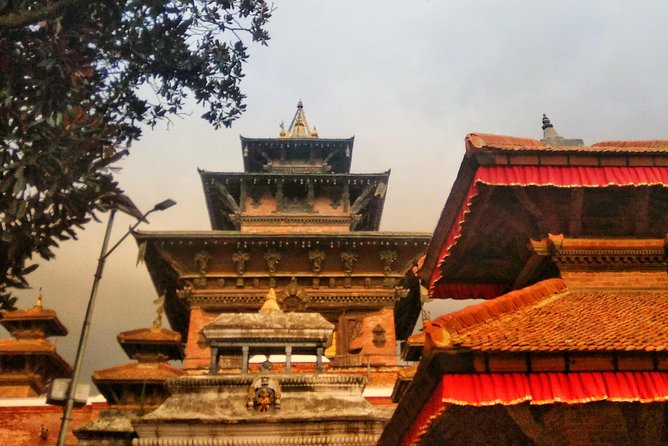
Kumari Temple adds a different kind of interest to the Durbar Square section. It is not simply another carved facade. The temple is associated with the Kumari tradition, one of the cultural features that makes Kathmandu’s religious life distinct.
This is a place where respectful behavior matters. Follow your guide’s instructions about where to stand, what you may photograph, and how to behave near worshippers. The supplied information does not promise an appearance by the Kumari, so you should visit for the setting and tradition rather than expect a particular encounter.
I value this stop because it keeps the tour from becoming only an architectural walk. Anil’s background in Nepal travel guiding should be useful when explaining customs that are not obvious from the outside.
At the same time, the tour description gives no detailed schedule for the temple visit. Your experience may depend on opening conditions, ceremonies, or what is happening on the day. That uncertainty is normal at active religious sites, but it is worth knowing if you prefer a tightly controlled sightseeing program.
Freak Street and a different side of central Kathmandu
Freak Street gives the itinerary another change of tone. Its name is famous, and its inclusion adds a modern chapter to the old-city route.
The street is associated with Kathmandu’s counterculture past, making it a useful contrast to the palace and temple quarter. You move from royal architecture and religious courtyards to a place linked with a more recent era of independent travel and alternative city life.
The available information does not promise specific shops, cafes, or performances here, so I would treat Freak Street as a street-level history stop rather than a separate attraction with a fixed program. Anil can help explain why it matters and how it fits into Kathmandu’s changing identity.
This is one reason the overall route works well. You are not seeing only one version of the city. The walk moves through commerce, religion, royal history, public life, and more recent cultural memory.
What Anil Manandhar adds to the walk
The guide can make or break a city walk, and Anil’s experience is a major reason to consider this one. He has 32 years as a Nepal travel guide, and the available feedback praises his professional approach, timing, and ability to share useful information.
One account describes him leading a walk from Ason bazaar to Kathmandu Durbar Square, including the temples and palace. Another praises his deep interest in local culture, while a separate experience describes him arriving well before time for a different Kathmandu temple tour.
Those details suggest a guide who takes the work seriously. They do not guarantee a particular personality match, but they do point to strong local experience. If you want explanations rather than a silent escort, Anil is the central reason this tour has appeal.
I would contact him ahead of time with two simple requests: ask how much time the group will spend inside the main sites, and ask whether any current ceremony or cultural event may affect the route. That can help you set realistic expectations without assuming that every special event happens daily.
Is $68 a fair price?
The price is $68 per group, for as many as 10 people. That pricing structure is important.
For a full group of 10, the cost works out to $6.80 per person before admission fees. For five people, it is $13.60 each. For two people, the effective cost is $34 per person, and a solo participant pays the full $68.
That makes this walk especially attractive for families or friends traveling together. You are paying for a private licensed guide, not for transportation, meals, or included entrance tickets. The value comes from having local interpretation and a route that connects several central sights in one outing.
The separate admission cost keeps the headline price lower, but it also means your final expense will be higher. Since the entry fee is not stated, check it before booking if you need a firm budget.
For a small group that wants a private introduction to central Kathmandu, I think the price is reasonable. For one person, it becomes harder to call it a bargain unless personal guiding and cultural explanation are your top priorities.
Who should book this Kathmandu walk?
I would recommend this experience to you if you want to understand how Kathmandu works beyond its famous monuments. It suits first-time visitors who want orientation, small groups who value privacy, and anyone who prefers walking through ordinary districts instead of staying on a standard sightseeing route.
It is also a good fit if you enjoy asking questions. The tour’s strength is not a long list of included extras. It is the combination of Anil’s experience and the chance to connect Ason bazaar, Indra Chowk, Durbar Square, Kumari Temple, Hanuman Dhoka Palace, and Freak Street in one outing.
You may want a different plan if you dislike walking, want every entrance included, or prefer to spend a full hour at each monument. The tour covers a lot, and its back-street focus means the route is as much about moving through the city as it is about standing in front of major buildings.
Most people can participate, according to the available activity information, but no detailed accessibility description is provided. Ask before booking if you have specific mobility needs or require a route with fewer walking demands.
Book at least 24 hours before the start if you want the option of a full refund. Cancellations made less than 24 hours before the start are not refunded, and changes inside that period are not accepted. The activity depends on good weather, with a different date or full refund offered if poor weather causes cancellation.
My verdict on the real Kathmandu walking tour
I would book this walk if I wanted a compact, private introduction to Kathmandu’s old center with a guide who can explain the culture behind the buildings.
The strongest feature is the route itself. Ason bazaar and Indra Chowk bring you into daily city life, while Durbar Square, Kumari Temple, and Hanuman Dhoka Palace provide the major historic sights. Freak Street adds a more recent layer, and the return to the Garden of Dreams keeps the logistics simple.
The key caution is to budget for entrance fees and accept that three hours cannot give every stop a leisurely visit. If that trade-off works for you, the $68 group rate offers solid value, especially with several people sharing the private guide.
FAQ
How much does the walking tour cost?
The tour costs $68 per private group of up to 10 people. Entrance fees are not included.
How long does the tour last?
The experience lasts approximately three to four hours. The listed itinerary describes about three hours of touring.
Where does the tour start?
The meeting point is the Garden of Dreams on Tridevi Sadak in Kathmandu, Nepal.
Where does the tour end?
The activity ends back at the Garden of Dreams meeting point.
Is this a private tour?
Yes. Only your group participates, with a maximum group size of 10 people.
Can I cancel for a full refund?
Yes, if you cancel at least 24 hours before the experience start time. Cancellations or changes made less than 24 hours before the start are not accepted for a refund. If poor weather cancels the activity, you are offered another date or a full refund.
New in the Kathmandu listings
- Traditional Momo Making Class★ 5.0 · 10 reviews
- Kathmandu: Ancient City Kirtipur & Pharping Monastery Tour★ 5.0 · 2 reviews
- Kathmandu to Pokhara Premium sofa bus ticket★ 4.0 · 17 reviews
- Women Empowerment Project(Nepali cooking class & jewelry workshop★ 5.0 · 15 reviews
- 7-Day Langtang Valley Trek from Kathmandu★ 5.0 · 1 review
- Kathmandu 2 Nights 3 Days Chitwan Jungle Safari Tour★ 5.0 · 9 reviews
- Yoga Experience Day Trip with Private Transfer From Kathmandu★ 4.0 · 2 reviews
- Wildlife Adventure in Chitwan Nepal★ 4.0 · 4 reviews
Walking Tours, compared.


Walking Food Tour in Hidden Local Eateries of Kathmandu
Read our review →
Old Kathmandu Walking Tour, Historic World Heritage Durbar Square
Read our review →
Browse the lists this tour appears in