
REVIEW · LANGTANG VALLEY TREKS
10-Day Cultural Trek in Langtang
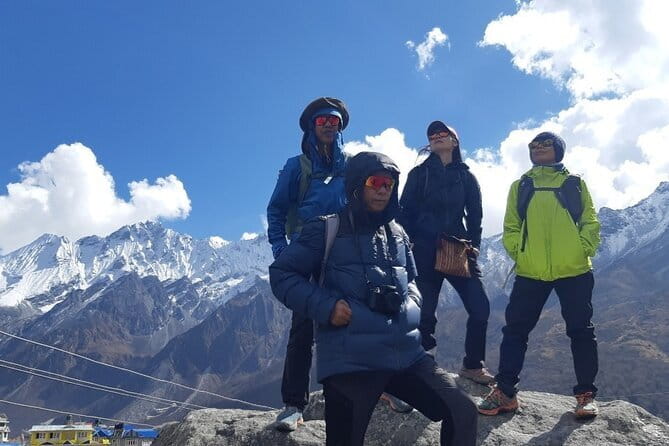
The Himalaya begins with a long bus ride. This 10-day Langtang trek combines snowy mountain views with village life, forest paths, monasteries, and a high viewpoint at 5,033 meters. I like the clear route from Syabrubesi to Kyanjin Gompa, and I like that the private trip includes a licensed English-speaking guide, permits, guesthouse stays, transport, and airport transfers. The reported price of $800 per person gives you a useful package for a Himalayan trek.
The main drawback is the road and walking time. The bus ride from Kathmandu to Syabrubesi takes seven to eight hours, and several hiking days run for six or seven hours. The summit day at Tserko Ri is demanding, and the schedule allows little spare time if weather, tired legs, or road delays interfere. Guides Milan Rai and Krishna have earned especially warm praise for their local culture, trail knowledge, and friendly manner.
In This Review
- Key points to know before booking
- What the Langtang route gives you in ten days
- Day 1 in Kathmandu: arrival, briefing, and a soft landing
- Day 2: the long road to Syabrubesi
- Day 3: waterfalls, bridges, and Lama Hotel
- Day 4: forest walking toward Langtang Village
- Day 5: reaching Kyanjin Gompa
- Day 6: the hard reward of Tserko Ri
- Days 7 and 8: retracing the valley
- Day 9: back to Kathmandu by shared bus
- Day 10: airport transfer and departure planning
- What the $800 price really covers
- Who should book this trek?
- Practical details worth knowing
- My verdict on the Langtang Cultural Trek
- FAQ
- How long is the Langtang Cultural Trek?
- What is the highest point on the trek?
- Is transportation from Kathmandu included?
- Is airport pickup available?
- What type of accommodation is included?
- Are meals included during the trek?
- Is this a private tour?
- Can I cancel for a full refund?
Key points to know before booking
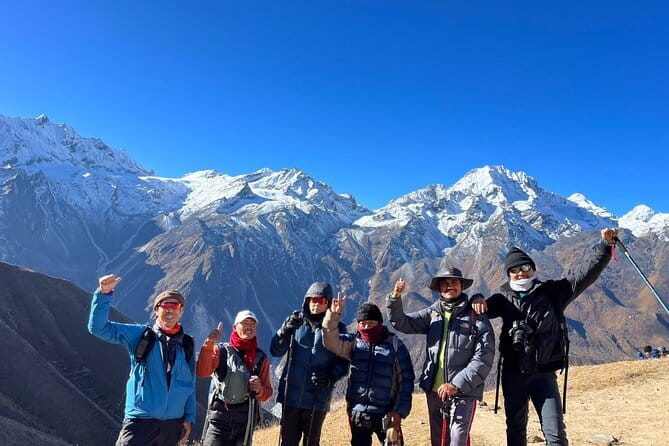
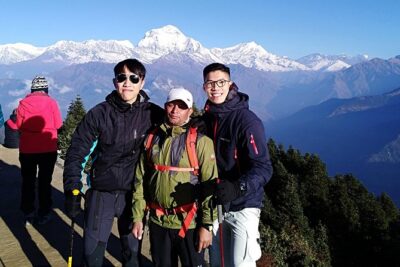
- Tserko Ri reaches 5,033 meters: This is the trek’s high point and gives you wide views of Langtang Lirung, Langtang Ri, and Dorje Lakpa.
- The route builds gradually: You begin near Syabrubesi, pass through forests and villages, and reach Kyanjin Gompa on day five.
- The bus rides are part of the bargain: Kathmandu to Syabrubesi takes seven to eight hours each way, with road conditions affecting comfort and timing.
- You sleep in simple guesthouses: The package includes trek accommodation, while Kathmandu includes two nights in a 2-star hotel with breakfast.
- Food costs extra: Plan on about $25 per day for food and drinks, in addition to the tour price.
- A private guide shapes the experience: You travel only with your own group, with a government-licensed English-speaking trekking guide.
What the Langtang route gives you in ten days
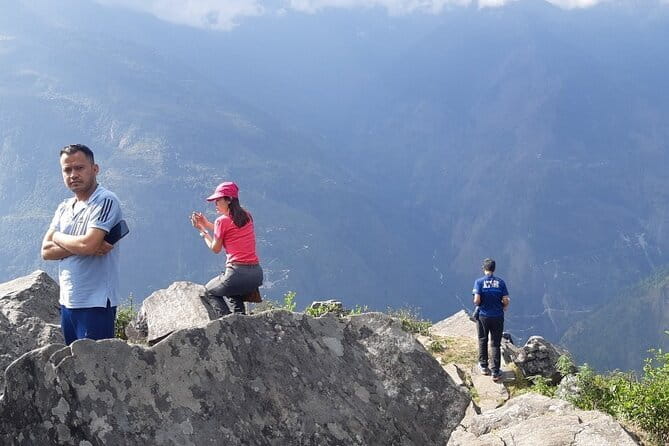
Langtang offers a good middle ground for someone who wants a Himalayan trek without signing up for a very long expedition. The route is described as moderate, with defined trails and manageable altitude for many people who are new to trekking.
That does not mean easy. Six-hour walking days are common, and the climb to Tserko Ri reaches 5,033 meters. You need reasonable fitness, patience on steep paths, and a willingness to sleep in basic lodgings.
The appeal is the steady change in scenery. You move from the busy Kathmandu Valley to the road town of Syabrubesi, then into river valleys, waterfalls, suspension bridges, pine woods, rhododendron forests, open meadows, and high mountain country.
Langtang National Park provides the setting. The trip description highlights its plants and wildlife, but it does not promise particular animal sightings. I would treat the natural setting as the main reward, not expect a wildlife safari.
The cultural side also matters. You pass traditional villages and spend time near Kyanjin Gompa, described as one of the oldest monasteries in the area. A local guide can add useful context, and the strong praise for Milan Rai and Krishna suggests that guide quality is one of this trip’s best features.
More Langtang treks:
- Langtang Valley Trek
★ 5.0 · 140 reviews - Private 8 – Day Langtang Trekking
★ 5.0 · 29 reviews - Kathmandu: 6-Day Limitless Langtang Trek
★ 5.0 · 21 reviews
Day 1 in Kathmandu: arrival, briefing, and a soft landing
The first day begins with pickup at Tribhuvan International Airport. You are taken to a Kathmandu hotel, where you receive a trek briefing and meet your guide.
This is a sensible first step. Kathmandu can feel hectic after a flight, so having transport arranged removes one immediate chore. The evening is not presented as a sightseeing program, which is probably wise. You need time to check your gear, ask questions, and prepare for the early start.
The package includes two nights in a 2-star Kathmandu hotel with breakfast. The wording of the schedule places one night at the beginning and another after the trek. Do not expect luxury, but the included lodging keeps the price easier to understand.
Day 2: the long road to Syabrubesi
The drive to Syabrubesi takes seven to eight hours by shared bus. That is a substantial part of the trip, and you should view it as transport rather than a polished sightseeing excursion.
Road travel in the hills can be tiring. The schedule calls the ride scenic, and you will pass through changing countryside, but the supplied information does not give road conditions or planned stops. Keep your expectations practical: this day gets you to the trailhead.
Syabrubesi sits beside the Langtang River. The plan allows some evening time to explore the town before you spend the night in a guesthouse.
This first stop gives you a useful change of pace from Kathmandu. You are no longer in the capital, but you have not yet entered the quieter trekking country. The shared bus also helps keep the $800 price under control, though it means you will not have the privacy of a dedicated vehicle.
Day 3: waterfalls, bridges, and Lama Hotel
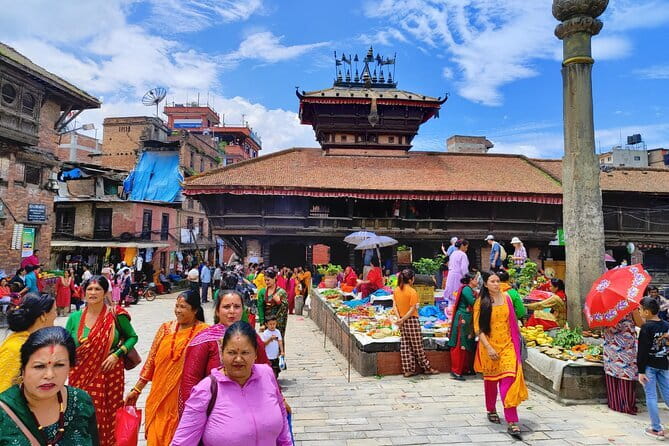
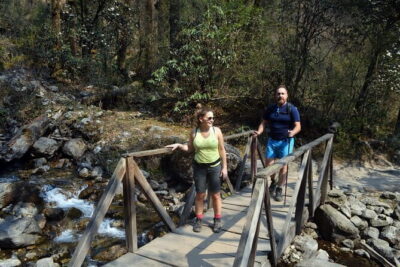
The first walking day runs about six hours, from Syabrubesi to Lama Hotel. The trail passes waterfalls, traditional villages, and several suspension bridges.
This is an effective introduction to the route. You begin with a mix of natural scenery and local settlement rather than a long, featureless climb. The bridges add a small thrill, while the waterfalls give the day memorable points along the way.
You sleep at Lama Hotel in a guesthouse. The name may suggest a large town, but the schedule presents it simply as an overnight stop. This is a basic trekking night, so pack with guesthouse accommodation in mind rather than hotel expectations.
The six-hour estimate is important. Trekking time can vary with pace, breaks, trail conditions, and group fitness. Your guide will likely set the rhythm, but you should still be ready for a full day on foot.
More walking in the hills of Kathmandu:
- Everest Base Camp Trek – 14 Days
★ 5.0 · 1,499 reviews - Everest Base Camp Trekking
★ 5.0 · 485 reviews - Nagarkot Sunrise View and Day Hiking from Kathmandu
★ 5.0 · 471 reviews - Annapurna Circuit Trek with Tilicho Lake
★ 5.0 · 368 reviews
Day 4: forest walking toward Langtang Village
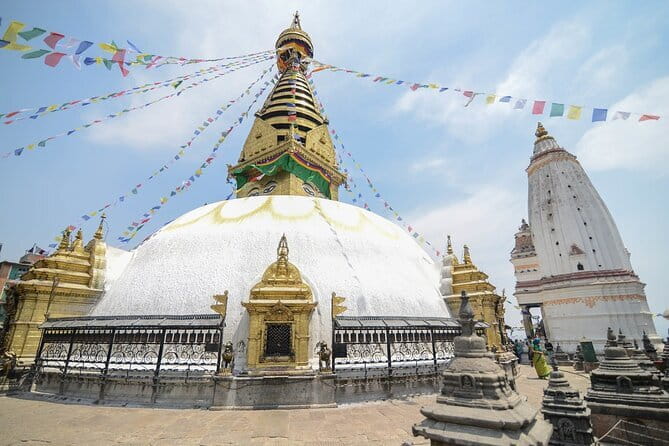
The route from Lama Hotel to Langtang Village takes about seven hours. The trail moves through dense rhododendron and pine forest before reaching Ghoda Tabela, known in the itinerary as Horse Stable.
This is one of the more scenic walking days because the forest changes the feel of the trek. You get shade, birdsong, and a sense of entering a more remote mountain valley. Rhododendrons are especially appealing when in bloom, though no flowering dates are provided, so you should not plan around that sight alone.
The longer walking time makes day four more tiring than the previous day. You will want comfortable footwear and a pack that is light enough to carry for several hours. The route is described as well defined, but a defined trail can still include uneven ground and sustained uphill walking.
Langtang Village is your overnight stop. A guesthouse here places you deeper into the valley and closer to the high mountains that make the following days special.
Day 5: reaching Kyanjin Gompa
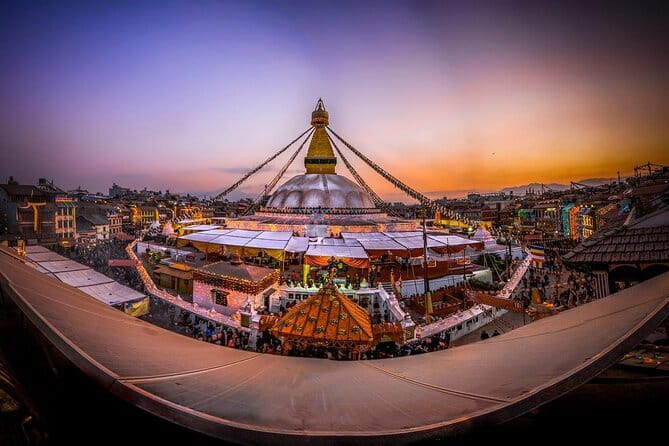
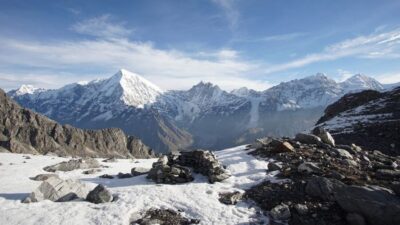
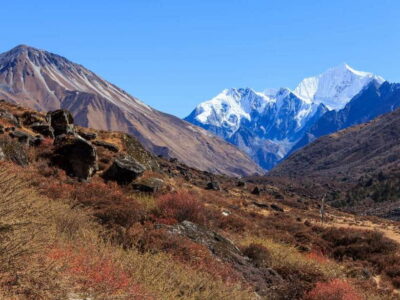
The trek from Langtang Village to Kyanjin Gompa takes around six hours. Kyanjin Gompa is presented as one of the oldest monasteries in the region and offers mountain views toward Langtang Ri, Dorje Lakpa, and Langtang Lirung.
This is the point where the route begins to feel like a high Himalayan trek rather than a pleasant forest walk. The settlement provides the base for the next day’s climb, so reaching it is both a scenic achievement and an important practical step.
The mountain names matter because the views are a central reason to choose Langtang. The trip promises broad sights of several peaks, but weather will always influence what you see. Clear conditions can make this the visual center of the trek, while cloud may turn the day into a quieter experience focused on the trail and village.
You spend the night at a guesthouse in Kyanjin Gompa. The two-night stay here is valuable. It avoids packing up every morning and gives your body time to adjust before the highest walk.
Day 6: the hard reward of Tserko Ri
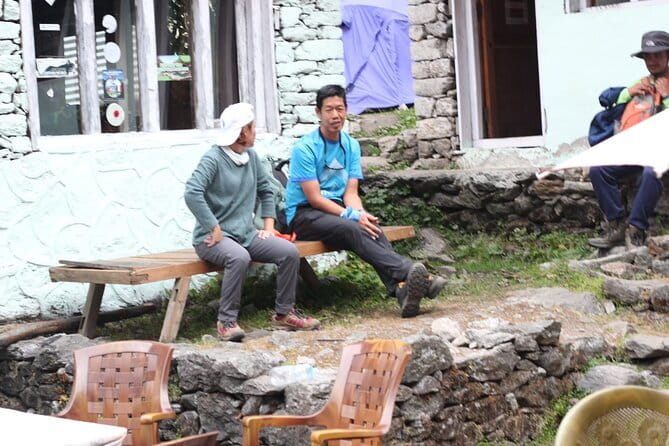
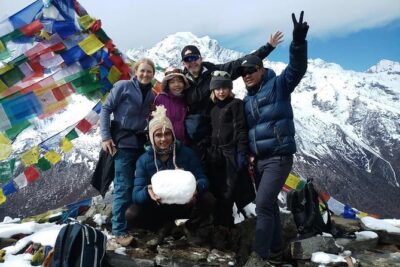
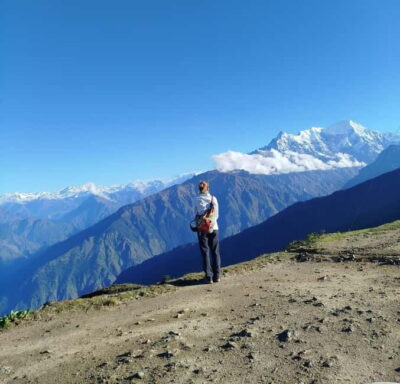
Day six is a seven-hour round trip from Kyanjin Gompa to Tserko Ri. The listed height is 5,033 meters, making this the highest viewpoint on the route.
The summit walk is the trip’s biggest physical test. You gain the reward of wide mountain views, including Langtang Lirung, Langtang Ri, and Dorje Lakpa, but the elevation makes the day serious. Even a moderate trek can feel strenuous at this height.
I would not treat this as a casual optional stroll. The schedule includes it as a central part of the program, and you should be comfortable with a long uphill day before booking. The itinerary uses both Tserko Ri and Tsergo Ri in its wording, so confirm the exact spelling and route with CAN Travels before departure.
You return to Kyanjin Gompa for a second night. That return is helpful because you do not need to descend with all your belongings after the viewpoint walk. It also gives you a straightforward rhythm: climb high, sleep at the same place, and begin the return the next day.
Days 7 and 8: retracing the valley
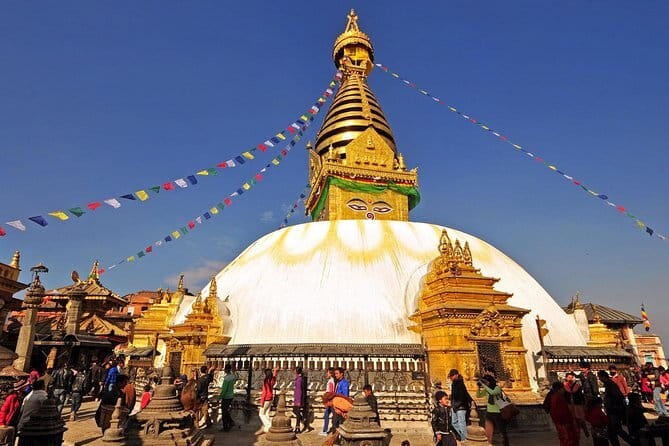
Day seven takes about six hours to return from Kyanjin Gompa to Lama Hotel. Day eight continues for roughly six hours from Lama Hotel back to Syabrubesi.
The return uses the same route, which can sound repetitive on paper. In practice, familiar trails often reveal different details when the direction and light change. Still, I would book this trek for the high valley, forests, and mountain views, not for constant new scenery on the descent.
These days also test your knees and feet. Downhill walking can be harder than climbing for some people, especially after the Tserko Ri outing. Use your guide’s pace and take care with the suspension bridges and uneven sections.
You spend the night in Syabrubesi before the final drive. That overnight stop is useful because it keeps the road journey separate from the last hiking day. It also gives you a buffer before returning to Kathmandu, although the overall schedule remains fairly tight.
Day 9: back to Kathmandu by shared bus
The return drive takes about seven hours. As on day two, the shared bus keeps costs down but may not provide a restful finish after a week of walking.
You spend the night in Kathmandu. The included hotel stay is practical if you have a flight the next day, since you are not trying to travel from the mountains directly to the airport.
The schedule does not list a Kathmandu sightseeing program on this day. That is useful to know if you want time for shopping or city visits. You should not assume the tour includes major Kathmandu attractions, guided city walks, or extra meals.
Day 10: airport transfer and departure planning
On the final day, the operator plans to drop you at Tribhuvan International Airport three hours before your departure. The airport ticket itself is not included, which is normal for a departure transfer.
The schedule shows about six hours for this stop, but the actual airport transfer time is not specified. Ask CAN Travels to confirm the pickup time against your flight details.
The operator also offers the chance to arrange another trip. That is optional and not part of the Langtang trek, so make your decision based on your own itinerary rather than assuming extra travel is included.
What the $800 price really covers
At $800 per person, this trip offers a useful bundle. The price includes airport pickup and drop-off, two Kathmandu hotel nights with breakfast, the guide, guesthouse accommodation during the trek, shared bus transport, trekking permits, official documents, entrance fees, and the guide’s food, lodging, and other expenses.
It also includes a normal emergency first-aid kit carried by the guide. That is helpful, but it does not replace personal medication or a full medical and safety plan.
Food and drinks are extra, with an approximate cost of $25 per day. Over ten days, that could mean roughly $250 if you buy meals and drinks throughout the trip, so your practical total may be closer to $1,050 before gratuities and personal spending.
The guide is a major part of the value. This is a private activity, so only your group participates. The strong praise directed at Milan Rai and Krishna focuses on their local culture, trail knowledge, and friendly personalities. If you want a guide who does more than point out the path, ask in advance who will lead your departure.
Tips are optional. The package does not include gratuities, so you can decide at the end based on the service you receive.
Who should book this trek?
I see this as a good fit for someone seeking a first Himalayan trek with a defined route and a manageable overall length. You get a real high-altitude viewpoint, but the trip does not require a long approach beyond the ten-day schedule.
It should also suit someone who values local guidance and simple cultural contact. The route passes villages, includes time at Kyanjin Gompa, and supports the local economy through guesthouse stays and guided trekking.
You should think twice if you dislike long bus rides, basic accommodation, or repeated six-hour walking days. The package is not designed for a relaxed holiday with short strolls and comfortable transfers.
A private trip is useful if you want your own group and a guide focused on your pace. It may be less suitable if you prefer a larger social group or want a highly polished luxury trekking service.
Practical details worth knowing
The start time is listed as 6:30 am. That early start matters most on the long road day and the Tserko Ri day, so plan for prompt mornings.
Confirmation is provided at booking, and most people can participate according to the supplied tour information. Even so, the 5,033-meter climb and repeated long walks deserve honest self-assessment.
Free cancellation applies if you cancel at least 24 hours before the experience begins. Cancellation within 24 hours is not refunded, and changes made inside that window are not accepted. The cutoff uses local time.
My verdict on the Langtang Cultural Trek
I would book this trek if I wanted a moderately challenging Himalayan route with strong mountain views, a private guide, and a price that includes the main permits, transport, and lodging. The best parts are the gradual approach through forests and villages, the two nights around Kyanjin Gompa, and the chance to reach Tserko Ri at 5,033 meters.
I would not book it without first accepting the long bus rides and simple guesthouses. Ask about your guide, confirm the Tserko Ri plan, budget the extra $25 per day for food, and leave some flexibility for road or weather delays. If those conditions suit you, this is a focused and fairly priced way to see the Langtang region while giving local communities a direct role in your trip.
FAQ
How long is the Langtang Cultural Trek?
The experience lasts approximately 10 days, including arrival in Kathmandu, transport to and from Syabrubesi, the trek, and airport drop-off.
What is the highest point on the trek?
The highest viewpoint is Tserko Ri, listed at 5,033 meters.
Is transportation from Kathmandu included?
Yes. The package includes shared bus transport from Kathmandu to Syabrubesi and back, plus hotel pickup and airport drop-off.
Is airport pickup available?
Yes. Pickup from Tribhuvan International Airport is included on arrival, and airport drop-off is planned on the final day.
What type of accommodation is included?
You receive two nights in a 2-star hotel in Kathmandu with breakfast. During the trek, you stay in guesthouses in Syabrubesi, Lama Hotel, Langtang Village, and Kyanjin Gompa.
Are meals included during the trek?
Breakfast is included for the two Kathmandu hotel nights. Food and drinks during the trek are not included and are estimated at about $25 per day.
Is this a private tour?
Yes. Only your group participates, and the trip includes a government-licensed English-speaking trekking guide.
Can I cancel for a full refund?
Yes, if you cancel at least 24 hours before the experience start time. Cancellations made within 24 hours are not refunded, and changes inside that period are not accepted.
New in the Kathmandu listings
- Traditional Momo Making Class★ 5.0 · 10 reviews
- Kathmandu: Ancient City Kirtipur & Pharping Monastery Tour★ 5.0 · 2 reviews
- Women Empowerment Project(Nepali cooking class & jewelry workshop★ 5.0 · 15 reviews
- Kathmandu to Pokhara Premium sofa bus ticket★ 4.0 · 17 reviews
- 7-Day Langtang Valley Trek from Kathmandu★ 5.0 · 1 review
- Kathmandu 2 Nights 3 Days Chitwan Jungle Safari Tour★ 5.0 · 9 reviews
- Yoga Experience Day Trip with Private Transfer From Kathmandu★ 4.0 · 2 reviews
- Wildlife Adventure in Chitwan Nepal★ 4.0 · 4 reviews
Langtang Valley Treks, compared.
Trekking in Annapurna/Langtang/Everest/Upper Mustang regions
Read our review →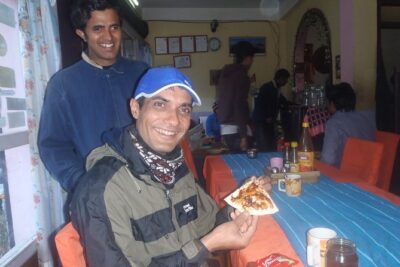
Browse the lists this tour appears in