
REVIEW · ANNAPURNA BASE CAMP TREKS
11-Day Annapurna Base Camp Trek
The mountains arrive one step at a time. Magic Himalaya Treks’ 11-day Annapurna Base Camp route combines village life, forest paths, high mountain views, and the hot springs at Jhinu Danda. I like the clear progression from Kathmandu to Pokhara, Ghandruk, the base camp, and back. I also like that permits, guide services, porters, meals, lodging, transport, and a duffel bag are included in the $910 price.
The main drawback is the long road travel. The bus between Kathmandu and Pokhara takes about seven hours each way, and several trekking days run close to a full day. You need moderate physical fitness, and the climb to 4,130-meter Annapurna Base Camp is serious despite the route being suitable for beginners with proper preparation.
In This Review
- Key things to know before booking
- Why this Annapurna route works so well in 11 days
- Day 1: Arrival in Kathmandu and a soft landing
- Day 2: The seven-hour road to Pokhara
- Day 3: Nayapul, Syauli Bazaar, and Ghandruk
- Day 4: Chhomrong and the descent to Sinuwa
- Day 5: Forest walking through Bamboo and Dovan
- Day 6: The demanding push to Annapurna Base Camp
- Day 7: Sunrise, then the long descent
- Day 8: Jhinu Danda and the hot springs
- Day 9: Back to Pokhara and an evening by the lake
- Day 10: The return to Kathmandu
- Day 11: Airport transfer and departure
- What the $910 price really covers
- Who should book this trek?
- FAQ
- Where does the Annapurna Base Camp trek begin?
- How long does the trek last?
- How much does the experience cost?
- Is the tour private?
- What level of fitness is required?
- What mountain views can you expect?
- What is the highest point on the route?
- Are meals included?
- Are permits and porters included?
- Should you book the Magic Himalaya Treks ABC route?
Key things to know before booking
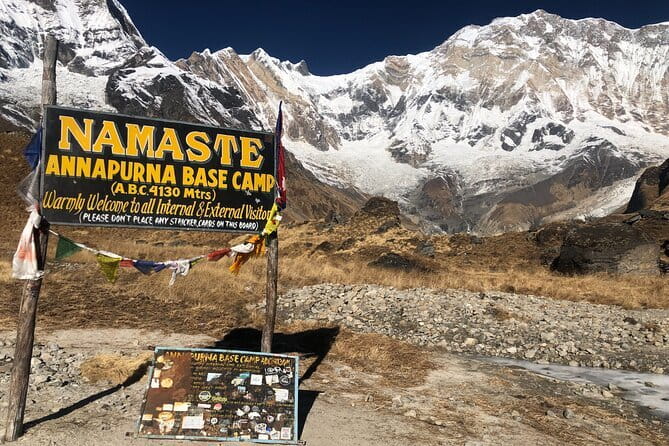
- Sunrise at Annapurna Base Camp: An early morning start gives you the best chance to enjoy the mountains around the camp before descending.
- Jhinu Danda hot springs: The river-side hot pools offer a welcome rest after the cold and demanding high-altitude section.
- Gurung and Magar villages: Ghandruk and other settlements provide a closer look at local life, not just mountain scenery.
- One porter for two trekkers: The porter arrangement keeps your daily load lighter, while a company duffel bag is supplied.
- Private group format: Only your own group takes part, which allows the guide to focus on your pace and needs.
- Mr. Shanta’s friendly guiding: One published five-star account specifically praises guide Mr. Shanta as both a helpful host and a friend.
Why this Annapurna route works so well in 11 days
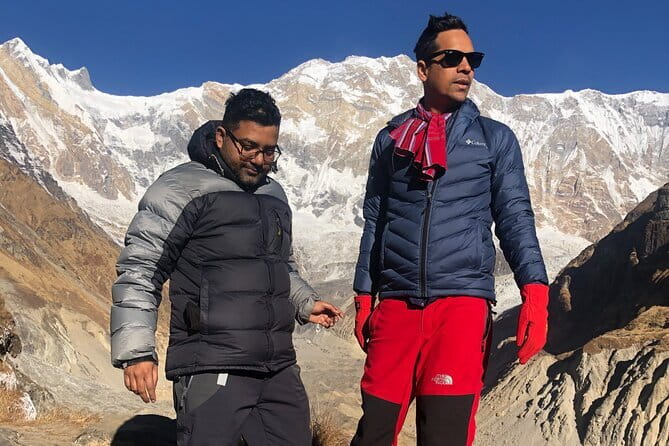
This trek is built around variety. You begin in Kathmandu, pass through Pokhara, walk among terraced farmland and forest, reach Machapuchare Base Camp and Annapurna Base Camp, then return through the hot springs at Jhinu Danda.
That order matters. The route does not throw you straight into high country. You first spend time on lower trails and in villages before reaching the colder, higher section. The changing scenery also keeps the walk interesting. One day brings forest shade, another brings open mountain views, and the next brings steep stone paths beside a river.
I especially like the cultural side of the route. The villages are connected with Gurung and Magar communities, and there is time to interact with local people. This makes the trek feel like a journey through the Annapurna region rather than a simple march toward a famous viewpoint.
The route is still demanding. The published schedule describes most days as roughly 12 hours, though that figure appears to represent the full daily program rather than continuous walking. You should still expect long days, repeated climbs and descents, and basic tea-house accommodation in remote areas.
More Annapurna Base Camp treks:
- Annapurna base camp trek 5 Days
★ 5.0 · 252 reviews - Annapurna Base Camp Trek
★ 5.0 · 111 reviews - Kathmandu to Annapurna Base Camp (ABC) 5-Day Trek
★ 5.0 · 102 reviews
Day 1: Arrival in Kathmandu and a soft landing
Your first day begins at Tribhuvan International Airport, where a Magic Himalaya representative meets you and drives you to a hotel in Thamel. This is a useful start after an international flight. You do not need to work out airport transport or find the hotel on your own.
Thamel places you in the middle of Kathmandu’s tourist district. If your arrival time and energy allow, take a short walk to get a first look at the city’s daily rhythm. The planned program is light, with advice from the company about practical do’s and don’ts before you rest.
Your overnight stay is in Kathmandu, and admission on this day is free. Lunch and dinner in Kathmandu are not included, so budget separately for those meals.
Day 2: The seven-hour road to Pokhara
After breakfast, you meet your guide and travel to the tourist bus station. The drive to Pokhara takes about seven hours along a scenic hill highway, with breaks for snacks and lunch.
This is not a glamorous transfer, but it is part of the Nepal experience. You see the countryside from the road rather than from an aircraft, and the scheduled breaks make the day more manageable. Still, anyone who dislikes long bus rides should consider this carefully. The return journey to Kathmandu also takes most of a day.
Pokhara is a pleasant change of pace. You stay overnight at a hotel, and the city gives you a chance to enjoy a lake-side setting before the walking begins. Dinner is not included in Pokhara, so plan to pay for that yourself.
Day 3: Nayapul, Syauli Bazaar, and Ghandruk
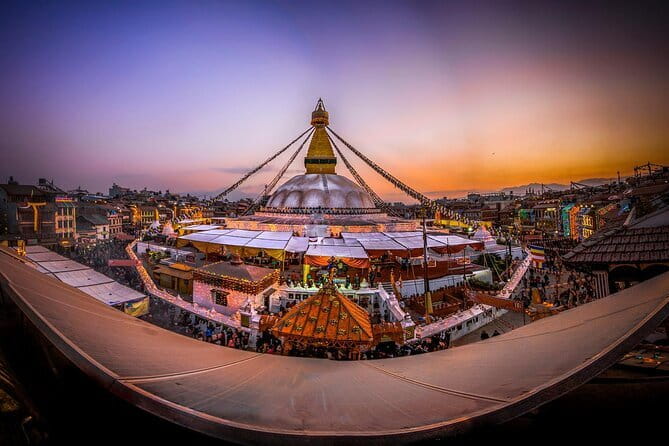
A clear morning in Pokhara may offer your first view of the Annapurna massif. From the hotel, a cab takes you to Nayapul, the starting point for the day’s walk.
The first two hours follow a road. That section may feel less scenic and less satisfying than a forest trail, but it provides a gradual beginning. From Syauli Bazaar, the route climbs toward Ghandruk, a well-known mountain village.
Ghandruk is one of the more meaningful stops on the trip. Here, mountain scenery connects with village life and Gurung culture. You stay in a hotel, giving you a chance to settle in rather than rushing straight through.
The climb also signals what the rest of the trek will ask of you. You will be walking uphill, then downhill, repeatedly. Good footwear and a steady pace matter more than speed.
More walking in the hills of Kathmandu:
- Everest Base Camp Trek – 14 Days
★ 5.0 · 1,499 reviews - Everest Base Camp Trekking
★ 5.0 · 485 reviews - Nagarkot Sunrise View and Day Hiking from Kathmandu
★ 5.0 · 471 reviews - Annapurna Circuit Trek with Tilicho Lake
★ 5.0 · 368 reviews
Day 4: Chhomrong and the descent to Sinuwa
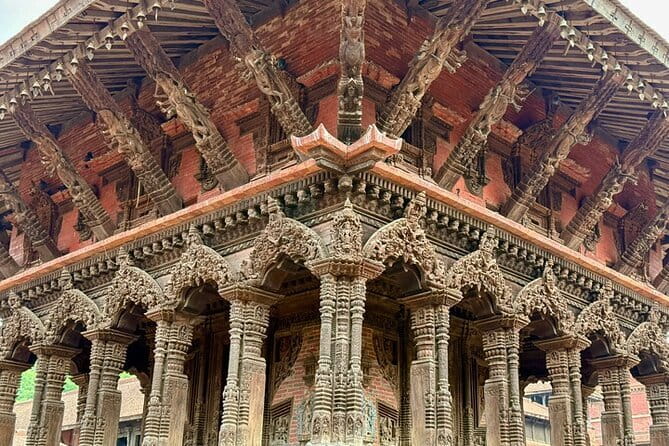
Day four begins with a view from your room and a morning breakfast before walking. The trail rises and falls as you make your way toward Chhomrong, where you stop for lunch.
After Chhomrong, the route descends to a river crossing and then continues for about 45 minutes to Sinuwa. This is a useful reminder that a trekking route is not simply a climb. You may gain height during one section and lose it again soon after.
Sinuwa is an overnight lodge stop. The shorter final stretch after the river crossing gives you time to settle in, though the repeated steps can still tire your legs. Keep your water accessible and avoid treating a downhill section as effortless. Descents can be hard on knees, especially after several hours on foot.
Day 5: Forest walking through Bamboo and Dovan
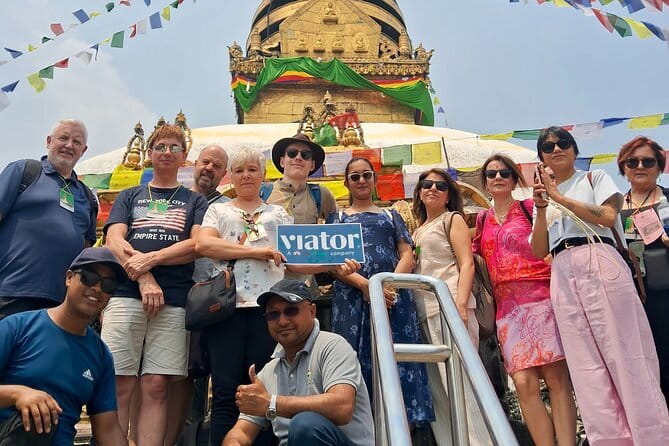
From Sinuwa, you may catch views of Machapuchare, the mountain commonly called Fishtail. Much of the day passes through forest, which provides shade and a welcome break from open sun.
The route reaches Bamboo, where you can pause, then continues to Dovan for lunch. After lunch, you walk for about two hours to the Himalayan Hotel, your night stop.
This section is appealing because the scenery changes again. The forest gives the day a quieter feel, while the named stops help divide the walk into clear stages. It is also a day when the remote nature of the route becomes more apparent. Accommodation is in a lodge, not a full-service hotel, and comfort becomes simpler as you go higher.
The company includes staff food, drinks, salaries, equipment, insurance, transport, accommodation, and local taxes for the trekking team. That broad coverage is important on a route where you depend on local support.
Day 6: The demanding push to Annapurna Base Camp
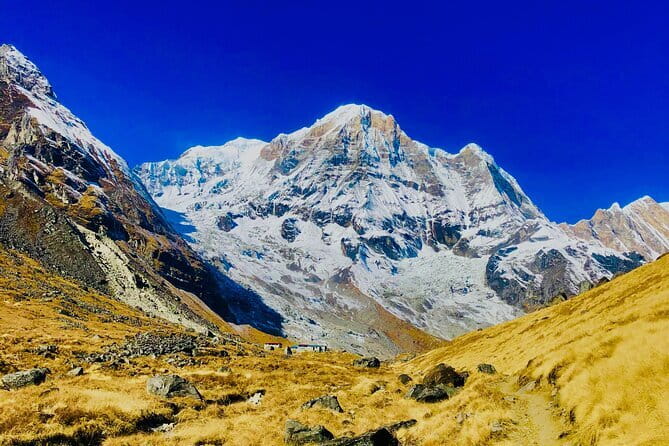
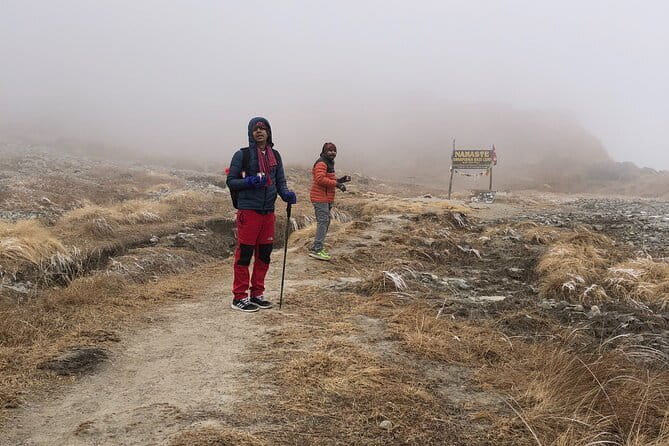
This is the trek’s main achievement day. Breakfast is planned around 6:30 a.m., with walking beginning at about 7:30. You pass Hinku Cave before reaching Deurali, where you stop for a rest.
From Deurali, the route takes about three hours to Machapuchare Base Camp, where lunch is provided. The final walk to Annapurna Base Camp takes another two hours. The camp sits at 4,130 meters above sea level.
The altitude changes the character of the day. The pace should be controlled, and you should tell your guide if you feel unwell. The schedule includes an experienced licensed guide, required porters, a medical kit, and needed medicine, but those provisions do not make altitude symptoms harmless.
Annapurna Base Camp has about five tea houses providing food and accommodation. This is a remote setting with practical facilities rather than luxury. Reaching the camp is rewarding because the goal is tangible: you have walked into a mountain amphitheater with views of Annapurna I, Machapuchare, and other peaks.
The best part may come the next morning. Reaching camp in the afternoon or evening means you should save energy for sunrise and the surrounding mountain views.
Day 7: Sunrise, then the long descent
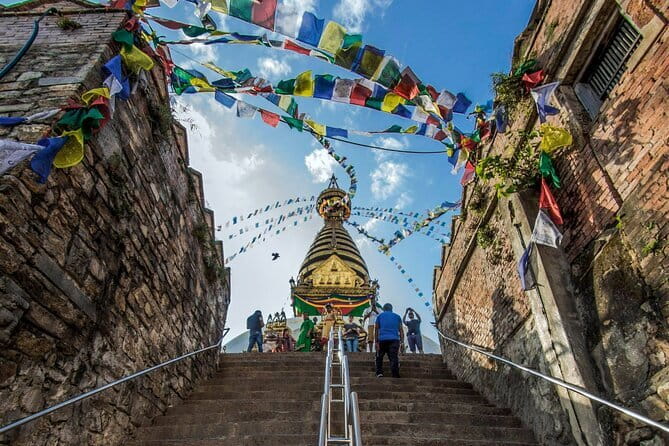
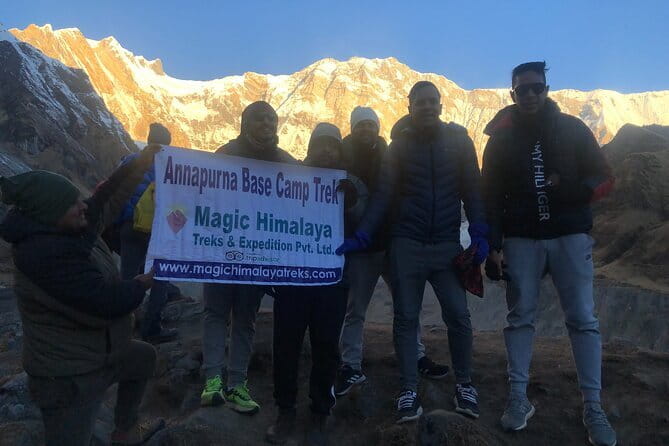
You wake early at Annapurna Base Camp to see the sunrise and the mountains around you. This is one of the most important moments of the route, so keep warm clothing close and prepare for a cold start.
After breakfast, you descend toward Bamboo or Sinuwa for the overnight stay. The return uses familiar ground, but it will not feel identical. Your legs are now carrying the fatigue of the climb, and downhill walking can be surprisingly demanding.
I like that the route does not rush straight from base camp back to a road. The overnight lodge stop breaks up the descent and gives you time to recover before the shorter walk toward Jhinu Danda.
Day 8: Jhinu Danda and the hot springs
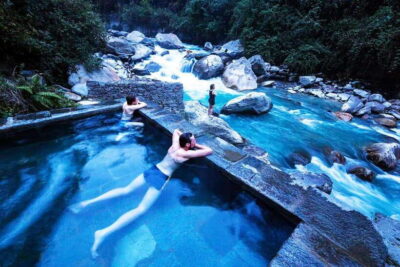
After breakfast, you make a shorter walk toward Jhinu Danda. The day’s special reward is a hot spring beside the river. You walk down to the hot pools, where the warm water can ease tired muscles after the cold conditions at base camp.
The hot springs are more than a pleasant extra. They give the return journey a clear purpose and add a different kind of experience to the trek. The mountains are still part of the setting, but here the focus shifts to rest and recovery.
You spend the night in Jhinu Danda. The stop also provides a gentler contrast to the base camp section. If you have been watching your pace and protecting your knees, this should feel like a welcome turning point.
Day 9: Back to Pokhara and an evening by the lake
After breakfast, you walk for about five hours to Nayapul. Lunch is planned there, followed by a drive of roughly one and a half hours to Pokhara.
This is a satisfying end to the walking portion. You return from remote trails to a city with more dining choices and easier comforts. The evening is free for the lake-side area and city life.
Lunch and dinner in Pokhara are not included in the package. That is a small but important budgeting point. The flexibility also lets you choose how you want to spend the evening rather than following another fixed group meal.
Day 10: The return to Kathmandu
After breakfast, you go to the bus park for the journey back to Kathmandu. The drive again takes much of the day, with stops for local snacks and lunch.
You should not treat this as a spare sightseeing day. Road conditions and traffic can affect the timing, and the bus trip is one of the least active but longest parts of the program. The payoff is reaching Kathmandu in the afternoon, with time to explore monuments near your hotel if your energy allows.
The trip ends with a Nepali farewell dinner attended by the trekking team. That is a fitting close to a route built on local guiding, portering, food, lodging, and transport.
Day 11: Airport transfer and departure
On the final day, a representative picks you up at your hotel and transfers you to the airport. The schedule is simple, which is helpful before an onward flight.
Airport or departure tax is not included, and Nepal’s entry visa fee is also separate. You should also keep funds available for bar bills, meals not covered by the package, and any personal expenses.
What the $910 price really covers
At $910 per person, the price is strongest when you use the included services. The package covers Annapurna conservation permits, the TIMS card, a trekking map, an English-speaking local guide, required porters, a company duffel bag, and accommodation.
It also includes seven lunches, seven dinners, and ten breakfasts. Staff costs are covered, including food, drinks, salary, equipment, insurance, transport, accommodation, and local tax. A farewell dinner, medical kit, required medicine, and taxes and VAT are also included.
That is a substantial bundle for an 11-day private trek. The main extras are meals in Kathmandu and Pokhara, drinks and bar bills, the Nepal entry visa, rescue operations if required, and airport or departure tax.
A private format adds value if you want your own group rather than a large shared departure. It can make it easier to discuss walking pace and daily needs with the guide. The published rating is five stars from two reviews, with particular praise for the company’s effort and the friendly service of guide Mr. Shanta. That is a small sample, so I would treat it as encouraging rather than definitive.
Who should book this trek?
This trip suits you if you want a classic Nepal trekking route with strong mountain scenery, village contact, a private group, and a clear support system. It is also a good fit if you prefer a planned package rather than arranging permits, porters, transport, and lodges yourself.
You should have moderate physical fitness. The route includes long walking days, steep climbs and descents, cold high-altitude conditions, and a summit section at 4,130 meters. Beginners can consider it, but beginners should not confuse suitable with preparation and easy.
You may want another option if you strongly dislike road journeys, prefer short walking days, or need high-end accommodation. The tea houses are practical, and the seven-hour bus trips are unavoidable parts of this schedule.
Free cancellation is available if you cancel at least 24 hours before the experience start time. Changes or cancellations made later are not accepted for a refund.
FAQ
Where does the Annapurna Base Camp trek begin?
The experience begins with pickup at Tribhuvan International Airport in Kathmandu, Nepal.
How long does the trek last?
The complete program lasts approximately 11 days.
How much does the experience cost?
The listed price is $910 per person.
Is the tour private?
Yes. This is a private tour or activity, so only your own group participates.
What level of fitness is required?
The tour requires a moderate level of physical fitness.
What mountain views can you expect?
The route provides views of Annapurna I, Machapuchare, also called Fishtail, and other peaks in the Annapurna region.
What is the highest point on the route?
Annapurna Base Camp is at 4,130 meters above sea level.
Are meals included?
The package includes ten breakfasts, seven lunches, and seven dinners. Lunch and dinner in Kathmandu and Pokhara are not included.
Are permits and porters included?
Yes. Annapurna conservation permits, the TIMS card, a trekking map, an experienced licensed guide, required porters, and a company duffel bag are included.
Should you book the Magic Himalaya Treks ABC route?
I would book this trek if you want a well-supported route with a strong mix of peaks, villages, forests, and hot springs. The $910 price is fair because it covers the permits, guide, porters, transport, lodging, most meals, staff costs, and a private group arrangement.
Before booking, be honest about two things: the long road transfers and the physical demands of reaching 4,130 meters. If those fit your travel style, the sunrise at base camp, the Gurung and Magar villages, and the hot springs at Jhinu Danda give this trek a satisfying range of experiences rather than one mountain view repeated for 11 days.
New in the Kathmandu listings
- Traditional Momo Making Class★ 5.0 · 10 reviews
- Kathmandu: Ancient City Kirtipur & Pharping Monastery Tour★ 5.0 · 2 reviews
- Kathmandu to Pokhara Premium sofa bus ticket★ 4.0 · 17 reviews
- Women Empowerment Project(Nepali cooking class & jewelry workshop★ 5.0 · 15 reviews
- 7-Day Langtang Valley Trek from Kathmandu★ 5.0 · 1 review
- Kathmandu 2 Nights 3 Days Chitwan Jungle Safari Tour★ 5.0 · 9 reviews
- Yoga Experience Day Trip with Private Transfer From Kathmandu★ 4.0 · 2 reviews
- Wildlife Adventure in Chitwan Nepal★ 4.0 · 4 reviews
Annapurna Base Camp Treks, compared.
Kathmandu to Annapurna Base Camp (ABC) 5-Day Trek
Read our review →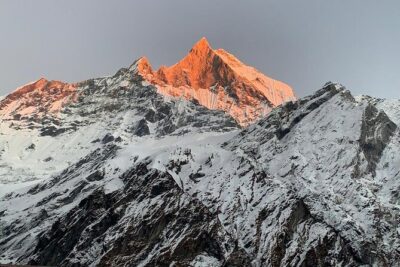
Kathmandu/Pokhara: 5-Day Annapurna Base Camp (ABC) Trek
Read our review →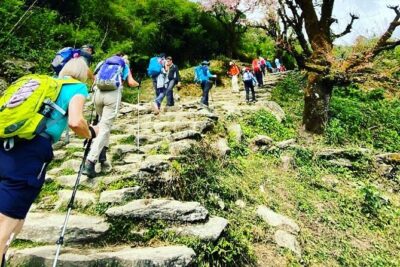
11-Day Hike Tour to Annapurna Base Camp Bliss in Kathmandu
Read our review →Browse the lists this tour appears in