
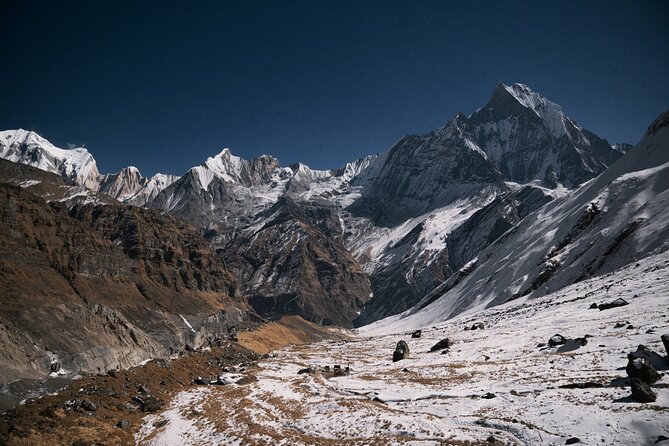
REVIEW · ANNAPURNA BASE CAMP TREKS
7 Days Annapurna Base Camp Trekking
Big mountain days start with a village road. I like this trek for its Ghandruk village stay and its rewarding visit to Annapurna Base Camp at 4,130 meters. I also like the final stop at Jhinu Danda’s hot springs, a welcome treat after several long walking days. The main caution is the pace: about six hours and 12 kilometers of walking each day, with a sharp rise in altitude.
This seven-day route packs a lot into one week. You move from Kathmandu toward the Annapurna region, pass mountain settlements, reach the base camp, then return through the hills to Pokhara. Meals, an English-speaking guide, transport, fees, and taxes are included, but bottled water, tea, coffee, snacks, and alcohol cost extra.
In This Review
- Key points to know before booking
- What makes this seven-day route appealing
- Day 1: Kathmandu to Nayapul, then Ghandruk at 1,940 meters
- Day 2: Ghandruk to Chhomrong at 2,170 meters
- Day 3: Chhomrong to Himalaya at 2,920 meters
- Day 4: Himalaya to Annapurna Base Camp at 4,130 meters
- Day 5: Annapurna Base Camp to Bamboo at 2,340 meters
- Day 6: Bamboo to Jhinu Danda at 1,780 meters
- Day 7: Jhinu Danda to Siwai, then onward to Pokhara
- Meals, transport, and what the $699 covers
- Fitness, altitude, and the daily pace
- The guide and the feel of the experience
- Who should book this trek
- Should you book the Annapurna Base Camp trek?
- FAQ
- How long is the Annapurna Base Camp trek?
- What is the highest altitude reached?
- What meals are included?
- Is a guide included?
- Are drinks and snacks included?
- Where does the experience begin?
- What is the cancellation policy?
Key points to know before booking
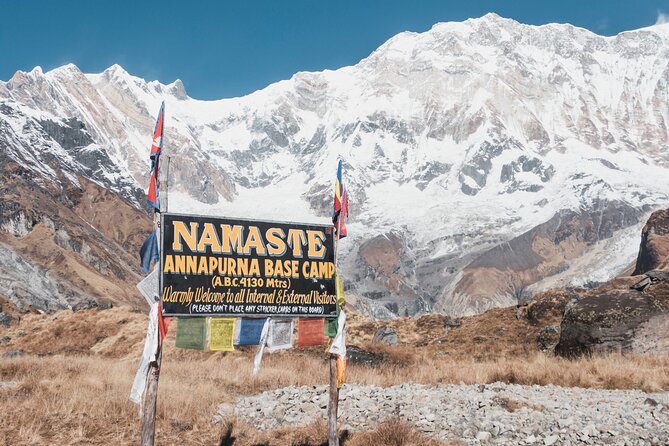
- Annapurna Base Camp reaches 4,130 meters, so altitude and steady pacing matter.
- Ghandruk offers a cultural start, with mountain settlement views and an authentic overnight stay.
- The route averages six hours of walking daily, covering roughly 12 kilometers.
- Meals are included, breakfast, lunch, and dinner, which helps control daily costs.
- Jhinu Danda’s hot springs provide a relaxing finish to the trekking section.
- Mr Subedi received special praise for being helpful, friendly, and well informed during one earlier trip.
What makes this seven-day route appealing
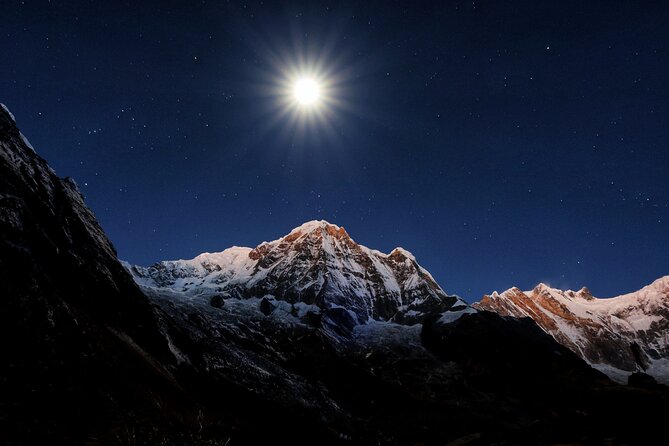
The Annapurna Base Camp trek gives you a clear goal without requiring a long expedition. In one week, you reach a famous Himalayan destination, spend time in mountain villages, and finish near Pokhara. That makes it a practical choice if you have limited time in Nepal but still want several full days on foot.
The route begins around 1,940 meters and climbs to 4,130 meters. That change is not minor. You gain more than 2,000 meters, so your fitness, pacing, and response to altitude will shape the experience.
I like the route’s mix of scenery and human contact. Ghandruk brings you into a mountain settlement rather than dropping you straight into a trail corridor. Chhomrong and the surrounding Annapurna region then carry you higher, where the focus shifts toward forest paths, steep climbs, and mountain views.
The price is $699 per person. That includes three meals each day, an English-speaking guide, transportation arranged privately or publicly as needed, all fees, and taxes. For a guided Himalayan trek, that bundled structure can offer good value because several costs are handled in advance.
Still, the price does not cover bottled water, snacks, coffee, tea, or alcoholic drinks. You should budget for those extras. The trek also demands a moderate level of physical fitness, and the six-hour walking average leaves little room for treating each day as a leisurely stroll.
More Annapurna Base Camp treks:
- Annapurna base camp trek 5 Days
★ 5.0 · 252 reviews - Annapurna Base Camp Trek
★ 5.0 · 111 reviews - Kathmandu to Annapurna Base Camp (ABC) 5-Day Trek
★ 5.0 · 102 reviews
Day 1: Kathmandu to Nayapul, then Ghandruk at 1,940 meters
The first day combines a long transfer with the beginning of the trek. You drive from Kathmandu to Nayapul, then walk onward to Ghandruk. The road journey gets you out of the capital and toward the Annapurna region, while the walk introduces the pace you will follow for the rest of the week.
Ghandruk is one of the most appealing overnight stops on this route. It is a mountain city close to the Annapurna range, with a settled community and cultural character. The appeal is not only the view. You get a sense of how people live in the high hills, which gives the trek more meaning than a simple point-to-point hike.
The altitude here is 1,940 meters, still well below base camp but high enough to signal that the route has begun. Your guide can help you keep the first day controlled. That matters because an eager start can make the later altitude gain feel harder.
Transport arrangements are described as private or public according to need. I would confirm the exact vehicle plan before departure, especially since the first day involves both driving and walking. Pickup is offered, and the stated meeting point is Blissful Himalayas Treks & Tours on Yak and Yeti Road at Durbar Marg in Kathmandu.
Day 2: Ghandruk to Chhomrong at 2,170 meters
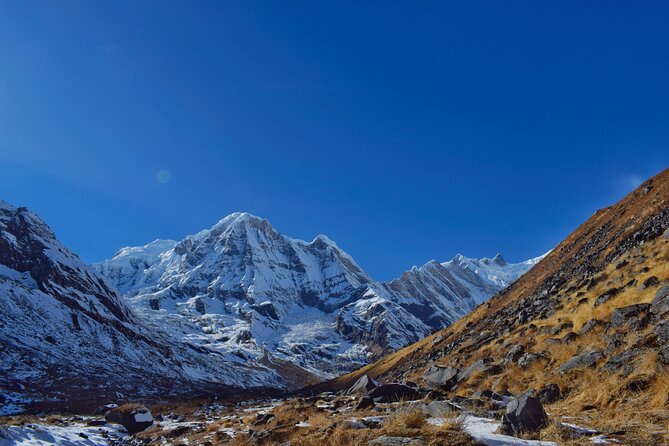
The second day takes you from Ghandruk to Chhomrong. The altitude gain is modest, from 1,940 to 2,170 meters, but the walking remains part of a steady multi-day effort.
Chhomrong is an important stop in the Annapurna region because it places you deeper into the mountain route. By this point, you will have settled into the daily rhythm: walk for several hours, stop for meals, and rely on your guide for direction and timing.
I like this part of the trek because the route continues to connect mountain communities with the bigger goal ahead. You are not simply racing to the base camp. The villages help break up the walking and give you changing views of the Annapurna range.
Do not judge the day only by the altitude number. The trek averages about 12 kilometers per day, and a route can feel demanding even when the overnight elevation change looks small. Good walking shoes, a sensible pack, and a willingness to maintain an even pace will help.
Day 3: Chhomrong to Himalaya at 2,920 meters
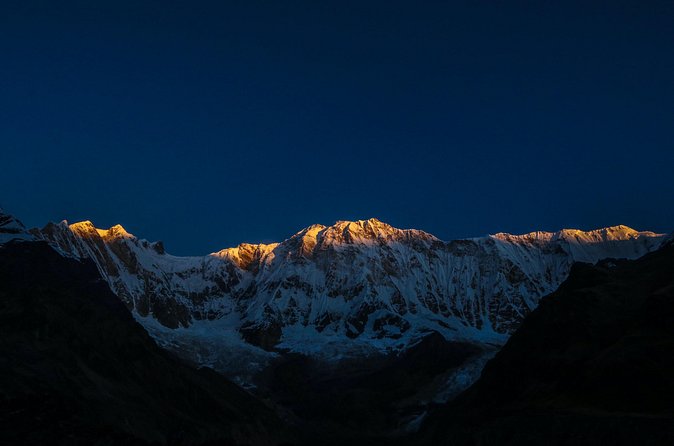
The third day takes you higher, from Chhomrong to Himalaya at 2,920 meters. This is where the altitude becomes a more serious part of the trip. You are not yet at base camp, but your body is already adjusting to a thinner atmosphere than in Kathmandu or Pokhara.
The name Himalaya describes the stop, but do not expect the day to be only about dramatic viewpoints. It is also a preparation day for the highest part of the trek. Follow your guide’s pace, drink regularly, and pay attention to how you feel.
The included meals are especially useful here. Breakfast, lunch, and dinner are covered, so you do not need to spend time arranging basic food at each stop. Bottled water is not included, however, and neither are snacks. You should plan for those purchases as you go.
The group can include up to 20 people. That is large enough for a social feel but not necessarily intimate. If you want a very personal walking pace or lots of quiet time with the guide, ask about the expected group size when booking.
More walking in the hills of Kathmandu:
- Everest Base Camp Trek – 14 Days
★ 5.0 · 1,499 reviews - Everest Base Camp Trekking
★ 5.0 · 485 reviews - Nagarkot Sunrise View and Day Hiking from Kathmandu
★ 5.0 · 471 reviews - Annapurna Circuit Trek with Tilicho Lake
★ 5.0 · 368 reviews
Day 4: Himalaya to Annapurna Base Camp at 4,130 meters
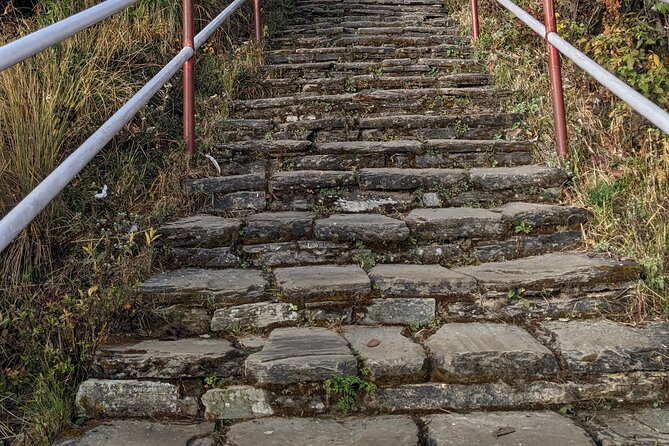
This is the main day of the trek. You walk from Himalaya to Annapurna Base Camp, reaching 4,130 meters, or about 13,550 feet.
Annapurna Base Camp sits within a natural amphitheater surrounded by major Himalayan peaks. The setting gives the destination its power. You are not simply arriving at a sign or viewpoint. You are entering a mountain bowl with high summits rising around you.
The route’s most famous mountain reference is Annapurna I, which reaches 8,091 meters and is one of the world’s highest peaks. Machhapuchchhre, also called Machapuchare or Fishtail Mountain, is another key sight in the area. Its distinctive shape and 6,993-meter height make it one of Nepal’s best-known peaks.
This day is also the greatest physical test. The elevation rises by more than 1,200 meters from Himalaya, and the route has already required several days of walking. A guide is valuable here, not only for navigation but also for judging the pace and helping you respond to the conditions.
You should expect the weather and visibility to affect the views. The information provided promises mountain scenery, but no mountain trip can promise clear skies. The experience remains worthwhile for the setting itself, though clear weather can make the arrival much more memorable.
Day 5: Annapurna Base Camp to Bamboo at 2,340 meters
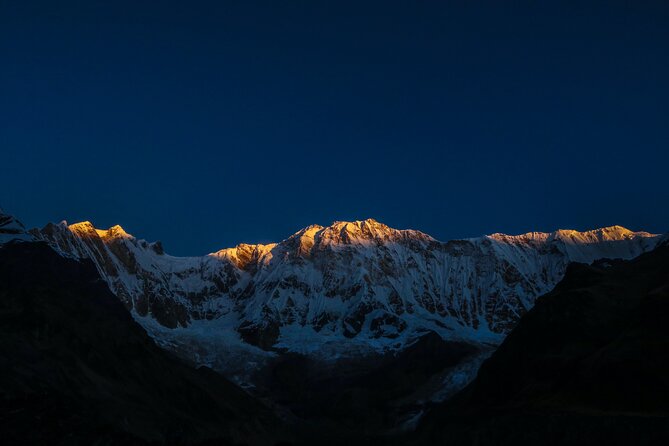
After reaching the high point, you descend from Annapurna Base Camp to Bamboo at 2,340 meters. This is a major drop in altitude, but downhill walking brings its own strain. Knees and thighs can work harder than expected, especially after the previous day’s climb.
The descent changes the feel of the trip. The base camp gives you open mountain surroundings, while the route toward Bamboo brings you back into lower terrain. You may find the day mentally easier because the highest goal is behind you, but it is still a full walking day.
This is one reason the seven-day schedule feels compact. The plan does not add a rest day at base camp. You arrive, take in the setting, and begin the return. If you want a slower schedule with extra time at altitude, this particular version may feel too tightly arranged.
Day 6: Bamboo to Jhinu Danda at 1,780 meters
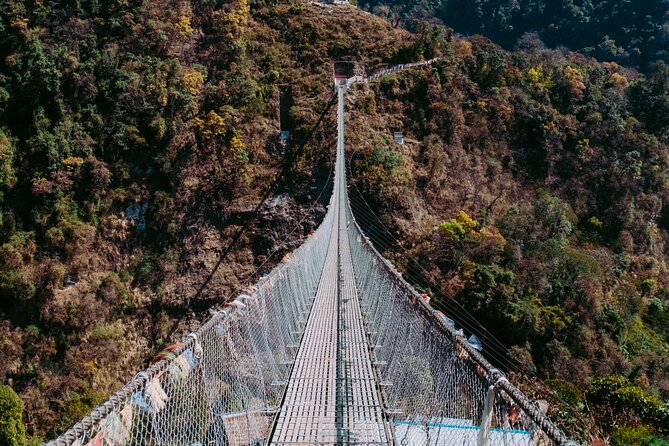
The sixth day takes you from Bamboo to Jhinu Danda, dropping to 1,780 meters. After the high point at base camp, this return to a lower elevation should feel welcome.
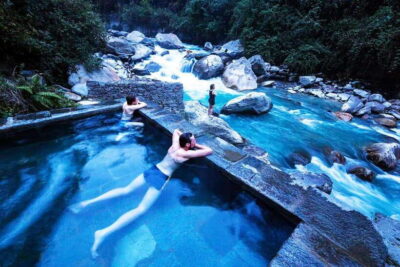
The special feature is the visit to the hot springs. After five days of substantial walking, warm water offers a simple but well-timed reward. It gives the route a more rounded ending than a descent straight to the road.
Jhinu Danda also provides a useful contrast with Annapurna Base Camp. The base camp is about scale and high mountain surroundings. Jhinu is about recovery, warmth, and the pleasure of being lower again.
You should still treat this as an active day. The hot springs are a stop during the route, not a replacement for the walk. Bring whatever personal items you need for the visit, and remember that snacks and drinks outside the included meals are not part of the package.
Day 7: Jhinu Danda to Siwai, then onward to Pokhara
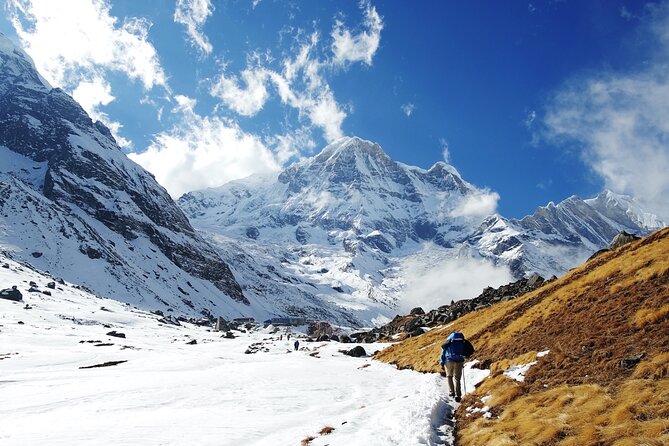
On the final day, you trek to Siwai and then drive to Pokhara. This combines the last section on foot with a road transfer to one of Nepal’s best-known trekking bases.
Pokhara is about 200 kilometers west of Kathmandu and sits beside Phewa Lake. It is closely linked with the Annapurna region, so finishing there makes practical sense. You can use the city as the next stop in your Nepal trip, although the information provided does not include a Pokhara stay or further arrangements.
There is one point worth confirming before you book. The day-by-day plan says the activity ends with a drive to Pokhara, while the meeting information says the activity ends back at the Kathmandu meeting point. Those details do not fully match. Ask Blissful Himalayas to confirm the exact final drop-off and whether transport beyond Pokhara is included.
Meals, transport, and what the $699 covers
The $699 price has a useful set of inclusions. Breakfast, lunch, and dinner are covered throughout the trek. For a seven-day route, that removes a large amount of daily planning.
An English-speaking guide is included. The guide’s role matters most on the longer and higher days, especially the walk to base camp. A previous participant gave particular praise to Mr Subedi, describing him as helpful, friendly, and well informed. That is a positive sign, though you should confirm who will lead your own departure.
Transportation is listed as private and public transport according to requirement. This gives the operator some flexibility, but it also makes the exact arrangement less clear. Confirm whether Kathmandu to Nayapul and Siwai to Pokhara will use private vehicles, shared transport, or a mix.
All fees and taxes are included. That helps make the headline price easier to judge. The main extra spending will likely be for bottled water, tea, coffee, snacks, and alcohol, all of which are excluded.
The maximum group size is 20. That is not a private trek, despite the personal support described in the promotion. A group of that size can make the experience more social, but it can also mean that walking speeds vary. Ask if smaller departures are available if that matters to you.
Fitness, altitude, and the daily pace
You should have a moderate level of physical fitness for this trek. The stated average is six hours of walking per day and roughly 12 kilometers, with the route climbing from 1,940 meters to 4,130 meters.
That combination requires more than casual sightseeing fitness. You do not need to be a professional climber, but you should be comfortable walking for several hours on consecutive days. The schedule includes no listed rest day.
Altitude is the bigger concern than distance alone. Day 4 reaches 4,130 meters, and Day 3 already ends at 2,920 meters. Move steadily, follow the guide’s advice, and do not treat the final ascent as a race.
The short duration is both the strength and the weakness. You get the Annapurna Base Camp goal in one week, but the schedule leaves less flexibility if you need extra time to adjust. People who prefer a relaxed pace may want to ask about a longer version.
The guide and the feel of the experience
The best part of a guided trek is not just finding the trail. It is having someone who can explain the route, help manage the day, and keep the group moving sensibly.
The praise for Mr Subedi is specific and useful. He was described as helpful, friendly, and well informed, qualities that matter when the walk becomes tiring. You should request his availability if you are hoping for that particular guide, since guide assignments can vary.
The trip combines nature with local settlement life. Ghandruk gives you an authentic mountain-community stop, while the Annapurna region supplies the larger mountain setting. The route feels more rewarding because it includes both.
Who should book this trek
I would recommend this trek to you if you have one week, want a guided mountain route, and are comfortable with six-hour walking days. It suits someone who wants a clear destination, included meals, and a planned route rather than arranging each section independently.
It is also a good fit if you value variety. You get village life in Ghandruk, higher mountain terrain, Annapurna Base Camp, a long descent, hot springs, and a finish near Pokhara.
I would be more cautious if you dislike fixed schedules or have limited walking experience. The altitude gain is substantial, the days are long, and the route does not include a listed acclimatization day at base camp. You should also confirm the final transport details because Kathmandu and Pokhara are both mentioned in the end arrangements.
Free cancellation is available if you cancel at least 24 hours before the local start time. Changes or cancellations within 24 hours are not refunded, so keep that deadline in mind.
Should you book the Annapurna Base Camp trek?
Book it if you want a compact, guided route with meals included and a strong mix of mountain scenery, village culture, and hot springs. At $699, the package offers fair value because food, transport, guide services, taxes, and fees are built in.
Before paying, confirm the guide, the transport arrangements, and the final drop-off in Pokhara. If you are fit enough for six hours of walking daily and prepared for 4,130 meters, this is a practical way to reach Annapurna Base Camp in a short amount of time.
FAQ
How long is the Annapurna Base Camp trek?
The trek lasts approximately seven days, with an average of six hours of walking per day.
What is the highest altitude reached?
The highest point is Annapurna Base Camp at 4,130 meters, or about 13,550 feet.
What meals are included?
Breakfast, lunch, and dinner are included.
Is a guide included?
Yes. An English-speaking guide is included.
Are drinks and snacks included?
Alcoholic drinks, coffee, tea, bottled water, and snacks are not included.
Where does the experience begin?
It begins at Blissful Himalayas Treks & Tours on Yak and Yeti Road, Durbar Marg, Kathmandu 44600, Nepal.
What is the cancellation policy?
You can receive a full refund if you cancel at least 24 hours before the experience start time. Cancellations or changes made within 24 hours are not accepted for a refund.
New in the Kathmandu listings
- Traditional Momo Making Class★ 5.0 · 10 reviews
- Kathmandu: Ancient City Kirtipur & Pharping Monastery Tour★ 5.0 · 2 reviews
- Kathmandu to Pokhara Premium sofa bus ticket★ 4.0 · 17 reviews
- Women Empowerment Project(Nepali cooking class & jewelry workshop★ 5.0 · 15 reviews
- 7-Day Langtang Valley Trek from Kathmandu★ 5.0 · 1 review
- Kathmandu 2 Nights 3 Days Chitwan Jungle Safari Tour★ 5.0 · 9 reviews
- Yoga Experience Day Trip with Private Transfer From Kathmandu★ 4.0 · 2 reviews
- Wildlife Adventure in Chitwan Nepal★ 4.0 · 4 reviews
Annapurna Base Camp Treks, compared.
Kathmandu to Annapurna Base Camp (ABC) 5-Day Trek
Read our review →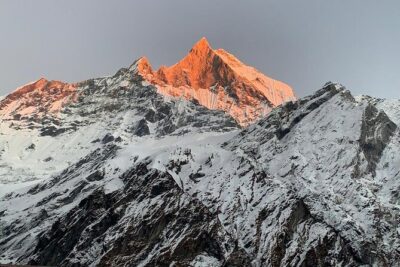
Kathmandu/Pokhara: 5-Day Annapurna Base Camp (ABC) Trek
Read our review →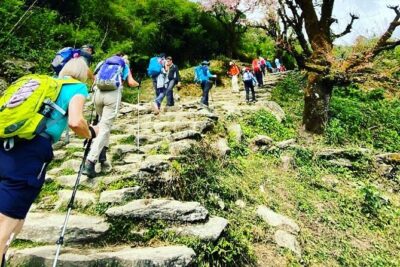
11-Day Hike Tour to Annapurna Base Camp Bliss in Kathmandu
Read our review →Browse the lists this tour appears in