
REVIEW · ANNAPURNA BASE CAMP TREKS
Annapurna Base Camp Trek – 10 Days
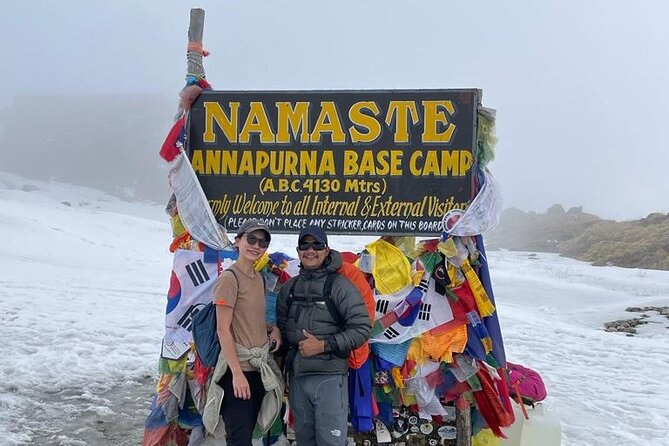
The Himalayas demand effort, then reward you. This 10-day Annapurna Base Camp trek combines Kathmandu temples, Pokhara’s lakefront, traditional mountain villages, and a high-altitude walk to Annapurna Base Camp at 4,130 meters. I like the strong mix of scenery and culture, and I also like that the price includes airport transfers, hotels, tea houses, transport, a licensed guide, and guide-related costs.
The main consideration is the physical demand. You will tackle steep stone steps, uneven trails, changing weather, and thin air at altitude. The schedule also contains a few timing and stop-name inconsistencies, including a reference to returning to Kathmandu on an eleventh day, so I would confirm the exact daily plan before paying.
In This Review
- Key points at a glance
- Kathmandu begins with temples and practical help
- The road to Pokhara sets the mood
- From Nayapul to Chhomrong, the walking gets serious
- Sinuwa brings stone steps and forest shade
- Machhapuchhre Base Camp leads into the sanctuary
- Annapurna Base Camp is the payoff, not the finish
- The return through Bamboo and Jhinu Danda
- Rice farms and Pokhara bring a gentler finish
- Kathmandu return and the schedule issue
- What the $699 price really covers
- Who should book this trek?
- Should you book the Annapurna Base Camp Trek?
- FAQ
- How high does the Annapurna Base Camp Trek reach?
- What accommodation is included?
- Is airport pickup included?
- What transport is included between Kathmandu and Pokhara?
- Is travel insurance required?
- Can I cancel for a full refund?
Key points at a glance
- Annapurna Base Camp at 4,130 meters: The trek reaches a dramatic mountain destination surrounded by the Annapurna range.
- Village-to-village walking: The route passes through ethnic communities, rhododendron forests, rice farms, rivers, and traditional valleys.
- A helpful package price: At $699 per person, the tour includes hotels, tea houses, transport, breakfast, a guide, airport transfers, taxes, and a farewell dinner.
- Guides praised by name: Santosh, Asok, Raju Simkhada, Dibo, and Varat are among the guides and support staff singled out for friendly care and professionalism.
- A real altitude challenge: The highest point is about 13,550 feet, and medical travel insurance with emergency repatriation is required.
- Small private groups: Up to 12 people can book together, and only your own group participates.
Kathmandu begins with temples and practical help
Your arrival starts at Tribhuvan International Airport, where a staff member meets you and helps you reach your Kathmandu hotel. That airport pickup matters after a long flight, especially if this is your first visit to Nepal and you are still sorting out local money, traffic, and hotel directions.
The first night includes a guide meeting and time in Kathmandu. The planned city stops include Thamel, Kathmandu Durbar Square, and Pashupatinath Temple. Thamel is useful for more than souvenir shopping. It is also where you can find trekking equipment to buy or rent, with help from the guide if you need to fill a gap in your gear.
Kathmandu Durbar Square gives you an early look at Nepal’s traditional architecture and public life. Pashupatinath, one of the city’s best-known Hindu temple areas, adds a very different side of Nepal before you head into the mountains. Swayambhunath, Chandragiri Hills, Patan Durbar Square, the Garden of Dreams, and Narayanhiti Palace Museum also appear in the schedule, but not all are assigned cleanly to a specific day.
That detail is worth checking. The program is packed, and some listed city stops may be optional or subject to the exact arrival and departure times. I would ask the company which sights are actually included, rather than assuming every named stop receives a full visit.
More Annapurna Base Camp treks:
- Annapurna base camp trek 5 Days
★ 5.0 · 252 reviews - Annapurna Base Camp Trek
★ 5.0 · 111 reviews - Kathmandu to Annapurna Base Camp (ABC) 5-Day Trek
★ 5.0 · 102 reviews
The road to Pokhara sets the mood
The journey to Pokhara is planned by luxury tourist bus. The ride follows rivers and offers broad views of Nepal’s countryside, though road travel here can take much of the day. If you prefer speed and are willing to pay more, ask before booking if a flight or another transfer option is available, since the published package specifically includes the bus.
Pokhara Lakeside is your base before and after the trek. Phewa Tal, the lake beside the city, gives you an easy place to rest before the hard walking begins. Sarangkot is also listed, offering a well-known viewpoint over the Pokhara area, though the exact timing is not clear from the schedule.
The package includes two nights in Pokhara in a three-star hotel with breakfast. That is a useful buffer. You get one night to prepare and one night to wash clothes, rest your legs, and enjoy the lake after returning from the trail.
From Nayapul to Chhomrong, the walking gets serious
The trekking section begins with a private car between Pokhara and Nayapul. From there, the route leads through villages and mountain foothills toward the Annapurna Conservation Area. The schedule describes Ghandruk and Chhomrong, with the Ghandruk to Chhomrong section involving steady uphill and downhill walking through woodlands and rhododendron-covered paths.
Chhomrong is an important point on the route, but reaching it is not a gentle warm-up. You should expect uneven footing and repeated climbs. The trail can feel demanding because the effort comes in many smaller rises and drops rather than one single push.
Poon Hill is also listed on this part of the program. Its inclusion needs clarification because the standard timing and route can vary depending on the overnight village and the exact approach to Annapurna Base Camp. If sunrise at Poon Hill is important to you, ask where you sleep the night before and whether the walk is included as a dedicated stop.
The cultural side is one of the best reasons to choose this route. You move through small settlements rather than spending the whole trek in an empty mountain wilderness. Homes, farms, local food, and village life give the walk a human scale.
Sinuwa brings stone steps and forest shade
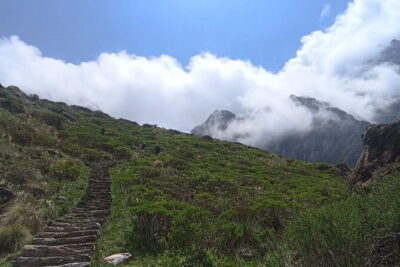
From Chhomrong, the path descends toward the Chhomrong Khola, crosses the river, and then climbs roughly 2,500 stone steps to Sinuwa. This is one of the days when a moderate fitness level may not feel quite enough unless you are comfortable with long stair climbs.
The steps are a practical warning for your knees. Trekking poles can help, and you should keep your pace steady rather than racing the group. The forest and mountain views provide welcome breaks, but the route remains a working hike, not a scenic stroll.
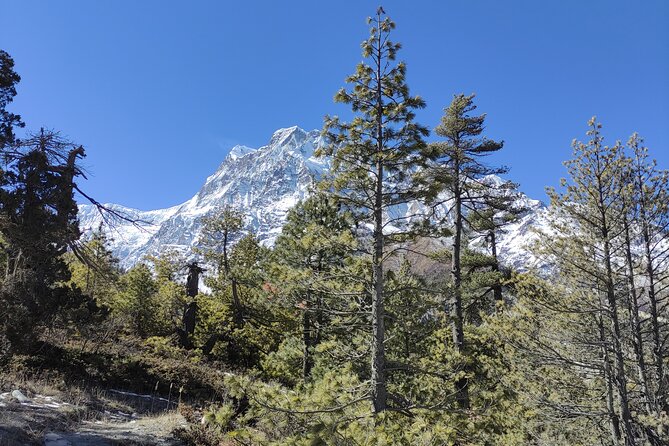
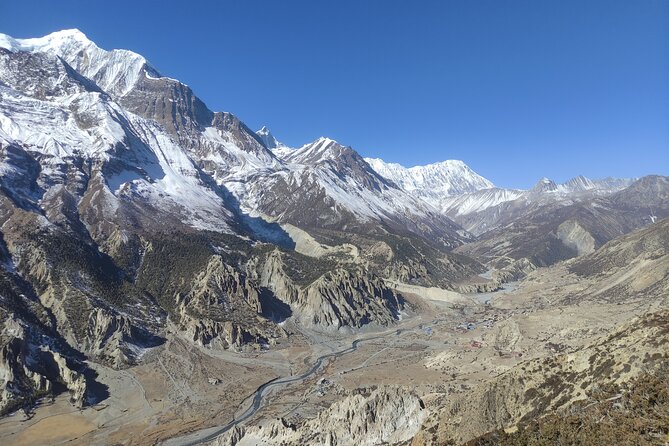
The trek stays within the Annapurna Conservation Area, and the surroundings change as you gain height. Lower sections include thicker woodland and farms. Higher sections feel cooler and more exposed, with the Annapurna range appearing through gaps in the trees.
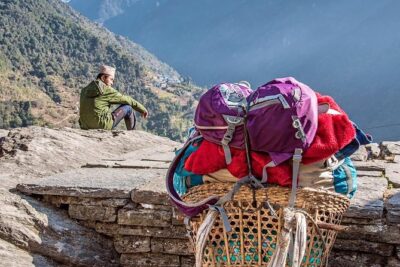
Accommodation during the trek is in tea houses for six nights. These are simple mountain lodgings, not an extension of the three-star hotels in Kathmandu and Pokhara. Their value is their location and practicality: you sleep near the route, eat nearby, and avoid carrying camping equipment.
More walking in the hills of Kathmandu:
- Everest Base Camp Trek – 14 Days
★ 5.0 · 1,499 reviews - Everest Base Camp Trekking
★ 5.0 · 485 reviews - Nagarkot Sunrise View and Day Hiking from Kathmandu
★ 5.0 · 471 reviews - Annapurna Circuit Trek with Tilicho Lake
★ 5.0 · 368 reviews
Machhapuchhre Base Camp leads into the sanctuary
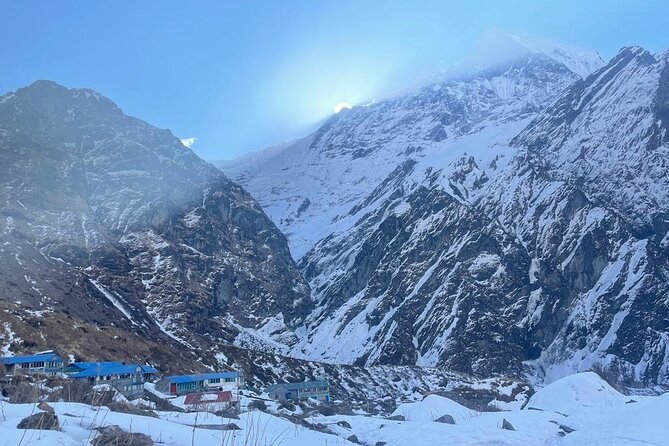
The trail continues beside the river and climbs toward Bagar before heading toward Machhapuchhre Base Camp. This is described as a strenuous section, and the increasing altitude makes the same number of steps feel harder than they would near Pokhara.
Machhapuchhre, also called Fishtail, is one of the striking peaks in the region. The route toward its base camp gives you a clear sense that Annapurna Base Camp is not simply another village stop. You are moving into a high mountain basin with more severe weather and less room for error.
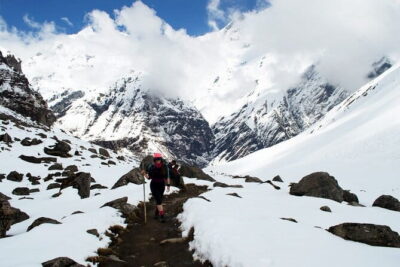
The Annapurna Sanctuary is a major feature of the trek. The route passes over small bridges and through a moist, wetland-like setting before opening toward the higher peaks. Weather can change quickly at these elevations, so waterproof layers and warm clothing are not optional extras.
The summit destination here is not a technical climbing summit. You walk to Annapurna Base Camp, which sits at about 4,130 meters, or 13,550 feet. Even so, altitude can affect people regardless of age, gender, or general fitness. Headaches, fatigue, poor sleep, and other adverse effects are possible, so you should discuss the trip with your doctor before leaving.
Annapurna Base Camp is the payoff, not the finish
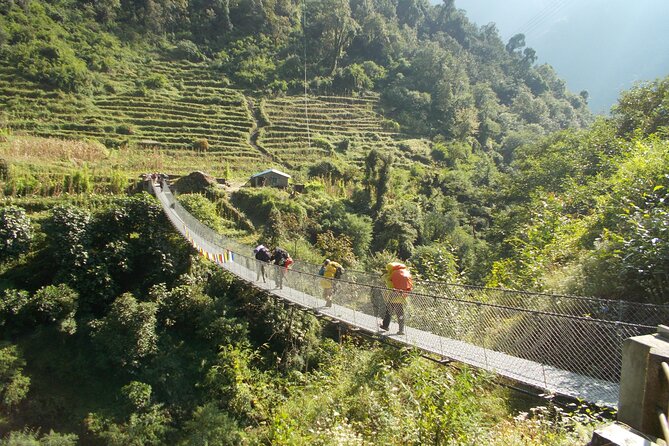
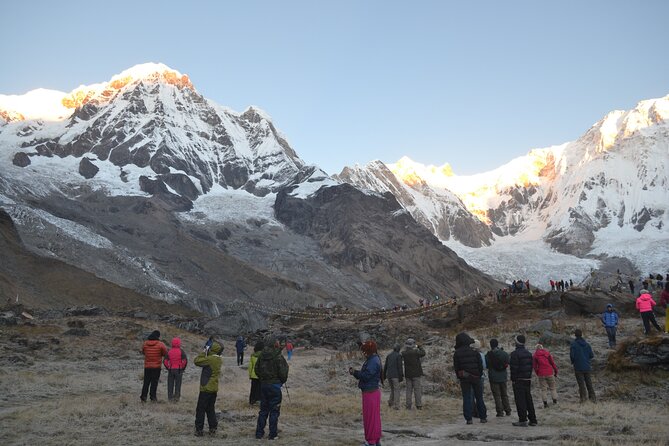
At Annapurna Base Camp, the reward is the close mountain setting and the sense of arriving somewhere earned on foot. The Annapurna range surrounds the route, and the high-point views are the reason many people accept the long climbs and basic lodging.
Give yourself time to appreciate the place rather than treating the stop as a quick photo break. The weather may limit visibility, and the mountain environment can be cold and changeable. The tour description promises impressive Himalayan views, but no guide can promise clear skies.
This is also where the guide’s role matters most. The company requires a government-licensed trekking guide and says its leaders have basic first-aid training and know the nearest medical facilities. Several guides receive especially warm praise, including Santosh, Asok, Raju Simkhada, Dibo, and Varat.
The strongest pattern in the feedback is personal support. People describe guides who were friendly, professional, thoughtful, and attentive, with humor helping during the long days. That is not a minor detail on a high-altitude trek. A good guide can help with pace, route decisions, and morale when your legs are tired.
The return through Bamboo and Jhinu Danda
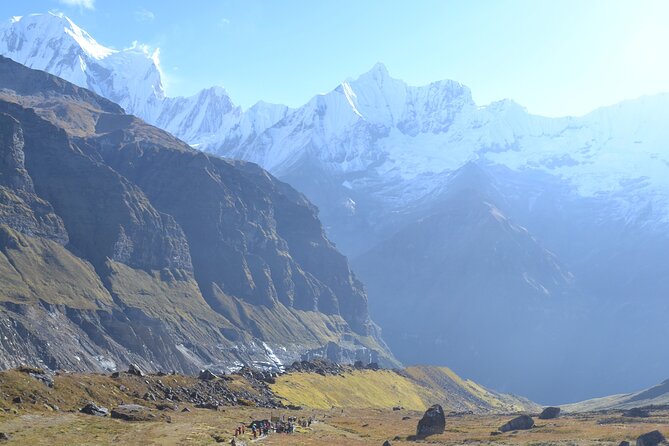
After Annapurna Base Camp, you retrace your steps toward Bamboo. The return passes back through the sanctuary, with damp forest conditions, small bridges, and familiar terrain viewed in the opposite direction.
Walking downhill is not automatically easier. Descents can punish tired knees, and the repeated stone steps remain demanding. Keep your boots well secured and take care with wet or uneven surfaces.
The route then climbs from Bamboo toward Kuldighar before descending again toward the Chhomrong Khola. After another climb to Chhomrong, you continue toward Jhinu Danda. This repeated up-and-down pattern is one reason you should prepare for sustained walking rather than focus only on the 4,130-meter high point.
Jhinu Danda is listed as an overnight stop, but the supplied schedule does not clearly state how much time is reserved there. Ask if a longer rest is planned. The answer affects how rushed the return feels.
Rice farms and Pokhara bring a gentler finish
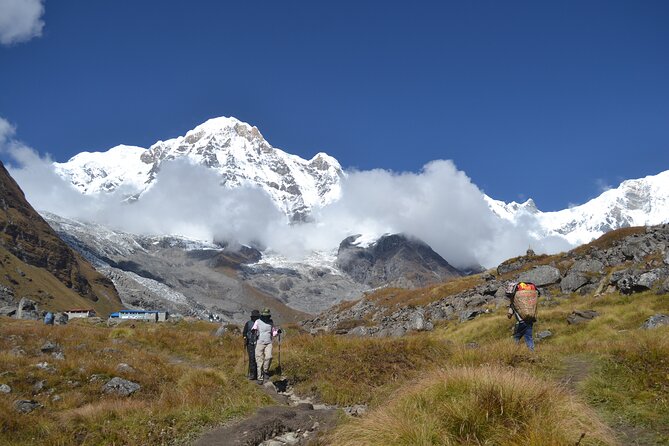
From Jhinu, the path leads through the countryside toward Nayapul. Rice plantations and distant Annapurna views replace the higher sanctuary terrain, giving the final walking day a softer character.
A private car returns you from Nayapul to Pokhara. Back at Phewa Tal, you can rest beside the water, and Sarangkot may provide another viewpoint if it fits the schedule. Since the trek is physically demanding, the extra Pokhara night is more than a sightseeing bonus. It gives you time to recover before the road trip to Kathmandu.
The package includes a farewell dinner with a cultural show. That final evening offers a social ending to a trip built around shared effort, village stays, and support from guides and porters. The feedback repeatedly praises the friendly atmosphere, including singing, dancing, shared meals, and jokes along the trail.
Kathmandu return and the schedule issue
The final transfer back to Kathmandu is by luxury tourist bus. The program then provides airport drop-off and assistance with last-minute preparations.
There is a scheduling wrinkle here. The day-by-day text says the return to Kathmandu happens on the eleventh day, even though the experience is sold as 10 days and includes a Day 10 airport transfer. I would get the final schedule in writing, including the actual Kathmandu to Pokhara travel day, the overnight villages, the Poon Hill plan, and the airport departure timing.
That is not a reason to reject the trip. It is simply the sort of detail you want settled before you commit to international flights.
What the $699 price really covers
At $699 per person, the package offers solid value if you want a guided trek with much of the basic infrastructure handled. Included items are:
- Airport transfers
- Two nights in Kathmandu and two nights in Pokhara
- Hotel breakfast
- Six nights in tea houses
- Kathmandu to Pokhara and return by luxury tourist bus
- Private car between Pokhara and Nayapul
- A licensed trekking guide
- Guide food, drinks, lodging, insurance, salary, equipment, transport, and local taxes
- First-aid kit and a company T-shirt
- Government taxes, VAT, and service charges
- Farewell dinner with cultural show
- Nine breakfasts
- Dinner, as specified in the package
The main extra cost is food and drinks not specified in the package, especially lunch and dinner in Kathmandu and Pokhara. The stated estimate is $150 per person. Gratuities are listed at $50 per person, bringing the practical total to about $899 before your international travel, insurance, personal gear, and any other personal spending.
The value is strongest for someone who wants a guide and arranged transport without paying for a fully private luxury trek. It is less attractive if you already have your own guide, permits, accommodation plan, and transport connections.
Who should book this trek?
I would recommend it to couples, solo walkers who want organized support, and small groups looking for a major Nepal trek without camping. The company allows a maximum of 12 people per booking, and the activity is private to your group.
The minimum age is seven, but that number should not be mistaken for an easy family holiday. The altitude, stairs, weather changes, and long walking days make personal fitness and medical advice more important than the age rule.
You must carry travel insurance covering medical expenses and emergency repatriation, and proof must be shown to the tour leader on the first day. You also need a passport copy with at least six months of validity, two passport photos, your occupation, and home address details for permits.
Extra luggage can remain at the company office or hotel while you trek. Trekking gear can be bought or rented in Kathmandu, and the guide can help arrange it. A non-English-speaking guide costs an additional $200 per group.
Free cancellation is available if you cancel at least 24 hours before the start time. Cancellations within 24 hours are not refunded, and late changes are not accepted.
Should you book the Annapurna Base Camp Trek?
Book this trek if you want a well-supported route that combines Nepal’s cities, villages, forests, farms, and high mountains in one compact trip. The strongest reasons are the included transport and lodging, the licensed guide, the private group format, and the consistently warm praise for staff such as Santosh, Asok, and Raju Simkhada.
Think twice if you dislike basic tea-house accommodation, steep stone stairs, long bus rides, or uncertain mountain weather. Before booking, confirm the corrected 10-day schedule and ask exactly how Poon Hill, Ghandruk, the Kathmandu sights, and the return to Kathmandu fit together.
For a first Himalayan trek, the package offers a sensible balance of support and challenge. Just arrive prepared for a real mountain walk, not a sightseeing tour with occasional steps.
FAQ
How high does the Annapurna Base Camp Trek reach?
The trek reaches Annapurna Base Camp at approximately 4,130 meters, or 13,550 feet, above sea level.
What accommodation is included?
The package includes two nights in Kathmandu and two nights in Pokhara at a three-star hotel with breakfast, plus six nights in tea houses during the trek.
Is airport pickup included?
Yes. Airport transfers at arrival and departure are included, and a staff member meets you at Tribhuvan International Airport.
What transport is included between Kathmandu and Pokhara?
The package includes Kathmandu to Pokhara and Pokhara to Kathmandu by luxury tourist bus. It also includes a private car between Pokhara and Nayapul in both directions.
Is travel insurance required?
Yes. You must have insurance covering medical expenses and emergency repatriation, and you must show proof to the tour leader on the first day.
Can I cancel for a full refund?
You can receive a full refund if you cancel at least 24 hours before the experience start time. Cancellations or changes made within 24 hours are not accepted for a refund.
New in the Kathmandu listings
- Traditional Momo Making Class★ 5.0 · 10 reviews
- Kathmandu: Ancient City Kirtipur & Pharping Monastery Tour★ 5.0 · 2 reviews
- Kathmandu to Pokhara Premium sofa bus ticket★ 4.0 · 17 reviews
- Women Empowerment Project(Nepali cooking class & jewelry workshop★ 5.0 · 15 reviews
- 7-Day Langtang Valley Trek from Kathmandu★ 5.0 · 1 review
- Kathmandu 2 Nights 3 Days Chitwan Jungle Safari Tour★ 5.0 · 9 reviews
- Yoga Experience Day Trip with Private Transfer From Kathmandu★ 4.0 · 2 reviews
- Wildlife Adventure in Chitwan Nepal★ 4.0 · 4 reviews
Annapurna Base Camp Treks, compared.
Kathmandu to Annapurna Base Camp (ABC) 5-Day Trek
Read our review →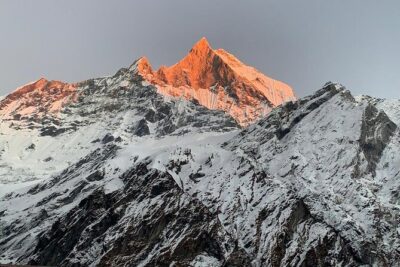
Kathmandu/Pokhara: 5-Day Annapurna Base Camp (ABC) Trek
Read our review →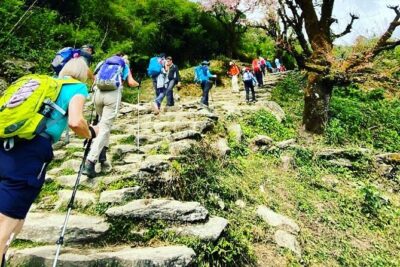
11-Day Hike Tour to Annapurna Base Camp Bliss in Kathmandu
Read our review →Browse the lists this tour appears in