
REVIEW · ANNAPURNA BASE CAMP TREKS
Annapurna Base Camp Trek – 11 Days
The Himalayas reward steady walking. This 11-day Annapurna Base Camp Trek combines terraced hills, rhododendron forests, local villages, hot springs, and close views of the Annapurna range in one well-planned route. I like the way it pairs the famous Poon Hill sunrise with the harder walk to Annapurna Base Camp, rather than treating the mountains as a quick photo stop.
I also like that the $986 price includes permits, accommodation, meals, staff costs, transport from Kathmandu, and useful gear such as a sleeping bag, down jacket, and duffel bag. The main consideration is the pace: you spend long hours walking on stone steps, and the first and last days include lengthy tourist-bus rides between Kathmandu and Pokhara.
In This Review
- Key points about the 11-day route
- What this Annapurna trek actually offers
- Day 1: Kathmandu to Pokhara by tourist bus
- Day 2: Nayapul, Birethanti, and the first trail
- Day 3: Rhododendron forest to Ghorepani
- Day 4: Poon Hill sunrise and the road toward Chhomrong
- Day 5: Stone trails and the Jhinu Danda hot spring
- Day 6: Forest trails toward the higher valley
- Day 7: Machhapuchhre Base Camp and Annapurna Base Camp
- Day 8: Descending from the high mountain zone
- Day 9: Return through Sinuwa, Chhomrong, and Jhinu Danda
- Day 10: Nayapul to Pokhara
- Day 11: Pokhara back to Kathmandu
- Is $986 good value?
- Guides, organization, and the human side
- Who should book this trek?
- Should you book the Annapurna Base Camp Trek?
- FAQ
- How long is the Annapurna Base Camp Trek?
- Where does the trek start and end?
- Is transport from Kathmandu included?
- What equipment is provided?
- Are meals included?
- What happens if bad weather cancels the trek?
Key points about the 11-day route
- Poon Hill sunrise adds a second Himalayan viewpoint: You see Annapurna, Dhaulagiri, Nilgiri, and Lamjung Himal before reaching base camp.
- The route reaches 4,130 meters at Annapurna Base Camp: Altitude matters, even though the trek is only 11 days.
- Jhinu Danda’s hot spring breaks up the walking: It gives you a welcome rest before and after the high mountain section.
- Transport is built into the plan: A tourist bus connects Kathmandu and Pokhara, with another road transfer between Pokhara and Nayapul.
- Gear and staff support are included: You receive a down jacket, sleeping bag, duffel bag, permits, first-aid support, and an oximeter check.
- Guide quality is central to the experience: Guides named in the feedback include Prakash, Shiva, Naba, and Saroj Dhakal, with repeated praise for patience, friendliness, and organization.
What this Annapurna trek actually offers
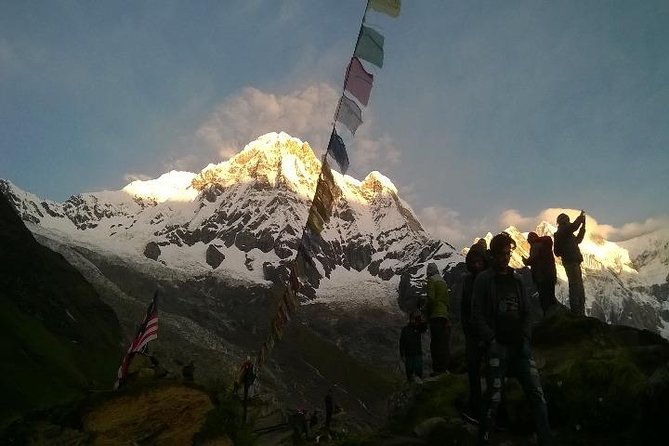
Annapurna Base Camp is a classic Nepal trek because it gives you variety without requiring weeks on the trail. You move from river valleys and terraced farms into forests, stone stairways, mountain villages, moraine paths, and a high amphitheater of snowy peaks.
This is not a luxury mountain holiday. Accommodation is in the best available guest houses, mainly in twin rooms, and your included meals cover 10 breakfasts, nine lunches, and eight dinners. Alcoholic drinks, hot and cold drinks, laundry, personal equipment, insurance, and tips cost extra.
The itinerary is private, so only your group participates. That can make a big difference on a demanding walk. You have one guide responsible for your group rather than being folded into a large mixed party.
The company provides a licensed English-speaking guide, trekking staff, transport, medicine, insurance for staff, and an oximeter to check pulse, oxygen saturation, and heart rate. Those details suggest a practical approach to mountain safety, though no equipment removes the need to pace yourself carefully.
More Annapurna Base Camp treks:
- Annapurna base camp trek 5 Days
★ 5.0 · 252 reviews - Annapurna Base Camp Trek
★ 5.0 · 111 reviews - Kathmandu to Annapurna Base Camp (ABC) 5-Day Trek
★ 5.0 · 102 reviews
Day 1: Kathmandu to Pokhara by tourist bus
The journey begins at 6:15 in the morning from the meeting point in Kathmandu. After breakfast, you take a tourist bus along the Prithvi Highway toward Pokhara.
This first day is about reaching the trekking region, not hiking. You pass rivers, terraced farms, villages, and towns, so the ride gives you an early look at rural Nepal. It also takes much of the day, which is worth knowing before you book. If you prefer a fast start on foot, this schedule may feel slow.
The bus transfer is included in the price, as is the return transfer on Day 11. Surface transport from and to Kathmandu removes one of the more tiring planning chores, though you should still expect a long road day.
Day 2: Nayapul, Birethanti, and the first trail
From Pokhara, the group drives through the countryside to Nayapul. The drive takes about two hours, then the trek begins with a suspension bridge over the Modi River and a walk toward Birethanti.
This opening section introduces the rhythm of the route: road transfer, village paths, river crossings, and steady walking. It is a good transition from city travel to mountain travel because the setting changes gradually rather than all at once.
The route description does not give exact walking times or overnight details for every day. That means you should confirm daily distances, room arrangements, and expected arrival times with Base Camp Adventure before departure.
Day 3: Rhododendron forest to Ghorepani
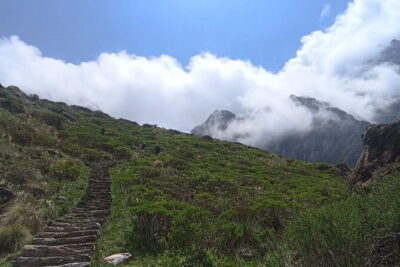
Day 3 takes you through thick rhododendron forest, with Banthanti and Nangethanti along the way. The route reaches Ghorepani by way of uphill stone stairs.
Rhododendron forests are one of the pleasures of the Annapurna region, especially when the flowers are in bloom. Even outside flowering season, the forest gives the walk shade and a strong sense of moving away from the settled valley floor.
The stairs are the catch. Nepal trekking routes often use stone steps instead of smooth paths, and repeated uphill sections can be harder on your knees and lungs than the distance alone suggests. Keep your pace modest here. You are saving energy for Poon Hill and the higher trail ahead.
Ghorepani is important not only as an overnight stop but also as the launch point for the next morning’s sunrise walk. Try to keep your camera and warm layers easy to reach.
More walking in the hills of Kathmandu:
- Everest Base Camp Trek – 14 Days
★ 5.0 · 1,499 reviews - Everest Base Camp Trekking
★ 5.0 · 485 reviews - Nagarkot Sunrise View and Day Hiking from Kathmandu
★ 5.0 · 471 reviews - Annapurna Circuit Trek with Tilicho Lake
★ 5.0 · 368 reviews
Day 4: Poon Hill sunrise and the road toward Chhomrong
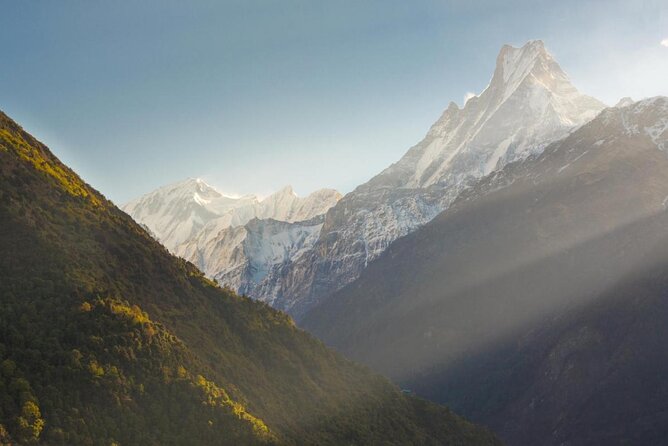
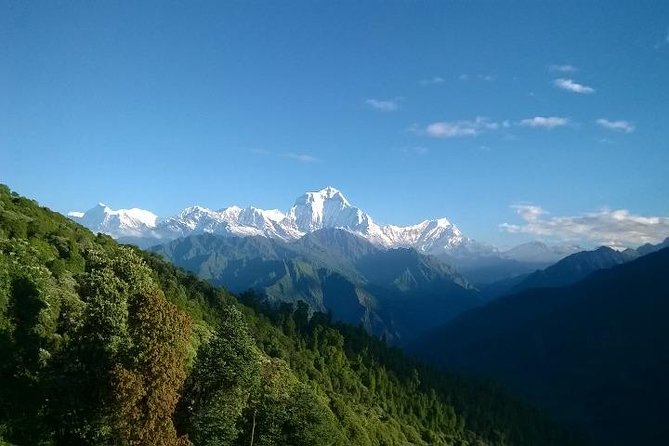
The day starts early with an ascent to Poon Hill. From the viewpoint, you can watch sunrise over the Annapurna and Dhaulagiri ranges, with named peaks including Nilgiri at 7,061 meters and Lamjung Himal at 6,983 meters.
This is one of the strongest parts of the itinerary. Poon Hill gives you a broad mountain panorama before the trail turns toward the more enclosed valleys leading to base camp. It also creates a memorable reward early in the trek, when your legs are still adjusting to the stairs and altitude.
After the viewpoint, the route continues with uphill and downhill walking through forest toward Chhomrong. The day is not simply a short sunrise excursion. You still have a full walking stage afterward, so the early start can make it feel long.
Day 5: Stone trails and the Jhinu Danda hot spring
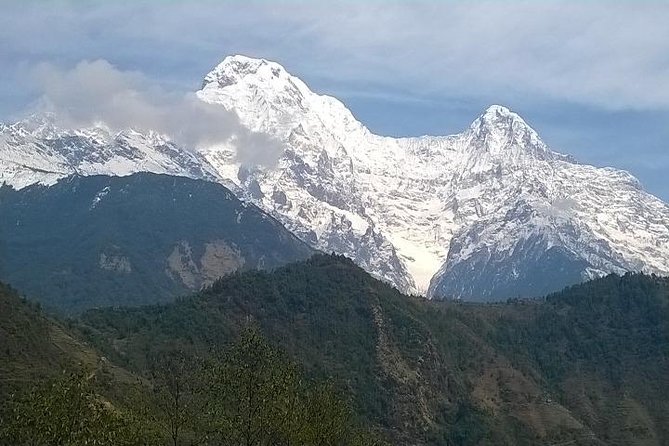
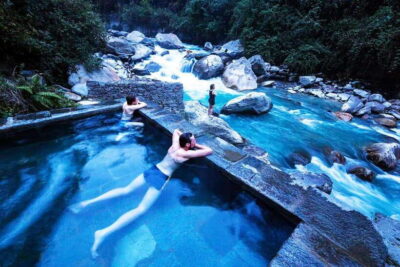
The trail rises and falls through forest before crossing the suspension bridge over Kimrong Khola. The route then reaches Jhinu Danda, where you can rest at the hot spring before continuing toward the next section.
Jhinu Danda is a smart inclusion. A warm dip gives your legs a break and adds a distinctly local mountain experience to a route otherwise focused on viewpoints and altitude. It also helps break up the demanding pattern of climbs and descents.
Do not assume the hot spring makes this an easy day. Uphill and downhill sections, bridges, and stone paths still require effort. Bring a small day bag with whatever you need for the stop, since your main duffel may be handled separately by the trekking staff.
Day 6: Forest trails toward the higher valley
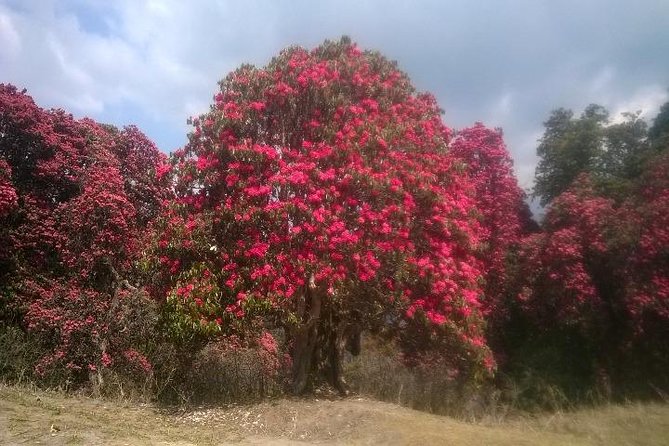
Day 6 is described as an easier walk through rhododendron forest with orchids and ferns. You descend stone stairs, cross Chhomrong Khola, and climb toward Sinuwa.
The scenery changes again as the route follows forested trails rather than open high ground. This stage is useful as a conditioning day before the main ascent because it keeps you moving without presenting the most severe altitude of the trip.
You should still take the word easy in context. Stone stairs can be tiring, particularly after several days of walking. Trekking poles would be useful, but personal trekking equipment is not included, so you need to bring or arrange your own poles if you want them.
Day 7: Machhapuchhre Base Camp and Annapurna Base Camp
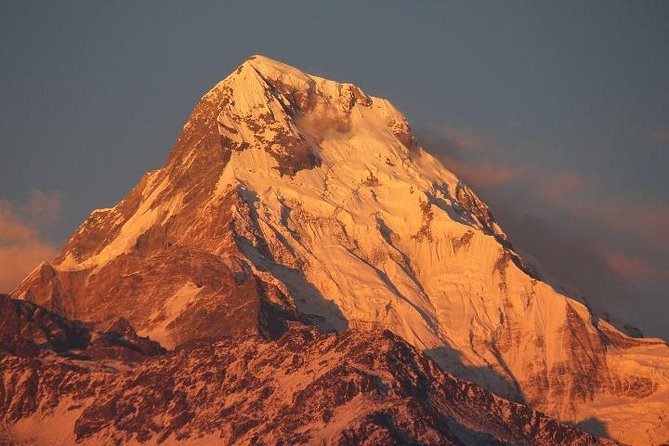
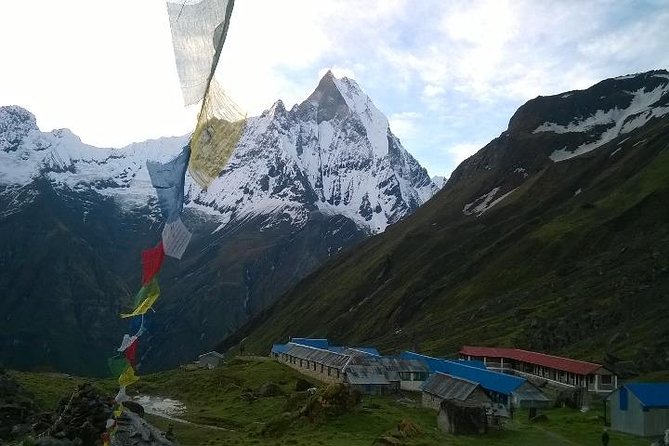
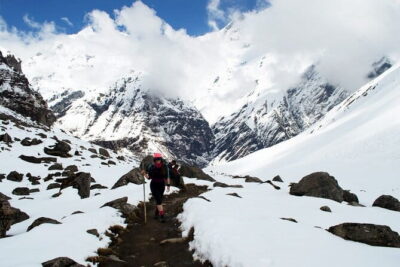
Day 7 is the main prize. You climb to Deurali, follow stone stairs, and reach a scenic area with views of snow-covered mountains before continuing to Machhapuchhre Base Camp at 3,700 meters.
From there, the route follows the moraines toward Annapurna Base Camp. The base camp sits at roughly 4,130 meters, placing this among the most demanding days of the trek. You are high enough for altitude to become a serious concern, even if you feel fit at lower elevations.
The route beside Modi Khola and the surrounding snowy peaks gives this day its drama. The terrain becomes more open and rugged than the lower forest sections. Moraines are uneven, so watch your footing and let your guide set a sensible pace.
This is also where a private trip can be especially useful. A guide can monitor how each member of your group is handling the altitude, use the supplied oximeter when appropriate, and decide how carefully the group should proceed. The provided first-aid kit is helpful, but it is not a substitute for travel insurance or proper medical planning.
Day 8: Descending from the high mountain zone
The return begins by descending toward Machhapuchhre Base Camp along the moraine route. You then follow the Modi Khola through rhododendron and fir forest.
The change from exposed mountain terrain to forest is satisfying. You have completed the highest objective, and the route begins to feel more forgiving. Still, downhill walking can be rough on tired knees, particularly after the steep stone sections and uneven moraine trail.
The itinerary places this descent soon after reaching base camp. If you want a slow acclimatization schedule or extra rest days, this fixed 11-day format may not suit you. It is designed for people who can maintain a steady rhythm and accept a fairly compact schedule.
Day 9: Return through Sinuwa, Chhomrong, and Jhinu Danda
The trail first climbs through forest to Sinuwa. You then descend to Chhomrong Khola, climb the stone stairs to upper Chhomrong, and descend again to Jhinu Danda.
This is a classic Annapurna day: the route seems to go in every direction because the valleys are steep and the trail repeatedly crosses ridges and rivers. The hot spring at Jhinu Danda provides another chance to soak after the long return walk.
The repeated descents and climbs are the main physical drawback of the route. On a map, the distance may not look extreme, but stone stairs make the effort feel bigger. Good footwear, careful pacing, and patience matter more than trying to walk quickly.
Day 10: Nayapul to Pokhara
The final trekking day follows the Modi Khola toward Nayapul. From there, you drive back to Pokhara.
This is a useful ending because you do not have to walk all the way back to Kathmandu immediately after leaving the trail. The evening in Pokhara is left open for rest or personal plans, although the supplied details do not specify any guided sightseeing or included activities there.
You may appreciate the contrast after several days in mountain villages. Pokhara offers a softer landing before the final bus journey, but remember that the next morning begins early.
Day 11: Pokhara back to Kathmandu
The group leaves Pokhara early by tourist bus and follows the highway back to Kathmandu. The route again passes greenery, villages, and rivers before reaching the capital.
Like Day 1, this is a long transfer rather than a sightseeing tour with scheduled stops. The included transport saves money and simplifies the return, but anyone who dislikes lengthy road journeys should factor this into the decision.
The activity ends back at the Kathmandu meeting point. Airport transfers and international airfare are not included, so you need to arrange your flight plans and airport departure tax separately.
Is $986 good value?
At $986 per person, the package offers solid value for a private, guided 11-day trek. The price covers the two major surface transfers, trekking permits and entry fees, guest house accommodation, meals on most days, a licensed English-speaking guide, trekking staff, staff insurance, staff equipment, medicine, transport, and a down jacket, sleeping bag, and duffel bag.
That list matters because permits, staff support, and transport can add up quickly in Nepal. The inclusion of an oximeter and first-aid kits also shows attention to basic monitoring and emergency readiness.
You still need to budget for alcoholic drinks, hot and cold drinks, laundry, tips, personal trekking equipment, travel insurance, international flights, and airport tax. The phrase best available guest houses does not promise upscale rooms, and accommodation is mainly twin sharing.
The meal allocation is clear: 10 breakfasts, nine lunches, and eight dinners. Since the itinerary lasts 11 days, some meals are evidently not included on particular travel days. Ask which meals are covered on the Kathmandu and Pokhara transfer days before you leave.
Guides, organization, and the human side
The strongest part of this package appears to be the guide and porter support. Prakash receives repeated praise for being patient, polite, friendly, and helpful, while Shiva and Naba are also named for guiding a successful April 2024 trek. Saroj Dhakal is described as especially good on a solo trip.
One past account criticized a guide, but the operator replied that the complaint appeared to concern another company and that it had not organized a solo Annapurna Base Camp trek in the previous four months. That dispute is worth noting because company names can be confusing in Nepal. Confirm your guide’s name, company details, and contact information before departure.
The broader pattern is clear: personal attention and organization are major reasons to choose this package. The trip is private, and the provider supplies the guide, porters, equipment, meals, and transport in one arrangement.
Who should book this trek?
I would recommend it to you if you want a classic Himalayan trek with a strong mix of scenery and village life, but you do not want to arrange every permit, transfer, room, and staff detail yourself. It also suits solo visitors who want a private group structure rather than trekking entirely alone.
You should have a moderate level of physical fitness. The trail includes forest paths, suspension bridges, repeated stone stairways, uphill and downhill sections, moraines, and a high point around 4,130 meters.
This is less suitable if you want a relaxed holiday, guaranteed private rooms, short transfer days, or a flexible schedule with several rest days. Weather can also affect the trip. If poor weather causes cancellation, you are offered another date or a full refund, but a weather-sensitive mountain itinerary always requires some flexibility.
The published rating is 4.9 from 30 ratings, with 97 percent recommending the experience. Those figures are encouraging, especially alongside the repeated praise for guides and organization, but I would still ask practical questions before paying: who will guide your group, what are the expected walking hours, which meals are excluded, and how is altitude monitoring handled?
Should you book the Annapurna Base Camp Trek?
Book it if you value a well-supported route, want both Poon Hill and Annapurna Base Camp, and can handle long walking days plus two substantial bus journeys. The hot spring at Jhinu Danda, the mountain views from Poon Hill, and the high valley around base camp give the trip real variety.
Think twice if you need a slow itinerary or more comfort. For fit walkers who want a classic Nepal experience at a price that includes most of the costly essentials, this is a strong option. Pack carefully, protect your knees on the stairs, arrange insurance, and confirm the day-by-day plan with Base Camp Adventure before setting out.
FAQ
How long is the Annapurna Base Camp Trek?
The trek lasts approximately 11 days, including travel between Kathmandu and Pokhara, the drive from Pokhara to Nayapul, the walking route, and the return to Kathmandu.
Where does the trek start and end?
The experience starts in Kathmandu at the listed meeting point, with a start time of 6:15 am. It ends back at the same Kathmandu meeting point after the return from Pokhara.
Is transport from Kathmandu included?
Yes. Surface transport from and to Kathmandu is included. The itinerary uses tourist buses between Kathmandu and Pokhara and includes transport between Pokhara and Nayapul.
What equipment is provided?
The package provides a down jacket, sleeping bag, and duffel bag. Personal trekking equipment is not included, so you need to arrange your other gear yourself.
Are meals included?
Yes. The package includes 10 breakfasts, nine lunches, and eight dinners. Alcoholic drinks and hot and cold drinks are not included.
What happens if bad weather cancels the trek?
If poor weather causes the experience to be canceled, you can choose a different date or receive a full refund. You must cancel at least 24 hours before the start time to receive a full refund for a personal cancellation.
New in the Kathmandu listings
- Traditional Momo Making Class★ 5.0 · 10 reviews
- Kathmandu: Ancient City Kirtipur & Pharping Monastery Tour★ 5.0 · 2 reviews
- Kathmandu to Pokhara Premium sofa bus ticket★ 4.0 · 17 reviews
- Women Empowerment Project(Nepali cooking class & jewelry workshop★ 5.0 · 15 reviews
- 7-Day Langtang Valley Trek from Kathmandu★ 5.0 · 1 review
- Kathmandu 2 Nights 3 Days Chitwan Jungle Safari Tour★ 5.0 · 9 reviews
- Yoga Experience Day Trip with Private Transfer From Kathmandu★ 4.0 · 2 reviews
- Wildlife Adventure in Chitwan Nepal★ 4.0 · 4 reviews
Annapurna Base Camp Treks, compared.
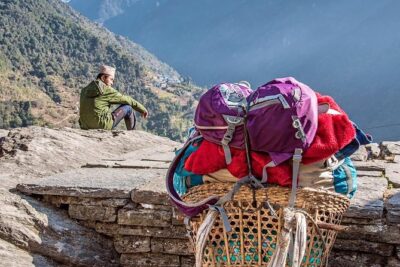
Kathmandu to Annapurna Base Camp (ABC) 5-Day Trek
Read our review →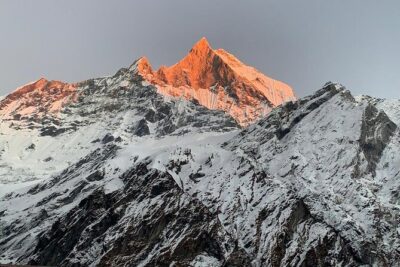
Kathmandu/Pokhara: 5-Day Annapurna Base Camp (ABC) Trek
Read our review →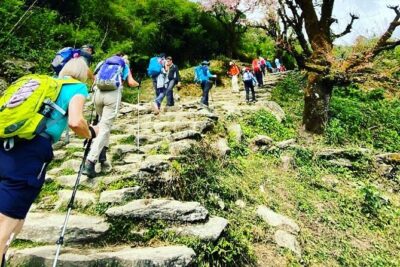
11-Day Hike Tour to Annapurna Base Camp Bliss in Kathmandu
Read our review →Browse the lists this tour appears in