
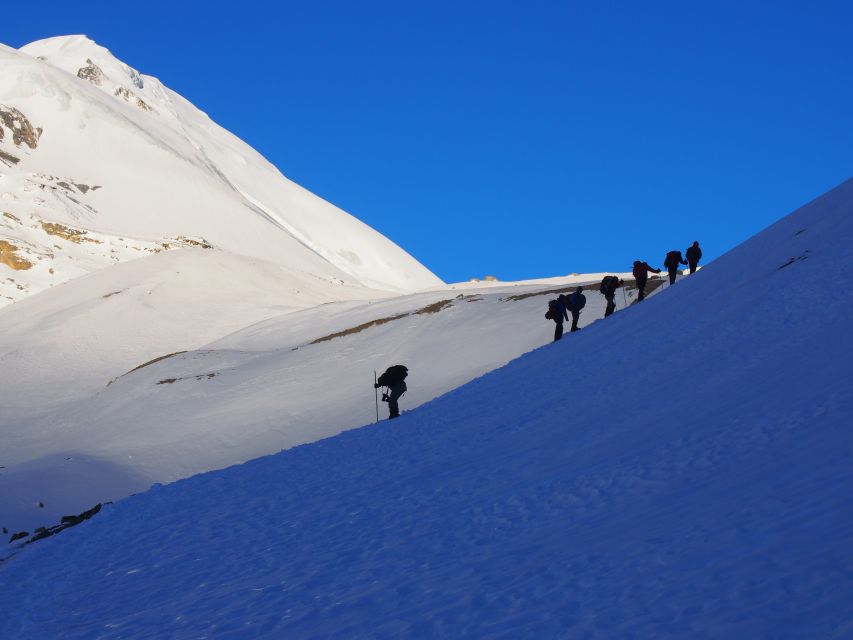
REVIEW · ANNAPURNA CIRCUIT TREKS
Annapurna Circuit Trekking 13 Days
High passes make this trek unforgettable. The Annapurna Circuit combines river valleys, Tibetan Buddhist villages, the 5,416-meter Thorong La Pass, Muktinath, and a sunrise walk to Poon Hill in one demanding 13-day route. I especially like the changing scenery, from green forests near the Marshyangdi River to the dry, windblown Kali Gandaki Valley. The inclusion of meals, permits, tea house lodging, guide services, and key equipment also gives the $970 price strong value.
The main caution is altitude. Thorong La is a serious crossing, and several nights are spent above 3,500 meters. The itinerary is tightly arranged, the transport days are long, and the basic tea houses are practical rather than luxurious. Still, the small group limit of 12 and the personal service described by Maxim and Daniel make this feel more manageable, especially if you can request guides such as Ganesh or Rabin.
In This Review
- Key points to know before booking
- What the 13-day route is really like
- Day 1: Kathmandu to Jagat by a long road journey
- Day 2: Jagat to Dharapani through the Marshyangdi Valley
- Day 3: Dharapani to Chame and the first higher mountain feel
- Day 4: Chame to Pisang, with altitude and scenery in balance
- Day 5: Pisang to Manang and Tibetan Buddhist culture
- Day 6: Acclimatization in Manang
- Day 7: Manang to Yak Kharka at 4,120 meters
- Day 8: Yak Kharka to Thorong Phedi
- Day 9: Crossing Thorong La at 5,416 meters
- Day 10: Muktinath to Jomsom through the Kali Gandaki Valley
- Day 11: Jomsom to Tatopani and a natural hot spring
- Day 12: Tatopani to Ghorepani
- Day 13: Poon Hill sunrise and the descent to Pokhara
- Meals, tea houses, and equipment
- Guide support and group size
- Is $970 good value?
- Best season and who should choose it
- Should you book the Annapurna Circuit Trek?
- FAQ
- How long is the Annapurna Circuit Trek?
- How high is Thorong La Pass?
- Is an acclimatization day included?
- What meals are included?
- What accommodation is provided?
- Is a porter included?
- Is trekking equipment provided?
- What transportation is included?
- What languages does the guide service provide?
Key points to know before booking
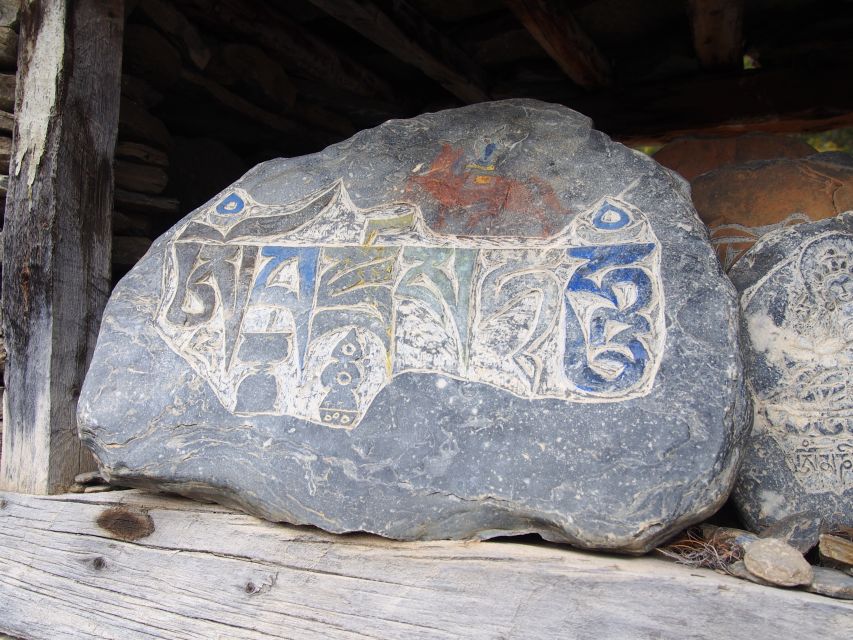
- Thorong La is the central test: You cross a 5,416-meter pass after spending nights at high altitude, so steady pacing matters more than speed.
- The route changes dramatically: Expect forest, waterfalls, river valleys, dry Mustang country, Buddhist settlements, and a windy gorge within less than two weeks.
- Manang is your main rest point: The acclimatization day gives you time to adjust before the route climbs toward Yak Kharka and Thorong Phedi.
- Poon Hill finishes the trek well: The early morning climb to 3,210 meters adds a famous mountain viewpoint after the circuit’s main pass.
- The price covers the essentials: Meals, permits, guide costs, tea house accommodation, airport pickup, selected transport, and equipment are included.
- The service sounds personal: Solo trekker Maxim praised guide Ganesh, while Daniel suggested asking for Rabin, a useful tip if guide choice is possible.
What the 13-day route is really like
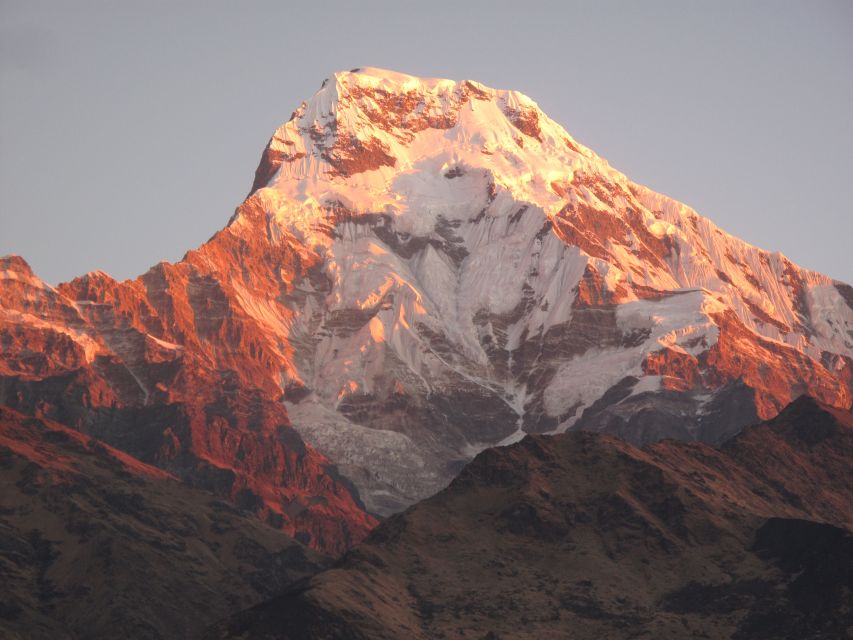
The Annapurna Circuit is appealing because it does not give you the same view every day. You begin beside the Marshyangdi River, pass through forest and village country, reach the Tibetan Buddhist culture of Manang, cross the high Thorong La, then descend through Muktinath and the Kali Gandaki Valley before finishing at Poon Hill.
That variety comes with a price: the route asks you to handle long drives, steady uphill walking, cold high-altitude mornings, and basic accommodation. You are not signing up for a soft mountain holiday. You are signing up for a well-supported trek with one demanding high pass at its center.
The stated price is $970 per person. For that amount, you receive a government-licensed guide, guide expenses, three meals a day during the trek, 12 nights in twin-sharing tea houses, permits, airport pickup, transport on the specified sections, one hotel night with breakfast in Pokhara, and use of a sleeping bag, down jacket, and duffel bag if needed.
That is a useful package for someone who wants one clear price rather than arranging every piece alone. You still need to budget for a Nepal entry visa, international flights, Kathmandu accommodation, city meals, drinks, personal spending, and possibly a porter. A porter costs an extra $250, according to the supplied details.
More Annapurna Circuit treks:
- Kathmandu: 9-Day Annapurna Circuit Trek via Thorong La Pass
★ 5.0 · 17 reviews - Kathmandu: 10-Day Annapurna Circuit Trek via Thorong La Pass
★ 5.0 · 10 reviews - Kathmandu/Pokhara: Annapurna Circuit Trek 10 days
★ 5.0 · 6 reviews
Day 1: Kathmandu to Jagat by a long road journey
The first day is mostly transport, not trekking. You drive from Kathmandu toward Jagat via Besisahar, with an expected duration of eight to nine hours. The transport package includes a taxi to the Kathmandu bus station and public bus transport toward Bhulbhule, so you should expect a practical local travel day rather than a private, door-to-door transfer.
Jagat sits at about 1,100 meters, making it a sensible starting point for the walking section. The long road journey may be tiring, but it moves you quickly from the capital toward the lower Marshyangdi River Valley.
This is also where a guide becomes useful. Adventure Bound includes the guide’s food, accommodation, salary, equipment, and insurance, so you are not paying those costs separately. Airport pickup is included as well, which removes one small worry after an international flight.
Day 2: Jagat to Dharapani through the Marshyangdi Valley
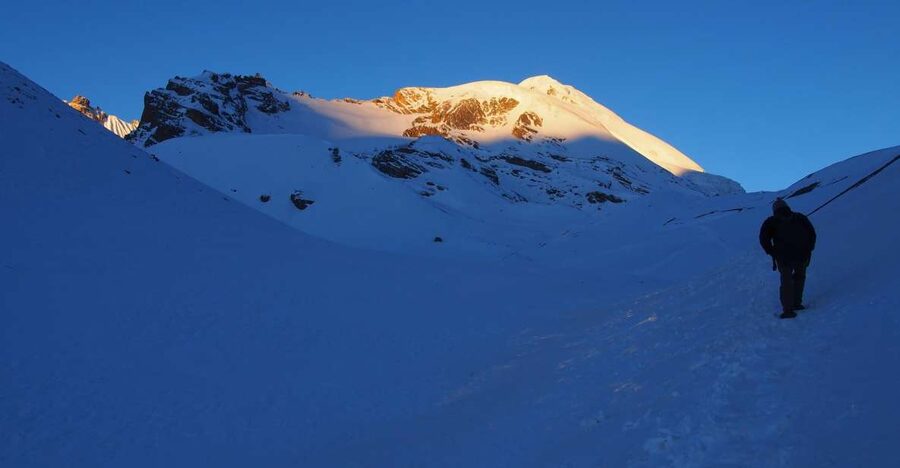
The walk from Jagat to Dharapani takes about six to seven hours and climbs to 1,960 meters. This is where the trek begins to feel like a mountain route rather than a transport itinerary.
You can expect the scenery to include river views, green woodland, waterfalls, and local communities. The appeal is not only the mountains in the distance. The route takes you through settlements where daily life continues around the trail, giving the walk a human scale.
Dharapani is an important overnight stop because the altitude is rising in measured steps. You should use the evening to eat well, organize your pack, and avoid treating the early days as a race.
Day 3: Dharapani to Chame and the first higher mountain feel
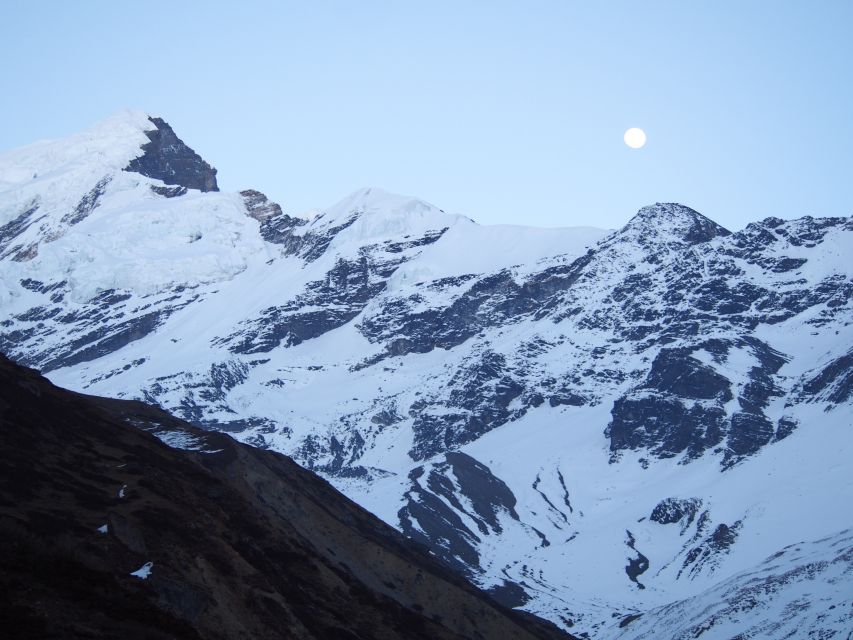
The five to six-hour walk to Chame reaches 2,710 meters. You continue through the Marshyangdi area, with the setting becoming more distinctly alpine as the route gains height.
Chame is the administrative center of the Manang area and a practical place to spend the night. The elevation is high enough for you to begin paying close attention to how your body feels, but the schedule still allows a gradual approach before Manang.
The tea houses are described as basic, with twin-sharing rooms. Some lodges have continental kitchens, which can make meals more familiar, but you should still expect simple mountain accommodation. The included three daily meals help keep the routine easy.
More walking in the hills of Pokhara:
- Poon hill Trek 3 days
★ 5.0 · 176 reviews - Trekking in Annapurna/Langtang/Everest/Upper Mustang regions
★ 5.0 · 161 reviews - Pokhara: 4-Day Ghorepani, Poonhill & Ghandruk Mountain Trek
★ 5.0 · 132 reviews - Ghorepani – Poon Hill Trek 3N-4D
★ 5.0 · 125 reviews
Day 4: Chame to Pisang, with altitude and scenery in balance
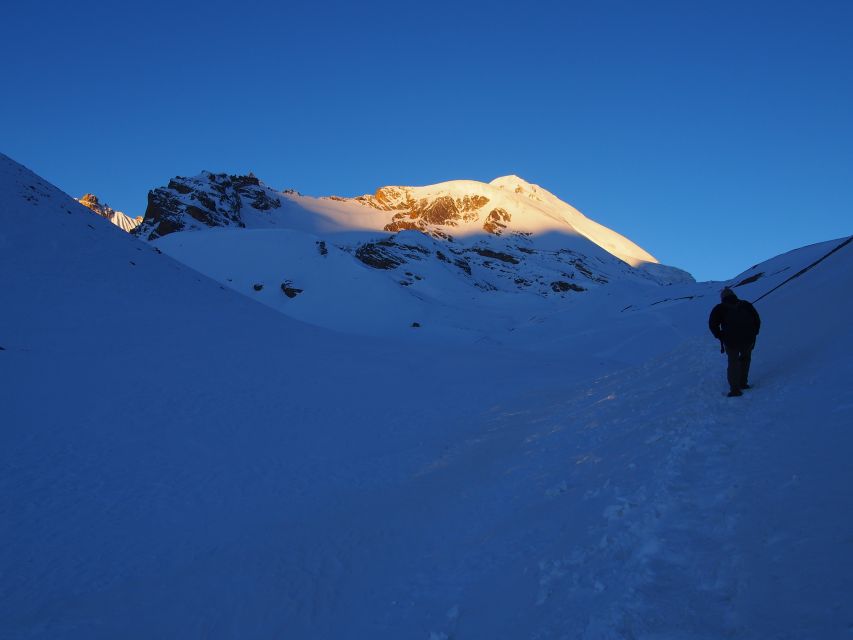
The route to Pisang takes five to six hours and reaches about 3,300 meters. This is a useful transition day. You gain altitude, but the walking time is not excessive, leaving some room to settle into the pace.
Pisang marks the point where the journey begins to feel more exposed and high mountain in character. The surrounding Annapurna peaks become a larger part of the experience, while the route continues to change from lower forest toward drier terrain.
You should not judge your fitness only by how you feel here. Altitude effects can appear later, so drink regularly, walk steadily, and tell the guide early if you develop a headache, unusual fatigue, or other concerns. The included first aid box and oximeter provide basic support, but they do not replace careful decisions.
Day 5: Pisang to Manang and Tibetan Buddhist culture
The six to seven-hour walk to Manang reaches 3,540 meters. This is one of the most rewarding days because the physical setting changes alongside the culture.
Manang is known for its Tibetan Buddhist influence, and that character is one reason the circuit feels more substantial than a simple mountain walk. You are passing through a region with its own traditions and visual identity, not just moving from one lodge to another.
The day is long enough to require patience. If the route feels strenuous, that is normal. Manang is not just another overnight stop. It is the place where the itinerary pauses before the most serious altitude gains.
Day 6: Acclimatization in Manang
The rest day in Manang is essential. It breaks up the climb before you head toward Yak Kharka, Thorong Phedi, and the pass.
The supplied plan does not specify a particular acclimatization walk or activity, so you should ask the guide how the day will be handled. You might spend part of it walking locally, resting, or taking a short outing designed to help your body adjust. The key point is that you should not treat this as a wasted day.
I like that the schedule includes this pause. On a compressed 13-day circuit, removing the acclimatization day would make the high section more stressful. Use it to prepare your clothing, refill supplies, check your sleeping bag, and keep your pace calm.
Day 7: Manang to Yak Kharka at 4,120 meters
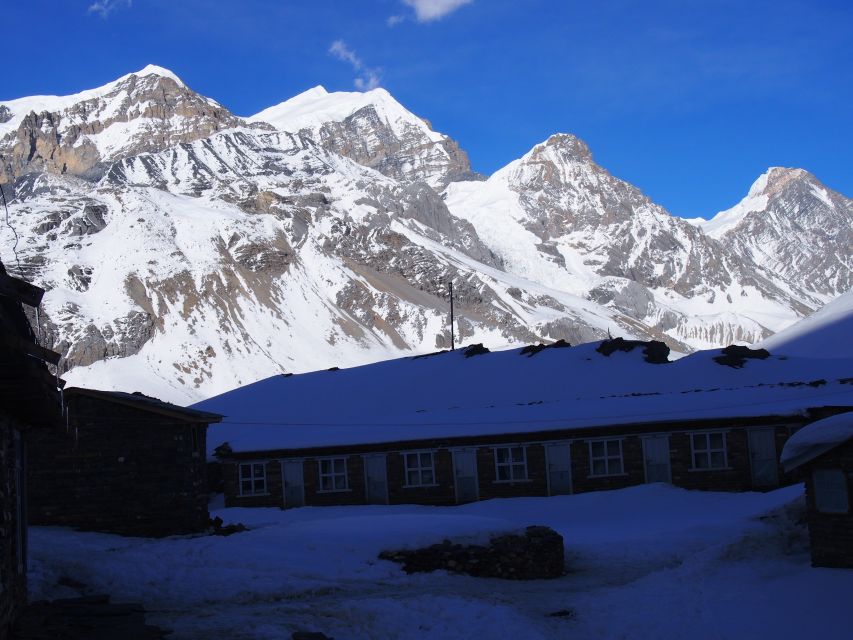
The walk to Yak Kharka takes four to five hours and reaches 4,120 meters. The shorter walking time can look easy on paper, but the altitude changes the rules. At this height, a modest uphill stretch can feel surprisingly hard.
Yak Kharka is a high overnight stop before the pass. You will want warm layers, a charged phone or camera, and a plan for keeping your personal items close in the tea house. The supplied down jacket and sleeping bag can be used if needed, which is especially helpful for trekkers who do not want to purchase or carry all cold-weather gear.
This is a good point to be honest with yourself. If you feel unwell, tell the guide. The appeal of reaching Thorong La should never outweigh sensible altitude decisions.
Day 8: Yak Kharka to Thorong Phedi
The four to five-hour walk to Thorong Phedi reaches roughly 4,450 meters. This is a short day by distance but a serious day by altitude.
Thorong Phedi is the final staging point before the pass. The atmosphere here is likely to be focused and practical: eat, rest, organize your layers, and prepare for an early start. The itinerary does not state a precise departure time for the pass day, so ask the guide about the plan before turning in.
You should keep your daypack light but complete. Carry water, warm clothing, snacks if you use them, sun protection, and any personal medication. The main bag arrangement should be confirmed with your guide, especially if you hire the optional porter service.
Day 9: Crossing Thorong La at 5,416 meters
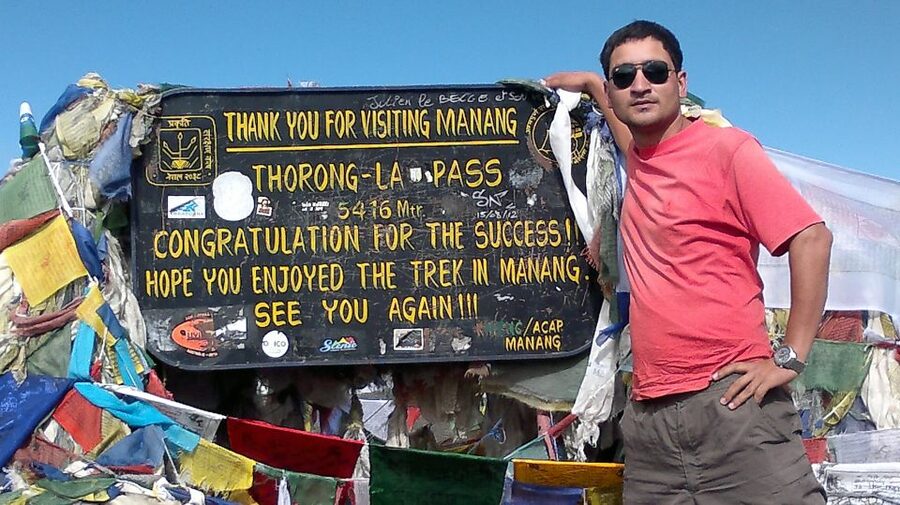
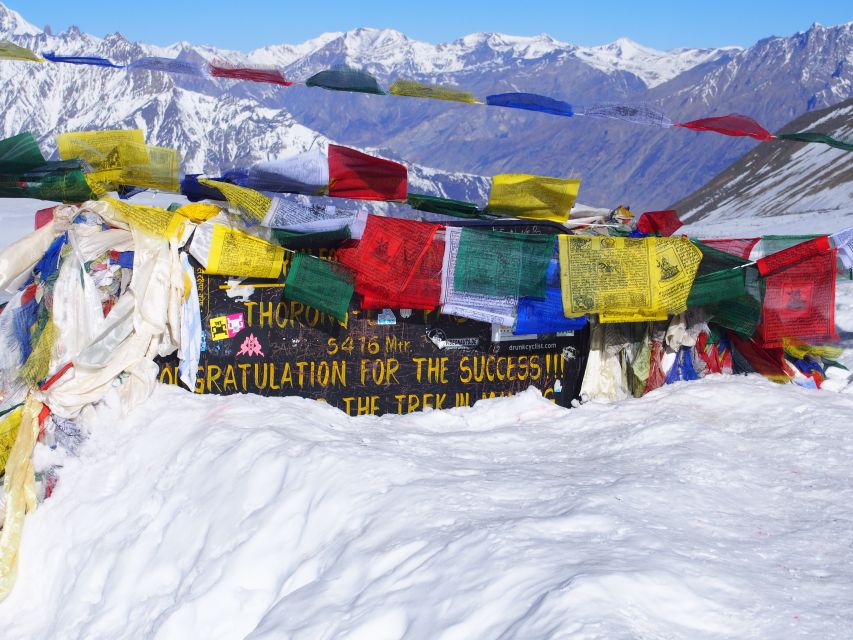
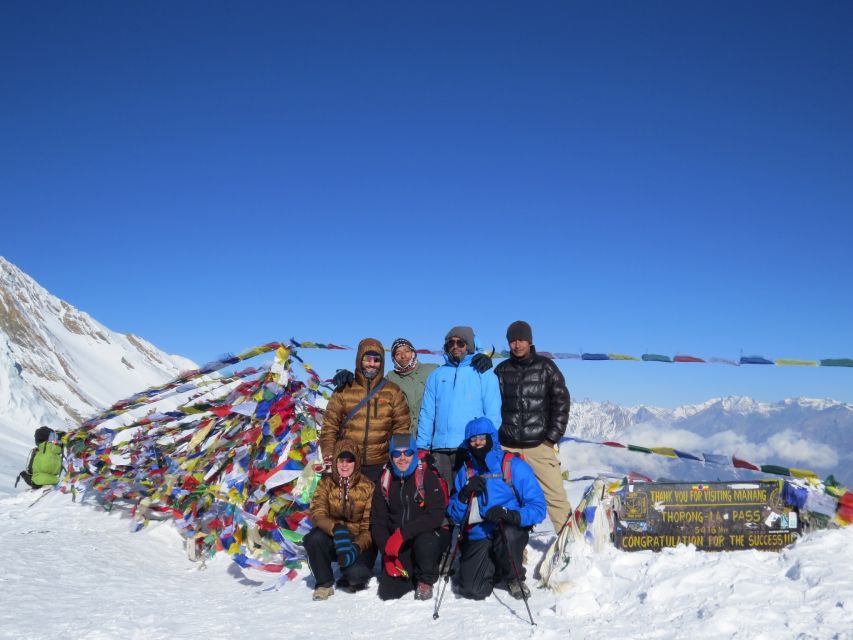
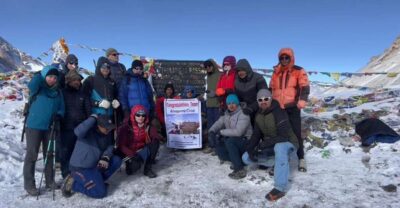
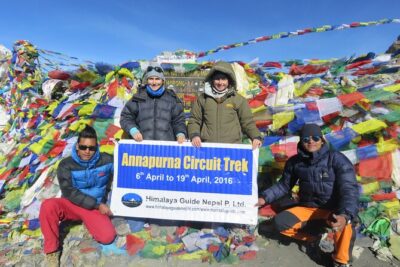
This is the big day. You walk from Thorong Phedi over Thorong La Pass and descend to Muktinath, with a total walking time of about seven to eight hours. At 5,416 meters, Thorong La is the highest and most demanding point of the circuit.
The reward is a remarkable change in scenery and a broad view toward the Annapurna peaks and surrounding mountains. The crossing is often remembered not because every step is easy, but because the route asks you to work for the moment at the top.
The descent to Muktinath is an important part of the day. Reaching the pass is not the end, and tired legs can make downhill walking awkward. Take your time, follow the guide’s pace, and protect your knees with trekking poles if you use them.
Muktinath sits at about 3,802 meters and is a major spiritual center. Its religious importance adds meaning to the day beyond the physical achievement of crossing the pass. This is also where the environment begins to feel drier and more like the Lower Mustang region.
Day 10: Muktinath to Jomsom through the Kali Gandaki Valley
The five to six-hour walk from Muktinath to Jomsom descends to 2,743 meters. The lower elevation should feel welcome after the pass, though the route is not simply a gentle victory lap.
Jomsom lies in the windy Kali Gandaki Valley, a striking change from the greener Marshyangdi section. Muktinath and nearby Kagbeni are among the places that give this part of the trek its character. The dry terrain, strong wind, and Tibetan-influenced setting make the route feel almost like a different trip.
You should protect your face and eyes from dust and wind. The details provided do not specify the exact walking route through Kagbeni, so ask the guide if it is included in your day’s path or available as an optional stop.
Day 11: Jomsom to Tatopani and a natural hot spring
This day shifts back to transport. You drive from Jomsom to Tatopani, with the journey listed at four to five hours. Public bus transportation from Jomsom to Tatopani is included, which keeps the price down but may make the ride less private or predictable than a hired vehicle.
Tatopani sits at about 1,290 meters and is known for its natural hot spring. After the high pass and several demanding days, this is a welcome change of pace. The hot spring is a practical pleasure, not just a sightseeing stop, and gives your tired muscles a chance to relax.
Private transport is not included. If you want a more flexible vehicle, that would be an extra cost. The included option is better suited to you if value matters more than control over every departure.
Day 12: Tatopani to Ghorepani
The walk to Ghorepani takes seven to eight hours and climbs to about 2,750 meters. After descending to Tatopani, this is a clear return to uphill trekking.
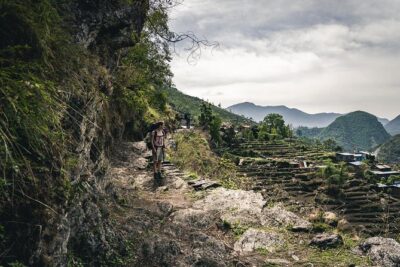
The route connects with the Lower Annapurna section as you ascend via Sikha. That change gives the final portion a fresh feel rather than simply repeating the earlier circuit. You return to greener surroundings and village country, with Ghorepani serving as the overnight base for the final viewpoint walk.
This is one of the itinerary’s tougher scheduling choices. You have a long uphill day immediately before the early morning hike to Poon Hill. Plan to eat, prepare your clothes and headlamp, and go to bed as soon as practical.
Day 13: Poon Hill sunrise and the descent to Pokhara
The final day begins with an early morning hike to Poon Hill at 3,210 meters. You then descend to Nayapul at about 2,070 meters, with the full walking section listed at seven to eight hours, followed by a taxi to Pokhara.
Poon Hill provides a strong finish. You get a high viewpoint after the circuit’s main pass, with a chance to see the Annapurna region from a different angle. The early start will not appeal to everyone, especially after the previous day’s climb, but it gives the final morning a clear purpose.
The route ends in Pokhara rather than Kathmandu. One night of hotel accommodation with breakfast is included, as is tourist bus transport from Pokhara to Kathmandu. That makes the package useful for anyone who wants the trek and the return connection handled together.
Meals, tea houses, and equipment
Three meals a day are included during the trek: breakfast, lunch, and dinner. Local lodges along the route also have continental kitchens, so you should find more than one style of food, although mountain menus remain simple and supplies can vary by altitude.
Accommodation is in basic tea houses, with 12 nights in twin-sharing rooms. This is part of the authentic mountain experience, but it also means you should lower expectations about privacy and hotel-style comfort. Bring personal essentials that help you sleep and stay warm.
The company provides a sleeping bag, down jacket, and duffel bag if you need them, with the expectation that these items are returned after the trip. An ACT trek map and a first aid box with normal medical supplies and an oximeter are also included.
A porter is optional at an additional $250. If you prefer carrying only a daypack, this may be worthwhile. If you are comfortable managing your own duffel, skipping the porter keeps the total cost lower.
Guide support and group size
The group is limited to 12 participants, which is a sensible size for a route with altitude concerns. A small group makes it easier for the guide to notice how people are coping and keeps the walking experience more personal than a large procession.
The strongest praise is directed at the service and guide support. Maxim, a solo trekker from Malta, was paired with Ganesh and highlighted his patience, careful attention, adaptability, and mountain experience. Daniel from the United Kingdom also described the trek as well organized and specifically suggested asking if Rabin could guide the trip.
That does not guarantee that either guide will be available for your dates. Still, it is useful advice: ask about guide assignments before booking, particularly if you are traveling alone. The languages listed are English, Nepali, and Hindi.
Is $970 good value?
I consider $970 a fair price for the amount included. Permits, guide wages and expenses, meals, tea house accommodation, airport pickup, selected transport, equipment, a Pokhara hotel night, and the return tourist bus add up quickly when arranged separately.
The value is strongest if you need the guide and permits organized, want equipment supplied, and are happy with basic accommodation. It is less attractive if you plan to use private transport, stay in higher-end hotels, or hire a porter, since those choices add to the advertised total.
The package also includes free luggage storage at Adventure Bound’s store during the trek if needed. That is a small but practical benefit for anyone carrying city clothes or extra luggage before heading into the mountains.
Best season and who should choose it
Spring and autumn are identified as the best seasons for this trek. Those are the periods you should consider first when checking dates, especially because the route depends on a high pass and changing mountain conditions.
This trek suits you if you want a classic Himalayan route with cultural stops, high-altitude walking, changing scenery, and a structured support system. It is also a good fit for solo trekkers who prefer joining a small group rather than managing the route alone.
You should think twice if you dislike long public bus journeys, shared tea house rooms, early starts, or steep altitude gains. The route is not presented as easy, and the tight schedule gives you limited spare time if you fall behind.
Free cancellation up to 24 hours before the start and the option to reserve now and pay later give you useful flexibility. Those policies do not remove the need to check your fitness, insurance, visa requirements, and personal spending budget before committing.
Should you book the Annapurna Circuit Trek?
I would recommend this 13-day trek if you want the major Annapurna highlights in one organized package and accept basic mountain conditions. The combination of Manang, Thorong La, Muktinath, the Kali Gandaki Valley, Tatopani, and Poon Hill gives you a lot of variety for the price.
Before booking, ask about the exact transport arrangements, guide availability, daily departure times, and whether Rabin or Ganesh can lead your group. If you understand the altitude demands and do not expect luxury, the included services make this a practical, well-priced way to tackle the Annapurna Circuit.
FAQ
How long is the Annapurna Circuit Trek?
The trek lasts 13 days. The program includes transport from Kathmandu, walking days, an acclimatization day in Manang, one hotel night in Pokhara, and transport from Pokhara back to Kathmandu.
How high is Thorong La Pass?
Thorong La Pass reaches 5,416 meters, or about 17,769 feet. It is crossed on Day 9 while walking from Thorong Phedi to Muktinath.
Is an acclimatization day included?
Yes. Day 6 is an acclimatization day in Manang before the route continues toward Yak Kharka and Thorong Phedi.
What meals are included?
Breakfast, lunch, and dinner are included during the trek. Meals in the cities are not included.
What accommodation is provided?
The package includes 12 nights in basic tea houses with twin-sharing accommodation. It also includes one night in a Pokhara hotel with breakfast.
Is a porter included?
No. A porter is optional and costs an additional $250. The guide and the guide’s related expenses are included.
Is trekking equipment provided?
A sleeping bag, down jacket, and duffel bag can be provided if needed. These items must be returned after the trip.
What transportation is included?
Airport pickup is included, along with a taxi to the Kathmandu bus station, public bus transport toward the trek area, public transport from Jomsom to Tatopani, a taxi from Nayapul to Pokhara, and tourist bus transport from Pokhara to Kathmandu.
What languages does the guide service provide?
Live guiding is available in English, Nepali, and Hindi. The group size is limited to 12 participants.
New in the Pokhara listings
- Pokhara: Pokhara Highlights Tour by Bus★ 3.6 · 10 reviews
- Discover Pokhara in Style: Private Vehicle Service with Driver★ 5.0 · 5 reviews
- Multi-Day Tour from Pokhara, Poon Hill and Mulde Trek★ 5.0 · 1 review
- Pokhara in 5 Hours: Lake, Museum, Cave, Falls & Pagoda Hill★ 4.5 · 16 reviews
- Private 4 Day Poon Hill Trek from Pokhara★ 5.0 · 16 reviews
- 4 Day Mardi Himal Base Camp Trek from Pokhara★ 5.0 · 18 reviews
- From Pokhara Full Day Entire Pokhara Tour with Guide★ 5.0 · 1 review
- Things to do at Pokhara World Peace Stupa tour with Guide★ 5.0 · 2 reviews
Annapurna Circuit Treks, compared.
15-Day Private Annapurna Circuit Trek from Kathmandu
Read our review →
Browse the lists this tour appears in