
REVIEW · ANNAPURNA CIRCUIT TREKS
Kathmandu/Pokhara: Annapurna Circuit Trek 10 days
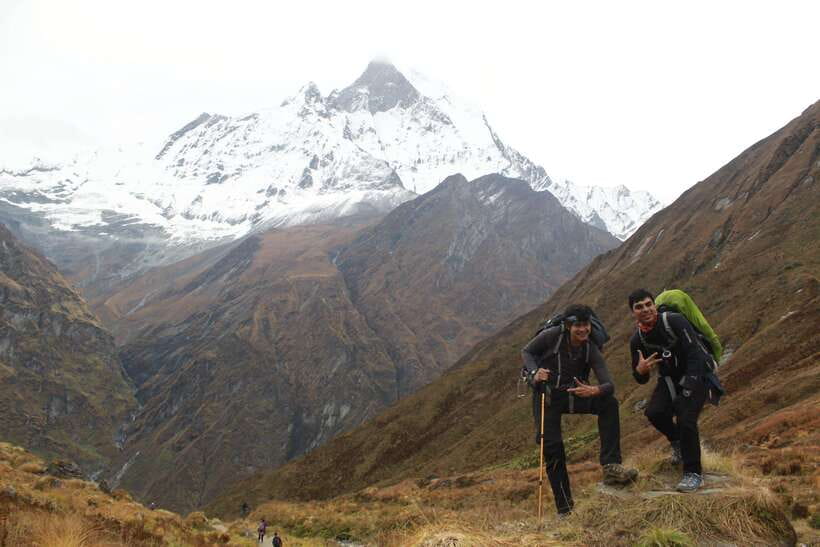
High passes, hot springs, apple country. This 10-day Annapurna Circuit trek packs Nepal’s changing scenery into one demanding route, from the subtropical Marsyangdi Valley to the dry, Tibetan-style country beyond Manang. I especially like the private group format, which gives you more say over the day’s pace, and the strong guide support reported from Kim, Khim, Nir, and Milan.
I also like the cultural side of the trip. You pass through ethnic villages, stay in local teahouses, visit Muktinath, and finish toward Pokhara rather than treating the mountains as a simple out-and-back walk. The main catch is that meals are not included, and the advertised 10-day schedule does not clearly include every place described in the overview, including Tatopani, Ghorepani, and Poon Hill. Confirm the final route before paying.
In This Review
- Key points to know before you book
- What this Annapurna trek gets right
- Day 1: The long road to Dharapani
- Day 2: Dharapani to Chame at 2,670 meters
- Day 3: Chame to Pisang and the first alpine feel
- Day 4: Pisang to Manang, 3,540 meters
- Day 5: A needed rest day in Manang
- Day 6: Manang to Yak Kharka, 4,000 meters
- Day 7: Yak Kharka to Thorong Phedi
- Day 8: Crossing Thorong La at 5,416 meters
- Day 9: Muktinath to Jomsom through the Kali Gandaki Valley
- Day 10: Jomsom to Pokhara
- Teahouses, meals, and what the price covers
- How the guiding affects the experience
- Who should book this trek?
- Should you book the Annapurna Circuit Trek?
- FAQ
- How long is the Annapurna Circuit Trek?
- What is the highest point on the trek?
- Is the trek suitable for pregnant women?
- Is an English-speaking guide included?
- Is this a private group trek?
- Are trekking permits included?
- Is accommodation included?
- Are meals included?
- Is travel insurance required?
- What equipment do I need to provide?
Key points to know before you book
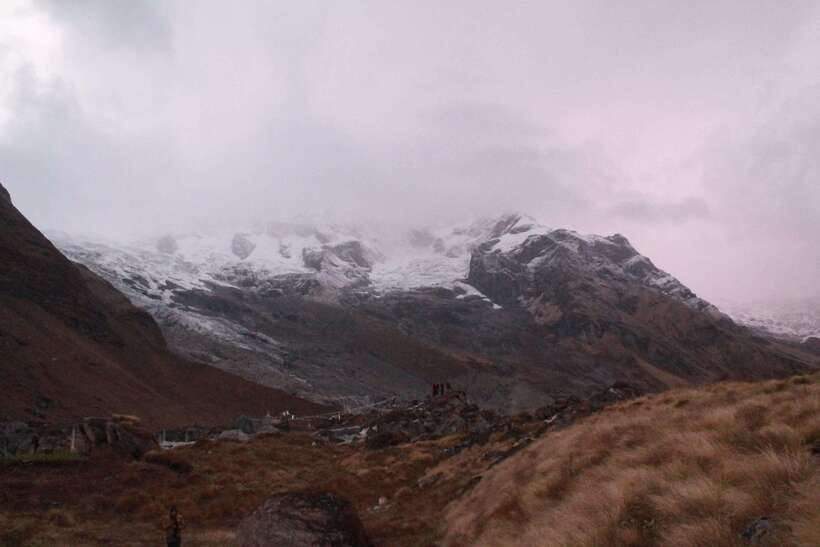
- Thorong La reaches 5,416 meters: The pass is the physical and emotional high point, but altitude makes this a serious trek rather than a casual walking holiday.
- You get one acclimatization day in Manang: This pause matters before the route climbs toward Yak Kharka and Thorong Phedi.
- The scenery changes fast: You move from terraced farmland and forest to alpine terrain, then into dry country shaped by the Kali Gandaki Valley.
- The guide can make or break the trip: Kim, also written as Khim in one review, Nir, and Milan received especially warm praise for care, route planning, humor, and safety.
- The $430 price covers key basics: Permits, transport, guide, teahouse lodging, maps, a first aid kit, taxes, and a farewell dinner are included, but food and personal gear are extra.
- The published route needs clarification: The daily plan ends with Jomsom to Pokhara, while the wider description also mentions Tatopani, Ghorepani, and Poon Hill.
What this Annapurna trek gets right
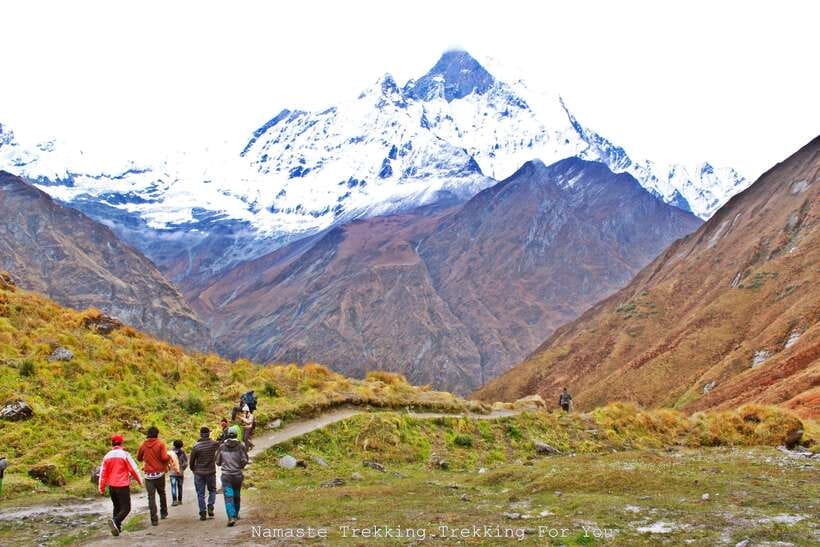
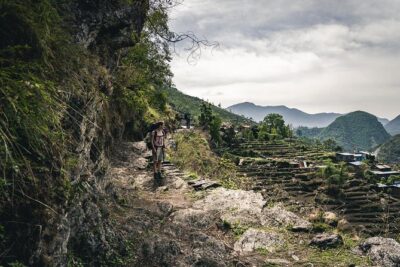
I like this route because it gives you more than mountain views. The Marsyangdi River, terraced fields, village homes, monasteries, apple orchards, and hot springs create a steady change of mood. You are not simply walking toward one famous viewpoint. You are crossing an entire region with its own climates and cultures.
The Annapurna Conservation Area also gives the trek a wider purpose. Your permits and local spending help support the villages and services along the route. That does not remove the hard work, but it makes the cost feel more connected to the place you are visiting.
The strongest part of the experience appears to be the human support. Kim and Khim are praised for warmth, humor, and steady care. Nir is praised for talking through each day’s route, choosing good teahouses, and finding ways around dusty or unpleasant road sections. Milan is praised for helping trekkers feel safe, including a father and son group that reached 5,416 meters with a 61-year-old participant.
That is exactly what I want from a high-altitude guide. You need more than someone who points toward the trail. You need someone who watches how you are coping, explains the plan, and adjusts when the day is not going well.
More Annapurna Circuit treks:
- Kathmandu: 9-Day Annapurna Circuit Trek via Thorong La Pass
★ 5.0 · 17 reviews - Kathmandu: 10-Day Annapurna Circuit Trek via Thorong La Pass
★ 5.0 · 10 reviews - Annapurna Circuit Trek With Tilicho Lake :Best Trek in Nepal
★ 5.0 · 4 reviews
Day 1: The long road to Dharapani
The trip begins with a 6 to 8-hour drive from Kathmandu to Dharapani, listed at 1,860 meters. Transportation from Kathmandu or Pokhara to the trailhead is included, although the day-by-day plan specifically describes the journey from Kathmandu.
This is not a gentle sightseeing transfer. It is a long first day on the road, so you should arrive ready for a tiring start. The payoff is that you reach the trail rather than spending an extra day walking through lower sections.
Dharapani marks the beginning of the classic mountain route. You will likely notice the shift from city travel to village life right away, with the Marsyangdi Valley opening into a greener setting. Keep your first evening simple. Eat, organize your pack, and sleep.
Day 2: Dharapani to Chame at 2,670 meters
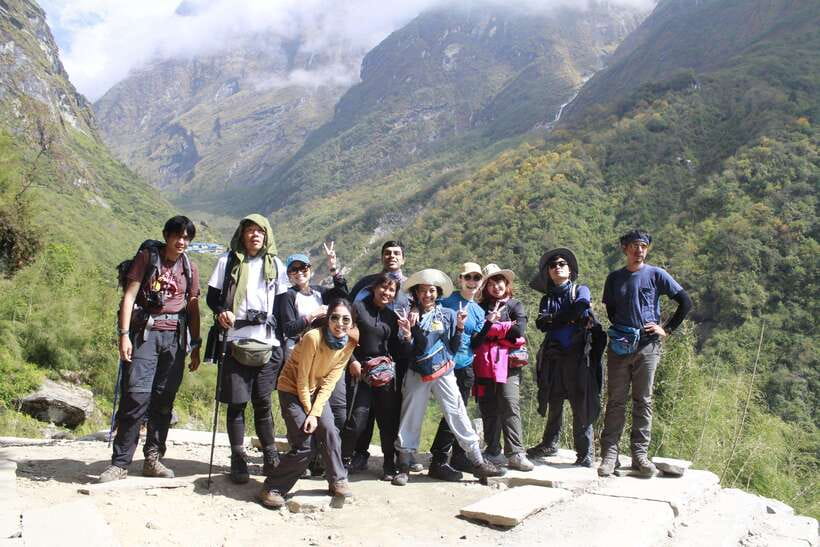
The walk to Chame takes about 4 to 5 hours and gains a useful amount of height without yet pushing into the highest zone. This section moves through forest, fields, and settlements shaped by the river valley.
Chame is the administrative center of the Manang district and a practical overnight stop. The village gives you a first taste of mountain services before the route becomes more remote and the air grows thinner.
I would treat this day as a chance to find your walking rhythm. Do not race. The circuit rewards a slow pace, regular water breaks, and attention to how your body responds. You still have several major altitude gains ahead.
Day 3: Chame to Pisang and the first alpine feel
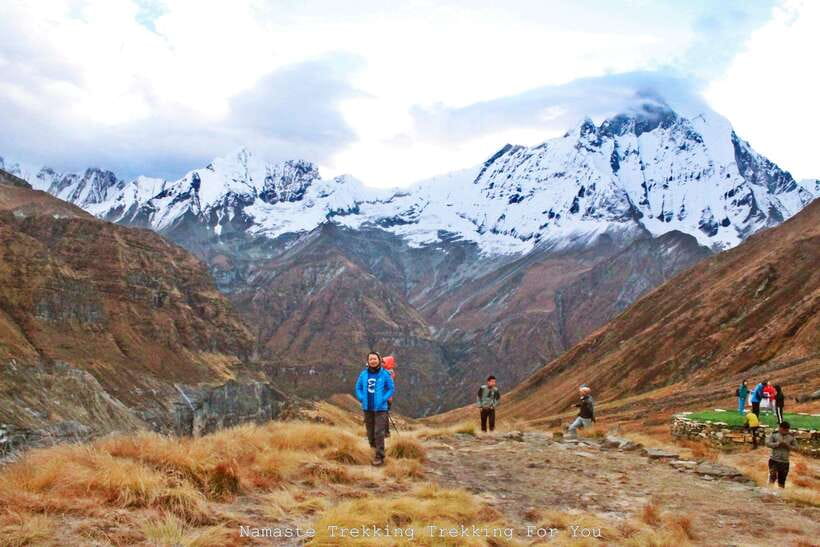
The trail reaches Pisang at 3,300 meters after roughly 5 to 6 hours. By now, the scenery begins to feel more open and severe. Forest still appears, but the valley grows wider, peaks become more imposing, and the route takes on a colder mountain character.
Pisang is one of the most appealing stops because it sits at the point where the route begins to feel properly alpine. The village also gives you a strong sense of the contrast between the lower Marsyangdi Valley and the high Manang region.
This is a day to keep an eye on altitude symptoms. Headache, unusual tiredness, or poor sleep should not be brushed aside. A good private guide can help you decide whether to slow down or change the next day’s plan.
More walking in the hills of Pokhara:
- Poon hill Trek 3 days
★ 5.0 · 176 reviews - Trekking in Annapurna/Langtang/Everest/Upper Mustang regions
★ 5.0 · 161 reviews - Pokhara: 4-Day Ghorepani, Poonhill & Ghandruk Mountain Trek
★ 5.0 · 132 reviews - Ghorepani – Poon Hill Trek 3N-4D
★ 5.0 · 125 reviews
Day 4: Pisang to Manang, 3,540 meters
The 5 to 7-hour walk to Manang is one of the route’s most rewarding days. You pass through a mix of mountain scenery, cultivated land, and villages with strong local character.
Manang is more than a bed for the night. It is the main base for adjusting to the altitude before the route climbs higher. The village has an important role in the trek because nearly every later section depends on how well you handle this change in elevation.
The route description highlights cultural contact in ethnic villages, and this is where that part of the experience becomes especially clear. You are moving through communities adapted to a high, dry climate, not just stopping at anonymous lodges.
Day 5: A needed rest day in Manang
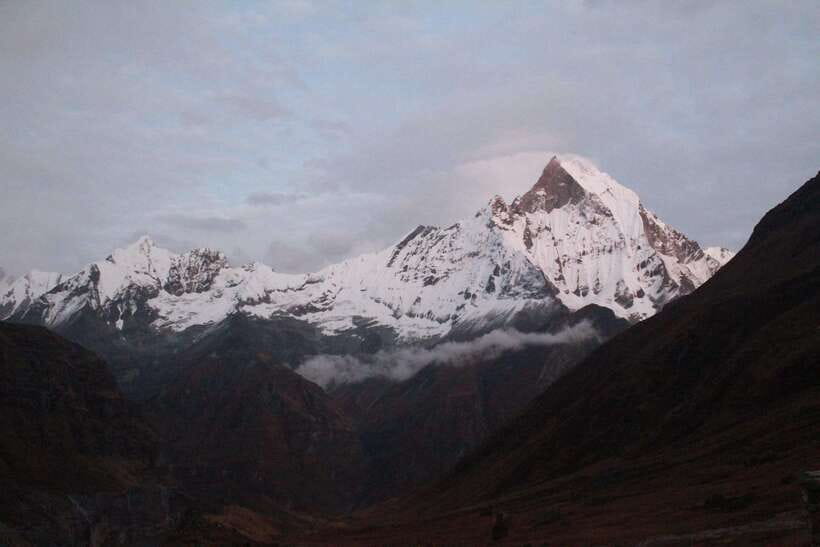
The fifth day is set aside for acclimatization at 3,540 meters. You explore the village and allow your body to adjust rather than gaining more height.
I consider this one of the most valuable parts of the schedule. A 10-day trek can feel compressed, especially with a pass crossing still ahead, so skipping this pause would make the plan harder and less sensible.
Use the day for a modest outing, local exploration, and rest. The goal is not to turn the acclimatization day into another full trekking day. You want to finish it feeling stronger, not worn out.
Day 6: Manang to Yak Kharka, 4,000 meters
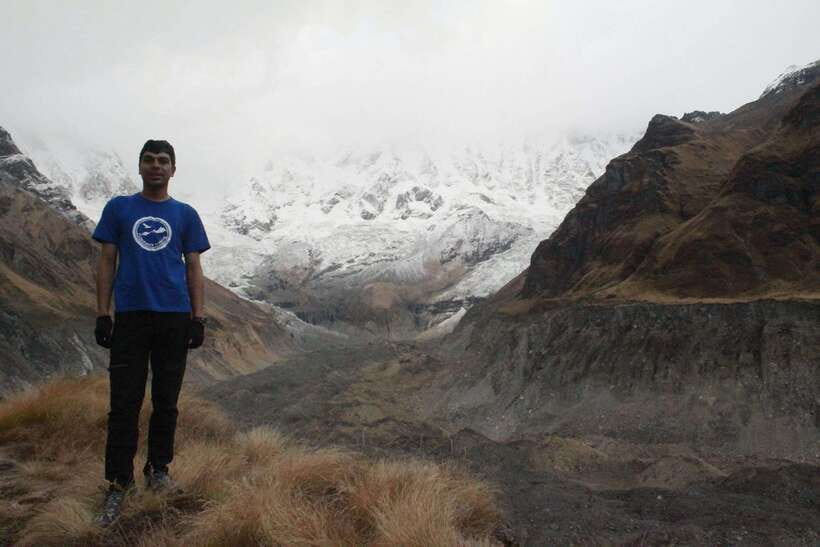
The walk to Yak Kharka takes about 4 to 5 hours and brings you to 4,000 meters. The vegetation thins, the air feels sharper, and the scenery becomes more exposed.
This is where the trek changes from challenging to serious. You are no longer just walking uphill through pleasant mountain country. You are preparing for a pass above 5,400 meters, and every extra gain can be felt.
Yak Kharka is a simple staging point for the next day. Do not expect the same range of comforts you might find in Kathmandu or Pokhara. Teahouse accommodation is included, but hot showers and charging can cost extra or may not be available at some stops.
Day 7: Yak Kharka to Thorong Phedi
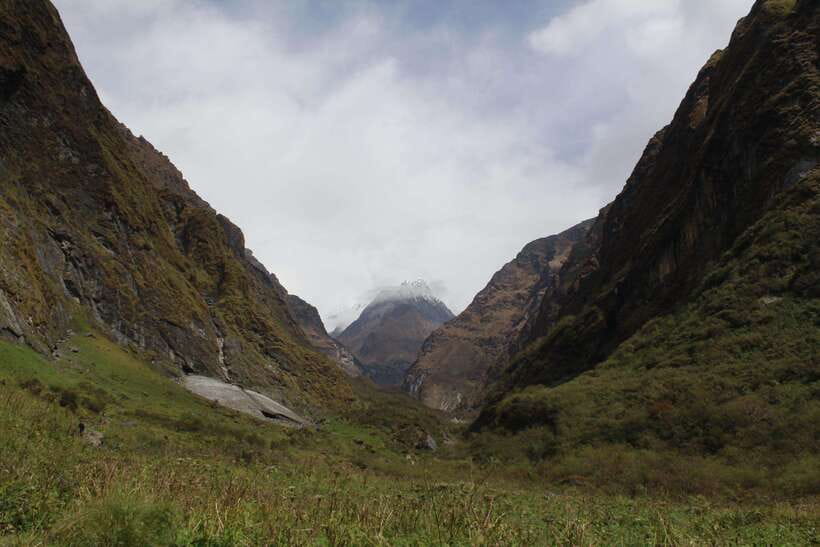
The 3 to 4-hour route to Thorong Phedi reaches 4,450 meters. The distance is short, but the altitude makes it a serious day.
Thorong Phedi is the last main overnight stop before the pass. The important thing here is to rest and prepare for an early, demanding crossing. Keep your warm layers, water, snacks, and personal essentials easy to reach.
This is also the point where travel insurance becomes more than a routine item on a booking page. Insurance is mandatory for this trek and must cover high-altitude trekking. You should check the wording carefully before departure.
Day 8: Crossing Thorong La at 5,416 meters
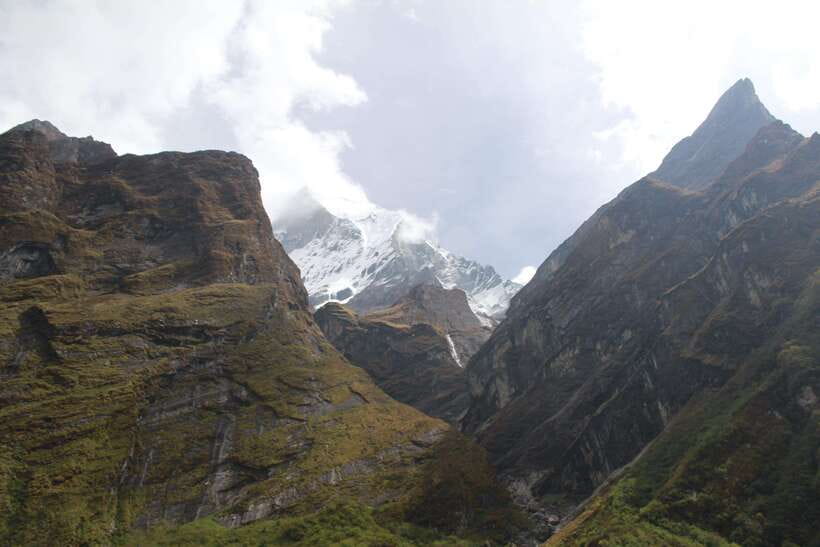
This is the big day. The route from Thorong Phedi over Thorong La to Muktinath takes about 7 to 9 hours, with the pass reaching 5,416 meters.
The crossing is physically demanding because you gain height early, walk in thin air, and then descend a long way to Muktinath at 3,710 meters. The reward is a huge mountain panorama, with views toward Annapurna, Dhaulagiri, and Manaslu.
I would not underestimate this section. It is not a place to prove toughness. Your guide’s pacing and judgment matter greatly, especially if weather or altitude makes the crossing slower than planned.
Muktinath gives the day a strong cultural finish. The town is sacred, with temples and monasteries that are important to both Hindu and Buddhist pilgrims. After the stark pass, this change in atmosphere is striking. You move from a high mountain crossing into a place shaped by faith and centuries of local tradition.
Day 9: Muktinath to Jomsom through the Kali Gandaki Valley
The route to Jomsom takes 5 to 6 hours and drops to 2,720 meters. The lower altitude should feel welcome after the pass.
This section follows the Kali Gandaki area, described as the world’s deepest gorge, with Annapurna and Dhaulagiri rising on either side. The scenery is dry and open, with a strong Tibetan influence in its appearance.
Marpha is highlighted as a charming village known for apple orchards. It is one of the places that gives this trek its character. The apple-growing tradition feels wonderfully different from the subtropical start and the icy pass above.
The wider description also includes Tatopani and its natural hot springs. However, the supplied daily schedule moves from Muktinath to Jomsom and then Pokhara. If hot springs are important to you, ask Peak to Peak Treks if Tatopani is included in your exact version of the route.
Day 10: Jomsom to Pokhara
The final transfer from Jomsom to Pokhara is listed as a 6 to 8-hour drive. This closes the trip in a much greener setting than the high country.
The route description also talks about Ghorepani, rhododendron forests, and sunrise at Poon Hill. Those are major attractions, but they do not appear in the 10-day itinerary provided here. This is the single most important detail to verify before booking.
You should ask three direct questions: Does the trip include Ghorepani? Is Poon Hill sunrise part of the schedule? Does the route visit Tatopani before reaching Pokhara? A clear answer will prevent disappointment, especially if those stops are the reason you chose this trip.
Teahouses, meals, and what the price covers
At $430 per person, this trek offers good value if the stated inclusions match your final plan. You get ACAP and TIMS permits, transport to the trailhead, an English-speaking guide, teahouse accommodation, trekking maps, a first aid kit, government taxes, service charges, and a farewell dinner.
That is a useful base price for a private 10-day trek. The guide and permits are the most important inclusions, while teahouse lodging keeps the trip rooted in the mountain villages rather than separating you from them.
Meals are not included. Budget for food throughout the trek, and remember that hot showers and charging may also cost extra or be unavailable at some teahouses. Personal equipment is your responsibility, including sleeping bags, warm jackets, and trekking poles.
The food experience appears to be a strong point. One itinerary reported comfortable teahouses and good meals, but you should still treat food costs as a separate part of your budget.
How the guiding affects the experience
The guide is the clearest strength of this trip. Kim and Khim are praised for kindness, humor, professionalism, and close support. Nir is singled out for discussing the route each day, adjusting plans, selecting good accommodation, and avoiding dusty road sections when possible.
Milan is praised for careful support and helping a group feel safe during the pass crossing. That kind of care matters more than polished commentary when you are tired at altitude.
The trek is a private group experience with live guiding in English. That should give you more personal attention than a large fixed group, though the exact group size is not stated. If you have a slower walking pace, previous altitude concerns, or a family member who needs extra support, use the booking conversation to explain that clearly.
Who should book this trek?
I would recommend it to you if you want a major Himalayan challenge with strong cultural contact and a set 10-day plan. It suits fit hikers who are comfortable walking for several hours a day and accepting basic teahouse conditions.
You should also enjoy variety. The route moves from river valleys to forests, high alpine country, dry mountain terrain, religious sites, and apple-growing villages. That range is the reason the Annapurna Circuit remains so appealing.
I would hesitate if you want a relaxed holiday, dislike long road transfers, or have no interest in high-altitude trekking. Pregnant women should not take this activity, and everyone else needs mandatory insurance that covers the altitude involved.
The schedule is also tight. The pass crossing, Muktinath, Jomsom, and the final transfer fit into a short period. If you want Tatopani, Ghorepani, and Poon Hill too, confirm how the operator plans to fit them in.
Should you book the Annapurna Circuit Trek?
Book it if Thorong La is your main goal and you value a private guide who can adjust the day around your condition. The price is attractive for the permits, transport, lodging, guiding, and support included, and the praise for Kim, Khim, Nir, and Milan suggests that guide quality is a real strength.
Before booking, get the route in writing. The supplied schedule does not match every sight named in the wider description, particularly Tatopani, Ghorepani, and Poon Hill. If the operator confirms your preferred stops and you are ready for a high pass, this is a strong, compact introduction to the Annapurna Circuit.
FAQ
How long is the Annapurna Circuit Trek?
The trek lasts 10 days. The schedule begins with travel to Dharapani and ends with transportation from Jomsom to Pokhara.
What is the highest point on the trek?
The highest point is Thorong La Pass at 5,416 meters, or 17,769 feet.
Is the trek suitable for pregnant women?
No. Pregnant women are listed as unsuitable for this activity.
Is an English-speaking guide included?
Yes. An experienced, English-speaking guide is included.
Is this a private group trek?
Yes. The activity is described as a private group experience.
Are trekking permits included?
Yes. The price includes ACAP and TIMS permits.
Is accommodation included?
Yes. Teahouse accommodation during the trek is included.
Are meals included?
No. Meals during the trek are not included.
Is travel insurance required?
Yes. Travel insurance is mandatory, and it must cover high-altitude trekking.
What equipment do I need to provide?
You need to arrange personal trekking gear, including items such as a sleeping bag, warm jackets, and trekking poles.
New in the Pokhara listings
- Pokhara: Pokhara Highlights Tour by Bus★ 3.6 · 10 reviews
- Discover Pokhara in Style: Private Vehicle Service with Driver★ 5.0 · 5 reviews
- Multi-Day Tour from Pokhara, Poon Hill and Mulde Trek★ 5.0 · 1 review
- Pokhara in 5 Hours: Lake, Museum, Cave, Falls & Pagoda Hill★ 4.5 · 16 reviews
- Private 4 Day Poon Hill Trek from Pokhara★ 5.0 · 16 reviews
- 4 Day Mardi Himal Base Camp Trek from Pokhara★ 5.0 · 18 reviews
- From Pokhara Full Day Entire Pokhara Tour with Guide★ 5.0 · 1 review
- Ultralight Flight: Into The Heart Of The Mountains (90 min)★ 5.0 · 1 review
Annapurna Circuit Treks, compared.
15-Day Private Annapurna Circuit Trek from Kathmandu
Read our review →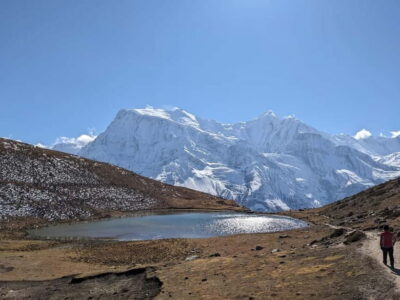
Browse the lists this tour appears in