
REVIEW · ANNAPURNA CIRCUIT TREKS
Annapurna Circuit Trek
High passes reward steady feet.
This 14-day private Annapurna Circuit trek gives you a practical way to tackle one of Nepal’s great mountain routes without arranging every lodge, permit, meal, and transfer yourself. I like the private format, which lets your group adjust the pace, and I like that the price includes trekking permits, area fees, full board during the trek, airport transfers, and hotel stays in Kathmandu and Pokhara.
The main caution is the altitude and the physical demand. Thorung La reaches 5,416 meters, and several walking days last six to eight hours. The long road transfers are another test, especially the roughly 10-hour drive from Muktinath to Pokhara.
In This Review
- Key Details Before You Book
- What the $1,150 Price Really Covers
- Kathmandu Arrival and the First Long Road
- Syange to Dharapani: The Walking Begins
- Dharapani to Chame Through Forest and Rock
- Paungda Danda and the Road to Manang
- Manang Rest Day: The Trip’s Most Important Pause
- Manang to Thorung Phedi and High-Altitude Lodges
- Crossing Thorung La at 5,416 Meters
- Muktinath, Mustang Culture, and the Long Ride to Pokhara
- Returning to Kathmandu and Flying Home
- Accommodation, Food, and What You Pay Extra
- Who Should Book This Annapurna Circuit Trek?
- Should You Book It?
- FAQ
- Where does the Annapurna Circuit Trek begin?
- How long does the trek last?
- Is Thorung La included in the route?
- Are meals included?
- Is porter service included?
- Can I cancel for a full refund?
Key Details Before You Book
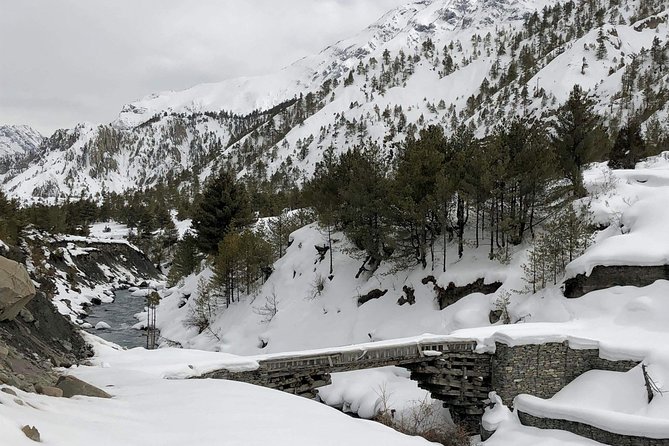
- The high point is Thorung La at 5,416 meters, reached after several days of gradual ascent and a rest day in Manang.
- You get a private trek with a guide, rather than joining a large fixed group.
- Most major costs are bundled, including permits, tea-house lodging, trekking meals, airport transfers, and selected city hotels.
- Manang provides the key rest day, with optional short hikes toward Gangapurna Lake, Bonjo Gumba, or nearby villages.
- The route finishes with Mustang culture and Muktinath, followed by a long shared bus or jeep ride to Pokhara.
- The package costs $1,150 per person, and group discounts may be available.
What the $1,150 Price Really Covers
At $1,150 per person, this trek offers good value for a guided 14-day trip, particularly because several expensive and awkward details are handled in advance. You receive airport and hotel transfers by private vehicle, two nights in Kathmandu with breakfast, two nights in Pokhara with breakfast, tea-house accommodation during the walking portion, and a professional trekking guide.
During the trek, breakfast, lunch, and dinner are included. That full-board arrangement matters in the mountains. You do not need to negotiate every meal or carry a large food supply, though you still pay separately for bottled water, Wi-Fi, charging, hot showers, and alcoholic drinks.
Permits and entrance fees are included, along with first-aid medicine carried by the guide. A company duffel bag and sleeping bag can also be provided if needed. Porter service is not included, so you need to carry your own day-to-day gear unless you arrange and pay for a porter separately.
The package also includes a trip completion certificate, government and local taxes, and long-distance tourist bus transport. The ride from Muktinath to Pokhara uses a local bus or jeep and is shared with other people, so the price is not buying private transport for every mile.
Lunch and dinner in Kathmandu and Pokhara are extra. International flights, a Nepal travel visa, tips, and any personal costs are also outside the package. I would budget for these items before comparing the headline price with other Annapurna options.
The average booking lead time is 105 days. That suggests you should not leave planning until the last week, especially if you need international flights, vacation time, or extra nights in Nepal.
More Annapurna Circuit treks:
- Annapurna Circuit Trek with Tilicho Lake
★ 5.0 · 368 reviews - Annapurna Circuit Trek
★ 5.0 · 94 reviews - Annapurna Circuit Trek
★ 5.0 · 34 reviews
Kathmandu Arrival and the First Long Road
Your trip begins at Tribhuvan International Airport, where a company representative meets you and drives you to your hotel. After some rest, the guide provides a short briefing about the trek.
That first evening has real value. You can sort equipment, ask questions, and learn how the walking days will work before leaving the city. Since airport and hotel transfers are included by private vehicle, your arrival is simpler than arranging a taxi after a long international flight.
Day two is mostly about transport. After breakfast, you drive toward Syange, with the road journey taking roughly eight to nine hours. The package also describes tourist bus transport for the long route from Kathmandu toward Besishar, so you should confirm the exact vehicle and endpoint with the operator before departure.
This is not a glamorous travel day. It is a necessary one. Roads in the hill country can make distances feel longer than they look on a map, and you should expect limited comfort compared with the hotel transport in Kathmandu.
Syange to Dharapani: The Walking Begins
The first serious walking day takes you from the Syange area toward Dharapani. The schedule allows about six to eight hours, with a bridge crossing and forested mountain paths along the way.
This is where the trip changes character. The road and city arrangements fall away, and you begin moving under your own power. Dharapani is an important early stop because it places you deeper into the circuit while giving your body time to settle into the rhythm of long walking days.
You should not treat this as an easy warm-up. The route includes steep sections, and the schedule does not hide the fact that the days can be tiring. A moderate level of physical fitness is required, and you should be comfortable walking for several hours with a pack.
The twin-sharing tea-house accommodation keeps costs down and gives the trek a simple, local feel. Comfort is basic, and hot showers, charging, Wi-Fi, and bottled water cost extra. I would carry cash for these small charges and avoid assuming that every modern convenience is included.
Dharapani to Chame Through Forest and Rock
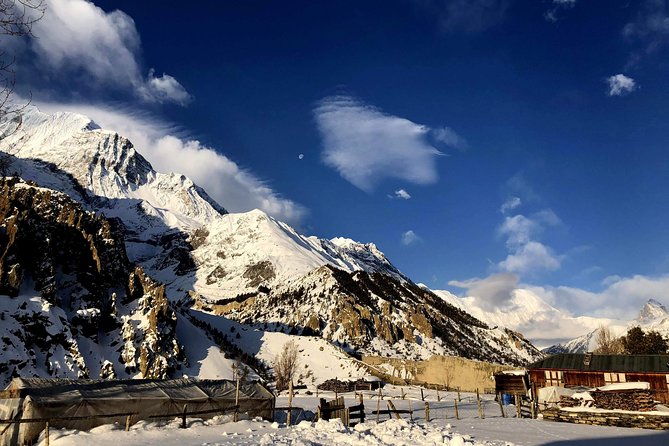
From Dharapani, the route continues toward Chame. The walk takes about six hours and passes steep ridges, green woodland, and sections affected by landslides.
The guide becomes especially useful here. A private trek allows the walking pace to suit your group, but steep terrain still demands care. Keep your attention on the trail, particularly in narrow areas, while leaving enough time to look up at the surrounding mountains.
Chame is more than just another overnight stop. It marks your progress into the higher part of the circuit, where the route begins to feel less like a road-based excursion and more like a true mountain journey. The itinerary describes a mix of forest, exposed ridges, and dramatic rock formations, so this day offers variety rather than one unchanging view.
More walking in the hills of Kathmandu:
- Everest Base Camp Trek – 14 Days
★ 5.0 · 1,499 reviews - Everest Base Camp Trekking
★ 5.0 · 485 reviews - Nagarkot Sunrise View and Day Hiking from Kathmandu
★ 5.0 · 471 reviews - Everest Base Camp Trekking – 13 Day
★ 5.0 · 365 reviews
Paungda Danda and the Road to Manang
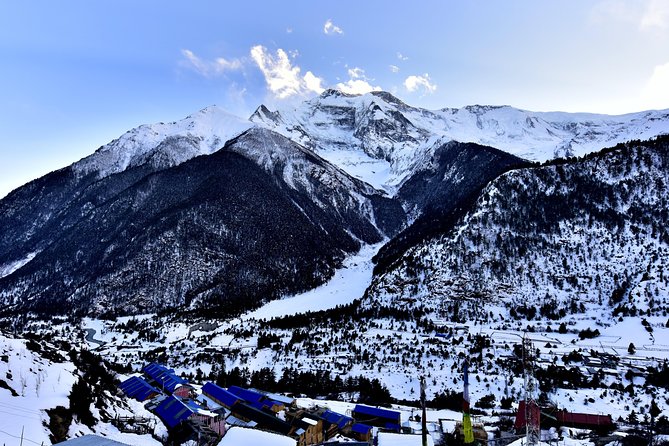
The next stretch leads through a narrow valley and past Paungda Danda, a curved rock formation rising about 1,500 meters. The terrain can be steep, so you need to keep a sensible pace and listen to the guide’s instructions.
The route then continues toward Manang, passing through Upper Pisang. This is one of the more rewarding parts of the trek because the scenery begins to open up and the valley takes on a more high-country character.
Manang is described as a dream destination for local and international visitors, and it earns its place as the trip’s central stopping point. The village provides a base for acclimatization before the highest section of the route. This pause is not wasted time. It is the sensible way to prepare for Thorung La.
The walking time on the approach to Manang is listed at about seven hours. You should expect a full day, not a casual stroll. The combination of distance and rising altitude means that a slow, steady pace is more useful than trying to arrive early.
Manang Rest Day: The Trip’s Most Important Pause
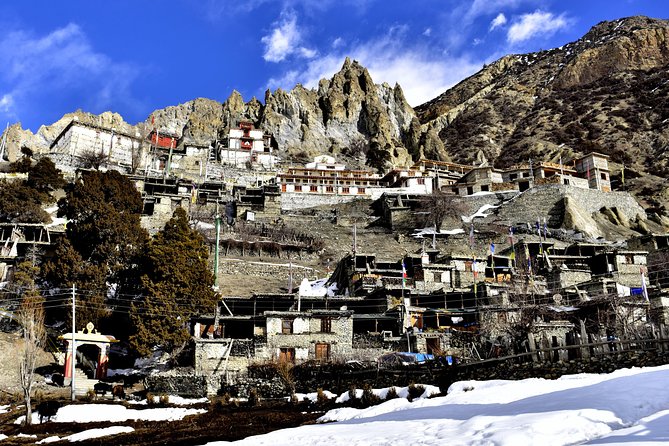
Day seven is a rest day in Manang, with short walking options toward Bonjo Gumba, Gangapurna Lake, or nearby areas such as Vraga. This is one of the strongest parts of the schedule.
I like that the day is not presented as a forced sightseeing program. You can rest, take a short hike, or explore at a gentle pace. That flexibility matters at altitude, where your body may need recovery more than another ambitious target.
The rest day also gives you time to check clothing, refill supplies, and speak with the guide about the next stages. Since the highest pass is still ahead, you should not use this day for an exhausting outing. A short hike may be useful, but saving energy is the smarter choice.
The guide carries first-aid medicine, but you should still bring your own essential medication and tell the guide promptly if you feel unwell. The provided information does not promise medical evacuation, so do not treat the first-aid kit as a substitute for travel insurance.
Manang to Thorung Phedi and High-Altitude Lodges
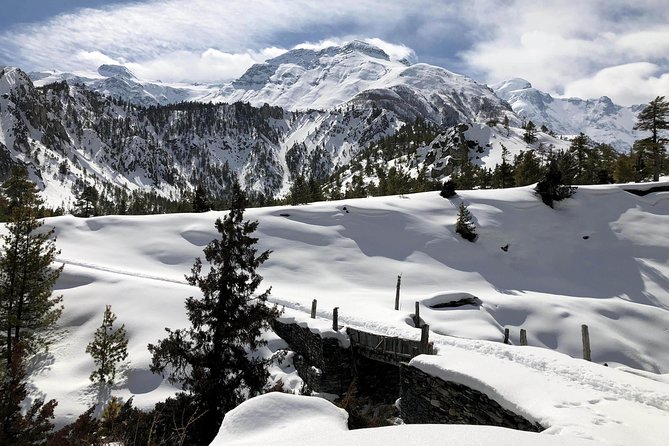
After Manang, the trail climbs higher through Tenki and along the northwestern side of the Marshyangdi Valley. The route passes juniper trees, a stream, and the small village of Ghunsa. The walking day is listed at about four hours.
Shorter does not always mean easier. At this altitude, a few hours of uphill walking can feel harder than a longer day at low elevation. You may find the landscape more open and spare, with fewer trees and a greater sense of exposure.
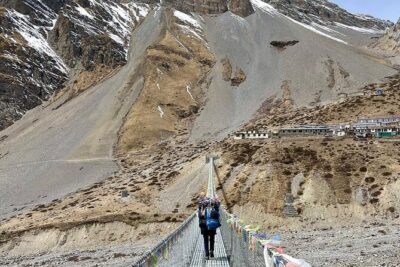
The following day continues toward Thorung Phedi, passing a suspension bridge and the village of Lather before reaching cliffs and higher ground. This section is also listed at around four hours.
The wording for one day in the schedule is inconsistent, showing only a few minutes for a route that clearly involves substantial walking. I would confirm the precise daily plan with the operator before departure. The main point is clear: the schedule includes a gradual approach to the pass, with overnight stops designed to break up the ascent.
Crossing Thorung La at 5,416 Meters
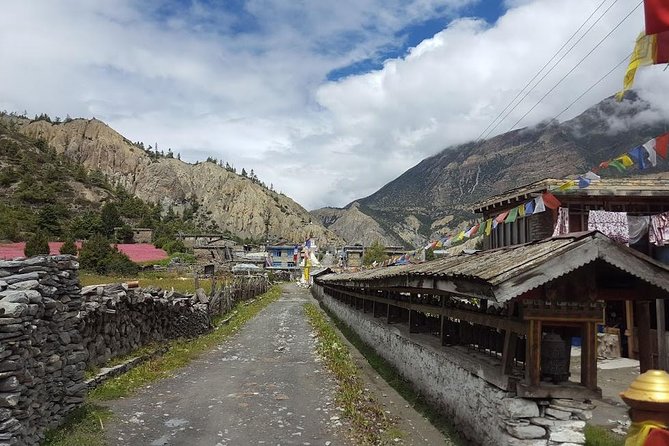
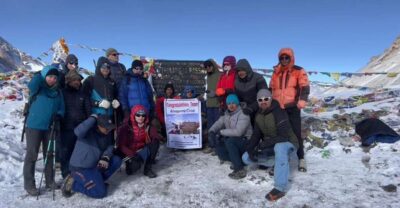
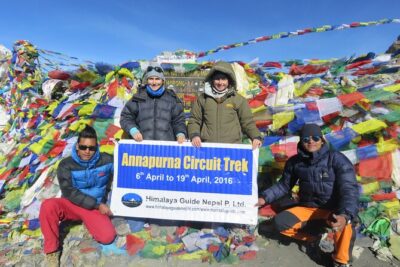
Thorung La is the physical and emotional center of the trek. At 5,416 meters, it is the highest point on the route and the day that demands the most patience.
You begin early after breakfast and climb toward the pass. The approach can take several hours, and the full day is listed at about eight hours. The altitude, cold, wind, and steep trail can make this the hardest part of the trip.
This is where the private guided arrangement earns its keep. You can move at a pace suited to your group, and the guide can help you manage the long climb. You should not race to the top. The goal is to cross safely, not to win a contest against your companions.
After reaching the pass, the route descends west toward Muktinath. That descent is still demanding on tired legs, but reaching Muktinath gives the day a clear reward. The area is known for its temple and its Tibetan-influenced cultural setting, which adds more than mountain scenery to the experience.
Muktinath also marks a change in the trip. You have crossed the highest point, and the route begins to move from the high Manang side toward Mustang and the lower road system.
Muktinath, Mustang Culture, and the Long Ride to Pokhara
Day 11 is the last trekking day in the schedule, though the main activity is transport. After breakfast, you take a shared local bus or jeep from Muktinath to Pokhara. The drive takes about 10 hours.
You should plan your expectations carefully. This is not a quick transfer after a short walk. It is a long, sometimes tiring road day, and sharing the vehicle means you have less control over stops and comfort. Still, it efficiently links the high mountain route with Pokhara and avoids adding several extra walking days.
Pokhara provides two nights of hotel accommodation with breakfast. The rest day after arrival gives your legs a chance to recover, and you can explore Pokhara Valley independently. Lunch and dinner are not included at the hotel, so you can choose and pay for those meals yourself.
This city pause is a good design choice. After a demanding pass crossing and a long road journey, you will probably appreciate a bed, a shower, and a day without a fixed walking target.
Returning to Kathmandu and Flying Home
On day 13, you travel from Pokhara to Kathmandu by tourist bus, a journey of about seven hours. There is also an option to fly from Pokhara to Kathmandu for an extra charge.
The bus keeps the basic price lower, but it uses much of the day. If you have a tight international departure schedule, ask about the flight option and its cost before booking. The Kathmandu hotel night with breakfast is included, which gives you a buffer before the final airport transfer.
On day 14, the company drives you to Tribhuvan International Airport. The transfer takes about 20 minutes according to the schedule. That final arrangement is simple and useful, particularly for an early flight or after two weeks of changing beds.
Accommodation, Food, and What You Pay Extra
The city hotels in Kathmandu and Pokhara include breakfast. During the trek, you stay in twin-sharing lodges or tea houses and receive breakfast, lunch, dinner, and tea.
That arrangement removes one of the largest daily planning chores. You still need money for drinks, snacks, Wi-Fi, charging, hot showers, and bottled water. Alcohol is also extra.
There is no porter included. A company duffel bag and sleeping bag may be available, but the practical details should be confirmed before you arrive. Pack light, keep important items dry, and make sure your footwear is already comfortable.
The package includes a professional guide and first-aid medicine. One useful caution comes from the available feedback: the airport and hotel arrangements were praised, while the guide and staff were described as needing more training. I would use the pre-trek briefing to ask direct questions about altitude, daily timing, transport, and what support is available if you need to slow down.
Who Should Book This Annapurna Circuit Trek?
I would recommend this trip to someone who wants the classic Annapurna route but does not want to arrange permits, lodging, meals, airport transfers, and long-distance transport alone.
It suits you best if you:
- Can handle six to eight hours of walking on several days
- Are prepared for a maximum altitude of 5,416 meters
- Like a private group and a flexible walking pace
- Are comfortable with basic tea-house accommodation
- Do not mind a long shared drive from Muktinath to Pokhara
- Want full-board trekking meals and bundled permits
I would hesitate to recommend it if you want luxury lodges, private transport throughout, included porter service, or a short and easy mountain holiday. The route is physically demanding, and several costs remain outside the package.
The tour has a five-star rating from 35 ratings, with 100 percent recommending it. The strongest practical praise centers on the smooth airport transfers, document arrangements, and hotel accommodation in Kathmandu and Pokhara. Those strengths make the package easier to manage, but they do not remove the need to check guide quality and daily trek details before setting off.
Should You Book It?
Book this Annapurna Circuit trek if you value convenience, private guiding, and a clear route through Manang, Thorung La, Muktinath, and Pokhara at a reasonable bundled price.
Before paying, confirm the guide’s experience, the exact transport route on day two, the daily plan around Thorung Phedi, and the availability of any duffel bag or sleeping bag. Also budget for tips, a visa, porter service, drinks, hot showers, Wi-Fi, charging, and meals in the cities.
For a fit hiker who accepts basic lodging and long road journeys, this is a strong way to experience the Annapurna Circuit without carrying the full burden of planning. The mountain will still make the decisions, but at least your paperwork and dinner are mostly sorted.
FAQ
Where does the Annapurna Circuit Trek begin?
The experience begins with an airport pickup at Tribhuvan International Airport in Kathmandu, Nepal.
How long does the trek last?
The full experience lasts approximately 14 days, including time in Kathmandu and Pokhara, transport days, the trek, and airport transfers.
Is Thorung La included in the route?
Yes. The route crosses Thorung La, also called Thorong La, at an elevation of 5,416 meters.
Are meals included?
Breakfast is included at the Kathmandu and Pokhara hotels. Breakfast, lunch, dinner, and tea are included during the trekking portion. Lunch and dinner in Kathmandu and Pokhara are not included.
Is porter service included?
No. Porter service is not included in the $1,150 price. A company duffel bag and sleeping bag may be provided if needed, but you should confirm this before departure.
Can I cancel for a full refund?
Yes. You can cancel at least 24 hours before the experience start time for a full refund. If poor weather causes cancellation, you will be offered another date or a full refund.
New in the Kathmandu listings
- Traditional Momo Making Class★ 5.0 · 10 reviews
- Kathmandu: Ancient City Kirtipur & Pharping Monastery Tour★ 5.0 · 2 reviews
- Kathmandu to Pokhara Premium sofa bus ticket★ 4.0 · 17 reviews
- Women Empowerment Project(Nepali cooking class & jewelry workshop★ 5.0 · 15 reviews
- 7-Day Langtang Valley Trek from Kathmandu★ 5.0 · 1 review
- Kathmandu 2 Nights 3 Days Chitwan Jungle Safari Tour★ 5.0 · 9 reviews
- Yoga Experience Day Trip with Private Transfer From Kathmandu★ 4.0 · 2 reviews
- Wildlife Adventure in Chitwan Nepal★ 4.0 · 4 reviews
Annapurna Circuit Treks, compared.
15-Day Private Annapurna Circuit Trek from Kathmandu
Read our review →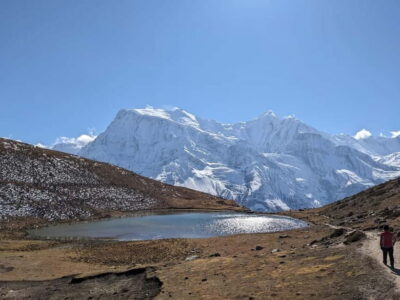
Annapurna Circuit Trek with Tilicho Lake (16 Days)
Read our review →Browse the lists this tour appears in