
REVIEW · ANNAPURNA CIRCUIT TREKS
Annapurna Circuit Trek
The high pass is only part of the story. This 14-day Annapurna Circuit Trek takes you from Kathmandu through river valleys, pine forests, dry mountain country, traditional villages, and the 5,416-meter Thorong La Pass. I like the private format, which gives your group one guide rather than placing you in a large tour, and I like that permits, teahouse rooms, meals, transport, and a first-aid kit are covered. The main caution is altitude: this is a serious mountain walk, not a casual holiday, and cold nights can be extreme.
The route also earns praise for its guides. Names such as Santosh, Ganesh, Rabin, Sandip, and Chakra appear in the feedback, with particular praise for patience, encouragement, local insight, and careful support at high elevations. You should still budget for drinks, showers, laundry, charging, tips, insurance, and possibly a porter, since these costs are not included.
In This Review
- Key points to know before booking
- What the $1,175 price really covers
- Day 1: Kathmandu to Jagat by a long mountain road
- Days 2 and 3: Jagat to Dharapani, then Chame
- Days 4 and 5: Chame to Pisang and Manang
- Day 6: Why the Manang acclimatization day matters
- Days 7 and 8: Yak Kharka and Thorong Phedi
- Day 9: Crossing Thorong La to Muktinath
- Day 10: Muktinath to Jomsom
- Day 11: Jomsom to Tatopani and the hot springs
- Day 12: The hard climb to Ghorepani
- Day 13: Poon Hill, Nayapul, and Pokhara
- Day 14: Returning from Pokhara to Kathmandu
- Guides, group size, and the human side of the trek
- Food, lodging, and extra costs
- Who should book this Annapurna Circuit trek?
- Should you book it?
- FAQ
- Where does the Annapurna Circuit Trek begin?
- How long does the trek last?
- What is the highest point on the route?
- Is there an acclimatization day?
- What accommodation is included?
- Are meals included?
- Is transportation included?
- What costs are not included?
Key points to know before booking
- Thorong La reaches 5,416 meters: The pass is the physical high point of the trek and the day with the greatest altitude concern.
- A full acclimatization day comes in Manang: This pause is important before the route climbs toward Yak Kharka and Thorong Phedi.
- The route changes dramatically: You move from humid lower valleys and waterfalls to dry, wind-swept mountain country around Manang and Muktinath.
- Teahouse accommodation keeps the price reasonable: You sleep in simple mountain lodges rather than paying for hotels throughout the route.
- The trip is private: Only your own group takes part, with a government-licensed guide assigned to help with safety and logistics.
- The final reward is not only the pass: Muktinath, the hot springs at Tatopani, Poon Hill, and the arrival in Pokhara add cultural and scenic variety.
What the $1,175 price really covers
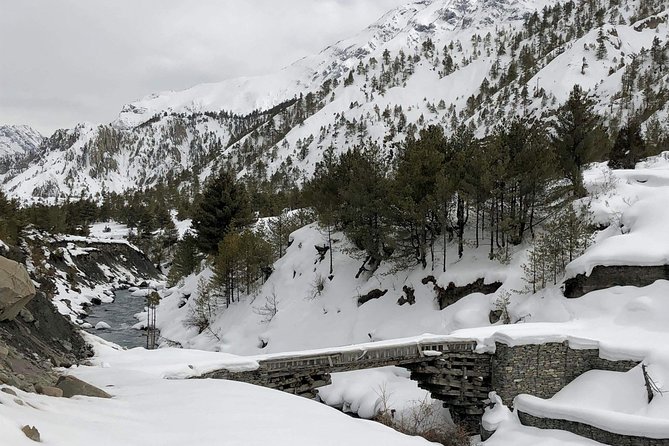
At $1,175, this trek offers a useful package for anyone who does not want to arrange a high-altitude route alone. The price includes transportation from Kathmandu to Jagat, the road journey from Jomsom to Tatopani, a private transfer from Nayapul to Pokhara, teahouse accommodation, three daily meals during the trekking days, permits, a TIMS fee, a map, a first-aid kit, taxes, and a licensed guide.
That list matters. Permits and transport can be a nuisance to organize, and the guide handles much of the daily planning. You are paying for a route with many moving parts, not simply for someone to walk beside you.
The value is strongest for a first Annapurna Circuit experience or for a solo visitor who wants support without joining a large group. The private setup may also make it easier to set a sensible pace, ask questions, and discuss how you are feeling as the trail rises.
The price does not include travel or rescue insurance, personal expenses, bottled or boiled water, showers, laundry, phone calls, bar bills, battery charging, tips, or a porter. A porter is available only at an additional cost if required. I would treat insurance as essential, not optional, given the altitude and remote sections of the route.
More Annapurna Circuit treks:
- Annapurna Circuit Trek with Tilicho Lake
★ 5.0 · 368 reviews - Annapurna Circuit Trek
★ 5.0 · 35 reviews - Annapurna Circuit Trek
★ 5.0 · 34 reviews
Day 1: Kathmandu to Jagat by a long mountain road
The first day is mainly a transfer, with an eight to nine-hour drive from Kathmandu to Jagat via Besisahar. It is a demanding start in a different way from the walking days. You spend much of the day on the road before reaching the point where the trek begins.
Jagat sits at about 1,100 meters. The lower route introduces you to the changing scenery of the Annapurna region, but you should not expect a relaxed sightseeing drive. Road conditions, stops, and traffic can affect the timing, so keep your first day flexible.
This transfer saves walking time and lets the itinerary reach the classic high sections within 14 days. The tradeoff is comfort. You will want patience, water, and a willingness to spend a full day seated.
Days 2 and 3: Jagat to Dharapani, then Chame
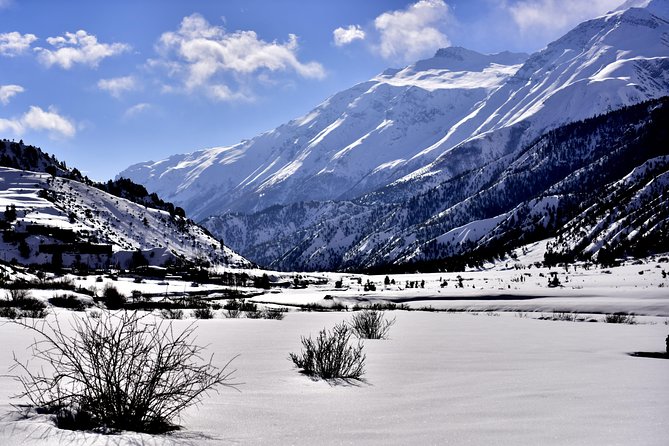
The first walking day runs from Jagat to Dharapani at 1,960 meters and takes about six to seven hours. Expect a proper mountain day, with the route moving through lower valleys and communities before reaching cooler country.
The next stage continues from Dharapani to Chame at 2,710 meters, usually in five to six hours. Chame is the administrative center of Manang District and a useful overnight stop before the trail begins to feel more alpine.
These early days build the rhythm of the trek. You walk, eat, rest, and repeat. The guide’s role is useful here because you can focus on pacing rather than checking every junction or calculating the next lodge.
Days 4 and 5: Chame to Pisang and Manang
From Chame, the route climbs to Pisang at about 3,300 meters over five to six hours. The scenery becomes more open and the mountain setting more pronounced. You also begin to notice the practical effects of altitude, even if you are still walking moderate distances.
Day 5 continues from Pisang to Manang, reaching about 3,540 meters after six to seven hours. This is one of the most important sections for scenery because the route shifts from forested valleys toward dry, high mountain country.
Manang is more than a place to sleep. It is the planned pause point before the route rises sharply. The town gives you time to eat, rest, and prepare for the hardest days ahead.
More walking in the hills of Kathmandu:
- Everest Base Camp Trek – 14 Days
★ 5.0 · 1,499 reviews - Everest Base Camp Trekking
★ 5.0 · 485 reviews - Nagarkot Sunrise View and Day Hiking from Kathmandu
★ 5.0 · 471 reviews - Everest Base Camp Trekking – 13 Day
★ 5.0 · 365 reviews
Day 6: Why the Manang acclimatization day matters
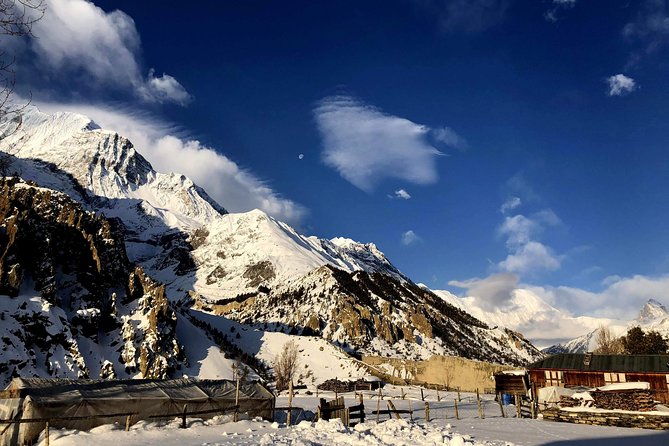
The sixth day is set aside for acclimatization in Manang. That is a major strength of this schedule. The next stages reach more than 4,000 meters, so pushing onward without a pause would make the route less sensible.
The itinerary does not specify a particular acclimatization walk, so your exact day may depend on your guide, weather, and how your group feels. The useful point is that the schedule does not treat Manang as just another overnight stop.
Take this day seriously. Rest, drink what you can safely obtain, and tell your guide promptly if you feel unwell. The guide is there for safety and logistics, but you still need to describe your symptoms clearly.
Days 7 and 8: Yak Kharka and Thorong Phedi
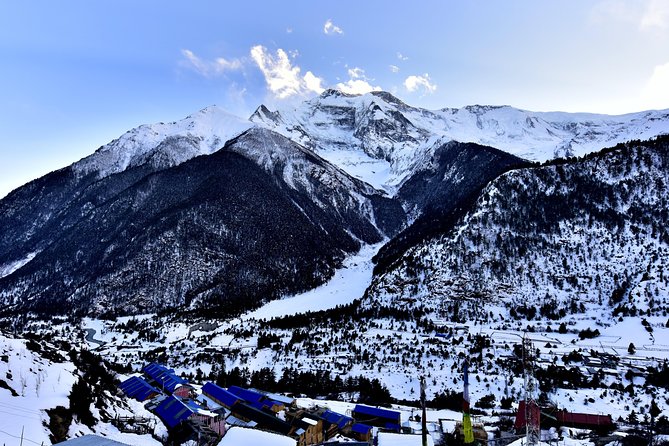
Day 7 climbs from Manang to Yak Kharka at 4,120 meters. The walk takes about four to five hours, but the shorter duration can be misleading. At this height, a modest trail can feel hard, and the air is thinner.
The next stage goes from Yak Kharka to Thorong Phedi at roughly 4,450 meters in four to five hours. Phedi means the foot of a pass, and this is your staging point for Thorong La.
This is where a private guide can be especially helpful. You are no longer simply measuring distance. You are watching the weather, your energy, and your response to altitude. The feedback gives strong credit to guides such as Ganesh for encouraging trekkers across the pass and to Santosh for keeping people informed about the next day.
Day 9: Crossing Thorong La to Muktinath
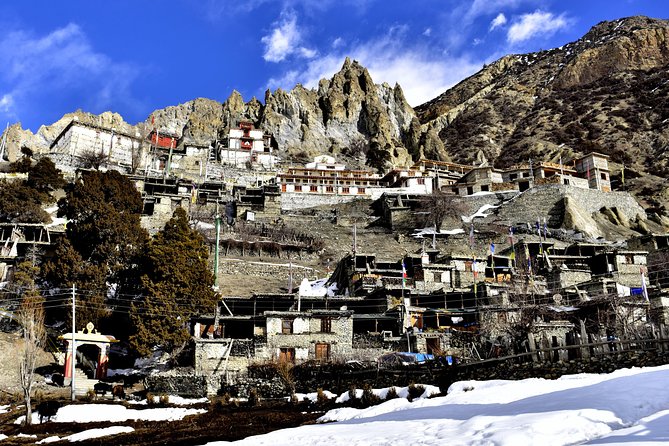
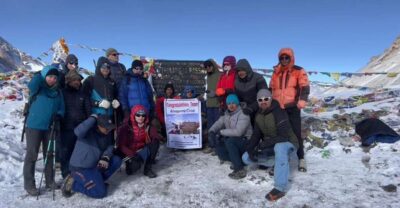
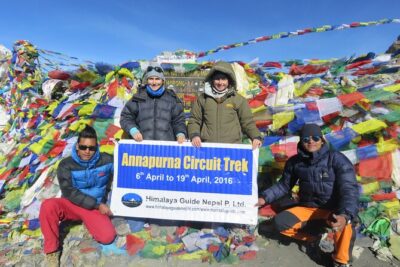
The pass day is the centerpiece of the trek. You leave Thorong Phedi, climb to Thorong La at 5,416 meters, then descend to Muktinath at 3,802 meters. The full day takes about seven to eight hours.
This is a big day, even for fit walkers. The challenge comes from the altitude, the length of the route, and possible cold and wind. One account describes nighttime temperatures dropping to minus 20 degrees Celsius, with water freezing in an ordinary bottle. That detail is a useful warning: conditions can be severe, especially at the highest camps.
The reward is a dramatic change in scenery and the satisfaction of crossing one of Nepal’s best-known mountain passes. Muktinath also brings a cultural change. It is an important pilgrimage site associated with both Hindu and Buddhist traditions, though the itinerary does not specify a guided religious tour.
You should view the pass as a serious objective, not a box to tick. A guide cannot remove the physical demands, but a careful guide can help you make better choices about pace, rest, and safety.
Day 10: Muktinath to Jomsom
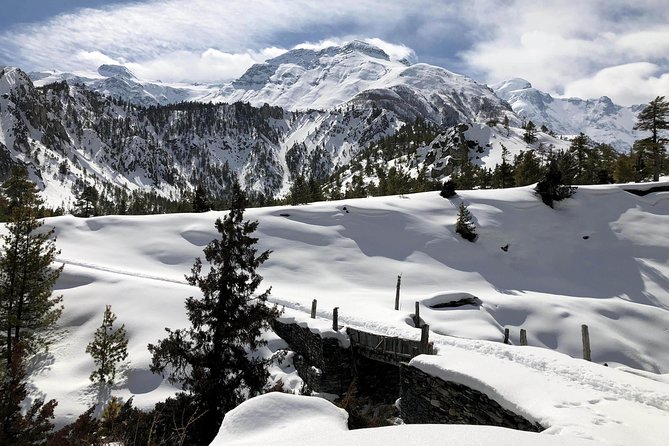
The route descends from Muktinath to Jomsom at 2,743 meters in about five to six hours. After the pass, this lower elevation should feel welcome, though the walk is not simply an easy stroll.
Jomsom is a practical stopping point in the Kali Gandaki area. The itinerary places you in a drier part of the Annapurna region, far removed from the forested valleys near Jagat.
This stage also gives your body a chance to recover from the high pass. If your knees are tired from the descent, use the evening to rest rather than treating Jomsom as another opportunity to overdo it.
Day 11: Jomsom to Tatopani and the hot springs
Day 11 uses road transport from Jomsom to Tatopani, a four to five-hour journey. Tatopani is known for its natural hot spring, which gives the trip a welcome change of pace after the cold and altitude above Thorong La.
The route is not a pure walking circuit because road travel is built into the schedule. That is worth understanding before booking. The drive saves time and connects the high dry country with the lower valley, but anyone seeking an entirely foot-powered route may prefer a different plan.
Tatopani sits at about 1,290 meters, so the descent is substantial. The warmer air and hot spring can feel like a reset before the final uphill section toward Ghorepani.
Day 12: The hard climb to Ghorepani
The walk from Tatopani to Ghorepani takes about seven to eight hours and climbs to 2,750 meters. This is one of the more demanding days because the route gains a lot of height after the lower stop at Tatopani.
Ghorepani is best known as the base for the early morning walk to Poon Hill. The overnight stay positions you well for the next day, though it also means an early start after a tiring climb.
This section gives the circuit a final change in character. You leave the hot spring valley and return to a higher, cooler setting with a strong mountain viewpoint ahead.
Day 13: Poon Hill, Nayapul, and Pokhara
The day begins with an early hike to Poon Hill at 3,210 meters. You then trek down to Nayapul, a seven to eight-hour day in total, before taking a taxi to Pokhara.
Poon Hill is the closing scenic highlight. The early start is part of the point, giving you a chance to reach the viewpoint at the start of the day. The schedule does not promise a particular sunrise or exact mountain visibility, so weather will shape the experience.
The descent to Nayapul is followed by private transport to Pokhara at 822 meters. This is a welcome finish to the walking portion. Pokhara gives you a lower, more comfortable place to recover before returning to Kathmandu.
Day 14: Returning from Pokhara to Kathmandu
The final day is a drive from Pokhara to Kathmandu, rising from about 822 meters to 1,400 meters. Like the opening transfer, it may take much of the day, so avoid booking a tight onward connection unless you have confirmed the timing.
The journey closes a route that has crossed several distinct zones: humid lower valleys, forest, high dry country, a major pass, a pilgrimage center, hot springs, and a hilltop viewpoint. That variety is the main reason this circuit remains such a strong choice.
Guides, group size, and the human side of the trek
The guide is one of the most important parts of this experience. You are assigned a government-licensed guide, and the strongest praise goes to the human qualities that matter on a hard trek: patience, clear communication, encouragement, and care.
Rabin is praised for staying close to a solo trekker and helping with decisions. Santosh is described as attentive and good at explaining the next day. Ganesh receives particular credit for patience and encouragement during the Thorong La crossing. Sandip is praised for cultural explanations and steady support, while Chakra, also called CK, is noted for sharing information about local traditions, mountains, and Nepali language.
Those details give you a useful picture of what good guiding should mean here. It is not only route finding. It is knowing when to explain, when to slow down, and when to take your concerns seriously.
The tour is private, so only your own group participates. That allows more personal attention, but it does not guarantee a gentle pace. You should discuss your fitness and expectations before setting out.
Food, lodging, and extra costs
Teahouse accommodation is included. These are simple mountain lodges, not full-service hotels, and conditions can become basic at higher elevations. The itinerary does not promise private rooms, attached bathrooms, heating, or charging access, so budget for the possibility of paying extra for comforts such as showers and battery charging.
Three standard meals are included during the trek: breakfast, lunch, and dinner. That is a strong part of the package price, especially over 14 days. Personal drinks and extra water are not included, and bottled or boiled water must be paid for separately.
You should also allow money for phone calls, laundry, bar bills, and tips. Rescue and travel insurance are excluded. A porter is not included, but you can add one if carrying your own bag would make the high sections less manageable.
Who should book this Annapurna Circuit trek?
This trip suits you if you want the classic Annapurna route but do not want to arrange permits, transport, lodges, meals, and daily route decisions yourself. It is especially useful for a solo visitor, a small private group, or anyone who values a guide’s support at altitude.
You need moderate physical fitness, but that phrase should not be read as easy. Walking times range from four to eight hours, the route reaches 5,416 meters, and the Thorong La day can be cold and tiring.
I would not choose this trip if you want a relaxed holiday with occasional walks, luxury accommodation, or a fully road-free route. The long drives, simple teahouses, high pass, and unpredictable mountain conditions are central to the experience.
The cancellation terms are worth noting before you pay. You can receive a full refund if you cancel at least six full days before the start time. Cancellation two to six full days ahead allows a 50 percent refund, while cancellation less than two full days ahead receives no refund.
Should you book it?
I would book this trek if you want a well-known Himalayan route with the main practical pieces arranged and a private guide beside you. The $1,175 price is fair because it covers transport, permits, accommodation, meals, and guide services across a demanding 14-day route.
Go in prepared for cold, altitude, basic lodging, long road journeys, and extra daily expenses. If you accept those limits, the mix of Thorong La, Muktinath, Tatopani, Poon Hill, and the repeated praise for guides such as Santosh, Ganesh, Rabin, Sandip, and Chakra makes this a strong choice for an active Nepal trip.
FAQ
Where does the Annapurna Circuit Trek begin?
The experience begins in Kathmandu, Nepal. The first scheduled transfer is by bus from Kathmandu to Jagat via Besisahar.
How long does the trek last?
The itinerary lasts approximately 14 days, including the drives from Kathmandu to Jagat, Jomsom to Tatopani, Nayapul to Pokhara, and Pokhara to Kathmandu.
What is the highest point on the route?
The highest point is Thorong La Pass at 5,416 meters, or about 17,769 feet.
Is there an acclimatization day?
Yes. Day 6 is an acclimatization day in Manang before the route climbs toward Yak Kharka and Thorong Phedi.
What accommodation is included?
Teahouse accommodation during the trek is included. The available information does not specify room type or bathroom arrangements.
Are meals included?
Yes. Three standard meals are included during the trekking portion: breakfast, lunch, and dinner.
Is transportation included?
Yes. Bus transportation from Kathmandu to Jagat and from Jomsom to Tatopani is included. Private transportation from Nayapul to Pokhara is also included.
What costs are not included?
Travel and rescue insurance, personal expenses, water, phone calls, laundry, bar bills, battery charging, showers, tips, and any porter service are not included.
New in the Kathmandu listings
- Traditional Momo Making Class★ 5.0 · 10 reviews
- Kathmandu: Ancient City Kirtipur & Pharping Monastery Tour★ 5.0 · 2 reviews
- Kathmandu to Pokhara Premium sofa bus ticket★ 4.0 · 17 reviews
- Women Empowerment Project(Nepali cooking class & jewelry workshop★ 5.0 · 15 reviews
- 7-Day Langtang Valley Trek from Kathmandu★ 5.0 · 1 review
- Kathmandu 2 Nights 3 Days Chitwan Jungle Safari Tour★ 5.0 · 9 reviews
- Yoga Experience Day Trip with Private Transfer From Kathmandu★ 4.0 · 2 reviews
- Wildlife Adventure in Chitwan Nepal★ 4.0 · 4 reviews
Annapurna Circuit Treks, compared.
15-Day Private Annapurna Circuit Trek from Kathmandu
Read our review →
Annapurna Circuit Trek with Tilicho Lake (16 Days)
Read our review →Browse the lists this tour appears in