
REVIEW · ANNAPURNA CIRCUIT TREKS
Kathmandu: 9-Day Annapurna Circuit Trek via Thorong La Pass
This trek earns its views the hard way. I like the mix of changing scenery, from terraced valleys and pine forests to Tibetan-style villages and high alpine ground, and I like that the plan includes an acclimatization day in Manang rather than rushing straight toward Thorong La. The care shown by guides such as Parkash, Sishir, Chakra, Ramit, Ghanashyam, Binod, and others is another strong point, especially when altitude and tired legs begin to matter.
I also like the practical transport plan, which gets you from Kathmandu or Pokhara toward the trail without asking you to arrange every bus and jeep yourself. The catch is simple: Thorong La is a serious high-altitude crossing, and nine days leaves little spare time if weather, road delays, or altitude trouble disrupts the schedule.
In This Review
- Key points at a glance
- What this Annapurna trek is really like
- Day 1: Kathmandu or Pokhara to Dharapani
- Day 2: Dharapani to Chame at 2,670 meters
- Day 3: Chame to Upper Pisang
- Day 4: Upper Pisang to Manang at 3,540 meters
- Day 5: Acclimatization around Manang
- Day 6: Manang to Yak Kharka at about 4,050 meters
- Day 7: Yak Kharka to Thorong Phedi at 4,450 meters
- Day 8: Thorong La Pass to Muktinath
- Day 9: Muktinath to Pokhara by bus
- Teahouses, meals, and comfort
- Guides and support from MTA Trekking
- When to go and what to pack
- Is nine days enough for you?
- Should you book the Annapurna Circuit via Thorong La?
- FAQ
- How high is Thorong La Pass?
- How long is the Annapurna Circuit trek?
- How many hours do I walk each day?
- When does the pass day begin?
- Is there an acclimatization day?
- What accommodation is provided?
- Are meals included?
- Is a porter included?
- What is the best season for this trek?
- Is travel insurance included?
Key points at a glance
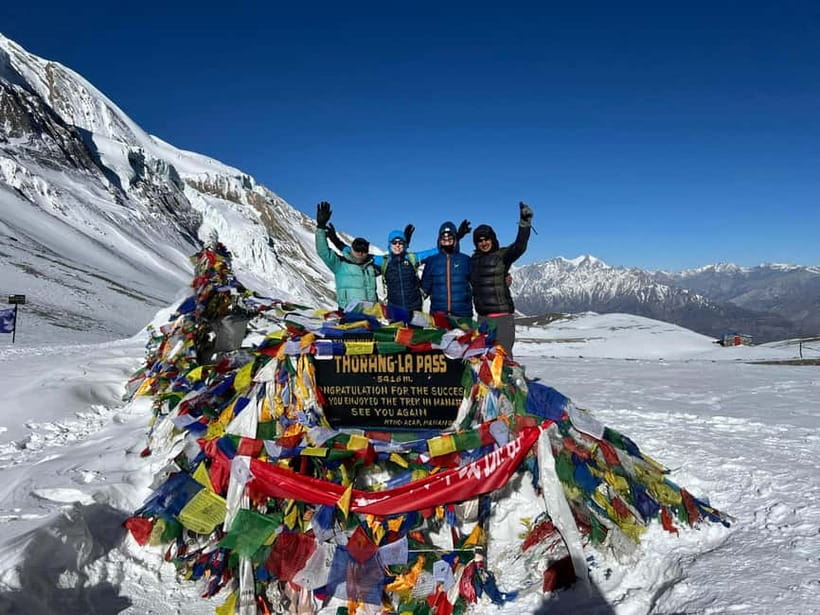
- Thorong La Pass reaches 5,416 meters: The pass day begins around 4:00 AM and is the hardest part of the trek.
- The scenery changes every day: Expect green valleys, pine and oak woods, rocky high country, Tibetan-style villages, and views of Annapurna, Dhaulagiri, Machapuchare, Tilicho Peak, and Lamjung Himal.
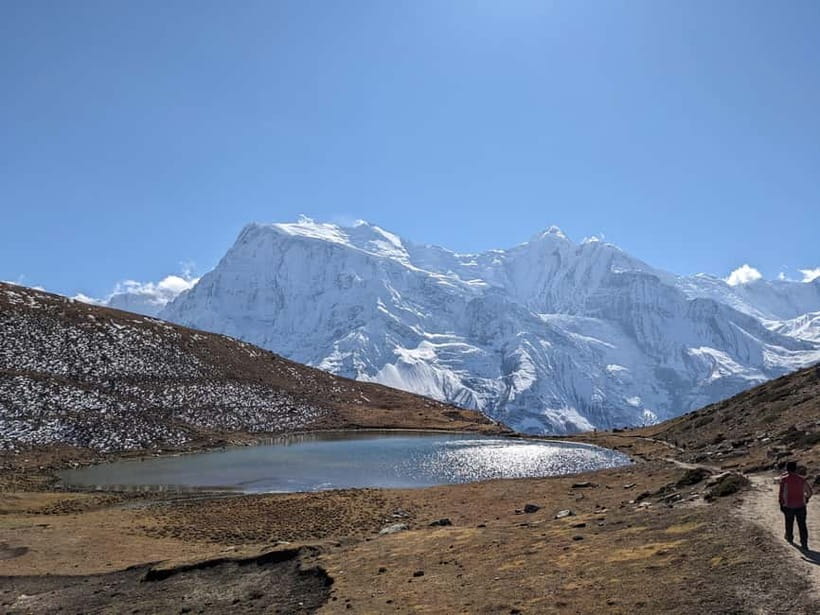
- Manang provides a needed pause: The acclimatization day can include a hike to Gangapurna Glacier Lake or nearby icefalls.
- Upper Pisang is a highlight: Its mountain setting and local culture make it more than just an overnight stop.
- Muktinath adds cultural depth: The sacred site matters to both Hindus and Buddhists, giving the trek more purpose than scenery alone.
- Basic lodging is part of the deal: Teahouses are simple, food is fairly similar from day to day, and a proper sleeping bag is important in cold conditions.
What this Annapurna trek is really like
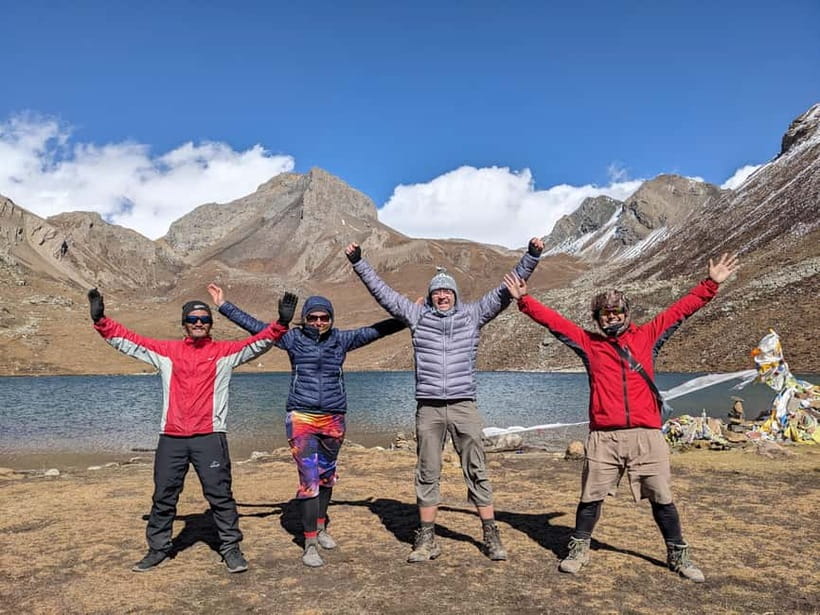
This is a fast, demanding version of the Annapurna Circuit. You cover the central route in nine days, with long drives at the beginning and end and a major pass crossing near the finish.
I would choose this trip for the combination of scenery and structure. You have an English or Hindi-speaking guide, permits and TIMS paperwork handled, teahouse lodging arranged, and transport organized between the walking sections. That takes away much of the usual planning work.
The pace still deserves respect. You walk for roughly four to eight hours on most trekking days, reaching 5,416 meters on the pass day. Good fitness and previous trekking experience are important, and you should not treat the route as a casual mountain holiday.
The private-group format is useful here. Your guide can keep an eye on your pace, hydration, rest, and response to altitude. Sishir, in particular, is praised for allowing enough rest and making sure the pace supported acclimatization. Parkash also made a point of checking in and offering help with a bag during the toughest sections.
More Annapurna Circuit treks:
- Kathmandu: 10-Day Annapurna Circuit Trek via Thorong La Pass
★ 5.0 · 10 reviews - Kathmandu/Pokhara: Annapurna Circuit Trek 10 days
★ 5.0 · 6 reviews - Annapurna Circuit Trek With Tilicho Lake :Best Trek in Nepal
★ 5.0 · 4 reviews
Day 1: Kathmandu or Pokhara to Dharapani
The opening day is mostly about transport. You travel by public bus to Besisahar, covering about 175 kilometers in seven to eight hours, then change to a shared local jeep for Dharapani.
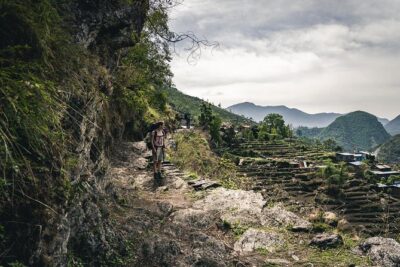
This is not a glamorous start, but it gives you an early look at Nepal beyond the city. The road passes rolling valleys, terraced fields, small villages, and distant mountain views. I like this gradual introduction because you begin seeing how people live in the hills before the walking begins.
The bus and jeep combination can be tiring. Road travel in the mountains is slower and less polished than the distance on a map suggests. Keep water, snacks, sun protection, and a light layer within reach rather than buried in your main luggage.
You spend the night in a basic teahouse. The accommodation is practical, not luxurious, and the overnight stop prepares you for the more remote lodges ahead.
Day 2: Dharapani to Chame at 2,670 meters
The first walking day covers about 13 kilometers in roughly six hours. You pass through Bhote villages, pine and oak forests, streams, and open fields as the route begins to feel like a true Himalayan trek.
Chame is where the high mountain character becomes more noticeable. The air is cooler, the settlement is surrounded by peaks, and the walking has a steady uphill rhythm without yet reaching the route’s most severe altitude.
You should use this day to settle into your boots and pack. It is tempting to walk quickly while you still feel fresh, but a measured pace helps later. Your guide can also explain how the trail, local communities, and altitude will shape the days ahead.
Day 3: Chame to Upper Pisang
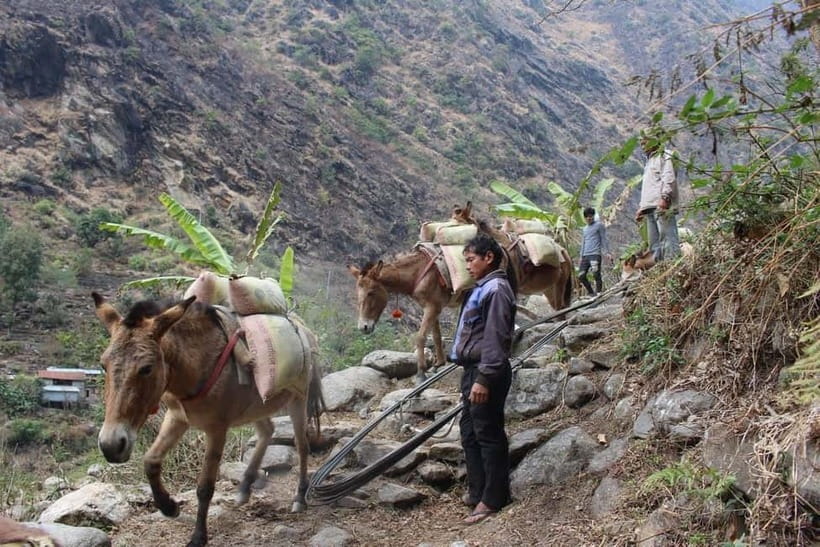
The route to Upper Pisang takes about five to six hours and covers approximately 15 kilometers. You climb through the Bhratang Valley, with views toward Lamjung Himal and the surrounding peaks.
Upper Pisang is one of the most appealing stops on the route. It has a strong mountain setting and a quieter village feel, giving you time to look around rather than simply eat and sleep. Meeting local people and seeing Himalayan customs up close is part of the value here.
The path is steadily gaining height, so the scenery changes along with your breathing. Pay attention to headaches, unusual fatigue, or nausea, and tell your guide early if something feels wrong. Altitude problems are easier to manage when they are reported promptly.
More walking in the hills of Pokhara:
- Poon hill Trek 3 days
★ 5.0 · 176 reviews - Trekking in Annapurna/Langtang/Everest/Upper Mustang regions
★ 5.0 · 161 reviews - Pokhara: 4-Day Ghorepani, Poonhill & Ghandruk Mountain Trek
★ 5.0 · 132 reviews - Ghorepani – Poon Hill Trek 3N-4D
★ 5.0 · 125 reviews
Day 4: Upper Pisang to Manang at 3,540 meters
This six-hour, 16-kilometer day takes you through forests and valleys toward Manang. Along the way, you may see Tilicho Peak, Annapurna III, and Annapurna IV.
Manang is a major pause point because the route is now entering much higher country. The village gives you a chance to rest, eat, and prepare for the pass section rather than treating each overnight stop as just another bed.
The schedule lists the next acclimatization day at about 4,050 meters, although Manang itself is also described at 3,540 meters. That difference may reflect a nearby hike or a simple description issue, so I would ask the operator to confirm the exact acclimatization plan before departure.
Day 5: Acclimatization around Manang
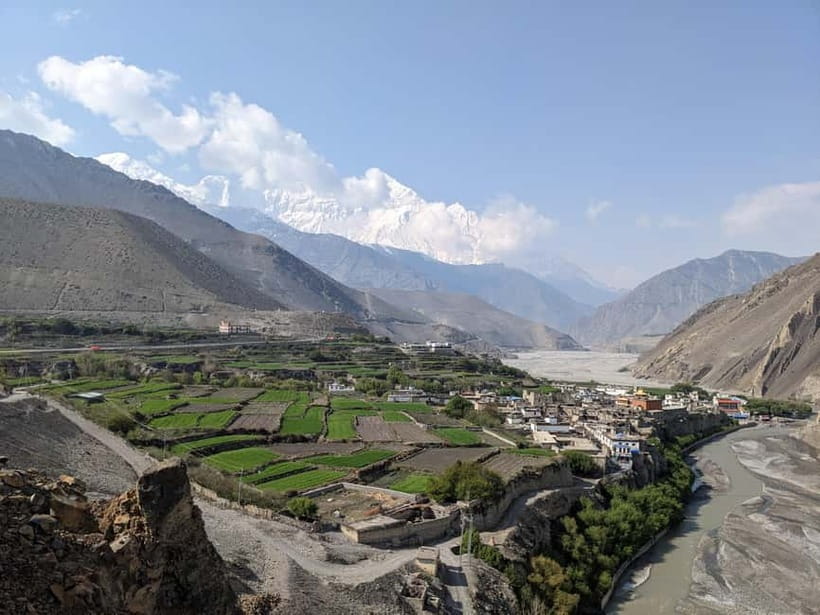
This is one of the smartest parts of the schedule. You have a rest day before moving toward Yak Kharka and Thorong Phedi, where the air is thinner and the route becomes more exposed.
If you feel well, the optional hike to Gangapurna Glacier Lake or nearby icefalls gives you a useful reason to walk without adding another overnight move. You get mountain views, a little exercise, and time for your body to adjust.
Do not turn this into a race. The aim is to help your body handle altitude, not to collect another strenuous hike. Drink regularly, eat even if your appetite is reduced, and tell your guide about any symptoms.
Several strong guide reports point to this day as a real benefit. One guest had hoped to complete the trek in eight days, but the guide recommended staying in Manang to reduce the chance of altitude sickness. That is the kind of practical judgment you want on a high pass trek.
Day 6: Manang to Yak Kharka at about 4,050 meters
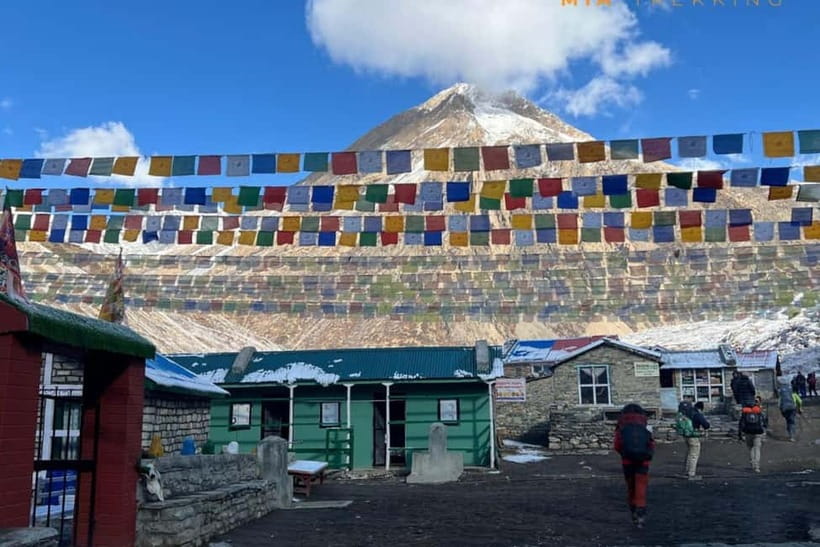
The walk to Yak Kharka is shorter, about seven kilometers and four hours. You move through alpine pastures with broad mountain views and noticeably colder air.
This shorter day helps you gain height without exhausting yourself before the pass. It may feel deceptively easy compared with the longer walks below, but altitude changes the equation. A modest uphill can feel like hard work when you are above 4,000 meters.
Yak Kharka is a functional overnight stop. Expect a simple teahouse, basic meals, and a cold evening. The trip information specifically warns that sleeping conditions can be very cold, and one useful piece of advice is to bring a proper sleeping bag rather than relying only on lodge bedding.
Day 7: Yak Kharka to Thorong Phedi at 4,450 meters
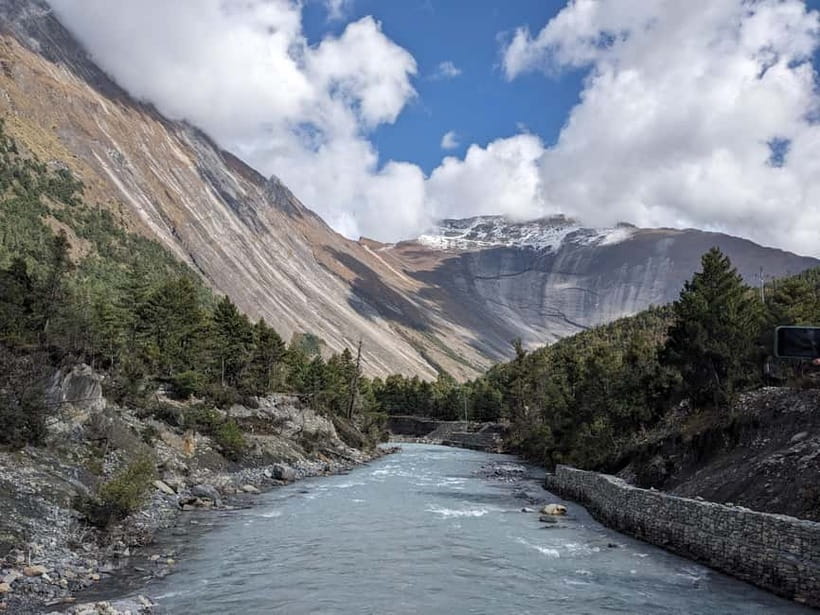
This is another short walking day, about six kilometers in four to five hours. The route follows rocky paths and suspension bridges toward Thorong Phedi, the base for the pass crossing.
The main task is not distance. It is saving energy for the next morning. Walk slowly, keep your breathing steady, and resist the urge to push hard just because the day is short.
Thorong Phedi is a basic staging point, not a place for comfort or entertainment. You eat, organize your clothing and daypack, and try to sleep before the early start. A headlamp, warm layers, gloves, water, and snacks should be ready before you turn in.
Day 8: Thorong La Pass to Muktinath
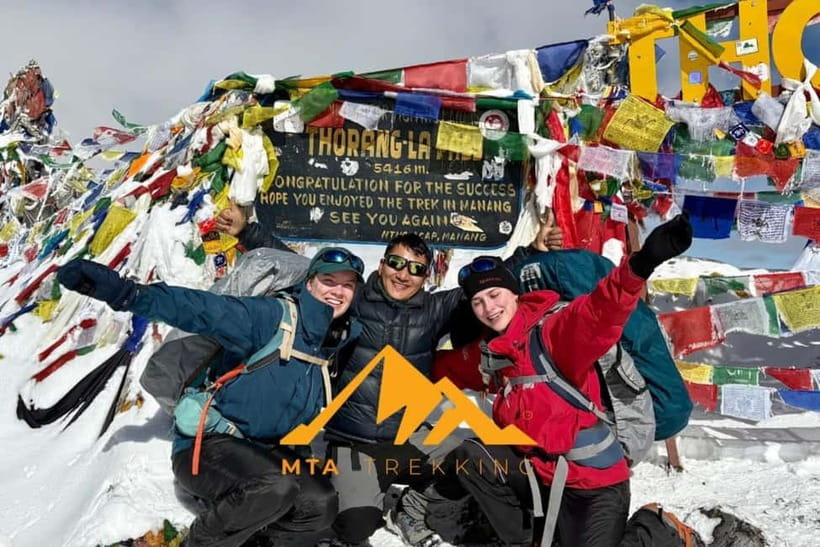
This is the defining day. You leave around 4:00 AM to reach Thorong La before strong winds build later in the day.
The climb to 5,416 meters is physically demanding. The ascent can feel slow and exhausting, while the descent to Muktinath can seem surprisingly long on tired legs. One guide and guest described the crossing as the moment when you may question your life choices, which is funny because it is also exactly the right warning.
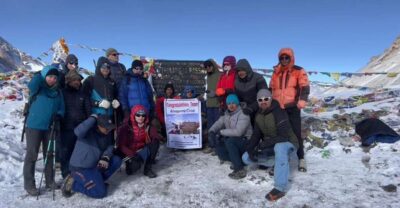
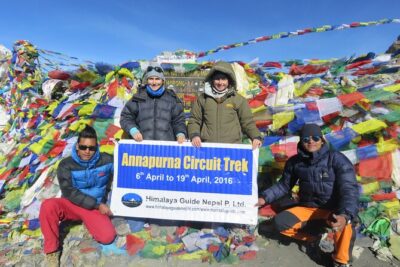
At the top, prayer flags and huge Himalayan views mark the achievement. The pass offers the kind of wide mountain setting that makes the effort worthwhile, but you should not assume the hardest part ends at the summit. You still descend steadily to Muktinath, usually arriving around midday or early afternoon.
Muktinath brings a cultural reason to celebrate. The temple is sacred to both Hindus and Buddhists, and its importance gives the route a meaningful finish beyond the physical challenge. You stay overnight after lunch.
There is an optional trip to Tatopani hot springs after the pass. Taxi costs are about USD 50 and are paid by participants, so ask for the current arrangement before counting on it. After a long descent, warm water may sound perfect, but the extra transport is not included.
Day 9: Muktinath to Pokhara by bus
The return to Pokhara takes about five to six hours and covers roughly 110 kilometers by bus. The road offers a final look at the mountain region as you leave the trail behind.
The transport details need checking. The day plan describes travel from Muktinath to Pokhara, while the inclusions specify a Jomsom to Pokhara bus. Muktinath and Jomsom are connected by local road transport, but the exact pickup point matters, so confirm whether a transfer to Jomsom is included.
The package also includes one night at Hotel Orchid in Pokhara, a farewell dinner with traditional Nepali food in Lakeside, and a luxury tourist air-conditioned sofa-seater bus from Pokhara to Kathmandu. Those extras are valuable if your wider plan includes Kathmandu, but confirm which transport applies to your booking and group size.
Teahouses, meals, and comfort
You spend eight nights in teahouse or lodge accommodation during the trek. This means simple rooms and basic facilities, with comfort becoming more limited as you reach higher elevations.
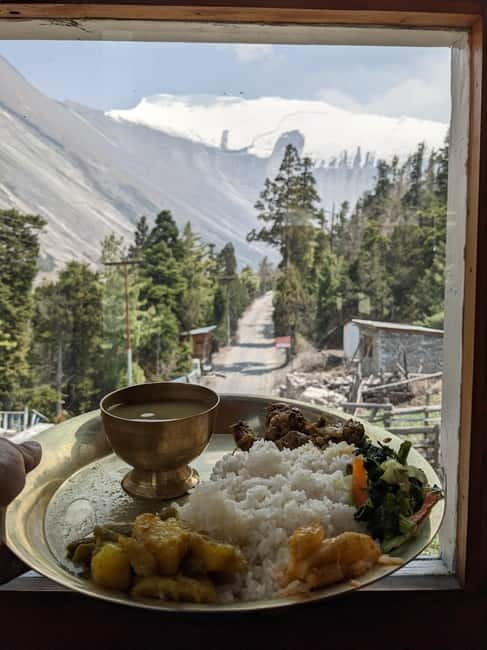
The food is described as tasty but fairly similar throughout. That is normal for a remote mountain route, and you should see meals as fuel rather than a major reason to book the trip. Full Package bookings include breakfast, lunch, and dinner during the trek.
Bring cash for personal extras such as bottled or boiled water, showers, battery charging, laundry, phone calls, bar bills, and snacks. Drinks are not included, and alcohol is not allowed under the stated rules.
A warm sleeping bag is one of the most useful purchases or rentals you can make. Cold conditions were a repeated practical concern, especially in the higher teahouses.
Guides and support from MTA Trekking
The guide service is one of the strongest parts of this trek. MTA Trekking provides an authorized English-speaking guide, with Hindi also available, and guide services include insurance coverage for staff.
The guides named in the feedback received particular praise for patience, kindness, trail knowledge, humor, and attention to safety. Sishir helped with pacing and hydration, Chakra recommended acclimatization instead of forcing an eight-day schedule, and Parkash regularly checked on a guest and offered to carry part of a bag.
A porter is available for an additional cost. That can make a major difference on the pass section, especially if you are carrying a sleeping bag, warm layers, and several days of personal gear.
The trip includes permits, paperwork, TIMS fees, government taxes, staff meals, accommodation, salaries, equipment, insurance, and transport. That package reduces surprise costs, though it does not remove personal spending or the need for rescue and travel insurance.
When to go and what to pack
The best periods are spring, from March to May, and autumn, from September to November. Spring brings warmer conditions and flowering plants, while autumn usually offers the clearest views and mild temperatures.
Winter can be cold and snowy, with possible trail closures. The monsoon months, June through August, bring heavy rain and slippery trails, making them a poor choice for this route.
Bring:
- Comfortable trekking boots
- Quick-dry clothing and warm layers
- A sleeping bag
- Sunglasses, sun hat, and sunscreen
- Comfortable clothes for evenings
- A passport or accepted copy
- Water and personal snacks
- Essential high-altitude trekking gear
Travel insurance must cover high-altitude trekking. It should also address rescue, since ordinary travel insurance may not cover a pass at 5,416 meters.
Is nine days enough for you?
Nine days can work if you are fit, prepared, and comfortable with a brisk schedule. The built-in acclimatization day makes the plan more sensible than simply forcing the pass into an eight-day rush.
Still, there is little flexibility. You have a long opening transfer, several consecutive walking days, a very early pass start, and a road journey at the end. If you prefer shorter days, extra rest, or more time in villages, a longer version of the circuit would be easier on your body.
This trip suits adults with good fitness and some trekking experience. It is not suitable for children under seven, pregnant women, people with altitude sickness, or people with high blood pressure.
The published information does not give a tour price, so I cannot judge the value by cost alone. Based on the inclusions, the package has solid practical value if you want permits, guides, transport, teahouses, meals on a Full Package booking, staff costs, Pokhara lodging, and a farewell dinner handled together.
Should you book the Annapurna Circuit via Thorong La?
I would recommend it if your priority is crossing Thorong La in a compact, organized trip and you accept basic accommodation, cold nights, long walking days, and unpredictable mountain conditions.
The strongest reasons to book are the varied scenery, the Manang acclimatization stop, the cultural visit to Muktinath, and the attentive guide service. I would contact MTA Trekking before paying to confirm the Muktinath to Jomsom transport detail, the exact Manang elevation plan, porter cost, and whether your booking includes full meals.
Book this trek for the challenge, not for comfort. If you prepare properly and listen to your guide, the pass crossing can become the moment you remember longest.
FAQ
How high is Thorong La Pass?
Thorong La Pass reaches 5,416 meters above sea level.
How long is the Annapurna Circuit trek?
This version lasts nine days, including transport from the Kathmandu or Pokhara area and the return journey to Pokhara.
How many hours do I walk each day?
Walking days range from about four to eight hours. The longest and hardest day is the crossing from Thorong Phedi to Muktinath via Thorong La.
When does the pass day begin?
The group starts around 4:00 AM to reach Thorong La before the winds become stronger.
Is there an acclimatization day?
Yes. Day 5 is set aside for acclimatization around Manang, with an optional hike to Gangapurna Glacier Lake or nearby icefalls.
What accommodation is provided?
The trek includes eight nights in teahouses or lodges. The package also includes one night at Hotel Orchid in Pokhara.
Are meals included?
Breakfast, lunch, and dinner during the trek are included for Full Package bookings. Soft and hard drinks are not included.
Is a porter included?
A porter is available at an additional cost. The authorized trekking guide is included.
What is the best season for this trek?
Spring, from March through May, and autumn, from September through November, are listed as the best seasons. Winter can bring snow and closures, while monsoon conditions can make trails wet and slippery.
Is travel insurance included?
No. You must arrange your own travel and rescue insurance, and it should cover high-altitude trekking.
New in the Pokhara listings
- Pokhara: Pokhara Highlights Tour by Bus★ 3.6 · 10 reviews
- Discover Pokhara in Style: Private Vehicle Service with Driver★ 5.0 · 5 reviews
- Private 4 Day Poon Hill Trek from Pokhara★ 5.0 · 16 reviews
- Multi-Day Tour from Pokhara, Poon Hill and Mulde Trek★ 5.0 · 1 review
- Pokhara in 5 Hours: Lake, Museum, Cave, Falls & Pagoda Hill★ 4.5 · 16 reviews
- 4 Day Mardi Himal Base Camp Trek from Pokhara★ 5.0 · 18 reviews
- From Pokhara Full Day Entire Pokhara Tour with Guide★ 5.0 · 1 review
- Ultralight Flight: Into The Heart Of The Mountains (90 min)★ 5.0 · 1 review
Annapurna Circuit Treks, compared.
15-Day Private Annapurna Circuit Trek from Kathmandu
Read our review →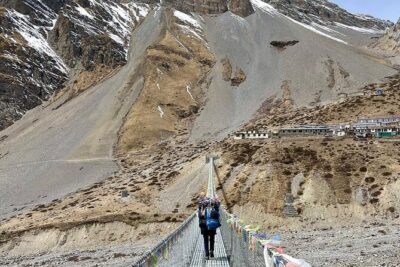
Annapurna Circuit Trek with Tilicho Lake (16 Days)
Read our review →Browse the lists this tour appears in