
REVIEW · ANNAPURNA CIRCUIT TREKS
15-Day Private Annapurna Circuit Trek from Kathmandu
Catch the Himalaya on foot. This 15-day private Annapurna Circuit trek links river valleys, mountain villages, Thorong La Pass, Muktinath, and Poon Hill in one demanding but varied journey. I like the family-run feel, including the chance to learn simple Nepali phrases along the way, and I like that airport transfers, permits, meals, transport, and a guide are bundled into the $995 price. The main caution is the pace: several days are listed at around 12 hours, so you need solid fitness and a real appetite for long mountain days.
You will travel privately with only your own group, which gives the schedule more flexibility than a large departure. The company has earned strong praise for friendly, caring service, with guides and porters such as Pratap, Dinesh, Binute, and Bashudev singled out for safety, humor, and personal attention. Still, ask for a precise day-by-day plan before paying, since some stop names and transport details are presented in a slightly confusing way.
In This Review
- Key points to know before booking
- Why this Annapurna trek works as a private journey
- Kathmandu to Bulbule: a long first day on the road
- Ghermu and Chamje: rivers, bridges, and steep village paths
- Dharapani and Chame: entering the higher mountain country
- Pisang to Manang: choose the route with your guide
- The Manang acclimatization day matters
- Yak pastures, Phedi, and the Thorong La crossing
- Muktinath and Jomsom: a new side of Nepal
- Tatopani, Shikha, and the return to forest trails
- Magar villages and Ghorepani’s rhododendron forests
- Poon Hill sunrise and the final ride to Pokhara
- What the $995 price really covers
- Who should book this trek?
- Should you book the 15-day Annapurna Circuit?
- FAQ
- How long is the Annapurna Circuit experience?
- Is airport pickup included?
- Is this a private tour?
- What is the highest point of the trek?
- Are meals included?
- Is accommodation included?
- Is a porter included?
- What transportation is included?
- Can I cancel for a full refund?
Key points to know before booking
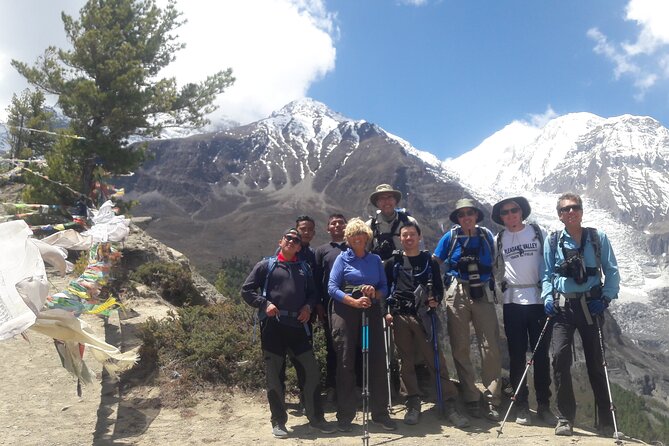
- Thorong La Pass reaches 5,416 meters: The high point is the physical and planning center of the trek.
- Meals and 15 nights of basic lodge accommodation are included: That keeps daily costs easier to control.
- A Manang acclimatization day is built in: This is essential before the pass crossing, not wasted time.
- The trek ends with Poon Hill sunrise: You get a second mountain viewpoint after completing the circuit.
- Transport is part of the package: Bus travel from Kathmandu, local transport, a car to Pokhara, and a tourist bus back are included.
- Porter service costs extra: You can request one, but it is not included in the advertised price.
Why this Annapurna trek works as a private journey
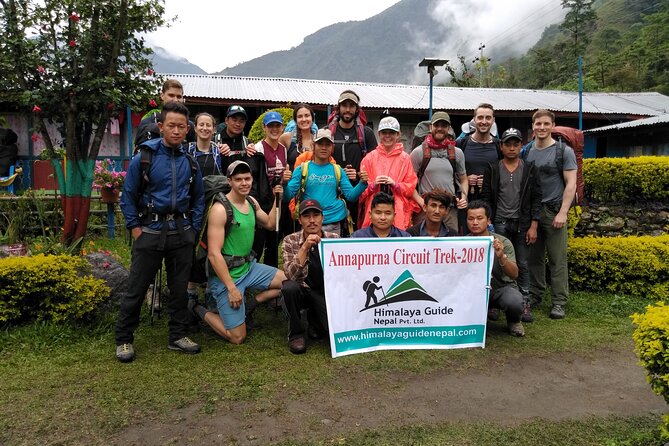
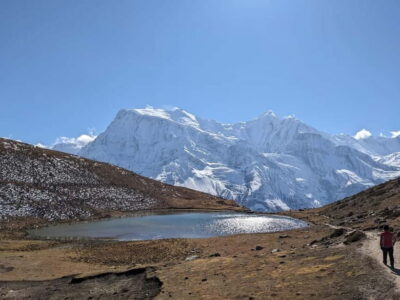
The Annapurna Circuit is not one single kind of walk. It changes from busy road corridors and river valleys to pine forests, high mountain settlements, dry slopes, and broad views from the pass. This trip gives you the full arc in 15 days, starting and ending in Kathmandu.
I like the private format because the group does not have to match the speed of strangers. That matters on steep days, especially around Thorong La. You can also ask your guide to explain local customs, village life, and useful Nepali words. The family-run company places special emphasis on a homely atmosphere, which should appeal to you if you prefer personal contact over a large commercial operation.
The tradeoff is that private does not mean leisurely. The published schedule includes many 12-hour days, and the highest parts of the route require patience. Accommodation is described as normal lodge accommodation, so you should expect practical mountain lodging rather than hotel comfort.
More Annapurna Circuit treks:
- Annapurna Circuit Trek with Tilicho Lake
★ 5.0 · 368 reviews - Annapurna Circuit Trek
★ 5.0 · 94 reviews - Annapurna Circuit Trek
★ 5.0 · 35 reviews
Kathmandu to Bulbule: a long first day on the road
Your first major move is by local bus from Kathmandu toward Besisahar and Bulbule. The journey follows the Trisuli River and crosses the river at Muglin before continuing along the Marshyangdi route. It is a long road day, listed at roughly six to seven hours for the bus portion, and road conditions can affect the experience.
This opening is useful because it gets you quickly from the capital into the trekking region without adding a separate acclimatization night. It is not the polished part of the trip. You will be using public transport, so keep expectations practical and keep your essential items close.
From Bulbule and the lower Marshyangdi valley, the route begins to feel more like a village trek. You will see how mountain communities connect to roads, rivers, farms, and footpaths rather than entering an isolated wilderness from the first morning.
Ghermu and Chamje: rivers, bridges, and steep village paths
The walk toward Ghermu begins after breakfast and follows villages, roads, and the east bank of the Marshyangdi River. A climb toward Bahun Danda, a Brahmin settlement at about 1,270 meters, provides an early hill section and a place for lunch.
This is a good introduction to the rhythm of the circuit. You are not simply walking through scenery. You are moving between settlements, crossing slopes, and adjusting to the steady rise in elevation. The day can be long, listed at around 12 hours, so you should not treat the lower valley as an easy warm-up.
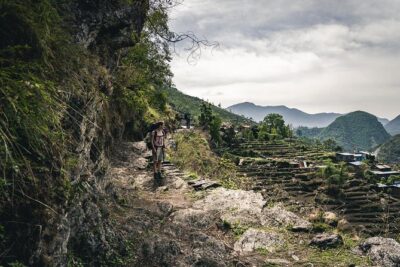
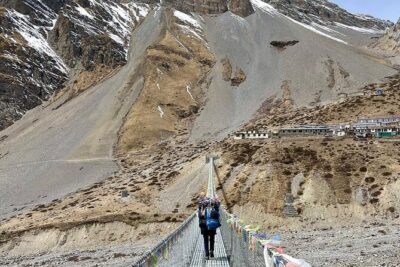
From Ghermu, the route drops toward Syange, crosses a suspension bridge, and climbs again toward Chamje. The trail includes a steep section along a cliff face. That combination of downhill walking, bridge crossings, and sharp uphill work is typical of the early circuit: the altitude is still moderate, but your legs are already working hard.
Dharapani and Chame: entering the higher mountain country
The route toward Chame passes through Dharapani, Bagarchhap, and Danque. A stone entrance chorten marks Danque, and the villages begin to show more of the traditional mountain character associated with the upper Marshyangdi valley.
At Chame, the scenery changes again. The route moves through forest and a narrow valley, then crosses the Marshyangdi Khola near 3,038 meters. A dramatic curved rock face rises about 1,500 meters from the river, giving this section a strong sense of scale.
This is also the point where altitude deserves your full attention. The day is again described as long, and the rise from the lower valley is substantial. Walk at a pace you can maintain, drink regularly, and tell your guide early if you feel unwell. A private guide can respond more easily when you give clear information instead of trying to be heroic.
More walking in the hills of Kathmandu:
- Everest Base Camp Trek – 14 Days
★ 5.0 · 1,499 reviews - Everest Base Camp Trekking
★ 5.0 · 485 reviews - Nagarkot Sunrise View and Day Hiking from Kathmandu
★ 5.0 · 471 reviews - Everest Base Camp Trekking – 13 Day
★ 5.0 · 365 reviews
Pisang to Manang: choose the route with your guide
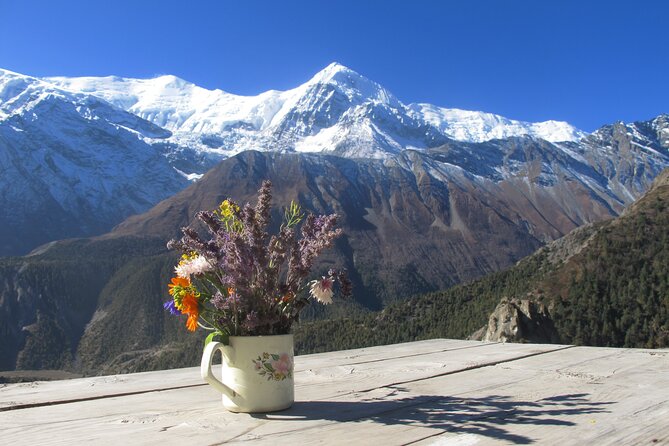
The route from Pisang toward Manang offers two paths. One follows the Marshyangdi Khola, while another crosses the river and later rejoins near Mungji. The higher or alternate route passes through pine forest and provides a different angle on the valley before the paths meet again.
The schedule places Manang across more than one day, with time around the village to explore and acclimatize. That may look repetitive on paper, but Manang is the right place to slow down. At roughly the threshold of the high-altitude section, it gives your body a better chance to adjust before the pass.
You may also have time for optional local visits. One listed stop is a lama or monk visit with a 100-rupee donation. Treat this as an optional cultural moment, not a required fee. The value of Manang is less about checking off attractions and more about letting the trip breathe before the hardest climb.
The Manang acclimatization day matters
Do not skip the rest day in Manang. The plan specifically sets aside a day before continuing toward Thorong La at 5,416 meters, and this is one of the most important parts of the schedule.
You can use the day for an optional exploration, a short walk, or simply rest. The supplied details do not promise a fixed excursion, so ask your guide what is practical for your group and current conditions. A gentle outing may be useful, but exhausting yourself defeats the purpose.
I appreciate that acclimatization is included rather than treated as an optional extra. The price also includes breakfast, lunch, and dinner for all 15 days, so you do not need to spend the rest day hunting for meals or arranging your own schedule.
Yak pastures, Phedi, and the Thorong La crossing
After Manang, the trail climbs toward Tanki and passes through Ghungsang before leaving the Marshyangdi valley for the Jarsang Khola valley. You move through pastures and scrub, with fewer settlements and a greater feeling of exposure.
The final approach leads toward the last camp before the pass. The route follows yak-grazing ground, drops briefly toward the Jarsang Khola, and climbs to a tea shop near Durali. The exact stop names in the schedule are a little muddled, so confirm the overnight point with the company before departure.
The Thorong La day begins early. That is necessary because it is both a high climb and a long descent. The pass itself is the trip’s major achievement, but the descent can be just as tiring as the ascent. You should expect cold, thin air and a day that demands steady pacing rather than speed.
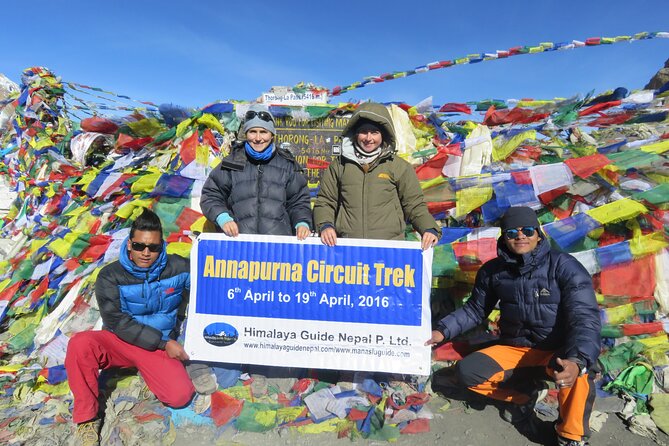
The pass crossing is included in the route, but success depends on weather, health, and local conditions. Your guide’s role is especially valuable here. Past clients have praised guides including Pratap for care and cheerful company, while Dinesh and Binute have been praised for putting safety first. Those qualities matter more on this day than a fast walking pace.
Muktinath and Jomsom: a new side of Nepal
After Thorong La, the route reaches Muktinath and continues toward Jomsom. Muktinath is an important pilgrimage site, and the transition from the high pass to the Kali Gandaki valley gives the trek a new visual character.
The plan allows different choices from Muktinath. One option continues by public transport toward Tatopani, while another may use a flight from Jomsom to Pokhara. The included arrangements specifically mention public transportation from Muktinath to Tatopani, so confirm which version applies to your booking and how any flight option would affect the price.
This flexibility is useful, but it is also one of the areas where you should request details in writing. The 15-day program later includes Tatopani, Shikha, Ghorepani, and Pokhara, suggesting the walking route rather than a direct flight is the intended version.
Tatopani, Shikha, and the return to forest trails
Tatopani is associated with a hot spring stop, giving you a welcome change after the pass and long descent. Afterward, the path crosses a suspension bridge over the Kali Gandaki River and follows the Burung Khola before reaching the junction toward the next villages.
The stay in this part of the route adds variety. You have moved from high, dry mountain terrain back toward warmer valleys and forested trails. The public transportation listed for this section means the circuit is not a pure foot journey, but that is normal for the modern Annapurna route.
The walk toward Shikha continues through local settlements and changing farmland. You should expect another demanding day, with the route combining transport, river crossings, and uphill or downhill walking rather than offering one simple trail surface.
Magar villages and Ghorepani’s rhododendron forests
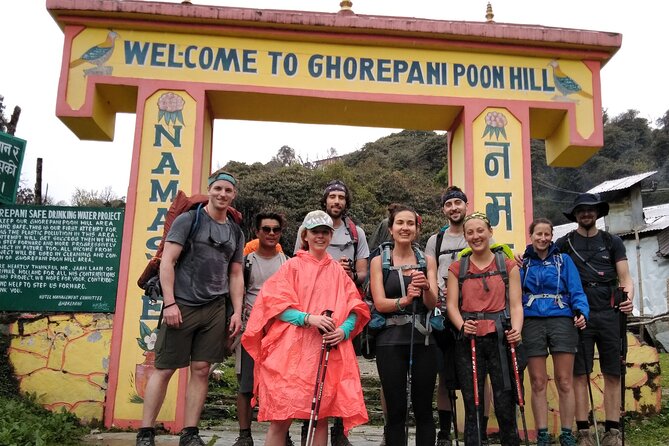
From Shikha, the route passes through the Magar villages of Phalate and Chitre. Terraced fields give way to dense rhododendron and pine forest, and the climb toward Ghorepani is described as quite hard.
This is one of the most rewarding changes in scenery. You are no longer only looking at stark high-altitude ridges. Forest, terraces, villages, and mountain air create a softer finish to the trek, though the uphill work is still real.
Ghorepani is the base for the early walk to Poon Hill. Plan your evening around rest, warm clothing, and getting ready for an early start. The schedule is full, and this is not the place to assume the hard work is finished just because Thorong La is behind you.
Poon Hill sunrise and the final ride to Pokhara
The final trekking highlight is an early hike to Poon Hill at about 3,210 meters. The climb is listed at 40 to 50 minutes, followed by views of Dhaulagiri, Tukuche Peak, Nilgiri, Annapurna South, and Hiunchuli.
Poon Hill is a smart ending because it gives you one more major mountain viewpoint after the circuit’s high pass. The sunrise start means you will need to walk in the dark or early dawn, so ask your guide about departure time and carry suitable warm layers.
After the viewpoint, the route continues toward the trek’s ending point and then by car to Pokhara Lakeside. The car transfer is included, which saves you from arranging the final connection yourself. You then spend time in Pokhara before returning to Kathmandu by deluxe tourist bus.
What the $995 price really covers
At $995 per person, this is a strong package if you use most of what is included. Airport pickup and drop-off, the bus to Bulbule, local transport from Muktinath to Tatopani, the car to Pokhara, and the tourist bus back to Kathmandu can otherwise create a string of separate costs and decisions.
The package also includes a guide’s salary, equipment, insurance, transport, lodging, and food, plus the ACAP permit, TIMS card, taxes, lodge accommodation, and all three meals for 15 days. That is a meaningful amount of logistical work for one price.
You still need to budget for Kathmandu and Pokhara accommodation and meals outside the trek, travel insurance, drinks, laundry, phone use, battery charging, showers, boiled water, and personal purchases. A porter is not included, though the company can arrange one. If you do not want to carry a full pack through the long days, ask about the extra cost before booking.
Who should book this trek?
I would recommend it to you if you want the classic Annapurna route with a private guide, included meals, and a family-run company rather than a self-organized trip. It suits people with moderate physical fitness who are comfortable with steep trails, suspension bridges, basic lodges, public transport, and long walking days.
It is less suitable if you want short hikes, private hotel rooms throughout, or a tightly standardized schedule. The route has several demanding days, and the combination of high altitude and road transport calls for flexibility.
The company’s strongest praise centers on personal care, safety, and guide character. Pratap has been praised for his help around Tilicho Lake and Thorong La, Dinesh and Binute for friendly and safety-focused support, and Bashudev for guiding an Annapurna circuit in late November. Those details suggest a company culture that values the human side of guiding, which is a major part of a successful Nepal trek.
Should you book the 15-day Annapurna Circuit?
Book this trip if you want a well-priced, private route that includes the major Annapurna milestones: Manang, Thorong La, Muktinath, the Kali Gandaki valley, and Poon Hill. The included guide, permits, meals, transfers, and airport service make it good value for a first visit to Nepal.
Before you commit, ask the company to clarify the exact overnight villages, the Muktinath to Tatopani transport, the role of any Jomsom flight option, and the price of a porter. If you are fit, flexible, and ready for long days, this is an appealing way to experience the circuit with close support and a personal touch.
FAQ
How long is the Annapurna Circuit experience?
The experience lasts approximately 15 days, beginning in Kathmandu and returning to Kathmandu after time in Pokhara.
Is airport pickup included?
Yes. International airport pickup and drop-off between Tribhuvan Airport and your hotel are included.
Is this a private tour?
Yes. Only your own group participates in the private activity.
What is the highest point of the trek?
The route crosses Thorong La Pass at approximately 5,416 meters.
Are meals included?
Yes. Breakfast, lunch, and dinner are included for 15 days.
Is accommodation included?
Normal lodge accommodation during the trek is included. Extra nights and food in Kathmandu and Pokhara are not included.
Is a porter included?
No. Porter service is not included in the listed price, but the company can arrange a porter on request.
What transportation is included?
The package includes a bus ticket to Bulbule, public transportation from Muktinath to Tatopani, a car from Nayapul to Pokhara, and a deluxe tourist bus from Pokhara to Kathmandu.
Can I cancel for a full refund?
Yes. You can receive a full refund if you cancel at least 24 hours before the experience start time. Cancellations or changes made less than 24 hours in advance are not accepted for a refund.
New in the Kathmandu listings
- Traditional Momo Making Class★ 5.0 · 10 reviews
- Kathmandu: Ancient City Kirtipur & Pharping Monastery Tour★ 5.0 · 2 reviews
- Women Empowerment Project(Nepali cooking class & jewelry workshop★ 5.0 · 15 reviews
- Kathmandu to Pokhara Premium sofa bus ticket★ 4.0 · 17 reviews
- 7-Day Langtang Valley Trek from Kathmandu★ 5.0 · 1 review
- Kathmandu 2 Nights 3 Days Chitwan Jungle Safari Tour★ 5.0 · 9 reviews
- Yoga Experience Day Trip with Private Transfer From Kathmandu★ 4.0 · 2 reviews
- Wildlife Adventure in Chitwan Nepal★ 4.0 · 4 reviews
Annapurna Circuit Treks, compared.
Annapurna Circuit Trek with Tilicho Lake (16 Days)
Read our review →Browse the lists this tour appears in