
REVIEW · ANNAPURNA CIRCUIT TREKS
Annapurna Circuit Trek
The mountains reward steady walkers. This 12-day Annapurna Circuit Trek links Kathmandu, Besisahar, Chame, Manang, Thorong La, Muktinath, and Pokhara in a compact Himalayan journey. I like the built-in acclimatization day in Manang and the fact that airport transfers, guides, tea house lodging, meals, permits, and trekking gear are included. The main concern is the schedule: several days list 12 to 14 hours of travel or walking, so this is not a gentle holiday.
I also like the mix of trekking and local transport. You walk through pine forests, alpine villages, and high mountain settlements, then use buses and jeeps where roads now reach the route. The 5,416-meter Thorong La crossing is the great prize, but you should take altitude seriously and resist the temptation to ride a jeep all the way to Manang.
In This Review
- Key points to know before you book
- Why this short Annapurna Circuit is appealing
- Day 1: Kathmandu arrival and a useful briefing
- Day 2: The long road to Besisahar
- Day 3: Jeep road and pine scenery to Chame
- Day 4: Walking from Chame toward Manang
- Day 5: Pisang, Manang Valley, and rising altitude
- Day 6: Acclimatizing in Manang
- Day 7: Yak Kharka and the high valley
- Day 8: Thorong Phedi and the final approach
- Day 9: Thorong La at 5,416 meters, then Muktinath
- Day 10: The rough scenic drive to Pokhara
- Day 11: Back to Kathmandu by road
- Day 12: Airport transfer and departure
- What the $975 price really covers
- Who should book this trek?
- Should you book the Annapurna Circuit Trek?
- FAQ
- How long is the Annapurna Circuit Trek?
- Where does the trek start?
- Is transportation included?
- Is a guide included?
- Are meals and accommodation included?
- Can I cancel for a full refund?
Key points to know before you book
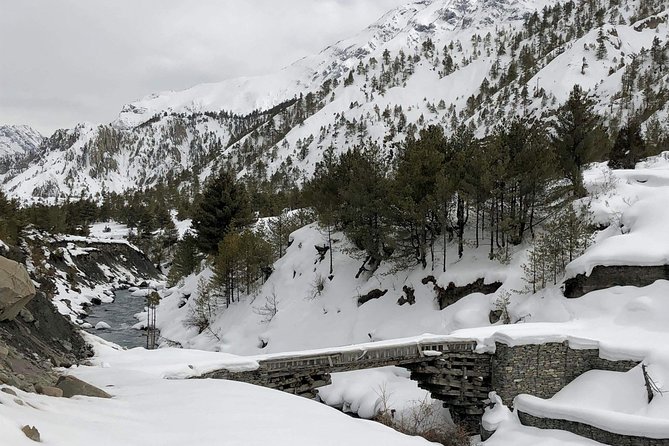
- Thorong La reaches 5,416 meters: The pass is the physical and visual high point of the trip, with Buddhist prayer flags and wide mountain views.
- Manang includes an acclimatization day: You have time to rest and take the recommended walk to Gangapurna Lake before climbing higher.
- The route uses road transport: Buses and jeeps shorten the traditional circuit, but the drive to Besisahar, Chame, and Pokhara can be long and rough.
- Most trek nights are in private local tea houses: Twin-sharing beds are included, along with breakfast, lunch, and dinner.
- The package includes useful cold-weather gear: A sleeping bag, down jacket, and duffle bag are supplied, which reduces the amount you need to bring.
- Guide service is a major part of the experience: Named guides in past trips include Shanta, Buddhi Tamang, Pawan, Indaco, Anjan, Suman, Veer, and Anos Tamang.
Why this short Annapurna Circuit is appealing
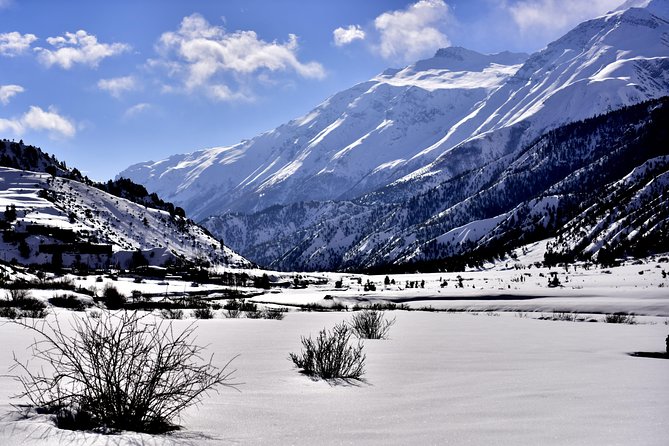
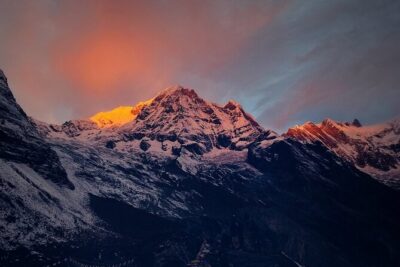
The Annapurna Circuit is famous because it changes character day by day. You begin in warmer hill country, follow the Marsyangdi River, move into pine forest, reach the dry high valley around Manang, cross a high Himalayan pass, and finish near Muktinath and Pokhara.
This shortened plan keeps the route’s main drama while cutting out many of the slower approach days. That makes the $975 price easier to understand. You are not paying only for a guide and a bed. You are also paying for airport transfers, long ground journeys, permits, food, tea house lodging, and the planning needed to move a private group through a demanding route.
Still, the short format asks a lot from you. The published schedule includes long days, and some descriptions list 12 to 14 hours. Those figures may combine driving, walking, and the full day’s movement, but they still warn you not to treat this as a casual stroll. A moderate level of fitness is required, and the pass day will test your legs.
The company has an overall rating of 5 from 34 ratings, with 100 percent recommending the experience. The strongest praise centers on guide care, organization, safety, and cultural contact. That matters here because a good guide can make a high-altitude trip feel orderly rather than chaotic.
More Annapurna Circuit treks:
- Annapurna Circuit Trek with Tilicho Lake
★ 5.0 · 368 reviews - Annapurna Circuit Trek
★ 5.0 · 94 reviews - Annapurna Circuit Trek
★ 5.0 · 35 reviews
Day 1: Kathmandu arrival and a useful briefing
Your trip begins at Tribhuvan International Airport, where staff receive you and transfer you to your hotel. The first day includes hotel check-in and a group briefing about the trek and practical matters.
This is more valuable than it sounds. You can use the meeting to check your equipment, ask about the walking schedule, and clarify how the road sections work. The package includes two Kathmandu hotel nights with breakfast, but the itinerary places the return to Kathmandu on Day 11, so the exact hotel-night pattern should be confirmed before departure.
Kathmandu is your soft landing before the road and mountain days begin. Since airport pickup is included, you do not need to arrange a taxi immediately after a long international flight.
Day 2: The long road to Besisahar
The drive to Besisahar in Lamjung takes about 12 hours. You leave the Kathmandu Valley and head toward warmer, lower country, with views of villages, farmland, and snowcapped mountains along the way.
This is one of the least comfortable parts of the trip. A full day in a bus or vehicle can feel tiring before the trek has even started. The benefit is that you reach the main gateway to the Annapurna route without spending extra walking days on the lower approach.
Besisahar gives the journey a clear change of pace. From here, the road and trail begin pushing farther into the mountains. All ground transport is included, which helps protect your budget from the cost of arranging separate vehicles.
Day 3: Jeep road and pine scenery to Chame
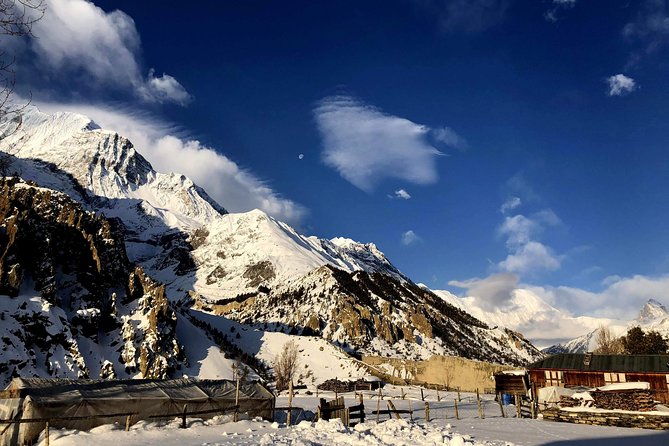
After breakfast, you drive to Chame, the headquarters of Manang district. The road is unpaved, and the journey can be rough, but the scenery becomes more rewarding as you pass multi-ethnic villages, changing terrain, and pine forests.
I would treat this as an adventure road, not a scenic coach tour. Conditions can affect timing, and a long ride over an unpaved road may be tiring. In return, you gain quick access to the higher part of the circuit.
Chame is an important transition point. The route now feels more alpine, and the mountains begin to dominate the day. A local tea house provides the sort of simple, practical lodging that fits the route. The package covers twin-sharing tea house accommodation, but you should not expect hotel-style comfort in these mountain settlements.
More walking in the hills of Kathmandu:
- Everest Base Camp Trek – 14 Days
★ 5.0 · 1,499 reviews - Everest Base Camp Trekking
★ 5.0 · 485 reviews - Nagarkot Sunrise View and Day Hiking from Kathmandu
★ 5.0 · 471 reviews - Everest Base Camp Trekking – 13 Day
★ 5.0 · 365 reviews
Day 4: Walking from Chame toward Manang
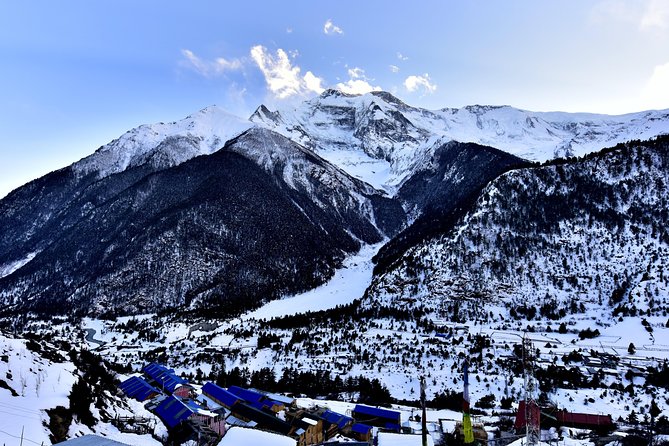
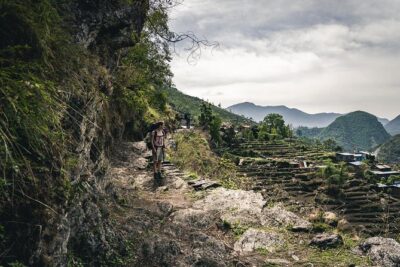
From Chame, the journey changes from road-heavy travel to a substantial mountain walk. You follow the Marsyangdi River upstream through alpine forest and pass Bhratang village.
The route climbs through pine trees toward Dhukure Pokhari, with views opening toward the higher peaks. The day is listed at about 13 hours, so you need to begin with realistic expectations. The distance may feel manageable on paper, but altitude and uneven trails make every hour count.
This is the kind of day I like on a Himalayan route because the scenery changes while you walk. You are no longer simply being carried toward the mountains. You are moving through the river valley under your own power.
Day 5: Pisang, Manang Valley, and rising altitude
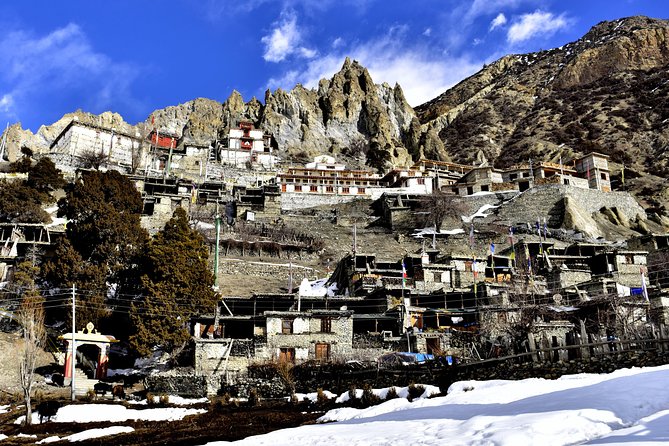
The walk continues through Pisang village into the Manang Valley. Mountain views include Annapurna II, Annapurna III, Gangapurna, and other high peaks.
Altitude begins to matter more from here. The itinerary describes gradual gains, but a gradual climb is not the same as an easy climb. You should keep your pace steady, drink the tea and water available during the trek, and tell your guide promptly if you feel unwell.
This day has another long listing of about 13 hours. The reward is a stronger sense of entering the high country, with drier surroundings and bigger views. The tour includes three cups of tea per day during the trek, seasonal fruit, and three daily meals, all useful comforts when the air gets colder and the walking gets harder.
Day 6: Acclimatizing in Manang
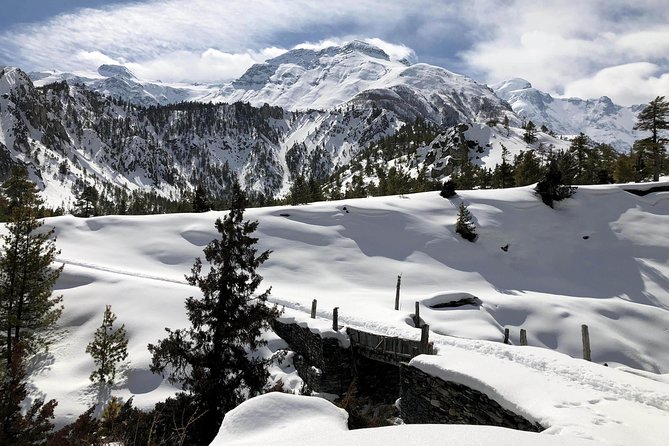
The rest day in Manang is one of the smartest parts of the itinerary. You pause before going higher toward Thorong La, rather than stringing together a nonstop series of climbing days.
The recommended outing is Gangapurna Lake, described as an especially beautiful lake in the Manang Valley. A short acclimatization walk gives you something worthwhile to do without turning the rest day into another exhausting stage.
This is also your chance to speak openly with the guide. The company warns against taking a four-wheel jeep all the way to Manang because of the risk of altitude sickness. Although a jeep can reach Manang, the stated advice is to avoid that shortcut. The itinerary uses Chame as the sensible point to stop driving and continue on foot.
Day 7: Yak Kharka and the high valley
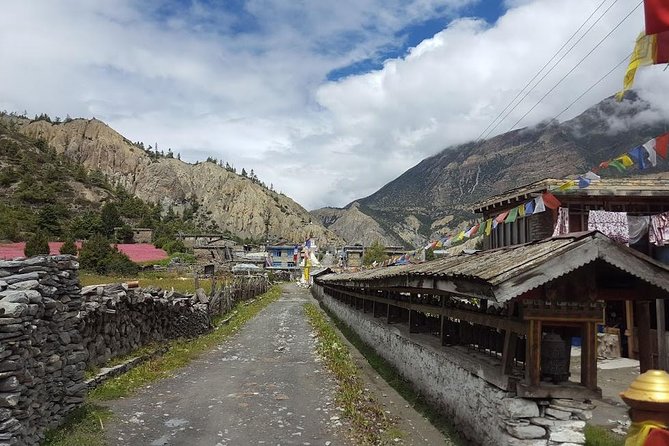
After Manang, you walk to Yak Kharka. The route crosses small streams and climbs through high country with views toward Gangapurna and Annapurna.
The settlement is small, and the surroundings are the attraction. You are now preparing for the pass, so the pace should be controlled rather than competitive. The day is listed at about 14 hours, making it one of the demanding sections of the trip.
A guide’s attention is especially useful here. The itinerary includes a government-licensed guide from Kathmandu, and past trips have named guides such as Shanta, Buddhi Tamang, Pawan, Indaco, Anjan, Suman, Veer, and Anos Tamang. Specific experiences praise Shanta for looking after a solo woman, Buddhi Tamang for careful organization, and Pawan for adding good humor to a strenuous trek.
Day 8: Thorong Phedi and the final approach
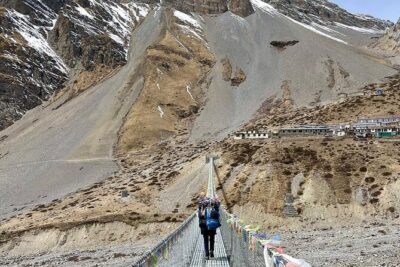
The walk moves closer to the pass, crossing a bridge and following the Jarjung River toward Thorong Phedi. You rest briefly there before the final uphill section.
The day is again listed at roughly 13 hours. That sounds long because it is long. The approach to a high pass is not the place to rush, and cold, wind, fatigue, or trail conditions can affect the pace.
Thorong Phedi is important because it places you near the crossing without asking you to climb from much lower ground on the same morning. Your guide will be central to judging the pace and handling changes caused by weather or trail conditions.
Day 9: Thorong La at 5,416 meters, then Muktinath
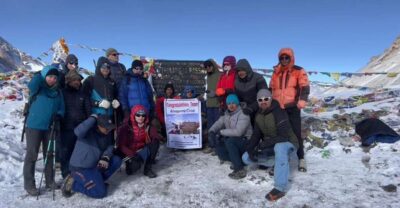
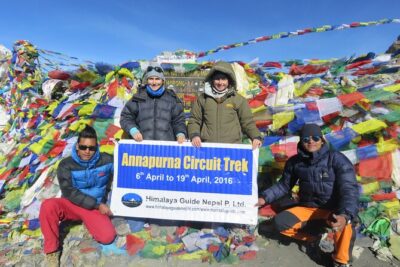
You start early for the highest point of the trek. The climb to Thorong La reaches 5,416 meters, where Buddhist prayer flags mark the pass and the views stretch across dramatic mountain country.
This is the day that defines the circuit. It is also the day that demands the most respect. The physical challenge is real, and altitude sickness is a serious concern, especially in a shortened itinerary. You should not see reaching the pass as more important than staying safe.
After the crossing, you continue toward Muktinath Temple. The descent changes the feel of the journey and brings you into a place important to both Hindu and Buddhist traditions. The package includes the relevant admission tickets noted for the pass and Muktinath portion.
The schedule lists about 14 hours. That is a very full day, even for a fit walker. Good boots, sunscreen, warm layers, and patience are essential. One past participant specifically advised bringing sunscreen, a small tip that makes sense at high altitude, where strong sunlight can catch you off guard.
Day 10: The rough scenic drive to Pokhara
After Muktinath, you drive to Pokhara. The journey is described as challenging but scenic, with changing views and an easier feel after the pass.
This is not a quiet transfer. Road travel in the region can be slow, and the listed duration is about 14 hours. The upside is that you finish the high-altitude walking and reach Pokhara without adding several more trekking days.
One hotel night in Pokhara with breakfast is included. That gives you a softer setting after the tea houses and a chance to rest before the final overland journey. The city also provides a clear contrast with the high valley, though the schedule may leave limited time for independent activities.
Day 11: Back to Kathmandu by road
You leave Pokhara in the morning and travel overland to Kathmandu, passing farm villages and towns. The trip is listed at about 14 hours, with arrival by afternoon according to the schedule.
The long ride is the trade-off for keeping the trek short. You will have completed the hardest mountain section, but your body may still feel the previous days. The rest of the day is free for personal activities, giving you some room to buy gifts, eat independently, or simply recover.
All ground transportation is included. Drinks, laundry, desserts, mineral water, beer, and soft drinks are not included, so keep some Nepalese rupees available for those extras.
Day 12: Airport transfer and departure
On your final day, staff transfer you from the hotel to Tribhuvan International Airport according to your international flight time. Airport pickup and drop-off are included.
The schedule shows breakfast included on 11 days, while the final day depends on your departure time. Confirm the practical details if you have an early flight.
What the $975 price really covers
At $975 per person, this package offers solid value if you want a guided private trek with major logistics handled. Included services cover:
- Airport transfers and all bus and jeep transportation
- Two Kathmandu hotel nights with breakfast
- One Pokhara hotel night with breakfast
- Three meals each trekking day
- Twin-sharing tea house accommodation
- A government-licensed guide
- Annapurna Conservation Area permit
- Sleeping bag, down jacket, and duffle bag
- Seasonal fruit and three cups of tea per day
The price does not include travel insurance, bottled water, alcoholic drinks, soft drinks, laundry, desserts, or tips for the trekking crew. Travel insurance is not a minor extra on a high-altitude trip. Arrange it before you go and check that it covers trekking at the elevations on this route.
The tour is private, so only your group takes part. That gives you more control than a large scheduled group, although it does not remove the fixed demands of weather, roads, and altitude.
Who should book this trek?
I would choose this trip if you have limited time but still want the main Annapurna Circuit experience. It suits someone who can handle long walking days, basic tea house accommodation, rough road journeys, and a serious high-altitude pass.
It is also a good fit if you value support. The strongest praise attached to this experience focuses on guides who brief people each evening, watch over safety, manage changing weather, and help solo participants feel comfortable. One solo female participant gave particular credit to Shanta, while a group of friends enjoyed the care of guides including Anjan and Suman.
I would think twice if you want slow travel, short daily walks, private hotel rooms, or plenty of free time. The compact plan saves days, but it does so by making the schedule busy.
Should you book the Annapurna Circuit Trek?
Book it if you want a well-supported, private Himalayan trek and accept that the short schedule will be demanding. The included food, permit, gear, guide, transport, and lodging make the $975 cost attractive, especially for a first Nepal trek.
Before paying, ask the operator to confirm the exact walking hours, transport arrangements beyond Chame, tea house standards, and hotel nights in Kathmandu. Do not use a jeep to Manang simply to shorten the trek. The itinerary itself warns that gaining altitude too quickly can raise the risk of altitude sickness.
For fit, time-conscious walkers, this is a strong version of a classic route. For anyone who prefers a relaxed pace, choose a longer Annapurna Circuit itinerary instead.
FAQ
How long is the Annapurna Circuit Trek?
The experience lasts approximately 12 days, including arrival and departure days. The description also refers to a 10-day trekking itinerary, so you should confirm the exact trekking and transport schedule before booking.
Where does the trek start?
The tour begins with pickup at Tribhuvan International Airport in Kathmandu, Nepal. From Kathmandu, you travel by road to Besisahar and then continue toward Chame.
Is transportation included?
Yes. Airport transfers, buses, and jeep drives are included in the package. Road travel is used for the journeys to Besisahar, Chame, Pokhara, and Kathmandu.
Is a guide included?
Yes. A government-licensed guide from Kathmandu is included, and the activity is private for your group.
Are meals and accommodation included?
Yes. Breakfast, lunch, and dinner are included during the trek, along with twin-sharing local tea house accommodation. The package also includes two Kathmandu hotel nights and one Pokhara hotel night with breakfast.
Can I cancel for a full refund?
You can cancel at least 24 hours before the experience start time for a full refund. Cancellations or changes made less than 24 hours beforehand are not accepted for a refund. If poor weather or an insufficient number of participants causes cancellation, you will be offered another date or experience, or a full refund.
New in the Kathmandu listings
- Traditional Momo Making Class★ 5.0 · 10 reviews
- Kathmandu: Ancient City Kirtipur & Pharping Monastery Tour★ 5.0 · 2 reviews
- Kathmandu to Pokhara Premium sofa bus ticket★ 4.0 · 17 reviews
- Women Empowerment Project(Nepali cooking class & jewelry workshop★ 5.0 · 15 reviews
- 7-Day Langtang Valley Trek from Kathmandu★ 5.0 · 1 review
- Kathmandu 2 Nights 3 Days Chitwan Jungle Safari Tour★ 5.0 · 9 reviews
- Yoga Experience Day Trip with Private Transfer From Kathmandu★ 4.0 · 2 reviews
- Wildlife Adventure in Chitwan Nepal★ 4.0 · 4 reviews
Annapurna Circuit Treks, compared.
15-Day Private Annapurna Circuit Trek from Kathmandu
Read our review →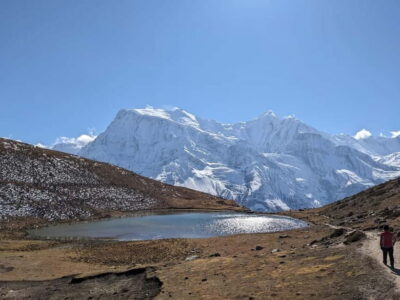
Annapurna Circuit Trek with Tilicho Lake (16 Days)
Read our review →Browse the lists this tour appears in