
REVIEW · ANNAPURNA BASE CAMP TREKS
From Kathmandu: 7-Day Annapurna Basecamp Trek
The mountains get close fast. This seven-day trek packs Gurung villages, waterfalls, forest paths, high Himalayan views, and Annapurna Base Camp into a short, demanding trip from Kathmandu. I especially like the stay in traditional Ghandruk and the chance to soak in Jhinu’s natural hot bath after several days on foot. The main caution is the pace: six to seven hours of trekking on several days, with a high point of 4,130 meters, is no casual walk.
The $276 starting price can be strong value if your booking includes full-board meals and the porter service. I also like the small group limit of 14 people, which should make it easier to keep the trek organized. But check exactly which inclusion option you are buying, since some details, including meals and a porter, are listed as dependent on the selected package.
In This Review
- Key things to know before booking
- What the $276 price really covers
- Day 1: A gentle Kathmandu arrival
- Day 2: Kathmandu to Ghandruk by bus and jeep
- Day 3: Chomrong, waterfalls, and the trail to Sinuwa
- Day 4: Forest paths from Sinuwa to Deurali
- Day 5: The high point at Annapurna Base Camp
- Day 6: Sunrise, breakfast, and a long descent
- Day 7: Jhinu hot bath and the road to Pokhara
- Guides, group size, and support
- What to pack and what to budget
- Who should choose this trek?
- Should you book the Annapurna Base Camp trek?
- FAQ
- How long is the Annapurna Base Camp trek?
- What is the highest altitude reached?
- Is transport from Kathmandu included?
- Is transport from Simrung to Pokhara included?
- Are meals included during the trek?
- Is a porter included?
- Where do I sleep during the trek?
- What languages does the guide speak?
- Can I cancel the booking?
Key things to know before booking
- Annapurna Base Camp reaches 4,130 meters: You spend the fifth night at the trek’s highest point, with close views of the Annapurna range and a sunset facing west.
- Ghandruk and Chomrong add real local character: These Gurung villages give the mountain walk a cultural side, not just a parade of high peaks.
- Jhinu provides a welcome recovery stop: The final hiking day includes time for the natural hot bath before the drive to Pokhara.
- The route is physically demanding: Expect six to seven hours of hiking on the middle days, plus steep mountain paths and a high-altitude overnight stay.
- Transport takes up a large part of the trip: The first trekking transfer runs from Kathmandu to Pokhara by tourist bus, followed by a jeep to Ghandruk.
- Guide support has received strong praise: Raju and Terrence are two guides associated with especially positive feedback for clear explanations, care, flexibility, and problem solving.
What the $276 price really covers
At $276 per person, this is priced as a tightly arranged Himalayan trekking package rather than a luxury holiday. You receive airport arrival and transfer service, a three-star Kathmandu hotel with breakfast, trekking permits, transport from Kathmandu to Pokhara, and mountain guesthouse accommodation.
The trek includes five nights in mountain guesthouses, using twin-sharing rooms. You also receive a sleeping bag, duffle bag, and trekking poles on a returnable basis. Those items matter because buying or renting trekking gear separately can add cost and planning work.
The porter arrangement needs a close look. The package describes one porter for every two people, but also notes that porter service applies if the inclusion option is selected. Full-board meals during the hiking days are described in the same way. I would confirm both points before paying, since food and luggage support can make a large difference to the final value.
Meals in Kathmandu beyond breakfast are not included. Accommodation and meals in Pokhara are also excluded, and drinks, including hot, cold, and alcoholic beverages during the trek, cost extra. Guide and porter tips are not included either, and travel insurance is your responsibility.
For the right package, the price is appealing. You are paying for the permits, transport framework, guide, guesthouses, equipment loans, and airport handling, not just for someone to point toward the mountains. Still, the low headline price should not be treated as your entire trip budget.
More Annapurna Base Camp treks:
- Annapurna base camp trek 5 Days
★ 5.0 · 252 reviews - Annapurna Base Camp Trek
★ 5.0 · 111 reviews - Kathmandu to Annapurna Base Camp (ABC) 5-Day Trek
★ 5.0 · 102 reviews
Day 1: A gentle Kathmandu arrival
Your first day begins at Tribhuvan International Airport in Kathmandu. A representative meets you with a name sign, takes you to the hotel, and introduces you to the guide during a trek briefing.
Kathmandu sits at about 1,350 meters, so this first night is not an altitude challenge compared with the days ahead. It is useful for getting organized, checking equipment, and understanding the route before the early departure.
The included hotel is a three-star property with breakfast and twin-sharing accommodation. Lunch and dinner are not included, so plan for those separately. The airport pickup is a practical touch, especially if you arrive tired or have not visited Kathmandu before.
Day 2: Kathmandu to Ghandruk by bus and jeep
Day two is mostly a transport day. You leave early for Pokhara by tourist bus, a journey that forms part of the eight to nine hours of total driving. From Pokhara, a private vehicle continues toward Ghandruk.
This is not the smoothest way to begin a mountain holiday, but it gets you quickly toward the trail. The switch from tourist bus to jeep also shows how the trip moves from city roads to mountain access routes.
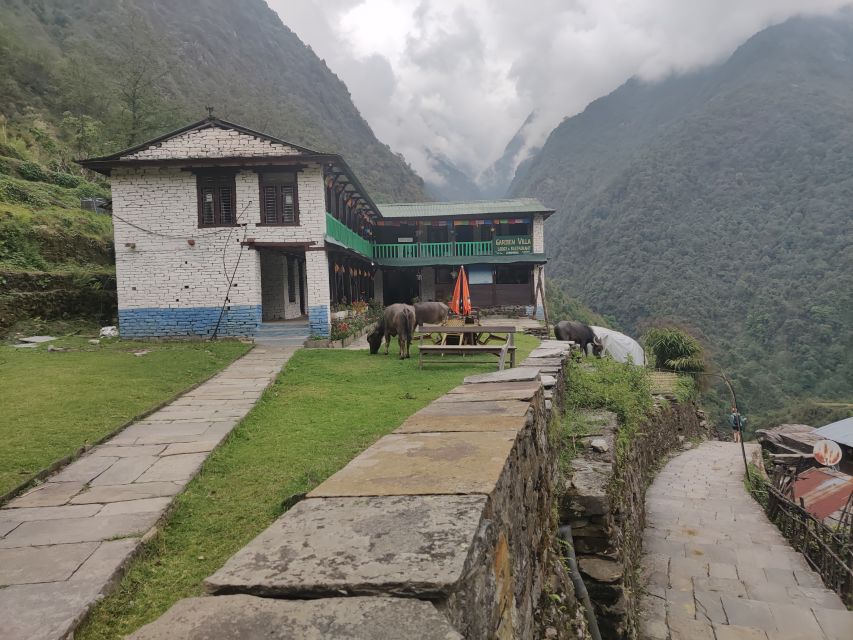
Ghandruk is one of the trip’s best cultural stops. It is a traditional Gurung village, and the appeal is not simply the mountain setting. You get a look at a settled Himalayan community and an introduction to Gurung hospitality before the longer walking days begin.
The schedule refers to Ghandruk exploration and a night halt at Birethanti. Since those are different places, I would ask the operator to confirm the exact overnight location before departure. The information supplied gives a minimum altitude of 1,950 meters for this day, so you are already sleeping higher than Kathmandu.
Day 3: Chomrong, waterfalls, and the trail to Sinuwa
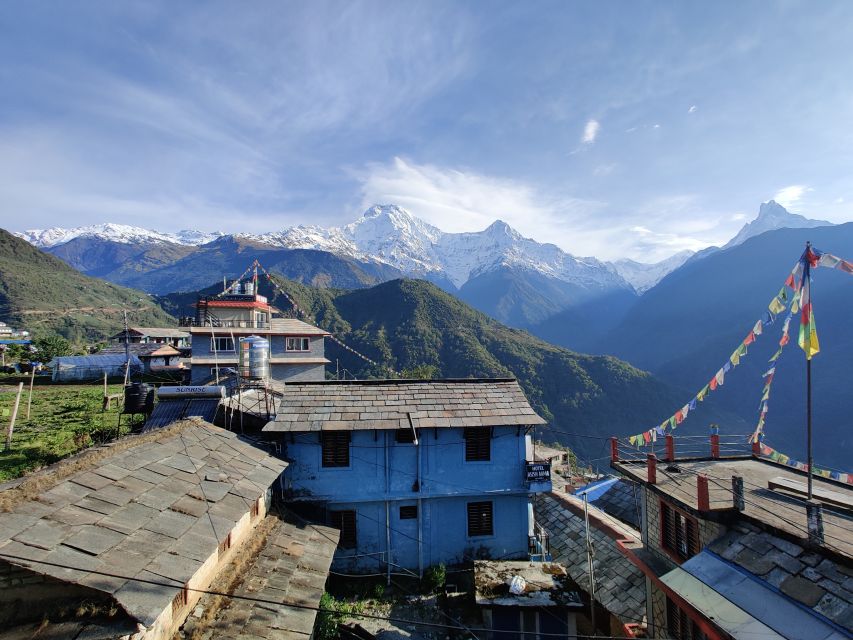
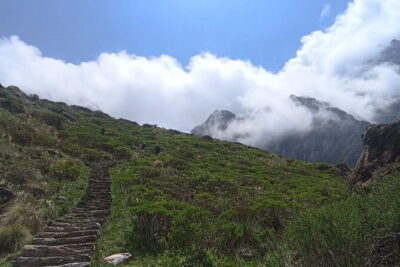
The walking begins in earnest on day three. You hike for six to seven hours toward Sinuwa, passing through Chomrong and several scenic sections with waterfalls and views of Annapurna South and Hiunchuli.
Chomrong is described as a modern Gurung village, while Ghandruk offers a more traditional village experience. Together, they give the route a useful cultural contrast. You are not moving through empty mountain scenery all day. You are also passing through communities that support life and trekking in the valley.
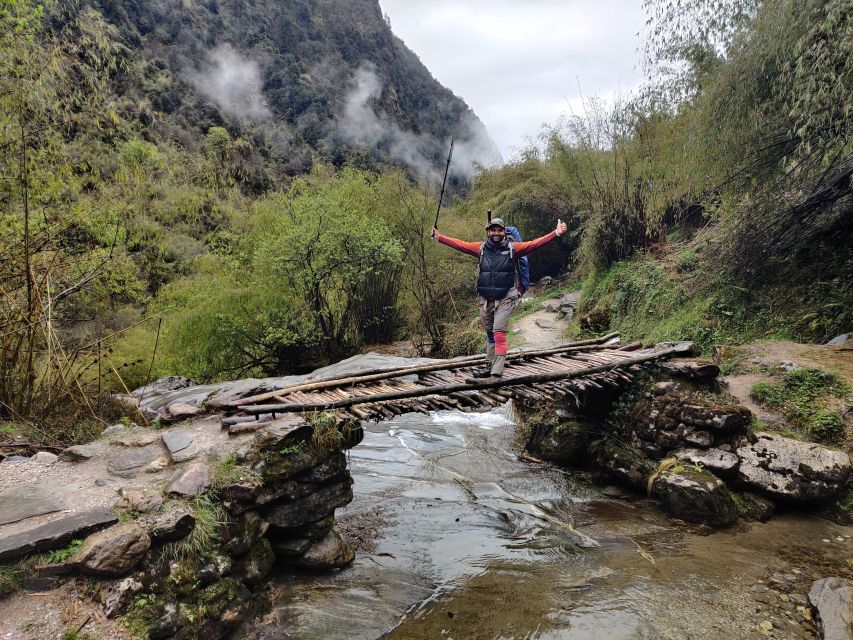
The trail’s waterfalls provide welcome visual variety, particularly when the mountain views are partly covered. The route is still a serious physical start, though. Six to seven hours on foot, after a long transfer the day before, may feel tough if you have not prepared.
Sinuwa sits at about 2,340 meters. You spend the night in a guesthouse there, with twin-sharing accommodation. Expect basic mountain lodging rather than hotel comfort. The supplied information does not specify room facilities, so you should be ready for simple conditions and carry your own towel, as advised.
More walking in the hills of Kathmandu:
- Everest Base Camp Trek – 14 Days
★ 5.0 · 1,499 reviews - Everest Base Camp Trekking
★ 5.0 · 485 reviews - Nagarkot Sunrise View and Day Hiking from Kathmandu
★ 5.0 · 471 reviews - Annapurna Circuit Trek with Tilicho Lake
★ 5.0 · 368 reviews
Day 4: Forest paths from Sinuwa to Deurali
Day four takes you from Sinuwa to Deurali in another six to seven hours. The route passes through dense forest, small settlements, and more waterfalls, with Himalaya described as a tea-house stop along the way.
This is one of the route’s more atmospheric days. The forest gives the walk a cooler, enclosed feel before the trail moves toward higher and more open mountain country. The waterfalls also break up the long walking hours, giving you natural places to pause and take stock.
Deurali reaches 3,230 meters. That gain is significant, and you should pay attention to how your body responds as the air gets thinner. The schedule does not provide a separate acclimatization day, so the steady pace and guide support matter.
You spend the night at Deurali Guest House. The accommodation is part of the mountain guesthouse system, not a private hotel room with city-style comforts. If you value the social side of trekking, this style of lodging can be part of the appeal. If you need quiet, privacy, or reliable facilities, adjust your expectations.
Day 5: The high point at Annapurna Base Camp
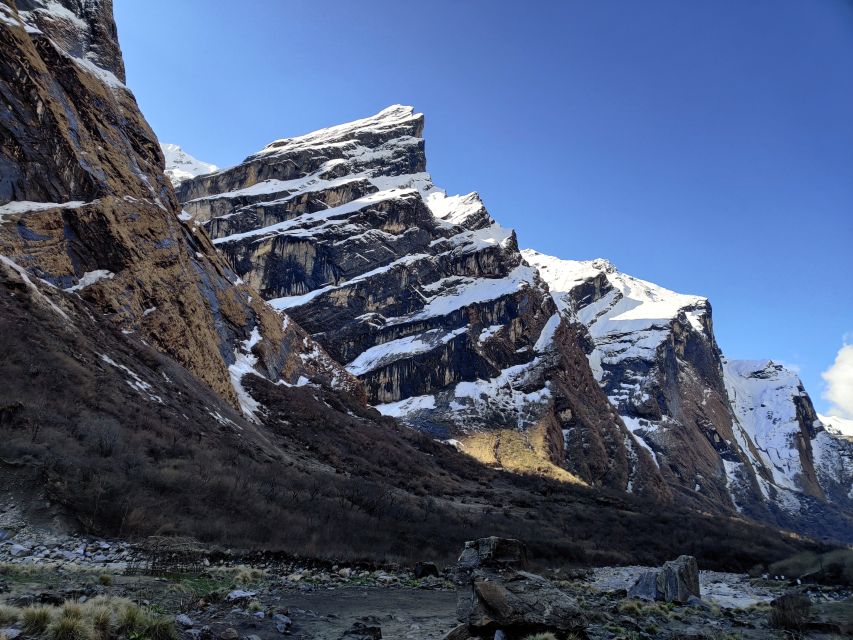
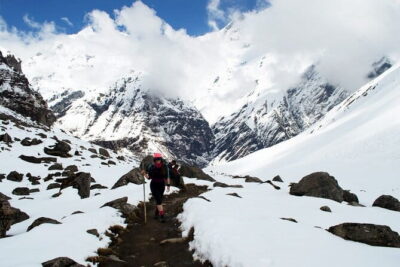
Day five is the emotional center of the trek. From Deurali, you walk for five to six hours through the valley toward Machhapuchhre Base Camp and then Annapurna Base Camp.
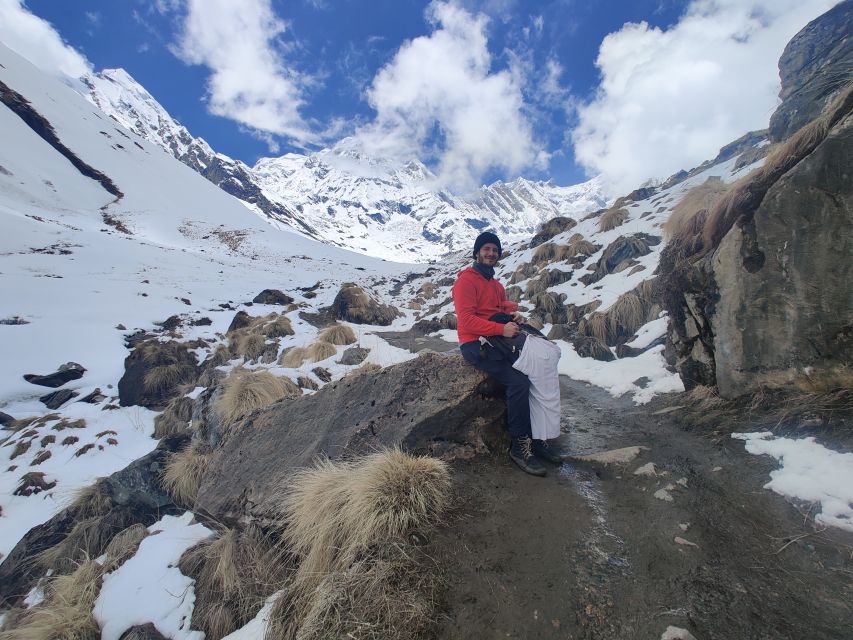
Annapurna Base Camp sits at 4,130 meters, below Mt. Annapurna I, which rises to 8,091 meters and is identified here as the world’s tenth-highest mountain. The draw is the scale of the setting. Instead of seeing the peaks from a distant viewpoint, you reach a high mountain basin surrounded by the Annapurna range.
The approach through Machhapuchhre Base Camp adds a second major point to the day. The route places you among some of the region’s most recognizable peaks before reaching the final base camp.
You spend the night at a tea house at Annapurna Base Camp itself. That is a major advantage of this schedule, since you do not need to reach the viewpoint and then immediately descend. The plan includes time for the sunset toward the west, followed by an early sunrise the next morning.
At this altitude, the reward comes with a clear physical cost. The supplied information does not state a formal altitude-sickness plan, so you should discuss symptoms with your guide and follow the guide’s instructions. Travel insurance is not included, and insurance with trekking and high-altitude coverage deserves serious attention.
Day 6: Sunrise, breakfast, and a long descent
The sixth day begins with sunrise views and breakfast at base camp. This is a smart use of the overnight stay. The morning light can give the peaks a different appearance from the previous evening, and you do not have to rush away before seeing the high camp in daylight.
After breakfast, you descend through Deurali, Himalaya, and Dobhan toward Bamboo or Sinuwa. The exact overnight point depends on the arrangement, so ask your guide for the confirmed destination on the day.
The descent takes you back through familiar sections of the route, but downhill does not mean easy. Long descents can be hard on knees and thighs, especially after the high-altitude day. Trekking poles, included on a returnable basis, should be useful here.
You sleep in a guesthouse at Bamboo or Sinuwa. The minimum altitude listed for this day is 2,340 meters, a major drop from base camp. That lower elevation should feel welcome, although the walking hours still make this a full day.
Day 7: Jhinu hot bath and the road to Pokhara
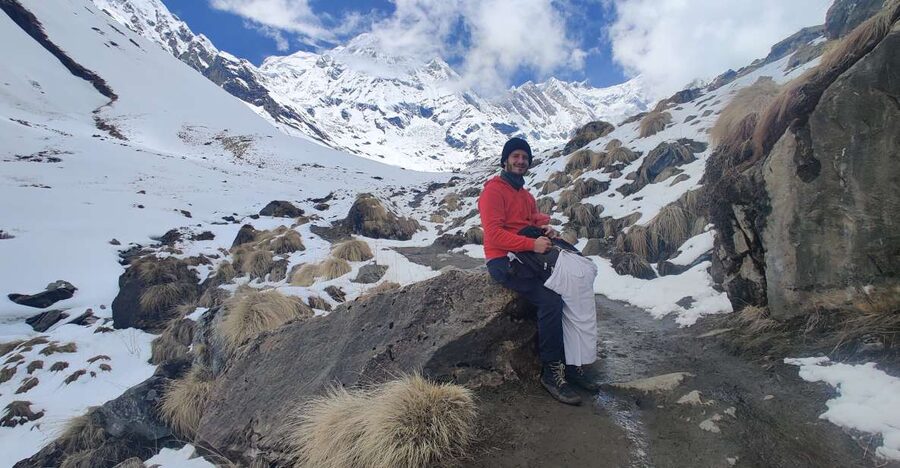
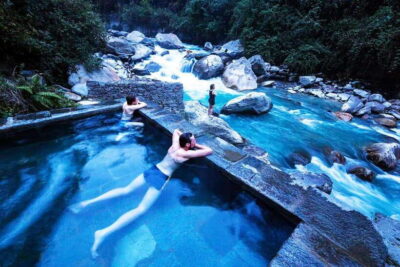
The final hiking day takes you toward Simrung via Jhinu. The walk lasts about five to six hours, and Jhinu is famous for its natural hot bath.
This is a well-placed ending. After several days of forest trails, stone paths, and high-altitude walking, a natural hot bath offers a simple reward before you leave the mountain route. It is not an extra luxury add-on. It is one of the most distinctive parts of the trip.
From Simrung, you take a shared jeep for about an hour and a half to Pokhara. The shared vehicle keeps the transfer practical and helps hold down the cost, but it also means less control over departure timing and personal space.
The organized portion ends in Pokhara. Accommodation and meals there are not included, so you need to arrange your own next step. The supplied plan does not include a return to Kathmandu, which is important if your wider holiday begins and ends in the capital.
Guides, group size, and support
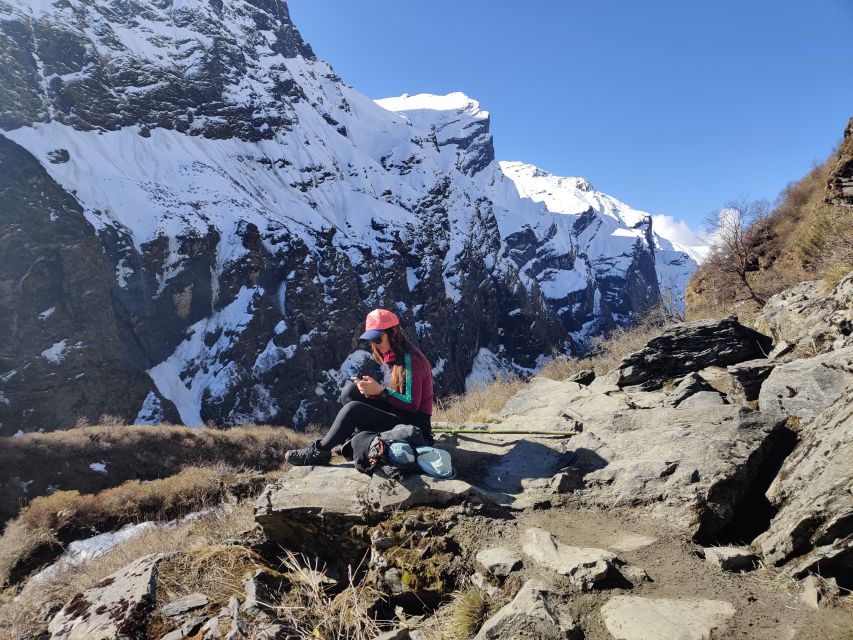
The group is limited to 14 people, and the advertised languages are English and Hindi. A small group should make daily coordination easier than a large commercial departure, particularly on narrow paths or during the transport changes.
The guide and porter system is one of the package’s strongest practical features. A porter is assigned for every two people when that option is included, allowing you to carry a lighter daypack. The recommended packing list calls for a towel, passport or copy, and daypack, but you should still confirm what personal clothing and equipment you need for the high camp.
Raju and Terrence are two guide names linked with especially strong praise. Raju was noted for explaining the trek clearly, answering questions, and handling small problems with care. Terrence was praised for staying present when difficulties arose and for finding solutions during a period of severe weather.
That flexibility matters in Nepal. Mountain weather can disrupt plans, and the most useful guide is not just someone who walks ahead. The strongest feedback here points to communication and calm problem solving, though guide assignments can change.
What to pack and what to budget
The official essentials are modest: a towel, passport or a copy, and a daypack. In practical terms, you should also allow space for your own trekking clothing and personal supplies, since the provided information does not list those items.
The returnable sleeping bag, duffle bag, and trekking poles reduce the amount of gear you must arrange before arrival. You should still ask how the return process works and confirm the condition and size of the equipment.
Budget separately for Kathmandu lunches and dinners, all Pokhara accommodation and meals, drinks during the trek, tips, and travel insurance. A $276 booking can therefore be good value, but only when you add those excluded costs before comparing it with longer or more inclusive packages.
Free cancellation is available up to 24 hours before the start, and you can reserve now while paying later. Those terms provide useful flexibility, especially because one recent booking was handled flexibly after severe weather created uncertainty.
Who should choose this trek?
I would recommend this trip to you if you want a compact route to Annapurna Base Camp and prefer an organized package over arranging permits, vehicles, guides, and guesthouses on your own. It suits people who value local village stops, basic mountain lodging, and a guide-led experience.
You should be ready for long walking days and a high overnight stay. The trip is not suitable for children under eight, people with mobility impairments, or people over 95, according to the supplied restrictions.
The two available guide languages, English and Hindi, may also help you choose the right departure. If your main goal is luxury lodging, generous rest days, or a slow pace, this is probably not the right format.
Should you book the Annapurna Base Camp trek?
Book it if you want a short, structured Himalayan trek with a strong mix of mountain views and Gurung culture. The best features are the overnight stay at Annapurna Base Camp, the waterfall-filled route, the villages of Ghandruk and Chomrong, and the hot bath at Jhinu.
Before booking, confirm four points: the precise night-two accommodation, whether full-board meals are included, whether the porter is included, and how you will continue from Pokhara. If those details fit your plans, $276 offers a practical route into one of Nepal’s most famous mountain areas, with useful support and two guides, Raju and Terrence, receiving particularly warm praise.
FAQ
How long is the Annapurna Base Camp trek?
The experience lasts seven days, beginning with arrival in Kathmandu and ending with the drive from Simrung to Pokhara.
What is the highest altitude reached?
Annapurna Base Camp is the highest point, at 4,130 meters or 13,549 feet.
Is transport from Kathmandu included?
Yes. The package includes Kathmandu to Pokhara by tourist bus, followed by a private vehicle from Pokhara to Ghandruk.
Is transport from Simrung to Pokhara included?
Yes. The return transfer from Simrung to Pokhara takes about one and a half hours by shared jeep.
Are meals included during the trek?
Full-board meals during trekking days are included if the selected inclusion option provides them. Drinks are not included, and meals in Kathmandu and Pokhara are excluded.
Is a porter included?
A porter for every two people is included if the selected inclusion option includes porter service.
Where do I sleep during the trek?
You stay in mountain guesthouses for five nights, using twin-sharing accommodation. The high point includes a tea-house stay at Annapurna Base Camp.
What languages does the guide speak?
The available guide languages are English and Hindi.
Can I cancel the booking?
You can cancel up to 24 hours in advance for a full refund. The experience also offers a reserve-now-and-pay-later option.
New in the Kathmandu listings
- Traditional Momo Making Class★ 5.0 · 10 reviews
- Kathmandu: Ancient City Kirtipur & Pharping Monastery Tour★ 5.0 · 2 reviews
- Kathmandu to Pokhara Premium sofa bus ticket★ 4.0 · 17 reviews
- Women Empowerment Project(Nepali cooking class & jewelry workshop★ 5.0 · 15 reviews
- 7-Day Langtang Valley Trek from Kathmandu★ 5.0 · 1 review
- Kathmandu 2 Nights 3 Days Chitwan Jungle Safari Tour★ 5.0 · 9 reviews
- Yoga Experience Day Trip with Private Transfer From Kathmandu★ 4.0 · 2 reviews
- Wildlife Adventure in Chitwan Nepal★ 4.0 · 4 reviews
Annapurna Base Camp Treks, compared.
Kathmandu to Annapurna Base Camp (ABC) 5-Day Trek
Read our review →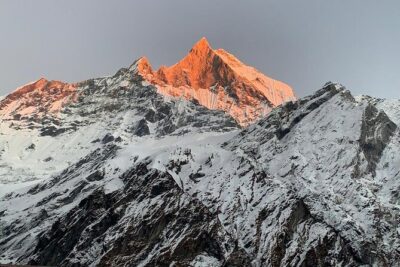
Kathmandu/Pokhara: 5-Day Annapurna Base Camp (ABC) Trek
Read our review →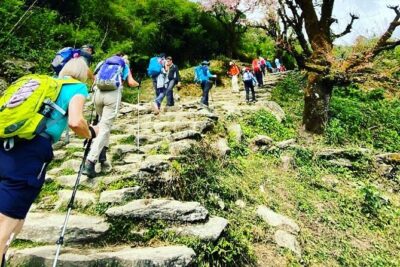
11-Day Hike Tour to Annapurna Base Camp Bliss in Kathmandu
Read our review →Browse the lists this tour appears in