
REVIEW · BHAKTAPUR TOURS
From Kathmandu: Pashupatinath, Boudhanath and Bhaktapur Tour
Sacred sites, ancient courtyards, and cremation fires fill this short Kathmandu tour. I like the way it joins three very different landmarks in one private outing: Hindu Pashupatinath, Buddhist Boudhanath, and historic Bhaktapur. I also like that private transport and an English-speaking guide keep the day simple, though the tour’s five-hour schedule leaves limited time at each stop.
A second consideration is cost. The advertised price is $71 per person, but you should add about $25 for UNESCO monument entrance fees, plus any food, drinks, or personal purchases. The pace suits you if you want a focused introduction, not a slow day spent studying every temple and courtyard.
In This Review
- Key points at a glance
- Why these three Kathmandu sites work together
- Bhaktapur Durbar Square: the longest and most rewarding stop
- Pashupatinath and the Bagmati River cremation ghats
- Boudhanath Stupa and the rhythm of pilgrimage
- How the five-hour schedule feels in practice
- The real price: $71 plus entrance fees
- What to bring and how to behave
- Who will appreciate this Kathmandu tour?
- Should you book this private tour?
- FAQ
- How long does the tour last?
- Which places are visited?
- How much time is spent at each main site?
- Is transportation included?
- Is a tour guide included?
- Are entrance fees included in the price?
- Can I cancel the booking?
- Is the tour suitable for wheelchair users?
Key points at a glance
- Bhaktapur comes first: You get about 80 minutes in the city’s famous Durbar Square, the longest stop of the day.
- Pashupatinath offers a serious cultural encounter: The tour includes the temple complex and views of cremation rituals along the Bagmati River.
- Boudhanath brings a calmer mood: You can watch pilgrims circle one of the world’s largest Buddhist stupas while turning prayer wheels.
- Private transport saves time: You travel between the three sites with a private group and bottled water included.
- The total cost is higher than the headline price: Plan for roughly $96 per person before meals and drinks.
- Walking matters: Comfortable shoes, sun protection, and respect for religious customs are essential.
Why these three Kathmandu sites work together
This tour gives you three ways to read Nepal. Bhaktapur shows you Newar architecture and royal urban design. Pashupatinath introduces one of Nepal’s most important Hindu religious centers and the rituals beside the Bagmati River. Boudhanath shifts the mood toward Tibetan Buddhist practice, with pilgrims circling the stupa and turning prayer wheels.
That variety is the main reason I find the route appealing. You are not spending five hours looking at similar buildings. Each place has a different religious purpose, visual style, and atmosphere.
The schedule is compact. The guided visits add up to about 150 minutes: 80 minutes in Bhaktapur, 40 minutes at Pashupatinath, and 30 minutes at Boudhanath. The remaining time is used for pickup, driving, and returning to Kathmandu, so you should expect an efficient overview rather than a leisurely exploration.
Because the group is private, the experience should feel more personal than a large coach outing. You can ask the guide questions in English and receive explanations as you move through the sites. The guide is especially important here, since religious symbols and local customs may not be obvious from the outside.
More time in Bhaktapur:
- Day Trip to Bhaktapur and Panauti from Kathmandu
★ 5.0 · 184 reviews - Bhaktapur & Patan Durbar Square Day Tours
★ 5.0 · 122 reviews - Nagarkot Sunrise & Bhaktapur UNESCO Heritage Private Tour
★ 5.0 · 66 reviews
Bhaktapur Durbar Square: the longest and most rewarding stop
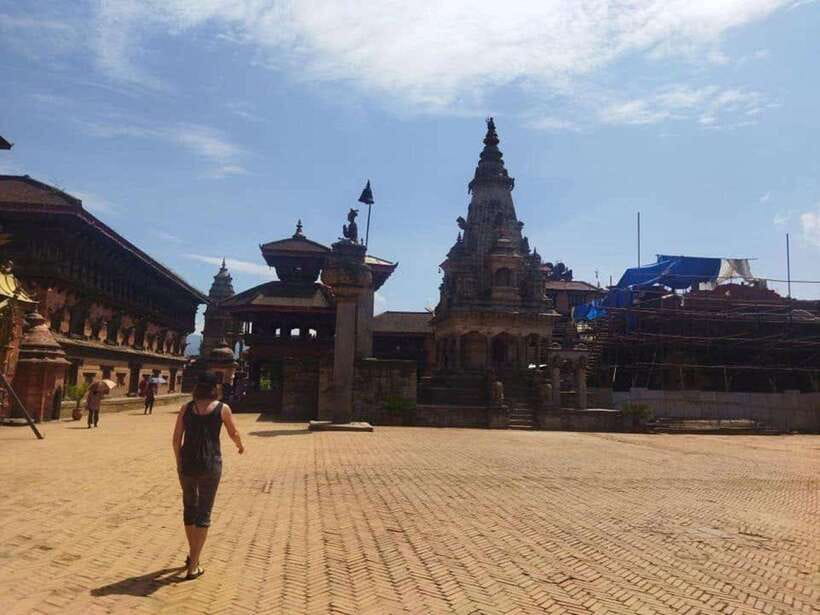
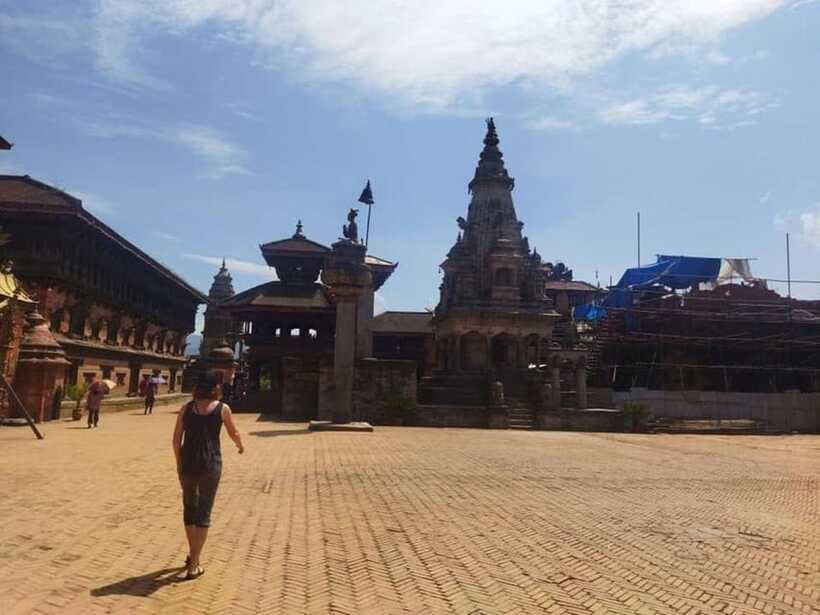
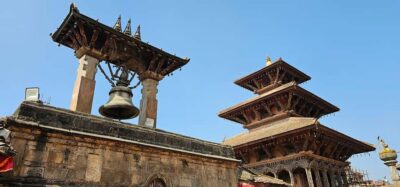
Bhaktapur receives the largest share of your sightseeing time, and that makes sense. The square is a historic center filled with intricate Newar architecture, temple courtyards, and carved details. An 80-minute guided visit gives you enough time to see the principal sights without making this a full-day town visit.
The 55-Window Palace is one of the key points on the route. Its name draws attention to the palace facade, while the surrounding courtyards help you understand how the area functioned as a royal center. Your guide can give meaning to the buildings instead of leaving you to identify them from a map.
The Vatsala Temple and Vigneswara Temple are also included among the highlights. Their importance is not only visual. They show how religious buildings, public squares, and palace spaces were woven together in Bhaktapur’s old city.
I would use this first stop to get comfortable with the tour’s walking pace. The visit involves moving through courtyards and historic areas, so shoes with good support are more useful than anything stylish. A hat and sunscreen are sensible, especially if the day is bright.
Eighty minutes can pass quickly in Bhaktapur. You may have to choose between lingering over architectural details, taking photographs, and listening closely to the guide. Since photography is restricted in certain areas, follow the guide’s instructions rather than assuming every courtyard or shrine is open for pictures.
The tradeoff is clear: this visit gives you a strong first look, but it will not satisfy you if Bhaktapur is your main reason for visiting Nepal. For that, you would want more time in the city. On this route, the benefit is that you see Bhaktapur alongside two major religious sites in a single morning or afternoon.
Pashupatinath and the Bagmati River cremation ghats
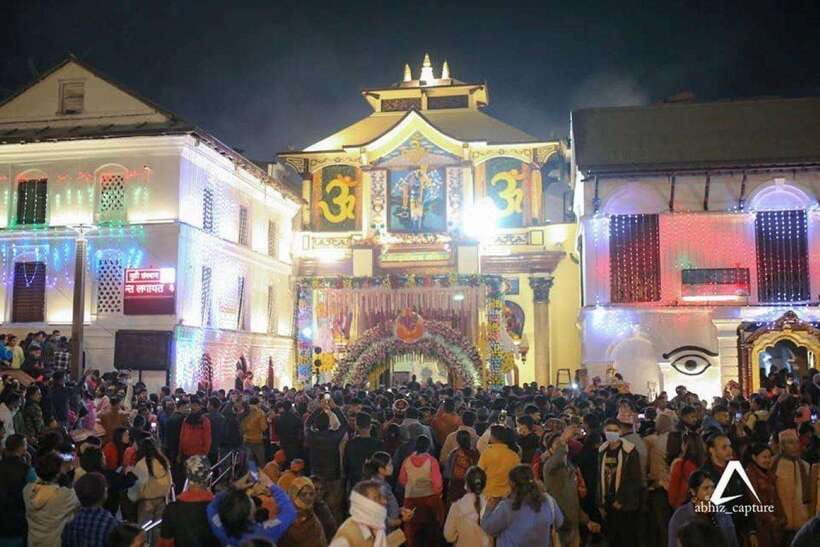
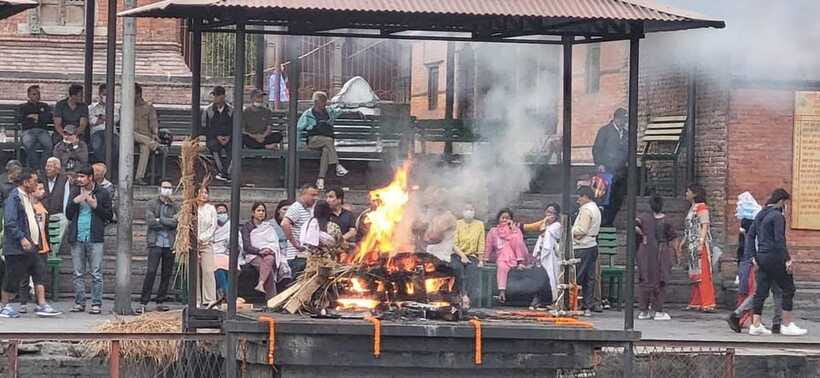
Pashupatinath is a different kind of stop. It is one of the holiest Hindu temples in Nepal and is dedicated to Lord Shiva. The complex includes shrines and statues, but its cultural weight comes from its continuing religious use rather than from architecture alone.
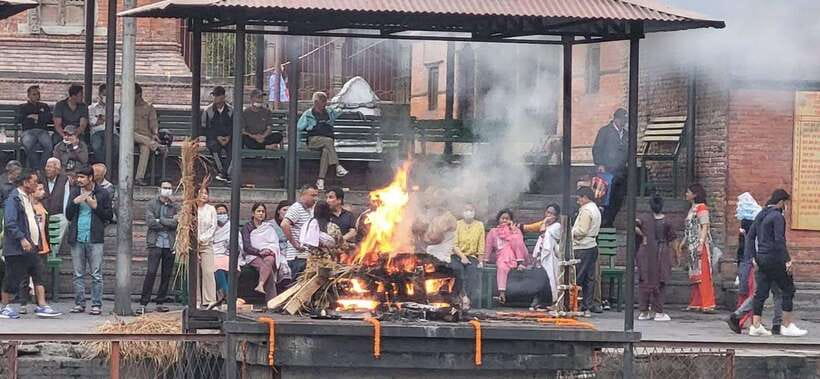
The tour includes time along the Bagmati River, where you may witness cremation rituals. This can be a powerful part of the day, but it requires a respectful attitude. You are observing an important Hindu funeral practice, not a staged cultural display.
That distinction matters. Keep your voice low, avoid intrusive behavior, and follow the guide’s directions about where you may stand and what you may photograph. Flash photography is not allowed, and photography is restricted in some areas, so your camera should remain secondary to respect.
The guided portion lasts about 40 minutes. That is enough for an introduction to the temple complex, the river setting, and the rituals taking place there, but it is not a long visit. You may find the stop emotionally heavier than Bhaktapur or Boudhanath, especially if a cremation is underway.
The tour is not suitable for wheelchair users or people with mobility impairments, and the walking involved is described as moderate. That is useful information here, since historic religious compounds can include uneven surfaces and routes that are not designed for easy access.
You should also remember that entry rules can vary within religious sites. The tour includes a visit to the complex, but you should not assume every interior area is open to every visitor. Let the guide explain where you can go.
Boudhanath Stupa and the rhythm of pilgrimage
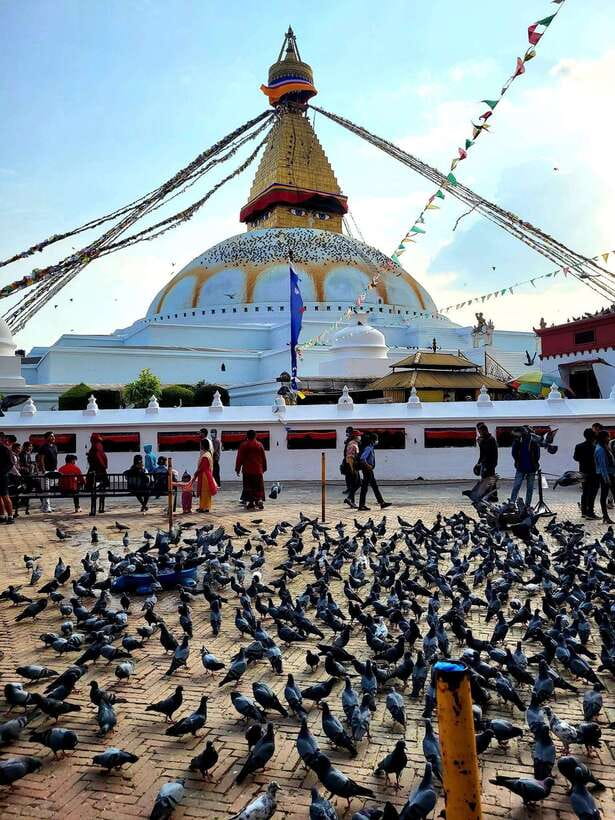
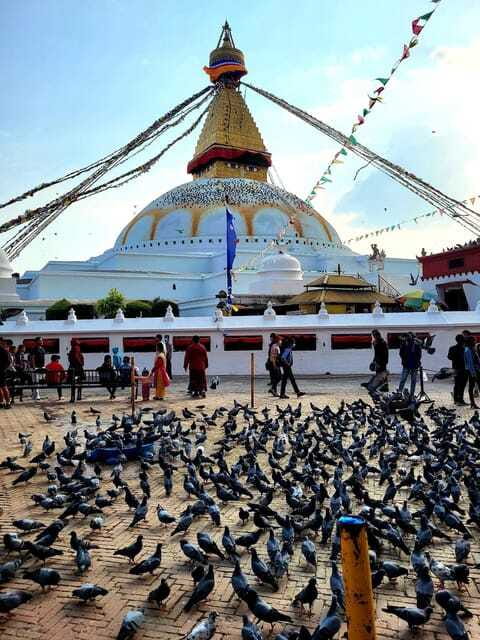
Boudhanath changes the tone again. The massive Buddhist stupa is one of the largest in the world, and monasteries surround it. Your 30-minute guided visit is short, but it gives you time to take in the scale of the structure and watch pilgrims move around it.
The most interesting feature for many people is the steady act of walking around the stupa while turning prayer wheels. That repeated movement creates a quiet, focused atmosphere. I like this stop because it gives you a chance to observe religious practice without needing a complicated explanation to understand the basic rhythm of the place.
Thirty minutes is enough for a first impression, but it is the tightest sightseeing segment on the schedule. You may want to spend longer watching the pilgrims, looking at the surrounding monasteries, or taking in the details of the stupa. If Boudhanath is especially important to you, consider returning independently with more time.
Photography can be appealing here, but the same rule applies: respect restrictions and listen to the guide. Bring a camera if you like, but do not let taking pictures distract from the setting.
The stop also gives the day a useful contrast. Pashupatinath presents Hindu worship and cremation rites beside the river. Boudhanath shows Buddhist pilgrimage in a more circular, communal setting. Seeing both in one tour helps you understand how different religious traditions shape Kathmandu’s public life.
More visits to Pashupatinath:
- Kathmandu Spiritual Sites: Bodhnath & Pashupatinath Tour
★ 5.0 · 185 reviews - Kathmandu: Pashupatinath Temple Evening Aarati Tour
★ 5.0 · 36 reviews - Kathmandu: Pashupatinath Temple Aarti Night Tour
★ 4.8 · 29 reviews - Pashupatinath Temple, Hindu Crematorium and Aarati in-depth Tour
★ 5.0 · 25 reviews
How the five-hour schedule feels in practice
The official duration is five hours, including pickup in Kathmandu and return to the city. The stated guided times total two and a half hours, which leaves approximately two and a half hours for transportation and transitions.
That is a reasonable design for a private half-day tour, but timing can feel brisk. Bhaktapur receives 80 minutes, Pashupatinath 40, and Boudhanath 30. You will need to keep moving, especially if traffic slows the route.
The private format is a real advantage. You are not waiting for a large group to board a bus or gather at every doorway. Private transportation also makes the route easier to manage, particularly when you want to ask the guide for clarification or need a short pause.
The tour includes bottled water, but meals and other drinks are not included. I would eat before setting out or carry money for refreshments. Local currency is useful because not every place accepts credit cards.
The experience is offered with a live English-speaking guide. No guide’s name is provided, so you cannot request a specific person in advance based on the available information. Still, the guide’s role is central, especially at Pashupatinath, where context and etiquette matter as much as what you see.
The real price: $71 plus entrance fees
At $71 per person, the tour is not the cheapest way to see these sites, especially once you add approximately $25 for UNESCO monument entrance fees. That brings the expected cost to about $96 per person before meals, beverages, and personal expenses.
The value depends on what you want from the day. If you prefer to arrange local transport, research the sites yourself, and move at your own pace, you may not need a private guided outing. If you want one vehicle, one English-speaking guide, and a carefully connected route, the added cost buys convenience and structure.
The private-group format also matters if you are traveling with family or friends. You can share the expense while keeping the day more flexible than a large group tour. The tour is less appealing if you want a slow photographic study or extended time at one location.
The headline price should therefore be treated as a starting point, not the final budget. Add the monument fees, then allow for food and personal spending. The provider offers free cancellation up to 24 hours in advance and a reserve-now, pay-later option, which helps if your Kathmandu plans are still shifting.
What to bring and how to behave
You should dress for walking and religious sites. Comfortable shoes are the most important item, followed by a hat, sunscreen, and water. Bottled water is included, but carrying your own backup is still practical.
A camera is welcome where photography is permitted. Do not use flash, and do not photograph restricted areas simply because other people appear to be doing so. At Pashupatinath in particular, be discreet around the cremation grounds.
Respectful conduct is not a minor detail on this tour. You are visiting active Hindu and Buddhist sites, not museum displays. Follow the guide, keep a calm manner, and be prepared for the tone at Pashupatinath to be more solemn than at the other stops.
The tour is not suitable for children under six, people with mobility impairments, or wheelchair users. Moderate walking is involved, and the schedule does not appear designed for a slow-access route.
Who will appreciate this Kathmandu tour?
I would recommend this experience to you if you have limited time in Kathmandu and want to cover several major cultural sites without arranging separate transport. It is also a good match if you prefer explanations in English and want the comfort of a private vehicle.
The route suits first-time visitors who want a broad introduction to Nepal’s religious and architectural traditions. You will see royal-era Bhaktapur, Hindu Pashupatinath, and Buddhist Boudhanath in one compact outing.
It is less suitable if you want to spend a full day in Bhaktapur, linger at Boudhanath, or approach Pashupatinath at your own quiet pace. The schedule is focused and efficient, not spacious.
The strongest part of the experience is the range of what you see. A French-speaking customer described the Bhaktapur visit as especially well explained, praised the great stupa, and found the funeral rites fascinating. That matches the route’s appeal: the guide’s explanations can turn three famous stops into a connected cultural story rather than a simple checklist.
Should you book this private tour?
Book it if you want an organized five-hour introduction to Kathmandu’s major sacred and historic sites, with private transportation and an English-speaking guide. The combination of Bhaktapur’s courtyards, Pashupatinath’s serious river rituals, and Boudhanath’s prayer-wheel circle gives you plenty of variety in a short time.
Think twice if you dislike fixed schedules or want long visits at individual sites. Also budget for about $25 in entrance fees, and choose another option if mobility limitations make moderate walking difficult.
For a compact first look at Kathmandu’s cultural core, I find the route worthwhile. Just arrive prepared for a brisk pace and approach Pashupatinath with the respect it deserves.
FAQ
How long does the tour last?
The tour lasts five hours, including pickup in Kathmandu and return to Kathmandu.
Which places are visited?
The tour visits Bhaktapur Durbar Square, Pashupatinath Temple, and Boudhanath Stupa.
How much time is spent at each main site?
The guided visit lasts about 80 minutes at Bhaktapur Durbar Square, 40 minutes at Pashupatinath Temple, and 30 minutes at Boudhanath Stupa.
Is transportation included?
Yes. Private transportation is included, along with bottled water.
Is a tour guide included?
Yes. A professional, live English-speaking guide is included.
Are entrance fees included in the price?
No. UNESCO monument entrance fees are not included and cost around $25.
Can I cancel the booking?
Yes. You can cancel up to 24 hours in advance for a full refund.
Is the tour suitable for wheelchair users?
No. The tour is not suitable for wheelchair users, people with mobility impairments, or children under six years old.
More Visits to Boudhanath
- PashupatiNath and BoudhaNath – Private/Small Group
★ 5.0 · 18 reviews - Sacred Pashupatinath: Aarati,Cremation Rites & Boudha Stupa
★ 5.0 · 18 reviews - Kathmandu City in One Day with Bodhnath Stupa
★ 5.0 · 10 reviews - Private Half-Day Tour of Boudhanath and Pashupatinath Temples in Kathmandu
★ 4.5 · 9 reviews
New in the Kathmandu listings
- Traditional Momo Making Class★ 5.0 · 10 reviews
- Kathmandu: Ancient City Kirtipur & Pharping Monastery Tour★ 5.0 · 2 reviews
- Kathmandu to Pokhara Premium sofa bus ticket★ 4.0 · 17 reviews
- Women Empowerment Project(Nepali cooking class & jewelry workshop★ 5.0 · 15 reviews
- 7-Day Langtang Valley Trek from Kathmandu★ 5.0 · 1 review
- Kathmandu 2 Nights 3 Days Chitwan Jungle Safari Tour★ 5.0 · 9 reviews
- Yoga Experience Day Trip with Private Transfer From Kathmandu★ 4.0 · 2 reviews
- Wildlife Adventure in Chitwan Nepal★ 4.0 · 4 reviews
Bhaktapur Tours, compared.
Day Trip to Bhaktapur and Panauti from Kathmandu
Read our review →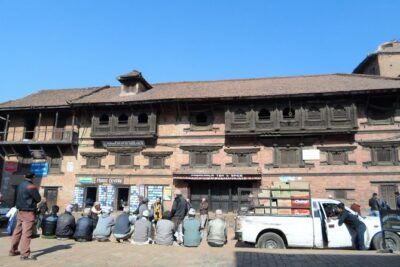
Nagarkot Sunrise & Bhaktapur UNESCO Heritage Private Tour
Read our review →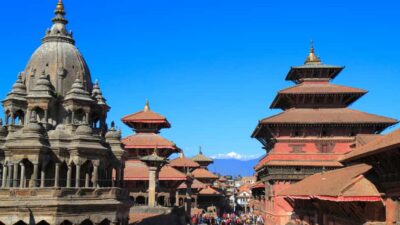
Bhaktapur & Nagarkot Day Tour with Lunch – Private/Group
Read our review →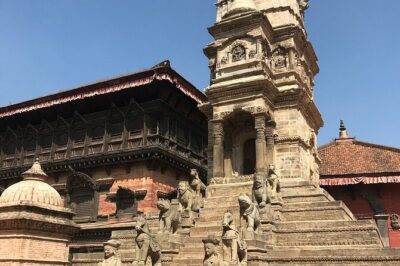
Nagarkot Sunrise & Bhaktapur Heritage Tour -Private Full Day Trip
Read our review →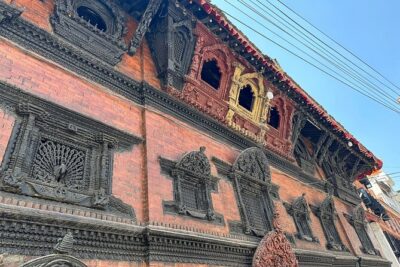
Browse the lists this tour appears in