
REVIEW · ANNAPURNA CIRCUIT TREKS
Kathmandu: 11-Day Annapurna Circuit Guided Trek via Tilicho
The high pass is only part of the story. This 11-day Annapurna Circuit trek links mountain villages, high alpine trails, Tilicho Lake, and the sacred town of Muktinath for $490 per person. I like the extra visit to Tilicho Lake and the patient guiding style reported from Bipin Rijal and Mahesh, who adjusted the pace instead of pushing people uphill. The main drawback is the long transport at the start and finish, plus basic tea-house comfort at high altitude.
I also like the way this trip includes the main practical pieces: permits, guide insurance, sleeping bag, trekking poles, luggage storage, meals when you choose the Meals Package, and transport from Kathmandu or Pokhara. You still need to budget for insurance, drinks, showers, charging, bottled or boiled water, and a porter if you want help with your main bag.
In This Review
- Five details that shape this trek
- Why Tilicho makes the Annapurna Circuit special
- Day 1: ten hours from Kathmandu to Chame
- Day 2: Chame to Upper Pisang
- Day 3: Upper Pisang to Ngawal
- Day 4: Ngawal to Manang, with time to adjust
- Day 5: Manang to Tilicho Base Camp
- Day 6: the long push to Tilicho Lake
- Day 7: Shri Kharka to Yak Kharka
- Day 8: Yak Kharka to Thorong Phedi
- Day 9: Thorong La to Muktinath, the toughest day
- Day 10: descending to windy Jomsom
- Day 11: eight hours by bus to Pokhara
- What $490 really covers
- Guides, comfort, and the human side
- What to pack and how to prepare
- Should you book this Annapurna trek?
- FAQ
- How long is the Annapurna Circuit trek via Tilicho?
- What is the highest point on the trek?
- Is Tilicho Lake included in the route?
- Are meals included?
- Is a porter included?
- What transport is included?
Five details that shape this trek
- Tilicho Lake at about 5,050 meters: This high mountain lake adds a demanding but memorable detour to the standard Annapurna route.
- Thorong La Pass at 5,416 meters: The pass crossing is the hardest day, with about 12 hours of walking from Thorong Phedi to Muktinath.
- A useful acclimatization stop in Manang: You get time to rest, explore the village, and adjust before going higher.
- A low advertised price: At $490, the package covers major trekking costs, but extras and the meal-plan choice matter.
- Guides who adapt to your pace: Bipin Rijal and Mahesh received especially strong praise for care, companionship, and practical help.
Why Tilicho makes the Annapurna Circuit special
The Annapurna Circuit already gives you a fine cross-section of Nepal: green foothills, high mountain valleys, old villages, dry Mustang scenery, and a major Himalayan pass. Adding Tilicho Lake gives the trip a second high point, literally and otherwise.
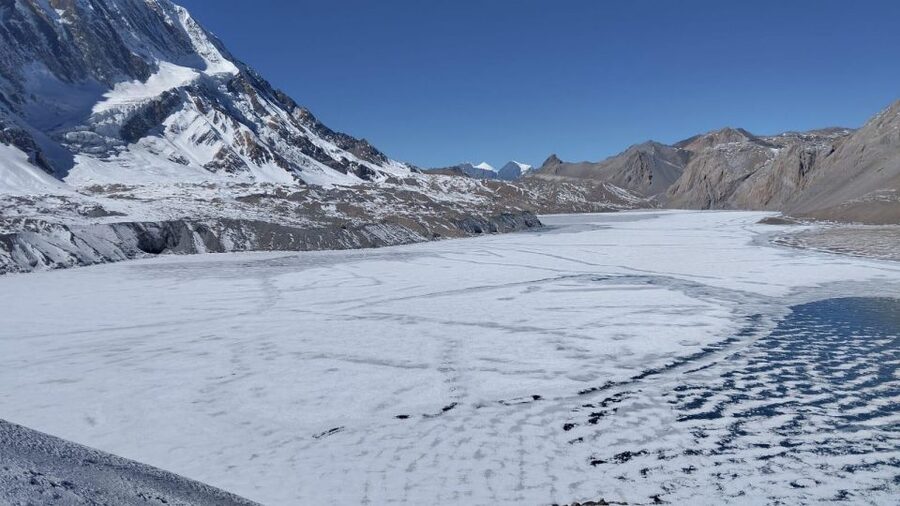
Tilicho is listed at about 5,050 meters, although the daily details give a slightly different figure. Either way, this is serious altitude. The route takes you away from Manang toward Tilicho Base Camp, then up to the lake before returning toward Shri Kharka. You should see it as an extra mountain day, not a quick side trip.
I like that this route does not rush straight from low elevation to Thorong La. You spend nights at Chame, Upper Pisang, Ngawal, Manang, Tilicho Base Camp, Shri Kharka, Yak Kharka, and Thorong Phedi. That gradual rise is important, though it does not remove the need to watch for altitude problems.
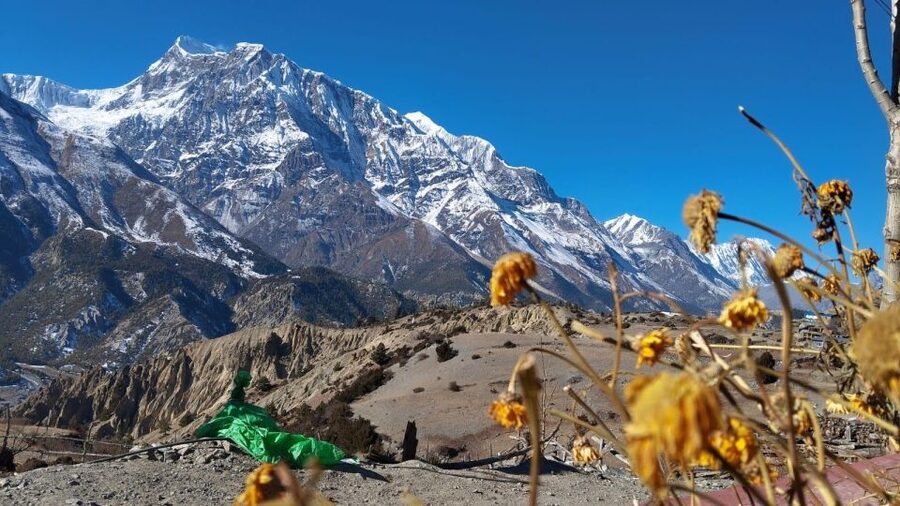
The scenery changes constantly. Around Upper Pisang and Ngawal, you get broad views toward Annapurna II, Annapurna III, and Gangapurna. Near Tilicho, the surroundings become more spare and alpine. After Thorong La, the dry, open country around Mustang feels like a different Nepal from the wetter valleys you crossed earlier.
More Annapurna Circuit treks:
- Kathmandu: 9-Day Annapurna Circuit Trek via Thorong La Pass
★ 5.0 · 17 reviews - Kathmandu: 10-Day Annapurna Circuit Trek via Thorong La Pass
★ 5.0 · 10 reviews - Kathmandu/Pokhara: Annapurna Circuit Trek 10 days
★ 5.0 · 6 reviews
Day 1: ten hours from Kathmandu to Chame
The first day is mostly transport. From Kathmandu, you take a bus to Besisahar, then continue by shared Jeep through Dharapani to Chame. The schedule gives roughly 10 hours for the full journey, so this is not a gentle sightseeing transfer.
If you start in Pokhara, the pickup arrangement is different, but the included transport details still specify the bus to Besisahar, the shared Jeep onward to Chame, and the bus from Jomsom to Pokhara. Confirm the exact pickup plan before departure, especially if you are beginning from Pokhara rather than Kathmandu.
This is one of the trip’s less comfortable sections. A shared Jeep keeps the cost down, but space and road conditions can vary. One customer described concern about a private Jeep driver and luggage handling, so keep important items with you and confirm who is responsible for your duffel before every transfer.
Chame sits at 2,670 meters. You have already gained noticeable altitude before the first real trekking day, so use the evening for food, water, and rest rather than trying to squeeze in too much activity.
Day 2: Chame to Upper Pisang
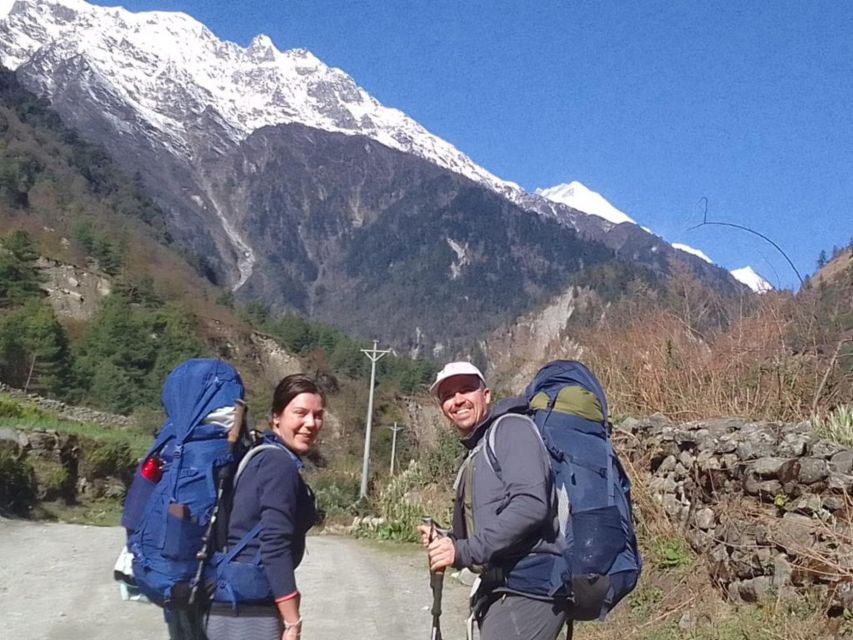
The trek from Chame to Upper Pisang takes about six hours and brings you properly into the Annapurna high country. Upper Pisang is a picturesque mountain village with strong views and a more traditional feel than a road stop.
This is a good day to settle into the walking rhythm. You will be on your feet for several hours, but the bigger issue is the rising elevation. Pay attention to how you feel, walk steadily, and tell your guide about headaches, nausea, unusual tiredness, or poor sleep.
Tea-house accommodation is part of the experience and part of the compromise. Rooms are basic, and standards can differ from one stop to another. One direct account specifically pointed out that some tea houses need better upkeep, including rooms used by guides and porters. That is useful context: this is mountain lodging, not a hotel circuit.
Day 3: Upper Pisang to Ngawal
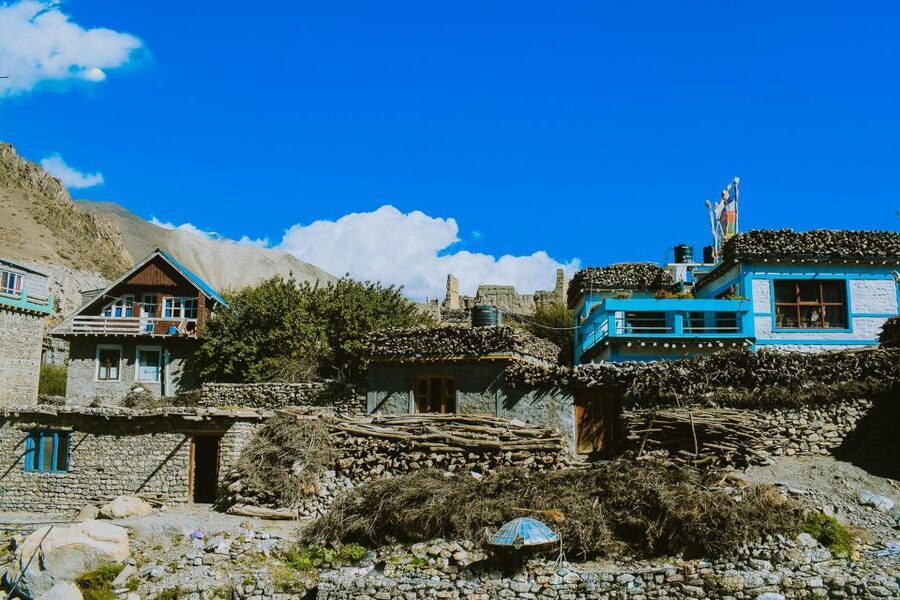
The route continues uphill to Ngawal at about 3,700 meters. The day takes around six hours and gives you views toward Annapurna II, Annapurna III, and Gangapurna, along with wide views down the valleys.
Ngawal is one of the memorable village stops because of its hillside setting and high views. You may also visit a cave near the village on the following day, adding a small cultural and local detail to the route.
The elevation gain here deserves respect. From Chame to Ngawal, your sleeping altitude rises by about 1,000 meters. The itinerary includes a rest day in Manang next, which helps, but you should still avoid racing to the next tea house.
More walking in the hills of Pokhara:
- Poon hill Trek 3 days
★ 5.0 · 176 reviews - Trekking in Annapurna/Langtang/Everest/Upper Mustang regions
★ 5.0 · 161 reviews - Pokhara: 4-Day Ghorepani, Poonhill & Ghandruk Mountain Trek
★ 5.0 · 132 reviews - Ghorepani – Poon Hill Trek 3N-4D
★ 5.0 · 125 reviews
Day 4: Ngawal to Manang, with time to adjust
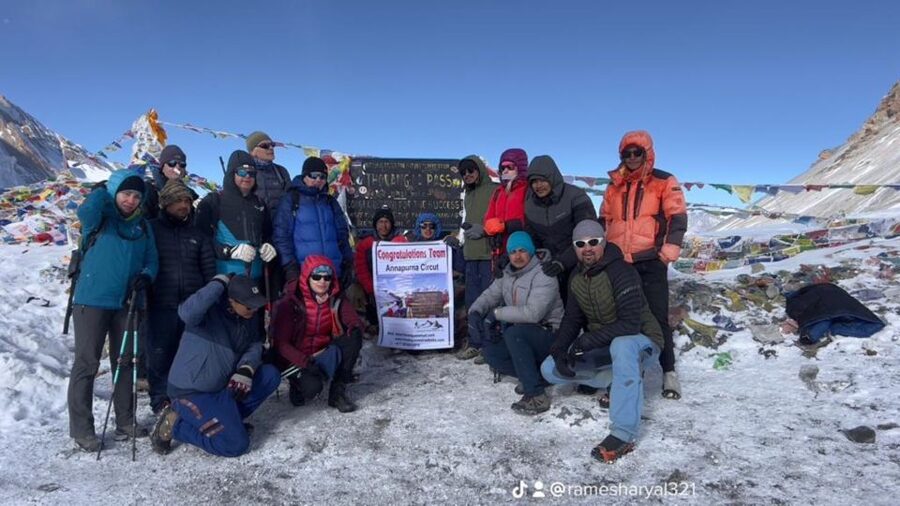
The walk to Manang is listed as an acclimatization day, even though it includes trekking. You explore the nearby cave, continue to Manang at 3,540 meters, and then have time to rest and look around the village.
This is a valuable pause before Tilicho. Manang is high enough that your body needs time to adjust, and the schedule gives you a chance to enjoy mountain views without treating every hour as a test of endurance.
The wording of the day is worth clarifying with the company. It says Ngawal to Manang and calls the day an acclimatization day, so ask how much walking and free time are planned. A flexible guide can make this a sensible recovery day rather than another hard push.
Day 5: Manang to Tilicho Base Camp
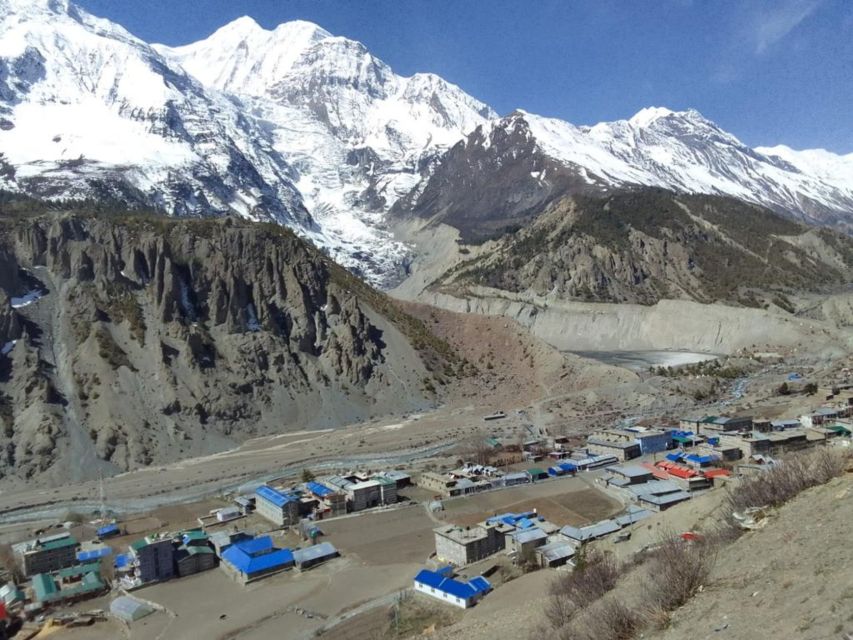
From Manang, you walk for about six hours toward Tilicho Base Camp at 4,150 meters. The route moves into more exposed alpine country, with fewer signs of ordinary village life and a stronger sense of being in the high Himalayas.
This is where the trek becomes more demanding. You are sleeping above 4,000 meters, and the next day includes the climb toward the lake. Keep your daypack light, protect yourself from sun and cold, and drink regularly.
The trip includes a sleeping bag and trekking poles, which are useful here. You should still bring warm clothing, a jacket, sunglasses, sunscreen, comfortable boots, a headlamp, and a water bottle. The supplied guidance also recommends insurance with high-altitude coverage. That is not a luxury on this route.
Day 6: the long push to Tilicho Lake
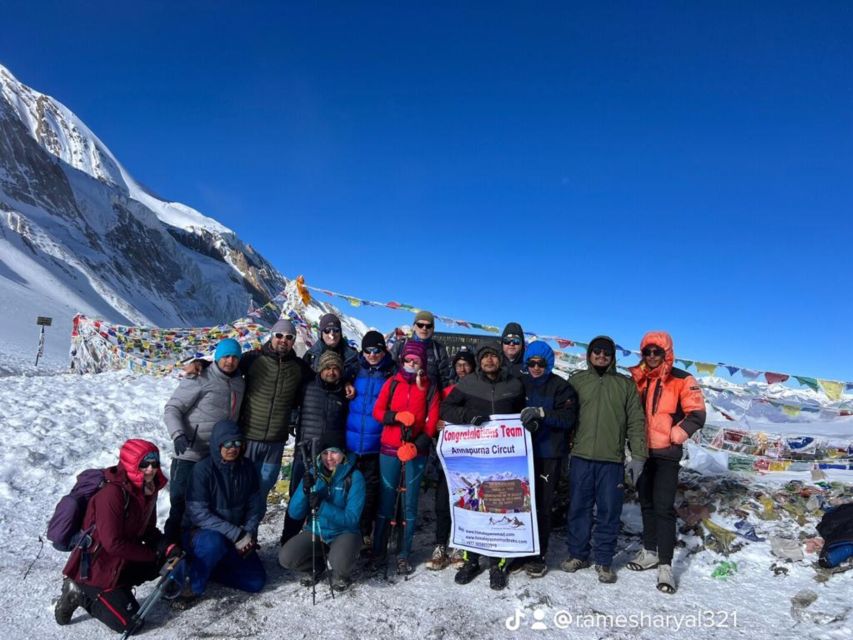
The Tilicho day is the emotional center of the trip. The schedule gives about six hours for the walk from Base Camp to Tilicho Lake, listed at roughly 5,050 meters, followed by a descent through the high country toward Shri Kharka at about 4,050 meters.
The distance and timing can vary with conditions and pace, so do not treat six hours as a guarantee. You are gaining and losing altitude in the same day, and the air is thin. A patient guide matters here. Juan Pedro gave Bipin Rijal especially strong praise for staying attentive without applying pressure, while Callum said the visit to Tilicho was worth the extra time.
Expect the lake to be surrounded by stark mountain scenery rather than trees or comfortable facilities. The reward is the setting: a quiet body of water in a high, remote basin. Bring layers because mountain weather can change quickly, even when the morning begins clear and sunny.
Day 7: Shri Kharka to Yak Kharka
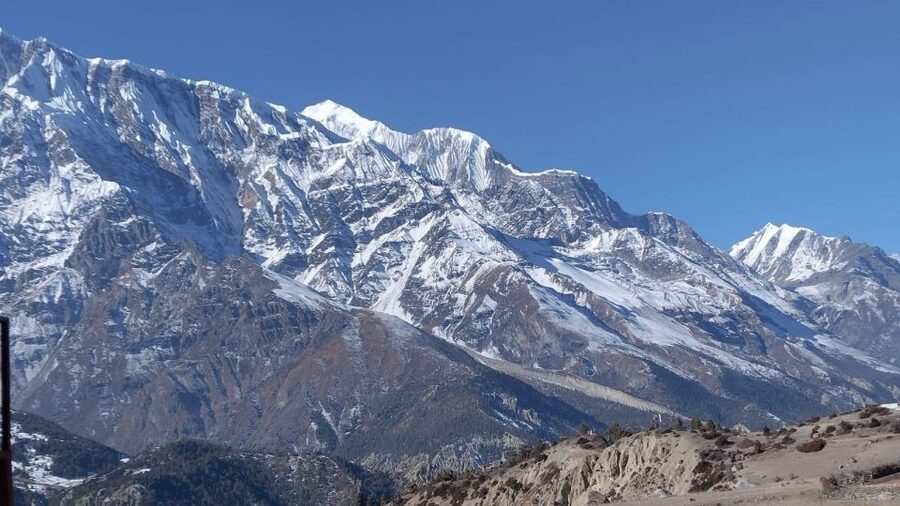
After the Tilicho excursion, you walk for about six hours to Yak Kharka, which is listed at approximately 4,050 meters. This is still high, but the route helps place you back on the main approach toward Thorong La.
The key feature of this day is recovery. You have just completed the highest sightseeing stop of the trip, and you need to preserve energy for the pass. Keep the pace controlled and use your guide’s judgment if you are struggling.
Yak Kharka is not a luxury stop. Think of it as a practical mountain base where you eat, sleep, and prepare for the next stage. This is also a good evening to check your headlamp, warm layers, water, and personal items.
Day 8: Yak Kharka to Thorong Phedi
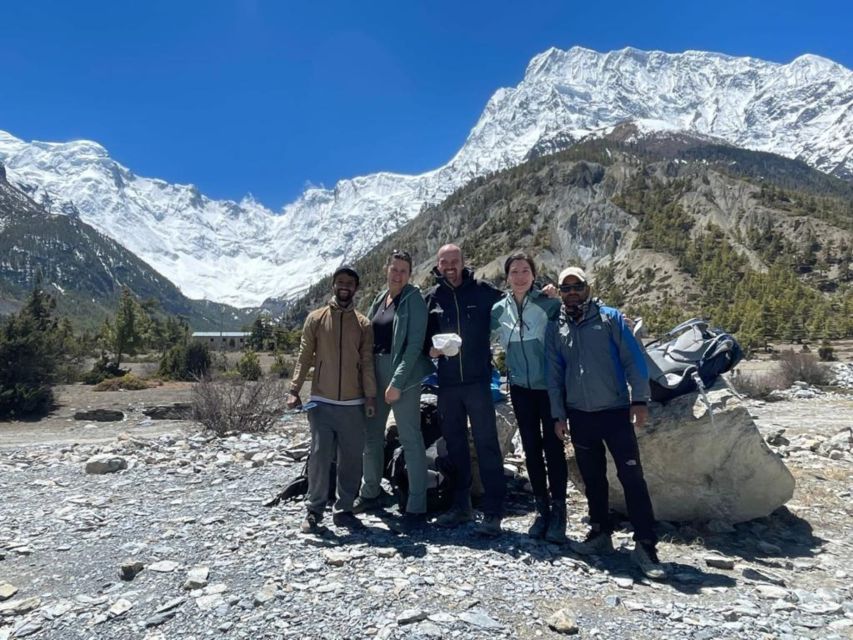
The walk to Thorong Phedi takes about six hours and ends at 4,450 meters. Thorong Phedi is the staging point for the pass crossing, so the day is less about sightseeing and more about getting ready.
You should aim to arrive with enough energy for an early start the next morning. Eat a proper dinner, organize your bag, and ask your guide about the planned departure time. At this height, small delays can matter because the pass day is long.
This is another point where the private-group format helps. You can discuss pace, rest stops, and how you are feeling without being tied to a large group schedule. The tour is described as a private group experience, but ask how many people will actually be in your booking.
Day 9: Thorong La to Muktinath, the toughest day
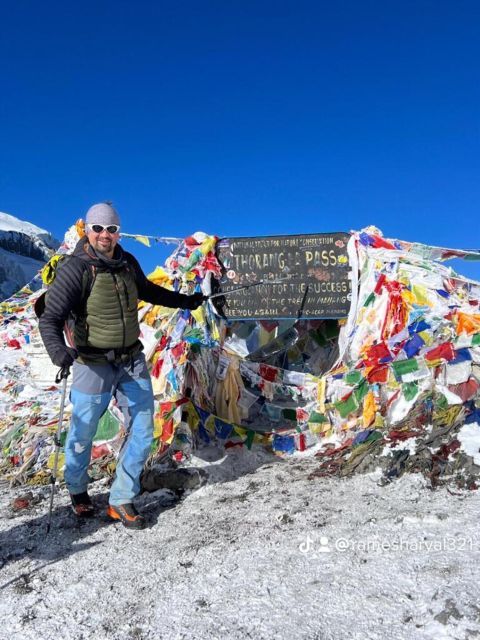
The crossing from Thorong Phedi to Muktinath is the most demanding part of the trek. The schedule allows about 12 hours for the ascent to Thorong La at 5,416 meters and the long descent to Muktinath at 3,800 meters.
The pass itself is the big achievement, with wide mountain views and a strong feeling of crossing from one side of the Annapurna region to another. But the downhill walk can be just as tiring as the climb. Trekking poles are especially useful here, and you should not underestimate the strain on knees and legs.
Muktinath adds cultural meaning to a hard physical day. It is a sacred pilgrimage site for Hindus and Buddhists, and the village gives you a chance to slow down after the pass. Respect local customs, keep clothing suitable around religious sites, and follow your guide’s advice.
A 12-hour day at high altitude is not suitable for everyone. You should be fit for long uphill and downhill walking, and pregnancy is specifically excluded. If you become unwell, your guide and your insurance arrangements matter far more than the planned timetable.
Day 10: descending to windy Jomsom
The route drops to Jomsom in about five hours. At approximately 2,720 meters, Jomsom feels lower and easier after Thorong La, but it also marks a clear change into the dry, desert-like Mustang region.
The scenery becomes more open and arid, with a sharp contrast to the greener sections near the start. Jomsom is described as a windy town, so keep a jacket handy even when the altitude loss makes the air feel warmer.
This is your final trekking night. It can be a welcome chance to rest, sort your luggage, and reflect on the route before the last bus journey.
Day 11: eight hours by bus to Pokhara
The final day takes you from Jomsom to Pokhara by bus, with mountain views along the way. The schedule gives about eight hours, so allow for a full day rather than expecting a quick transfer.
You finish in Pokhara, where the package includes drop-off at your hotel. The tour does not include extra nights in Kathmandu or Pokhara if you arrive early, leave late, or return from the mountains ahead of schedule for reasons outside the planned program. Plan a buffer if you have a fixed international flight.
What $490 really covers
At $490 per person, the price is attractive for an 11-day high-altitude trek. It includes hotel pickup and drop-off, an English-speaking local guide, permits, paperwork, government taxes, luggage storage, 10 nights of trek accommodation, guide rescue insurance, sleeping bag, trekking poles, a porter duffel bag, and the listed transport.
It also covers staff costs such as meals, accommodation, salary, equipment, insurance, and transport. If you select the Meals Package, breakfast, lunch, and dinner during the trek are included. Confirm that choice when booking, since the wording makes the meal inclusion conditional.
The price does not include a porter. You can arrange one for an extra charge, and that may be worthwhile if you do not want to carry your main bag through the Tilicho and Thorong La sections.
You also pay for travel and rescue insurance, drinks, bottled or boiled water, showers, phone calls, laundry, battery charging, bar bills, and personal expenses. International flights and the Nepalese visa fee are separate. A private vehicle is available at additional cost, but the standard transport is by bus and shared Jeep.
The free cancellation period is up to 24 hours before departure, and you can reserve now and pay later. Those terms help if your schedule is still moving, but they do not replace high-altitude insurance.
Guides, comfort, and the human side
The strongest feature is the guide service. Bipin Rijal was described as attentive, supportive, and willing to match an individual pace without pressure. Mahesh received similar praise for arranging tea-house rooms, helping with the daily routine, and being good company.
Those details matter more than polished accommodation on a route like this. A guide who watches your condition, handles tea-house bookings, and communicates clearly can make a difficult day manageable.
The provider, Himalayan Nomad Treks Pvt. Ltd., offers English, Hindi, and Nepali guiding. The experience is set up as a private group, which should give you more flexibility than a fixed large-group departure, though the exact group size should be confirmed.
What to pack and how to prepare
Bring your passport or identification, warm clothing, a jacket, sunglasses, sunscreen, comfortable boots, a sleeping bag, trekking poles, a headlamp, and a water bottle. Layering is important because conditions can shift between sun, rain, and snow.
You should also bring enough personal money for excluded costs. Bottled or boiled water, charging, showers, laundry, drinks, and extra porters are not covered.
Physical preparation should focus on long days and inclines. You do not need to race, but you do need the strength to walk for six hours on many days and up to 12 hours on the pass crossing. Build endurance before arriving, and let your guide know early if altitude is affecting you.
Should you book this Annapurna trek?
Book it if you want a demanding mountain route with two major goals: Tilicho Lake and Thorong La Pass. The price offers good value when you count the permits, guide, equipment, accommodation, staff costs, and transport, especially for a private-group trip.
Choose another plan if you want short walks, guaranteed comfort, or simple road access. The first and last days are long, tea houses are basic, and the altitude is real.
For the best experience, confirm the Meals Package, porter cost, group size, transport details, and altitude insurance before paying. If you are fit, flexible, and ready for cold nights and a very long pass day, this is a strong way to see the Annapurna region.
FAQ
How long is the Annapurna Circuit trek via Tilicho?
The experience lasts 11 days, beginning from Kathmandu or Pokhara and ending with drop-off at a hotel in Pokhara.
What is the highest point on the trek?
The highest point is Thorong La Pass at 5,416 meters, or 17,769 feet. Tilicho Lake is listed at about 5,050 meters.
Is Tilicho Lake included in the route?
Yes. The route goes from Manang to Tilicho Base Camp, continues to Tilicho Lake, and then proceeds toward Shri Kharka.
Are meals included?
Breakfast, lunch, and dinner during the trek are included when you select the Meals Package. Drinks and bottled or boiled water are not included.
Is a porter included?
No. A porter is available at an additional cost, while a porter duffel bag is included.
What transport is included?
The standard plan includes a bus from Kathmandu to Besisahar, a shared Jeep from Besisahar to Chame, and a bus from Jomsom to Pokhara. A private vehicle is available for an extra fee.
New in the Pokhara listings
- Pokhara: Pokhara Highlights Tour by Bus★ 3.6 · 10 reviews
- Discover Pokhara in Style: Private Vehicle Service with Driver★ 5.0 · 5 reviews
- Multi-Day Tour from Pokhara, Poon Hill and Mulde Trek★ 5.0 · 1 review
- Pokhara in 5 Hours: Lake, Museum, Cave, Falls & Pagoda Hill★ 4.5 · 16 reviews
- Private 4 Day Poon Hill Trek from Pokhara★ 5.0 · 16 reviews
- 4 Day Mardi Himal Base Camp Trek from Pokhara★ 5.0 · 18 reviews
- From Pokhara Full Day Entire Pokhara Tour with Guide★ 5.0 · 1 review
- Things to do at Pokhara World Peace Stupa tour with Guide★ 5.0 · 2 reviews
Annapurna Circuit Treks, compared.
15-Day Private Annapurna Circuit Trek from Kathmandu
Read our review →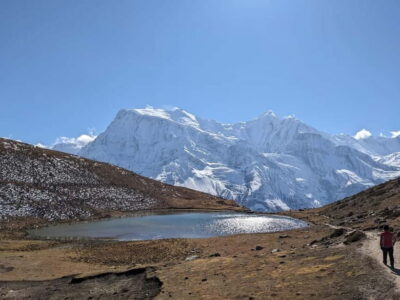
Browse the lists this tour appears in