
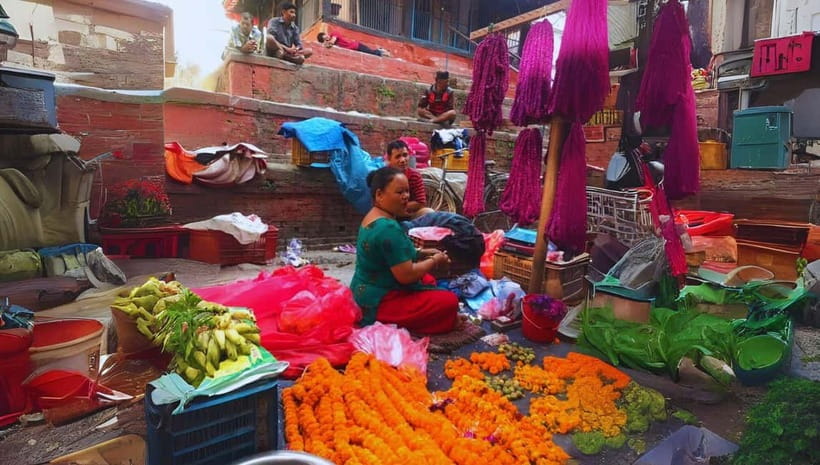
REVIEW · WALKING TOURS
Kathmandu: Bazaar Walking Tour with Refreshments
Kathmandu reveals itself one alley at a time. This 2.5-hour walk brings you into Asan Tole and Indra Chowk, where produce, textiles, jewelry, shrines, and daily trade crowd the old city streets. I like the focus on ordinary local life, and I like that the tour adds quiet Newari courtyards and sacred sites rather than stopping at markets alone.
The English-speaking guide gives useful context about trade, religion, architecture, and the 2015 earthquake. The main consideration is the walking itself: narrow lanes, active market streets, and uneven city surfaces make this a poor choice for wheelchair users and a better fit for people wearing sturdy, comfortable shoes.
In This Review
- Key points at a glance
- Starting with a drink at Electric Pagoda Cafe
- Asan Tole, Kathmandu’s working market crossroads
- Indra Chowk and the old city’s layered character
- Annapurna Ajima Temple and Aksh Bhairab Shrine
- Nyalon, the Fish Stone, and small sacred details
- Yita Chapo and the visible cost of the 2015 earthquake
- The courtyards behind Kathmandu’s lanes
- What Saroj’s guiding style adds
- Is $18 a fair price?
- Who should book this Kathmandu walk?
- Final verdict: a useful first look at old Kathmandu
- FAQ
- How long does the Kathmandu Bazaar Walking Tour last?
- Where does the tour start?
- Does the tour return to Thamel?
- What language is the tour offered in?
- What sites are included?
- Are food and drinks included?
- Is the tour suitable for wheelchair users?
Key points at a glance
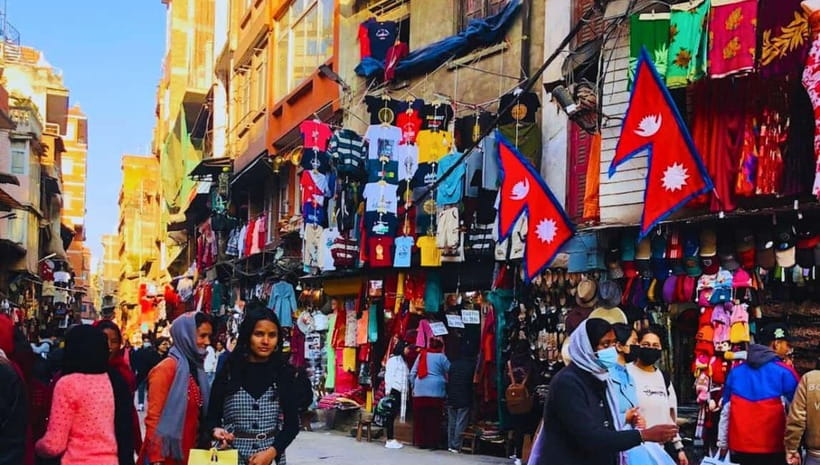
- Asan Tole and Indra Chowk: Two of central Kathmandu’s best-known traditional markets, with food, clothing, crafts, jewelry, and local trade happening around you.
- Newari courtyards: Takse Baha, Kwathu Baha, Haku Baha, Dhalasikna Baha, Dagu Baha, Asan Baha, and Hwakha Baha offer a look at shared religious and residential spaces.
- Sacred landmarks: Annapurna Ajima Temple and the Aksh Bhairab Shrine bring Hindu and Buddhist traditions into the walk.
- Nyalon, the Fish Stone: A decorated and respected local site that shows how sacred objects can sit right beside everyday commerce.
- Yita Chapo: The remains of a structure destroyed in the 2015 earthquake give the city’s recent past a visible place in the tour.
- Small-group format: With no more than 10 participants, the guide can explain details without turning the walk into a moving crowd.
Starting with a drink at Electric Pagoda Cafe
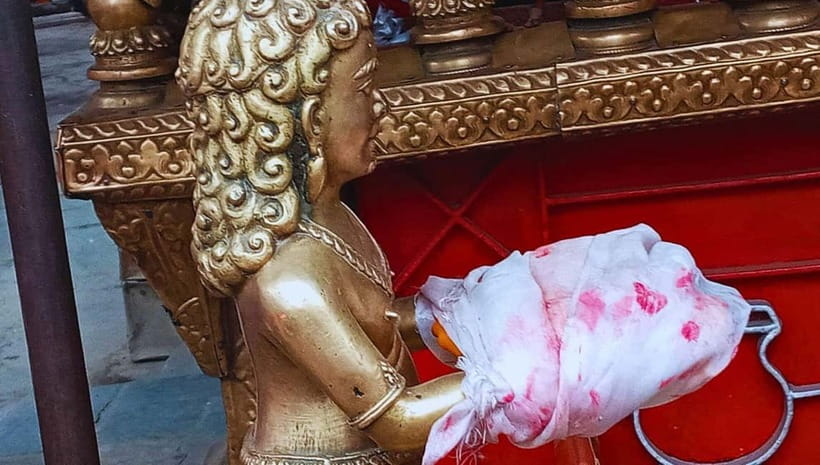
The walk begins at Electric Pagoda Cafe, where you receive a refreshing drink before setting out. It is a simple touch, but a useful one. Kathmandu’s market lanes can be busy and warm, and starting with a short pause gives you a chance to meet the guide and prepare for the walk.
Pickup and drop-off from Thamel are available if you select that option. If you arrange your own way to the start, check the exact meeting instructions when booking. The stated route returns to Thamel after the market portion, making this easy to fit into a day based in the area.
The tour lasts 2.5 hours. That is long enough to see several places and hear their stories, but short enough to combine with other Kathmandu plans. You will spend roughly an hour around Ason, or Asan, and another hour at Indra Chowk, with time also given to shrines, courtyards, and connecting lanes.
The group is limited to 10 people. I consider that a useful size for this setting. In a market, a large group can block passageways and make it hard to hear. A smaller party gives you a better chance to pause near a carving or shrine while the guide explains what you are seeing.
More Walking Tours in Kathmandu
- Kathmandu Food and Drink Walking Tour
★ 5.0 · 266 reviews - Kathmandu: Food and Drink Walking Tour
★ 4.9 · 119 reviews - Walking Street Food Tour in Kathmandu
★ 5.0 · 111 reviews
Asan Tole, Kathmandu’s working market crossroads
Asan Tole is the first major stop, and it gives you the clearest sense of Kathmandu as a living trading center. The streets carry fresh produce, traditional textiles, intricate jewelry, handcrafted souvenirs, and other daily goods. This is not a quiet museum display. Shops and stalls operate around you, and the market’s energy comes from regular commerce.
The guide explains how farmers bring produce into the city and how trade has shaped these crossroads over the centuries. That background makes the market easier to read. Instead of seeing only piles of goods and crowded lanes, you begin to understand why this part of Kathmandu developed as a meeting point for people, products, and religious life.
I like this part of the tour because it does not reduce Kathmandu to monuments. You see the city being used for its original purpose. A market can tell you more about everyday life than a polished attraction, especially when someone explains the customs and connections behind it.
Bring a camera, but use it with care. The description of the experience specifically encourages photography, yet this is an active market rather than a staged photo set. Ask before photographing people, vendors, or devotional activity. Keep your belongings close, since crowded lanes require the same awareness you would use in any busy market.
Indra Chowk and the old city’s layered character
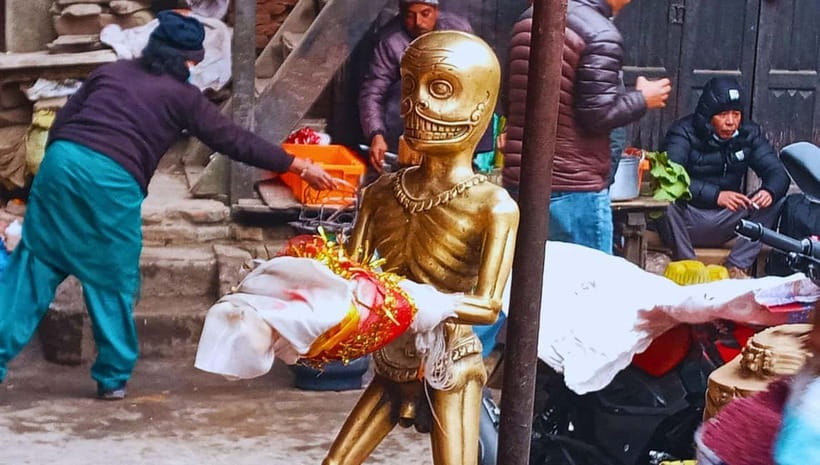
From Asan, the walk continues to Indra Chowk, another major marketplace in the historic center. Like Asan Tole, it offers a mix of goods and movement, but the value here comes from seeing how commercial life sits beside temples, shrines, and older buildings.
Your guide discusses the story of the crossroads and the ways local trade has continued around them. The tour also points out traditional Newari-style terraced buildings and the historic Nyalon, known as the Fish Stone. These buildings and objects give the market a strong sense of place without requiring a long lecture.
The Newari architecture matters because it shows how homes, businesses, and worship can share the same close urban setting. Look upward as you walk. The ground level may be filled with shops, while upper floors reveal older patterns of brickwork, wood, and tightly arranged residences. Details can be easy to miss when you are watching your step, so this is where a local guide adds real value.
The lanes are narrow and active. You may need to stop against a wall or step aside for people, goods, or vehicles. That is part of the setting, but it also means this walk is not designed for a relaxed stroll on broad pavements. Wear shoes with good support, bring water, and expect to walk at a steady pace.
Annapurna Ajima Temple and Aksh Bhairab Shrine
The tour moves beyond shopping streets to two important religious sites. Annapurna Ajima Temple is dedicated to the goddess of abundance. Its place in a market walk is fitting, since food, prosperity, and daily trade are closely linked in the life of the city.
The Aksh Bhairab Shrine offers another point of contact with Kathmandu’s religious traditions. Your guide explains why the shrine matters to devotees and how sacred spaces fit into the surrounding neighborhoods. You do not need to know the details of Nepalese religious practice in advance. The guide’s role is to help you observe respectfully and understand what gives each site meaning.
Keep in mind that these are active places of worship. Dress and behave respectfully, and follow the guide’s instructions about where to stand or what you may photograph. The experience description promises visits to the sites, but it does not specify entry rules or ceremonial access, so you should expect observation and explanation rather than a private ritual.
One strength of this portion is the contrast. A few minutes can take you from shopping and bargaining to a shrine covered with offerings. Kathmandu often places sacred and ordinary life side by side, and this route lets you see that relationship directly.
More market mornings in Kathmandu:
- Kathmandu Secret Food Crawl & Local Market Tour
★ 4.7 · 54 reviews - Kathmandu Food Crawl & Market Tour
★ 5.0 · 26 reviews - Best Nepali Cooking Class in Thamel with Local Market Trip
★ 5.0 · 26 reviews - Oldest Local Market Walking Tour with Living Goddess Kumari
★ 5.0 · 8 reviews
Nyalon, the Fish Stone, and small sacred details
Nyalon, also called the Fish Stone, is one of the tour’s more unusual stops. It is described as a revered site decorated with colorful offerings. You might pass something like this quickly on your own, especially when your attention is fixed on shops and foot traffic. With a guide, the stone becomes a chance to consider how local beliefs are tied to particular objects and corners of the city.
This is the sort of detail that makes a walking tour worthwhile. A major temple is easy to identify. A decorated stone in a market lane requires someone to point it out and explain its place in local practice.
The tour also includes encounters with Kathmandu’s sacred cows. They may be wandering through the streets as part of the city’s everyday religious life. Give them space and avoid treating the moment as a petting opportunity. The point is to observe how spiritual customs appear naturally in the city rather than in a separate attraction.
Yita Chapo and the visible cost of the 2015 earthquake
Yita Chapo adds a more serious note to the walk. The site was once sacred, but the structure was destroyed in the 2015 earthquake. The remaining pieces show that Kathmandu’s old city is not only a collection of beautiful buildings. It is also a place still marked by loss, damage, and the long work of remembering.
I appreciate the inclusion of this stop because it keeps the tour from presenting the old city as untouched. The earthquake changed many landmarks and communities, and seeing the remains gives you a more honest understanding of Kathmandu’s built heritage.
The information provided does not promise a full earthquake recovery tour, so do not expect a detailed survey of reconstruction work. Instead, Yita Chapo functions as one meaningful stop within a broader cultural walk. The guide can connect the remains to the city’s past and present, while you get a direct look at what was lost.
The courtyards behind Kathmandu’s lanes
One of the most distinctive parts of the route is the chance to enter hidden courtyards, including Takse Baha, Kwathu Baha, Haku Baha, Dhalasikna Baha, Dagu Baha, Asan Baha, and Hwakha Baha.
These baha courtyards offer a glimpse into Newari communal life. They may contain carved temples, devotional features, and traditional residential clusters arranged around shared space. From the market street, an entrance can look easy to miss. Inside, the mood changes from commercial activity to a more enclosed setting shaped by worship and neighborhood life.
The courtyards are valuable because they show how Kathmandu’s older communities were organized. You are not only looking at an individual shrine. You are seeing the relationship between homes, temples, and shared gathering places.
Do not expect every courtyard to feel the same. The tour description names several locations, but it does not guarantee identical access or equal time at each one. Conditions can vary, and the guide may adjust the route. Still, the promise of visiting several bahas gives this experience more depth than a basic market walk.
What Saroj’s guiding style adds
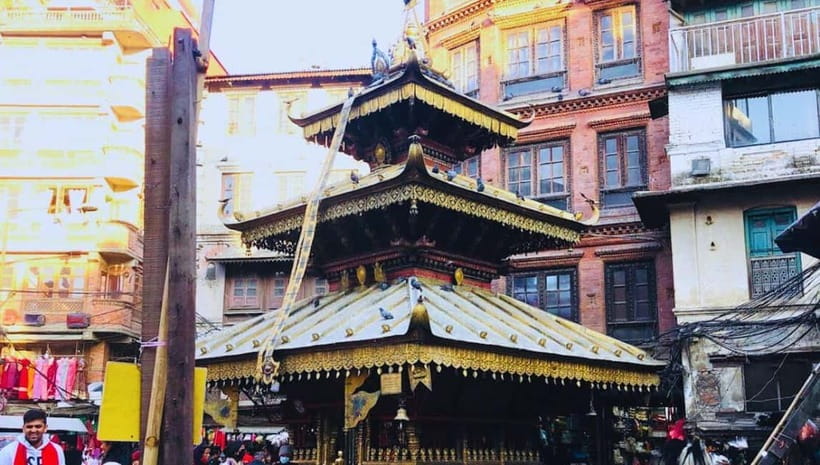
The available feedback praises Saroj as friendly, thoughtful, and well informed. It also highlights the pace of the walk, with enough time to take in the sights and sounds of this busy historic area. Those details matter more here than flashy presentation.
A good guide in Kathmandu’s old center needs to manage two jobs at once. Saroj must keep the group moving through crowded lanes, while also slowing down for shrines, architecture, and small cultural details. The praise for the pace suggests a guide who understands that rushing would flatten the experience, while stopping too long could make the route awkward.
The tour is offered with an English-speaking guide, and the group limit is 10 people. Guide quality can vary from one departure to another, but Saroj’s reported approach sets a useful expectation: a friendly manner, clear explanations, and attention to the group’s comfort.
Is $18 a fair price?
At $18 per person, this is a reasonable price for a small-group experience lasting 2.5 hours. The value comes from the combination of a live English-speaking guide, refreshments at the start, access to several religious and cultural sites, and a route through markets that can be difficult to understand on your own.
You are not paying for a meal, major transportation, or a full-day excursion. Meals are not included, and gratitude to the guide is also separate. Think of the price as covering interpretation and local orientation rather than entertainment or luxury.
I would find the cost especially worthwhile at the beginning of a Kathmandu stay. The walk can help you understand the old center before you return on your own for shopping or further sightseeing. It also suits anyone who wants a focused introduction without committing to a long city tour.
The value is less clear if you only want quiet monuments or dislike crowded commercial streets. The markets are central to the experience, and the walking conditions are part of the package. You should book for the chance to see daily city life, not for a polished, controlled attraction.
Who should book this Kathmandu walk?
I would recommend it to first-time visitors who want cultural context quickly. It also suits photographers interested in architecture and street scenes, people curious about Newari community life, and anyone who prefers local markets to large formal attractions.
The tour is a good match if you enjoy asking questions. The route contains many small points of interest, from the Fish Stone to courtyard temples, and the guide is the person who connects them. If you simply want to walk through markets without stopping for explanation, you may get less from it.
Plan on comfortable shoes, water, and a camera. The activity is not suitable for wheelchair users, and the narrow lanes and active market streets make mobility an important consideration. Cancellation is free up to 24 hours before the tour, and you can reserve now and pay later, which helps if your Kathmandu schedule is still changing.
Final verdict: a useful first look at old Kathmandu
Book this tour if you want markets, shrines, courtyards, and local stories in one compact outing. The best parts are the route through Asan Tole and Indra Chowk, the Newari baha courtyards, and the chance to connect ordinary commerce with religious life.
Skip it if you need step-free access, dislike crowded streets, or want a tour centered only on grand monuments. For most able walkers, though, $18 is a fair exchange for a small group, a refreshing start, and a guide who can help you notice what the city does not label for you. Saroj’s friendly, careful pace is a particularly good fit for this kind of close-up walk.
FAQ
How long does the Kathmandu Bazaar Walking Tour last?
The tour lasts 2.5 hours.
Where does the tour start?
It starts at the Electric Pagoda Cafe. Pickup from Thamel is available if you select that option.
Does the tour return to Thamel?
Yes. The stated route begins with pickup in Thamel and returns to Thamel after the walk.
What language is the tour offered in?
The live tour guide speaks English.
What sites are included?
The walk includes Asan Tole, Indra Chowk, the Annapurna Ajima Temple, the Aksh Bhairab Shrine, Nyalon, Yita Chapo, and several Newari courtyards.
Are food and drinks included?
A refreshing drink at the starting point is included. Meals are not included.
Is the tour suitable for wheelchair users?
No. The activity is listed as unsuitable for wheelchair users. Comfortable shoes and water are recommended.
New in the Kathmandu listings
- Traditional Momo Making Class★ 5.0 · 10 reviews
- Kathmandu: Ancient City Kirtipur & Pharping Monastery Tour★ 5.0 · 2 reviews
- Kathmandu to Pokhara Premium sofa bus ticket★ 4.0 · 17 reviews
- Women Empowerment Project(Nepali cooking class & jewelry workshop★ 5.0 · 15 reviews
- Yoga Experience Day Trip with Private Transfer From Kathmandu★ 4.0 · 2 reviews
- 7-Day Langtang Valley Trek from Kathmandu★ 5.0 · 1 review
- Kathmandu 2 Nights 3 Days Chitwan Jungle Safari Tour★ 5.0 · 9 reviews
- Wildlife Adventure in Chitwan Nepal★ 4.0 · 4 reviews
Walking Tours, compared.


Walking Food Tour in Hidden Local Eateries of Kathmandu
Read our review →
Old Kathmandu Walking Tour, Historic World Heritage Durbar Square
Read our review →
Browse the lists this tour appears in