
REVIEW · WALKING TOURS
Oldest Local Market Walking Tour with Living Goddess Kumari
See Kathmandu through its oldest streets. This two-hour walk links Ason Bazaar with Kathmandu Durbar Square and the Kumari House, giving you a quick look at daily commerce, sacred architecture, and the city’s living religious tradition. I like the market’s ordinary, local feel, and I like that the guide helps connect the crowded lanes with the customs behind them. The main drawback is that the NPR 1,000 monument fee is not included in the $40 price.
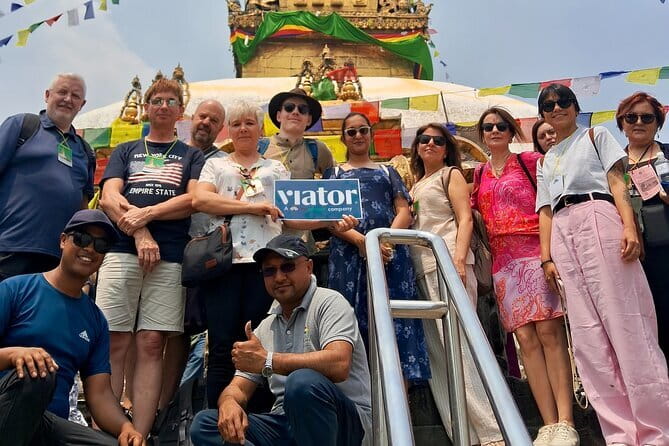
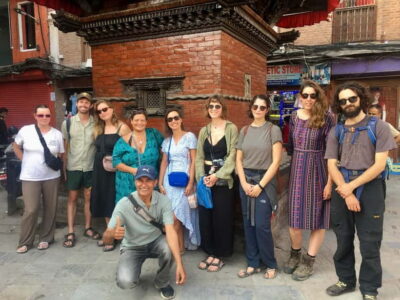
You begin at Chhaya Devi Complex in Thamel and return there on foot. The group can include up to 20 people, so the tour offers a social way to get your bearings, though a larger group may make narrow market lanes harder to navigate. The Kumari viewing lasts only about 10 minutes, so you should book this for cultural context and atmosphere, not for a long private audience.
In This Review
- Key points at a glance
- From Chhaya Devi Complex into old Kathmandu
- Ason Bazaar: the tour’s most local stretch
- Kathmandu Durbar Square and its palace courtyards
- Kumari Chowk and Kathmandu’s living goddess
- Why the guide matters on this route
- What $40 means for the value
- Who will enjoy this two-hour walk
- Practical tips for a smoother visit
- Should you book the Ason and Kumari tour?
- FAQ
- Where does the tour begin?
- Where does the tour end?
- How long does the experience last?
- What places are included on the route?
- Is the Kathmandu Durbar Square entrance fee included?
- Is the Kumari Chowk admission fee included?
- How many people can join the tour?
- What does the price include?
Key points at a glance
- Ason Bazaar comes first: Walk through Kathmandu’s oldest local market area, with shops and stalls selling food, clothes, instruments, spices, and everyday goods.
- The route starts in Thamel: Meet at the main gate of Chhaya Devi Complex, then walk through Thamel before reaching Ason.
- Kathmandu Durbar Square anchors the tour: Spend about an hour around temples, courtyards, palace buildings, and the Kumari House.
- The Kumari appearance is brief: The planned viewing at Kumari Chowk lasts around 10 minutes and is free, while the monument entrance fee is separate.
- You receive a guide, not transport: An experienced English-speaking guide leads the walk, and the activity ends back at the starting point.
- The price suits a short orientation: At $40 per person, the value depends on how much you want explanation and structure during your first hours in Kathmandu.
From Chhaya Devi Complex into old Kathmandu
The walk begins at the main gate of Chhaya Devi Complex on Amrit Marg, Kathmandu 44600. This is a practical starting point if you are staying around Thamel, since the route begins in one of the city’s best-known visitor areas and then moves toward older market streets.
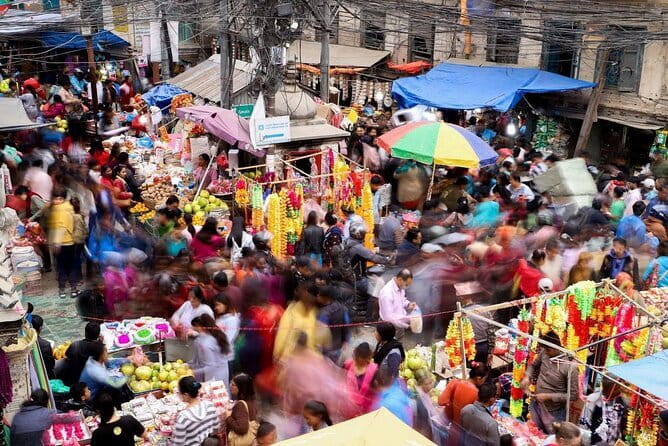
You first pass through Thamel Market. That opening section helps you compare two sides of Kathmandu: the shops and services aimed at international visitors in Thamel, followed by the more local trade of Ason. The change in mood is part of the point. You are not simply being taken from one monument to another by car. You are walking through the city and watching its commercial life shift around you.
I like this setup because it gives the tour a clear sense of movement. You start somewhere familiar, then enter a part of Kathmandu where the focus is less on sightseeing and more on buying, selling, worship, and daily errands.
The walk is listed at about two hours, so wear comfortable shoes and expect an active outing. No transport is included or needed for the route described. Since the activity ends back at Chhaya Devi Complex, you do not need to arrange a separate ride from the final stop.
More Walking Tours in Kathmandu
- Kathmandu Food and Drink Walking Tour
★ 5.0 · 266 reviews - Kathmandu: Food and Drink Walking Tour
★ 4.9 · 119 reviews - Walking Street Food Tour in Kathmandu
★ 5.0 · 111 reviews
Ason Bazaar: the tour’s most local stretch
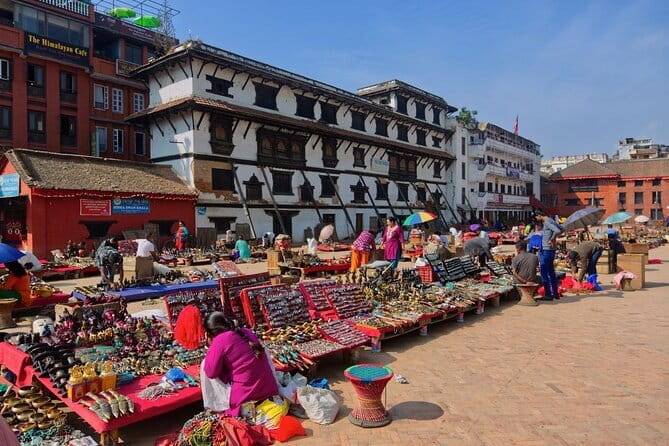
Ason Bazaar is the first main stop, with about 30 minutes set aside for exploring. It is described as one of Kathmandu’s oldest popular markets, and the range of goods is broad: food, clothes, instruments, spices, textiles, and souvenirs all appear in the market setting.
This is where the guide can add real value. A market can look like a wall of color and noise when you first arrive. An English-speaking guide gives you a way to understand what you are seeing, point out the purpose of different shops, and explain how the area fits into Kathmandu’s everyday life.
You should not expect a polished shopping center. Ason is a working market district, and the experience is about its streets, stalls, traditional buildings, and local activity. That can be more rewarding than a short stop at a shop chosen only for sightseeing. It also means the walk may feel crowded, and you may need to stay close to the guide.
The 30-minute timing is enough for an introduction, but not enough for serious shopping. If you find something you want to buy, ask the guide how much time is available before making a purchase. The schedule continues to Kathmandu Durbar Square, so this is better treated as a guided orientation than as a dedicated shopping trip.
Ason also gives you useful context for the rest of the experience. The religious buildings in the old city are not isolated museum pieces. They sit beside shops, homes, food sellers, and working streets. That connection between sacred places and ordinary commerce is one of the strongest reasons to choose this walk.
Kathmandu Durbar Square and its palace courtyards
The route then reaches Kathmandu Durbar Square, with about one hour planned here. The square is a UNESCO World Heritage site and includes palace buildings, temples, courtyards, and detailed traditional architecture.
This is the longest stop, and rightly so. If Ason shows you how Kathmandu works today, Durbar Square gives you a concentrated look at the city’s royal and religious past. The guide can help you read the buildings rather than simply photograph them. You will have time to look at the architectural details, move through the courtyards, and understand why the square matters.
The monument entrance fee is NPR 1,000 per person and is not part of the $40 tour price. That is the largest practical cost to remember. The fee means the total price is higher than the headline amount, but it also covers access to the central historic site that gives the tour much of its meaning.
You should also know that the square is not the entire experience. The tour does not present Kathmandu as a silent museum. The route connects the square with market streets, and that contrast makes the visit more useful. You see the famous buildings, then return to the city around them.
One hour is a reasonable amount of time for a first look. It allows the guide to explain the main complex without turning the walk into a full-day architectural study. If you have a strong interest in Nepalese art or temple design, you may want to return later with more time. For a first orientation, the schedule is efficient.
Kumari Chowk and Kathmandu’s living goddess
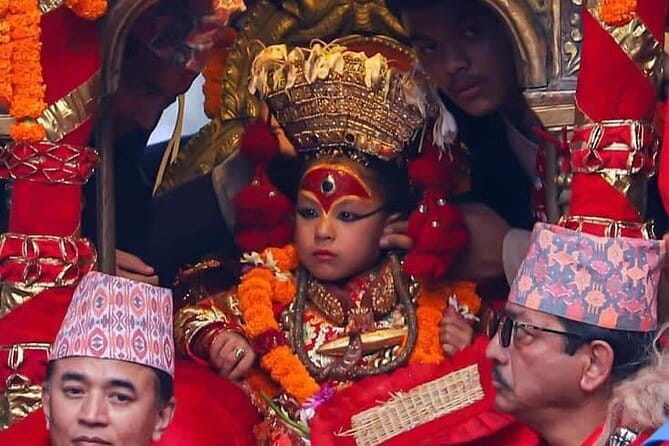
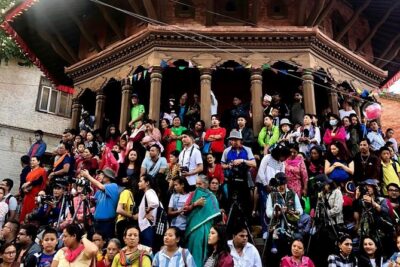
The most unusual part of the walk is Kumari Chowk, where you can witness the living goddess Kumari. The scheduled visit lasts about 10 minutes, and admission to this part is listed as free.
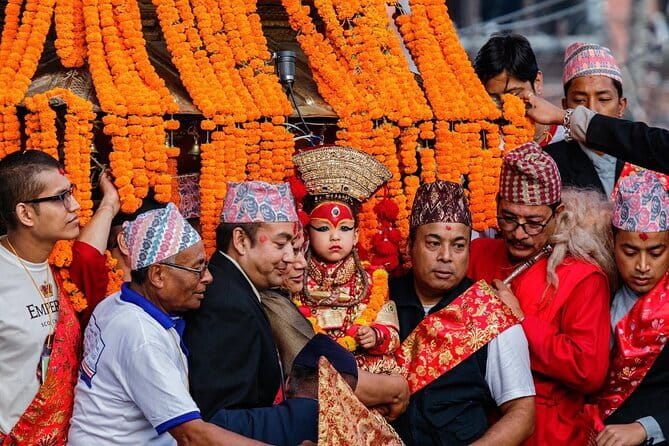
The Kumari is a pre-pubescent girl regarded in Nepali tradition as the living incarnation of the goddess Taleju. She lives in the Kumari Ghar, also known as the Kumari House, within the Durbar Square area. This is not a standard portrait session or a staged performance. It is a religious tradition with rules and meaning that deserve respectful attention.
Your guide should help you understand the setting and the customs before you approach Kumari Chowk. You may be able to see the Kumari during the brief viewing, but the short time matters. This is a moment to observe quietly, not an opportunity to expect a long conversation or personal interaction.
The Kumari visit is the tour’s strongest feature for anyone interested in living culture. Many historic sites preserve old buildings, but this stop connects Kathmandu’s past with a religious role that continues today. I especially like that the experience places the Kumari House inside a wider walk through the city rather than treating it as an isolated attraction.
At the same time, you should set your expectations carefully. A 10-minute viewing is necessarily limited. If seeing the Kumari is your main reason for booking, the experience may feel too short if the viewing conditions change or the appearance is brief. If you see it as one part of a larger walk, the timing makes more sense.
More market mornings in Kathmandu:
- Kathmandu Secret Food Crawl & Local Market Tour
★ 4.7 · 54 reviews - Kathmandu Food Crawl & Market Tour
★ 5.0 · 26 reviews - Best Nepali Cooking Class in Thamel with Local Market Trip
★ 5.0 · 26 reviews - Oldest Local Market Walking Tour With Living Goddess Kumari
★ 5.0 · 8 reviews
Why the guide matters on this route

The tour includes an experienced, English-speaking guide, along with company service charges and tax. There is no guide name provided, so you should not book expecting a particular individual. The important feature is the language support and the fact that someone leads you through the market and historic district.
The guide’s role is especially useful in Ason. Without context, it can be hard to tell which details are important and which are simply part of the street scene. In Durbar Square, the guide can also help you connect the palaces, temples, courtyards, and Kumari House into a clear story.
A small group can make this kind of walk easier, but the maximum is 20 people. That is not a private tour. In narrow streets, you may need to pause while the group gathers, and it may be harder to hear every explanation if you walk at the back.
I would try to arrive a little early at Chhaya Devi Complex. The meeting point is specific, and joining the group at the main gate is simpler than trying to catch up once the walk has entered Thamel or Ason.
What $40 means for the value
The listed price is $40 per person, with group discounts available. The tour lasts about two hours and includes a guide, but not the NPR 1,000 monument entrance fee, food, drinks, or tips.
That makes the value depend on your travel style. If you want to wander independently, you can explore market streets without paying for a guided activity. If you prefer clear explanations, a set route, and a chance to connect Ason with Durbar Square and the Kumari House, the fee can be reasonable for a short introduction to central Kathmandu.
I like that the route covers three different subjects in a compact period: shopping and daily life at Ason, architecture and political history at Durbar Square, and religious tradition at Kumari Chowk. You are not paying only for entrance to one monument. You are paying for the structure and interpretation that connect these places.
The extra entrance fee should be included in your budget from the start. Food and drinks are also your responsibility, so do not assume refreshments are part of the walk. Tips for the guide are not included either.
The activity is confirmed at booking, and free cancellation is available if you cancel at least 24 hours before the start time. Cancellations made within 24 hours are not refunded, and changes in that period are not accepted. The cut-off follows local Kathmandu time.
Who will enjoy this two-hour walk
This experience suits you best if you are staying in or near Thamel and want a compact introduction to central Kathmandu. It is also a good choice for a first full day when you want someone to explain the city before exploring on your own.
You will likely appreciate it if you enjoy markets, architecture, religious customs, and walking routes that connect attractions rather than separating them. The Kumari visit adds a rare cultural element, while Ason keeps the experience tied to ordinary city life.
The tour may be less suitable if you want extended shopping time, a private guide, or a long and guaranteed audience with the Kumari. The schedule moves quickly, and the group may include as many as 20 people.
Most people can participate, according to the activity information. Still, you should be comfortable walking for roughly two hours through market streets and historic areas. The route is not presented as a vehicle-based tour, and no transport is included.
Practical tips for a smoother visit
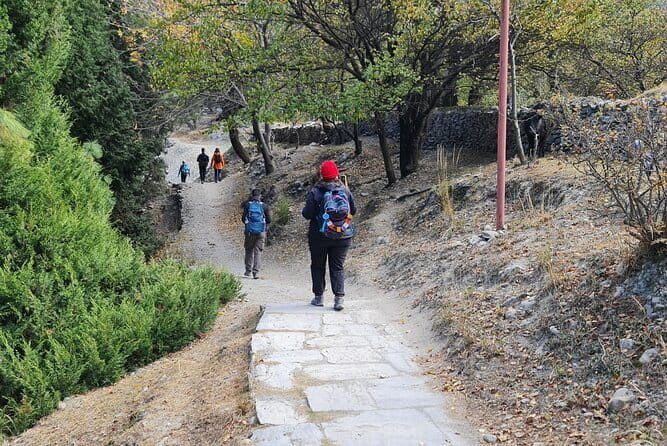
Wear shoes that can handle a city walk. You will cover Thamel, Ason, and the Durbar Square area on foot, and the route works best when you can stay with the group without worrying about discomfort.
Keep your plans flexible after the tour. Since the walk returns to Chhaya Devi Complex, you can use the end point to continue exploring Thamel or make your way back to your accommodation.
Bring enough money for the separate NPR 1,000 monument fee, plus any food, drinks, purchases, or tip you may want to add. The tour price alone does not cover these items.
Most of all, approach Kumari Chowk with respect. The Kumari is part of a living religious tradition, not simply a photo opportunity. Listen to the guide and follow the local expectations around viewing.
Should you book the Ason and Kumari tour?
Book it if you want a guided introduction to Kathmandu that mixes local commerce, UNESCO-listed architecture, and the unusual chance to witness the Kumari. The strongest reason to choose it is the route itself: Ason makes the city feel lived in, while Durbar Square and Kumari Chowk add historical and religious depth.
Skip it if you want a private, leisurely walk or a dedicated shopping tour. The two-hour schedule is tight, the group may reach 20 people, and the NPR 1,000 monument fee comes separately.
For most first-time visitors staying around Thamel, I see this as a useful opening walk. It gives you a map in your head, a guide to the old city, and one of Kathmandu’s most distinctive cultural encounters without taking up an entire day.
FAQ
Where does the tour begin?
The tour begins at the main gate of Chhaya Devi Complex, also called Chhaya Center, on Amrit Marg in Kathmandu.
Where does the tour end?
The activity ends back at the meeting point at Chhaya Devi Complex.
How long does the experience last?
The walking tour lasts approximately two hours.
What places are included on the route?
The route goes through Thamel Market, Ason Bazaar, Kathmandu Durbar Square, and Kumari Chowk, where you can witness the living goddess Kumari.
Is the Kathmandu Durbar Square entrance fee included?
No. The monument entrance fee is NPR 1,000 per person and must be paid separately.
Is the Kumari Chowk admission fee included?
The Kumari Chowk stop is listed as free. The separate monument fee for Kathmandu Durbar Square still applies.
How many people can join the tour?
The tour can have a maximum of 20 people. Group discounts are available.
What does the price include?
The $40 price includes an experienced English-speaking guide, company service charges, and tax. Food, drinks, tips, and monument entrance fees are not included.
New in the Kathmandu listings
- Traditional Momo Making Class★ 5.0 · 10 reviews
- Kathmandu: Ancient City Kirtipur & Pharping Monastery Tour★ 5.0 · 2 reviews
- Kathmandu to Pokhara Premium sofa bus ticket★ 4.0 · 17 reviews
- Women Empowerment Project(Nepali cooking class & jewelry workshop★ 5.0 · 15 reviews
- 7-Day Langtang Valley Trek from Kathmandu★ 5.0 · 1 review
- Kathmandu 2 Nights 3 Days Chitwan Jungle Safari Tour★ 5.0 · 9 reviews
- Yoga Experience Day Trip with Private Transfer From Kathmandu★ 4.0 · 2 reviews
- Wildlife Adventure in Chitwan Nepal★ 4.0 · 4 reviews
Walking Tours, compared.


Walking Food Tour in Hidden Local Eateries of Kathmandu
Read our review →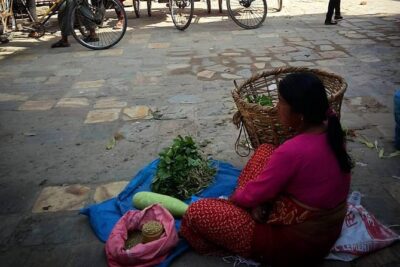
Old Kathmandu Walking Tour, Historic World Heritage Durbar Square
Read our review →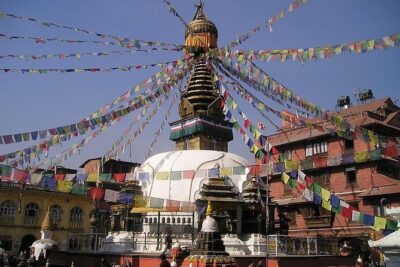
Browse the lists this tour appears in