
REVIEW · COOKING CLASSES
Best Nepali Cooking Class in Thamel with Local Market Trip
Food is Kathmandu’s best classroom. This three-hour experience pairs a local market visit with hands-on Nepali cooking, so you see the ingredients before they reach the plate. I like the included market shopping and the chance to learn from Nepali cooks, then sit down to eat what you prepared. I also like that vegetarian and vegan options can be arranged. The main caution is space: even though the group limit is eight, the kitchen may feel tight, and one participant found the session more like assembling ingredients than a full cooking lesson.
At $30 per person, this is a strong value if you want a meal, local food instruction, snacks, and the market stop in one short outing. Just keep your expectations sensible. This is a friendly, practical introduction to Nepali cooking, not a formal culinary course with a large teaching kitchen or a long list of advanced techniques.
In This Review
- Key points at a glance
- Why the market visit matters in Kathmandu
- Inside the small Thamel cooking kitchen
- What you can expect to cook and eat
- A cultural lesson without a lecture
- Is $30 a good price in Kathmandu?
- Timing, pickup, and getting there
- Who will enjoy this class most?
- How to get the most from the three hours
- Should you book the Thamel Nepali cooking class?
- FAQ
- How long does the Nepali cooking class last?
- How much does the cooking class cost?
- Is a market visit part of the experience?
- Are ingredients included?
- Is a meal included after cooking?
- Are vegetarian and vegan options available?
- How many people can join the class?
- Is transportation included?
- Can I use a mobile ticket?
- What is the cancellation policy?
Key points at a glance
- Start with a local market: You may help shop for the fresh ingredients used during the class.
- Three hours from market to meal: The compact schedule gives you a useful cultural activity without taking a full day.
- Small group, limited kitchen space: The maximum is eight people, but a small kitchen may work best with fewer participants.
- Come ready to eat: Food, snacks, and the meal are included, and the portions can be generous.
- Vegetarian and vegan requests are welcome: Tell the provider when booking so the menu can be prepared appropriately.
- Thamel-friendly location: Pickup is offered, public transportation is nearby, and a mobile ticket is accepted.
Why the market visit matters in Kathmandu
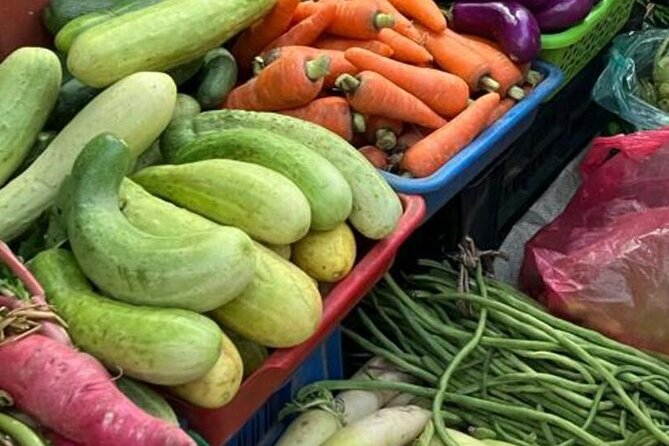
The class typically begins with an introduction to local ingredients, spices, and cooking methods. From there, the group may visit an outdoor market or grocery shop to buy fresh produce and other items for the meal.
That short market segment is one of the best reasons to book this experience. A recipe on paper tells you what goes into a dish. A market shows you how food fits into daily Nepali life. You get a better sense of the raw ingredients, the role of spices, and the kinds of produce used in home cooking.
The market stop is also useful for anyone who feels lost in Kathmandu’s food stalls and shops. You may not learn the name of every ingredient, but you will see the food before it is chopped, mixed, and cooked. I find that this makes the later cooking more meaningful.
The supplied timing lists about 30 minutes for the cooking-school stop or introductory portion. That should give you a rough idea of the pace. This is not a slow market tour followed by an all-day kitchen session. You move from introduction to shopping to preparation in a fairly compact block.
More Cooking Classes in Kathmandu
- Half day cooking class in Thamel kathmandu
★ 5.0 · 607 reviews - Kathmandu: Local Women-Led Nepali Cooking & Momo Class
★ 4.9 · 360 reviews - Kathmandu: Local Lead Nepali Cooking & Momo-Making Class
★ 5.0 · 212 reviews
Inside the small Thamel cooking kitchen
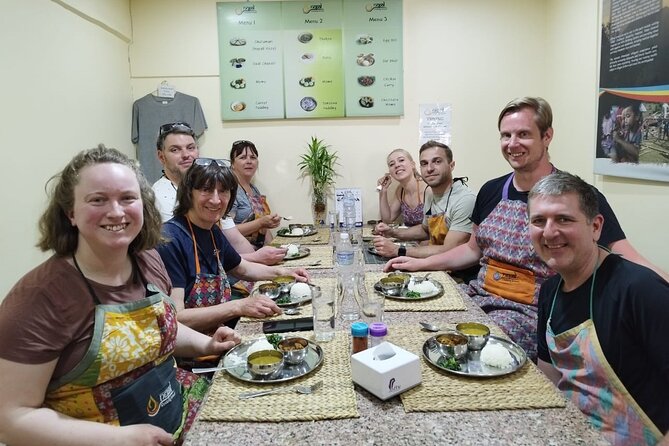
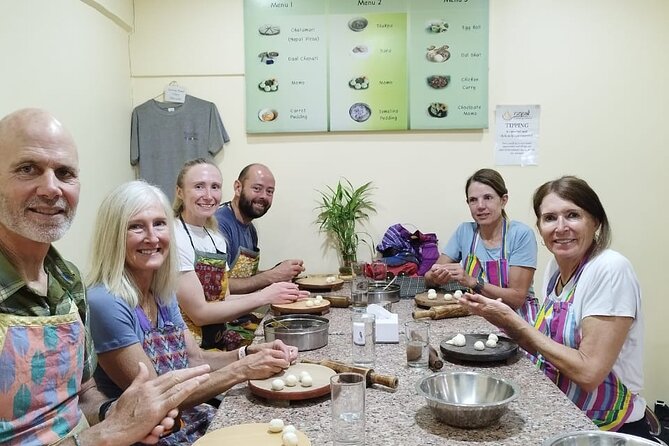
After the market portion, the class turns to preparation and cooking. You learn from Nepali cooks and take part in making a selection of local dishes. The experience is meant to be hands-on, although the exact menu is not specified in the available details.
That lack of a fixed menu is worth noting. You should expect food according to the day’s menu and the ingredients selected for the class, but you should not book this expecting one guaranteed dish unless you confirm it before arrival. If you have a particular interest, such as learning a certain Nepali recipe, ask Epic Adventures Pvt. Ltd. in advance.
The strongest praise centers on the friendly, practical nature of the session. You get to work with the food rather than simply watching a demonstration. That makes the class a good choice if you want something social and active, especially if you enjoy meeting people who are also interested in local food.
Still, this is where the main limitation appears. One four-person group found the kitchen too small for many more people. The same participant felt the activity could be stressful and sometimes seemed closer to putting ingredients together than receiving detailed instruction.
I would treat that comment as useful guidance rather than a reason to reject the class. A compact kitchen can make the activity feel informal and crowded, especially if everyone is chopping or preparing food at once. If your main goal is to master precise knife work, cooking temperatures, or complex techniques, you may want a more formal school.
If your goal is to cook, talk, meet locals, and eat well, the relaxed format may work in its favor. The class appears designed around participation and enjoyment rather than professional training.
What you can expect to cook and eat
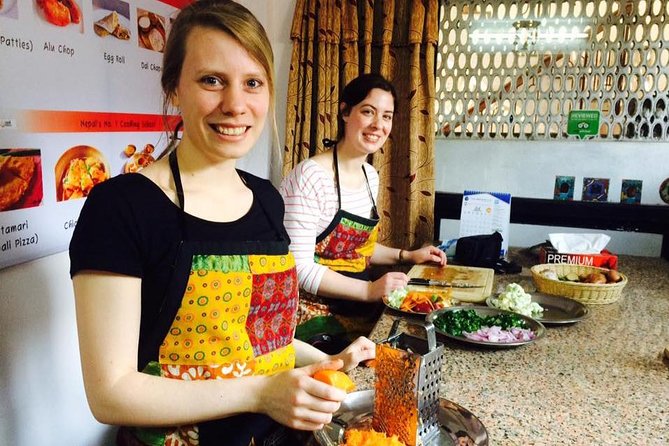
The food package is generous on paper. It includes all food according to the menu, market shopping for the ingredients, snacks, and a meal. The information also lists breakfast, lunch, and dinner as included, but you should read that as meal coverage in the booking details rather than assume you will be served three separate full meals during a three-hour class.
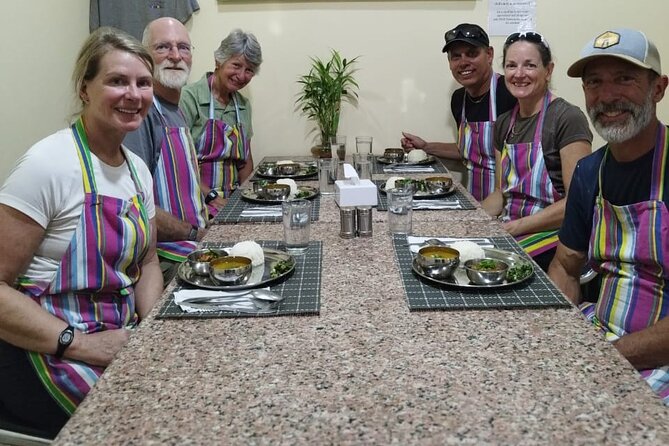
The practical advice is simple: arrive hungry. One of the clearest positive comments praised the amount of food, so this is not an activity built around a tiny tasting plate. You prepare the dishes and then eat your creations after the class.
That final meal gives the experience a satisfying finish. You do not just learn a technique and leave. You see the ingredients at the market, help prepare them, and then taste the result. For me, that chain from market to kitchen to table is what gives the outing its value.
Vegetarian and vegan options are available when requested. I would make that request at booking rather than wait until the class begins. The available information confirms those options, but it does not list a separate menu, so ask what substitutions or dishes will be provided if your diet is strict.
The recipes are also included for you to take home. That small extra matters. A cooking class is far more useful when you can recreate at least part of it after returning home, even if your local ingredients are not exactly the same.
A cultural lesson without a lecture
Nepali food offers a direct way to understand everyday life. Ingredients, spice combinations, and preparation methods can tell you more about a place than a quick restaurant meal. Here, the cooks connect the food to local life while you work.
I like that the cultural learning is built into an ordinary activity. You are not simply listening to a talk about Nepal. You are handling ingredients, asking questions, and sharing food with the people in the kitchen.
The class can also help you meet locals and other people who enjoy food. One positive account specifically valued the chance to meet local people and fellow participants. With a maximum of eight, the group should be small enough for conversation, although the physical kitchen may still feel crowded.
That small-group limit is important. Eight is more manageable than a large tour bus group, but it does not guarantee generous working space. If only a few people book on your date, the class should feel more comfortable. If the group reaches its maximum, expect a lively and possibly cramped session.
A completely different way to spend the day:
- Everest Base Camp Trek – 14 Days
★ 5.0 · 1,499 reviews - Private Kathmandu Sightseeing Tour | UNESCO World Heritage sites
★ 5.0 · 756 reviews - Everest Base Camp Helicopter Tour landing at Everest View Hotel
★ 5.0 · 668 reviews - Everest Base Camp Trekking
★ 5.0 · 485 reviews
Is $30 a good price in Kathmandu?
At $30 per person, I see good value here because the price covers more than instruction. You receive the market shopping, ingredients, snacks, the prepared meal, and recipes to take home. You also get a three-hour activity in central Kathmandu rather than paying separately for a meal and a market experience.
The value is strongest if you would otherwise spend money on a restaurant lunch or dinner. Instead of simply ordering Nepali food, you get the chance to understand how it is prepared and then eat a meal connected to your own work.
The value is weaker if you want a polished professional kitchen, private attention, or an advanced lesson. The small-space concern means you should not compare this $30 class directly with an expensive chef-led workshop. It is better understood as an informal cultural activity with food at its center.
The rating information is encouraging: the experience has a 4.9 out of 5 score from 26 reviews, with 100 percent recommending it. That points to a consistently positive experience, while the one four-star account gives you an important practical warning about the kitchen and teaching style.
Timing, pickup, and getting there
The activity lasts about three hours. That makes it easy to fit into a Kathmandu itinerary, perhaps on a morning when you want a break from temples or on a day when you prefer an indoor activity.
Pickup is offered, but private transportation is not included. Those details may sound contradictory, so I would confirm exactly what pickup means for your booking. The location is near public transportation, which should make independent arrival possible, but the supplied information does not specify the pickup area, meeting point, or vehicle arrangement.
A mobile ticket is accepted, and confirmation arrives at booking. Those are useful conveniences, especially if you are moving between several Kathmandu activities and do not want to print paperwork.
Book ahead if your schedule is fixed. The experience is booked, on average, 13 days in advance, and the group limit is eight. That does not guarantee that every date sells out, but it is a clear reason not to leave the class until the last morning of your trip.
Cancellation is flexible if you plan carefully. You receive a full refund when you cancel at least 24 hours before the local start time. Inside that 24-hour window, cancellations and changes are not accepted for a refund.
Who will enjoy this class most?
I would recommend this outing to you if you enjoy learning by doing. It suits people who want an approachable introduction to Nepali food, a local market stop, and a shared meal without giving up an entire day.
It is also a good fit for couples, solo visitors, and small groups who like social activities. The modest group limit gives you a reasonable chance to speak with the cooks and other participants, and the shared meal gives everyone an easy topic of conversation.
Families may also find the format appealing, since most people can participate and the activity is not described as physically demanding. Still, the available details do not provide a specific children’s policy, so families should confirm age requirements before booking.
Vegetarians and vegans have a clear reason to consider it, since alternatives are available on request. Again, make the request early. The kitchen can plan better when dietary needs are known in advance.
I would be more cautious if you are a serious home cook seeking advanced instruction. The comments about a cramped kitchen and limited formal teaching suggest that the class may focus more on preparing and sharing food than on detailed culinary theory.
How to get the most from the three hours
I would arrive ready to participate, not just observe. Wear practical clothing, listen closely during the ingredient introduction, and ask about the spices and methods while the food is being prepared.
If you have a dietary restriction, state it at booking. If you want a particular dish, ask whether it can be included. The published details confirm a menu, but they do not name the dishes, so a quick question can prevent disappointment.
Keep your schedule flexible around the three-hour duration. The activity is listed as approximately three hours, not an exact minute-by-minute program. Add time for getting to the meeting point, especially if you are arranging your own transportation.
Do not expect a quiet, spacious classroom. The strongest experience will come from accepting the informal setting and treating the class as a shared cooking session. If the kitchen is busy, patience and cooperation will matter.
Finally, save the recipes. The meal is enjoyable on the day, but the recipes are the part that can continue to benefit you after Nepal. They give you a way to bring a little of the class into your own kitchen.
Should you book the Thamel Nepali cooking class?
Yes, if you want a well-priced, social food experience that connects a local market with a hands-on meal. The $30 cost covers enough food and activity to make the outing worthwhile, and the high 4.9 rating suggests that most people find it rewarding.
Book with realistic expectations. You are choosing a small, informal kitchen rather than a spacious professional school. If you value local contact, plenty of food, simple instruction, and recipes to take home, I would put this on your Kathmandu list. If you need advanced lessons or lots of personal workspace, ask detailed questions first or choose a more formal cooking course.
FAQ
How long does the Nepali cooking class last?
The experience lasts approximately three hours.
How much does the cooking class cost?
The listed price is $30 per person.
Is a market visit part of the experience?
Yes. You are guided to a local market or grocery shop to purchase fresh ingredients for the class.
Are ingredients included?
Yes. All food according to the menu and the market shopping for ingredients are included.
Is a meal included after cooking?
Yes. The included food package lists snacks and a meal, including lunch and dinner in the booking details.
Are vegetarian and vegan options available?
Yes. Vegetarian and vegan options are available on request.
How many people can join the class?
The activity has a maximum group size of eight people.
Is transportation included?
Private transportation is not included. Pickup is offered, and the location is near public transportation.
Can I use a mobile ticket?
Yes. A mobile ticket is accepted, and confirmation is received at the time of booking.
What is the cancellation policy?
You can cancel for a full refund up to 24 hours before the experience start time. Cancellations or changes made within 24 hours are not accepted for a refund.
More Market Mornings in Kathmandu
- Kathmandu Secret Food Crawl & Local Market Tour
★ 4.7 · 54 reviews - Kathmandu Food Crawl & Market Tour
★ 5.0 · 26 reviews - Oldest Local Market Walking Tour with Living Goddess Kumari
★ 5.0 · 8 reviews - Oldest Local Market Walking Tour With Living Goddess Kumari
★ 5.0 · 8 reviews
New in the Kathmandu listings
- Traditional Momo Making Class★ 5.0 · 10 reviews
- Kathmandu: Ancient City Kirtipur & Pharping Monastery Tour★ 5.0 · 2 reviews
- Kathmandu to Pokhara Premium sofa bus ticket★ 4.0 · 17 reviews
- Women Empowerment Project(Nepali cooking class & jewelry workshop★ 5.0 · 15 reviews
- 7-Day Langtang Valley Trek from Kathmandu★ 5.0 · 1 review
- Kathmandu 2 Nights 3 Days Chitwan Jungle Safari Tour★ 5.0 · 9 reviews
- Yoga Experience Day Trip with Private Transfer From Kathmandu★ 4.0 · 2 reviews
- Wildlife Adventure in Chitwan Nepal★ 4.0 · 4 reviews
Cooking Classes, compared.
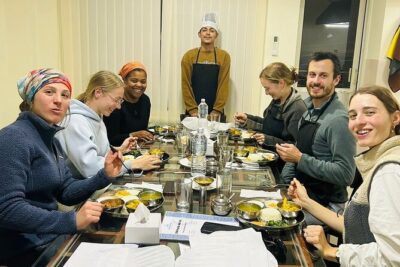
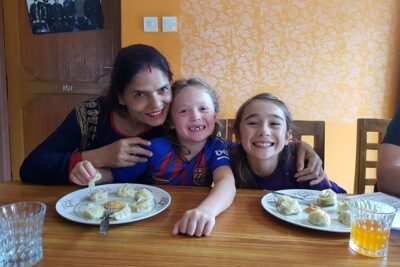
Nepalese Momos or Dal Bhat Cooking Class (Cook with Delight)
Read our review →
The best Private Nepali Cooking Class in Kathmandu
Read our review →
Nepalese Kitchen in Pokhara: Momos or Dal Bhat Cooking Class
Read our review →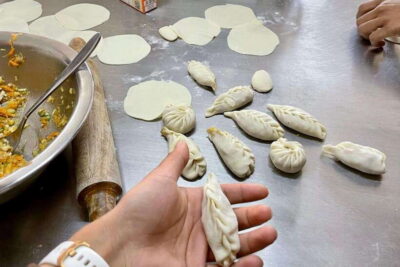
Browse the lists this tour appears in