
REVIEW · UNESCO WORLD HERITAGE TOURS
Kathmandu Durbar Square Sightseeing
History is carved into nearly every corner. Kathmandu Durbar Square gives you a compact look at Nepalese architecture, royal power, worship, and daily city life in one three-hour visit. I especially like the intricate woodcarvings and the chance to see major landmarks such as Hanuman Dhoka, Kumari Ghar, and Kasthamandap in a single walk. The included guide also adds real value, particularly if you are paired with someone as well informed as Rajan, whose explanations cover Nepal’s history, local culture, and current situation.
The main consideration is time. Three hours is enough for an introduction, but the square contains many courtyards, temples, statues, and palace buildings. You will see a long list of important sites, yet some stops last only five or ten minutes. At $71 per person, the price makes the most sense if you value hotel pickup, private transportation, admission, and a live guide rather than simply wanting to wander through the square alone.
In This Review
- Key points to know before you go
- Why Kathmandu Durbar Square matters
- Starting from The Great Adventure Treks office
- Taleju Bhawani Temple and Gaddi Baithak
- Kumari Ghar and the Hanuman Dhoka palace
- Kaal Bhairab and the shorter temple visits
- Gorakhnath and Garuda Narayan
- What the three-hour schedule really gives you
- The guide can shape the whole experience
- Is $71 per person good value?
- Who should book this experience?
- Booking flexibility and practical details
- FAQ
- Where does the Kathmandu Durbar Square tour start?
- How long does the sightseeing experience last?
- What is included in the price?
- Are meals included?
- Which languages are available for the live guide?
- Can I cancel the booking?
- Can I reserve now and pay later?
- Should you book Kathmandu Durbar Square Sightseeing?
Key points to know before you go
- The tour covers ten historic sights: The route includes Taleju Bhawani Temple, Gaddi Baithak, Kumari Ghar, Hanuman Dhoka Durbar, Kaal Bhairab, Kasthamandap, Trailokya Mohan Narayan Temple, Gorakhnath, and Garuda Narayan Temple.
- You get a guide in five possible languages: English, Spanish, French, Chinese, and Hindi are available, which makes the history easier to follow.
- Hanuman Dhoka is the main anchor: This former royal palace helps explain why the square was once a political, religious, and cultural center.
- The tour begins and ends at the same company office: The Great Adventure Treks and Expedition Pvt. Ltd. is both the starting and return point, with hotel pickup and drop-off included.
- The visit mixes major monuments with smaller shrines: The short stops at Gorakhnath and Garuda Narayan keep the route broad, but you should not expect long time at every building.
- Rajan received especially strong praise: One confirmed booking described him as a walking library, with unusually strong knowledge of Nepal’s past, culture, and present-day situation.
Why Kathmandu Durbar Square matters
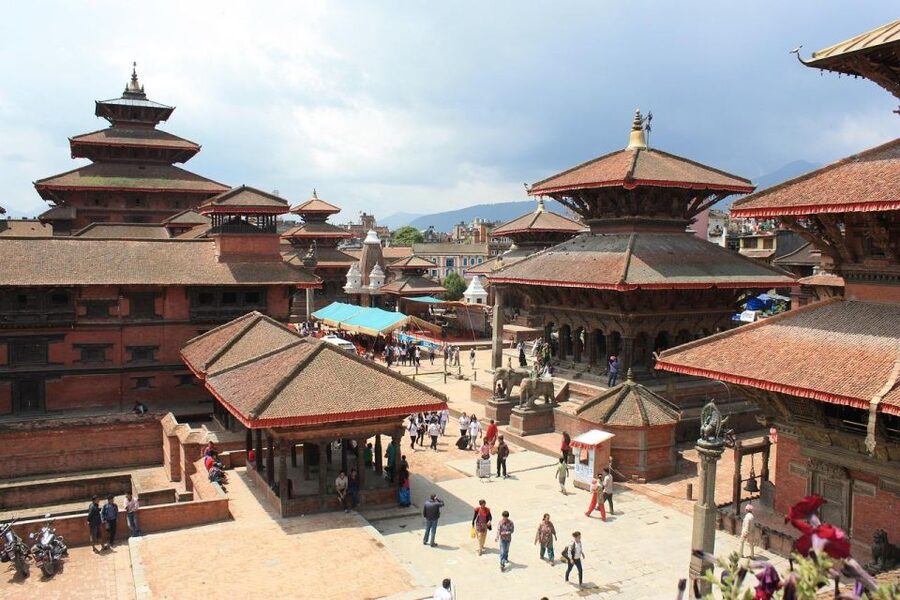
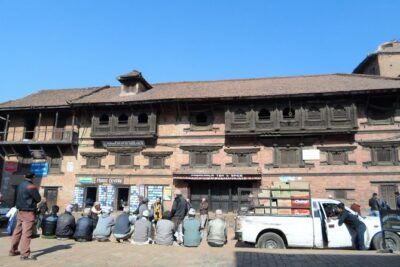
Kathmandu Durbar Square sits in the heart of Kathmandu. It is a UNESCO World Heritage Site and one of the clearest places to see the cultural and architectural traditions of the Kathmandu Valley gathered in one setting.
The square served as the royal palace area for the Malla kings. That former role explains the mixture of palace buildings, temples, courtyards, statues, and ceremonial spaces. You are not simply looking at old structures. You are walking through a place where government, royal life, worship, and public activity once met.
I like this kind of sight because it rewards both quick sightseeing and careful attention. You can admire the broad shapes of the pagoda-style temples, then pause over a carved wooden window or doorway. A guide helps connect those details to the larger story, which is important here because the square can otherwise feel like a dense collection of monuments without a clear order.
It also remains a place for present-day worship and local activity. That gives the visit a living quality. The square is not presented as a frozen museum. People gather there to explore, worship, and spend time in the center of Kathmandu.
More UNESCO World Heritage Tours in Kathmandu:
- Private Kathmandu Sightseeing Tour | UNESCO World Heritage sites
★ 5.0 · 756 reviews - Kathmandu: Full Day 7 UNESCO Tour with Lunch – Private/Group
★ 5.0 · 415 reviews - Kathmandu: Full Day Top 4 UNESCO Tour with Lunch – Private/Group
★ 5.0 · 269 reviews
Starting from The Great Adventure Treks office
The experience starts at The Great Adventure Treks and Expedition Pvt. Ltd. Hotel pickup and drop-off are included, along with private transportation. That is useful in Kathmandu, where arranging a short ride can add friction to an otherwise simple sightseeing plan.
The exact pickup timing depends on availability, so you need to check the starting options when booking. The scheduled visit lasts three hours, and the route returns to the same company location at the end.
The transport is most valuable for convenience rather than sightseeing. The main appeal of this experience is the square itself and the walking route through its monuments. If you are already close by, you may find that the included transfer matters less to you. If you are staying farther away or prefer not to arrange local transport, it helps justify the cost.
Taleju Bhawani Temple and Gaddi Baithak
The first listed sightseeing stop is Taleju Bhawani Temple, with about 15 minutes set aside for the visit. This gives you enough time for an introduction, a look at the structure, and some explanation of its place within the square.
You should treat this as a first orientation point rather than a full study of the temple. The tour moves at a steady pace, so listen for the details that help you understand the wider royal and religious setting.
Gaddi Baithak follows, also with 15 minutes. The name refers to an important palace area, and its position early in the route helps shift your attention from temple design to royal architecture and public authority. With a guide, this stop can help you see how the square served more than one purpose.
The two stops work well together. One highlights sacred architecture, while the other points toward the square’s former royal function. I would keep a small amount of attention on the transitions between buildings, since the relationship between the courtyards and monuments is part of what makes this area easy to explore on foot.
Kumari Ghar and the Hanuman Dhoka palace
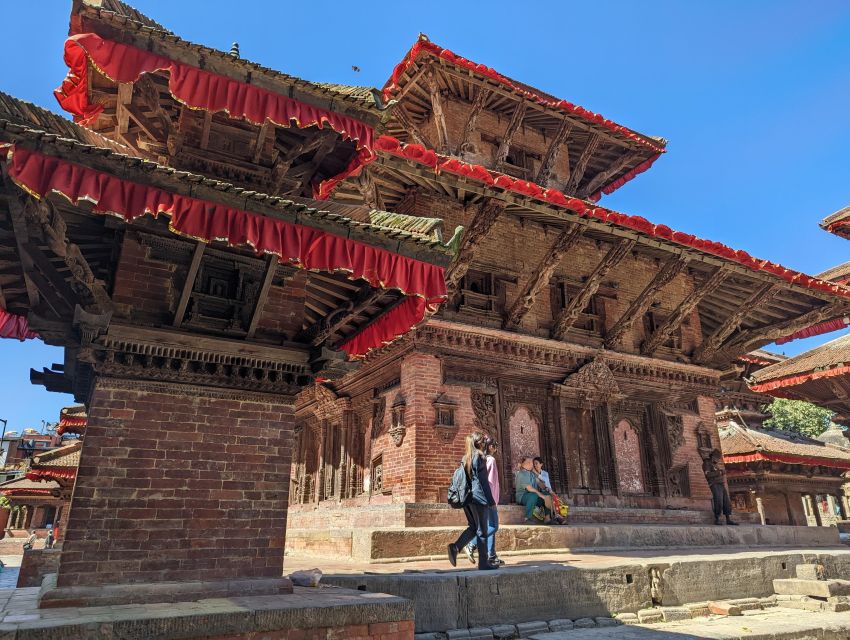
Kumari Ghar is scheduled for 15 minutes. Its inclusion is one of the strongest reasons to choose a guided route rather than simply walking around without a plan. The building is closely tied to the cultural identity of Kathmandu, and its location gives you another important piece of the square’s living religious heritage.
As with the other stops, the visit is brief. You should expect an explanation and sightseeing rather than a long, unhurried examination of every architectural detail.
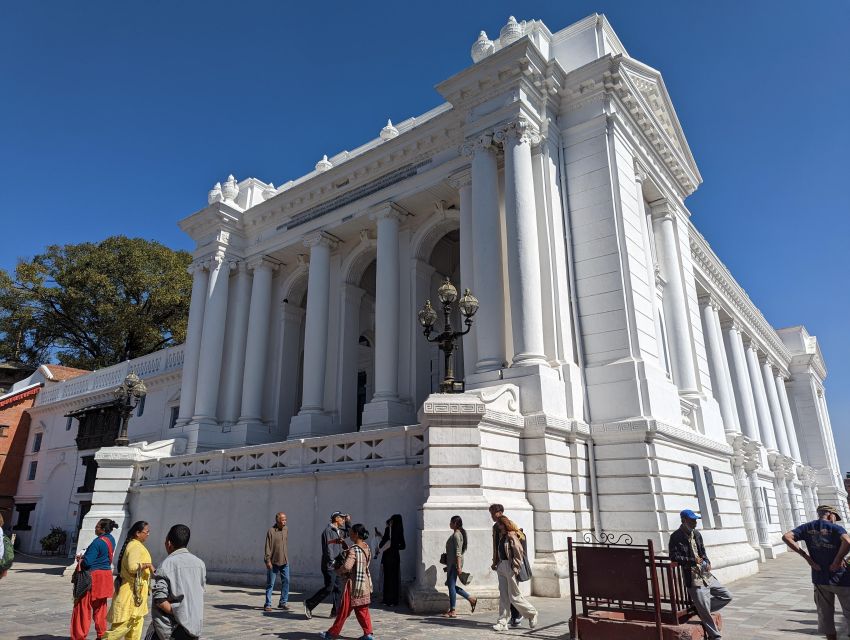
Hanuman Dhoka Durbar receives the same 15-minute allocation and serves as the central attraction of the route. This impressive palace complex represents the square’s royal past and gives the tour its clearest sense of scale.
The palace is where the historical story comes together. The Malla kings ruled the region from this area, making Hanuman Dhoka an important political, religious, and cultural center. The name may be familiar before you arrive, but a guide can give the building a useful place in the sequence of Nepalese history.
If you enjoy architecture, this is a good point to focus on the woodwork and the pagoda-style forms mentioned throughout the site. You might find that the short schedule leaves you wanting more time here. That is not a flaw in the monument, but it is a limit of a three-hour introduction.
A short list of alternatives around Kathmandu
- Everest Base Camp Trek – 14 Days
★ 5.0 · 1,499 reviews - Everest Base Camp Helicopter Tour landing at Everest View Hotel
★ 5.0 · 668 reviews - Half day cooking class in Thamel kathmandu
★ 5.0 · 607 reviews - Everest Base Camp Trekking
★ 5.0 · 485 reviews
Kaal Bhairab and the shorter temple visits
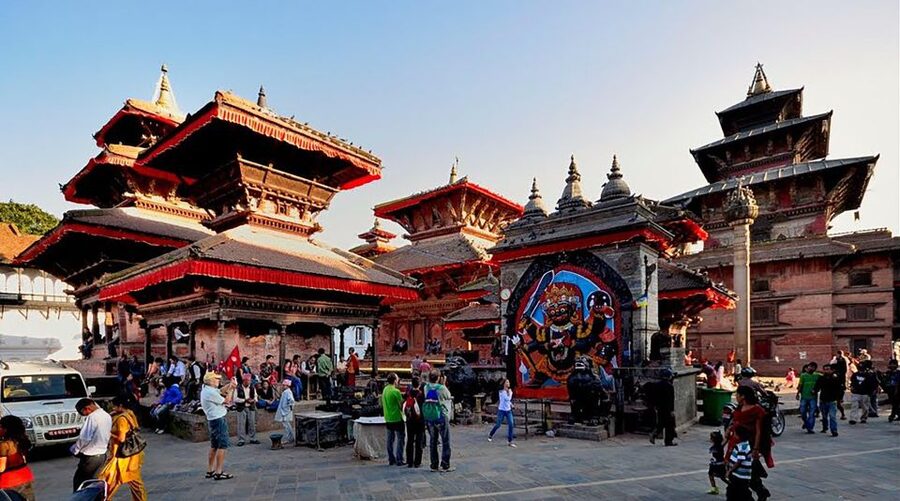
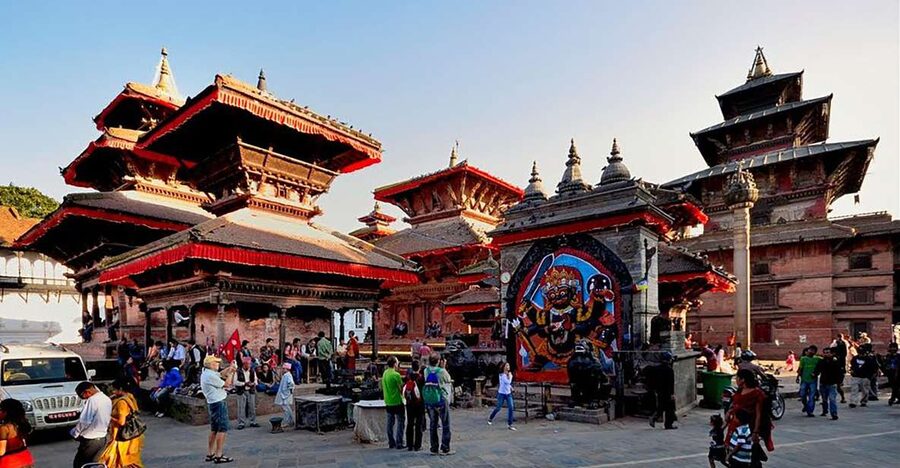
Kaal Bhairab, also written as Kaal Bhairab, has about ten minutes. The stop brings a different kind of visual and religious focus to the route. It is one of the statues and sacred sites that helps show how many forms of worship are represented within the square.
The next stop is Kasthamandap Temple, also scheduled for ten minutes. Its inclusion matters because it is one of the best-known names in the complex and adds another layer to the architectural story. You will want to use the guide’s time well here, especially if you are interested in the relationship between temples, courtyards, and public movement.
Trailokya Mohan Narayan Temple receives about five minutes. That is enough for a quick visit and a clear explanation, but it is not enough for a slow architectural inspection. The short timing tells you something important about this tour: it aims to give you a guided survey of the square, not an extended study of each monument.
I like the variety in this middle section. You move from a major palace to a statue, then to temples of different sizes and roles. The drawback is that the pace can feel brisk if you want to stop often for photographs or examine each carving closely.
Gorakhnath and Garuda Narayan
The route continues with sightseeing at Shri Shri Shri Mahayogi Gorakhnath for about seven minutes. The name itself may be unfamiliar, and this is exactly where a live guide can make a short stop worthwhile. Rather than trying to decode every site on your own, you can ask what makes this shrine important and how it fits into the religious character of the square.
Garuda Narayan Temple is the final listed visit, with about five minutes. It is a compact ending to the monument route before you return to the starting point.
These final stops are not designed as major set pieces. They broaden your understanding of the square by including smaller and less obvious places. If your main goal is to see Hanuman Dhoka and the largest temples, you may regard them as quick add-ons. If you want a fuller introduction to the complex, they are useful because they prevent the visit from narrowing to only the most famous buildings.
What the three-hour schedule really gives you
The listed stops add up to a little under two hours of set sightseeing time. The remaining time allows for walking between locations, transportation, introductions, questions, and the guide’s explanations.
That balance is sensible for a first visit. You cover ten named sites without spending the entire day on one square. You also avoid the common problem of seeing a monument but learning almost nothing about it.
Still, you need to set realistic expectations. A three-hour tour cannot provide a long pause at every palace, temple, statue, and courtyard. If you take many photographs, ask detailed questions, or move slowly, the schedule may feel tight.
I would choose this tour as an orientation. It can show you what deserves a second look later, when you have more time to return independently. That is often the best way to handle a large historic complex: first learn the layout and major stories, then revisit your favorite corners at your own pace.
The guide can shape the whole experience
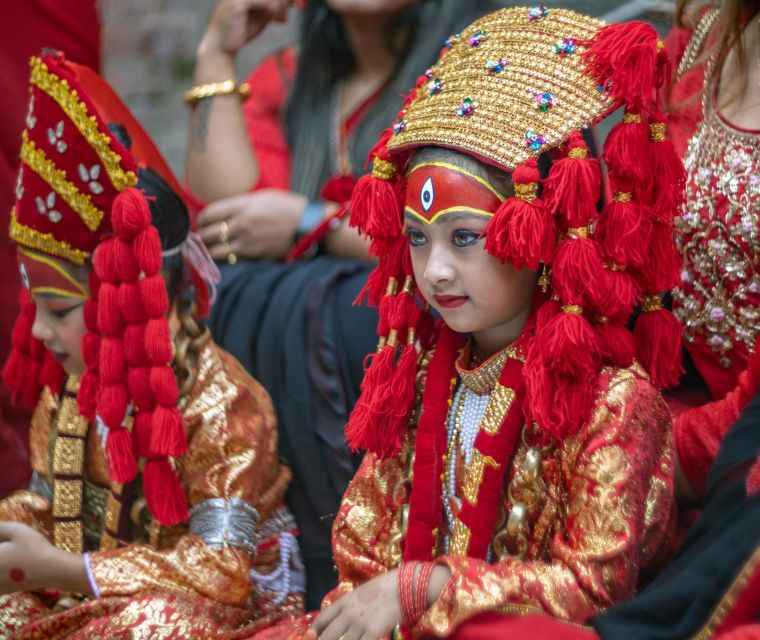
The strongest part of this experience may be the guide. English, Spanish, French, Chinese, and Hindi are offered, so you can request the language that makes historical explanations easiest for you.
Rajan is the guide name connected with the strongest praise. His command of Nepal’s history, local culture, and current situation was described as exceptional, to the point that a visitor compared him to a walking library. That is useful information if you are hoping for more than basic directions and dates.
A good guide matters especially in Kathmandu Durbar Square because the site contains many close-set monuments. Without context, the woodcarvings and temple roofs can blur together. With clear explanations, you can understand why the palace matters, how the square functioned, and why the area remains important today.
You should also ask questions during the shorter stops. Five minutes passes quickly, so a direct question can help you get the most from a small shrine or statue. If you are interested in Nepal’s present-day culture as well as its past, Rajan’s reported ability to discuss current conditions is an appealing feature.
The available information does not promise that every departure will include Rajan, so you should not book on the assumption that he will be your guide. You can, however, request your preferred language and ask the provider about guide availability.
Is $71 per person good value?
The price is $71 per person. That is not the cheapest way to see Kathmandu Durbar Square, particularly if you are comfortable arranging your own transport and walking around independently.
The price includes private transportation, hotel pickup and drop-off, the entrance fee, and a guide fee. Those inclusions change the calculation. You are paying for a managed visit that removes several practical tasks and gives you a structured route through ten sights.
I think the value is strongest for a first-time visitor, anyone staying away from the square, and anyone who wants historical explanation in a chosen language. It is also useful if you have only a few hours in Kathmandu and want to make that window count.
The value is weaker for independent sightseers who are already nearby, enjoy reading signs or guidebooks on their own, and want to spend as long as possible at one or two monuments. In that case, the short stop times may feel restrictive.
Meals are not included, but the tour lasts only three hours. That is a minor omission rather than a serious problem. Plan to eat separately before or after the visit.
Who should book this experience?
I would recommend it to you if you want a clear introduction to Kathmandu Durbar Square without handling the transport, admission, and route yourself. It suits first-time visitors, history fans, architecture lovers, and anyone who prefers asking questions to reading a quick description from a phone.
It also works well for people who want a compact activity near the center of Kathmandu. The square is within walking distance for many people in the area, and the route itself is built around walking between historic sites.
You may want a different plan if you prefer a slow, unstructured visit. Photographers who need long pauses, travelers with strong independent research habits, and repeat visitors may get more from returning on their own.
The tour is also a reasonable choice for a mixed-interest group. One person can focus on palace history, another on temple design, and another on local religious life, while the guide keeps the route moving.
Booking flexibility and practical details
You can cancel up to 24 hours before the activity for a full refund. The reserve-now-and-pay-later option also gives you flexibility if your Kathmandu schedule is still changing.
The duration is three hours, but you need to check available starting times. Pickup and drop-off are included, and the experience returns to The Great Adventure Treks and Expedition Pvt. Ltd.
Because meals are not included, plan food separately. The tour information does not specify meal breaks, so you should not count on eating during the three-hour route.
FAQ
Where does the Kathmandu Durbar Square tour start?
It starts at The Great Adventure Treks and Expedition Pvt. Ltd. Hotel pickup is included, and the experience returns to the same location.
How long does the sightseeing experience last?
The activity lasts three hours.
What is included in the price?
The $71 price includes private transportation, hotel pickup and drop-off, the entrance fee, and the guide fee.
Are meals included?
No. Meals are not included in the activity.
Which languages are available for the live guide?
Live guides are available in English, Spanish, French, Chinese, and Hindi.
Can I cancel the booking?
Yes. You can cancel up to 24 hours in advance for a full refund.
Can I reserve now and pay later?
Yes. You can reserve your place and pay later, which keeps your plans flexible.
Should you book Kathmandu Durbar Square Sightseeing?
Book this experience if you want a well-organized first look at Kathmandu’s most important historic square, with transport, admission, and a live guide handled for you. The route covers ten significant sites, and a strong guide can turn a fast walk into a meaningful lesson about Nepalese royal history, architecture, worship, and present-day culture.
The main question is how you like to sightsee. At $71, this is a convenience-and-context purchase, not simply an entrance ticket. If you want to wander slowly and set your own pace, visit independently. If you want to get your bearings quickly and understand what you are seeing, this three-hour tour is a sensible choice, especially when a guide with Rajan’s reported range is available.
New in the Kathmandu listings
- Traditional Momo Making Class★ 5.0 · 10 reviews
- Kathmandu: Ancient City Kirtipur & Pharping Monastery Tour★ 5.0 · 2 reviews
- Kathmandu to Pokhara Premium sofa bus ticket★ 4.0 · 17 reviews
- Women Empowerment Project(Nepali cooking class & jewelry workshop★ 5.0 · 15 reviews
- 7-Day Langtang Valley Trek from Kathmandu★ 5.0 · 1 review
- Kathmandu 2 Nights 3 Days Chitwan Jungle Safari Tour★ 5.0 · 9 reviews
- Yoga Experience Day Trip with Private Transfer From Kathmandu★ 4.0 · 2 reviews
- Wildlife Adventure in Chitwan Nepal★ 4.0 · 4 reviews
UNESCO World Heritage Tours, compared.
Private Kathmandu Sightseeing Tour | UNESCO World Heritage sites
Read our review →
Full Day 7 UNESCO Tour with Lunch – Private/Group
Read our review →
Full Day Top 4 UNESCO Tour with Lunch – Private/Group
Read our review →
Full-Day 7 UNESCO Tour with Lunch – Private/Group
Read our review →
Browse the lists this tour appears in