REVIEW · FULL-DAY
Kathmandu Heritages Sightseeing Full Day Tour
Ancient Kathmandu fits into one memorable day. I like this tour’s private air-conditioned transport and its careful selection of four major sites: Swayambhunath, Kathmandu Durbar Square, Pashupatinath, and Boudhanath. I also like the human touch, especially the chance to travel with Rama, whose Spanish was praised as excellent and whose timing helped make each stop feel unhurried.
The main drawback is that entrance tickets are not included in the $60 price. You will also spend much of the day walking around temple courtyards, stupas, and riverfront shrines, so this is a full sightseeing day rather than a relaxed outing. Still, for a first look at Kathmandu Valley, the route packs in the places that matter most.
In This Review
- Five things to know before you go
- Why this Kathmandu day makes sense
- Swayambhunath, the hilltop stupa with a monkey audience
- Kathmandu Durbar Square and the former royal courtyards
- Pashupatinath and the Bagmati River cremation ghats
- Boudhanath, the great stupa and Tibetan quarter
- What $60 includes, and what it does not
- How to prepare for eight hours of temple visits
- Who should book this tour?
- FAQ
- How long does the Kathmandu heritage tour last?
- Which places are visited?
- Is hotel pickup included?
- Are entrance tickets included in the $60 price?
- Is the tour private?
- Which guide languages are available?
Five things to know before you go
- Four major heritage sites in eight hours: You visit Kathmandu’s principal historic and religious centers in one day.
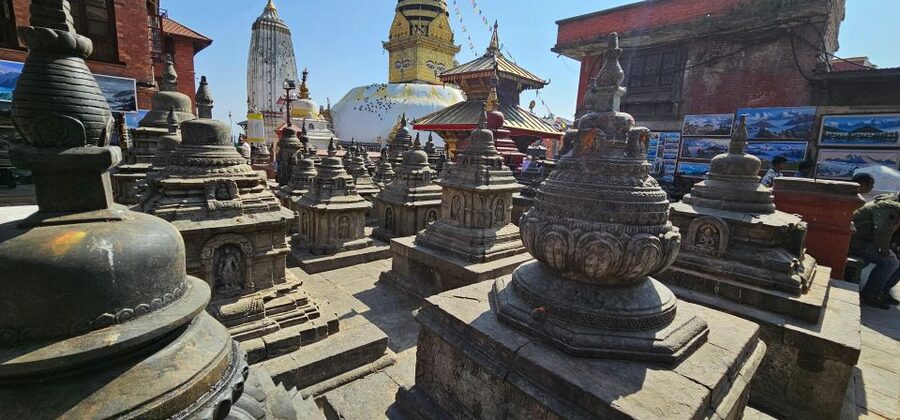
- Swayambhunath begins the cultural story: The 2,000-year-old Buddhist stupa also gives you one of the best views across Kathmandu Valley.
- Kathmandu Durbar Square brings the palace history close: Temples, old courtyards, royal buildings, and the Kumari Bahal fill this stop.
- Pashupatinath requires cultural sensitivity: Non-Hindus cannot enter the main temple, but the surrounding shrines and Bagmati River cremation ghats remain open to observation.
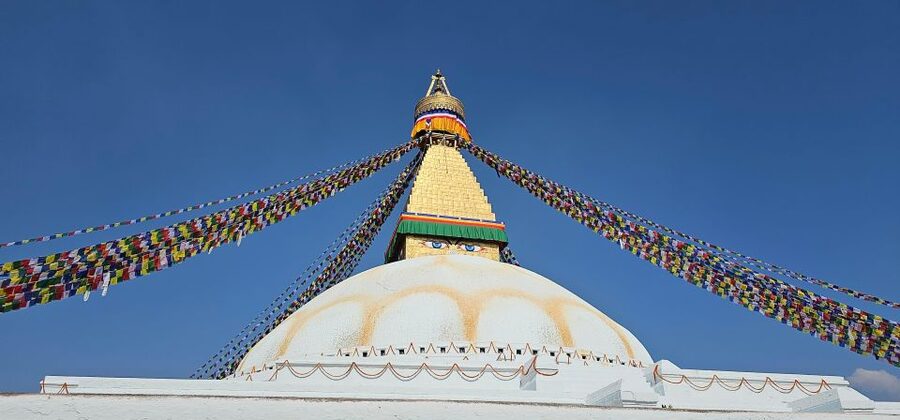
- Boudhanath ends the day on a strong note: The huge fifth-century stupa is surrounded by Tibetan Buddhist life, monasteries, and small souvenir shops.
- Private transport keeps the day practical: Hotel pickup and drop-off, an air-conditioned vehicle, and a live guide are included, while site admission is extra.
Why this Kathmandu day makes sense
Kathmandu Valley is not a place where four major sights sit neatly along one street. The sites are spread across the city, and getting between them takes time. A private vehicle removes much of the guesswork, especially when you have only one day and want to see both Hindu and Buddhist landmarks.
The tour lasts about eight hours and usually begins around 9 a.m. from your hotel. That start gives you a full morning and afternoon, but it also means you should expect a busy schedule. You are not simply being driven past monuments. The planned stops include guided visits, free time, and walking at each location.
I see this as a good first-day tour for someone new to Kathmandu. It gives you the city’s central religious and royal sites without asking you to organize separate rides, guides, and entrance arrangements. You get a broad introduction, then you can return later to the place that caught your attention.
The private format matters. You are not tied to a large group moving at the speed of the slowest person, and you can ask questions as the day develops. The guide languages are English and Spanish. If you prefer Spanish, Rama is a particularly useful detail to request when arranging the tour, since his Spanish and his command of the subject were strongly praised by Victor, a visitor from Argentina.
A short list of alternatives around Kathmandu
- Everest Base Camp Trek – 14 Days
★ 5.0 · 1,499 reviews - Private Kathmandu Sightseeing Tour | UNESCO World Heritage sites
★ 5.0 · 756 reviews - Everest Base Camp Helicopter Tour landing at Everest View Hotel
★ 5.0 · 668 reviews
Swayambhunath, the hilltop stupa with a monkey audience
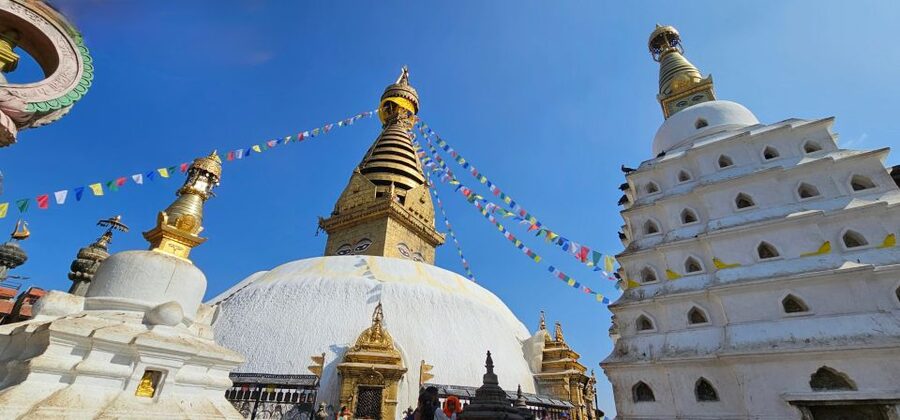
The described route begins at Swayambhunath, also called the Monkey Temple. The name is easy to remember. Monkeys are commonly seen around the temple, adding a lively, slightly chaotic note to what is otherwise a serious Buddhist pilgrimage site.
The central stupa is said to date back about 2,000 years. Its white dome and golden details make it instantly recognizable, but the setting is just as important. From the hilltop, you can look over Kathmandu Valley, and on a clear day the view may cover roughly 60 percent of Kathmandu.
That viewpoint gives you useful orientation. Before spending the rest of the day among dense courtyards and narrow city streets, you see how broad the urban area really is. The city appears close and crowded from above, while the temple grounds offer a quieter place to understand its religious importance.
Plan on about one hour here. That is enough for a guided look, photographs, and a walk around the stupa, but not enough for a slow visit to every corner. Watch your belongings around the monkeys, and follow your guide’s instructions near active religious areas. The title is playful, but this is not simply a place to chase animals for pictures.
Swayambhunath suits you best if you want a strong first impression of Kathmandu. It combines age, worship, architecture, and a city view in one stop. The tradeoff is the limited time. If Buddhist art or temple details are your main interest, you may wish you had longer.
Kathmandu Durbar Square and the former royal courtyards
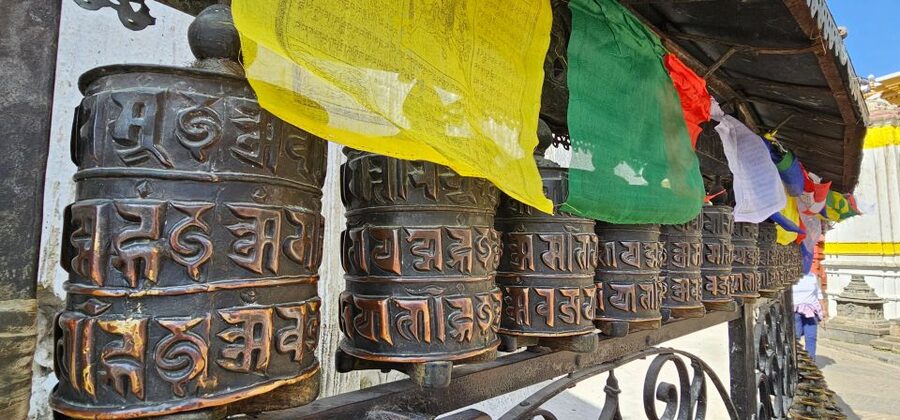
Kathmandu Durbar Square shifts the focus from hilltop Buddhism to royal Nepal. This was a palace complex with many temples, and the palace was used as a royal residence until 1896. The square is not one single building. It is a group of courtyards, shrines, palace structures, and temple fronts that reward slow looking.
The guide can point out the Taleju Temple, dedicated to a protector goddess of the kingdom and dating from 1564. You also see the Shiva and Parvati Temple, along with Kal Bhairav, a striking image carved from one piece of stone. These names can blur together during a packed sightseeing day, so having a live guide explain who each figure is makes the visit more useful.
The Kumari Bahal is one of the most distinctive stops. It is the residence of the Kumari, a living goddess chosen from a Buddhist family and honored by followers of both Hinduism and Buddhism. According to the information provided for this tour, the girl traditionally remains in the role until her first period.
You should approach this part with respect. The Kumari is not a museum display, and the courtyard is a religious home as well as a historic attraction. You may hear more about the tradition from your guide, but do not expect a theatrical performance. The value is in seeing how an old custom still shapes the identity of the square.
Allow about two hours here. That is the longest scheduled stop, and it needs the time. You will walk through old courtyards, inspect temple details, and have some free time. Wear shoes you can walk in, since the experience depends on moving between several parts of the complex.
Kathmandu Durbar Square may be the best stop for you if you want architecture and royal history. It is also the place where the schedule may feel tight. There are many structures to absorb, and the square rewards patience more than quick photographs.
Pashupatinath and the Bagmati River cremation ghats
Pashupatinath is Kathmandu’s major Hindu pilgrimage site and one of the most emotionally serious stops of the day. The main temple is dedicated to Shiva and is considered holy by Hindus from around the world.
Non-Hindus cannot enter the main temple. That restriction is important, but it does not make the visit pointless. From outside, you can see the temple area, the many small Shiva shrines called shivalayas, and the religious activity along both sides of the Bagmati River.
The riverbank is also where Hindu cremations take place. This can be confronting. You may see a ceremony in progress, and the correct response is quiet observation rather than casual photography or close approach. The tour description specifically presents cremation as something people come to witness, but the setting still calls for restraint. Your guide can help explain what you are seeing and where you should stand.
Pashupatinath is scheduled for about two hours, giving you time to walk through the temple precinct and along the river area. You may also see sadhus, Hindu holy men who sit near the temple. Some may pose for photographs in return for extra rupees. Treat that as a paid photo opportunity, not as an automatic part of the tour, and ask before taking a picture.
This stop is valuable because it shows living religion rather than only preserved buildings. You are seeing a place used for worship, pilgrimage, death rites, and daily ritual. It can also be the most difficult stop emotionally, particularly if a cremation is taking place. If you prefer a lighter sightseeing day, keep that in mind before booking.
A completely different way to spend the day:
- Half day cooking class in Thamel kathmandu
★ 5.0 · 607 reviews - Everest Base Camp Trekking
★ 5.0 · 485 reviews - Nagarkot Sunrise View and Day Hiking from Kathmandu
★ 5.0 · 471 reviews - Kathmandu: Full Day 7 UNESCO Tour with Lunch – Private/Group
★ 5.0 · 415 reviews
Boudhanath, the great stupa and Tibetan quarter
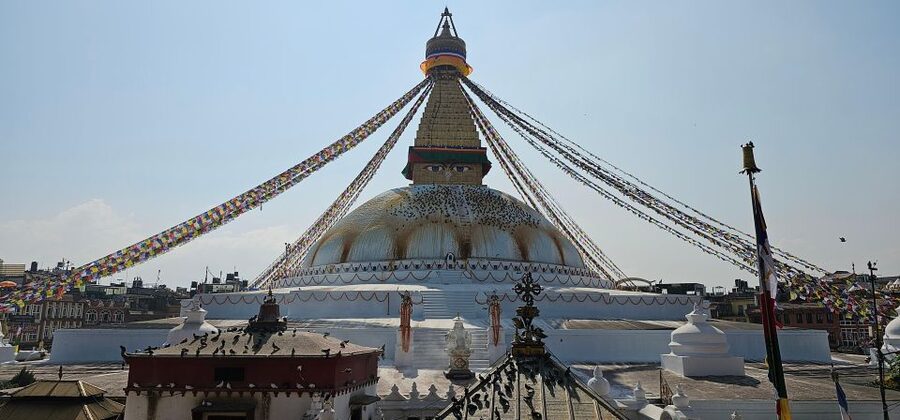
Boudhanath is the final major stop, with about two hours set aside for the visit. The stupa was constructed in the fifth century and is described as the largest in the area. Its broad circular base and white dome create a very different feeling from Kathmandu Durbar Square’s packed palace courtyards.
The Boudhanath area is often associated with a Tibetan community in Kathmandu. Many Tibetan residents live in the area, and Buddhist monasteries surround the stupa. You will also find small shops selling souvenirs around the circular square.
This is a good place to slow the pace after Pashupatinath. The huge stupa gives you a clear focal point, while the surrounding monasteries and shops let you observe how pilgrimage, neighborhood life, and commerce share the same space. You have free time here, so you can look more carefully, take photographs, or browse without being rushed from one small shrine to the next.
The tour information also connects the area with Tamang people, an ethnic group from the hills north of Kathmandu. That detail helps place Boudhanath within the wider cultural picture of the valley. It is not only a monument. It is part of a community with links to Buddhist traditions and mountain regions.
Boudhanath is likely to be your favorite stop if you enjoy Buddhist architecture or want time to absorb a site at your own pace. The drawback is that the final stop comes after a long day. If you are tired, the two hours can feel generous or demanding, depending on how much energy you have left.
What $60 includes, and what it does not
At $60 per person, the tour’s value depends on how much you want handled for you. The price includes hotel pickup and drop-off, a private air-conditioned transfer, and a live guide. Those inclusions cover the parts of Kathmandu sightseeing that can be awkward to arrange independently.
The private vehicle is especially useful because the four sites are not clustered together. You avoid organizing transport between each stop, and you can return directly to your hotel at the end. Air conditioning is a practical comfort during a long day of city touring.
Entrance tickets to the heritage sites are not included. You should budget separately for those fees, though the exact amounts are not provided here. Ask the operator for the current total before you go so the final cost is clear.
The price is easier to justify if you are traveling alone, as a couple, or in a small private party and value a guide’s explanation. A person focused only on transport may find a private tour less appealing, while someone who wants context at the Kumari Bahal, Pashupatinath, and Boudhanath will get more from the arrangement.
The flexible booking terms also reduce some planning risk. You can cancel up to 24 hours in advance for a full refund, and you can reserve now and pay later. For pickup, you are asked to call one day ahead and provide your hotel location. Do that. It is a small step that helps prevent a slow start in a city where hotel addresses can be confusing.
How to prepare for eight hours of temple visits
Wear comfortable walking shoes. Every stop includes walking, and Kathmandu Durbar Square and Pashupatinath both reward time on foot. The day is not physically described as difficult, but eight hours of sightseeing can still wear you down.
Dress respectfully for religious places. The information provided does not set out a formal dress code, but you are visiting Hindu and Buddhist temples, a royal complex, and an active pilgrimage site. Modest clothing is the sensible choice.
Carry some extra Nepalese rupees. You may need them for site admission, and the sadhus at Pashupatinath may request payment for photographs. Since entrance fees are excluded, arriving without local cash could create an avoidable nuisance.
Keep your schedule open after the tour. The day is designed to end back in Kathmandu, but the exact movement between stops can vary. You want room for traffic, walking, and the occasional moment when a religious ceremony makes the site more absorbing than expected.
The tour received a perfect rating from the two reviews provided, though that is a small sample. The most specific praise concerned timing and the guide. Victor from Argentina felt each stop allowed enough time and described Rama’s Spanish and wisdom as major strengths. That is useful evidence, but it should not be treated as a guarantee that every guide or every day will feel identical.
Who should book this tour?
Book it if you have one full day in Kathmandu and want the essential heritage circuit without arranging four separate visits. It is especially well suited to first-time visitors, private parties, and Spanish-speaking travelers who can request Rama or another Spanish-speaking guide.
You should also book it if you want both famous monuments and active religious life. Swayambhunath and Boudhanath show Buddhist traditions, while Pashupatinath presents Hindu worship and cremation rites. Kathmandu Durbar Square adds the royal and architectural side of the city.
Think twice if you dislike fixed schedules, crowded heritage areas, or emotionally serious sights. Pashupatinath can be intense, and the day includes enough walking to make comfortable shoes essential. You also need to add entrance fees to the advertised price.
For most first visits, I think the tour offers a sensible balance of coverage, comfort, and personal guidance. It will not replace a slow, several-day study of Kathmandu Valley, but it gives you a clear start and helps you decide where to return.
FAQ
How long does the Kathmandu heritage tour last?
The tour lasts eight hours and usually starts around 9 a.m. It returns you to Kathmandu after visiting the four main sites.
Which places are visited?
The tour visits Kathmandu Durbar Square, Swayambhunath Temple, Boudhanath Stupa, and Pashupatinath Temple.
Is hotel pickup included?
Yes. Hotel pickup and drop-off in Kathmandu are included. You are asked to call one day before the tour and provide your hotel location.
Are entrance tickets included in the $60 price?
No. Entrance tickets to the heritage sites are not included and must be paid separately.
Is the tour private?
Yes. The experience is arranged for a private group and includes private air-conditioned transportation.
Which guide languages are available?
Live guides are available in English and Spanish.
New in the Kathmandu listings
- Traditional Momo Making Class★ 5.0 · 10 reviews
- Kathmandu: Ancient City Kirtipur & Pharping Monastery Tour★ 5.0 · 2 reviews
- Kathmandu to Pokhara Premium sofa bus ticket★ 4.0 · 17 reviews
- Women Empowerment Project(Nepali cooking class & jewelry workshop★ 5.0 · 15 reviews
- Yoga Experience Day Trip with Private Transfer From Kathmandu★ 4.0 · 2 reviews
- 7-Day Langtang Valley Trek from Kathmandu★ 5.0 · 1 review
- Kathmandu 2 Nights 3 Days Chitwan Jungle Safari Tour★ 5.0 · 9 reviews
- Wildlife Adventure in Chitwan Nepal★ 4.0 · 4 reviews
Full-Day, compared.
Full Day 7 UNESCO Tour with Lunch – Private/Group
Read our review →
Full Day Top 4 UNESCO Tour with Lunch – Private/Group
Read our review →Full-Day 7 UNESCO Tour with Lunch – Private/Group
Read our review →
Full-Day Tibetan Cultural Tour to Tibetan Settlements Pokhara
Read our review →
Full-Day Sharing Bus Tour on 7 Iconic Destination
Read our review →
Full Day 7 UNESCO Tour with Lunch – Private/Group
Read our review →