
REVIEW · BOUDHANATH STUPA TOURS
Kathmandu: Kopan Monastery, Swayambhu and Boudha Nath Stupa Tour
Peace begins with three Kathmandu landmarks. This private half-day tour links Kopan Monastery, Boudhanath Stupa, and Swayambhunath, giving you Buddhist teaching, Tibetan religious life, and sweeping city views in one outing. I like the hotel pickup in an air-conditioned vehicle, and I like having a private English-speaking guide who can explain what you are seeing rather than leaving you to guess. The main consideration is time: five to six hours is enough for an introduction, but not enough for a slow, extended visit at every site.
I also like that the plan includes time around Boudhanath, where you can stop for lunch at a rooftop restaurant with a view of the stupa. Guide Madan is specifically praised for explaining the sites, answering many questions, and adjusting the pace. At $70 per person, this is not the cheapest way to see Kathmandu, but the private transport, entrance fees, hotel service, and personal guiding make the price easier to justify for a first visit.
In This Review
- Key points to know before booking
- Why this Kathmandu tour works well
- Beginning at Boudhanath Stupa
- The calm setting of Kopan Monastery
- Swayambhunath and the Monkey Temple
- What the private vehicle and guide add
- Is $70 per person good value?
- Who should book this experience?
- Booking, cancellation, and final advice
- FAQ
- How long does the Kathmandu religious sites tour last?
- What sites are included?
- Is hotel pickup included?
- Is transportation included?
- Is this a private tour?
- Is an English-speaking guide included?
- Are entrance fees included?
- Are lunch and drinks included?
- What is the cancellation policy?
Key points to know before booking
- Three very different Buddhist sites: You move from the quiet hilltop setting of Kopan Monastery to the pilgrimage activity around Boudhanath and the hilltop shrine of Swayambhunath.
- Private touring with guide Madan available: Only your group takes part, so you can ask questions and set a pace that suits you.
- Hotel pickup and drop-off included: An air-conditioned private vehicle removes the need to arrange separate transport between the sites.
- Boudhanath lunch can add a memorable pause: A nearby rooftop restaurant offers views of the stupa while you eat, though meals and drinks cost extra.
- Five to six hours gives you a useful overview: The schedule works well for a focused introduction, but you should not expect lengthy meditation or study time.
- The price includes the practical extras: Monument entry fees, taxes, transport, and an English-speaking guide are included, while monastery donations are not.
Why this Kathmandu tour works well
Kathmandu can feel like a puzzle of temples, shrines, lanes, and sacred symbols. A private guide helps you put the pieces together. Instead of simply walking around three famous places, you get a day built around Buddhist worship, meditation, architecture, and the connection between Tibetan and Nepalese religious traditions.
The tour lasts about five to six hours. That is a useful length for a morning or afternoon outing, especially if you want to see more of Kathmandu on the same day. You start and finish at your hotel, and the air-conditioned private vehicle matters when you are moving between sites rather than staying in one compact area.
Because this is a private activity, you do not have to fit into a large group’s timetable. You can ask why the prayer wheels are spun, what the painted eyes on the stupas represent, or how a monastery differs from a pilgrimage shrine. The guide is the part of the experience that turns sightseeing into understanding.
One especially useful point comes from the feedback about Madan. He was praised for giving informative explanations, answering many questions, and moving at the visitor’s pace. That is exactly the sort of guide you want at religious sites, where the meaning behind a gesture or symbol is often more important than the building itself.
More visits to Boudhanath:
- Kathmandu Spiritual Sites: Bodhnath & Pashupatinath Tour
★ 5.0 · 185 reviews - PashupatiNath and BoudhaNath – Private/Small Group
★ 5.0 · 18 reviews - Sacred Pashupatinath: Aarati,Cremation Rites & Boudha Stupa
★ 5.0 · 18 reviews
Beginning at Boudhanath Stupa
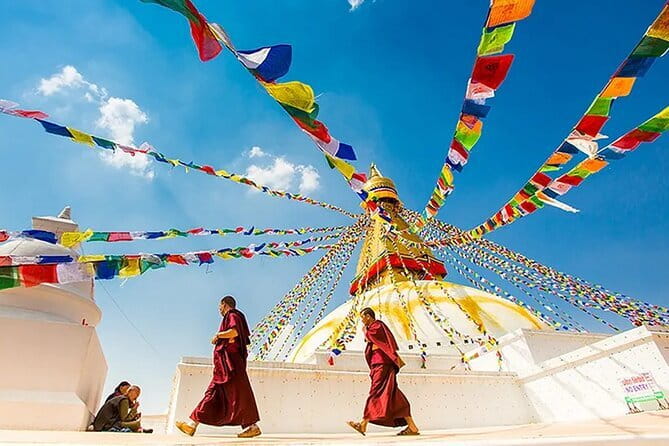
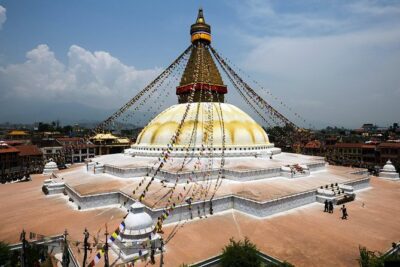
Boudhanath Stupa is scheduled as the first stop in the detailed route, with about one hour set aside and admission included. It is one of the largest stupas in the world and a UNESCO World Heritage site. More than a quick photo stop, it is a major Buddhist pilgrimage place and a focal point for Tibetan culture in Kathmandu.
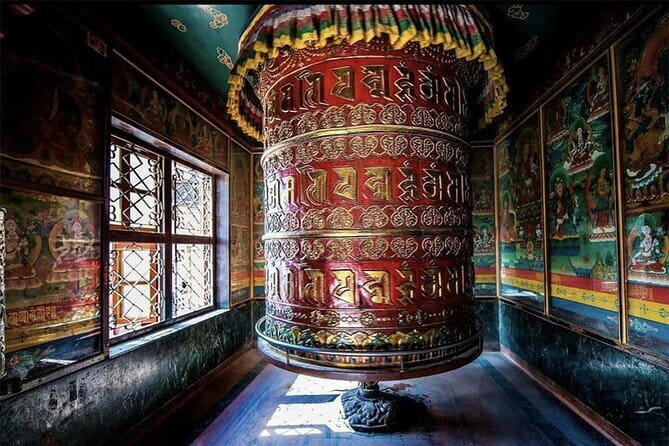
The scale makes an immediate impression. You can walk around the stupa, spin prayer wheels, and watch the steady pattern of religious activity. The tour description highlights the spiritual atmosphere and Tibetan character of the area, so your guide can help explain what you are seeing instead of reducing the visit to architecture alone.
One hour is a sensible starting point. It gives you time to see the main structure and take in the activity without using half your day at a single site. Still, this is one place where the clock may feel tight if you want to sit quietly, browse nearby shops, ask many questions, and take photographs.
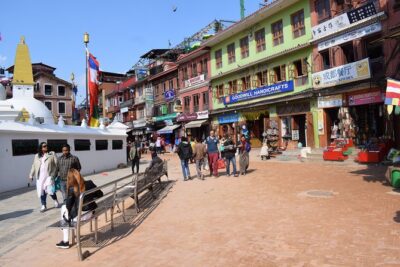
The lunch option adds real value. A rooftop restaurant near Boudhanath offers a view of the stupa, turning a standard meal into part of the visit. Food and drinks are not included, so you should budget separately, but the setting can make this a more enjoyable break than eating somewhere disconnected from the day’s theme.
I would pay attention to the order of the stops here. Boudhanath is listed first in the detailed itinerary, while the general description presents the three locations in a different sequence. Your guide may set the order around the day’s arrangements, so confirm the plan at pickup if the sequence matters to you.
The calm setting of Kopan Monastery
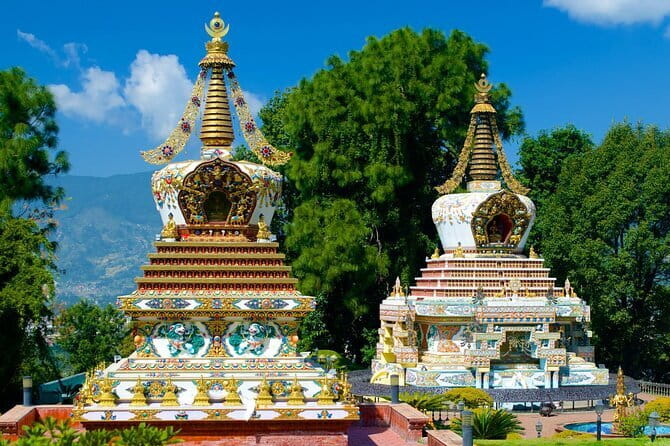
Kopan Monastery receives about one hour, with admission included. It is described as a Tibetan Buddhist monastery on a hill near Kathmandu, known for its quiet setting, meditation, and teachings. This is the stop that gives the tour its most reflective mood.
The value of Kopan is not only the view or the building. It gives you a chance to see a working center of Buddhist learning and practice. The atmosphere is likely to feel different from Boudhanath, where pilgrimage and public activity are more visible. Here, the focus is on stillness, study, and spiritual discipline.
An hour should let you take in the setting and hear the main explanation from your guide. If you are interested in Buddhist ideas, this is the point where questions can add the most to your visit. Ask your guide to explain the monastery’s role, the purpose of meditation, and how the site connects with Tibetan Buddhism.
Donations are not included in the tour price. The supplied information does not specify an amount, so you should treat any contribution as optional and decide for yourself. Entrance fees are included, but a donation is a separate matter.
Kopan may suit you best if you want more than famous monuments. It is also a useful counterpoint to the other two stops. Boudhanath shows a major public pilgrimage center, while Kopan offers a quieter setting associated with learning and meditation. Together, they create a fuller picture of Buddhist life in and around Kathmandu.
The one limitation is that a guided one-hour visit cannot reproduce the experience of attending a longer teaching or retreat. Think of Kopan as an introduction, not a full spiritual program. The tour lets you encounter the setting and ask questions, but it does not promise an extended meditation session.
Swayambhunath and the Monkey Temple
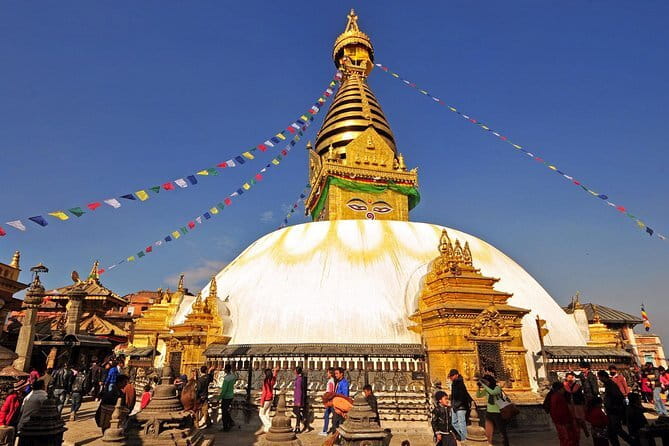
The final part of the route visits Swayambhunath, also called Swayambhu, Swayambhunath Stupa, or Swayambhu Mahachaitya. The schedule gives this area roughly 30 minutes in several entries, with one entrance fee listed as included and another entry marked free. The duplicated stop names suggest that the booking details describe the same site more than once, not several separate attractions.
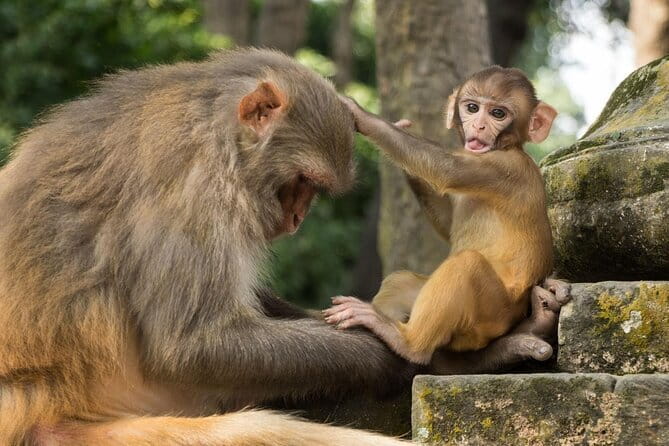
Swayambhunath sits on a hill overlooking Kathmandu Valley. It is widely known as the Monkey Temple, and the site combines Buddhist and Hindu symbolism. That combination is important. Kathmandu’s religious life is not neatly divided into separate boxes, and Swayambhunath gives you a clear example of traditions sharing one sacred place.
The hilltop position provides panoramic views across the valley, one of the strongest visual reasons to include this stop. The viewpoint can also help you understand Kathmandu’s setting after seeing the city from ground level at Boudhanath. Your guide can explain the symbols and the relationship between Buddhist and Hindu worship.
Thirty minutes is short. You can get a strong first impression, see the main stupa, enjoy the view, and hear an introduction, but you may need to keep moving. If you want quiet time with the prayer wheels or a longer look at the religious details, tell your guide early.
The site also includes monkeys, so you should stay attentive around them. The supplied tour information identifies the nickname, but it does not promise a particular animal encounter or special wildlife activity. Treat the monkeys as part of the setting, not the main reason to book the tour.
Swayambhunath is a good final stop because it ends with a broad view and a different kind of sacred space. After the intimate feel of Kopan and the circular pilgrimage route at Boudhanath, the hilltop shrine gives the day a visual finish.
More visits to Swayambhunath:
- Kathmandu: Chandragiri Cable Car and Monkey Temple Tour
★ 4.8 · 139 reviews - Monkey Temple – Swayambhunath Tour – Private/Small Group
★ 5.0 · 50 reviews - Chandragiri Cable Car & Monkey Temple Tour- Private/Group
★ 5.0 · 32 reviews - Private Chandragiri Cable Car and The Monkey Temple Tour
★ 5.0 · 30 reviews
What the private vehicle and guide add
The private format is one of the clearest advantages. Only your group participates, and an air-conditioned private vehicle handles the transfers. Hotel pickup and drop-off are included, so you do not need to arrange separate rides for three well-known but distinct sites.
That convenience has practical value. You can use the travel time to ask questions, rest between visits, or discuss what you have just seen. You also avoid the uncertainty of finding transport after each stop. The tour does not describe the vehicle size or exact pickup time, so confirm those details when booking.
The guide is just as important as the vehicle. At these sites, a guide can explain the difference between a stupa, a monastery, and a hilltop shrine. The strongest praise is directed at Madan, who is described as professional, informative, willing to answer many questions, and prepared to match the visitor’s pace.
That last point matters. Some people want a quick overview and good photographs. Others want to stop at each symbol and ask how it fits into Buddhist practice. A private guide can adapt better than a fixed group schedule, though the total tour still has a set five to six-hour window.
The experience is conducted in English, according to the inclusions. If you have a particular interest in Tibetan Buddhism, meditation, architecture, or Hindu and Buddhist traditions in Nepal, mention it at the start. You will get more from the day if the guide knows what you want to understand.
Is $70 per person good value?
At $70 per person, the tour sits above the cost of visiting one site independently, but the comparison is not quite fair. The price includes private air-conditioned transport, hotel pickup and drop-off, monument entrance fees, taxes, and an English-speaking guide.
That package makes the strongest financial sense if you are traveling with one or more companions. Since this is a private tour, the group discount feature may reduce the per-person cost for a larger party. The exact discount is not provided, so check the current rate before you book.
For a solo visitor, the price is harder to judge as a bargain, but the private format still offers convenience and personal attention. The feedback gives the guiding a real value: the ability to ask questions and move at your own pace can make the difference between recognizing a famous stupa and understanding why it matters.
Lunch, drinks, and monastery donations are extra. The rooftop meal near Boudhanath is optional, so you can control that part of the budget. I would view the tour as a time-saving package rather than a low-cost sightseeing deal.
The rating shown is 4.8 from four reviews, a positive result but a small sample. The available written feedback gives particular weight to the guide’s explanations and flexibility, which are the most useful indicators for this kind of cultural outing.
Who should book this experience?
I would recommend it to a first-time visitor who wants a clear introduction to Kathmandu’s Buddhist landmarks without planning several separate trips. It also suits anyone who values hotel service, private transport, and the freedom to ask questions.
It is a good match for you if you want:
- A focused half-day cultural outing
- Three major religious sites in one route
- Explanations from a private English-speaking guide
- A rooftop lunch setting near Boudhanath
- A flexible pace within a private group
- Monument fees and transport handled in advance
You may want another kind of visit if you prefer spending a full day at one monastery, joining a meditation course, or exploring each site without a schedule. The tour offers a well-packed introduction, not a long retreat or an unhurried architectural study.
The 30-minute allocation at Swayambhunath is the biggest timing concern. Kopan and Boudhanath each receive about an hour, but the full experience also includes driving and possibly lunch. If you want extensive time at every stop, ask whether the schedule can be adjusted.
The tour is described as suitable for most people, and it is a private activity. No special participation restriction is stated. Even so, you should discuss any personal needs with the provider before booking because the supplied information does not give detailed mobility or access notes.
Booking, cancellation, and final advice
Confirmation is provided when you book, and mobile tickets are available. Free cancellation applies if you cancel at least 24 hours before the experience begins. Within 24 hours, the amount paid is not refunded, and changes made inside that period are not accepted.
This experience is booked, on average, 47 days ahead. That does not guarantee it will sell out, but it is a useful sign that you should not leave a preferred date until the last minute, especially if you want a private departure during a busy visit.
I would book this tour if you want three important Kathmandu sites explained in one efficient outing. The best reasons are the private vehicle, hotel service, included entry fees, and the chance to ask questions at your own pace. I would skip it only if your priority is extended quiet time at Kopan, a long visit at Boudhanath, or independent wandering.
For most first visits, $70 buys a practical introduction with cultural context, not just transport between monuments. Confirm the stop order, ask about the lunch timing, and tell the guide what interests you. Those three steps should help you get the most from a tightly scheduled but worthwhile day.
FAQ
How long does the Kathmandu religious sites tour last?
The experience lasts approximately five to six hours, including visits to Boudhanath Stupa, Kopan Monastery, and Swayambhunath.
What sites are included?
The tour includes Boudhanath Stupa, Kopan Monastery, and Swayambhunath, also known as Swayambhu, Swayambhunath Stupa, the Monkey Temple, or Swayambhu Mahachaitya.
Is hotel pickup included?
Yes. Hotel pickup and drop-off are included in the tour.
Is transportation included?
Yes. The tour provides an air-conditioned private vehicle for your group.
Is this a private tour?
Yes. Only your group participates in this private activity.
Is an English-speaking guide included?
Yes. A private English-speaking tour guide is included. Guide Madan is specifically identified in the available feedback.
Are entrance fees included?
Yes. Monument entrance fees, all listed taxes, and other stated fees are included. Donations at the monastery are not included.
Are lunch and drinks included?
No. Meals and drinks are not included. You may have lunch at a nearby rooftop restaurant with a view of Boudhanath Stupa.
What is the cancellation policy?
You can cancel for a full refund up to 24 hours before the experience starts. Cancellations or changes made within 24 hours are not refunded or accepted.
More Monastery Visits in Kathmandu
- From Kathmandu: 2 Stupas and Kopan Monastery Spiritual Tour
★ 4.8 · 115 reviews - Lunch with Nuns – Monastery
★ 5.0 · 75 reviews - Kathmandu: Dhulikhel to NamoBuddha Day Hike with Lunch
★ 4.8 · 62 reviews - Dhulikhel, Namobuddha & Panauti: A Scenic Day Tour from Kathmandu
★ 5.0 · 36 reviews
New in the Kathmandu listings
- Traditional Momo Making Class★ 5.0 · 10 reviews
- Kathmandu: Ancient City Kirtipur & Pharping Monastery Tour★ 5.0 · 2 reviews
- Kathmandu to Pokhara Premium sofa bus ticket★ 4.0 · 17 reviews
- Women Empowerment Project(Nepali cooking class & jewelry workshop★ 5.0 · 15 reviews
- 7-Day Langtang Valley Trek from Kathmandu★ 5.0 · 1 review
- Kathmandu 2 Nights 3 Days Chitwan Jungle Safari Tour★ 5.0 · 9 reviews
- Yoga Experience Day Trip with Private Transfer From Kathmandu★ 4.0 · 2 reviews
- Wildlife Adventure in Chitwan Nepal★ 4.0 · 4 reviews
Boudhanath Stupa Tours, compared.
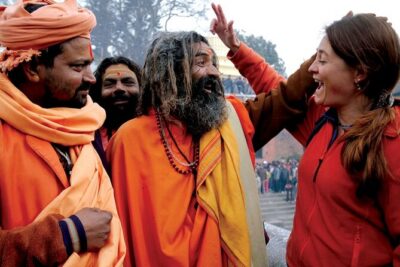
Kathmandu Spiritual Sites: Bodhnath & Pashupatinath Tour
Read our review →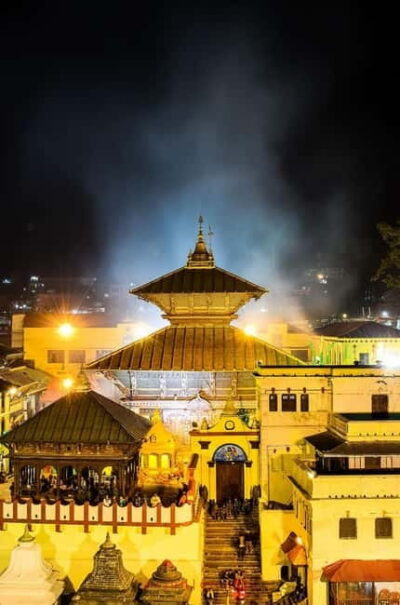
Sacred Pashupatinath: Aarati,Cremation Rites & Boudha Stupa
Read our review →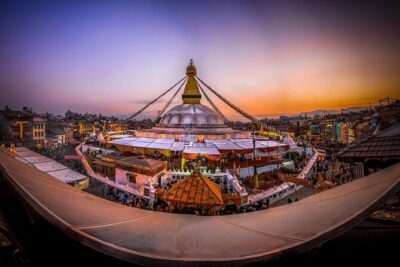
PashupatiNath and BoudhaNath – Private/Small Group
Read our review →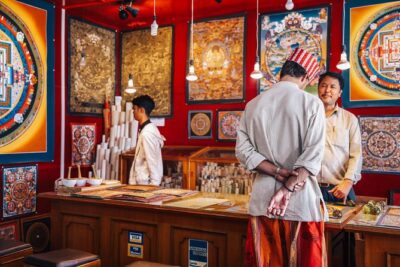
Private Half-Day Tour of Boudhanath and Pashupatinath Temples in Kathmandu
Read our review →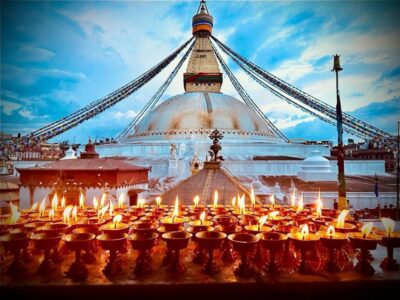
Browse the lists this tour appears in