REVIEW · GUIDED
Old Kathmandu: A Self-Guided Audio Tour
Kathmandu’s best stories hide behind small doors. This self-guided walk follows the old trade route from Sohrakhutte through Thamel and its neighboring courtyards, with Nepali writer Rabi Thapa telling stories of traders, warrior kings, Tibetan demons, flying stupas, and tooth goddesses. I like the strong sense of place and the freedom to pause whenever a shrine or quiet bahal catches your eye. I also like that the tour costs only $5.40, yet leads you well beyond the usual tourist streets.
The main drawback is the lack of a live guide. You must manage your phone, headphones, route, and timing yourself, and the GPS format cannot answer questions or change the walk for your interests. Still, the audio works well for independent visitors who want context without joining a group.
In This Review
- Key points at a glance
- Why this Old Kathmandu walk is worth your time
- Starting at Sohrakhutte on Paknajol Marg
- Thamel beyond the trekking shops
- Bhagwan Bahal and the value of looking sideways
- Narsingh Chowk and Chusya Bahal
- Shree Gha and stories with a strange edge
- Asan, where two trade routes meet
- From the Garden of Dreams toward Ratna Park
- How long should you allow?
- What $5.40 gets you
- Who should choose this audio tour?
- Should you book Old Kathmandu: A Self-Guided Audio Tour?
- FAQ
- Where does the tour start?
- Where does the tour end?
- How long does the tour take?
- Is this a guided group tour?
- Is the tour available in English?
- What is included in the price?
- Do I need to bring anything?
- Can I cancel or change the booking?
Key points at a glance
- A medieval route through modern Kathmandu: Follow the old path toward Asan, once an important meeting point for two ancient trade routes.
- Narrated by Nepali writer Rabi Thapa: The English audio brings together local legends, religious stories, and the people who shaped the city.
- Small courtyards are part of the reward: The route passes through peaceful bahals and narrow entrances that are easy to miss without guidance.
- Flexible timing: The audio itself can take about 50 minutes to 2 hours and 30 minutes, while a slower visit with extra plaques can approach three hours.
- A very low-cost introduction to Old Kathmandu: At $5.40 per person, the tour is inexpensive, though you still need your own smartphone and headphones.
- A one-way walk: Start at Paknajol Marg in Sohrakhutte and finish near Annapurna Ajima Temple, not far from Ratna Park.
Why this Old Kathmandu walk is worth your time
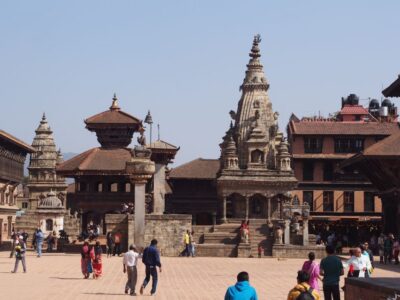
Thamel is now Kathmandu’s designated tourist quarter, filled with hotels, restaurants, trekking shops, and souvenir stores. This tour asks you to look underneath that modern layer. The area began as a medieval center of Buddhist learning, linked to the old trans-Himalayan route between India and Tibet.
That background gives the walk its purpose. You are not simply moving from one landmark to another. You are following the route toward Kathmandu’s great medieval bazaar, seeing how commerce, faith, migration, and local legends met in the same streets.
I especially like the way the route treats Thamel as more than a place to sleep before a trek. Its older identity is tied to Buddhist practice and trade, and the audio helps connect the surviving shrines and courtyards to that past. The tour also brings in figures from different eras, including kings, traders, artisans, and the hippies who later helped make Kathmandu famous with a different kind of wandering crowd.
The storytelling sounds intentionally imaginative. Tibetan demons and flying stupas share space with recognizable historical characters and neighborhood traditions. That mix should appeal to you if you enjoy history with a little folklore rather than a dry list of dates.
Here is what else people book around Kathmandu:
- Everest Base Camp Trek – 14 Days
★ 5.0 · 1,499 reviews - Private Kathmandu Sightseeing Tour | UNESCO World Heritage sites
★ 5.0 · 756 reviews - Everest Base Camp Helicopter Tour landing at Everest View Hotel
★ 5.0 · 668 reviews
Starting at Sohrakhutte on Paknajol Marg
The official start is at Paknajol Marg 16 in Kathmandu, in the Sohrakhutte area. The route description also uses the spelling Sorhakhutte, so do not be alarmed if you see both versions while checking the location.
This starting point matters because the tour begins away from the most polished part of Thamel. You get an introduction to the older northern approach before reaching the better-known tourist quarter. It sets up the idea that Kathmandu’s history is layered, not neatly divided into old and new districts.
Because this is a GPS audio tour, download the audio, maps, and geodata before setting out. Offline access is included, which is useful if your mobile connection is unreliable or you want to avoid using data. You still need a smartphone and headphones, neither of which is supplied.
The walk is private in the sense that only your own group participates. It is not a private guide waiting at the starting point. You follow the VoiceMap app, listen to Rabi Thapa, and make your own decisions about pauses and detours.
Thamel beyond the trekking shops
The route passes through Thamel, but it does not treat Thamel as the final attraction. Instead, it uses the district as evidence of how Kathmandu changes over time.
The audio points you toward the Buddhist foundations of the area and the old trade connections that once linked India and Tibet. That makes the walk useful early in a Kathmandu visit. You can begin to understand why the streets around the tourist quarter contain so many religious sites and old courtyards, even when the surrounding businesses feel thoroughly modern.
You will not receive a full guided tour of every hotel, shop, or restaurant. That is a strength if you want the focus kept on history and local stories. It is also a limitation if you expect detailed advice about shopping, food, or nightlife.
I would allow more time than the shortest estimate. The route can be completed in roughly 50 minutes if you keep moving, but the published range extends to 2 hours and 30 minutes. One careful listener took close to three hours after stopping at places with extra information plaques. That is a useful clue: the audio may be short, but the route rewards curiosity.
Bhagwan Bahal and the value of looking sideways
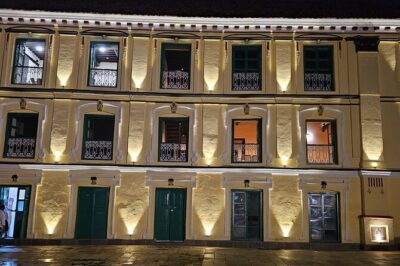
Bhagwan Bahal is one of the places that gives this walk its character. The route leads you through parts of the old city where a doorway or courtyard can matter as much as a large public monument.
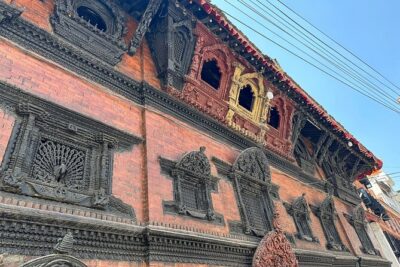
The word bahal refers to a traditional Buddhist courtyard complex. You do not need specialized architectural knowledge to appreciate the basic idea. From the street, the entrance may look modest. Inside, you might find a quieter religious space that feels far removed from the noise and movement outside.
The tour’s audio stories help you notice these transitions. A self-guided walk without narration could easily become a search for attractive doors. With Rabi Thapa’s commentary, those doors become part of a larger story about Buddhist learning, trade, and neighborhood life.
The route’s quieter spaces are among its most appealing features. A visitor who used the app found several peaceful havens through small doors. That is exactly the sort of discovery that can be missed if you stay on the main road or rely only on major sights.
A completely different way to spend the day:
- Half day cooking class in Thamel kathmandu
★ 5.0 · 607 reviews - Everest Base Camp Trekking
★ 5.0 · 485 reviews - Nagarkot Sunrise View and Day Hiking from Kathmandu
★ 5.0 · 471 reviews - Kathmandu: Full Day 7 UNESCO Tour with Lunch – Private/Group
★ 5.0 · 415 reviews
Narsingh Chowk and Chusya Bahal
From the Thamel area, the tour continues through Narsingh Chowk and Chusya Bahal. These names may not carry the same immediate recognition as Asan or Thamel, and that is part of the point.
The route is designed around an underrated part of the old city. You are guided through a sequence of smaller places rather than being rushed from one famous sight to the next. The audio supplies a cast of characters and legends that gives each section a sense of connection.
Chusya Bahal is another reminder to keep your eyes open for entrances and courtyards. You should not expect a large museum-style attraction at every stop. The value is in seeing how religious and communal spaces fit into the everyday city.
This is also where a self-guided format can test your patience. You need to keep an eye on the app while also watching where you walk. The tour is easy to follow according to the available feedback, but a phone-based route still requires attention. Headphones can help you hear the narration, though you should remain alert to your surroundings.
Shree Gha and stories with a strange edge
The route passes through Shree Gha, continuing the pattern of religious sites, older streets, and local stories. The audio is not limited to conventional historical explanation. Its cast includes tooth goddesses, Tibetan demons, and flying stupas.
That unusual material gives the walk a distinctive voice. Kathmandu’s sacred traditions do not always fit neatly into a modern guidebook paragraph, and the tour uses legend to show how people have imagined and explained their city.
I would choose this tour if you like stories that sit between history and folklore. If you want only confirmed dates, architectural measurements, and a formal academic presentation, parts of the narration may feel too fanciful. The advantage is that the route becomes memorable. You are more likely to remember a shrine connected with a strange local story than a street name presented without context.
Asan, where two trade routes meet
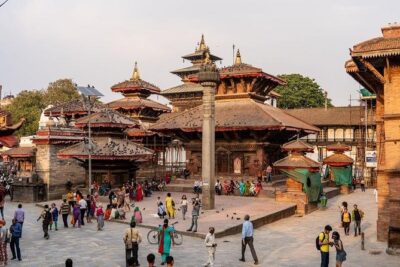
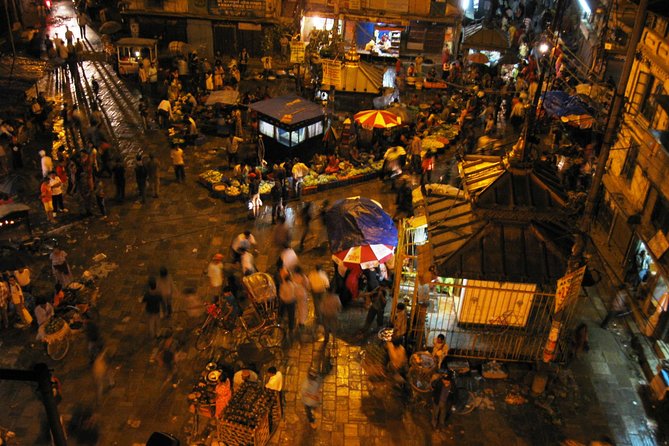
The walk reaches Asan, the grand bazaar at the intersection of two ancient trade routes. This is the clearest large-scale destination on the route, and it gives the earlier courtyards a wider meaning.
Asan was not simply a place where people bought things. Its position connected movement through the Kathmandu Valley with long-distance trade between India and Tibet. The market helps explain why Kathmandu developed as a meeting point for merchants, religious traditions, and different communities.
The itinerary allows about one minute at the Asan stop, but that should not be read as a strict limit. The audio segment may be brief, while the bazaar itself deserves more time if you want to observe the setting. The tour price does not include food or drink, so any snacks or market purchases are your responsibility.
Asan is also a useful point for judging the tour’s balance. The walk does not end at one grand monument with a long formal visit. Instead, it builds a story from many smaller places and uses the bazaar as a major link in that chain.
From the Garden of Dreams toward Ratna Park
Later sections are not far from the Garden of Dreams, and the tour passes by Kwabahal before ending near Ratna Park. The finish is at Annapurna Ajima Temple on Siddhidas Marg.
That ending gives you a clear sense of movement across the old city. You begin in Sohrakhutte, pass through the Thamel area and its older religious quarters, reach Asan, and continue toward the city center. This is a route through changing neighborhoods rather than a return loop.
The endpoint near Annapurna Temple is practical if you plan to continue exploring central Kathmandu. The tour ends near Ratna Park, and public transportation is nearby. Transportation itself is not included, so you must arrange your onward journey separately.
The endpoint also means you should think about the walk as one-way. You are not returning to the start automatically. If you are meeting someone, arranging transport, or planning another activity, allow time after reaching the temple.
How long should you allow?
The stated duration ranges from 50 minutes to 2 hours and 30 minutes. I would set aside at least two hours if you want to listen comfortably, pause for photos, and enter the courtyards that catch your attention.
A quick listener could finish in about an hour. A slower visit may run close to three hours, especially if you stop to scan additional information plaques. The self-guided format makes this flexibility one of the tour’s best features.
You are not tied to a guide’s schedule or a fixed departure. The listed opening hours run around the clock from Monday through Sunday, and the app format supports that flexibility. Still, daytime is the sensible choice for seeing courtyards and finding your way through the streets.
What $5.40 gets you
At $5.40 per person, this is a strong-value option if you already have a smartphone and headphones. The price includes lifetime access to the English tour, the VoiceMap app for Android and iOS, and offline audio, maps, and geodata.
That lifetime access matters if you want to spread the walk across more than one visit or repeat parts of it later. You are paying for a prepared route and narration rather than a single timed event.
The price does not include transportation, food, drinks, museum admission, or entrance fees for other attractions along the route. The supplied information does not identify a required admission charge for the main walk, so I would treat the tour as an outdoor route with possible optional costs rather than assume every site is free.
The main value is the combination of low cost and local focus. You get Rabi Thapa’s English narration and a route through places you might not identify on your own. You do not get a person beside you to answer questions, manage the route, or explain an unexpected closure.
Who should choose this audio tour?
I would recommend it most strongly to independent visitors who enjoy walking, folklore, and neighborhood history. It also suits people who want a gentle introduction to Kathmandu before taking on longer day trips or more demanding sightseeing.
The tour works well for:
- Visitors staying in or near Thamel
- People who prefer private sightseeing without joining a group
- History and religious architecture enthusiasts
- Independent visitors comfortable using a phone app
- Anyone looking for a low-cost activity with flexible timing
- Curious walkers who enjoy small courtyards more than major attractions
It may be less suitable if you want a live guide, a short direct route, or detailed instruction about food and shopping. You also need to be comfortable using your own device and headphones.
The cancellation terms are strict. The booking is non-refundable and cannot be changed for any reason, so choose your date carefully before paying.
Should you book Old Kathmandu: A Self-Guided Audio Tour?
Book it if you want a low-cost, story-led walk through the older layers of Kathmandu. The best parts are the route through Bhagwan Bahal, Narsingh Chowk, Chusya Bahal, Shree Gha, and Asan, plus the chance to step through small doors into calm courtyards.
I would give yourself two to three hours rather than treating it as a quick audio stroll. Download the material in advance, bring headphones, and leave room for extra plaques and unplanned pauses.
Skip it if you need a guide in person or want a tightly scheduled sightseeing program. For everyone else, $5.40 buys a thoughtful route, a memorable Nepali narrator, and a better understanding of why Thamel and Asan matter beyond their present-day tourist roles.
FAQ
Where does the tour start?
The tour starts at Paknajol Marg 16, Kathmandu 44600, Nepal, in the Sohrakhutte area.
Where does the tour end?
It ends at Annapurna Ajima Temple on Siddhidas Marg, Kathmandu 44600, near Ratna Park.
How long does the tour take?
The approximate duration is 50 minutes to 2 hours and 30 minutes. Taking your time and scanning extra information plaques can extend the visit to close to three hours.
Is this a guided group tour?
No. It is a self-guided private activity using the VoiceMap app. Only your group participates, and no live guide accompanies you.
Is the tour available in English?
Yes. The tour includes lifetime access to the English audio.
What is included in the price?
The price includes access to the VoiceMap app for Android and iOS, plus offline access to the audio, maps, and geodata.
Do I need to bring anything?
You need your own smartphone and headphones. Transportation, food, drinks, museum tickets, and entrance fees for other attractions are not included.
Can I cancel or change the booking?
No. The experience is non-refundable and cannot be changed for any reason.
New in the Kathmandu listings
- Traditional Momo Making Class★ 5.0 · 10 reviews
- Kathmandu: Ancient City Kirtipur & Pharping Monastery Tour★ 5.0 · 2 reviews
- Kathmandu to Pokhara Premium sofa bus ticket★ 4.0 · 17 reviews
- Women Empowerment Project(Nepali cooking class & jewelry workshop★ 5.0 · 15 reviews
- 7-Day Langtang Valley Trek from Kathmandu★ 5.0 · 1 review
- Kathmandu 2 Nights 3 Days Chitwan Jungle Safari Tour★ 5.0 · 9 reviews
- Yoga Experience Day Trip with Private Transfer From Kathmandu★ 4.0 · 2 reviews
- Wildlife Adventure in Chitwan Nepal★ 4.0 · 4 reviews
Guided, compared.