
REVIEW · WALKING TOURS
Oldest Local Market Walking Tour With Living Goddess Kumari
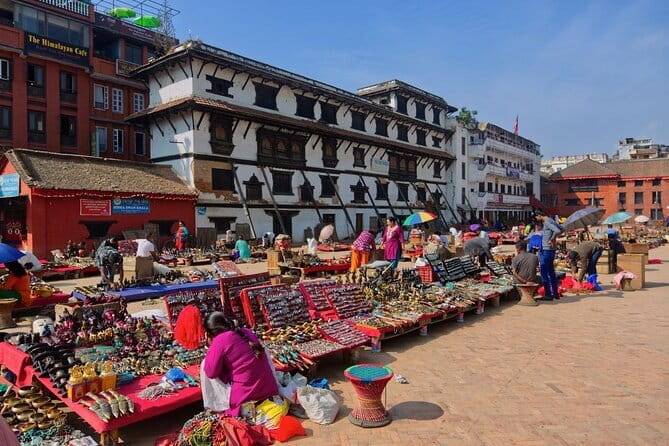
A goddess visit begins in a market. This two-hour walk links Ason Market, Kathmandu’s oldest local market area, with Kathmandu Durbar Square and the Kumari, Nepal’s living goddess. I like the way it joins daily life, Hindu and Buddhist traditions, and major monuments in one compact outing. I also like that an English-speaking guide adds context instead of leaving you to guess what the symbols mean.
The price is $39 per person, with water, taxes, and a guide included. That is fair if you want a focused introduction to central Kathmandu, especially with a guide such as Santos, who received praise for clear and detailed explanations. My main caution is the extra Kathmandu Durbar Square entry fee of 1,000 Nepali rupees, which is not included, and the schedule may feel tight if you want a long, unhurried market visit.
In This Review
- Key points to know before you book
- Starting at Chhaya Center in Thamel
- Ason Market, where Kathmandu shops for daily life
- Walking toward Kathmandu Durbar Square
- Meeting the Kumari of Kathmandu
- Understanding Hindu and Buddhist Kathmandu
- What the guide adds to a short tour
- Is $39 a fair price?
- Who should choose this walk?
- Practical tips for making the most of it
- Should you book this Kumari and market tour?
- FAQ
- Where does the tour start and finish?
- How long does the tour last?
- What language is the tour conducted in?
- Is the Kathmandu Durbar Square entry fee included?
- What is included in the $39 price?
- Can I cancel or pay later?
Key points to know before you book
- Ason is the lively starting point: Expect a working market area with spices, textiles, souvenirs, shops, stalls, and traditional buildings.
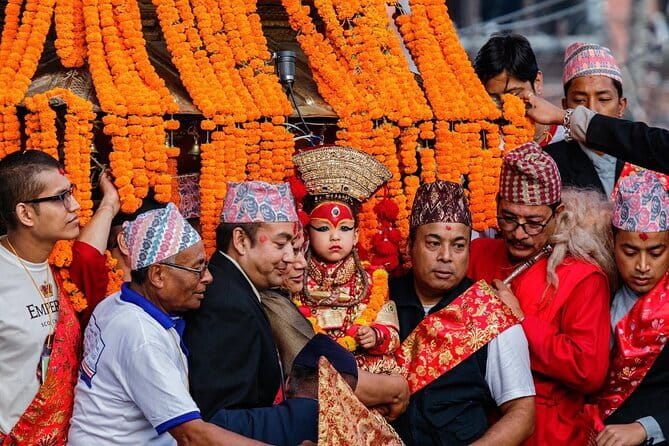
- The Kumari visit is the tour’s special purpose: You are taken to see the Kumari, a prepubescent girl regarded as the living form of the goddess Taleju.
- Kathmandu Durbar Square adds grand historical setting: Palaces, temples, and courtyards show the cultural importance of the Kathmandu Valley.
- The walk connects Hindu and Buddhist traditions: Your guide helps explain how both faiths shape Kathmandu’s public spaces and religious customs.
- Santos earned especially strong praise: A review from Alison in Australia described him as an excellent communicator with detailed knowledge of the sites.
- Plan for an additional 1,000 Nepali rupees: This government entry charge for Kathmandu Durbar Square is separate from the tour price.
Starting at Chhaya Center in Thamel
The meeting point is at the main gate side of Chhaya Devi Complex in Thamel, Kathmandu. This gives you a clear urban starting point, but you should look for the main gate rather than simply waiting somewhere inside the complex.
The activity lasts two hours and returns you to Chhaya Center. That return point is useful if you are staying in or around Thamel, since you do not need to arrange a separate ride back from the square.
I would arrive a little early. The provided details do not give a precise meeting time beyond the available start times, and a central Kathmandu meeting point can be easier when you are not rushing. Bring comfortable shoes, water if you prefer more than the included bottle, and enough Nepali currency for the 1,000 rupee entry fee.
This is a walking tour, so the short duration matters. You are getting a concentrated introduction rather than a full-day exploration of the old city. I would choose it early in a Kathmandu stay, when you want to understand the city’s layout and customs before exploring farther on your own.
More Walking Tours in Kathmandu
- Kathmandu Food and Drink Walking Tour
★ 5.0 · 266 reviews - Kathmandu: Food and Drink Walking Tour
★ 4.9 · 119 reviews - Walking Street Food Tour in Kathmandu
★ 5.0 · 111 reviews
Ason Market, where Kathmandu shops for daily life
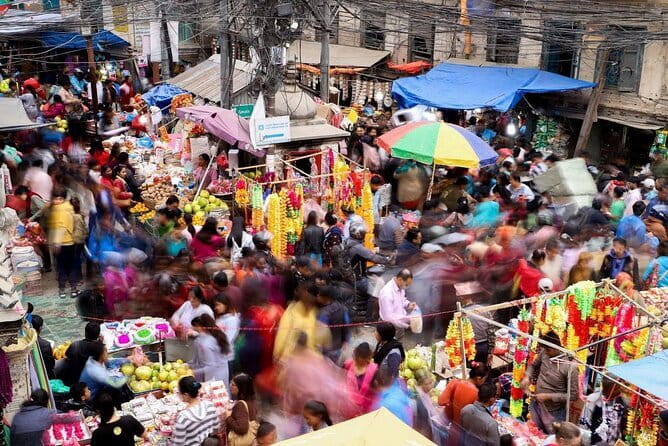
Ason is described as Kathmandu’s oldest local market area, and it gives the tour a useful first note: this is not only a monument district. It is a place of trade, movement, and ordinary city life.
The market’s shops and stalls carry goods such as spices, textiles, and souvenirs. Those categories may sound simple, but they give you a practical way to read the area. Spices point to Nepal’s food traditions, textiles show local craft and dress, and souvenirs reveal what visitors are expected to take home.
I like this stop because it puts the later monuments into a living setting. Kathmandu is not a museum city. Religious buildings, shops, courtyards, and markets exist side by side, and Ason helps you see that from the beginning.
The tradeoff is that a market is not a quiet sightseeing stop. Streets may be crowded, activity may be constant, and you may need to stay close to the guide. The supplied information does not promise shopping time, tastings, or a chance to bargain, so I would treat purchases as optional rather than a central part of the tour.
You should also keep your expectations practical. The tour description tells you what kinds of goods you can find, but it does not list particular stalls or promise specific products. The value is in seeing Ason as a local market and hearing the guide explain its place in Kathmandu.
Walking toward Kathmandu Durbar Square
Kathmandu Durbar Square is the tour’s main historical setting. The square lies in the heart of Kathmandu and includes palaces, temples, and courtyards tied to the history of the Kathmandu Valley.
A guided visit is useful here because a large collection of buildings can blur together when you walk alone. A good explanation helps you connect architecture with religious practice and royal history, even during a short visit.
The itinerary identifies the Kathmandu Durbar Square portion as a two-hour guided tour, while the overall activity is also listed as two hours. That wording leaves the exact amount of time in Ason and the walking route unclear. I would ask the operator at the start how the time is divided, especially if the market matters as much to you as the square.
The entry fee is 1,000 Nepali rupees and is not included in the $39 price. This is the most important cost detail to remember. The tour price covers the English-speaking guide, government taxes and VAT, and a bottle of mineral water, but not meals, drinks, personal expenses, or the square’s entry charge.
That makes the price reasonable for a visitor who values interpretation and a simple plan. It is less attractive if you only want to glance at the square and prefer exploring independently. You are paying mainly for the guide, the organized route, and the religious context.
Meeting the Kumari of Kathmandu
The Kumari is the emotional center of this walk. In Nepalese tradition, the Kumari is a prepubescent girl regarded as the living embodiment of Taleju, a goddess with an important place in Kathmandu’s religious life.
She resides in the Kumari Ghar, associated with Kathmandu Durbar Square. The tour gives you the chance to witness the living goddess, a rare sight for many visitors and a subject that calls for care and respect.
One verified review described the Kumari’s gaze as impressive and the visit as an honor. That detail says something about the mood of this stop. It is not simply another building or photo opportunity. For many people, the power comes from understanding that a real child holds a sacred role within a living tradition.
The information provided does not explain the exact viewing rules, the chance of seeing her at a particular moment, or whether photography is allowed. For that reason, I would listen closely to your guide and follow the instructions at the Kumari Ghar. Do not assume that the visit works like a standard attraction where you can linger, photograph freely, or expect a particular interaction.
I also appreciate that the tour presents the Kumari alongside both Hindu and Buddhist traditions. Kathmandu’s religious life cannot always be divided into neat boxes, and a guide can help you approach the subject without treating it as a strange spectacle.
If you are interested in culture, belief, and the way religion shapes public life, this part gives the tour its strongest reason to exist. If you want only architecture or shopping, the Kumari stop may feel less familiar and may require a more respectful, patient attitude.
More market mornings in Kathmandu:
- Kathmandu Secret Food Crawl & Local Market Tour
★ 4.7 · 54 reviews - Best Nepali Cooking Class in Thamel with Local Market Trip
★ 5.0 · 26 reviews - Kathmandu Food Crawl & Market Tour
★ 5.0 · 26 reviews - Oldest Local Market Walking Tour with Living Goddess Kumari
★ 5.0 · 8 reviews
Understanding Hindu and Buddhist Kathmandu
The tour promises an introduction to Hinduism and Buddhism, not just a quick walk past temples. That matters because the old center of Kathmandu brings different religious practices into close contact.
I would pay attention to the guide’s explanations of the places you see, the meaning attached to the Kumari, and the relationship between religious buildings and everyday life. The available feedback repeatedly points to the quality of the explanations. Erin from the United States found the tour very informative, while a Japanese-speaking booking praised the guide’s thorough explanations.
The Spanish-language feedback also described the tour as incredible and the guide as friendly and detailed. That lines up with the strongest pattern in the comments: the guide is not an extra feature here. The guide is what turns a short route into a lesson in place and belief.
The tour is conducted in English. That is important if you want to ask questions or follow explanations about religious ideas, royal traditions, and architecture. The language information lists English only, so you should not book expecting a multilingual guide.
I would also keep the religious setting in mind. This is a sightseeing walk, but the Kumari and the temples are part of active traditions. Quiet behavior, suitable clothing, and attention to instructions are sensible choices, even though detailed dress rules are not provided.
What the guide adds to a short tour
Two hours can either feel rushed or efficient. The difference usually comes down to the guide, and this is where the experience receives its strongest support.
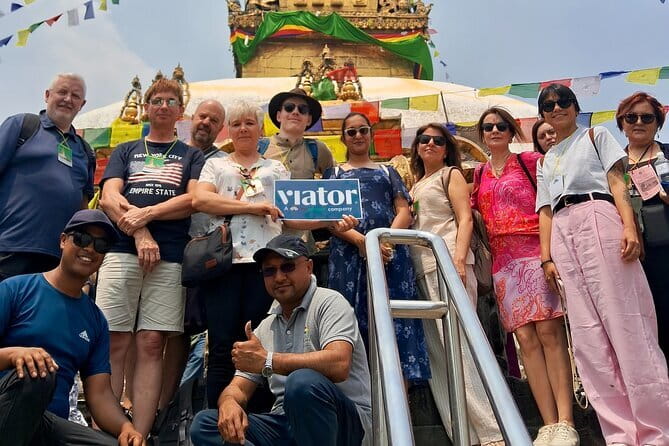
Santos is specifically praised as an excellent communicator who explained things in detail. Another booking described the tour as very informative, and a Japanese-language comment praised the thoroughness of the guide’s explanations. Those details suggest a guide-led experience with real interpretation, not a simple escort between landmarks.
I like that balance. A local market can be confusing without context, and a historic square can become a list of names without a clear story. An English-speaking guide can point out what deserves attention and help you connect the market, the square, and the Kumari.
Still, guide quality can vary from one departure to another. The supplied information names Santos in one positive account, but it does not promise that he will lead every tour. I would book this for the value of having an English-speaking guide, while treating Santos’s excellent feedback as encouraging rather than guaranteed.
The small group size is not provided, so I would not assume a private walk or a quiet pace. Ask if group size matters to you. That one detail can affect how easily you hear the guide, ask questions, and stay together in Ason.
Is $39 a fair price?

At $39 per person, this is not the cheapest way to wander around Kathmandu. You could visit a market and walk toward the square on your own for less, though you would still need to pay the square’s 1,000 rupee entry fee.
The stronger value is the guided explanation. You receive an English-speaking guide, government taxes and VAT, and bottled mineral water. The route also joins three different subjects in one outing: market life, historic Kathmandu, and the Kumari tradition.
I would consider the price good if you are new to Kathmandu, have only a short window, or want help understanding Hindu and Buddhist customs. It is also a practical choice for people who prefer a fixed meeting point and a return to Thamel.
I would be more cautious if you dislike organized walks, want to shop at length, or plan to spend a full day in Kathmandu Durbar Square. The $39 does not cover the entry fee, food, beverages, or personal purchases, so your final spending will be higher.
The reserve-now, pay-later option adds useful flexibility, and cancellation is free up to 24 hours before the tour for a full refund. Those terms help if your Kathmandu schedule is still changing.
Who should choose this walk?
I think this tour suits first-time visitors who want a clear introduction without committing to a long day. It also fits you if the Kumari is the main reason you are curious about Kathmandu and you want religious and historical context around the visit.
It is a good match for solo visitors who want a guide, couples interested in culture, and anyone who prefers a short planned route over working out the old city alone. The bottled water and central return point are small but useful touches.
Families may appreciate the two-hour length, though the tour’s details do not explain whether children receive a reduced price or how the route accommodates young walkers. Ask the provider before booking if those points affect your plans.
I would not choose it if your priority is food. No meals or beverages are included, and the description does not promise tastings. I would also skip it if you want a long photography session, since the timing and Kumari viewing rules are not explained.
Practical tips for making the most of it
Carry 1,000 Nepali rupees for the Kathmandu Durbar Square fee, plus money for any personal expenses or market purchases. The tour includes one bottle of mineral water, but no meals or other drinks.
Wear shoes suitable for a two-hour city walk. The route includes a market area and a historic square, and the exact walking distance is not stated, so practical footwear is safer than dressing only for photographs.
Keep your attention on the guide in Ason. The market contains shops, stalls, spices, textiles, souvenirs, and traditional buildings, and it is easy to lose the group when the streets are active.
At the Kumari Ghar, follow the guide’s instructions. The living goddess is part of a sacred tradition, not a staged performance. The supplied details do not state photography rules or how long the viewing lasts, so respectful observation is the best approach.
Finally, ask how the two hours will be divided. The description gives two hours for the overall activity and also labels the Durbar Square guided tour as two hours. Clarifying the timing will help you know how much market time to expect.
Should you book this Kumari and market tour?
I would book it if you want a compact, guide-led introduction to Kathmandu’s old center, with the Kumari as the main draw. The strongest reasons are the unusual religious encounter, the Ason market setting, and the repeated praise for clear, detailed guiding.
I would pause if you want independent wandering or a long visit inside the square. Remember the extra 1,000 rupee entry fee, the lack of included food, and the unclear split between Ason and Kathmandu Durbar Square.
For most first-time visitors, $39 is a fair price for two hours of explanation and a carefully chosen route. Go with an open mind, keep your expectations respectful, and let the guide help you understand why this small part of Kathmandu matters.
FAQ
Where does the tour start and finish?
The tour starts at the main gate side of Chhaya Devi Complex at Chhaya Center in Thamel, Kathmandu. It returns to Chhaya Center.
How long does the tour last?
The overall activity lasts two hours. The available details also describe the Kathmandu Durbar Square guided portion as two hours, so ask the guide how the time is divided between Ason and the square.
What language is the tour conducted in?
The live tour guide speaks English.
Is the Kathmandu Durbar Square entry fee included?
No. The entry fee is 1,000 Nepali rupees per person and must be paid separately.
What is included in the $39 price?
The price includes an English-speaking guide, government taxes and VAT, and a bottle of mineral water.
Can I cancel or pay later?
You can cancel up to 24 hours in advance for a full refund. The reserve-now, pay-later option lets you book without paying on the day of booking.
New in the Kathmandu listings
- Traditional Momo Making Class★ 5.0 · 10 reviews
- Kathmandu: Ancient City Kirtipur & Pharping Monastery Tour★ 5.0 · 2 reviews
- Kathmandu to Pokhara Premium sofa bus ticket★ 4.0 · 17 reviews
- Women Empowerment Project(Nepali cooking class & jewelry workshop★ 5.0 · 15 reviews
- 7-Day Langtang Valley Trek from Kathmandu★ 5.0 · 1 review
- Kathmandu 2 Nights 3 Days Chitwan Jungle Safari Tour★ 5.0 · 9 reviews
- Yoga Experience Day Trip with Private Transfer From Kathmandu★ 4.0 · 2 reviews
- Wildlife Adventure in Chitwan Nepal★ 4.0 · 4 reviews
Walking Tours, compared.


Walking Food Tour in Hidden Local Eateries of Kathmandu
Read our review →
Old Kathmandu Walking Tour, Historic World Heritage Durbar Square
Read our review →
Browse the lists this tour appears in