REVIEW · PRIVATE
One-Day Private Vehicle Sightseeing Tour – 6 Points
Six sacred stops, one very busy day. This private Kathmandu tour packs major temples, stupas, royal courtyards, valley views, and a rooftop lunch option into a single outing. I like the hotel pickup and drop-off, which saves you from negotiating city transport, and I like the chance to visit both Hindu and Buddhist sites with your own vehicle.
I also like the price: $35 per person is good value for a private car, air conditioning, water, parking, and an experienced driver. The catch is time. Traffic can stretch the day, entrance fees and meals cost extra, and a proper guide adds another $45. You will see a lot, but you should not expect a slow, unhurried look at every monument.
In This Review
- Six Kathmandu highlights worth knowing
- What the $35 private tour really gives you
- Pashupatinath and Guhyeshwari: Kathmandu’s sacred opening
- Boudhanath: the best place for a slow lunch
- Budhanilkantha and the reclining Vishnu statue
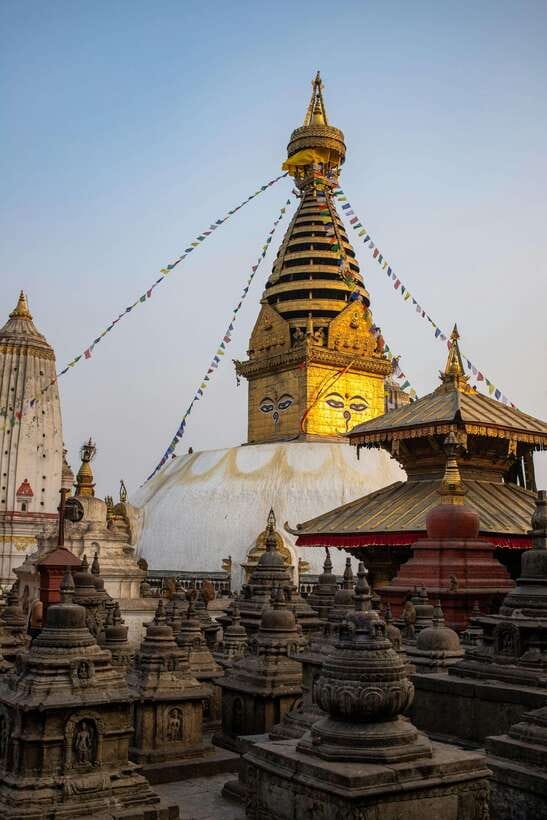
- Swayambhunath: monkeys, prayer wheels, and the valley below
- Kathmandu Durbar Square from 3:30 to 5:30 PM
- The pace, vehicle, and daily schedule
- Who will get the most from this Kathmandu day
- Should you book this six-stop tour?
- FAQ
- What is included in the $35 price?
- Is a tour guide included?
- Are entrance fees included?
- Where does pickup take place?
- What time does the tour finish?
- Is lunch included?
- Who should not book this tour?
Six Kathmandu highlights worth knowing
- Pashupatinath begins the day with real spiritual weight: Watch activity along the Bagmati River and see one of Nepal’s most important Hindu temple complexes.
- Guhyeshwari adds a quieter sacred stop: This Shakti Peeth is especially important in Nepal’s Tantric Hindu tradition.
- Boudhanath gives you the best lunch setting: A rooftop restaurant overlooking the great stupa makes a memorable midday break.
- Budhanilkantha brings you face to face with Sleeping Vishnu: The huge black stone statue is unlike anything else on this route.
- Swayambhunath delivers Kathmandu Valley views: Prayer wheels, shrines, monkeys, and a hilltop outlook make this the strongest photo stop.
- Kathmandu Durbar Square ends the day with royal history: Hanuman Dhoka, Kumari Ghar, Kasthamandap, and street food fill the final hours.
What the $35 private tour really gives you
At $35 per person, this is an unusually inexpensive way to cover a wide section of Kathmandu in a private vehicle. The cost includes air conditioning, drinking water, parking, taxes, staff allowances, and pickup and return to your hotel. It also includes the comfort of not sharing the vehicle with strangers.
That private setup matters in Kathmandu. Distances on a map look short, but road conditions and traffic can make a 4-kilometer trip take 15 minutes or longer. You can adjust your pace slightly, stop for photographs, and leave shopping or lunch decisions to your own group rather than a large bus schedule.
The price does not include entrance fees, meals, personal purchases, or a tour guide. The optional guide costs $45 for the group, not per person. For two people, that raises the total by $22.50 each. For four people, it adds only $11.25 each, making the guide a more attractive choice for a larger party.
The driver can communicate in Nepali, Hindi, English, French, Russian, or Spanish. That helps with basic coordination and transport, but do not confuse a multilingual driver with a licensed sightseeing guide. If you want detailed explanations at each shrine and palace, pay for the guide.
The tour is private, but it is not a luxury tour. Think of it as a practical sightseeing car with a broad route. You pay separately at the monuments, and the schedule may change with traffic or the amount of time you spend at each place.
A short list of alternatives around Kathmandu
- Everest Base Camp Trek – 14 Days
★ 5.0 · 1,499 reviews - Private Kathmandu Sightseeing Tour | UNESCO World Heritage sites
★ 5.0 · 756 reviews - Everest Base Camp Helicopter Tour landing at Everest View Hotel
★ 5.0 · 668 reviews
Pashupatinath and Guhyeshwari: Kathmandu’s sacred opening
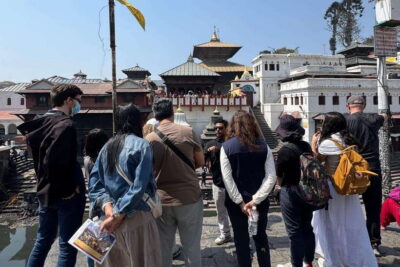
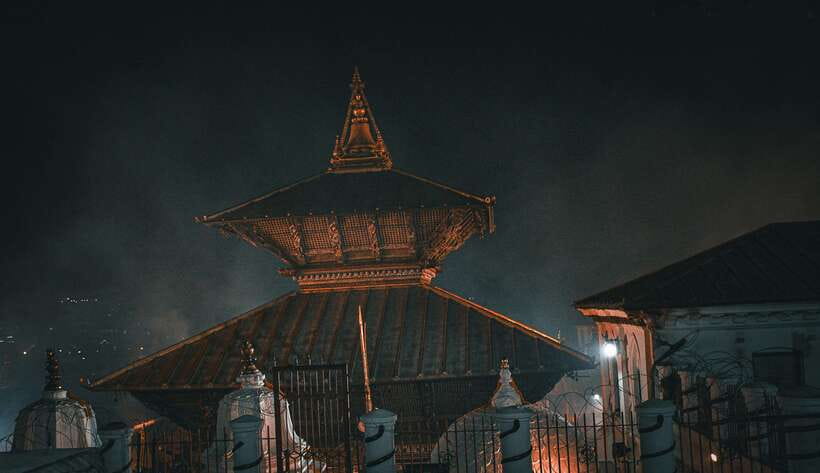
The first major stop is Pashupatinath Temple, about 4.3 kilometers from Thamel, with an expected drive of roughly 15 minutes. This is Nepal’s holiest Hindu temple, dedicated to Shiva, and it sits beside the Bagmati River.
Non-Hindu visitors cannot enter the main temple building, but the wider complex contains more than 500 temples and shrines. You can walk through the grounds, see the river ghats, and observe cremation rituals from a respectful distance. This is not staged culture for a tour bus. It is an active religious place, and your behavior matters.
Keep your voice low near worship and funeral activity. Do not point a camera directly at mourners, and follow any instructions about restricted areas. Modest clothing is important here: shoulders and knees should be covered.
Pashupatinath can feel intense early in the day. The cremation ghats, temple bells, shrines, and pilgrims create a serious atmosphere. I consider this one of the most meaningful stops, but it is not the easiest place for visitors who prefer a quiet, polished sightseeing experience.
Guhyeshwari Temple is only about 1 kilometer away, a drive of around five minutes. Dedicated to Goddess Parvati, it is associated with the Shakti Peeth tradition and has special importance in Tantric Hindu practice.
The stop is shorter and more focused than Pashupatinath. You may spend about 20 minutes here, depending on access and the pace of the group. It works well as a companion visit because it adds another layer to the religious story rather than repeating the same type of monument.
Boudhanath: the best place for a slow lunch
From Guhyeshwari, Boudhanath is about 3.5 kilometers away, normally a 10-minute drive. The great white stupa is one of Asia’s largest and a major center of Tibetan Buddhism.
This is the stop where I would protect your time. Walk around the circular base in the direction used by Buddhist worshippers, look up at the painted eyes, and take in the steady movement around the stupa. The prayer wheels and surrounding monasteries give the place a clear rhythm. You do not need a long lecture to understand that this is a living center of worship.
The planned visit is about 90 minutes, including walking and free time. That is enough for a full circuit, photographs, shopping, and lunch if you move at a sensible pace. It is not enough to linger over every side street or browse every shop.
The optional rooftop lunch is one of the most appealing details of the day. Restaurants around Boudhanath offer elevated views toward the stupa, so you can eat while keeping the monument in sight. Tibetan-style momos, laphing, and Tibetan tea are suggested choices. Food is not included, so bring cash and expect to pay your own bill.
I like the lunch option because it gives the day a needed pause. Six cultural stops can become a blur if you only jump in and out of the car. A meal overlooking Boudhanath lets you rest your feet and enjoy the setting without adding another separate restaurant stop.
Still, remember the tradeoff. A rooftop meal uses sightseeing time, and traffic later in the day may force the driver to shorten another visit. If food matters less to you than the monuments, make lunch quick.
Budhanilkantha and the reclining Vishnu statue
The drive from Boudhanath to Budhanilkantha covers about 8 kilometers and takes roughly 25 minutes. This is the longest drive so far, and traffic can make it longer.
Budhanilkantha Temple is known for its enormous black stone statue of Lord Vishnu reclining on a bed of serpents. The image rests outdoors in a water tank and is one of the most unusual religious sights in the Kathmandu Valley.
The setting at the foot of the Shivapuri Hills feels different from the dense temple districts earlier in the day. Pilgrims come here to pray, and the visit offers a quieter pause before the climb at Swayambhunath. You can look closely at the statue and watch local worship, but the visit itself is not a large complex with hours of rooms to explore.
This stop is especially worthwhile if you enjoy religious art and local pilgrimage sites. If your main goal is old palaces and UNESCO monuments, it may feel less essential than Boudhanath or Kathmandu Durbar Square. That is the nature of this tour: it mixes headline sights with places that give you a broader view of Kathmandu’s faith traditions.
A completely different way to spend the day:
- Half day cooking class in Thamel kathmandu
★ 5.0 · 607 reviews - Everest Base Camp Trekking
★ 5.0 · 485 reviews - Nagarkot Sunrise View and Day Hiking from Kathmandu
★ 5.0 · 471 reviews - Kathmandu: Full Day 7 UNESCO Tour with Lunch – Private/Group
★ 5.0 · 415 reviews
Swayambhunath: monkeys, prayer wheels, and the valley below
From Budhanilkantha, expect about 7 kilometers and around 20 minutes by vehicle to Swayambhunath. The stupa sits on a hill west of central Kathmandu and is reached by walking and climbing stairs.
Swayambhunath is often called the Monkey Temple because monkeys live around the shrine area. Do not feed them or leave food loose in your bag. The monkeys are entertaining from a distance, but they are still wild animals looking for an easy snack.
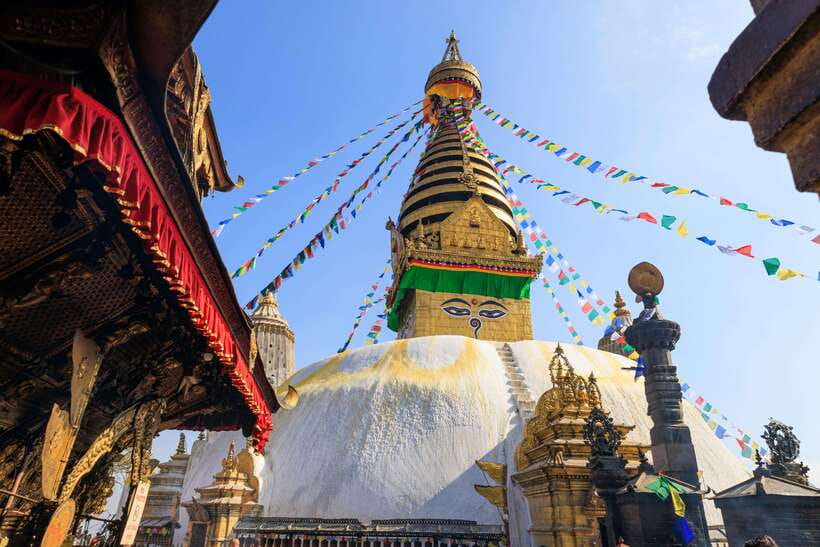
The visit lasts about an hour. Walk around the stupa, spin the prayer wheels, and notice how Hindu and Buddhist practices share the same hilltop setting. The monument’s painted eyes look across the city, while smaller shrines and statues fill the surrounding grounds.
The main reward is the view. On a clear day, you can look across Kathmandu Valley and take strong photographs from the hill. Weather matters here. Haze or monsoon clouds may limit the view, so keep your expectations flexible.
This is also the most physically demanding part of the day for many people. The route involves walking and stairs, and the tour is not suitable for wheelchair users, people with mobility impairments, pregnant women, people with back problems, or children under 10. Anyone over 80 or over 230 pounds is also listed as unsuitable. Those restrictions are worth taking seriously rather than treating them as routine fine print.
Wear shoes with a good grip. Bring water, sunscreen, a hat, and any medication you need. The tour provides drinking water, but you should still carry personal supplies for a full day outdoors.
Kathmandu Durbar Square from 3:30 to 5:30 PM
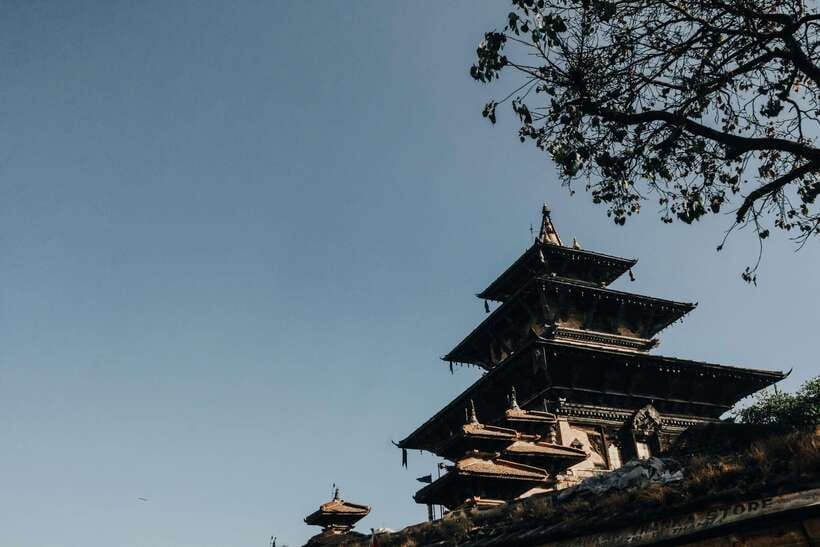
The final major stop is Kathmandu Durbar Square, about 4.5 kilometers from Swayambhunath and roughly 15 minutes by car in normal conditions. In practice, this central-city drive can take longer.
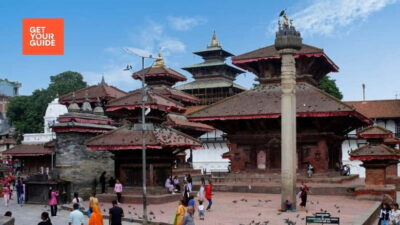
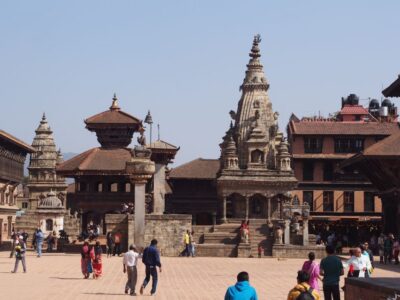
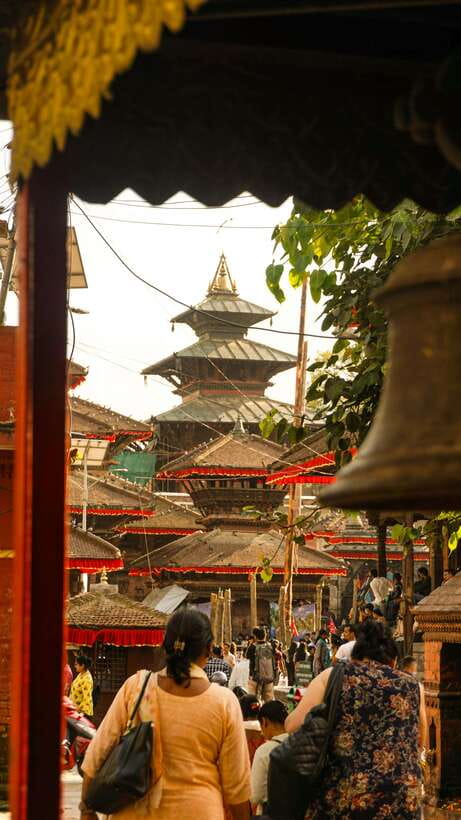
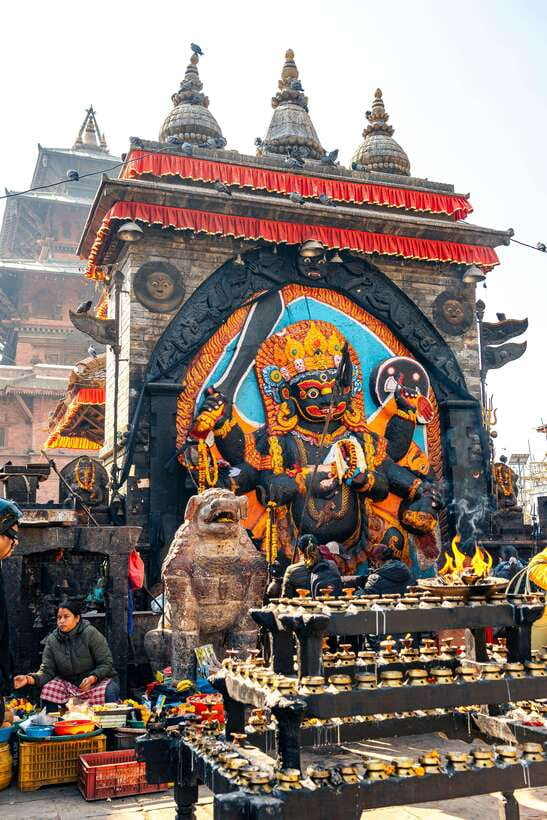
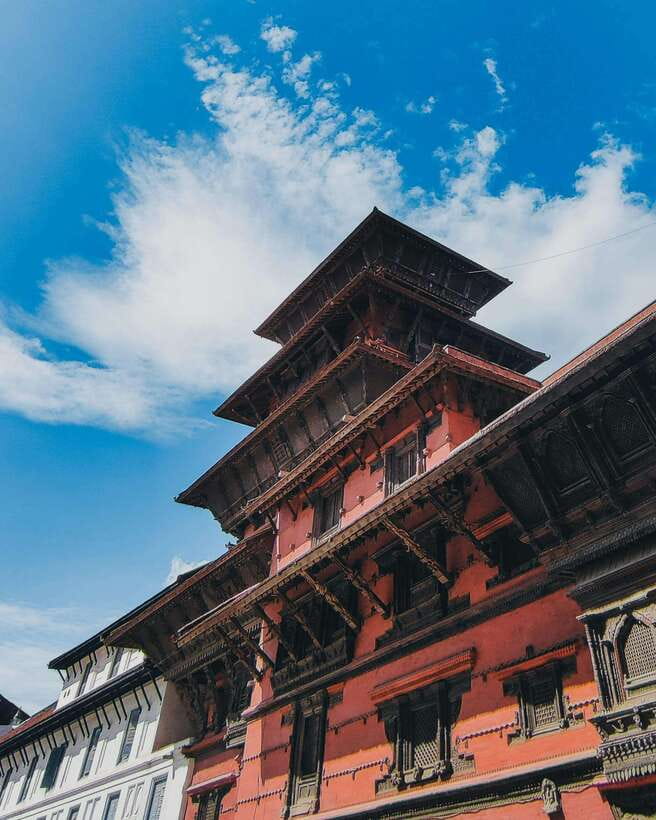
The square was the royal center of the Malla kings and later rulers. Your visit includes the Hanuman Dhoka palace complex, Kasthamandap, the Kal Bhairav statue, the Taleju Temple area, and Kumari Ghar, the home of the Living Goddess.
Allow about two hours here. That is the right amount of time for a first look, photographs, some free exploration, and a little shopping. You can also visit the National Museum and Art Museum areas if they are open and time allows, though the schedule may not permit a long museum visit.
Kasthamandap is a wooden pavilion traditionally said to have been made from a single tree. The earthquake damage and restoration work across the square are part of the site’s modern story, but the courtyards still give you a strong sense of Kathmandu’s royal past.
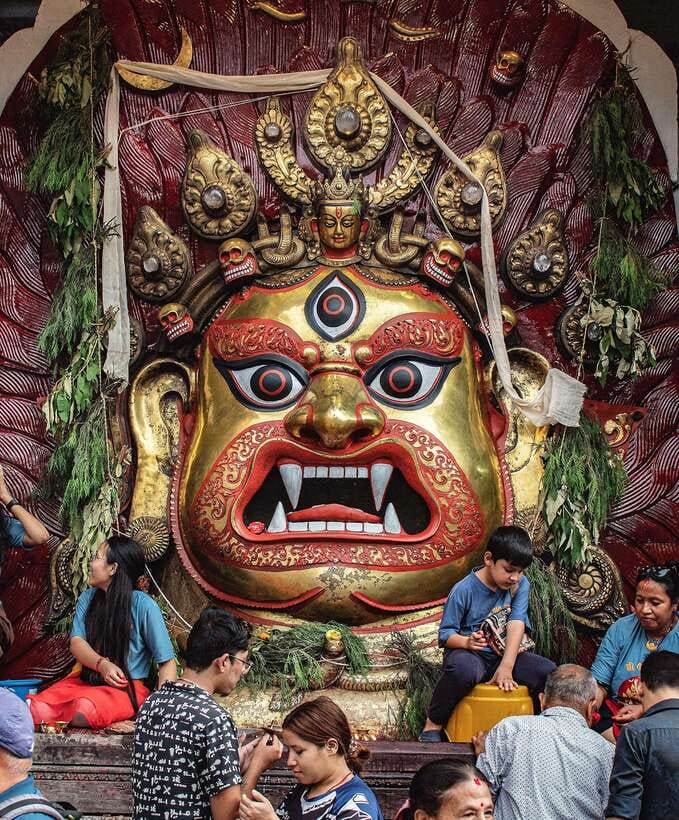
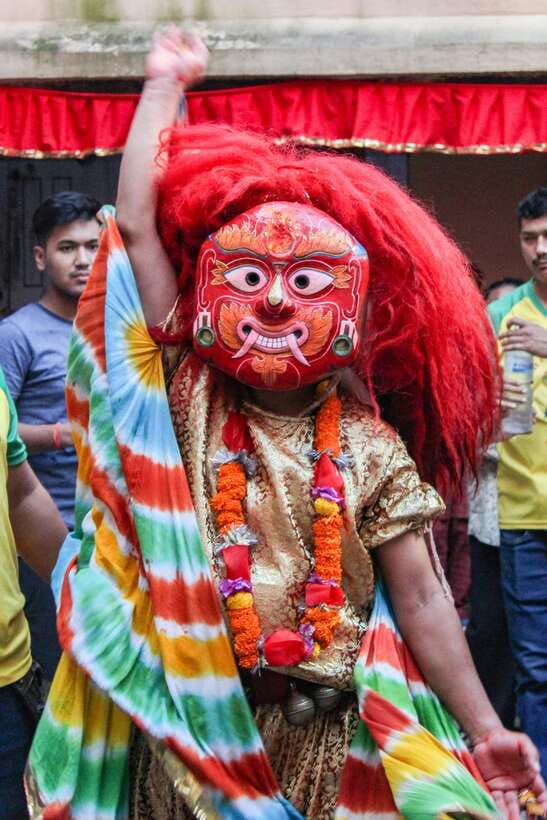
Kumari Ghar is one of the most distinctive stops. The Kumari, or Living Goddess, may appear at around 4:30 or 5:30 PM. The timing is not guaranteed, and respectful silence is essential. Do not treat the appearance like a casual photo opportunity, and follow local rules about photography.
If you have time, try bara, a lentil pancake, or momos from nearby stalls. Street food is not included, and cash is useful because smaller shops and food vendors may not accept cards.
The square is a good place to finish because it combines architecture, religion, local life, shopping, and food. The drawback is that two hours can pass quickly. If the group spends too long at earlier stops, you may need to choose between museums, shopping, snacks, and a patient look at the palace courtyards.
The pace, vehicle, and daily schedule
The day begins with pickup in Kathmandu, usually from your hotel lobby. The representative is expected about 10 minutes before the scheduled departure, so be ready early. If your hotel has no lobby, you receive a nearby meeting point.
The advertised return is around 5:30 PM. That is a full day, especially with six stops, driving, stairs, lunch, and possible traffic delays. The route covers roughly 27 kilometers between the listed sites, not counting the drive from your hotel. Kathmandu’s roads can make that distance feel much greater.
The air-conditioned private vehicle is valuable during hot afternoons, dusty roads, or monsoon weather. The tour advises carrying an umbrella or raincoat during the monsoon. Comfortable clothing and shoes will help more than dressy outfits.
Large bags and luggage are not allowed in the vehicle, and smoking is prohibited. Littering and loud behavior are also not allowed. Carry a passport or identification, cash, camera, sunglasses, sunscreen, and personal medication.
The tour includes a local SIM on request, but data and top-ups are extra. That is a useful touch if you need local communication, though you should not assume mobile data is included.
Who will get the most from this Kathmandu day
I would recommend this tour to first-time visitors who have only one full day in Kathmandu and want to cover the major religious and royal sights without arranging several separate taxis. It also suits couples, families with older children, and private groups who want control over the vehicle and pickup.
It works particularly well for people who value variety. In one day, you see Hindu temples, a Tibetan Buddhist stupa, a hilltop Buddhist shrine, a reclining Vishnu image, and a former royal square. That mix gives you more than a standard palace-only route.
I would be cautious about booking it if you dislike early starts, traffic, stairs, or tight schedules. It is not designed for deep study at each monument. You will get a strong introduction, not a slow specialist tour.
The extra guide is most useful if architecture, religious symbolism, and royal history matter to you. Without one, you still have transport and a driver who can help with the route, but your understanding may depend more on signs and your own preparation.
A verified French visitor, Lucile, rated the day five out of five in January 2025 and described the experience as an incredible day covering Kathmandu’s iconic places. That praise fits the tour’s main strength: it gives you a lot of the city in a very compact package. The sensible qualification is to accept that speed is part of the deal.
Should you book this six-stop tour?
Book it if you have one day, want a private car, and prefer a wide introduction to Kathmandu over a relaxed visit to only two or three sites. At $35 per person, the included vehicle, water, parking, and hotel service make it good value, especially for a small private group.
Add the $45 guide if you want real historical and religious explanation. Bring cash for entrance fees, food, snacks, and shopping, and dress modestly from the start.
Skip it if mobility is an issue or if you want long, quiet visits. For everyone else, this is a practical way to see Kathmandu’s essential sights in one demanding but rewarding day.
FAQ
What is included in the $35 price?
The price includes a private air-conditioned vehicle, an experienced driver, drinking water, hotel pickup and drop-off, taxes, staff allowances, and parking fees. A local SIM is available on request.
Is a tour guide included?
No. A tour guide is an optional extra costing $45. The driver may speak Nepali, Hindi, English, French, Russian, or Spanish.
Are entrance fees included?
No. You pay monument entrance fees separately, along with food, personal expenses, SIM data, and top-ups.
Where does pickup take place?
Pickup is in Kathmandu, normally at your hotel lobby. If your hotel has no lobby, an exact nearby meeting point will be provided.
What time does the tour finish?
The planned return to your hotel is approximately 5:30 PM. Traffic and time spent at each site can change the schedule.
Is lunch included?
No. Lunch is optional and can be taken at a rooftop restaurant overlooking Boudhanath Stupa. Suggested foods include momos, laphing, and Tibetan tea.
Who should not book this tour?
The experience is not suitable for children under 10, pregnant women, people with back problems, mobility impairments, or wheelchair users. It is also not suitable for people over 80 or people over 230 pounds, or 104 kilograms.
New in the Kathmandu listings
- Traditional Momo Making Class★ 5.0 · 10 reviews
- Kathmandu: Ancient City Kirtipur & Pharping Monastery Tour★ 5.0 · 2 reviews
- Kathmandu to Pokhara Premium sofa bus ticket★ 4.0 · 17 reviews
- Women Empowerment Project(Nepali cooking class & jewelry workshop★ 5.0 · 15 reviews
- 7-Day Langtang Valley Trek from Kathmandu★ 5.0 · 1 review
- Kathmandu 2 Nights 3 Days Chitwan Jungle Safari Tour★ 5.0 · 9 reviews
- Yoga Experience Day Trip with Private Transfer From Kathmandu★ 4.0 · 2 reviews
- Wildlife Adventure in Chitwan Nepal★ 4.0 · 4 reviews
Private, compared.
Private Kathmandu Sightseeing Tour | UNESCO World Heritage sites
Read our review →
Full Day 7 UNESCO Tour with Lunch – Private/Group
Read our review →
Full Day Top 4 UNESCO Tour with Lunch – Private/Group
Read our review →Full-Day 7 UNESCO Tour with Lunch – Private/Group
Read our review →