REVIEW · PRIVATE
Private Half Day Tour in Kathmandu
Three hours can open Kathmandu wide. This private half-day tour lets you choose two major UNESCO sites, with an air-conditioned vehicle and a personal guide keeping the visit focused. I like the freedom to shape the outing around your interests, and I like the chance to see Kathmandu Durbar Square and Swayambhunath without joining a large group. The main catch is the tight schedule, plus a separate $20 monument fee per person.
The strongest praise goes to the guides. Nilakantha Acharya is repeatedly singled out for clear explanations, patience, local insight, and help with photographs, while Kumar and Kamal also receive warm praise. One small caution: communication was occasionally difficult for one participant, so it helps to ask questions slowly and confirm what you want to see.
In This Review
- Key points to know before booking
- Why this short Kathmandu tour makes sense
- Kathmandu Durbar Square: royal courtyards and Newari carving
- Swayambhunath: a Buddhist hilltop with a wide view
- The other site combinations and what they offer
- What the three-hour schedule really feels like
- Guides who add the most value
- Price, entrance fees, and overall value
- Who should book this half-day experience?
- Should you book it?
- FAQ
- How long is the Kathmandu private tour?
- How many sites will I visit?
- Which sites can I choose?
- Is Kathmandu Durbar Square included in the price?
- How much are the monument entrance fees?
- What does the $40 tour price include?
- Are food and drinks included?
- Is this a private tour?
- Is pickup available?
- Can most people participate?
- What is the cancellation policy?
Key points to know before booking
- Two UNESCO sites in about three hours: A smart way to cover major sights when your time in Kathmandu is short.
- Five possible landmarks: Choose from Kathmandu Durbar Square, Swayambhunath, Patan Durbar Square, Pashupatinath Temple, and Boudhanath Stupa.
- Private transport matters: Your group rides in an air-conditioned vehicle instead of following a fixed shared group.
- Guides are the main strength: Nilakantha Acharya, Kumar, and Kamal are praised for history, culture, patience, and personal attention.
- Budget $60 per person before food: The tour costs $40, and monument entrance fees add $20 per person.
- Best for first-time visitors: You get a quick cultural introduction, though the pace leaves little room for wandering.
Why this short Kathmandu tour makes sense
Kathmandu Valley can feel like several cities packed into one. Royal courtyards, Hindu shrines, Buddhist stupas, traffic, incense, carved windows, and ordinary city life all meet within a relatively small area. If you have only a morning or afternoon, this tour gives you a practical first look without asking you to arrange every ride and entrance stop yourself.
The format is simple. You spend roughly 90 minutes at each of two selected sites, with transport between them. That is enough time for a guided introduction, the major buildings, photographs, and questions. It is not enough time for a slow study of every shrine or a leisurely cafe break, so you should treat this as a sharp orientation rather than a full exploration of Kathmandu Valley.
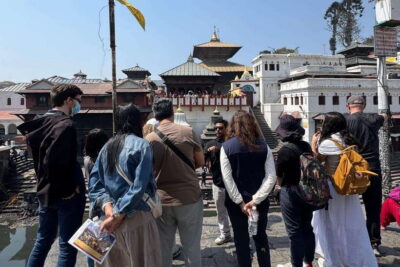
I especially like the private setup. Only your group takes part, which gives you room to ask about religious customs, architecture, or daily life. Several experiences were tailored around personal interests, and one guide took plenty of photographs for a solo participant. That kind of attention is hard to expect on a large coach outing.
The tour costs $40 per person. Monument entrance fees are not included and are listed at $20 per person, bringing the stated cost to $60 before food and drinks. That is fair if you value private transport and a guide, particularly for a couple or small family. It is less attractive if you prefer to move slowly, use local transport, and read about the sites on your own.
A short list of alternatives around Kathmandu
- Everest Base Camp Trek – 14 Days
★ 5.0 · 1,499 reviews - Private Kathmandu Sightseeing Tour | UNESCO World Heritage sites
★ 5.0 · 756 reviews - Everest Base Camp Helicopter Tour landing at Everest View Hotel
★ 5.0 · 668 reviews
Kathmandu Durbar Square: royal courtyards and Newari carving
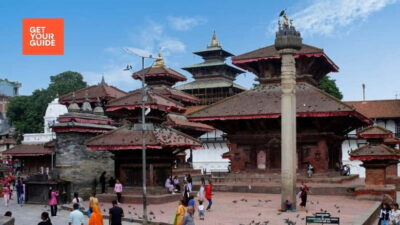
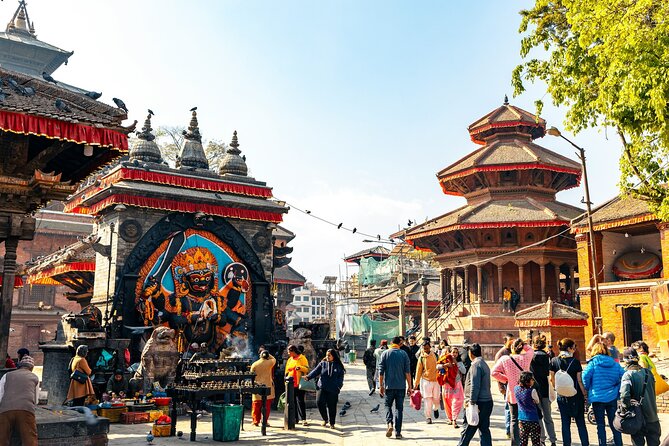
Kathmandu Durbar Square is one of the valley’s three royal squares recognized by UNESCO. Its setting combines palace courtyards, temples, shrines, and elaborate timber carving, making it one of the best places to see the visual language of Newari architecture in one concentrated area.
The earliest construction began in the third century, though many of the structures you see today were added much later. The outer part of the square includes temples from the 16th century, built during the rule of the Malla kings. Their carved facades are a major reason to bring a guide. At first glance, the details can blend together, but a good explanation helps you notice the workmanship and understand how the square developed.
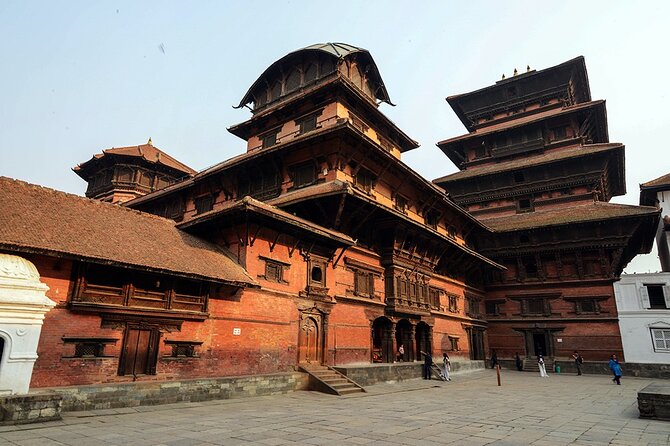
The palace compounds also reflect the Malla and Shah periods. Nautale Durbar, a nine-story palace commissioned by Prithvi Narayan Shah, is among the best-known buildings in the complex. You will spend about 90 minutes here, so the guide needs to make choices rather than cover every corner.
That time limit is both useful and restrictive. It keeps the visit moving and prevents you from losing half a day in one complex, but you may leave wanting more time for close inspection and photographs. The entrance fee is extra, so factor that into the price before you book.
I would choose this stop if you want architecture, royal history, and a central introduction to Kathmandu. It is also a strong choice for first-time visitors who want a clear explanation of how Nepal’s political and religious life has shaped the city.
Swayambhunath: a Buddhist hilltop with a wide view
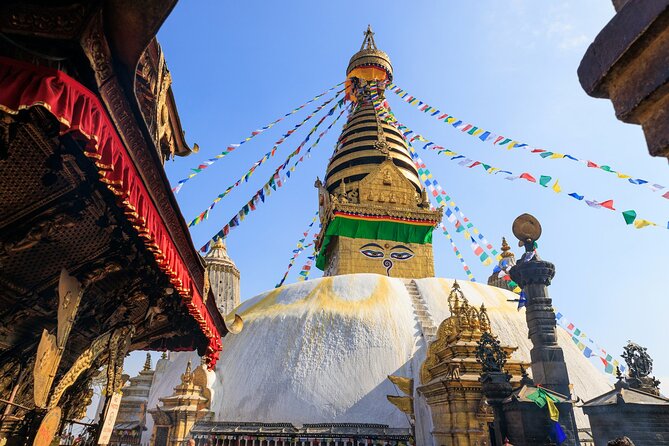
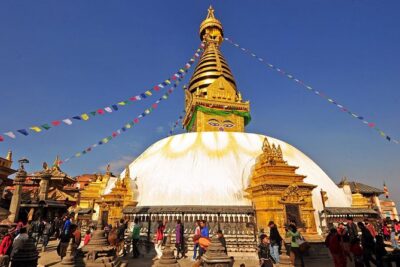
Swayambhunath, often called the Monkey Temple, provides a different experience from the royal square. The site centers on the Mahachaitya stupa and sits on a hill known for its many varieties of trees. The name Swayambhu is linked with the idea of something self-sprung, while the site carries major importance for Buddhist Newars and for Tibetan Buddhists.
That religious importance is worth keeping in mind. This is not simply a viewpoint with an attractive monument placed on top. It is a working sacred site, and your guide can help explain why it matters to both Buddhist and Hindu communities. The cultural context gives the visit more meaning than a quick stop for photographs.
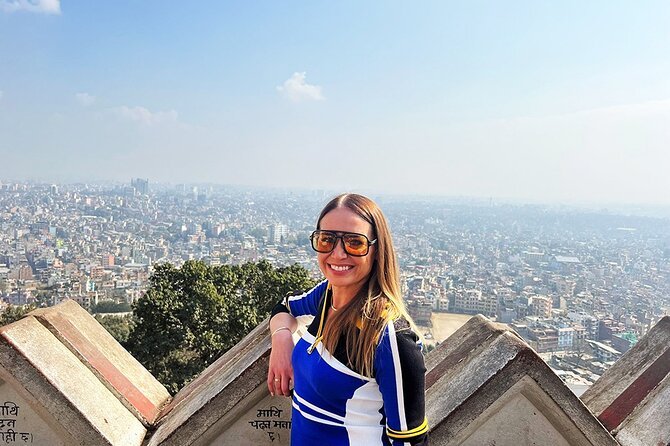
The hilltop also offers a 360-degree view of Kathmandu Valley. On a clear day, that perspective helps you understand the scale of the city and see how densely its neighborhoods fill the valley. The tour gives you about 90 minutes here, enough for the main stupa area and the view, though not for an unhurried visit to every part of the complex.
I like the contrast between these two stops. Kathmandu Durbar Square shows you a royal and architectural center at street level. Swayambhunath adds a hilltop religious site and a broader view of the valley. Together, they make a balanced introduction to Kathmandu’s built culture and spiritual life.
The name Monkey Temple is not just a marketing label. The site is associated with monkeys, and the informal nickname is widely used. Still, the sacred character of the place should come first. Dress and behave respectfully, and let your guide set the tone.
The other site combinations and what they offer
The experience allows you to choose two sites from five major landmarks. The detailed route described here focuses on Kathmandu Durbar Square and Swayambhunath, but the other choices can change the character of your outing.
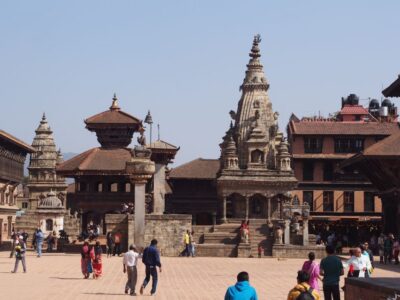
Patan Durbar Square would suit you if you want another royal courtyard and more Newari architectural detail. Like Kathmandu Durbar Square, it is part of the valley’s UNESCO-recognized Durbar Square group.
Pashupatinath Temple is the choice for a strong Hindu religious focus. It is one of the valley’s major sacred sites, so it may appeal more to you if religious practice and pilgrimage matter more than palace architecture.
Boudhanath Stupa offers a Buddhist setting distinct from Swayambhunath. If you want to compare two important Buddhist sites, this could be a useful pairing, though the exact timing and route depend on the selection available when you book.
Because the supplied details do not spell out every combination or the order of each route, confirm your preferred pair before departure. The private format should make it easier to state your priorities clearly. If you care most about architecture, ask for the Durbar Square option. If you want religious sites, compare Swayambhunath, Pashupatinath, and Boudhanath.
A completely different way to spend the day:
- Half day cooking class in Thamel kathmandu
★ 5.0 · 607 reviews - Everest Base Camp Trekking
★ 5.0 · 485 reviews - Nagarkot Sunrise View and Day Hiking from Kathmandu
★ 5.0 · 471 reviews - Kathmandu: Full Day 7 UNESCO Tour with Lunch – Private/Group
★ 5.0 · 415 reviews
What the three-hour schedule really feels like
The timing is divided into two 90-minute visits. That sounds generous until you include vehicle transfers, meeting your guide, entrance arrangements, and the stop itself. You should expect a purposeful outing, not a slow day of browsing.
This pace works well for a first visit, a stopover, or a family that wants a manageable introduction. One family-focused experience was praised for teaching a great deal in Kathmandu Durbar Square and at the Monkey Temple. Another participant described the tour as busy but satisfying because it covered the sights they wanted within half a day.
The private arrangement gives you some flexibility, but it does not turn three hours into a full-day visit. You can ask for more time at one site, yet that will likely mean less time at the second. Decide in advance if you prefer equal time or a stronger focus on one landmark.
The vehicle is air-conditioned, which is a practical benefit in Kathmandu. It gives you a comfortable break between sites and avoids the uncertainty of arranging separate transport. Pickup is offered, and the tour is near public transportation, though the provided details do not specify the exact pickup area or vehicle size.
Guides who add the most value
A short cultural tour depends heavily on the person explaining it. Here, the guide is not just there to point out a stupa or palace. The strongest feedback centers on explanations of Nepalese history, religious practice, local culture, and ordinary life in Kathmandu.
Nilakantha Acharya receives the most enthusiastic praise. He is described as warm, organized, attentive, and able to answer questions about the sites and Nepal’s past. He also adjusted one outing around personal interests and helped with photographs, useful details if you are traveling alone or want a few pictures without asking strangers.
Kamal is praised for patience and for expanding on historical points rather than rushing through them. Kumar is also credited with making good use of limited time and explaining a great deal during the half-day route.
One point deserves a fair mention. A participant found the guide helpful and kind but sometimes had to repeat questions because of communication difficulties. That does not cancel out the strong overall impression, but you should speak clearly, ask for clarification, and confirm special requests at the start.
The high rating of 4.9 from 20 ratings and a 100 percent recommendation mark suggest a very strong record. The most consistent strength is not simply friendliness. It is the guide’s ability to make complicated places easier to understand in a short period.
Price, entrance fees, and overall value
At $40 per person, the base price is modest for a private three-hour tour with an air-conditioned vehicle and an experienced guide. The additional $20 monument fee per person changes the calculation, so your working total is $60 per person before food and drinks.
For one person, that may feel expensive compared with exploring independently. For two or more people, the private format becomes easier to justify, especially if you would otherwise pay separately for transport, a guide, and entrance fees. Group discounts are offered, though the exact discount is not provided.
The value is strongest when you have limited time or want context at the sites. A palace square can look like a maze of old buildings if you do not know what you are seeing. A guide can point out the difference between a royal complex, a temple, a stupa, and a living place of worship.
The value is weaker if your priority is solitude or an open-ended schedule. Ninety minutes per stop gives you a useful overview, but you will not have time to sit, sketch, browse at length, or return to a favorite shrine.
Who should book this half-day experience?
I would recommend this tour to first-time visitors, families, couples, solo visitors, and anyone with only a short window in Kathmandu. It is particularly helpful if you want a private guide rather than a large group, or if arranging taxis and entrance details feels like needless work.
It also suits people who learn best through conversation. You can ask why a site matters, how Buddhist and Hindu traditions overlap, and what you are looking at rather than simply collecting photographs.
I would be more cautious about booking if you already know Kathmandu well or prefer a very slow pace. You may get more from choosing one site and spending several hours there independently.
Book at least a day ahead if possible. The experience is commonly reserved around 11 days before the date, which suggests planning ahead is sensible, especially if you want a particular guide or site combination. Confirmation is provided at booking, and free cancellation is available until 24 hours before the start time. Changes or cancellations inside that window are not accepted for a refund.
Should you book it?
Book this private Kathmandu tour if you want two major cultural sites, personal explanations, and simple transport in three hours. The combination of Kathmandu Durbar Square and Swayambhunath gives you royal architecture, sacred practice, and a hilltop view in one compact outing.
The extra monument fee and brisk timing are the main tradeoffs. Still, for a first introduction to Kathmandu, the guide quality and private format make the $60 total per person reasonable. Ask for your preferred two sites, confirm the pickup details, and tell the guide what interests you most before setting off.
FAQ
How long is the Kathmandu private tour?
The tour lasts approximately three hours.
How many sites will I visit?
You will visit two of the five available UNESCO World Heritage Sites.
Which sites can I choose?
The choices are Kathmandu Durbar Square, Swayambhunath, Patan Durbar Square, Pashupatinath Temple, and Boudhanath Stupa.
Is Kathmandu Durbar Square included in the price?
The tour includes the visit, but the monument entrance fee is not included.
How much are the monument entrance fees?
The listed monument entrance fee is $20 per person.
What does the $40 tour price include?
It includes an air-conditioned vehicle, an experienced tour guide, and the three-hour city tour.
Are food and drinks included?
No. Food and drinks are not included.
Is this a private tour?
Yes. Only your group will participate.
Is pickup available?
Yes. Pickup is offered.
Can most people participate?
The experience is described as suitable for most participants and is near public transportation.
What is the cancellation policy?
You can cancel at least 24 hours before the local start time for a full refund. Cancellations or changes made less than 24 hours before the start time are not accepted.
New in the Kathmandu listings
- Traditional Momo Making Class★ 5.0 · 10 reviews
- Kathmandu: Ancient City Kirtipur & Pharping Monastery Tour★ 5.0 · 2 reviews
- Kathmandu to Pokhara Premium sofa bus ticket★ 4.0 · 17 reviews
- Women Empowerment Project(Nepali cooking class & jewelry workshop★ 5.0 · 15 reviews
- 7-Day Langtang Valley Trek from Kathmandu★ 5.0 · 1 review
- Kathmandu 2 Nights 3 Days Chitwan Jungle Safari Tour★ 5.0 · 9 reviews
- Yoga Experience Day Trip with Private Transfer From Kathmandu★ 4.0 · 2 reviews
- Wildlife Adventure in Chitwan Nepal★ 4.0 · 4 reviews
Private, compared.
Private Kathmandu Sightseeing Tour | UNESCO World Heritage sites
Read our review →
Full Day 7 UNESCO Tour with Lunch – Private/Group
Read our review →
Full Day Top 4 UNESCO Tour with Lunch – Private/Group
Read our review →Full-Day 7 UNESCO Tour with Lunch – Private/Group
Read our review →