
REVIEW · WALKING TOURS
Walking Tour from Bazaar to Hippie Hub Ason and Freak Street
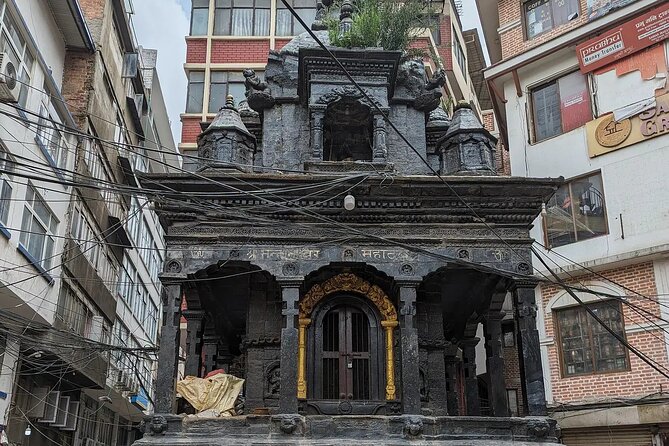
Kathmandu tells its stories on foot. This three-hour walk from Thamel to Asan, Indra Chowk, Potey Bazaar, and Freak Street gives you a close look at the city’s markets, temples, old lanes, and counterculture past. I like the small group of no more than five people, which should make it easier to hear the guide and ask questions. I also like the route itself: it links daily shopping streets with religious sites and the bohemian legacy of Jhochhen, better known as Freak Street.
The main consideration is the setting. Asan, Indra Chowk, and New Road are active city areas, not quiet museum spaces. You should expect crowds, traffic, vendors, and plenty of sensory noise. If you want a calm sightseeing walk, this may feel intense. If you want a direct look at Kathmandu’s working streets, that energy is part of the value.
In This Review
- Key points to know before you book
- Starting in Thamel at Pumpernickel Bakery
- Asan: Kathmandu’s market and temple quarter
- Indra Chowk and the bead makers of Potey Bazaar
- New Road: Where older Kathmandu meets newer city life
- Freak Street and the legacy of Jhochhen
- What the guide adds to the experience
- Is $15 a fair price for three hours?
- Who should take this Kathmandu walk?
- Booking, cancellation, and practical details
- Should you book the Asan to Freak Street walk?
- FAQ
- How long does the walking tour last?
- Where does the tour start?
- Where does the tour end?
- How many people can join the tour?
- What places are included?
- How much does the tour cost?
- Can I cancel for a full refund?
Key points to know before you book
- A compact group of up to five people: This is a useful size for a walking tour, especially in narrow market lanes.
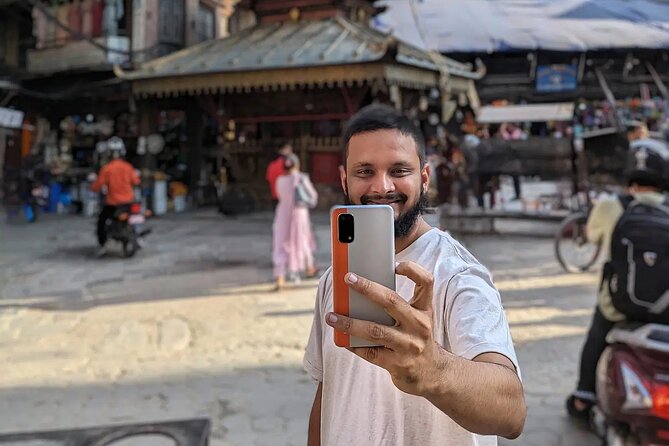
- Three major stops in about three hours: You spend roughly an hour around Asan, an hour at Indra Chowk, and an hour in Freak Street.
- Annapurna Temple adds a spiritual focus: The Asan section is not only about shopping. It also brings you to an important sacred site.
- Potey Bazaar shows a specialized craft tradition: Newar Muslim artisans make beads here, giving the market a distinct cultural identity.
- Freak Street connects Kathmandu with the 1960s and 1970s: The route explores the area once associated with figures such as Jimi Hendrix and The Beatles.
- The price is modest for a guided city walk: At $15 per person, the tour can offer good value if you want context rather than a simple stroll.
Starting in Thamel at Pumpernickel Bakery
The meeting point is Pumpernickel Bakery on Pariyatan Marg in Thamel. This gives you a clear starting place in one of Kathmandu’s best-known visitor districts, then moves you toward older market quarters and historic streets.
The tour returns to the same meeting point at the end. That matters because you do not need to arrange a separate ride from an unfamiliar neighborhood. It also makes the walk easier to fit into a first day in Kathmandu, when you may prefer an activity with a known beginning and end.
The walk lasts about three hours. You should plan to spend that time on foot without expecting transport between stops. Confirmation arrives when you book, and the activity is near public transportation. Service animals are allowed, and the stated participation guidance says most people can join.
The guide is an important part of this experience. One response from the operator thanks visitors for enjoying a tour with Santosh, while another describes the guide as excellent at explaining local religions and city history. If Santosh is leading your walk, you may find that the tour has a strong focus on culture and religious life rather than only market photography.
More Walking Tours in Kathmandu
- Kathmandu Food and Drink Walking Tour
★ 5.0 · 266 reviews - Kathmandu: Food and Drink Walking Tour
★ 4.9 · 119 reviews - Walking Street Food Tour in Kathmandu
★ 5.0 · 111 reviews
Asan: Kathmandu’s market and temple quarter
The first main stop is Asan, where shopping, worship, and street life meet. The square is known for vendors selling spices and textiles, so you can expect this part of the route to appeal to your eyes and nose as much as your sense of history.
I like Asan because it gives you a practical view of Kathmandu. You are not simply looking at an old building from behind a barrier. You are seeing a working market where goods are sold and people move through their daily routines. The tour’s value comes from helping you understand what you are seeing, rather than leaving you to guess at the purpose of each lane or stall.
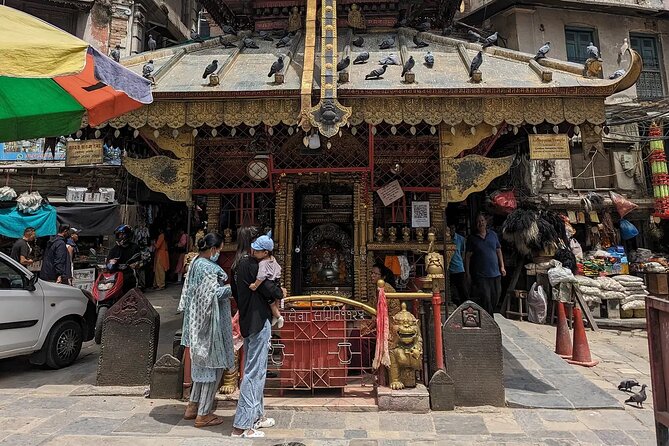
The spiritual side of Asan is just as important. The route includes the sacred Annapurna Temple, giving the guide a natural opening to explain Nepal’s religious traditions. According to the tour description, the walk also points out ancient quarantine houses. That detail adds a less familiar layer to the neighborhood and shows how old city spaces served practical public needs as well as religious ones.
You should give yourself time to take in the contrast. One moment you may be looking at colored textiles or fragrant spices, and the next you may be standing near a temple with a very different mood. The tour works best if you stay alert to both sides of Asan: the everyday commerce and the sacred places woven into it.
There is a drawback here. Market streets can be crowded and distracting, and a group of five can still need to stay close together. You may not have much time to stop at every shop or photograph every detail. Treat this as a guided introduction to the area, not as a dedicated shopping excursion.
Indra Chowk and the bead makers of Potey Bazaar
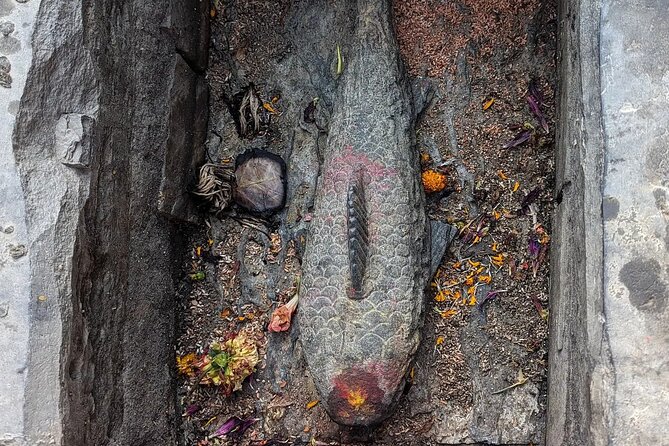
The second hour takes you to Indra Chowk, another major market square. From there, the route continues through lively lanes toward Potey Bazaar, a place known for bead-making by Newar Muslim artisans.
This is one of the most specific and useful parts of the tour. Many city walks point out markets in general terms, but Potey Bazaar offers a look at a particular craft tradition. You can learn how a specialized trade fits into Kathmandu’s wider social and commercial life, while also seeing the narrow streets where that work takes place.
The presence of Newar Muslim artisans is a reminder that Kathmandu’s culture is not one single story. Religious and ethnic traditions have developed side by side, and a guide can help you understand those connections in a way that a quick walk through the market cannot. I would pay close attention here and ask questions, especially if the guide explains how the bead trade connects with local religious or ceremonial use.
Indra Chowk also helps you see how older market areas continue to function. You may find shops, vendors, shoppers, and pedestrians all using the same tight streets. That can feel chaotic, but it also gives the tour a sense of place that a polished sightseeing district cannot provide.
The one-hour timing is a useful guide, not a promise that every part will receive equal attention. If you stop often for photographs or questions, the pace may feel quick. If you prefer to keep moving and listen, the hour should give you a solid introduction.
I would not book this walk expecting a hands-on craft class. The information provided describes the artisans and the bazaar, but it does not promise a workshop or a chance to make beads yourself. The appeal is seeing the setting and learning its cultural importance.
New Road: Where older Kathmandu meets newer city life
After Indra Chowk, the route continues through New Road. This section adds a change of pace and helps connect the older market quarters with Kathmandu’s modern urban side.
The appeal of New Road is the contrast. The walk does not place old temples and market squares in isolation. Instead, it shows how older traditions sit beside newer commercial activity. You move through a city that has changed over time while retaining strong links to its earlier neighborhoods.
The guide’s role matters again here. Without context, New Road may seem like a busy shopping area on the way to Freak Street. With explanation, it becomes part of the larger story of Kathmandu’s growth and changing identity.
The tour description also presents this section as a meeting point between old traditions and modern influences. That makes it useful for orientation. You see that Kathmandu is not divided neatly into an old quarter and a new quarter. The two overlap, sometimes within a single block.
For practical planning, New Road may be one of the less relaxed parts of the walk. You should wear comfortable shoes, stay aware of your group, and keep your belongings secure in crowded areas. Those are sensible habits for any busy city market, and this route puts you directly in the middle of that setting.
More market mornings in Kathmandu:
- Kathmandu Secret Food Crawl & Local Market Tour
★ 4.7 · 54 reviews - Best Nepali Cooking Class in Thamel with Local Market Trip
★ 5.0 · 26 reviews - Kathmandu Food Crawl & Market Tour
★ 5.0 · 26 reviews - Oldest Local Market Walking Tour with Living Goddess Kumari
★ 5.0 · 8 reviews
Freak Street and the legacy of Jhochhen
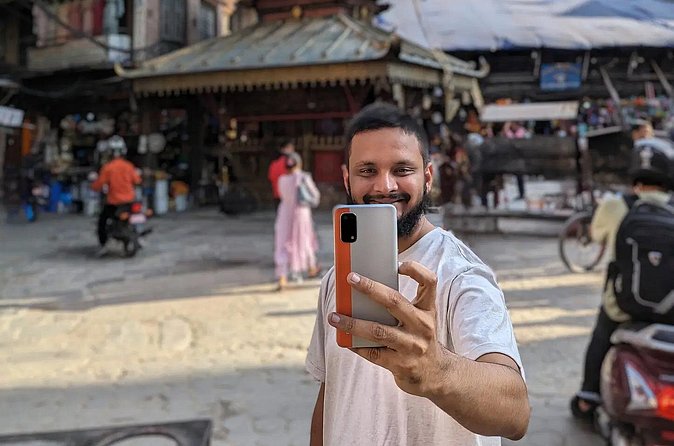
The final hour leads to Jhochhen, widely known as Freak Street. This is where the tour shifts from market and religious life to Kathmandu’s hippie-era story.
Freak Street was once associated with international counterculture, including well-known figures such as Jimi Hendrix and The Beatles. The area’s appeal is not only celebrity connection. It represents a period when Kathmandu became part of a wider alternative travel route, attracting people looking for a different pace and a different kind of experience.
I like this final stop because it gives the walk a strong ending. Asan shows you present-day trade and worship. Indra Chowk and Potey Bazaar highlight specialized local commerce. Freak Street then adds a layer of modern cultural memory, linking Kathmandu with an era of music, long-distance travel, and bohemian life.
You should keep your expectations realistic. The tour explores Freak Street’s legacy, but the available details do not promise preserved rooms, celebrity memorabilia, or a live music performance. The experience is about the streets and their story, not a themed attraction.
The hour in Freak Street may also feel different from the first two stops. You are likely listening more closely to the guide’s historical explanation and looking at how the district fits into present-day Kathmandu. If you enjoy city stories that connect local streets with wider cultural movements, this portion may be the highlight.
What the guide adds to the experience
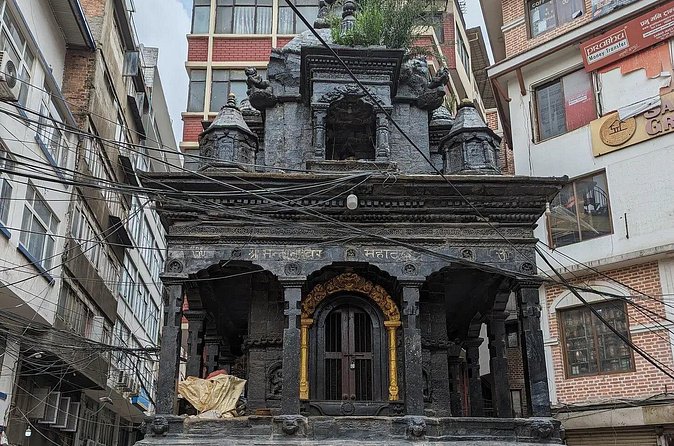
A walking route through these neighborhoods can be worthwhile on its own, but the guide is what turns movement into understanding. The strongest praise connected with this experience focuses on the guide’s ability to explain Kathmandu’s history and religious life clearly.
One account describes the walk as an effective cultural introduction for someone arriving in Kathmandu. Another praises the guide for explaining local religions and the city’s past, rather than offering only a quick tour of famous spots. That is exactly the kind of help you need in Asan and Indra Chowk, where many details are easy to miss.
The guide named in the operator’s response is Santosh. Since guide assignments can vary, I would treat that as useful information rather than a guarantee. Still, it gives you a specific name to ask about when booking if having him lead the walk matters to you.
The small group limit is another real advantage. Five people is small enough for a guide to respond to questions and adjust explanations. It also reduces the chance that you will spend the entire walk trying to keep up with a large crowd.
Is $15 a fair price for three hours?
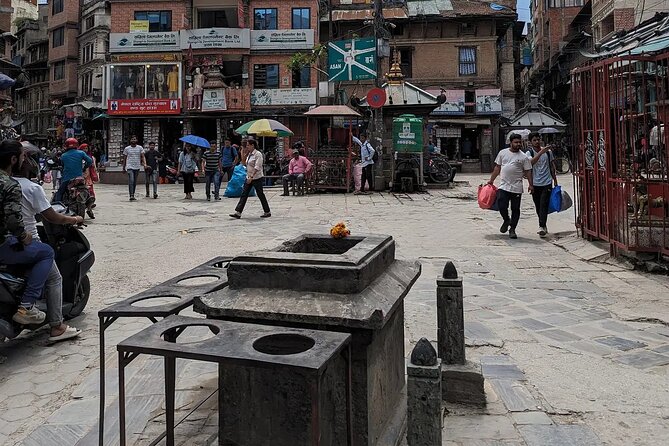
At $15 per person, this is a low-cost guided introduction to central Kathmandu. Admission to the three listed stops is free, so you are mainly paying for the guide’s time, route planning, explanations, and the convenience of moving between several districts with a clear structure.
I see good value here if you are new to Kathmandu. In three hours, you get markets, a temple, old quarantine houses, artisan work, religious context, New Road, and Freak Street’s counterculture story. Reaching all those places on your own is possible, but you may not understand what you are seeing or know which lanes to follow.
The value is less clear if you already know these neighborhoods well or mainly want time to shop. A guide-led schedule may limit how long you linger at one stall, and the route covers several areas rather than focusing deeply on one market.
Group discounts are available, which may make the tour more appealing if you are traveling with companions. The small maximum group size also gives the price extra weight. You are not paying for a large group transfer or a generic city loop. You are joining a compact walking experience centered on conversation and local context.
Who should take this Kathmandu walk?
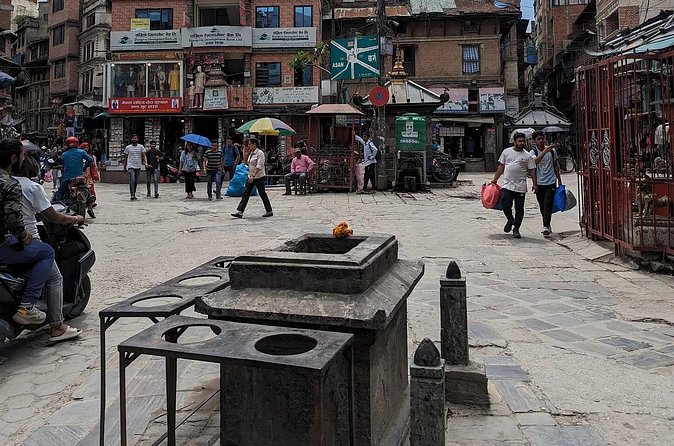
I would recommend this tour to first-time visitors who want quick orientation with cultural background. It suits you especially well if you enjoy markets, religious sites, local crafts, and stories about how a city changed over time.
It also fits people who want a short activity near Thamel and prefer returning to the same meeting point. The three-hour length is long enough to feel substantial but short enough to leave room for another plan later in the day.
You may want to skip it if you dislike crowded streets, walking for several hours, or stopping in active markets. It is also not the best choice if your main goal is shopping, since the focus is guided interpretation rather than free time.
The tour can work for most participants according to the stated activity information, and service animals are allowed. Still, you should judge your own comfort with an active urban walk, since the route passes through busy market areas and narrow lanes.
Booking, cancellation, and practical details
The meeting point is Pumpernickel Bakery, Pariyatan Marg, Kathmandu 44600, Nepal. The walk ends back at that same location, so you can plan around a fixed start and finish.
Mobile tickets are available, and booking confirmation is provided at the time of booking. You can cancel for a full refund if you do so at least 24 hours before the local start time. Cancellations or changes made within 24 hours are not accepted for a refund.
I would arrive ready to walk, keep your phone and belongings secure, and stay close to the guide in the market lanes. Since the tour includes religious places, modest and respectful behavior is a sensible approach, even though no specific dress code is given.
Should you book the Asan to Freak Street walk?
I would book this tour if you want a compact, inexpensive introduction to Kathmandu that goes beyond the usual photo stops. The route has variety, and the strongest feature is the cultural explanation connecting temples, markets, artisan work, city development, and Freak Street’s hippie-era past.
The best reason to choose it is the combination of a five-person maximum and a guide-led look at local religious life. At $15, that is a good deal for a first visit, especially if Santosh is available and you value clear historical explanation.
I would pass if you want a slow shopping morning or a quiet old-town stroll. This is an active city walk through busy streets. For the right visitor, though, it offers a sharp first look at Kathmandu, from spice stalls and temple courtyards to bead makers and the lingering memory of Freak Street.
FAQ
How long does the walking tour last?
The tour lasts approximately three hours.
Where does the tour start?
It starts at Pumpernickel Bakery on Pariyatan Marg in Kathmandu.
Where does the tour end?
The activity ends back at the meeting point.
How many people can join the tour?
The tour has a maximum of five participants.
What places are included?
The route includes Asan, Indra Chowk, Potey Bazaar, New Road, and Freak Street in Jhochhen. It also includes the Annapurna Temple and information about ancient quarantine houses.
How much does the tour cost?
The listed price is $15 per person. Group discounts are available.
Can I cancel for a full refund?
Yes. You can receive a full refund if you cancel at least 24 hours before the experience start time. Cancellations or changes made less than 24 hours before the start time are not refunded.
New in the Kathmandu listings
- Traditional Momo Making Class★ 5.0 · 10 reviews
- Kathmandu: Ancient City Kirtipur & Pharping Monastery Tour★ 5.0 · 2 reviews
- Kathmandu to Pokhara Premium sofa bus ticket★ 4.0 · 17 reviews
- Women Empowerment Project(Nepali cooking class & jewelry workshop★ 5.0 · 15 reviews
- 7-Day Langtang Valley Trek from Kathmandu★ 5.0 · 1 review
- Kathmandu 2 Nights 3 Days Chitwan Jungle Safari Tour★ 5.0 · 9 reviews
- Yoga Experience Day Trip with Private Transfer From Kathmandu★ 4.0 · 2 reviews
- Wildlife Adventure in Chitwan Nepal★ 4.0 · 4 reviews
Walking Tours, compared.


Walking Food Tour in Hidden Local Eateries of Kathmandu
Read our review →
Old Kathmandu Walking Tour, Historic World Heritage Durbar Square
Read our review →
Browse the lists this tour appears in