REVIEW · TOURS
8 Days Tour in Nepal (Accommodation at 5 Star Hotel)
Nepal packs a lot into one week. This eight-day tour links Kathmandu’s sacred sites, Chitwan’s wildlife, and Pokhara’s mountain views without asking you to plan every transfer yourself. I like the strong mix of culture and nature, and I like that the route includes both major cities and quieter village experiences.
The best parts are the Kathmandu heritage sights and Chitwan’s canoeing, jungle walk, and jeep safari. You also get a sunrise stop at Sarangkot and time on Phewa Lake. The main drawback is the road travel. Nepal’s highways can be slow, and the trip covers a lot of ground in a short time.
This package costs $1,400 per person and includes six breakfasts, two dinners, and two lunches. It is marketed with five-star hotel accommodation, but private transportation is listed separately, so you should confirm exactly what vehicle and transfers are included before paying.
In This Review
- Key points to know
- Arrival in Kathmandu and a Gentle Thamel Start
- Four Sacred Sites Across Kathmandu Valley
- The Road to Chitwan and a First Evening by the Rapti
- Canoeing, Jungle Walking, and a Four-Hour Jeep Safari
- The Drive to Pokhara and Time on Phewa Lake
- Sarangkot Sunrise and Pokhara’s Southern Sights
- Returning to Kathmandu and Using the Last Afternoon
- What $1,400 Buys You
- Who Will Enjoy This Nepal Tour
- Should You Book It?
- FAQ
- How long is the Nepal tour?
- Where does the tour begin?
- Which places in Nepal does the tour visit?
- Are meals included?
- Is private transportation included?
- What is the maximum group size?
- Can I cancel for a full refund?
Key points to know
- Four major Kathmandu sights in one day: Boudhanath, Patan Durbar Square, Pashupatinath, and Swayambhunath.
- Chitwan offers more than a safari: You also get a Rapti River canoe ride, a jungle walk, a Tharu village visit, and a cultural show.
- Pokhara brings the mountain views: Sarangkot sunrise, Phewa Lake boating, Devi’s Fall, Gupteswar Cave, and the World Peace Pagoda fill two days.
- The route is busy but efficient: You see three very different parts of Nepal in eight days, with little spare time between them.
- Company coordination is a strong point: The owner, Mani, is described as easy to reach and flexible with arrangements. Guides such as Sanjaya and drivers including Binod and Ram have also received specific praise.
- Check transport details carefully: Pickup is offered, but private transportation is marked as not included.
Arrival in Kathmandu and a Gentle Thamel Start
Your first day begins with airport pickup at Tribhuvan International Airport. After the ride to your hotel, you have about two hours to get your bearings around Thamel, Durbar Marg, and nearby central Kathmandu.
That first afternoon is not overloaded, which is smart. International flights can leave you tired, and Thamel gives you an easy introduction to the city. You can walk among shops, restaurants, travel offices, and small streets without committing to a major sightseeing program.
Durbar Marg offers a different feel, with more polished shops, restaurants, and a view toward Narayanhiti Palace. The contrast between Thamel and Durbar Marg helps you understand Kathmandu quickly: one area is geared toward independent visitors and outdoor trips, while the other feels more formal.
The tour lists a 9:15 am start time, but your arrival-day schedule depends on your flight. Confirm the pickup instructions and airport contact before departure. Pickup is offered, but the separate note about private transportation is important. Ask if airport transfers, sightseeing vehicles, and the long road journeys are part of the quoted price or require an extra payment.
A short list of alternatives around Kathmandu
- Everest Base Camp Trek – 14 Days
★ 5.0 · 1,499 reviews - Private Kathmandu Sightseeing Tour | UNESCO World Heritage sites
★ 5.0 · 756 reviews - Everest Base Camp Helicopter Tour landing at Everest View Hotel
★ 5.0 · 668 reviews
Four Sacred Sites Across Kathmandu Valley
Day two is the cultural heart of the trip. It visits four major religious and architectural sites, each showing a different side of Nepal.
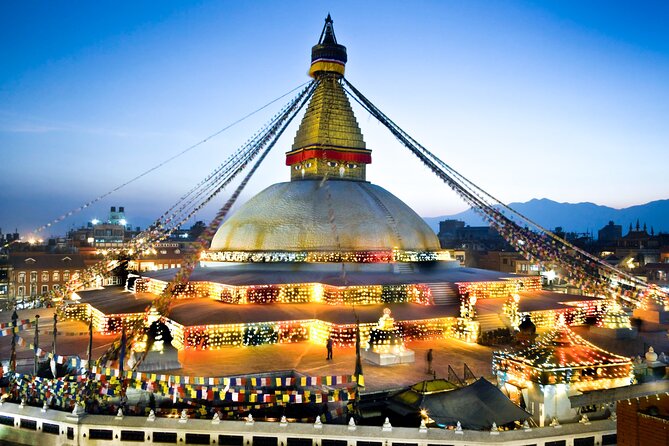
Boudhanath Stupa is an excellent first stop. Its large white dome, painted Buddha eyes, prayer flags, and surrounding Buddhist activity create a calm setting even when the square is busy. Give yourself time to walk around the stupa rather than simply taking a photograph. The design is meant to be experienced from several angles, and the circle around it is part of the visit.
Patan Durbar Square comes next. Within a compact area, you see temples, courtyards, and traditional Newari architectural details. The Krishna Temple, Golden Temple, Mahabauddha Temple, Hiranya Varna Mahavihar, Golden Window, and Patan Museum are among the named sights.
Patan is the kind of place where a guide adds real value. Without context, you might notice carved wood, brick buildings, and metal statues. With help, you can better understand how Hindu and Buddhist traditions share the same urban space. The square is also a good place to watch daily life continue around historic buildings rather than treating the area as a museum set.
Pashupatinath Temple sits along the sacred Bagmati River. This is one of Nepal’s most important Hindu temple areas, with shrines, ashrams, inscriptions, and religious images spread across the riverside complex. Non-Hindu visitors may have restrictions on entering certain inner areas, but the wider site still offers much to see.
Approach Pashupatinath respectfully. Religious ceremonies may be taking place, and the riverbank is an active sacred place, not simply a sightseeing stop. Your guide should help explain what you are seeing and where you may walk.
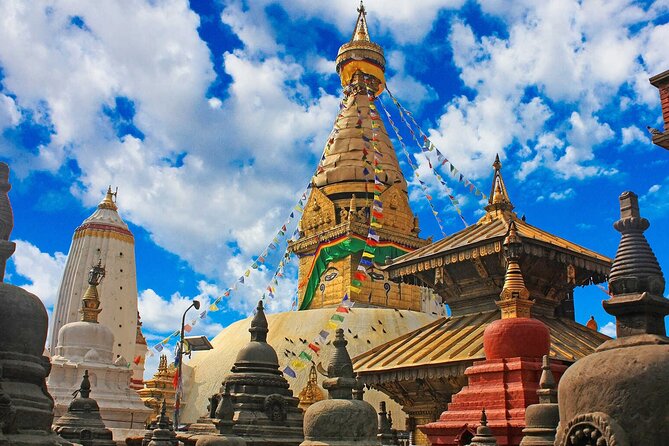
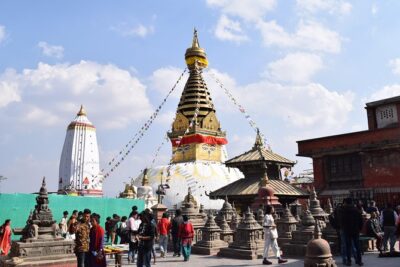
The final stop is Swayambhunath, often called the Monkey Temple. From the hill, you can look across Kathmandu and see Buddhist shrines, temples, statues, chaityas, and painted religious images. The hilltop setting gives the day a strong finish, but the visit may involve steps and uneven walking.
Four major sites in one day make this an efficient introduction to Kathmandu, though it is not a slow one. If you prefer long museum visits or quiet photography, the schedule may feel brisk. If you want a broad first look at the valley, it works well.
The Road to Chitwan and a First Evening by the Rapti
The journey from Kathmandu to Chitwan takes you across hills and along winding roads. You may see rows of hills on both sides, and on a clear day, mountains behind them. The road itself is part of the experience, but it also brings the trip’s main practical challenge: driving times can stretch.
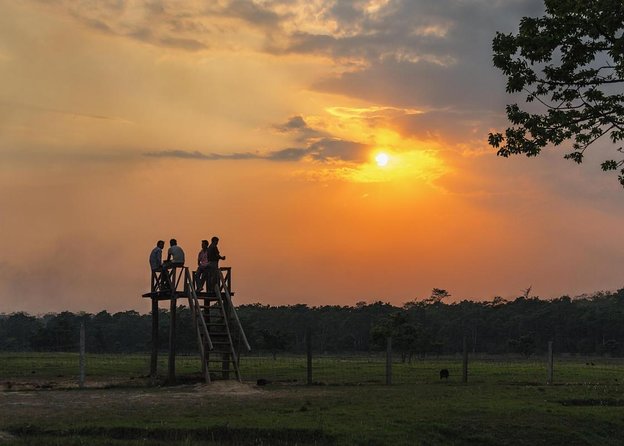
After arriving in Chitwan, the program allows a rest period before an afternoon and evening near the Rapti River. You may take a riverside walk, watch the sunset, and attend a Tharu cultural show.
This is a useful change of pace after Kathmandu. Chitwan feels less urban, and the river gives you a chance to slow down before the wildlife activities begin. The Tharu show adds cultural context, though the short schedule means you should see it as an introduction rather than a detailed cultural visit.
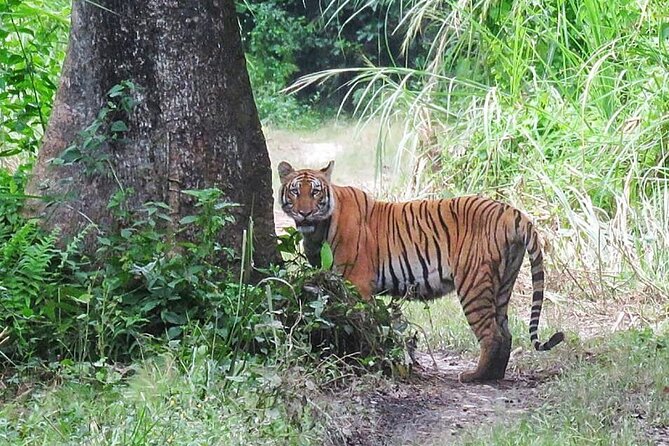
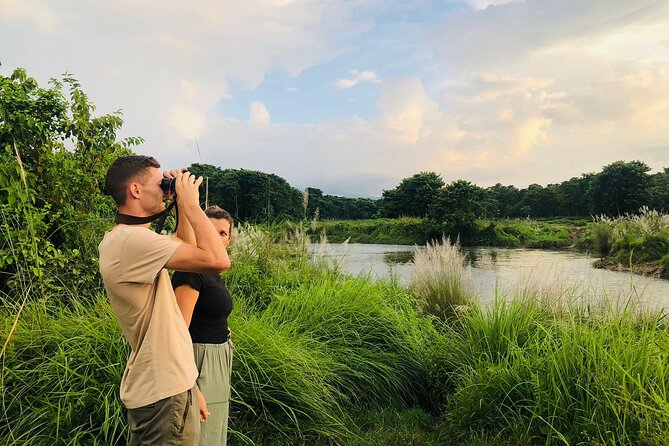
The Chitwan National Park area is known for forests and wildlife, but sightings are never guaranteed. Your guide can take you into the park environment, but nature decides what appears. That uncertainty is part of a safari, so approach the activities with patience rather than expecting a staged animal encounter.
Canoeing, Jungle Walking, and a Four-Hour Jeep Safari
Day four is the most activity-filled day of the tour. It begins with canoeing on the Rapti River, where you may get close views of crocodiles and other wildlife near the park. The canoe ride lasts about 45 minutes, so it is a short outing, but it offers a different view of the forest and riverbank than a vehicle can provide.
The jungle walk lasts around three hours. Walking through the forest gives you a closer sense of the park’s plant life and animal habitat than riding in a jeep. It also requires more attention. Follow the guide’s instructions, stay with the group, and wear practical clothing and shoes.
After the jungle walk, the tour visits the Elephant Breeding and Training Center near Sauraha. This stop may interest anyone curious about elephant care and training, but it is worth paying attention to how the animals are treated and asking your guide questions about the center’s work.
A visit to a Tharu village follows. You get a brief look at the daily life and customs of the Tharu community. The stop is only about 30 minutes, so it is necessarily limited. Still, it helps connect the park region with the people who live around it.
The day ends with a four-hour open-top jeep safari in Chitwan National Park. This is the longest wildlife activity and gives you the best amount of time for animal spotting. The open vehicle also provides a clear view for photographs.
The order of activities makes for a long day, but each outing offers something different. The canoe ride is quiet, the walk is active, and the jeep safari covers more ground. I would consider Chitwan the strongest part of the package for people who want wildlife without committing to a multi-day trek.
A completely different way to spend the day:
- Half day cooking class in Thamel kathmandu
★ 5.0 · 607 reviews - Everest Base Camp Trekking
★ 5.0 · 485 reviews - Nagarkot Sunrise View and Day Hiking from Kathmandu
★ 5.0 · 471 reviews - Kathmandu: Full Day 7 UNESCO Tour with Lunch – Private/Group
★ 5.0 · 415 reviews
The Drive to Pokhara and Time on Phewa Lake
The route from Chitwan to Pokhara follows several rivers, including the Trisuli, Marsyangdi, and Daraudi. The scenery changes as you travel, and the road gives you repeated views of water, hills, and rural Nepal.
Again, allow plenty of patience for this transfer. The tour is designed to connect several regions, not to minimize time in the vehicle. If you dislike long road journeys, ask for an estimated driving time and the planned vehicle before booking.
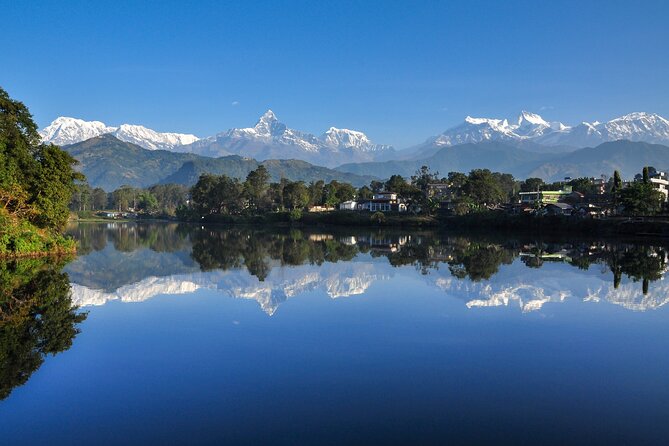
Once you reach Pokhara, the schedule becomes easier. Phewa Lake is the city’s defining sight, and the tour includes boating for about two hours. On the water, you get a calmer view of the city and surrounding hills. The lake is also a pleasant place to spend the afternoon after the road from Chitwan.
Pokhara is less intense than Kathmandu, and this first lake visit gives you room to enjoy that difference. The boating is included, but ask whether other lake expenses or personal purchases are separate.
Sarangkot Sunrise and Pokhara’s Southern Sights
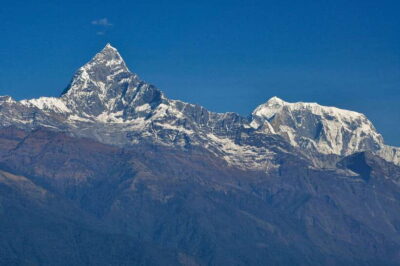
Day six starts early with a trip to Sarangkot. The hill is known for sunrise views toward the Annapurna and Manaslu mountain regions, along with a broad view over Pokhara Valley.
Clear weather matters greatly here. The tour cannot promise mountain visibility, and early cloud can hide the peaks. Still, the viewpoint is a sensible choice because it gives you both mountain and valley scenery from one location.
The morning continues with Devi’s Fall. Water from Phewa Lake passes through a narrow gorge before reaching the Seti River. The stop is short, about 30 minutes, so expect a quick visit rather than a long walk.
Nearby Gupteswar Gupha provides a more enclosed experience. The cave is described as Nepal’s longest, measuring 2,950 meters, and is linked to a discovery in the 16th century. The visit lasts about an hour. Cave floors and passages can be uneven, so take care while walking.
The final stop is the World Peace Pagoda. You reach it after a short hike from the city, and the white pagoda provides a wide view of Phewa Lake and the area around Pokhara. This is one of the day’s best places to pause. After the crowded sights and busy roads elsewhere, the hilltop setting feels calm.
You should be comfortable with an early morning, a short hike, and several stops in succession. The day is not difficult for most people, but it is active enough that comfortable shoes matter.
Returning to Kathmandu and Using the Last Afternoon
Day seven brings you back to Kathmandu. The remaining time is set aside for Durbar Marg, where you can shop, visit massage centers, eat, or enjoy the area around Narayanhiti Palace.
This flexible afternoon is useful because the earlier days leave little time for personal errands. You can also use it to buy gifts or simply take a break from guided sightseeing. Since the tour does not list a major attraction for this day, your experience will depend on how much energy you have after the return drive.
The final day is simple: staff take you to Tribhuvan International Airport according to your flight time. Confirm the departure transfer in advance, especially because the transportation note is not completely clear.
What $1,400 Buys You
At $1,400 per person, this is not a budget tour. Its value depends on what the five-star accommodation and transport arrangements actually include.
The price covers an ambitious route with Kathmandu, Chitwan, and Pokhara, plus many entry tickets and activities. You receive six breakfasts, two dinners, and two lunches. Admission is included for the main cultural sites, Chitwan activities, Phewa Lake boating, Sarangkot, Devi’s Fall, Gupteswar Cave, and the World Peace Pagoda.
That can be good value if the hotels are genuinely five-star and the main vehicle costs are included. It is less attractive if you must add substantial private transport charges, extra meals, or other required costs. The description specifically lists private transportation as not included, so get a written breakdown before you commit.
The maximum group size is 30 people. That is large enough to affect the pace at busy sites and may mean less flexibility for photo stops. On the other hand, a larger group can keep the per-person price lower and provide a structured way to see Nepal’s main destinations.
The company’s strongest praise centers on organization and communication. Mani, the owner, is described as friendly, capable, and flexible with itinerary arrangements. Sanjaya is praised as a guide, while drivers named Binod and Ram receive positive comments for their service and driving. Ask who will handle your trip, but these names give you useful points of contact to confirm.
Who Will Enjoy This Nepal Tour
I would recommend this tour to you if you want a first visit that covers Nepal’s best-known stops without building the route yourself. It suits people who want temples, wildlife, boating, viewpoints, and comfortable hotels in one package.
It also works well for families and small groups that value an organized plan. Past arrangements have included groups visiting Kathmandu, Pokhara, Chitwan, Lumbini, and Nagarkot, so the operator appears willing to handle broader custom routes as well.
You may want a different plan if you prefer slow travel, trekking, or several free days. This schedule has little spare time, and two long road transfers can be tiring. It also is not designed as a serious Himalayan trek. You see mountain regions from viewpoints, but the main activities are cultural sightseeing, wildlife outings, boating, and short walks.
Weather can affect the experience, especially at Sarangkot and the World Peace Pagoda. The company requires good weather for the activity and offers another date or a full refund if poor weather causes cancellation. You can cancel for a full refund up to three full days before the start time, but changes made inside that period are not accepted.
Should You Book It?
Book this Nepal tour if you want maximum variety in eight days, prefer help with the details, and value higher-end accommodation. The cultural day in Kathmandu, the full wildlife program in Chitwan, and the Pokhara viewpoints give you a strong first taste of the country.
Before booking, confirm three things: the exact hotels, the vehicle and road-transfer costs, and the final meal inclusions. If those details are clear and acceptable, $1,400 can be a fair price for the amount of ground covered.
I would skip it if you want a relaxed pace or expect private transport to be fully included without additional charges. For a compact introduction to Nepal, though, this is a well-chosen route with real variety and capable local coordination.
FAQ
How long is the Nepal tour?
The tour lasts approximately eight days, beginning with airport pickup in Kathmandu and ending with transfer to Tribhuvan International Airport.
Where does the tour begin?
The tour begins in Kathmandu, with pickup offered from Tribhuvan International Airport. The listed start time is 9:15 am.
Which places in Nepal does the tour visit?
The route includes Kathmandu, Chitwan National Park, Sauraha, and Pokhara, before returning to Kathmandu.
Are meals included?
Yes. The package includes six breakfasts, two dinners, and two lunches.
Is private transportation included?
Private transportation is listed under exclusions, so you should confirm the exact transport arrangements and any extra charges before booking.
What is the maximum group size?
The activity can include a maximum of 30 travelers.
Can I cancel for a full refund?
You can receive a full refund if you cancel at least three full days before the experience start time. Cancellations or changes made less than three full days before the start are not accepted.
New in the Kathmandu listings
- Traditional Momo Making Class★ 5.0 · 10 reviews
- Kathmandu: Ancient City Kirtipur & Pharping Monastery Tour★ 5.0 · 2 reviews
- Kathmandu to Pokhara Premium sofa bus ticket★ 4.0 · 17 reviews
- Women Empowerment Project(Nepali cooking class & jewelry workshop★ 5.0 · 15 reviews
- 7-Day Langtang Valley Trek from Kathmandu★ 5.0 · 1 review
- Kathmandu 2 Nights 3 Days Chitwan Jungle Safari Tour★ 5.0 · 9 reviews
- Yoga Experience Day Trip with Private Transfer From Kathmandu★ 4.0 · 2 reviews
- Wildlife Adventure in Chitwan Nepal★ 4.0 · 4 reviews
Tours, compared.
Private Kathmandu Sightseeing Tour | UNESCO World Heritage sites
Read our review →
Everest Base Camp Helicopter Tour landing at Everest View Hotel
Read our review →
Full Day 7 UNESCO Tour with Lunch – Private/Group
Read our review →
Full Day Top 4 UNESCO Tour with Lunch – Private/Group
Read our review →
Full-Day 7 UNESCO Tour with Lunch – Private/Group
Read our review →