
REVIEW · ANNAPURNA BASE CAMP TREKS
Annapurna Base Camp: 5-Day Guided Trek with Hot Spring
The Himalayas make you earn the view. This five-day Annapurna Base Camp trek combines towering mountain scenery with Gurung and Magar villages, local tea houses, and a warm-spring stop at Jhinu. I like the clear route, the experienced guide support, and the chance to reach a famous high-altitude viewpoint without committing to a much longer trek. The main drawback is the pace: five days leaves little room for slow walking or weather delays, and meals are not included in the $105 price.
I also like that permits, official documents, tea-house lodging, trekking poles, guide expenses, and transport from Pokhara are covered. The Japanese guest who rated the trip four stars praised the spectacular view from base camp and the veteran guide’s help. You should still arrive fit and properly equipped, since the route reaches 4,130 meters and includes long uphill and downhill days.
In This Review
- Key points before you book
- What the $105 price really covers
- Day 1: Jhinu Dada, Chhomrong, and Sinuwa
- Day 2: Forest trails from Sinuwa to Deurali
- Day 3: The final climb to Annapurna Base Camp
- Day 4: A long return to Sinuwa
- Day 5: Jhinu Dada and the natural hot spring
- Tea houses, food, and village life
- Fitness, altitude, and what to pack
- Guide support and languages
- Cancellation, timing, and practical booking notes
- Who should choose this five-day trek?
- Should you book the Annapurna Base Camp trek?
- FAQ
- How long is the Annapurna Base Camp trek?
- What is the highest point of the trek?
- Is transportation from Pokhara included?
- Are meals and drinks included?
- What type of accommodation is provided?
- What languages can the guide speak?
- Is travel insurance included?
Key points before you book
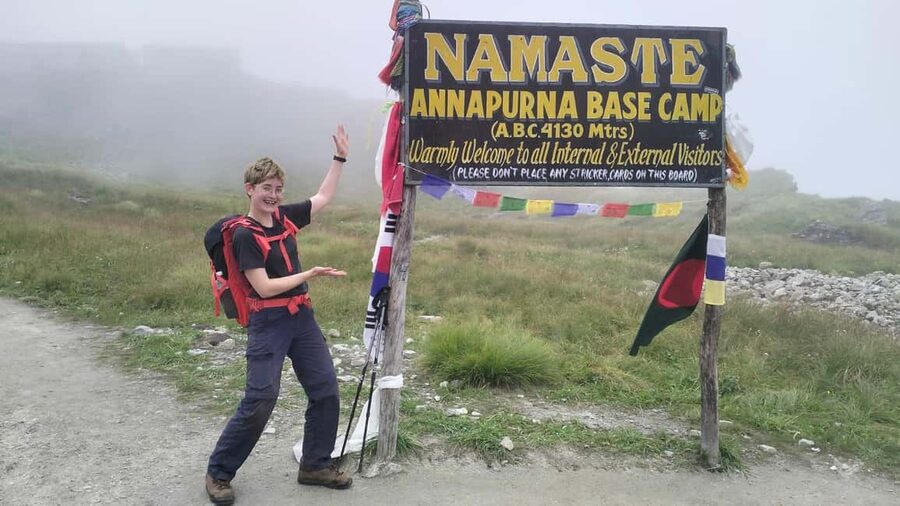
- Annapurna Base Camp at 4,130 meters: The high point is an amphitheater of snow-covered peaks, with Annapurna I rising to 8,091 meters.
- Jhinu hot spring finish: After the final hike, you can relax in a natural hot spring before returning to Pokhara.
- Gurung and Magar village culture: Chhomrong and other mountain communities add human interest to the forests and waterfalls.
- Five days with 5 to 7-hour hiking days: This is a compact route, so you need a good level of fitness.
- A private trek with shared jeep transfers: Your trekking group is private, but the road transfer is shared according to the schedule.
- $105 with major trip costs covered: Permits, guide costs, tea houses, poles, and round-trip jeep transport are included, while food, drinks, gear, insurance, and personal spending are extra.
What the $105 price really covers
At $105 per person, this trek can offer strong value if you already have suitable hiking clothes and shoes. The price includes hotel pickup and drop-off in Pokhara’s Lakeside area, trekking permits, official documents, a licensed guide, round-trip shared jeep transport, tea-house accommodation, trekking poles, and the guide’s food and lodging.
That list matters. Permits and transport can turn a simple-looking mountain trip into a collection of extra charges, so having them included makes budgeting easier. You also avoid arranging a guide, finding tea houses, and working out the road transfer on your own.
The price does not include meals or drinks. Food is available for purchase during the trek, but you should budget for it each day. You also need to bring or obtain hiking shoes, warm clothes, rain protection, sunscreen, water, and other personal trekking gear.
Travel insurance is not included, and it is specifically recommended. This is not a casual walk around Pokhara. The route is described as moderate to difficult, with changing weather and a top elevation above 4,000 meters.
One detail deserves attention: the trip is described as a private group, but the jeep transfer is shared. That is not unusual for mountain roads, but it means the private part mainly applies to the guided trekking arrangement, not necessarily every minute of transport.
More Annapurna Base Camp treks:
- Kathmandu/Pokhara: 5-Day Annapurna Base Camp (ABC) Trek
★ 4.9 · 72 reviews - Private 7 – Day Annapurna Base Camp Trekking
★ 5.0 · 50 reviews - Annapurna Base Camp Trek (8 days)
★ 5.0 · 45 reviews
Day 1: Jhinu Dada, Chhomrong, and Sinuwa
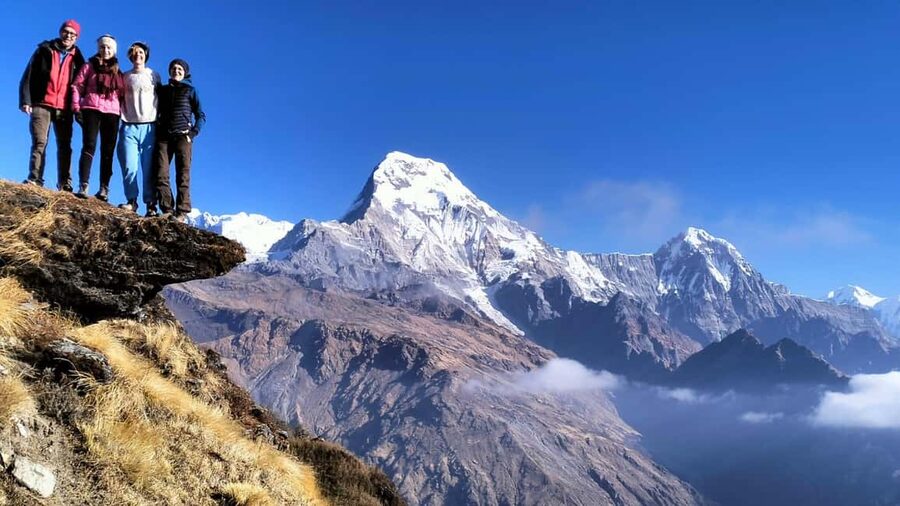
Your guide collects you from your Lakeside hotel in Pokhara in the morning. A shared jeep takes about three hours to reach Jhinu Dada, at 1,750 meters, or roughly 5,740 feet.
The road transfer is practical rather than luxurious. You are trading a longer approach on foot for a direct start to the trail. Once you leave the jeep, the walking begins with early views of several peaks and a steady route toward Chhomrong.
Chhomrong sits at about 2,170 meters and is described as a large, peaceful village with a strong Gurung presence. This is one of the best cultural parts of the route because the mountain scenery is paired with a real working village rather than only trail scenery.
From Chhomrong, you continue to Sinuwa at 2,340 meters, or about 7,677 feet. The hike takes around five hours. That first day is not extreme by Himalayan standards, but it is still a full day after the morning drive.
You spend the night in a tea house. Tea houses are a central part of trekking in Nepal: simple mountain lodging that keeps the route possible without requiring camping equipment. The accommodation is described as probably among the better tea houses available, but you should still expect practical rather than resort-style comfort.
The first day’s gain in height is worth taking seriously. You begin near Pokhara and finish well above the valley, so move at the guide’s pace and keep water close. A trekking pole, included with the trip, can help on uneven sections.
Day 2: Forest trails from Sinuwa to Deurali
Day two takes you from Sinuwa to Deurali, at 3,230 meters, or about 10,597 feet. The walking time is listed at five to six hours.
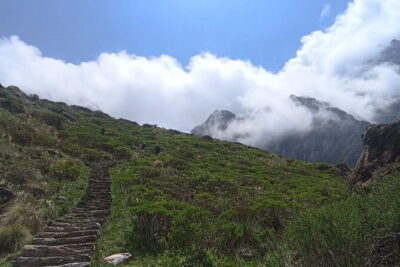
This section brings more mountain vegetation, forest paths, waterfalls, and changing views. The scenery shifts as you move higher, and the route begins to feel less like a village walk and more like a high mountain trek.
The guide becomes particularly useful here. The route is long enough for pacing to matter, and your guide can help keep the group moving at a sensible speed. The company provides guides who speak English, Arabic, Hindi, French, or Japanese, depending on availability and arrangement.
Deurali is an important overnight stop because it places you near the final approach to base camp. You stay in another tea house. As with Sinuwa, your meals and drinks are available for purchase rather than included.
At this height, weather can change quickly. The trip information advises you to prepare for varying conditions, so a raincoat and warm layers should be in your day pack, not buried in luggage. Even if the morning feels mild, the evening at Deurali can feel very different.
Day 3: The final climb to Annapurna Base Camp
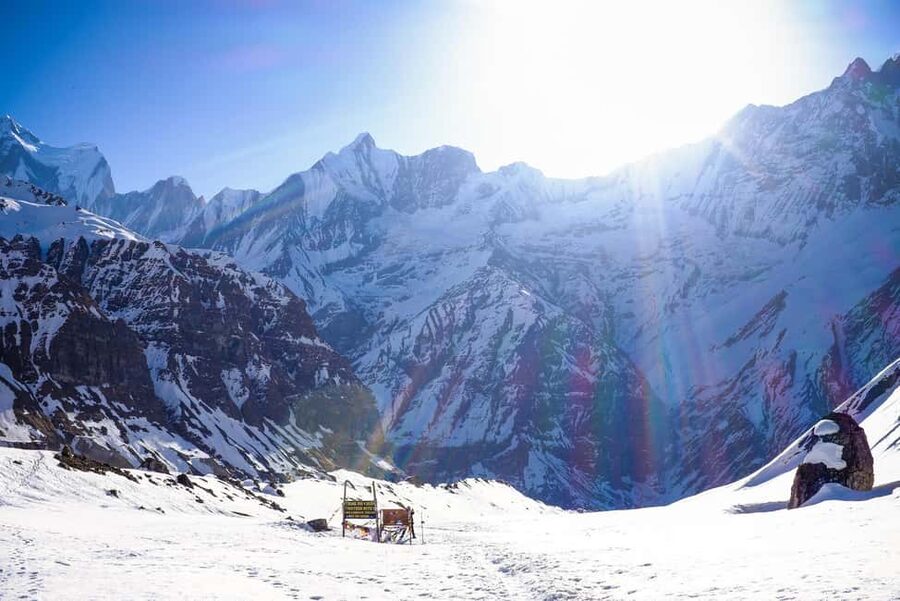
Day three is the emotional center of the trek. You leave Deurali and walk for approximately five to six hours to Annapurna Base Camp, at 4,130 meters, or around 13,550 feet.
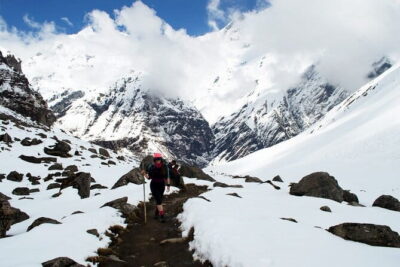
The route brings you closer to the snow-covered peaks and cascading waterfalls that define this part of the Annapurna region. The scenery becomes more open and dramatic as you approach the base camp amphitheater.
Annapurna I reaches 8,091 meters and is the tenth-highest mountain in the world. The base camp setting gives you a close view of a group of major Himalayan peaks, not just one distant summit. That enclosed mountain setting is why the destination feels so special even though you are not climbing Annapurna I.
The available feedback is strongest on this point. A Japanese visitor rated the experience four out of five and described the view from base camp as spectacular beyond words. The same person praised the guide as a veteran who provided a great deal of help.
That praise fits the nature of the day. The route is demanding because of the height, not only the distance. You may find yourself walking more slowly than expected, and a guide who watches the pace and helps with the route can make a real difference.
The trip information also notes that Annapurna I has the highest fatality ratio among the world’s eight-thousand-meter peaks. That fact concerns mountaineering on the mountain itself, not a claim that this base camp walk is an expedition to the summit. Still, it is a useful reminder that you are entering serious mountain country and should not treat the trek as an ordinary sightseeing outing.
You spend the night at base camp in a tea house. Keep expectations practical. The reward is the setting, the mountain air, and the view, not a high level of comfort.
More spa and hot spring stops in Pokhara:
- From Pokhara: 5-Day Annapurna Basecamp Trek with Hot Springs
★ 4.9 · 26 reviews - Pokhara: 7-Day Annapurna Base Camp Trek & Natural Hot Spring
★ 5.0 · 11 reviews - Pokhara: 7-Day Annapurna Base Camp Via PoonHill & Hot Spring
★ 5.0 · 6 reviews - Pkr/Kathmandu: 5-Day Annapurna Base Camp & Hot spring Trek
★ 5.0 · 6 reviews
Day 4: A long return to Sinuwa
After reaching base camp, day four turns downhill toward Sinuwa. The walking time is six to seven hours, making this one of the longest days of the schedule.
Downhill sounds easy until your knees and feet have been working for several hours. Trekking poles are included, and this is the day to use them carefully. They can help with balance and reduce some strain on steep or uneven ground.
Returning to Sinuwa also gives you a second look at the route. The same forests, waterfalls, and mountain villages can feel different when you are walking downhill and carrying the memory of base camp.
The schedule is efficient, but it is not leisurely. If you prefer frequent stops, long meals, or photography breaks, the five-day plan may feel tight. Ask about timing before departure and be honest with your guide about your pace.
You spend the night in a tea house at Sinuwa. Since the return is long, plan to keep water and a few purchased snacks accessible. Meals are not included, so your daily food budget should account for breakfast, lunch, dinner, and drinks.
Day 5: Jhinu Dada and the natural hot spring
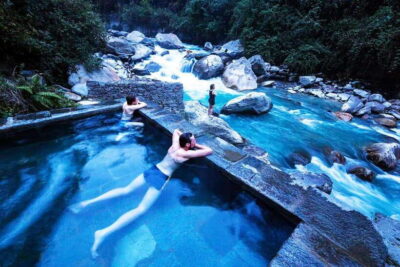
The final day takes about three hours to hike back to Jhinu Dada. From there, the highlight is a soak in the natural hot spring before the jeep ride back to Pokhara.
This ending gives the trek a welcome change of rhythm. After the high-altitude scenery and long walking days, warm water offers a simple way to rest tired legs. The hot spring is traditionally believed to help recover from aches and pain, though you should treat that as local belief rather than medical treatment.
The spring also makes the final day feel more rewarding than a plain return transfer. You finish with a relaxed stop before heading back to the city, rather than ending the trek at a road and immediately squeezing into a vehicle.
The drive returns you to Pokhara by jeep. The trip includes round-trip transfer according to the schedule, but the transport is shared. Allow for a practical mountain-road journey rather than expecting a private car directly to your hotel at every stage.
Tea houses, food, and village life
Tea-house lodging is one of the trip’s most authentic features. You sleep in local mountain accommodation and pass through communities where Gurung and Magar culture remains part of daily life.
The experience is not presented as a formal cultural tour with scheduled performances or demonstrations. Instead, the cultural value comes from walking through villages, seeing the setting, and eating food prepared along the route. That quieter contact often feels more natural than a staged stop.
Nepalese cuisine is included among the highlights, but the actual meals are not included in the price. You can purchase food and drinks during the trek. Since no exact menu or meal allowance is provided, bring enough spending money for your appetite and the length of each day.
Warm hospitality is also part of the intended experience. Keep in mind that tea houses are working mountain lodges, not full-service hotels. You should pack for simple conditions and be ready for changes in temperature.
Fitness, altitude, and what to pack
You need a good level of fitness for this route. The daily walks run from about three to seven hours, with the hardest concern being the combination of distance, elevation gain, and the return from base camp.
Warm clothing is essential. You should also bring hiking shoes, sunscreen, water, rain protection, and personal trekking gear. Weather can shift during the trek, so layers are more useful than one heavy item.
The recommended packing list includes travel insurance. That is important because insurance is not included in the tour price. The trip also supplies an emergency normal first-aid kit with the guide, but that does not replace your own medication or insurance arrangements.
The trek is not suitable for pregnant women or people with back, mobility, heart, or respiratory problems. If you have any health concern, get professional medical advice before booking. The high point is 4,130 meters, and the route is explicitly rated moderate to difficult.
Annapurna I’s dangerous mountaineering record is not a reason to panic about a guided base camp walk, but it is a reason to respect the environment. Follow the guide’s instructions, pace yourself, and be prepared to stop if you feel unwell.
Guide support and languages
The guide is a major part of the value here. The company provides licensed trekking guides who may speak English, Japanese, French, Arabic, or Hindi. Language availability should be confirmed when you book, especially if you need a particular language.
A guide handles more than navigation. The guide can help with the walking pace, tea-house arrangements, permits, official documents, and practical decisions when weather or fatigue affects the schedule.
The strongest available feedback praises the guide’s experience and help. No guide’s personal name is provided, so I would not assume a particular person will lead your trek. Ask who is assigned and confirm the language before you leave Pokhara.
The private group format is useful if you want a more personal pace than a large group can provide. Still, the shared jeep means the trip is not fully private from hotel door to trail and back.
Cancellation, timing, and practical booking notes
The activity lasts five days, with starting times based on availability. It offers free cancellation up to 24 hours before departure for a full refund, and you can reserve now and pay later.
Those terms help if your Pokhara schedule depends on weather or another trek. They do not remove the need to check conditions before departure, since mountain weather can affect the route.
Hotel pickup and drop-off are provided within the Lakeside area of Pokhara. If your accommodation is outside that area, confirm how you will reach the meeting point.
The trek is offered by RR Adventure Trekking. The listed rating is four out of five from one verified booking, so the feedback is encouraging but limited. I would treat the positive guide comments as useful evidence, not as a guarantee of identical conditions on every departure.
Who should choose this five-day trek?
I would recommend it to you if you want a guided introduction to Annapurna Base Camp and have five days available from Pokhara. It suits people who value mountain views, village life, simple tea-house lodging, and a clear route with transport and permits arranged.
It is also a good match if you want a private trekking group and may need a guide who speaks English, Japanese, French, Arabic, or Hindi. The hot spring at the end is a pleasant bonus, especially after the long return day.
I would be more cautious if you are new to sustained uphill walking, dislike basic accommodation, or want all food and equipment included. The low price looks attractive, but your final cost rises once you add meals, drinks, clothing, shoes, insurance, and personal expenses.
The five-day schedule is best for a fit person who accepts an active pace. If you want spare days for weather, rest, or a slower village experience, ask if a longer version is available before paying.
Should you book the Annapurna Base Camp trek?
Book it if the $105 price fits your budget after adding food, drinks, insurance, and gear, and if you are ready for five to seven hours of walking on some days. The included permits, licensed guide, tea houses, trekking poles, and jeep transport make the arrangement simple and give you solid value.
The main reasons to choose it are the dramatic base camp setting, the chance to pass through Gurung and Magar communities, and the relaxing Jhinu hot spring finish. The main reasons to hesitate are the demanding schedule, basic lodging, shared road transfers, and the need to buy your own meals and equipment.
For a prepared, reasonably fit walker, this is a focused way to reach Annapurna Base Camp without spending weeks on the trail. Pack well, confirm your guide’s language, budget for meals, and respect the altitude. Then the route offers a memorable taste of the high Himalayas with useful support at each stage.
FAQ
How long is the Annapurna Base Camp trek?
The trek lasts five days. Walking times range from about three hours to seven hours, depending on the day.
What is the highest point of the trek?
Annapurna Base Camp is at 4,130 meters, or approximately 13,550 feet.
Is transportation from Pokhara included?
Yes. Hotel pickup and drop-off within the Lakeside area are included, along with round-trip shared jeep transport according to the schedule.
Are meals and drinks included?
No. Meals and drinks are available for purchase during the trek but are not included in the price.
What type of accommodation is provided?
You stay in tea houses during the trek. The tour describes these as probably among the better tea houses available along the route.
What languages can the guide speak?
Guides may speak English, Arabic, Hindi, French, or Japanese. Confirm the available language when booking.
Is travel insurance included?
No. Travel insurance is not included, and you should arrange it before the trek.
New in the Pokhara listings
- Pokhara: Pokhara Highlights Tour by Bus★ 3.6 · 10 reviews
- Discover Pokhara in Style: Private Vehicle Service with Driver★ 5.0 · 5 reviews
- Multi-Day Tour from Pokhara, Poon Hill and Mulde Trek★ 5.0 · 1 review
- Pokhara in 5 Hours: Lake, Museum, Cave, Falls & Pagoda Hill★ 4.5 · 16 reviews
- Private 4 Day Poon Hill Trek from Pokhara★ 5.0 · 16 reviews
- 4 Day Mardi Himal Base Camp Trek from Pokhara★ 5.0 · 18 reviews
- From Pokhara Full Day Entire Pokhara Tour with Guide★ 5.0 · 1 review
- Ultralight Flight: Into The Heart Of The Mountains (90 min)★ 5.0 · 1 review
Annapurna Base Camp Treks, compared.
Kathmandu to Annapurna Base Camp (ABC) 5-Day Trek
Read our review →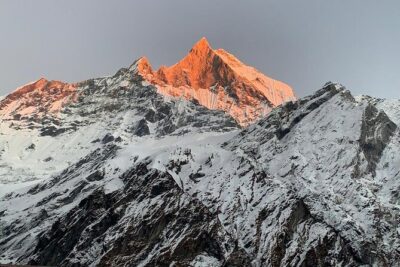
Kathmandu/Pokhara: 5-Day Annapurna Base Camp (ABC) Trek
Read our review →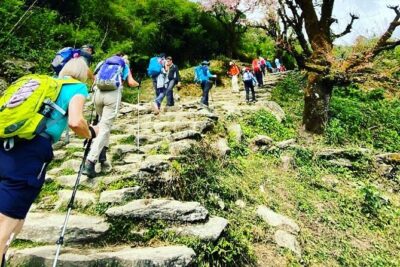
11-Day Hike Tour to Annapurna Base Camp Bliss in Kathmandu
Read our review →Browse the lists this tour appears in