
REVIEW · ANNAPURNA BASE CAMP TREKS
Pkr/Kathmandu: 5-Day Annapurna Base Camp & Hot spring Trek
Five days, one huge Himalayan goal. This Annapurna Base Camp trek packs forests, waterfalls, Gurung villages, and high mountain views into a brisk route from Pokhara. I like the efficient plan and the chance to reach ABC at 4,130 meters without committing to a much longer trek. I also like that the return includes Jhinu Danda’s hot spring, an optional comfort after several hard days.
The main caution is the pace. You gain altitude quickly, sleep at high elevation, and spend up to seven hours walking on steep, uneven trails. Good fitness and careful acclimatization matter, especially in cold, wet, or snowy weather. Guide Sagar earned repeated praise for pacing and safety, while Raj, Nareen, Shiva, and the porters were credited with keeping difficult trips on track.
In This Review
- Key points before you book
- Why this short ABC route works
- Day 1: Pokhara to Simrung, then Sinuwa
- Day 2: Forest, waterfalls, and the climb to Deurali
- Day 3: Machhapuchhre Base Camp to Annapurna Base Camp
- Day 4: Sunrise, then a long descent
- Day 5: Jhinu Danda hot spring and the return to Pokhara
- Guides, porters, and the human side of the trek
- Fitness, altitude, and what to pack
- Who should book this five-day trek?
- Should you book the Annapurna Base Camp trek?
- FAQ
- How long does the Annapurna Base Camp trek take?
- What is the highest altitude on the route?
- Is transportation from Kathmandu included?
- Are meals included?
- Is a porter included?
- When is the best time to take this trek?
Key points before you book
- ABC in five days: A fast route reaching Annapurna Base Camp at 4,130 meters, with a night at the base camp tea houses.
- Strong mountain views: Annapurna I, Machapuchare, and Hiunchuli provide the main visual reward, especially around sunrise and sunset.
- Private guided group: English, French, Japanese, and Chinese guide services are available, with a private group format.
- A demanding middle section: The Deurali to ABC day takes five to six hours, followed by a long descent the next day.
- Jhinu Danda finish: The route can pass through the hot spring area on day five, giving your tired legs a welcome break.
- Flexible package choices: The $60 starting price may not include meals, a porter, or Kathmandu flights, so check the exact option before paying.
Why this short ABC route works
I like this trek because it gives you a clear goal every day. You are not simply walking through the hills with no sense of progress. You begin on a road transfer from Pokhara, move through forest and village country, reach Machhapuchare Base Camp, and then enter the Annapurna Sanctuary before sleeping at ABC.
The five-day schedule is also useful if your Nepal trip is tight. You can base yourself in Pokhara, take on one serious mountain route, and return to your hotel by about 5:00 PM on the fifth day. That convenience comes with a cost: the itinerary leaves little room for a slow pace or a weather delay.
At $60 per person, the price looks remarkably low for a guided trek, but treat it as a starting figure rather than the final cost of every package. The budget option does not include meals or a porter. You may also need to add flights between Kathmandu and Pokhara, depending on how you book.
The included value is still solid. The main package covers Pokhara hotel pickup and drop-off, shared Jeep transport, four nights in mountain guest houses, a trekking guide, permits, first aid, and borrowed sleeping bags, duffle bags, and trekking poles. The all-inclusive choice adds meals and a porter, which can make a major difference on a high-altitude route.
More Annapurna Base Camp treks:
- Kathmandu/Pokhara: 5-Day Annapurna Base Camp (ABC) Trek
★ 4.9 · 72 reviews - Private 7 – Day Annapurna Base Camp Trekking
★ 5.0 · 50 reviews - Annapurna Base Camp Trek (8 days)
★ 5.0 · 45 reviews
Day 1: Pokhara to Simrung, then Sinuwa
The trek begins with pickup at your hotel in Lakeside Pokhara. From there, a shared Jeep takes you toward Simrung through Nayapul, a two to three-hour drive depending on road conditions and the day’s traffic.
The road transfer is not just a formality. It carries you from the city into the trail area, and the final road sections can be tiring before you even start walking. Pack water and keep a small snack within reach. Your main bag may be with a porter, but your daypack should hold the things you need during the drive and hike.
From Simrung, you walk four to five hours to Sinuwa. This first trail day introduces the route’s character: forest, river crossings, village sections, and steady climbs. Sinuwa sits at about 2,340 meters, high enough for you to begin thinking seriously about altitude, but not yet at the most demanding level.
You sleep in a mountain guest house. These lodges are practical rather than luxurious. Expect a simple overnight stop and a chance to eat, dry clothing, and prepare for the next morning. The guide’s role is especially useful here, since the walking time and departure hour may change with conditions. One useful lesson from the trip reports is to ask about the next day’s start time before turning in.
Day 2: Forest, waterfalls, and the climb to Deurali
Day two takes you from Sinuwa to Deurali in about five to six hours. You pass through dense forest and small settlements such as Himalaya, where tea houses provide a basic pause along the way.
This is one of the prettiest parts of the route. Waterfalls appear along the trail, and the sound of running water helps break up the long stretches of climbing. The forest also gives you shade, though wet conditions can make roots and stones slippery. Hiking shoes with a reliable sole are not optional decoration here.
Deurali sits at about 3,230 meters. That jump from Sinuwa is one reason this trip feels demanding. You are gaining height quickly across two days, so do not race simply because the itinerary lists a target time. Walk at a pace that lets you speak in short sentences, drink often, and tell your guide if you develop a headache, unusual fatigue, or breathing trouble.
The night is spent at Deurali Guest House. Cold becomes a real factor at this elevation, and weather can turn quickly. Warm clothing, a dry layer, and a sleeping bag are important. The borrowed equipment is useful, but ask in advance what is available and what condition it is in.
Day 3: Machhapuchhre Base Camp to Annapurna Base Camp
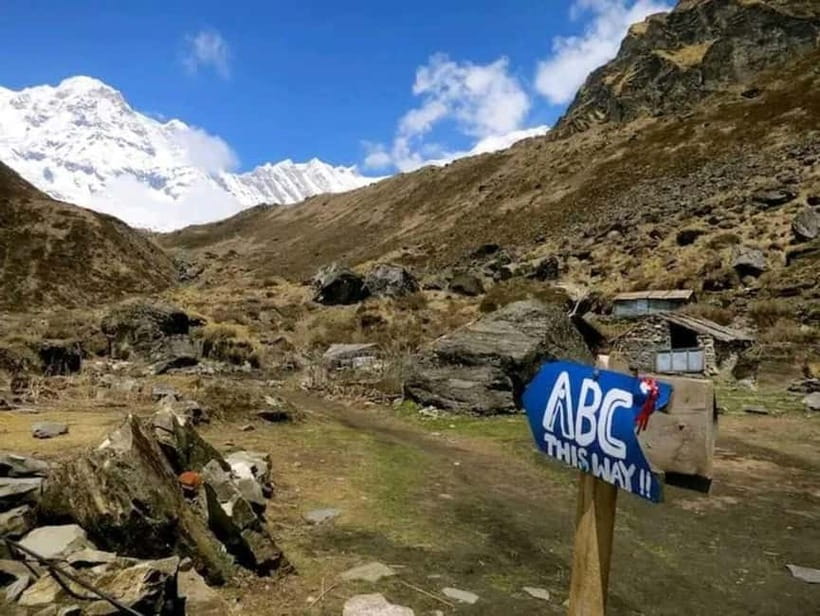
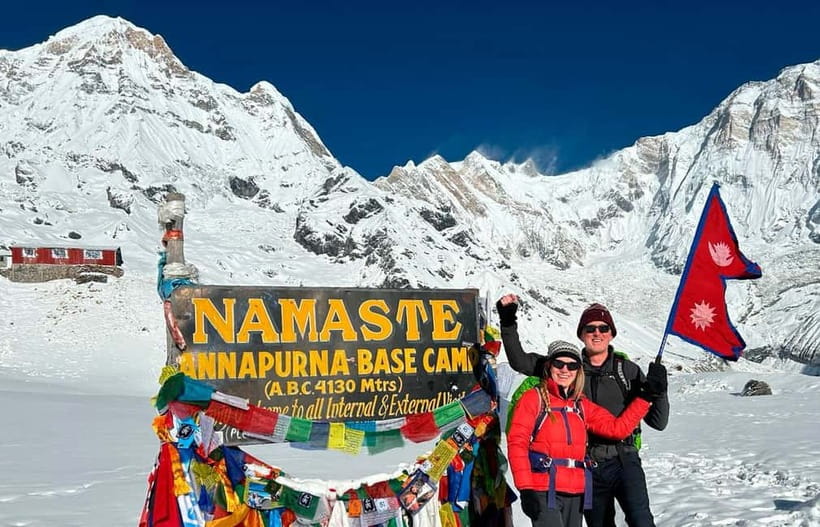
This is the key day. You leave Deurali and walk five to six hours through the Machhapuchhre Base Camp valley before reaching Annapurna Base Camp at 4,130 meters.
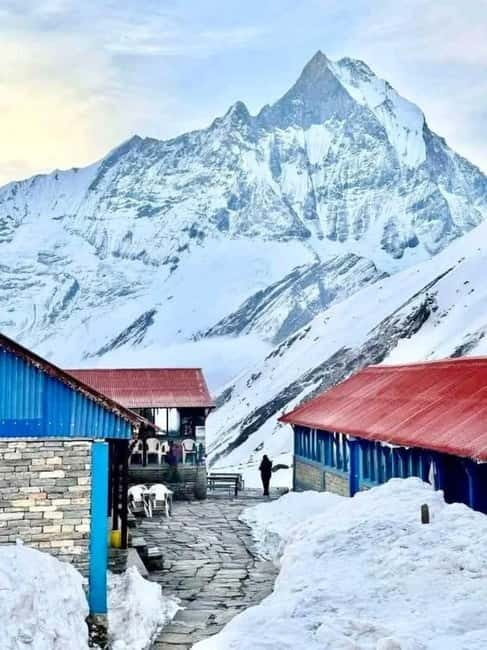
Machhapuchhre, also called Fishtail, is one of the defining peaks on the route. The stop at Machhapuchhre Base Camp gives you a major visual and psychological marker. From here, the trail feels more exposed and more alpine as you continue toward the sanctuary’s high point.
The final approach to ABC is the part that makes the short schedule both exciting and hard. Your legs have already worked for two days, the air is thinner, and cold or snow may slow you down. The reward is an overnight stay at tea houses beside one of Nepal’s best-known mountain viewpoints.
Annapurna I rises to 8,091 meters and is the tenth-highest mountain in the world. At base camp, you are not climbing the mountain, but you are close enough to feel its scale. Annapurna I, Machapuchare, and Hiunchuli form the main visual drama, with the surrounding peaks enclosing the sanctuary.
The western sunset is a special part of this night. Weather decides how much you see, so do not treat a clear view as guaranteed. If clouds move in, the evening may be more about warmth, food, and rest than photography. That is not a failure. At 4,130 meters, getting warm and sleeping well is useful preparation for the early start.
More spa and hot spring stops in Pokhara:
- From Pokhara: 5-Day Annapurna Basecamp Trek with Hot Springs
★ 4.9 · 26 reviews - Pokhara: 7-Day Annapurna Base Camp Trek & Natural Hot Spring
★ 5.0 · 11 reviews - Pokhara: 7-Day Annapurna Base Camp Via PoonHill & Hot Spring
★ 5.0 · 6 reviews - Pokhara: Amazing 7-Day ABC Trek with Natural Hot Spring
★ 5.0 · 5 reviews
Day 4: Sunrise, then a long descent
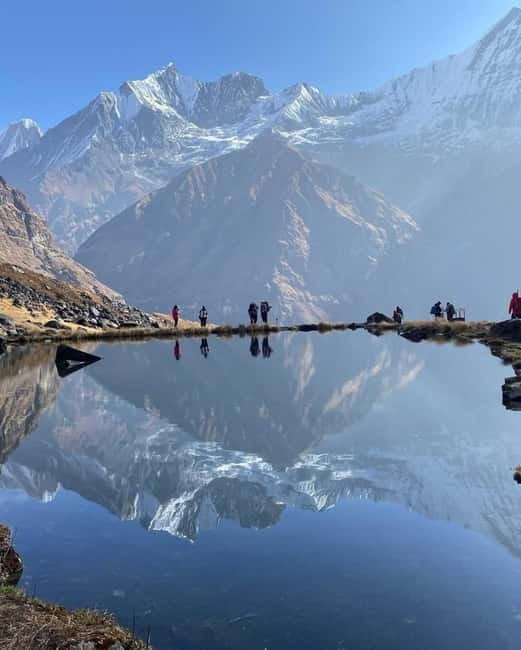
The fourth morning begins with an early look at sunrise around Machhapuchhre Base Camp and the Annapurna range. This is the moment to keep your camera ready, but protect your fingers and do not linger outside without warm layers.
You then retrace the trail through Deurali, Himalaya, and Dobhan before spending the night at Bamboo or Sinuwa. The walking time is listed as six to seven hours, making this the longest day for many people even though you are losing altitude.
Descending is easier on the lungs, but not always on the knees. Wet stones, steep steps, and tired legs can cause problems. Trekking poles are valuable here, and the package says poles can be borrowed. One group had to rely on bamboo poles when the expected equipment was not provided, so confirm your gear before leaving Pokhara.
The route’s flexibility at night matters. The stated stop may be Bamboo or Sinuwa, and that changes the feel of the final day. Ask your guide where you are likely to sleep and how the plan will affect the next morning’s walk. A clear briefing helps you manage energy and expectations.
Day 5: Jhinu Danda hot spring and the return to Pokhara
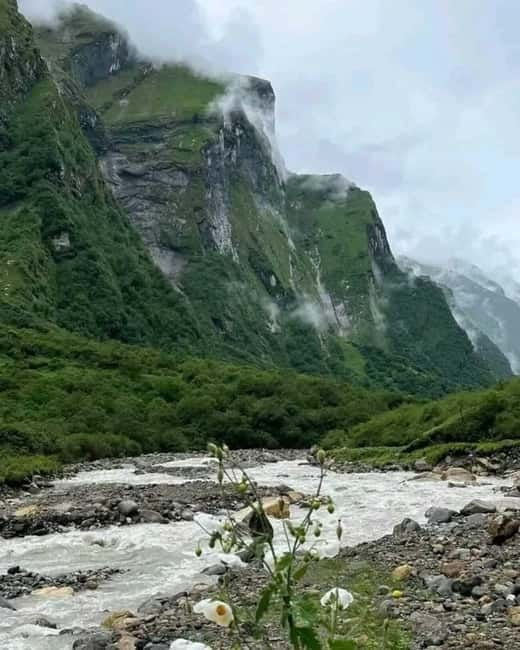
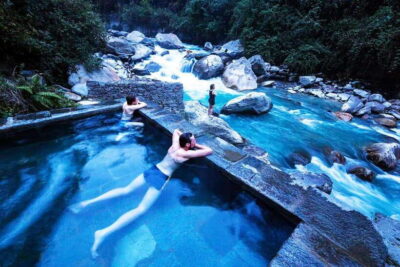
The final walking section takes three to four hours to Simrung via Jhinu Danda. The hot spring is optional, but it is one of the best ideas in the plan. After the high route and the long descent, a soak can feel like a small luxury, even if the walk to the water adds time and effort.
Jhinu Danda also gives the trek a gentler finish. Instead of ending only with a Jeep ride, you get one last village area and a chance to relax before the road back. Bring a swimsuit or clothing suitable for the hot spring, though the provided information does not specify changing facilities or towel service.
From Simrung, the shared Jeep takes about two to three hours to Pokhara. The stated arrival is around 5:00 PM, so do not schedule an important evening flight or a tight connection that same day. Road and trail conditions can affect timing.
The provider drops you at your Pokhara hotel or designated drop-off point. Kathmandu-based customers have a different arrangement: the package can include a roughly 30-minute flight to Pokhara at the start, with hotel pickup and drop-off in Kathmandu if that flight option is selected. The return flight from Pokhara to Kathmandu is an add-on, not automatically included.
Guides, porters, and the human side of the trek
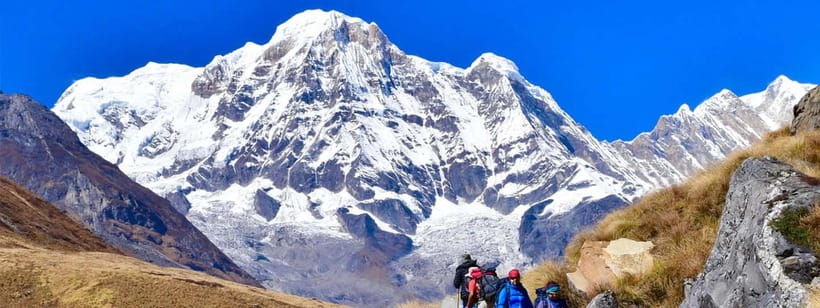
A short, high route depends heavily on the guide. You need someone who can manage pace, accommodation, weather changes, and altitude concerns without turning every day into a race.
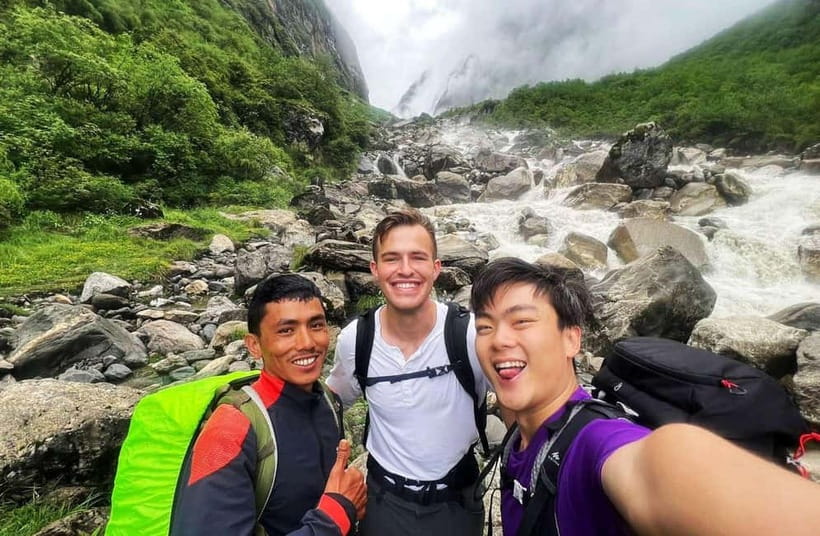
Sagar received especially strong praise for keeping a steady pace, arranging accommodation and meals, and watching safety. His friendly manner also mattered during long walking days. Shiva was described as an excellent guide during a smooth trip with good weather.
Raj and porter Naron were credited with rescuing a last-minute booking from becoming a mess. Nareen, also called Anarayan, was praised for caring for an inexperienced group through cold, rain, and snow. Porter Visnu and porter Azis were also singled out for their help and kindness.
The clearest practical lesson is to value the guide and porter service, not just the mountain scenery. A porter can carry the larger duffle bag while you keep a manageable daypack. If you choose the budget package, porter service is an add-on, so decide honestly how much weight you can carry over steep terrain.
The organization appears capable, but communication may not always be perfect. One group wanted clearer information about weather, luggage, departure time, and trekking poles. I would ask these questions before the trip rather than assume the booking page tells you everything.
Fitness, altitude, and what to pack
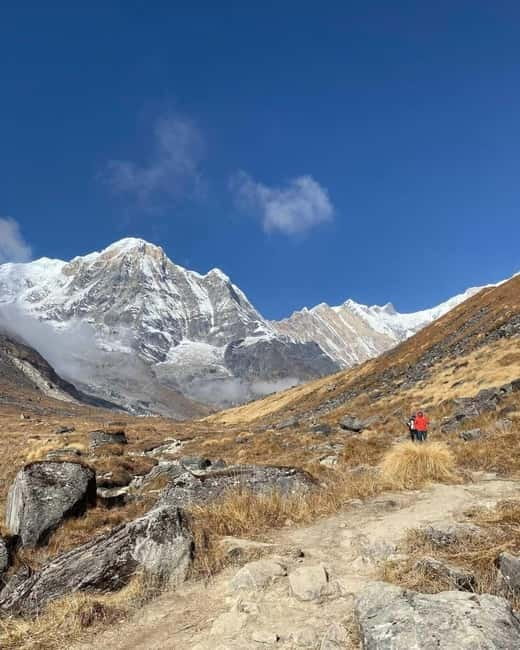
This is a moderate to challenging trek, not a casual mountain walk. You should be comfortable with several hours of hiking, steep climbs, long descents, and basic tea-house accommodation.
Altitude is the main concern. The route rises from about 830 meters near the final day to 4,130 meters at ABC in only a few days. The schedule is fixed, so pay attention to how you feel and follow your guide’s advice. People with heart problems, respiratory issues, a history of altitude sickness, low fitness, or mobility impairments should not choose this trip.
Pack warm layers, hiking shoes, sunscreen, water, a camera, travel insurance, and suitable trekking gear. Add dry socks, gloves, a warm hat, and a waterproof layer if you have them. The supplied information specifically warns that weather can be unpredictable, with cold temperatures possible even in the preferred seasons.
March to May and September to November are the best periods listed for this trek. These months still do not guarantee clear skies. October and November can bring excellent mountain visibility, while spring brings a different feel to the forest sections. Rain, cold, and snow remain possible, so pack for conditions rather than a perfect forecast.
Alcohol and drugs are not allowed. Hot, cold, and alcoholic drinks are not included, and meals depend on the package you select. Confirm what food is covered before you set out, especially if you choose the budget or Kathmandu option.
Who should book this five-day trek?
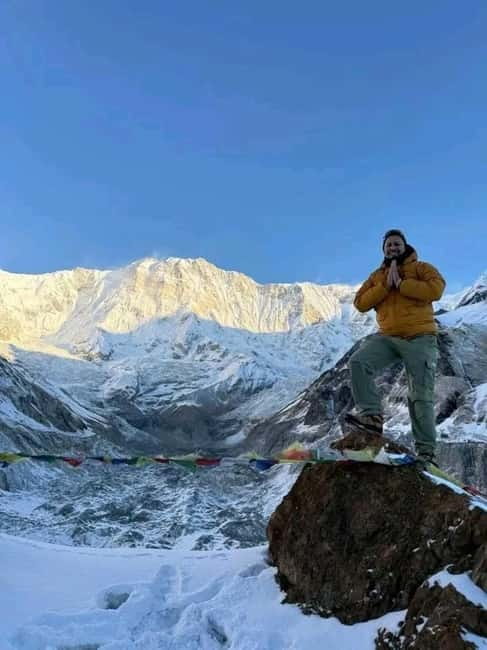
I would choose this trip if you have limited time in Nepal, want a private group, and are ready for a serious walking schedule. It suits people who prefer a guide to manage permits, accommodation, transfers, and route decisions.
It is also a good fit if you want variety. The route is not only mountain viewpoints. You pass through forest, see waterfalls, walk beside rivers, visit traditional villages, and finish near a natural hot spring. The combination gives you a better sense of the region than a simple drive to a viewpoint.
I would not choose it if you want leisurely mornings, guaranteed weather, or a soft introduction to trekking. The route is compressed, and the high overnight at ABC demands respect. Inexperienced hikers can still do it, but you should train beforehand and be open about your pace.
With six verified ratings averaging five stars, the strongest pattern is clear: the guides and porters make the experience work. The most useful praise centers on safety, pacing, kindness, organization, and support during bad weather. That is more meaningful than a collection of scenic adjectives.
Should you book the Annapurna Base Camp trek?
Book it if reaching ABC in five days is your priority and you accept the physical demands. The combination of a private guide, mountain guest houses, permits, transport from Pokhara, borrowed gear, and an optional hot spring makes the package appealing, especially at the $60 starting price.
Before booking, confirm four things: the exact package inclusions, whether meals and a porter are covered, which trekking equipment is available, and the planned departure time each day. If you are starting in Kathmandu, also confirm the flight option and the separate return flight cost.
For fit hikers with limited time, this is a focused way to see the Annapurna Sanctuary. For anyone unsure about altitude or endurance, choose a slower itinerary instead. The mountain will still be there, and enjoying the walk matters more than forcing a five-day finish.
FAQ
How long does the Annapurna Base Camp trek take?
The trek lasts five days, including transport from Pokhara, four nights in mountain guest houses, the walk to Annapurna Base Camp, and the return to Pokhara.
What is the highest altitude on the route?
The highest point is Annapurna Base Camp at 4,130 meters. The itinerary also passes Machhapuchhre Base Camp before reaching ABC.
Is transportation from Kathmandu included?
A Kathmandu option can include a roughly 30-minute flight to Pokhara, plus hotel pickup and drop-off in Kathmandu. The return Pokhara to Kathmandu flight is available as an add-on.
Are meals included?
Meals are included with the all-inclusive option. They are not included with the budget or from-Kathmandu option, though a meal add-on is available.
Is a porter included?
A porter is included with the all-inclusive option. For the budget or from-Kathmandu option, porter service is an add-on.
When is the best time to take this trek?
The recommended seasons are March to May and September to November. Weather can still change quickly, and you should prepare for cold temperatures, rain, or snow.
New in the Pokhara listings
- Pokhara: Pokhara Highlights Tour by Bus★ 3.6 · 10 reviews
- Discover Pokhara in Style: Private Vehicle Service with Driver★ 5.0 · 5 reviews
- Multi-Day Tour from Pokhara, Poon Hill and Mulde Trek★ 5.0 · 1 review
- Pokhara in 5 Hours: Lake, Museum, Cave, Falls & Pagoda Hill★ 4.5 · 16 reviews
- Private 4 Day Poon Hill Trek from Pokhara★ 5.0 · 16 reviews
- 4 Day Mardi Himal Base Camp Trek from Pokhara★ 5.0 · 18 reviews
- From Pokhara Full Day Entire Pokhara Tour with Guide★ 5.0 · 1 review
- 7-Day Trek to Annapurna Base Camp from Pokhara★ 5.0 · 12 reviews
Annapurna Base Camp Treks, compared.
Kathmandu to Annapurna Base Camp (ABC) 5-Day Trek
Read our review →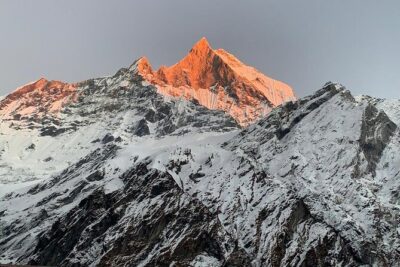
Kathmandu/Pokhara: 5-Day Annapurna Base Camp (ABC) Trek
Read our review →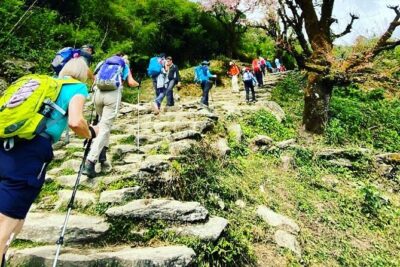
11-Day Hike Tour to Annapurna Base Camp Bliss in Kathmandu
Read our review →Browse the lists this tour appears in