
REVIEW · ANNAPURNA BASE CAMP TREKS
Pokhara: 7-Day Annapurna Base Camp Via PoonHill & Hot Spring
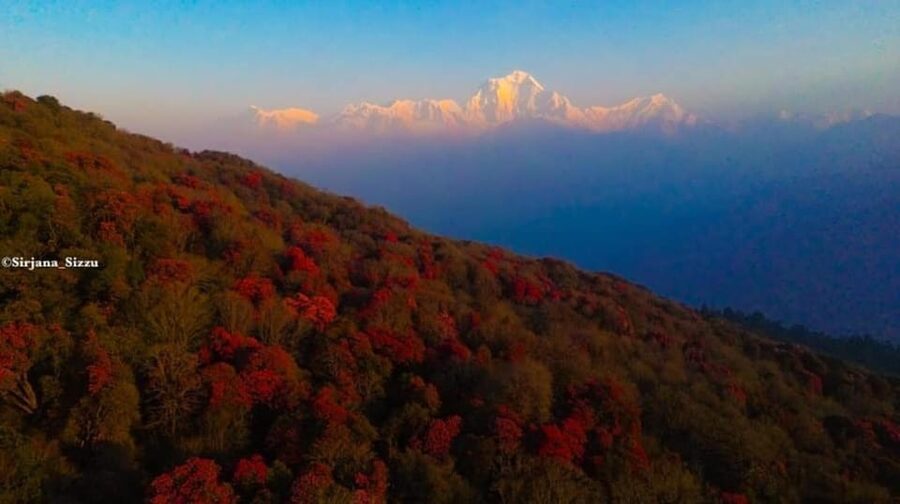
Sunrise comes early in the Himalayas. This seven-day route packs Poon Hill sunrise and Annapurna Base Camp into one demanding but rewarding trek, linking rhododendron forests, mountain villages, river valleys, snow peaks, and Jhinu Dada’s hot spring. I especially like the smart route design, which gives you a major viewpoint before heading toward ABC, and the care built into the guiding service, with guides such as Mahesh and Prakash praised for adjusting the pace and answering questions clearly. The main catch is simple: this is a hard trek, with long days, steep sections, and an overnight stay at 4,130 meters.
You start and finish in Pokhara, so the trip works well if you have limited time in Nepal but still want two of the Annapurna region’s best-known sights. The $267 price is strong value if you choose the full package, since it covers permits, accommodation, meals, guide costs, taxes, and 4-wheel-drive transport. You still need to budget for insurance, drinks, bottled or boiled water, personal expenses, and possibly a porter.
In This Review
- What makes this trek worth seven demanding days
- What the route really asks of you
- Day one: Pokhara to Ulleri and Ghorepani
- Day two: Poon Hill sunrise, Tadapani, and Chuile
- Day three: Chuile to Sinuwa beside the river
- Day four: Sinuwa to Dovan and Deurali
- Day five: Deurali to Annapurna Base Camp at 4,130 meters
- Day six: Returning from ABC to Bamboo
- Day seven: Bamboo to Jhinu Dada and back to Pokhara
- What the $267 price covers
- Guides, porters, and the private-group advantage
- Packing, comfort, and small practical warnings
- Who should book this trek?
- Should you book the Annapurna Base Camp via Poon Hill trek?
- FAQ
- How long is the Annapurna Base Camp via Poon Hill trek?
- What is the highest point on the route?
- Is Poon Hill included in the itinerary?
- Is transportation from Pokhara included?
- Are meals included?
- Is a porter included?
- What languages does the guide speak?
What makes this trek worth seven demanding days
- Poon Hill at 3,210 meters: Reach one of the area’s famous sunrise viewpoints before breakfast, with views toward the Annapurna range and other Himalayan peaks.
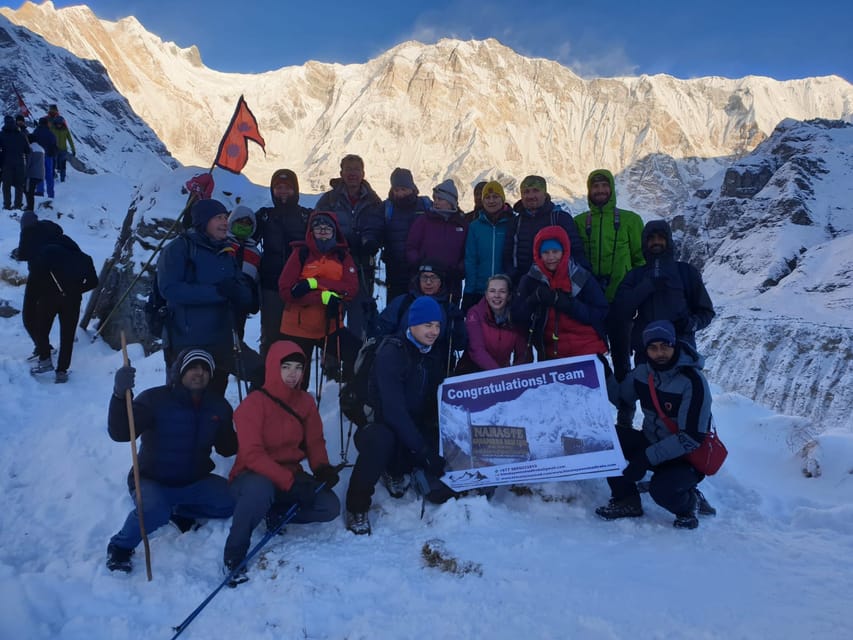
- Annapurna Base Camp at 4,130 meters: The high point of the route is a dramatic mountain bowl surrounded by snow-covered summits and glaciers.
- A varied route instead of a simple out-and-back: You pass through Ghorepani, Tadapani, Chuile, Sinuwa, Dovan, Deurali, and Bamboo, so every day has a different feel.
- A hot-spring finish: Soak at Jhinu Dada for about two hours before taking a jeep toward Lakeside Pokhara.
- Private guiding: Your group is private, and the guide speaks English, Hindi, or Nepali. That gives you more room to discuss pace and daily needs.
- A practical package at $267: Guide services, permits, tea-house lodging, meals on the full package, taxes, and listed transport are included, but insurance and porter service are extra.
What the route really asks of you
The itinerary covers seven days, but it is not a gentle sightseeing holiday. You will climb to Poon Hill early on day two, reach 4,130 meters on day five, then walk several hours back down the valley. The schedule lists roughly four to six hours of trekking on most days, plus driving on the first and final days.
That timing looks manageable on paper, yet mountain paths are not city sidewalks. You should expect stairs, uneven ground, forest tracks, and repeated uphill or downhill sections. The elevation also changes quickly. Ghorepani sits at 2,840 meters, Poon Hill reaches 3,210 meters, and ABC rises to 4,130 meters.
I would choose this trek if you already enjoy regular walking and can handle several active days in a row. You do not need to be a technical mountaineer, but you do need comfortable shoes, suitable clothing, and a willingness to walk when the weather or trail feels less forgiving.
The private format is useful here. The guide can adjust the route to your abilities and expectations, a point that mattered greatly to Karolina, who specifically praised Mahesh for taking care of the group and adapting the plan. Prakash also earned strong praise for his care and helpful attitude. If you are booking, asking for the guide’s name in advance is sensible, since the quality of communication can make a hard trek feel much easier.
More Annapurna Base Camp treks:
- Kathmandu/Pokhara: 5-Day Annapurna Base Camp (ABC) Trek
★ 4.9 · 72 reviews - Private 7 – Day Annapurna Base Camp Trekking
★ 5.0 · 50 reviews - Annapurna Base Camp Trek (8 days)
★ 5.0 · 45 reviews
Day one: Pokhara to Ulleri and Ghorepani
The first day combines a scenic jeep ride with a four-hour walk. You are collected in Pokhara and driven to Nayapul, then continue by 4-wheel-drive vehicle through small villages, beside streams, and into the hill country.
The drive matters because it saves walking time at the start of the route. It also gives you a quick look at the changing countryside before you set out on foot. From Ulleri, you continue toward Ghorepani through rhododendron forest, eventually reaching the tea-house village at 2,840 meters.
Ghorepani is more than a place to sleep. It is the launch point for the next morning’s climb to Poon Hill, so your arrival has a clear purpose. The drawback is that the first day includes both a long vehicle ride and a serious walk. You may feel the route starting in your legs before the main high-altitude section even begins.
Accommodation is described as tea-house lodging and available hotels during the trek. Do not expect a resort-style stay. The value is in having a bed and a place to eat along a remote mountain route, not in luxury extras. A sleeping bag is on the recommended packing list, so bring one or confirm rental arrangements before you leave.
Day two: Poon Hill sunrise, Tadapani, and Chuile
Day two begins with the trip’s most famous early start: the walk up to Poon Hill at 3,210 meters. The reward is a sunrise view across the Annapurna range and surrounding peaks, with Ghorepani below and the forested hills around you.
This is one of the strongest features of the route because it gives you a major viewpoint before you reach ABC. The view from Poon Hill is broad and open, while the later approach to Base Camp feels enclosed by much taller peaks. You get two very different mountain experiences in one trip.
After returning to Ghorepani for breakfast, you descend toward Tadapani and Chuile. The full day takes about six hours. Forest paths and village sections replace the open viewpoint, and the change in scenery keeps the day from feeling like a repeat of the morning.
The concern is fatigue. A pre-dawn climb followed by a six-hour walking day requires a reasonable pace. Take the sunrise seriously, but do not treat it like a race. Your guide can help set the rhythm, and a private group gives you more flexibility than a large fixed party.
You sleep in Chuile at about 2,400 meters. That lower elevation offers a useful break after Ghorepani and Poon Hill, even though the walking day itself is long.
Day three: Chuile to Sinuwa beside the river
The route continues toward ABC, passing the meeting point of the Kumrung and Modi Rivers before reaching Sinuwa at 2,170 meters. The walk takes about five hours.
This is a quieter transition day. You are moving deeper into the approach to Base Camp, but the route does not yet reach the highest elevations. The river becomes a natural companion, and the valley setting gives the day a different character from the open ridges near Poon Hill.
Sinuwa is a useful overnight stop because it keeps the schedule progressive rather than forcing one huge ascent. The lower altitude also offers some recovery before the climb toward Dovan and Deurali. Still, do not mistake a lower sleeping point for an easy day. You will continue to gain and lose height along mountain paths.
More Poon Hill treks:
- Poon hill Trek 3 days
★ 5.0 · 176 reviews - Pokhara: 4-Day Ghorepani, Poonhill & Ghandruk Mountain Trek
★ 5.0 · 132 reviews - Ghorepani – Poon Hill Trek 3N-4D
★ 5.0 · 125 reviews - From Pokhara: 3-Day Ghorepani Poon Hill Trek with Guide
★ 4.9 · 68 reviews
Day four: Sinuwa to Dovan and Deurali
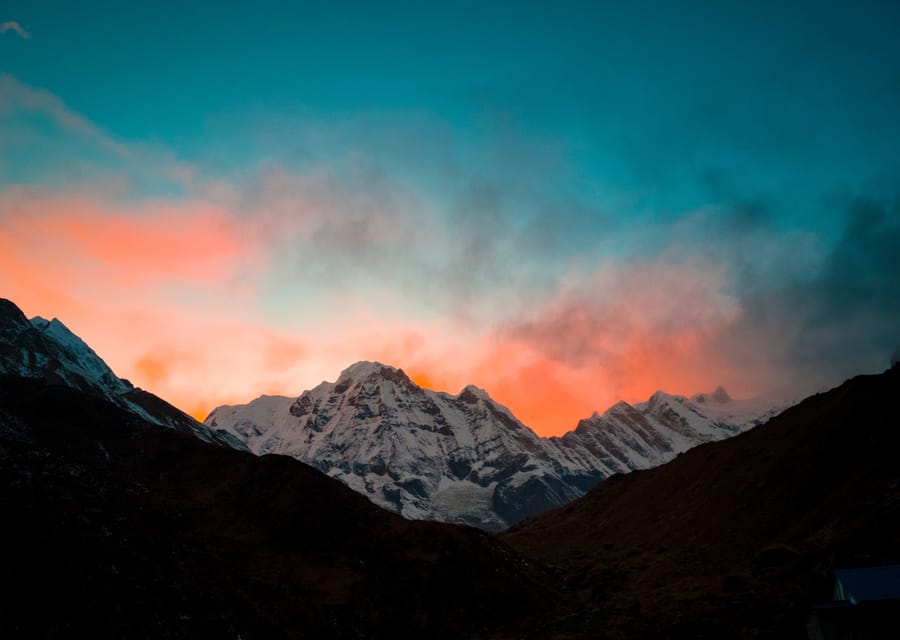
The fourth day takes about six hours and leads through bamboo and rhododendron forest toward Dovan and then Deurali at 3,200 meters. You will walk beside the Modi River and see the Annapurna and Machhapuchhre mountains when conditions allow.
This section shows why the route is more than a single viewpoint trek. The forest feels enclosed and cool, while the higher sections open toward the great peaks. Bamboo and rhododendron provide a strong contrast with the snow and rock above.
Deurali is the last major overnight point before ABC. At 3,200 meters, you are now high enough for altitude to matter. Go slowly, drink regularly, and tell your guide if you feel unwell. The supplied information does not promise a separate acclimatization day, so you should approach this section with care rather than trying to force a fast pace.
The schedule says six hours, but mountain conditions can affect that timing. Weather, trail conditions, rest stops, and individual pace all matter. Keep your day flexible and avoid planning an important flight immediately after the trek.
Day five: Deurali to Annapurna Base Camp at 4,130 meters
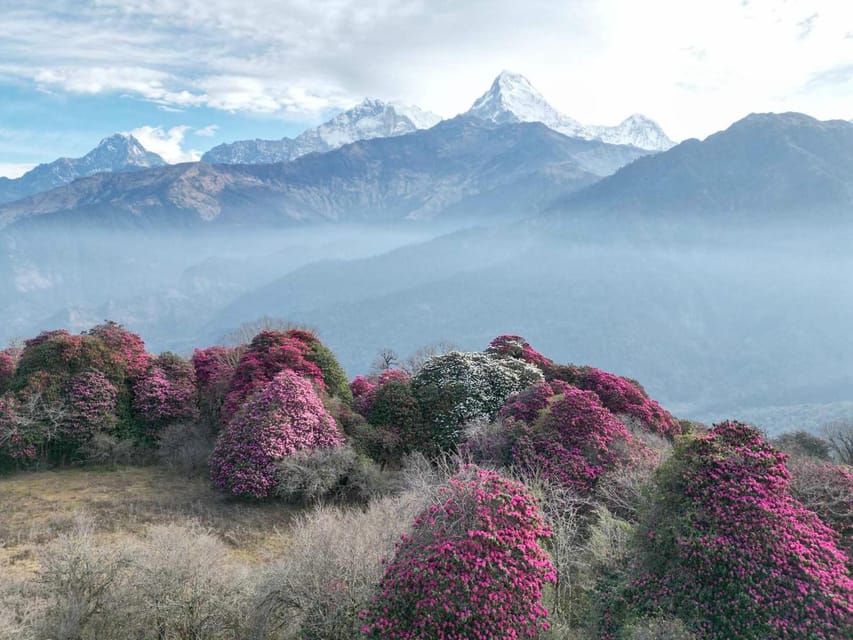
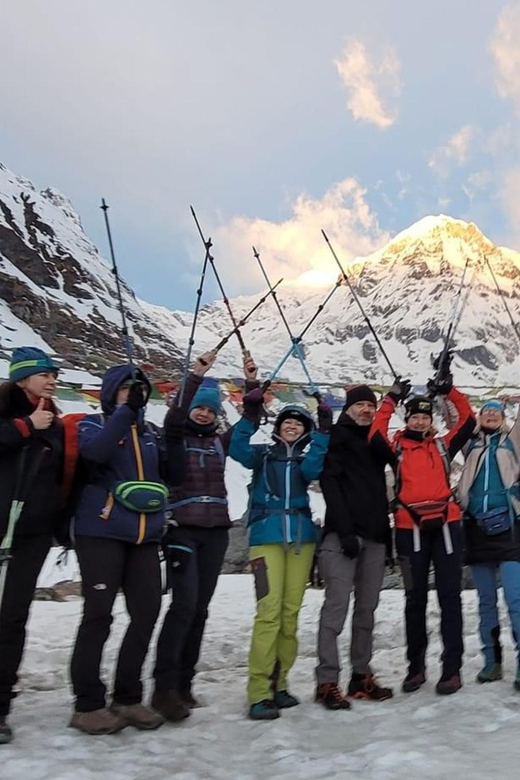
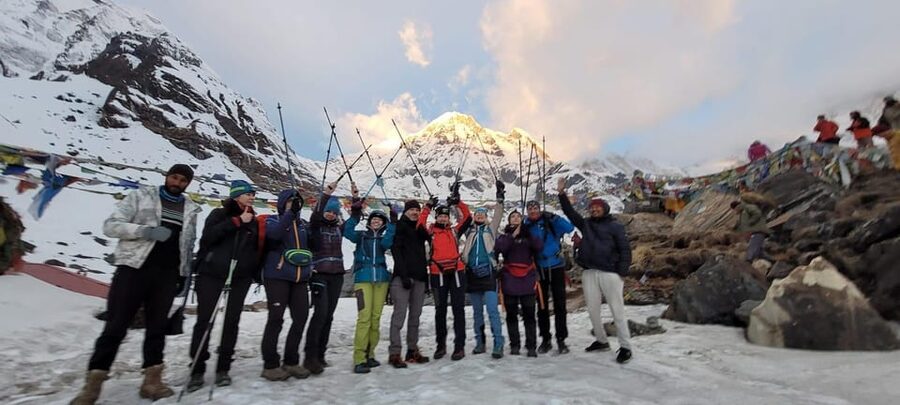
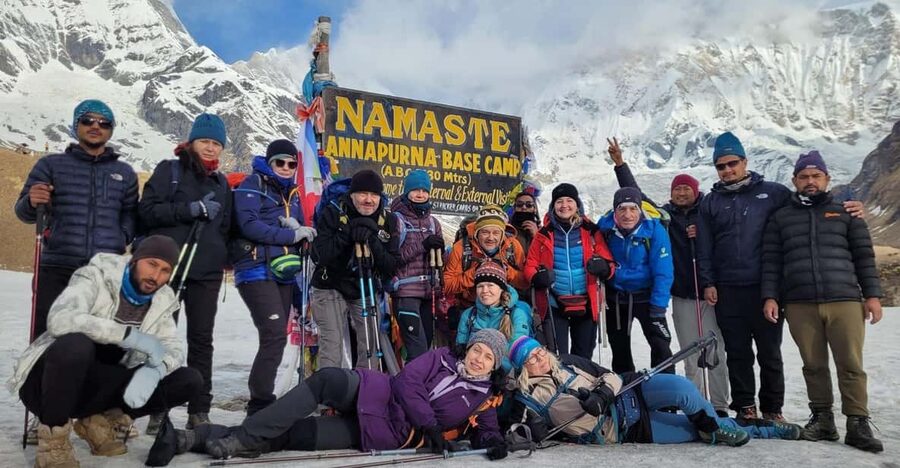
This is the day the whole route has been building toward. From Deurali, you walk for about six hours to Annapurna Base Camp, entering the famous mountain amphitheater at 4,130 meters.
The setting is the trek’s great payoff. Snow-capped peaks rise around the basin, and glaciers add a stark, dramatic edge to the view. The mountains do not feel distant here. You are surrounded by them, with the route ending in a place that has real mountaineering significance.
The height also creates the biggest physical challenge. At 4,130 meters, cold, thin air, and tired legs can change the experience quickly. Your guide is included to help with the practical side of the trek, but you remain responsible for telling the guide how you feel. Reaching Base Camp is important, but reaching it safely matters more.
Accommodation at this altitude is part of the available tea-house system, not a private mountain lodge. Pack warm clothing and a sleeping bag. The official packing suggestions also include a jacket, sunglasses, sunscreen, comfortable clothes, trekking gear, and a passport or ID card.
Do not expect a long, relaxed afternoon at Base Camp. The day is listed at six hours, and the high altitude can make the final stretch feel longer. Give yourself time to look around, take photographs, and appreciate the mountain bowl without turning the moment into a frantic photo stop.
Day six: Returning from ABC to Bamboo
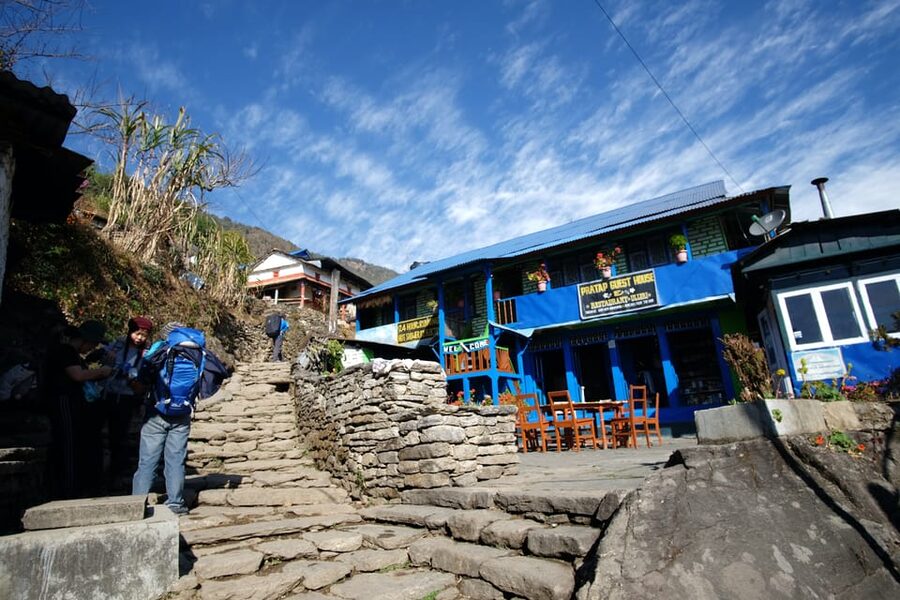
After the night at Base Camp, you retrace the route to Bamboo at 2,300 meters. The walk takes about six hours and is almost entirely downhill.
Downhill sounds easy until your knees disagree. The same rough sections that challenged your lungs on the way up can test your legs on the descent. Trekking poles, if part of your personal gear, may be useful, though the provided information does not say that poles are supplied.
The return route gives you another chance to see the Modi River valley and forest sections, but it is not a fresh route with new villages at every turn. That repetition is the main limitation of this itinerary. You gain Poon Hill and ABC in seven days, but the ABC portion uses the same corridor in both directions.
Bamboo at 2,300 meters feels like a welcome change after the high camp. You can rest, eat, and prepare for the final walking day. The package includes guide expenses and, on the full package, meals and accommodation during the trek, which keeps the basic mountain budget clear.
Day seven: Bamboo to Jhinu Dada and back to Pokhara
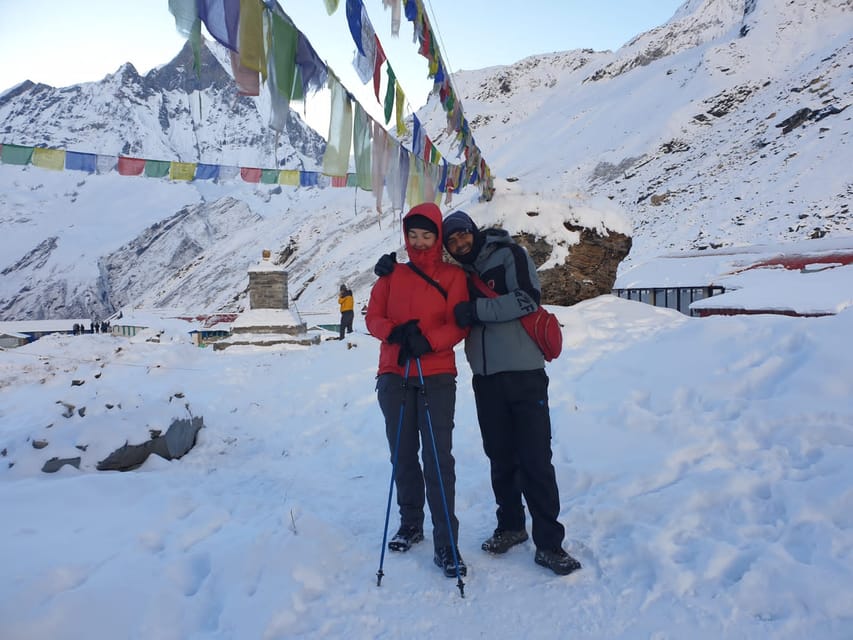
The final day combines about five hours of trekking with a 2.5-hour drive. You descend from Bamboo to Jhinu Dada at 1,600 meters, then have about two hours to enjoy the natural hot spring.
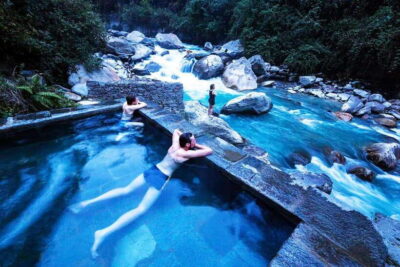
The hot spring is a smart ending. After several days of climbing and descending, warm water gives you a chance to relax before the drive back to Pokhara. It also breaks up what could otherwise be a simple final descent and vehicle transfer.
You continue trekking for about thirty minutes to Samrung, where you board a jeep for Lakeside Pokhara. The drive takes about 2.5 hours. Pickup and drop-off are included, although pickup is optional, so confirm the arrangement and wait in your hotel lobby ten minutes before the agreed time if you choose it.
The final transfer is practical rather than scenic luxury. Roads in mountain areas can be slow, and you may be tired by this point. Still, arriving back in Lakeside Pokhara on the same day gives the itinerary a clean finish.
What the $267 price covers
At $267 per person, this is a strong-value trek for the services listed. You receive:
- An English-speaking or local expert guide
- Hotel pickup and drop-off
- Trekking permits and required paperwork
- Trekkers’ Information Management System fees
- Government taxes
- Available accommodation during the trek
- Meals during the trek when you choose the full package
- 4-wheel-drive transport listed in the route
- The guide’s food, lodging, salary, equipment, insurance, and transport
That is a meaningful bundle. Permits, transport, food, and guide expenses can make a self-arranged trek more complicated than it first appears.
You should check one detail before paying: the information specifies meals for the full package only. Confirm that your selected $267 option is the full package if you want breakfast, lunch, and dinner included.
Extra costs are clear enough. You pay for soft and alcoholic drinks, travel and rescue insurance, entry fees during sightseeing, Nepal’s visa fee, phone calls, laundry, bar bills, battery charging, showers, and bottled or boiled water. Porter service is available for an additional charge, but it is not included.
I would not skip rescue insurance. The trek reaches 4,130 meters, and the price does not cover your travel or rescue policy. Also allow money for water and personal needs rather than assuming every mountain expense is covered.
Guides, porters, and the private-group advantage
The strongest personal praise centers on the guiding. Mahesh is described as attentive and flexible, while Prakash is praised for his knowledge of the route and kind help. Bishal and Avinesh also received specific praise for their porter work, and Sujal was appreciated as good company on the trail.
Those details matter because a guide on a high-altitude trek does more than point out mountains. You need clear communication, sensible pacing, help with route decisions, and someone who notices when the group is struggling. The experience is offered as a private group, which should make those conversations easier.
Porters are not part of the stated price, though you can purchase that service. If you prefer to carry only a daypack, arrange a porter ahead of time and ask exactly what is covered. The tour price includes the guide’s equipment and insurance, not your own personal insurance or every support service.
The activity offers live guiding in English, Hindi, and Nepali. That range is useful for mixed-language groups, but if your group needs a particular language, confirm it before departure.
Packing, comfort, and small practical warnings
Use the packing list as a starting point, not a suggestion to ignore. You need comfortable shoes, sunglasses, sunscreen, a jacket, comfortable clothing, a sleeping bag, trekking gear, and your passport or ID card.
The sleeping bag is especially worth sorting out early. The route includes high-altitude nights, and the information does not say one is supplied. Ask the organizer if rental equipment is available rather than arriving in Pokhara and hoping to find the right gear at the last moment.
Personal charging, showers, water, and laundry cost extra. Battery recharge is specifically listed as an additional expense, so carry a backup power option if you have one. Keep some Nepalese cash available for small purchases, though the exact payment arrangements are not provided.
Pregnant women should not book this activity. The combination of long walks, high altitude, and remote mountain sections makes that restriction important. Anyone with health concerns should get personal medical advice before committing, since no specific medical screening or acclimatization program is included in the supplied plan.
Who should book this trek?
I would recommend it to you if you want a concentrated Annapurna experience and have only seven days. Poon Hill gives you an early mountain panorama, while ABC provides the high-altitude finish. The hot spring then sends you back to Pokhara with a little comfort instead of one last punishing walk.
It suits people who value a private guide, included logistics, and a clear route more than luxury accommodation. It also suits hikers who want support without joining a large group. The strong five-star record, including praise for communication, organization, guides, porters, food, and hotel quality, supports that choice.
I would hesitate if you dislike early starts, steep trails, basic tea-house lodging, repeated routes, or high-altitude walking. The itinerary is tightly packed, and there is no spare acclimatization day shown. You should also reconsider if you need every cost included, since insurance, water, porter service, drinks, and personal expenses remain yours.
Should you book the Annapurna Base Camp via Poon Hill trek?
Book it if your priority is maximum mountain scenery in a short, organized trip. The route gives you two major goals, Poon Hill and Annapurna Base Camp, plus forests, rivers, villages, and the Jhinu Dada hot spring. At $267, the included permits, guide, food on the full package, lodging, taxes, and jeep transport make the price attractive.
Before confirming, check four things: that you are booking the full meal package, that your travel and rescue insurance is in place, that you have arranged a sleeping bag and suitable gear, and that porter service is included only if you purchase it. If you accept the physical demands, this is a focused and well-supported way to see a great deal of the Annapurna region in one week.
FAQ
How long is the Annapurna Base Camp via Poon Hill trek?
The trek lasts seven days, beginning in Pokhara and ending back in Lakeside Pokhara.
What is the highest point on the route?
The highest point is Annapurna Base Camp at 4,130 meters. Poon Hill reaches 3,210 meters.
Is Poon Hill included in the itinerary?
Yes. You climb to Poon Hill from Ghorepani early on day two for sunrise and mountain views, then return for breakfast before continuing toward Tadapani and Chuile.
Is transportation from Pokhara included?
Yes. The package includes 4-wheel-drive jeep transportation according to the itinerary, as well as hotel pickup and drop-off. The final drive from Samrung to Pokhara takes about 2.5 hours.
Are meals included?
Breakfast, lunch, and dinner are included during the trek for the full package only. Drinks, bottled or boiled water, and personal purchases are not included.
Is a porter included?
No. Porter service is available for an additional charge. The listed package includes the guide’s expenses, but not a personal porter for you.
What languages does the guide speak?
Live guiding is available in English, Hindi, and Nepali.
More Spa and Hot Spring Stops in Pokhara
- From Pokhara: 5-Day Annapurna Basecamp Trek with Hot Springs
★ 4.9 · 26 reviews - Pokhara: 7-Day Annapurna Base Camp Trek & Natural Hot Spring
★ 5.0 · 11 reviews - Pkr/Kathmandu: 5-Day Annapurna Base Camp & Hot spring Trek
★ 5.0 · 6 reviews - Pokhara: Amazing 7-Day ABC Trek with Natural Hot Spring
★ 5.0 · 5 reviews
New in the Pokhara listings
- Pokhara: Pokhara Highlights Tour by Bus★ 3.6 · 10 reviews
- Discover Pokhara in Style: Private Vehicle Service with Driver★ 5.0 · 5 reviews
- Multi-Day Tour from Pokhara, Poon Hill and Mulde Trek★ 5.0 · 1 review
- Pokhara in 5 Hours: Lake, Museum, Cave, Falls & Pagoda Hill★ 4.5 · 16 reviews
- Private 4 Day Poon Hill Trek from Pokhara★ 5.0 · 16 reviews
- 4 Day Mardi Himal Base Camp Trek from Pokhara★ 5.0 · 18 reviews
- From Pokhara Full Day Entire Pokhara Tour with Guide★ 5.0 · 1 review
- Ultralight Flight: Into The Heart Of The Mountains (90 min)★ 5.0 · 1 review
Annapurna Base Camp Treks, compared.
Kathmandu to Annapurna Base Camp (ABC) 5-Day Trek
Read our review →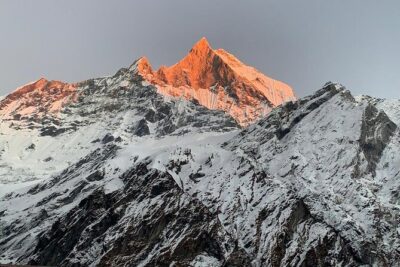
Kathmandu/Pokhara: 5-Day Annapurna Base Camp (ABC) Trek
Read our review →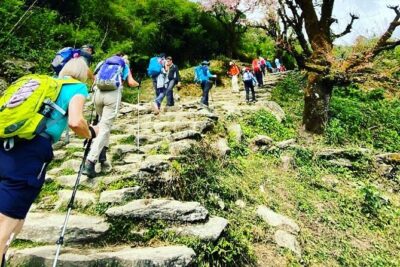
11-Day Hike Tour to Annapurna Base Camp Bliss in Kathmandu
Read our review →Browse the lists this tour appears in