
REVIEW · ANNAPURNA BASE CAMP TREKS
Annapurna Base Camp Trek
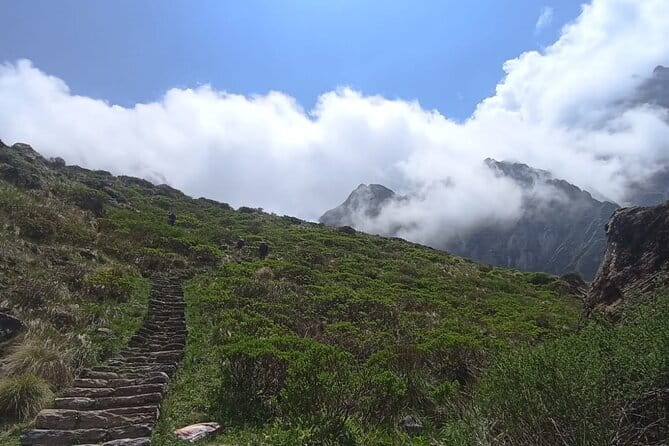
The mountains start before the trail. This 10-day Annapurna Base Camp trek combines a Poon Hill sunrise with the high mountain drama of ABC, and I like that local guides handle permits, transport, food, and safety. I also like the private format, so your group can move at its own pace rather than wait for a large tour.
The main trade-off is the schedule. Days commonly run five to seven hours, and the route reaches Annapurna Base Camp after a steady climb from Sinuwa through Deurali and Machapuchare Base Camp. At $700, the package offers strong value, but you still need moderate fitness, patience with road travel, and a willingness to live simply in tea houses.
In This Review
- Key points before you book
- What the $700 package really covers
- Day 1: Kathmandu to Pokhara by road or air
- Day 2: Nayapul to Ulleri and the first real walking
- Day 3: Ulleri to Ghorepani through forest
- Day 4: Poon Hill sunrise, then on to Tadapani
- Day 5: Tadapani to Sinuwa
- Day 6: Sinuwa to Deurali and a higher mountain setting
- Day 7: Deurali to Machapuchare Base Camp and Annapurna Base Camp
- Day 8: Annapurna Base Camp back to Sinuwa
- Day 9: Sinuwa to Jhinu, hot springs, and Pokhara
- Day 10: Pokhara to Kathmandu
- Guides, porters, and the human side of the trek
- Who should book this Annapurna route?
- Small details that make the trek easier
- Should you book it?
- FAQ
- Where does the Annapurna Base Camp trek start?
- How long does the trek last?
- Is airport pickup included?
- Are meals included during the trek?
- What level of fitness do I need?
- Is this a private tour?
- What is not included in the price?
Key points before you book
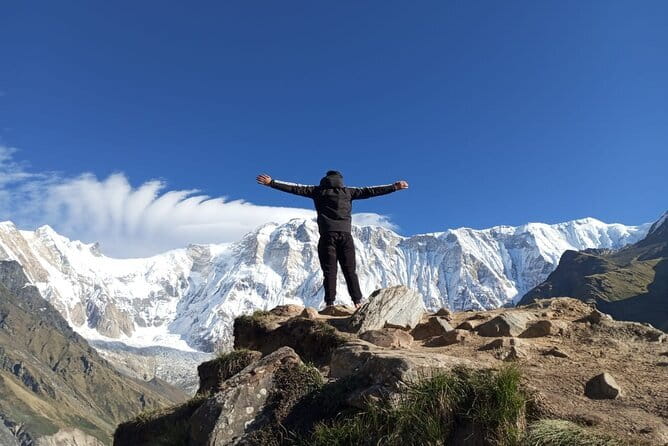
- Poon Hill adds a famous sunrise without a separate tour: You leave Ghorepani early, watch the light reach Annapurna and Dhaulagiri, then return for breakfast.
- The route reaches 4,130 meters at Annapurna Base Camp: The high point comes on Day 7, after several days of gradual walking.
- Meals and permits are included: Breakfast, lunch, dinner, and necessary trekking permits are part of the package, while extra snacks and drinks remain your responsibility.
- The private group format is useful: Only your own group takes part, with a licensed guide and porter support.
- The package includes Kathmandu nights and airport transfers: You receive accommodation for two nights in Kathmandu before and after the trek, plus airport pickup and drop-off.
- The hardest section is not the longest road day: The trek from Deurali to ABC takes about six to seven hours, followed by a long descent the next day.
What the $700 package really covers
At first glance, $700 for a 10-day Himalayan trek looks unusually reasonable. The value becomes clearer when you count what is bundled into the price.
You receive airport pickup and drop-off, two nights of accommodation in Kathmandu, transport between Kathmandu and Pokhara, trekking permits, and all three main meals during the trek. The package also covers your English, Hindi, or Chinese speaking government-licensed guide, a porter, guide and porter insurance, transport, food, accommodation, and basic equipment.
A duffel bag and trekking map are supplied. The duffel bag is returned after the trip, so you do not need to bring a large hiking pack for every item. A guide carries a first-aid kit, which is a useful safeguard on a route where distance from medical services matters.
The inclusions are generous, but read the food arrangement carefully. Breakfast, lunch, and dinner are included, and you can also buy additional meals or items at tea houses during the trek. Bring money for snacks, drinks, chocolates, and personal purchases. The supplied advice to carry light snacks and chocolate makes sense on the longer walking days.
Tips for your guide and porter are not included. You should also expect personal costs such as extra drinks and any optional purchases to sit outside the headline price. Even with those additions, the package is good value if you want a guided trek with the main logistics already arranged.
More Annapurna Base Camp treks:
- Annapurna base camp trek 5 Days
★ 5.0 · 252 reviews - Annapurna Base Camp Trek
★ 5.0 · 111 reviews - Kathmandu to Annapurna Base Camp (ABC) 5-Day Trek
★ 5.0 · 102 reviews
Day 1: Kathmandu to Pokhara by road or air
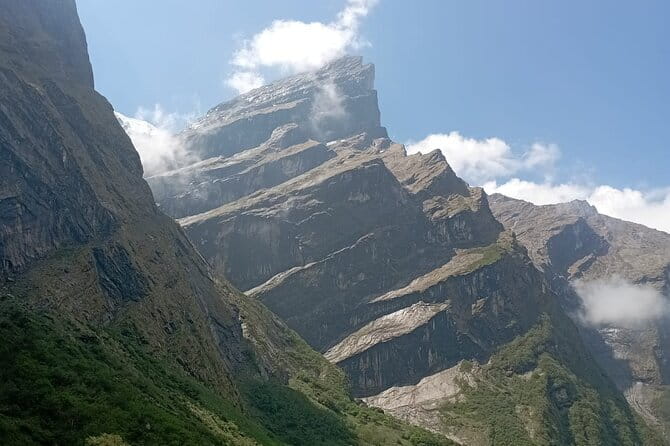
The first travel day is mostly about getting into position. By tourist bus, the journey from Kathmandu to Pokhara takes about seven hours and covers roughly 200 kilometers. The road follows the Trishuli River for much of the way, with views of villages and changing countryside.
This is not a quick transfer. A seven-hour road day can feel tiring before you have taken a single step on the trekking route. Still, it gives you a gradual change from city traffic to mountain country, and the river-side views make the journey more than dead time.
You can also choose a car or a flight. A flight saves time, while the bus gives you a fuller look at the country between the two cities. Confirm the transport choice and any price difference before departure, since the basic schedule allows more than one option.
Pokhara is your practical staging point. The day is listed as free of admission charges, since the value here is transport and scenery rather than a paid attraction.
Day 2: Nayapul to Ulleri and the first real walking
After breakfast, you drive for about an hour from Pokhara to Nayapul. From there, the trail follows the Modi Khola River and passes through villages before reaching Ulleri.
This is where the trip changes from transport to trekking. The village sections give you an early look at daily life in the Annapurna region, while the river helps provide a clear sense of direction. The walk takes about five hours, but the route begins to gain height, so you should not treat this as an easy stroll.
Ulleri is an important first night because it places you on the climbing route toward Ghorepani. Your guide can help set a steady pace, which matters more than trying to prove something on the first walking day. Save your energy. The route will ask for it later.
Day 3: Ulleri to Ghorepani through forest
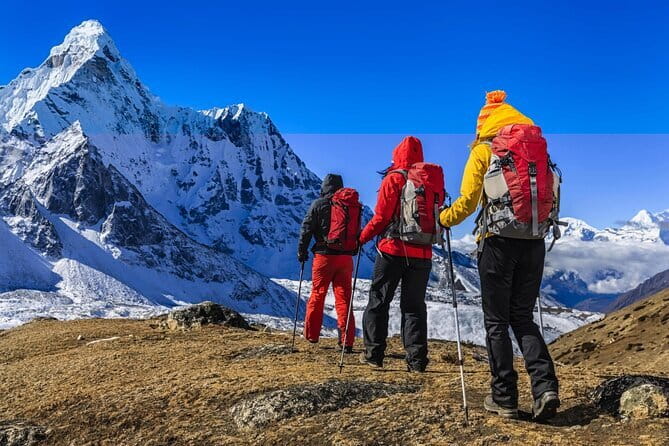
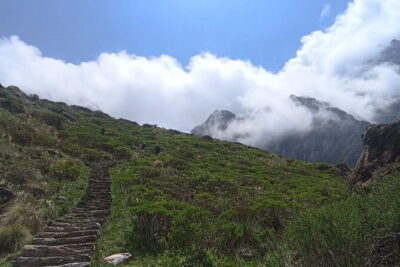
The five to seven hour trek from Ulleri to Ghorepani passes through forest and mountain scenery. As you climb, views of the Annapurna range begin to appear more often.
I like this part of the route because it gives you a clear reward for the effort. You start among trees and village paths, then gain wider views as the trail rises. It feels like a proper mountain journey rather than a series of isolated photo stops.
The timing varies in the supplied schedule, listed once as about five hours and described elsewhere as six to seven. Plan for the longer figure. A flexible pace is especially helpful if your group includes people with different walking speeds.
Ghorepani is more than an overnight stop. It sets up the early morning climb to Poon Hill, one of the most memorable parts of the whole trip.
More walking in the hills of Kathmandu:
- Everest Base Camp Trek – 14 Days
★ 5.0 · 1,499 reviews - Everest Base Camp Trekking
★ 5.0 · 485 reviews - Nagarkot Sunrise View and Day Hiking from Kathmandu
★ 5.0 · 471 reviews - Annapurna Circuit Trek with Tilicho Lake
★ 5.0 · 368 reviews
Day 4: Poon Hill sunrise, then on to Tadapani
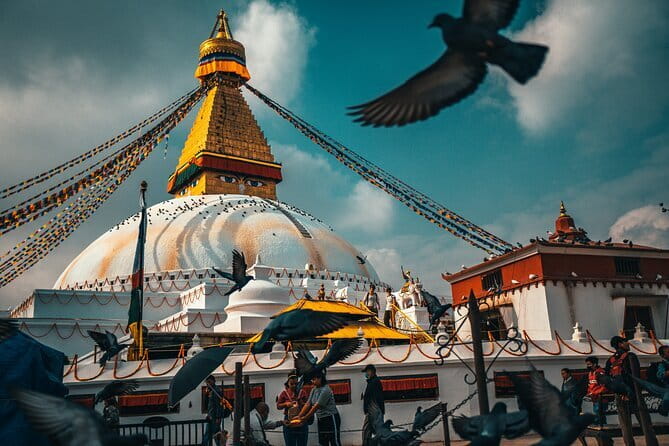
The day begins early with a hike to Poon Hill. You go before breakfast so you can see sunrise over Annapurna and Dhaulagiri, then return to Ghorepani for breakfast before continuing toward Tadapani.
This early start is worth taking seriously. Sunrise in the mountains depends on weather and visibility, so nobody can promise a perfect view. Still, the combination of dark morning, cold air, and changing light over two major Himalayan ranges gives this day a special feel.
After breakfast, you continue to Tadapani. The walking time is listed at about four to five hours, with forest and mountain views along the way. The day has two distinct moods: a short, high-impact morning viewpoint, followed by a quieter forest walk.
Poon Hill also makes this trek attractive to people who want more than a base camp label. You get a major sunrise viewpoint early in the trip, before the route turns toward the deeper mountain valley.
Day 5: Tadapani to Sinuwa

The trek from Tadapani to Sinuwa takes about five to seven hours. You descend through forest and pass several small villages, with views of the Annapurna range along the way.
The word descend should not fool you into expecting an effortless day. On a mountain route, downhill walking can test your knees and legs, especially after the early start at Poon Hill. Take care on uneven ground and use your poles if you carry them.
Sinuwa marks a shift toward the higher part of the Annapurna Base Camp route. The villages become stepping stones in the journey, and the forest gives the trail a more enclosed feel than the open views around Poon Hill.
This is a good point to check your water, charger, clothing, and snacks. The practical advice for this trek includes carrying water bottles, sunglasses, a charger, and light energy foods. Those items are small, but they matter when the walking day stretches longer than expected.
Day 6: Sinuwa to Deurali and a higher mountain setting
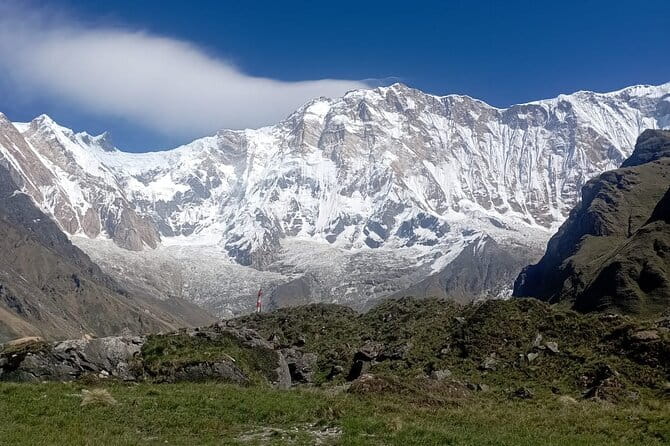
From Sinuwa, you trek to Deurali in about five to six hours. The trail rises through forest, then becomes more rugged as you approach Deurali.
The route description includes a crossing of the Khumbu Glacier. That name is unusual for an Annapurna itinerary, so I would ask the operator to clarify the exact trail feature and conditions before setting out. The important point for planning is that this day moves from forested paths into rougher, higher terrain.
Deurali is the last major stop before the base camp section. You should expect the air and terrain to feel different from the lower villages. This is where a guide’s judgment becomes especially useful. The package emphasizes altitude management, safety, and first-aid preparation, and those services have practical value here.
You do not need to race. The next day is the key ascent, so a calm pace and regular water breaks are more useful than an early arrival.
Day 7: Deurali to Machapuchare Base Camp and Annapurna Base Camp
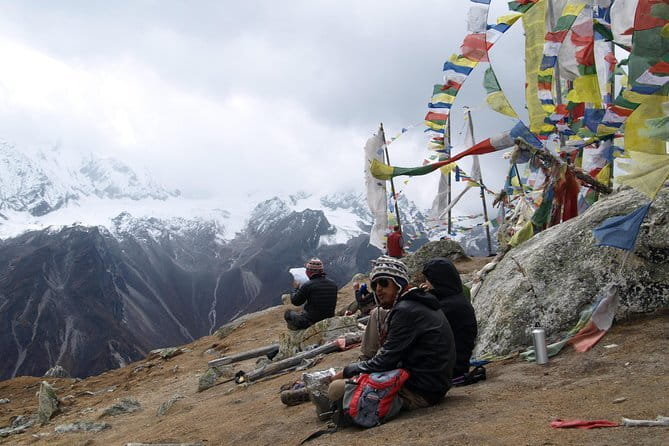
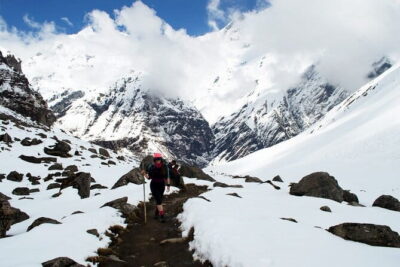
The trek from Deurali to Annapurna Base Camp takes about six to seven hours and passes through Machapuchare Base Camp. This is the central day of the experience.
The route leads deeper into the high mountain setting, with views opening around you as you climb. Machapuchare Base Camp provides an important pause before the final approach to ABC. From there, you continue toward Annapurna Base Camp and the great mountain amphitheater around it.
The schedule does not give a separate time for the Machapuchare section, so you should judge the day as one continuous effort. Weather, trail conditions, and group pace can all affect the timing. This is not the place to rely on a tight personal deadline.
A guide can help you watch for signs that the altitude is affecting you and can adjust the pace when needed. The tour is suitable for a first-time trekker with moderate fitness, but that does not mean it is physically easy. You should be comfortable walking for several hours on consecutive days.
Reaching ABC is the payoff, but do not reduce the day to a single photograph. The changing terrain, the route through Machapuchare Base Camp, and the sense of moving into a high mountain bowl are the real experience.
Day 8: Annapurna Base Camp back to Sinuwa
After taking in the views at ABC, you begin the long descent to Sinuwa. The walk takes about six to seven hours and retraces familiar sections of the route.
Descending is usually faster than climbing, but it can still be demanding. Your legs have already worked for nearly a week, and uneven paths can make the return harder than expected. Keep your pace controlled and avoid treating the downhill as a race.
This day also gives you a chance to notice details missed on the way up. Forest, villages, and trail junctions look different when you are no longer focused on reaching the next higher stop.
A private group is helpful here. You can take short pauses without worrying about keeping up with a large mixed party, while the guide still keeps the day organized.
Day 9: Sinuwa to Jhinu, hot springs, and Pokhara
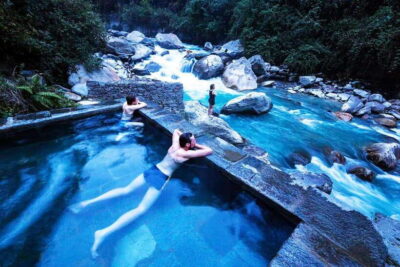
You walk from Sinuwa to Jhinu in about five to six hours. After reaching Jhinu, you can relax in nearby natural hot springs before driving back to Pokhara for the evening.
This is a smart final trekking day. The hot springs offer a welcome change after the long return from ABC, though you should still allow enough time to reach the road and complete the one to two hour drive to Pokhara.
The day combines walking, rest, and transport without trying to squeeze in another major mountain objective. It is a gentler ending than simply returning to the city immediately after the base camp descent.
You spend the evening in Pokhara, which also breaks up the return to Kathmandu. That pause matters after many days on foot.
Day 10: Pokhara to Kathmandu
For the final transfer, you can take a scenic drive of about seven to eight hours or choose a short flight. Once back in Kathmandu, you have free time for shopping or exploring before departure.
The drive repeats the long travel pattern from Day 1, while flying gives you more time in Kathmandu. If you have an international flight the same day, confirm the timing carefully. The schedule provides free time in the city, but it does not specify a protected overnight buffer before departure.
Airport pickup and drop-off are included, as are two nights of Kathmandu accommodation before and after the trek. The start point is in Thamel, and the stated start time is 6:15 in the morning, so plan for an early beginning.
Guides, porters, and the human side of the trek
The strongest part of this package is its local support. Touch The Himalaya Treks and Expedition uses guides from the region, with government licenses and first-aid training. The company says its guides manage permits, logistics, safety, and altitude concerns, allowing you to concentrate on walking.
Several team members have earned particular praise. Madan is associated with arranging the trip and answering questions, while guides including Rishi and Roshan Pandey have been credited with careful support on the trail. Porters Arjun and Ganesh have also been singled out for moving bags between camps. These names matter because good logistics often decide whether a trek feels manageable.
A guide cannot control weather or erase the physical demands of ABC. What a good guide can do is keep the pace sensible, explain the route, carry first-aid supplies, and help you deal with the daily practical problems that are easy to underestimate.
The package is private, so only your own group participates. That suits families, friends, and solo trekkers who want more control over pace and conversation. A solo woman has also found the arrangement reassuring, with regular help and communication from the team.
Who should book this Annapurna route?
I would recommend this trek to you if you want a guided introduction to high-altitude trekking without arranging every permit, transfer, meal, and porter detail yourself. It works especially well for people who want both Poon Hill and Annapurna Base Camp in one trip.
You should have moderate physical fitness and be ready for five to seven hour walking days. The route includes both climbs and descents, forest paths and rougher high sections, plus a long road journey between Kathmandu and Pokhara.
This may not suit you if you want a luxury mountain holiday, a short walking program, or a fixed timetable with little room for weather and pace changes. Tea house accommodation and simple mountain logistics are part of the deal.
The experience also suits a private group that values personal attention. English, Hindi, and Chinese language support is available through the guide options, which may make planning easier for different groups.
Small details that make the trek easier
Pack light, since a duffel bag is supplied and porters carry your main load. Keep daily essentials close, including water, sunglasses, a charger, and energy snacks.
Bring chocolate or another light snack for longer days. You can buy food at tea houses, but having something ready in your pocket saves time and gives you a quick lift when the trail rises.
Ask about the transport choice between Kathmandu and Pokhara, especially if you prefer a bus, car, or flight. Also ask for clarification about the Khumbu Glacier wording in the Day 6 description, so you know exactly what trail section is intended.
The cancellation terms are straightforward: cancel at least three full days before the local start time for a full refund. Cancellations or changes made later are not accepted for a refund.
Should you book it?
Book this trek if you want a well-supported 10-day route with a strong mix of village walking, forest, sunrise views, high mountain scenery, and a base camp finish. The $700 price is attractive because it includes the major costs that can otherwise add up quickly.
I would be comfortable recommending it to a fit first-time trekker, a private group of friends, or a solo trekker who values an attentive guide. Before paying, confirm your transport choices, tea house arrangements, the exact Day 6 trail description, and what personal expenses you should budget for.
If you are ready for early starts, long walking days, basic accommodation, and a little mountain unpredictability, this is a practical way to reach Annapurna Base Camp without losing the local character of the route.
FAQ
Where does the Annapurna Base Camp trek start?
The activity starts at Thamel in Kathmandu, Nepal. The stated start time is 6:15 am.
How long does the trek last?
The experience lasts approximately 10 days, including travel between Kathmandu, Pokhara, and the trekking area.
Is airport pickup included?
Yes. Airport pickup and drop-off are included, along with two nights of accommodation in Kathmandu before and after the trek.
Are meals included during the trek?
Yes. Breakfast, lunch, and dinner during the trek are included. You can also buy additional meals or items at tea houses.
What level of fitness do I need?
You should have a moderate level of physical fitness. The walking days generally take about four to seven hours, with the route reaching Annapurna Base Camp after a steady ascent.
Is this a private tour?
Yes. Only your own group participates in the activity.
What is not included in the price?
Tips for the guide and porter are not included. Personal snacks, chocolates, drinks, and other individual purchases are also your responsibility.
New in the Kathmandu listings
- Traditional Momo Making Class★ 5.0 · 10 reviews
- Kathmandu: Ancient City Kirtipur & Pharping Monastery Tour★ 5.0 · 2 reviews
- Kathmandu to Pokhara Premium sofa bus ticket★ 4.0 · 17 reviews
- Women Empowerment Project(Nepali cooking class & jewelry workshop★ 5.0 · 15 reviews
- 7-Day Langtang Valley Trek from Kathmandu★ 5.0 · 1 review
- Kathmandu 2 Nights 3 Days Chitwan Jungle Safari Tour★ 5.0 · 9 reviews
- Yoga Experience Day Trip with Private Transfer From Kathmandu★ 4.0 · 2 reviews
- Walking tour of real Kathmandu through back streets.★ 5.0 · 3 reviews
Annapurna Base Camp Treks, compared.
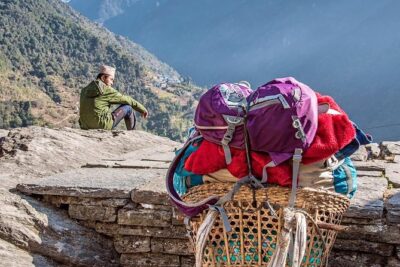
Kathmandu to Annapurna Base Camp (ABC) 5-Day Trek
Read our review →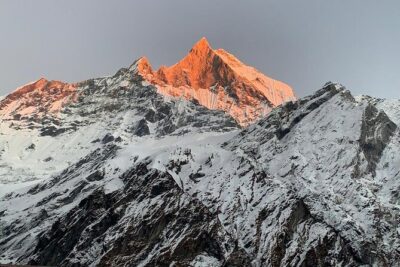
Kathmandu/Pokhara: 5-Day Annapurna Base Camp (ABC) Trek
Read our review →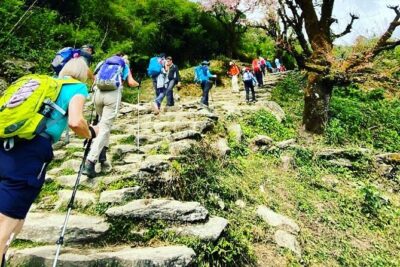
11-Day Hike Tour to Annapurna Base Camp Bliss in Kathmandu
Read our review →Browse the lists this tour appears in