
REVIEW · ANNAPURNA BASE CAMP TREKS
Annapurna Base Camp Trekking
The Himalayas reward steady feet. This private Annapurna Base Camp journey combines Kathmandu’s major sacred sites, a scenic road to Pokhara, and a demanding but manageable trek through rhododendron forests, mountain villages, and high alpine country. I especially like the private guide support and the fact that permits, porter service, teahouse lodging, and most trekking meals are arranged in advance. I also like the Poon Hill sunrise, which adds a famous mountain viewpoint without requiring a separate trek.
The main drawback is the itinerary’s lack of clarity. It is advertised as both 14 and 15 days, and some day descriptions repeat locations or use different overnight stops. You should confirm the exact schedule, hotel category, transport times, and what happens if weather or trail conditions force a change before paying.
In This Review
- Key details worth knowing before you book
- What the $899 price really buys you
- Kathmandu begins with culture, temples, and a busy schedule
- The six-hour road from Kathmandu to Pokhara
- Nayapul to Ulleri introduces the trail gently
- Ghorepani and Poon Hill deliver the first big mountain view
- Tadapani to Chhomrong changes the rhythm
- Bamboo forest, Dovan, and Deurali bring higher-country trekking
- Annapurna Base Camp is the emotional high point
- Bamboo, Chhomrong, and Jhinu Danda close the walking circuit
- Returning to Pokhara and Kathmandu takes patience
- Fitness, comfort, and who should choose this trek
- Should you book the Annapurna Base Camp trek?
- FAQ
- How long is the Annapurna Base Camp experience?
- What fitness level is required?
- Is airport pickup included?
- Are hotels included?
- Are meals included throughout the tour?
- Is a guide provided?
- Is porter service included?
- Are trekking permits included?
Key details worth knowing before you book
- Poon Hill comes before Base Camp: You get a sunrise over the Annapurna and Dhaulagiri ranges before entering the higher Modi Khola valley.
- The trek is private: Your group has an English-speaking guide, with one porter assigned for every two trekkers.
- Kathmandu sightseeing is built in: Pashupatinath, Boudhanath, Patan Durbar Square, and Swayambhunath all feature on the second day.
- Teahouse meals are covered: Breakfast, lunch, and dinner are included during the mountain trek, while Kathmandu and Pokhara lunches and dinners are not.
- The price includes major trekking costs: At $899 per person, permits, guide and porter wages, transport between Kathmandu and Pokhara, and mountain lodging are included.
- This is moderate, not easy: Expect long walking days, stone steps, steep climbs, and thinner air at Annapurna Base Camp.
What the $899 price really buys you
At $899 per person, this trip offers solid value if you want a guided trek without arranging every piece yourself. Airport pickup, Kathmandu and Pokhara hotels, tourist coach transport, trekking permits, guide service, porter support, and teahouse accommodation are included.
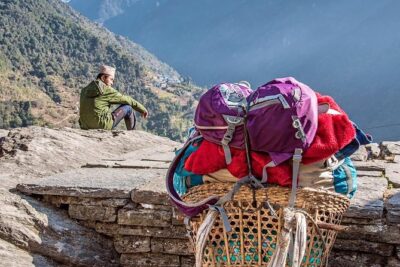
The porter arrangement is particularly useful. One porter for every two trekkers means you can walk with a lighter daypack, though you should still pack carefully and keep personal essentials with you. The guide’s salary, insurance, equipment, food, and lodging are also listed as covered costs, which removes several expenses that can surprise independent trekkers.
The meal deal is good once you reach the trail. Breakfast, lunch, and dinner are included at the teahouses, but the package does not cover bottled or boiled water, hot water, tea, coffee, showers, battery charging, laundry, soft drinks, beer, or phone calls. In Kathmandu and Pokhara, only hotel breakfast is included. You will need a separate budget for meals there.
Sightseeing entrance fees are extra. That matters on the Kathmandu day because the four major sites can carry meaningful admission costs. The description also says all government and local taxes are included, while another section excludes all fees and taxes. I would ask the operator to clarify this contradiction in writing.
More Annapurna Base Camp treks:
- Annapurna base camp trek 5 Days
★ 5.0 · 252 reviews - Annapurna Base Camp Trek
★ 5.0 · 111 reviews - Kathmandu to Annapurna Base Camp (ABC) 5-Day Trek
★ 5.0 · 102 reviews
Kathmandu begins with culture, temples, and a busy schedule
Your first day is simple: an airport representative from Himalayan Sanctuary Adventure picks you up at Tribhuvan International Airport and takes you to the hotel in Kathmandu. That welcome transfer is useful after a long flight, especially if you arrive tired or unfamiliar with the city.
Day two is a full sightseeing day and a chance to prepare for the trek. Pashupatinath is Nepal’s most important Hindu temple complex, set beside the Bagmati River. The main temple has restricted access for non-Hindu visitors, but the surrounding grounds and riverside activity remain significant.
Boudhanath Stupa offers a very different mood. The large white dome and watchful Buddha eyes form the center of Kathmandu’s Tibetan Buddhist community. It is about six kilometers east of central Kathmandu, and the site is described as 36 meters high.
Patan Durbar Square brings together palace courtyards, pagoda temples, bronze images, and a museum. Its stone Krishna temple is one of the notable monuments. Swayambhunath, often called the Monkey Temple, sits on a hill above the valley and links Buddhist devotion with broad city views.
These four stops give you a useful introduction to Nepal before the walking begins. The catch is time. A full day of sightseeing can feel packed, and entrance fees are not included. Still, I like this cultural start because the trek is not treated as an isolated mountain exercise.
The six-hour road from Kathmandu to Pokhara
On day three, the trekking staff takes you from your hotel to the tourist bus station early in the morning. The bus is scheduled to leave around 7:00 or 7:30 am, and the drive to Pokhara takes about six hours.
Pokhara is a calmer base than Kathmandu. It sits beside Phewa Lake and offers views toward Annapurna, Machhapuchare, Dhaulagiri, Lamjung Himal, and Manaslu when conditions are clear. The journey is long, and road travel in Nepal can be tiring, but using a tourist coach keeps the transport organized.
I would not treat this as a spare, carefree travel day. You should expect much of the day to pass on the road. The benefit is that your transport is already arranged, and you can begin the trek without sorting out local connections yourself.
Nayapul to Ulleri introduces the trail gently
The walking portion begins after a private vehicle carries you from Pokhara to Nayapul. The trail follows the Modi Khola for about 15 minutes before reaching Birethanti at 1,015 meters, a large village with shops and teahouses.
From there, you follow the Bhurungdi Khola toward Hille and Tikhedhunga. The route climbs steadily but is described as a relatively short and easy first walking day. Depending on the exact overnight plan, the day takes roughly five to seven hours.
Ulleri is known for its steep stone steps and Magar village setting. The first serious climb arrives early in the trek, so this day is a useful test of your pace and footwear. I would keep your breathing slow and avoid trying to match the guide’s speed.
More walking in the hills of Kathmandu:
- Everest Base Camp Trek – 14 Days
★ 5.0 · 1,499 reviews - Everest Base Camp Trekking
★ 5.0 · 485 reviews - Nagarkot Sunrise View and Day Hiking from Kathmandu
★ 5.0 · 471 reviews - Annapurna Circuit Trek with Tilicho Lake
★ 5.0 · 368 reviews
Ghorepani and Poon Hill deliver the first big mountain view
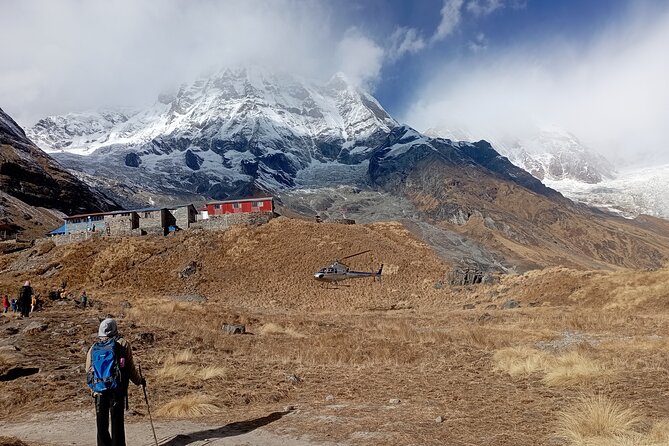
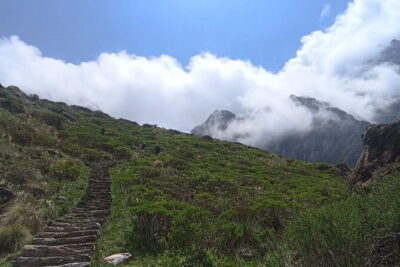
The climb from Ulleri to Ghorepani is one of the more memorable early sections. You pass through oak and rhododendron forest, Banthanti, and Nangethanti before reaching Ghorepani at roughly 2,750 to 2,840 meters.
The next morning starts early with the climb to Poon Hill at 3,210 meters. The viewpoint is famous for sunrise over the Annapurna and Dhaulagiri ranges, with views toward Mustang, Pokhara, and more than 20 high peaks when visibility cooperates.
This is an excellent design choice. You get a major Himalayan viewpoint before reaching Base Camp, and the climb is short enough to fit into the day’s larger route. After returning to Ghorepani for breakfast, you walk east along a ridge, then descend through rhododendron forest and past waterfalls toward Tadapani.
The early start can be cold and tiring, and clouds can hide the mountains. Still, Poon Hill gives the trek an immediate visual reward.
Tadapani to Chhomrong changes the rhythm
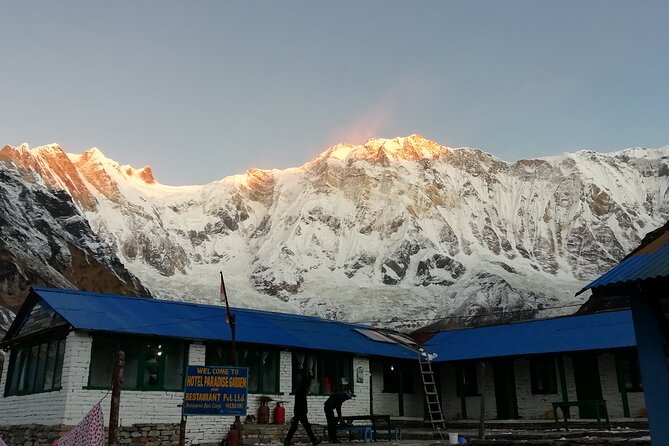
From Tadapani, the trail descends through thick rhododendron forest before opening onto terraced fields. The route includes waterfalls, a suspension bridge, and repeated uphill and downhill sections before Chhomrong.
Chhomrong is a major village below the Annapurna massif and an important point on the route toward Base Camp. The day takes about five to six hours, but the distance does not tell the whole story. Repeated stone steps can make this section harder than the timing suggests.
This is where the private guide becomes valuable. A good guide can help you keep a sensible pace, point out rest opportunities, and watch for signs that you are pushing too hard. Several personal accounts connected with the company praise guides such as Bishnu, Vishnu, and Prem for being friendly, caring, and attentive.
Bamboo forest, Dovan, and Deurali bring higher-country trekking
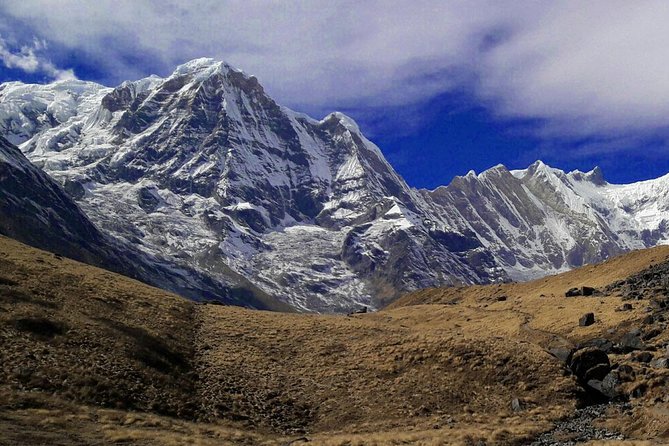
Beyond Chhomrong, the trail enters damp bamboo forest. It can feel cold and shaded at first, then the route climbs through Himalaya Hotel and toward Hinku Cave. The forest eventually opens, giving you views of the river, cliffs, waterfalls, and surrounding hills.
The route to Dovan takes about five to six hours. Vegetation becomes sparser as you gain height, and the scenery feels more alpine. From Dovan, you follow the valley toward Deurali in a steady climb, with rocky cliff sections and occasional steep ground.
The plan lists both Deurali and the Annapurna Base Camp approach across consecutive days, but the day numbering is inconsistent. The detailed schedule describes Dovan to Deurali on one day, followed by a five to seven hour climb to Annapurna Base Camp. Confirm whether you sleep at Deurali before the final ascent.
Annapurna Base Camp is the emotional high point
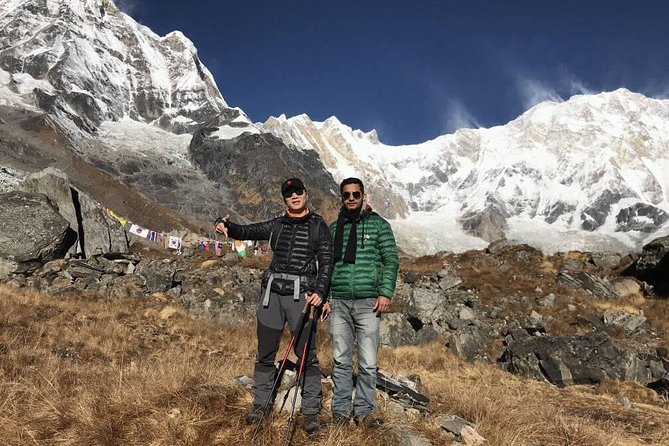
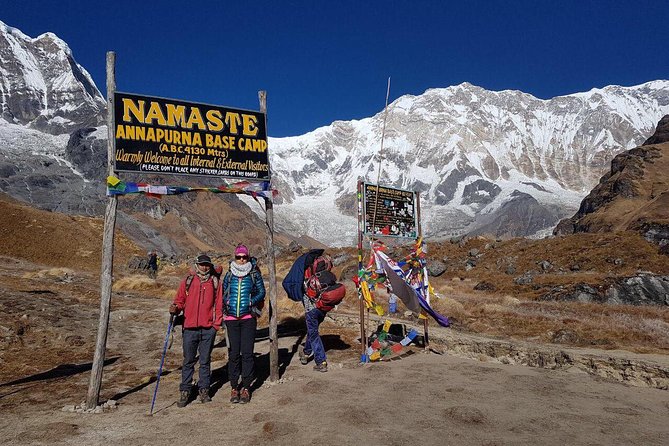
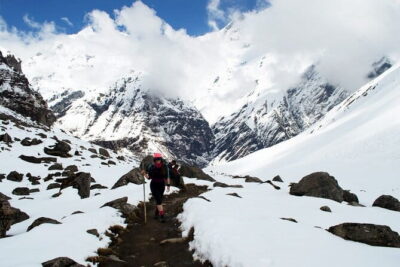
The final climb takes you past Machhapuchare Base Camp and onward to Annapurna Base Camp. The trail follows rocky ground and rises steadily through the upper valley. The exact walking time is given as five to seven hours.
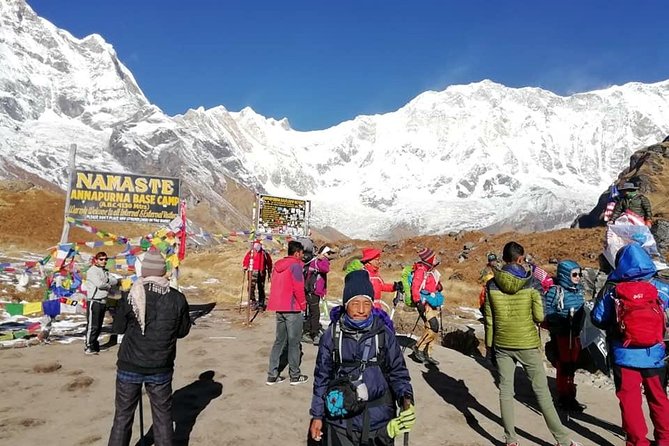
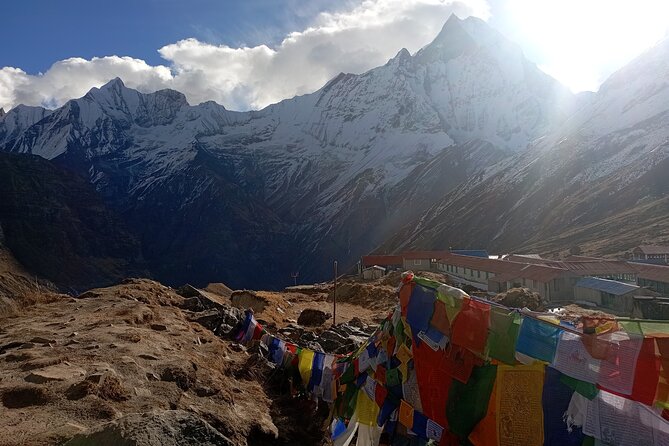
At Base Camp, the reward is not only a single summit view. You are surrounded by the high mountain amphitheater of the Annapurna Sanctuary, with cliffs, snowfields, and a sense of being enclosed by the range. Conditions can shift quickly, so your guide’s judgment matters more than a rigid timetable.
The descent begins quickly after the Base Camp visit. The route returns past Machhapuchare Base Camp, Deurali, Himalaya Hotel, and Dovan before reaching Bamboo. A seven-hour downhill day is not a rest day. Descending can be hard on knees, and wet stone steps require care.
Bamboo, Chhomrong, and Jhinu Danda close the walking circuit
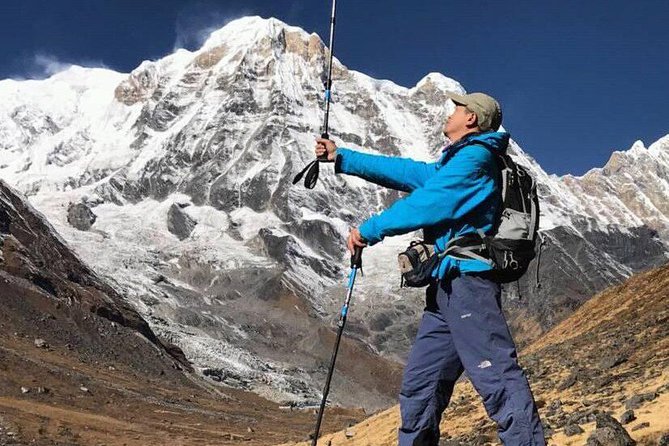
The route retraces its steps toward Chhomrong, where lunch is planned, then drops steeply toward the Modi Khola valley. The stone steps near Chhomrong are described as tricky in both directions, so trekking poles would be useful, although they are not specifically listed as included.
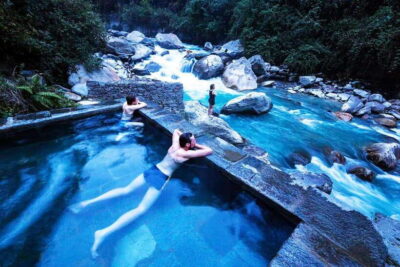
The next stage brings you to Jhinu Danda. Its hot spring is one of the trip’s best recovery features. After several long walking days, soaking in warm water beside the hill country can feel like a proper reward rather than a minor add-on.
The schedule gives some conflicting descriptions of the final walking days. One version places an overnight at Jhinu, while another describes a trek to Nayapul followed by a drive to Pokhara. The broad plan is clear enough: finish the trek, return by road to Pokhara, and spend the night there. The exact sequence should be confirmed.
Returning to Pokhara and Kathmandu takes patience
After completing the mountain route, you return to Pokhara by vehicle. The listed driving time is about five hours. Pokhara offers a softer landing after the trail, but remember that lunch and dinner are not included there.
Day fourteen calls for the tourist bus back to Kathmandu after breakfast. This trip can take seven to nine hours. It is a long final transport day, so keep water, snacks, documents, and any medication in your day bag rather than in checked luggage.
The program does not clearly include a final Kathmandu hotel night or airport transfer for departure. It does include airport pickup on arrival, but you should confirm the arrangements for your last night and departure day before booking flights.
Fitness, comfort, and who should choose this trek
The operator calls for moderate physical fitness, which is fair but easy to underestimate. You need to handle five to seven hours of walking on many days, steep stone steps, repeated climbs and descents, rocky trail, and the altitude around 3,210 meters at Poon Hill and higher at Base Camp.
This suits you if you enjoy active trips, can walk for several hours, and prefer a guide to handle permits, transport, lodging, and porters. It may also suit older walkers who are in good condition and willing to move slowly. Specific accounts describe older, average trekkers reaching Base Camp with support from guides.
The trip is less suitable if you want private bathrooms, fixed meal choices, short walking days, or guaranteed mountain views. Teahouse accommodation is practical rather than luxurious, and extras such as showers, hot water, charging, and bottled water cost more.
Food deserves a special note. One person specifically praised the team for paying close attention to meals and helping avoid stomach trouble. That does not guarantee the same experience for everyone, but it suggests that you should tell your guide early about dietary needs or food concerns.
Should you book the Annapurna Base Camp trek?
I would consider this a good-value guided trek for someone who wants Nepal’s major cultural sights, Poon Hill, Annapurna Base Camp, and organized support in one package. The strongest reasons to book are the private guiding, porter service, included mountain meals, permits, and the company’s caring approach associated with guides including Bishnu, Vishnu, and Prem.
I would not book until the operator confirms the 14-day versus 15-day duration, the exact overnight stops, all transport times, entrance fees, taxes, final Kathmandu accommodation, and the plan for weather-related changes. The cancellation policy allows a full refund when you cancel at least 24 hours before the local start time, but changes or cancellations inside that window are not accepted.
If those details are settled and you are ready for long walking days, this route gives you a strong first taste of the Himalayas without forcing you to manage every permit, porter, and teahouse yourself.
FAQ
How long is the Annapurna Base Camp experience?
The tour is described as approximately 14 days in the schedule, while the overview also calls it a 15-day tour. Confirm the exact duration with the operator before booking.
What fitness level is required?
A moderate level of physical fitness is required. Walking days commonly last five to seven hours and include steep climbs, descents, stone steps, rocky trail, and high-altitude sections.
Is airport pickup included?
Yes. A representative from Himalayan Sanctuary Adventure picks you up at Tribhuvan International Airport on arrival.
Are hotels included?
Three-star category hotel accommodation in Kathmandu and Pokhara, including breakfast, is included. Teahouse accommodation is included during the trek.
Are meals included throughout the tour?
Breakfast is included at the Kathmandu and Pokhara hotels. Breakfast, lunch, and dinner are included in the teahouses during the trek. Lunch and dinner in Kathmandu and Pokhara are not included.
Is a guide provided?
Yes. An experienced English-speaking trekking guide is included for the private tour.
Is porter service included?
Yes. The package includes porters, with one porter assigned for every two trekkers. Their listed salary, insurance, equipment, food, and lodging are included.
Are trekking permits included?
Yes. The Annapurna Conservation Area Permit and TIMS paperwork are included, along with the listed government and local taxes. The package also says some fees and taxes are excluded, so clarify that wording before booking.
New in the Kathmandu listings
- Traditional Momo Making Class★ 5.0 · 10 reviews
- Kathmandu: Ancient City Kirtipur & Pharping Monastery Tour★ 5.0 · 2 reviews
- Kathmandu to Pokhara Premium sofa bus ticket★ 4.0 · 17 reviews
- Women Empowerment Project(Nepali cooking class & jewelry workshop★ 5.0 · 15 reviews
- 7-Day Langtang Valley Trek from Kathmandu★ 5.0 · 1 review
- Kathmandu 2 Nights 3 Days Chitwan Jungle Safari Tour★ 5.0 · 9 reviews
- Yoga Experience Day Trip with Private Transfer From Kathmandu★ 4.0 · 2 reviews
- Walking tour of real Kathmandu through back streets.★ 5.0 · 3 reviews
Annapurna Base Camp Treks, compared.
Kathmandu to Annapurna Base Camp (ABC) 5-Day Trek
Read our review →
Kathmandu/Pokhara: 5-Day Annapurna Base Camp (ABC) Trek
Read our review →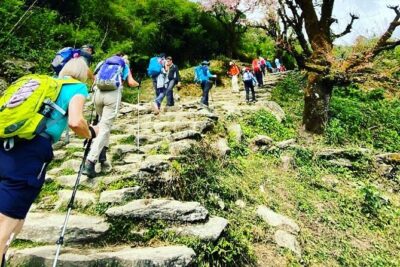
11-Day Hike Tour to Annapurna Base Camp Bliss in Kathmandu
Read our review →Browse the lists this tour appears in