
REVIEW · ANNAPURNA BASE CAMP TREKS
Annapurna Base Camp Trekking
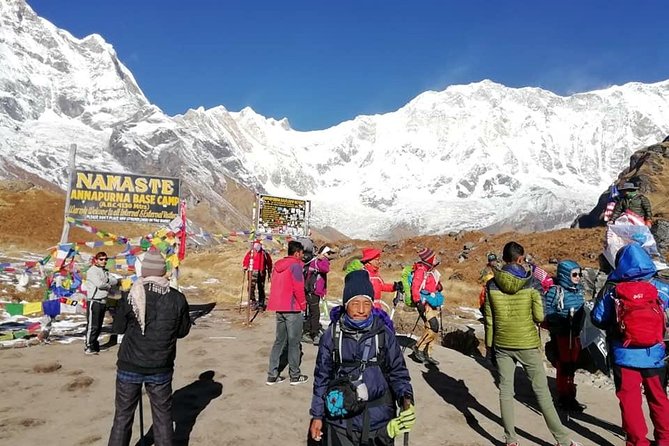
The mountains arrive one step at a time. This 12-day Annapurna Base Camp trek links Kathmandu, Pokhara, Poon Hill, and the Annapurna Sanctuary in one carefully arranged route. I like that the package handles the major logistics, including tourist buses, private transfers, permits, tea house lodging, and trekking equipment.
I also like the support system: one licensed English-speaking guide works with a porter for every two trekkers. The main tradeoff is that food during the trek, drinks, and hotels in Kathmandu and Pokhara are not included, so the $749.90 price is strong value, but not an all-inclusive trekking bill.
In This Review
- Key points before you book
- Why this Annapurna route works so well
- Day 1 in Kathmandu: arrival and trek briefing
- Day 2: the long road from Kathmandu to Pokhara
- Day 3: Birethanti, Ulleri, and Ghorepani
- Day 4: Poon Hill sunrise and the trail to Tadapani
- Day 5: Chuile and Sinuwa through the forest
- Day 6: Sinuwa to Deurali
- Day 7: Machhapuchhre Base Camp and Annapurna Base Camp
- Day 8: the long descent from ABC to Bamboo
- Day 9: Bamboo to Jhinu Danda
- Day 10: hot springs and the return to Pokhara
- Day 11: Pokhara to Kathmandu by tourist bus
- Day 12: airport transfer and departure
- What the $749.90 price really covers
- What sort of trekker should choose this?
- Practical details that affect your decision
- Should you book the Annapurna Base Camp trek?
- FAQ
- How long is the Annapurna Base Camp trek?
- What is the highest point of the trek?
- Is transport from Kathmandu to Pokhara included?
- Is transport to the trailhead included?
- Are permits included?
- Is a guide provided?
- Is a porter included?
- Are meals included during the trek?
- Is accommodation included?
- What equipment is provided?
Key points before you book
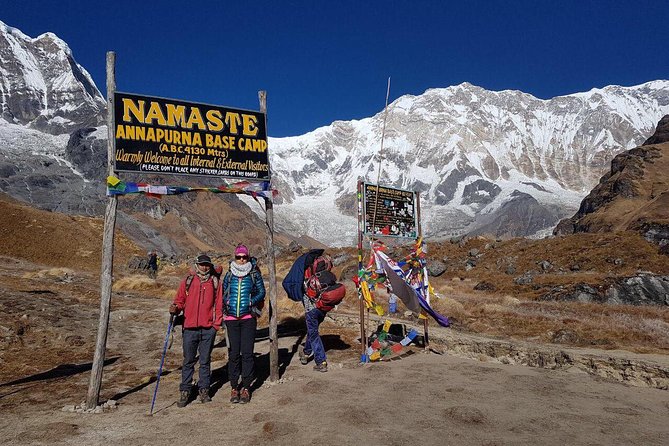
- ABC at 4,130 meters: The trek reaches Annapurna Base Camp, with Machhapuchhre Base Camp at about 3,700 meters along the way.
- Poon Hill at sunrise: A pre-dawn hike from Ghorepani adds a famous mountain viewpoint before the route turns toward the sanctuary.
- Transport is mostly arranged: Round-trip tourist bus service connects Kathmandu and Pokhara, with private transfers to and from the trail.
- Useful gear is supplied: You receive a duffle bag, sleeping bag, down jacket, first aid kit, trekking map, T-shirt, and trip certificate.
- A private group format: Only your own group takes part, while one porter is provided for every two trekkers.
- A real mountain itinerary: You need moderate physical fitness for long walking days, steep stone steps, and altitude up to 4,130 meters.
Why this Annapurna route works so well
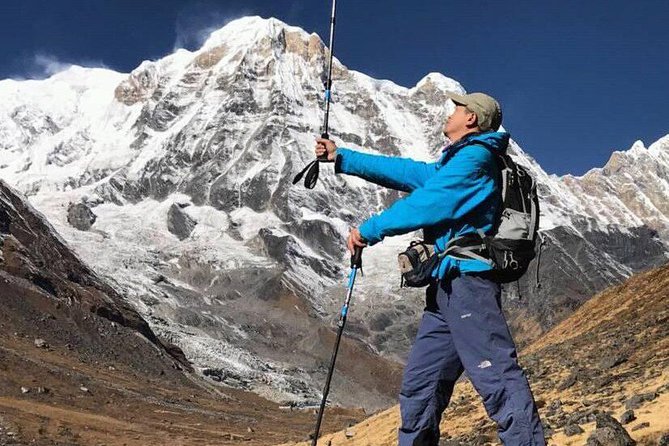
The great strength of this trip is its shape. You begin with city time in Kathmandu, travel to Pokhara, walk through villages and forest, reach the high point at Annapurna Base Camp, then descend to hot springs before returning to Kathmandu.
That gives you more than a simple out-and-back hike. You get a taste of Pokhara, a sunrise at Poon Hill, the mountain sanctuary, and the warm springs at Jhinu Danda. The route also avoids making you arrange every permit, bed, transfer, and piece of cold-weather gear yourself.
I like this setup for first-time trekkers in Nepal. You still walk under your own power, but you are not left to solve every practical problem on the trail. Your guide handles the route and safety side, while the porter carries the main load for two people.
The private format matters, too. You are not assigned to a large mixed group with an unknown pace. Your group can discuss the day with its guide and manage the walk at a more personal rhythm, though the itinerary itself remains demanding.
More Annapurna Base Camp treks:
- Annapurna base camp trek 5 Days
★ 5.0 · 252 reviews - Annapurna Base Camp Trek
★ 5.0 · 111 reviews - Kathmandu to Annapurna Base Camp (ABC) 5-Day Trek
★ 5.0 · 102 reviews
Day 1 in Kathmandu: arrival and trek briefing
Your first day begins at Tribhuvan International Airport, where a representative meets you and transfers you to your hotel. Later, you meet the trek leader for a pre-trip briefing.
This is a useful beginning rather than a wasted day. You can ask about the route, check the gear being provided, and make sure you understand the early departure schedule. The tour includes airport transfer on arrival, but accommodation in Kathmandu is not included, so you need to account for that separately.
The briefing is especially important because the trek reaches 4,130 meters. You should use this meeting to confirm what goes into the duffle bag, what remains with you, and how the porter arrangement works.
Day 2: the long road from Kathmandu to Pokhara
The bus to Pokhara leaves at about 7:00 a.m. The drive takes around seven hours and follows one of Nepal’s scenic river routes toward Pokhara Lakeside.
This is a full travel day. Do not think of it as a quick shuttle between cities. Road conditions and traffic can affect the timing, and the long ride is part of the price of traveling overland rather than arranging a separate flight.
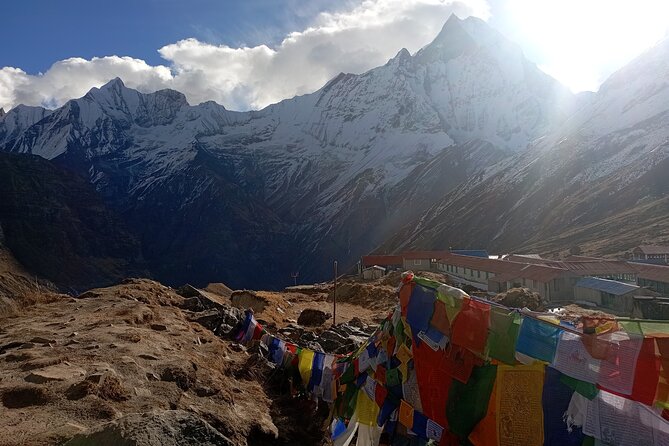
The payoff is Pokhara, a calmer city beside Phewa Lake with views toward the Annapurna and Dhaulagiri ranges. Pokhara is a major base for trekking in this region, and Lakeside gives you a chance to settle in before the walking begins.
The package includes the tourist bus transfer, but accommodation in Pokhara does not form part of the stated inclusions. Check your hotel arrangements carefully before departure.
Day 3: Birethanti, Ulleri, and Ghorepani
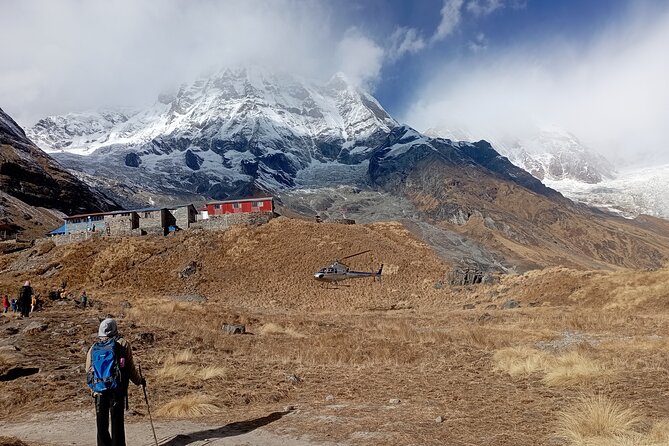
A private transfer takes you from Pokhara Lakeside toward the trailhead area. The route includes Birethanti, at about 827 meters, followed by the drive toward Tikhedhunga.
From Tikhedhunga, the walking begins in earnest. The climb to Ulleri takes about four hours and reaches roughly 1,480 meters. This is an important early test, since the route gains height quickly and includes a demanding uphill section.
You then continue through Nangethanti, a small stopping point at about 2,460 meters, before reaching Ghorepani at 2,874 meters. The day includes around three hours of driving and four hours of trekking, followed by about two hours in the Ghorepani area.
Ghorepani is more than a place to sleep. It is the launch point for the next morning’s Poon Hill sunrise, and its high position gives you an early sense of the mountain country ahead. The drawback is the pace: this is a long day with both road travel and a substantial climb.
More walking in the hills of Kathmandu:
- Everest Base Camp Trek – 14 Days
★ 5.0 · 1,499 reviews - Everest Base Camp Trekking
★ 5.0 · 485 reviews - Nagarkot Sunrise View and Day Hiking from Kathmandu
★ 5.0 · 471 reviews - Annapurna Circuit Trek with Tilicho Lake
★ 5.0 · 368 reviews
Day 4: Poon Hill sunrise and the trail to Tadapani
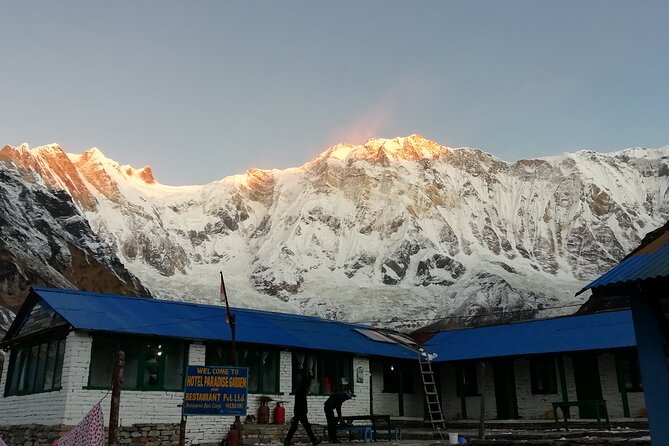
The morning starts before dawn with a roughly 45-minute walk from Ghorepani to Poon Hill, at 3,210 meters. The reward is a wide mountain view including Annapurna, Dhaulagiri, and Machhapuchhre.
Sunrise at Poon Hill is one of the best features of this route because it gives you a major viewpoint without requiring a separate multi-day side trip. Still, the early start means you need to be ready for a cold, dark climb when your legs may already feel the previous day.
After returning from Poon Hill, you continue toward Tadapani at about 2,630 meters. The walking portion takes around seven hours. Tadapani is known for views of Machhapuchhre, Annapurna South, and Hiunchuli.
This day mixes a popular viewpoint with a longer trail section. I like that contrast. You get the photographic moment at Poon Hill, then spend much of the day moving through the route rather than simply stopping at scenic overlooks.
Day 5: Chuile and Sinuwa through the forest
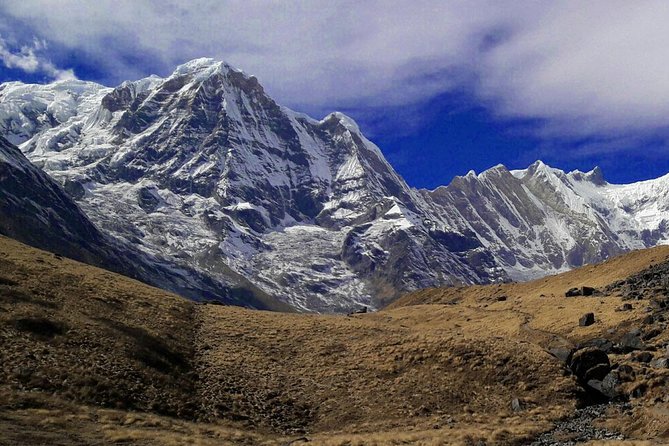
The route passes through Chuile, a quiet village at about 2,300 meters, before continuing toward Lower Sinuwa at approximately 2,340 meters. The day takes around seven hours of walking.
Chuile brings a change in mood. The setting includes forest and terraced fields, with views toward Annapurna South and Hiunchuli. Sinuwa is an important point on the approach to Annapurna Base Camp and is divided into Lower Sinuwa and Upper Sinuwa.
This section is not about reaching a famous summit or viewpoint. It is about settling into the rhythm of the trek. You move through small settlements, forested sections, and changing elevations while gradually entering the Annapurna Sanctuary route.
A useful detail is that the guide and porter support becomes increasingly valuable here. You are carrying only your day needs, while the main duffle load is handled through the porter arrangement. For solo bookings, however, the included porter terms are different, since a porter for a solo participant is not included.
Day 6: Sinuwa to Deurali
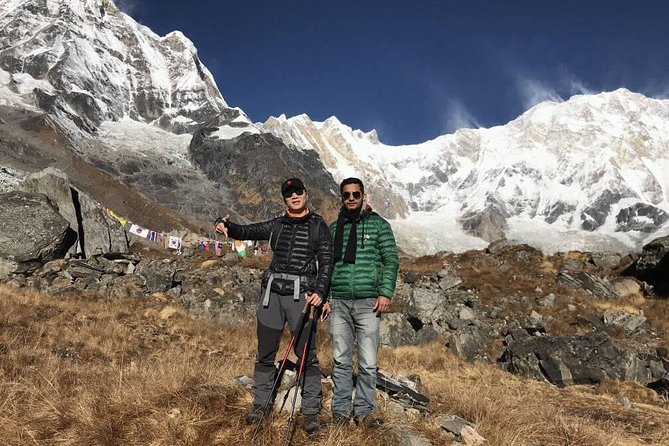
From Sinuwa, the trail continues toward Deurali. The listed walking time is about six hours to Sinuwa and another five hours toward Deurali, depending on the precise starting point and route plan.
The route descriptions also refer to Chhomrong, Himalaya, and Deurali. Chhomrong sits at about 2,165 meters, Sinuwa at roughly 2,340 to 2,360 meters, Himalaya at 2,890 meters, and Deurali at about 3,174 meters.
This is the point where the altitude becomes a more serious part of the experience. You are moving steadily higher, and the next day reaches Machhapuchhre Base Camp and Annapurna Base Camp. You should pay attention to your pace and tell your guide promptly if you feel unwell.
The exact stop pattern can vary within the supplied schedule, so confirm the overnight point during your briefing. What is clear is that Day 6 is a substantial mountain day, not a relaxed village walk.
Day 7: Machhapuchhre Base Camp and Annapurna Base Camp
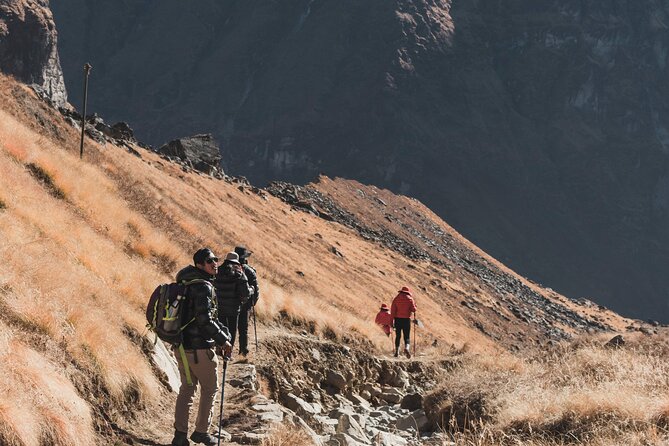
The main prize arrives on Day 7. From the Himalaya or Deurali area, you walk through Machhapuchhre Base Camp, at about 3,700 meters, and continue to Annapurna Base Camp at approximately 4,130 meters.
The walking time is listed at around six hours. The route enters the Annapurna Sanctuary, a high mountain bowl surrounded by major peaks. At ABC, the sense of arrival comes from the altitude, the surrounding summits, and the fact that the trail has carried you there over several days.
This is also the day when the trip demands the most from you. The air is thinner than at the lower villages, the path can feel slow, and the weather can affect comfort. The included down jacket and sleeping bag are practical benefits, not decorative extras.
The guide’s role matters most here. A licensed guide can help keep the group moving at a sensible pace and respond if someone struggles. The itinerary provides a first aid kit, but you should still bring any personal medication you need.
Day 8: the long descent from ABC to Bamboo
After the high point, you descend from Annapurna Base Camp at 4,130 meters to Bamboo at about 2,350 meters. The listed walking time is around seven hours.
The drop in altitude is welcome, but downhill walking can be hard on knees and ankles. The route covers roughly 16 kilometers according to the day description, so sturdy footwear and trekking poles, if you normally use them, can make a practical difference.
Bamboo marks a return to a lower, more wooded section of the route. You will likely appreciate the change after the exposed high-altitude surroundings, though this remains a long day on tired legs.
The schedule also mentions Annapurna Base Camp again as a stop on this day. Think of that as the starting point for the descent rather than another separate visit.
Day 9: Bamboo to Jhinu Danda
The trek continues from Bamboo at 2,350 meters down to Jhinu Danda at about 1,780 meters. The walk takes roughly five hours.
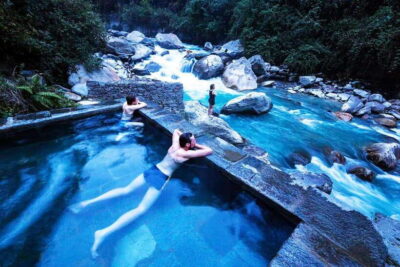
Jhinu Danda is known for its natural hot springs, making it a well-chosen stop after the high section of the trek. The descent is shorter than the previous day, and reaching a warmer, lower village gives the trip a clear change of pace.
The hot spring admission is not included. That cost is small compared with the overall trip, but you should carry some extra money for it and for drinks along the route.
This day is one reason I prefer the full itinerary to a rushed return from ABC. You get time to come down properly and a chance to recover before the final transfer.
Day 10: hot springs and the return to Pokhara
You have about an hour set aside for the Jhinu Danda hot spring stop. It is a simple pleasure, but a useful one after several demanding days of walking.
The final trail section runs from Jhinu Danda to Siwa or Ghandruk Phedi, depending on the route chosen. The walking time is around five hours, followed by transport back to Pokhara Lakeside.
Because the exact endpoint can vary, ask your guide which route is planned. The important point is that this is still an active day. You do not simply wake up at the hot springs and ride directly to Pokhara.
The return to Lakeside gives you a proper contrast with the mountain villages. Pokhara is a place to rest, eat, and enjoy the lakefront setting before the long bus ride back to Kathmandu.
Day 11: Pokhara to Kathmandu by tourist bus
The return journey to Kathmandu takes about eight hours and covers roughly 200 kilometers. The bus transfer is included.
Again, this is a full day of road travel. If you prefer short transfers, this part may test your patience, but the overland route keeps the package price lower and connects the two main cities without requiring you to arrange another ticket.
Kathmandu sits at about 1,350 meters, higher than Pokhara’s approximately 820 meters. Once back in the capital, the trek is effectively complete, though you still need to plan your final night’s accommodation unless it has been arranged separately.
Day 12: airport transfer and departure
The final day includes transfer to Tribhuvan International Airport. The listed airport portion takes about an hour.
Build some flexibility into your flight plans. The tour schedule provides the transfer, but the previous day involves a long road journey from Pokhara, so you should not create an overly tight connection between the bus arrival and your departure arrangements.
What the $749.90 price really covers
At $749.90 per person, this package offers good value for a guided Himalayan trek, mainly because several expensive and time-consuming details are bundled together.
Included services cover:
- Tourist bus transfers between Kathmandu and Pokhara
- Private transfers to the trail start and from the trail end
- Tea house accommodation during the trek
- Annapurna Conservation Area Permit and TIMS
- A licensed English-speaking guide
- One porter for every two trekkers
- Staff wages, food, equipment, insurance, and transport
- Duffle bag, sleeping bag, and down jacket
- First aid kit, trekking map, T-shirt, and certificate
- Government taxes and agency service charges
The main extra costs are food, drinks, Kathmandu accommodation, Pokhara accommodation, and the Jhinu Danda hot spring admission. Food includes breakfast, lunch, and dinner during the trek, so you need to budget for three meals each trekking day.
That distinction is important. The tour is logistically organized, but you still pay for your daily meals and city hotels. I would compare the total cost after adding those items, not just the headline price.
What sort of trekker should choose this?
This trip suits you if you want a serious but organized mountain walk and have moderate physical fitness. The schedule includes several six to seven-hour days, one day with a long descent, early morning walking to Poon Hill, and a maximum altitude of 4,130 meters.
It is a good match for someone who wants personal guide support without joining a large group. It also suits you if carrying a full pack would reduce your enjoyment, since a porter carries the main luggage for two trekkers.
I would think twice if you dislike long bus journeys, steep climbs, basic tea house accommodation, or paying separately for meals. The route is not a gentle sightseeing holiday. The private format makes it more comfortable, but it does not remove the physical work.
The strongest praise attached to the experience focuses on the guide and porter relationship. One participant specifically credited guide Avi and porter Robin with patience, safety-minded support, and a better overall experience on the Poon Hill and ABC route. That is exactly the kind of personal help you want when the trail becomes tiring.
Practical details that affect your decision
The tour is usually booked about 40 days ahead, which suggests you should not leave arrangements until the last moment. Confirmation is provided at booking, and mobile tickets are supported.
The start time is listed as 6:00 a.m. That applies to the tour schedule, though the Pokhara bus departure is described as 7:00 a.m. Confirm the exact pickup time with the operator before the first morning.
The package is rated five out of five from 38 published ratings, with 100 percent recommending it. That is a strong signal for satisfaction, especially regarding the personal support provided by the guide and porter, but you should still read the inclusions closely so the extra food and lodging costs do not surprise you.
Free cancellation is available until 24 hours before the experience begins. Changes or cancellations inside that window are not accepted for a refund.
Should you book the Annapurna Base Camp trek?
I would book this trek if you want ABC, Poon Hill, and Pokhara in one organized 12-day plan, and you are comfortable with long walking days and basic mountain lodging.
The best reasons to choose it are the private group format, included permits, supplied cold-weather gear, guide and porter support, and the satisfying route from Kathmandu to the sanctuary and back. The main cautions are the extra cost of meals and city hotels, the long bus rides, and the need for genuine physical preparation.
Before paying, confirm your Kathmandu and Pokhara hotels, meal budget, solo porter arrangements if relevant, and the precise daily overnight stops. If those details suit you, the price provides a practical way to reach Annapurna Base Camp without having to arrange the trek piece by piece.
FAQ
How long is the Annapurna Base Camp trek?
The experience lasts approximately 12 days, including arrival and departure transfers, the bus journeys between Kathmandu and Pokhara, and the trek itself.
What is the highest point of the trek?
Annapurna Base Camp is at approximately 4,130 meters, or 13,550 feet. Machhapuchhre Base Camp is around 3,700 meters.
Is transport from Kathmandu to Pokhara included?
Yes. The package includes tourist bus transfers from Kathmandu to Pokhara and from Pokhara back to Kathmandu.
Is transport to the trailhead included?
Yes. Private transfers to the trekking start point and from the trekking endpoint are included.
Are permits included?
Yes. The Annapurna Conservation Area Permit and TIMS are included, along with government taxes and agency service charges.
Is a guide provided?
Yes. The package includes one licensed, English-speaking trekking guide.
Is a porter included?
One porter is included for every two trekkers. A porter for a solo participant is not included.
Are meals included during the trek?
No. Breakfast, lunch, dinner, and drinks during the trek are not included. Cold drinks and bottled water are also excluded.
Is accommodation included?
Tea house accommodation during the trek is included. Accommodation in Kathmandu and Pokhara is not included.
What equipment is provided?
The package provides a duffle bag, sleeping bag, down jacket, and first aid kit for use during the trek. It also includes a T-shirt, trekking map, and trip achievement certificate.
New in the Kathmandu listings
- Traditional Momo Making Class★ 5.0 · 10 reviews
- Kathmandu: Ancient City Kirtipur & Pharping Monastery Tour★ 5.0 · 2 reviews
- Kathmandu to Pokhara Premium sofa bus ticket★ 4.0 · 17 reviews
- Women Empowerment Project(Nepali cooking class & jewelry workshop★ 5.0 · 15 reviews
- 7-Day Langtang Valley Trek from Kathmandu★ 5.0 · 1 review
- Kathmandu 2 Nights 3 Days Chitwan Jungle Safari Tour★ 5.0 · 9 reviews
- Yoga Experience Day Trip with Private Transfer From Kathmandu★ 4.0 · 2 reviews
- Walking tour of real Kathmandu through back streets.★ 5.0 · 3 reviews
Annapurna Base Camp Treks, compared.
Kathmandu to Annapurna Base Camp (ABC) 5-Day Trek
Read our review →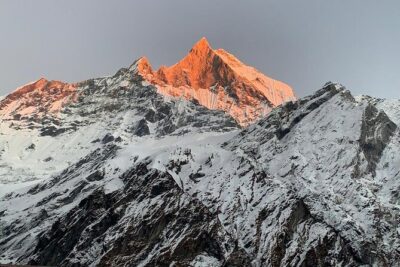
Kathmandu/Pokhara: 5-Day Annapurna Base Camp (ABC) Trek
Read our review →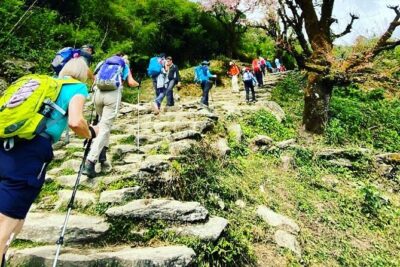
11-Day Hike Tour to Annapurna Base Camp Bliss in Kathmandu
Read our review →Browse the lists this tour appears in