REVIEW · TOURS
Fixed Departure Tibet Overland Group Joining Tours.
Tibet begins with a border crossing. This 8-day overland journey from Kathmandu trades quick flights for high mountain scenery, old monasteries, and a gradual approach to Lhasa across the Tibetan Plateau. I like the chance to see Mt. Everest, Yamdrok Tso, and the Brahmaputra River in one trip. I also like that permits, monastery entry fees, breakfast, transport, and an English-speaking Tibetan guide are included. The main caution is the pace: long drives, early starts, and very high passes can make this a demanding trip.
The itinerary also gives you two full sightseeing days in Lhasa, with Potala Palace, Jokhang Temple, Sera Monastery, and Drepung Monastery. Outshine Adventure receives especially warm praise for its organization, with Asmita and Gokul singled out for personal help before and during trips. Still, the $1,300 price does not cover lunch, dinner, visa fees, airfare or train fares, drinks, tips, or a single room.
In This Review
- Key points to know before booking
- Why this Kathmandu to Tibet route works
- Day 1: The early road to Kerung
- Day 2: The Tibetan Plateau and views toward Everest
- Day 3: Gyatchu La and the road to Shigatse
- Day 4: Tashlhumpu Monastery and Gyantse’s historic sights
- Day 5: Karo La, Kamba La, and Yamdrok Tso
- Day 6: Potala Palace, Norbulingka, and the heart of Lhasa
- Day 7: Drepung, Sera, and Jokhang Temple
- Day 8: Leaving Lhasa
- What the $1,300 price really covers
- The people behind the arrangements
- Who should book this Tibet overland tour?
- Booking, cancellation, and practical timing
- Should you book it?
- FAQ
- How long is the Tibet overland tour?
- Where does the tour begin?
- Is pickup offered?
- What is the tour price?
- What type of accommodation is included?
- Is breakfast included?
- Is a guide included?
- Is transportation included?
- Are monastery entrance fees included?
- Is the Tibet Travel Permit included?
Key points to know before booking
- The highest pass is Gyatchu La at 5,220 meters, making altitude a serious part of the experience.
- Mt. Everest views appear during the drive toward Tengri, weather permitting.
- Yamdrok Tso and the Brahmaputra River make the drive to Lhasa one of the tour’s most scenic days.
- Lhasa sightseeing includes both major palaces and active monasteries, not just photo stops.
- The group can reach 30 people, so this suits people who value price and shared transport over a small private tour.
- Your original passport is needed at least three working days ahead, and booking confirmation is required at least 15 working days before departure.
Why this Kathmandu to Tibet route works
This tour is designed for people who want Tibet as a road journey, not simply a destination reached by plane. You start in Kathmandu and cross into Tibet by land, watching Nepalese countryside give way to the stark, high-altitude scenery of the Tibetan Plateau.
The route has a strong sense of progression. You begin with a very early departure at 5:15 a.m., reach the Kerung border, and then continue uphill toward Kerung after border formalities. From there, each day brings higher roads, broad views, mountain passes, monastery towns, and eventually Lhasa.
I like this format because the road itself becomes part of the experience. You are not just ticking off Potala Palace and Jokhang Temple. You are seeing how the scenery changes as you climb, and you have time to understand the distance between Kathmandu and Lhasa.
The tradeoff is comfort. Eight days is short for such a high-altitude route, and the drives are central to the program. If you prefer slow mornings, long stays, or flexible sightseeing, this fixed departure may feel brisk.
A short list of alternatives around Kathmandu
- Everest Base Camp Trek – 14 Days
★ 5.0 · 1,499 reviews - Private Kathmandu Sightseeing Tour | UNESCO World Heritage sites
★ 5.0 · 756 reviews - Everest Base Camp Helicopter Tour landing at Everest View Hotel
★ 5.0 · 668 reviews
Day 1: The early road to Kerung
The first day starts at 5:15 a.m., so plan for a very early morning before you even reach the border. The drive passes through picturesque countryside, then continues to the Kerung border for formalities.
After crossing, the route climbs toward Kerung. That uphill movement matters because the change in elevation is not a minor detail. You are beginning the transition from Kathmandu’s lower setting to the high Tibetan Plateau.
The itinerary does not give an exact driving time, so you should keep this day flexible. Border procedures can affect the schedule, and the tour notes that natural or political disturbances beyond the operator’s control are not included in the price.
This is a day for patience. You will spend much of it on the road, but that is also when the trip starts to feel like a real overland crossing rather than a standard sightseeing package.
Day 2: The Tibetan Plateau and views toward Everest
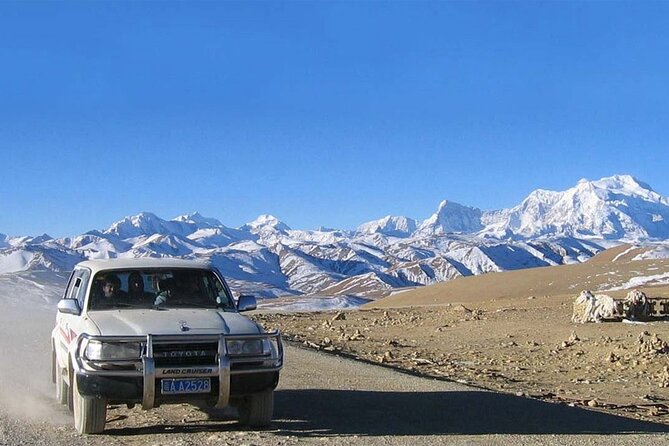
The second day continues into the highest plateau in the world. The reward is open Tibetan scenery and wide Himalayan views, including the chance to see Mt. Everest, listed here at 8,848 meters.
The route reaches Tengri, where the mountain views become a major part of the day. Sightings depend on weather and visibility, so keep expectations sensible. Even when clouds cover Everest, the high Himalayan setting remains a central reason to choose this route.
You will want a camera, but do not let photography become the whole day. Look at the scale of the scenery, the road, and the changing colors of the plateau. There are few urban distractions here, which makes the drive feel very different from the cultural sightseeing later in Lhasa.
The altitude is already a practical concern. Drink water, keep your first days calm, and pay attention to how you feel. The tour is not presented as a hiking program, but high roads can still affect you even when you spend much of the day seated.
Day 3: Gyatchu La and the road to Shigatse
After breakfast, the route continues toward Shigatse and crosses Gyatchu La at 5,220 meters, the highest pass on the journey. This is one of the clearest markers of how demanding the route can be.
The scenery is the attraction, but the pass is also a reminder to pace yourself. You may feel perfectly well, or you may notice that the height makes ordinary movement harder. The schedule does not describe extended walking here, which is helpful, but you should still avoid treating the stop like a normal low-altitude sightseeing break.
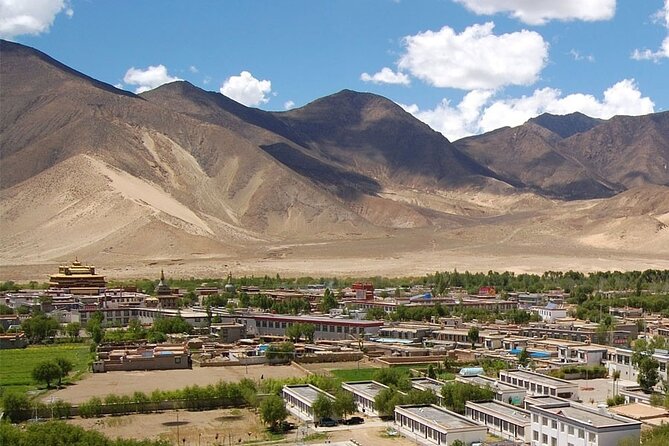
The drive to Shigatse is scenic, with Tibetan villages and broad mountain views. Shigatse gives the trip a useful cultural shift. The journey is no longer only about reaching Tibet. You are now moving through important religious and historic places connected with Tibetan Buddhism.
Because transport is shared and the group may include up to 30 people, expect the day to follow the guide’s timing rather than your own. That keeps the tour affordable, but it leaves less room for spontaneous detours.
A completely different way to spend the day:
- Half day cooking class in Thamel kathmandu
★ 5.0 · 607 reviews - Everest Base Camp Trekking
★ 5.0 · 485 reviews - Nagarkot Sunrise View and Day Hiking from Kathmandu
★ 5.0 · 471 reviews - Kathmandu: Full Day 7 UNESCO Tour with Lunch – Private/Group
★ 5.0 · 415 reviews
Day 4: Tashlhumpu Monastery and Gyantse’s historic sights
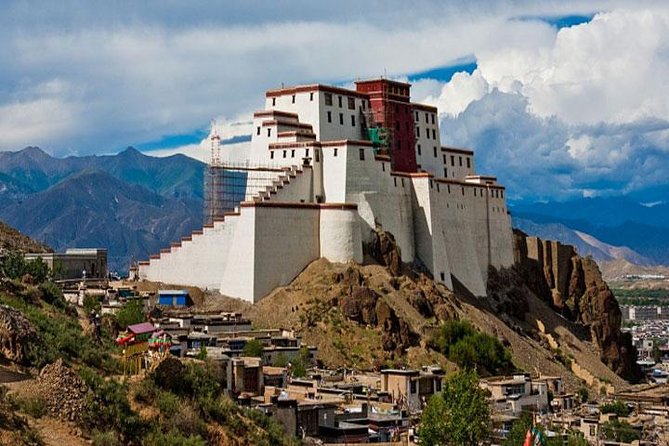
Day four begins with sightseeing at Tashlhumpu Monastery, associated with the Panchen Lama. This is one of the trip’s important religious visits, and it gives you a chance to see a major monastery in Shigatse rather than simply passing through town.
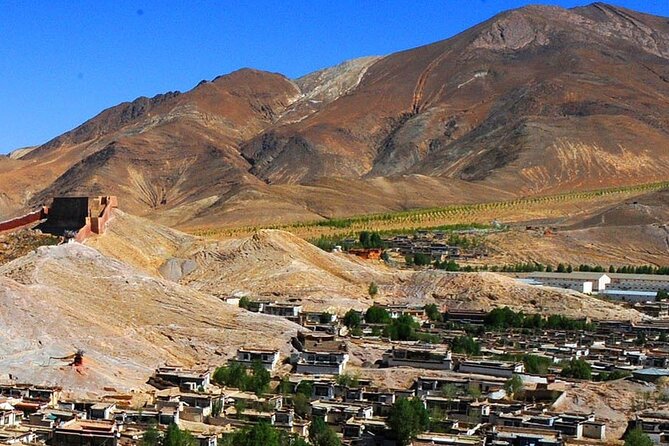
The itinerary then heads toward the Gyantse valley through Tibetan villages. The route matters here because you see more than monumental religious buildings. The villages provide a closer look at the settled side of Tibetan life, tradition, and rural scenery.
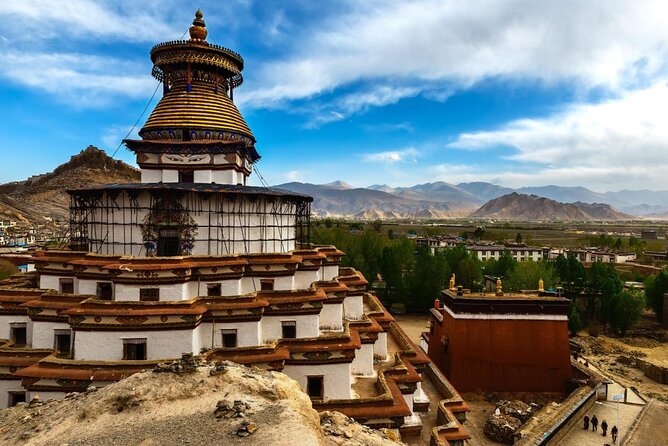
Gyantse brings several notable sights into the wider plan, including Gyantse Kumbum and Gyantse Dzong. The Kumbum is especially distinctive for its layered structure and religious art, while Gyantse Dzong adds a defensive and political dimension to the town’s past.
You should think of this day as a bridge between the long overland sections and the major Lhasa visits. It is less about one famous photograph and more about seeing how monasteries, villages, and old town centers fit together.
Day 5: Karo La, Kamba La, and Yamdrok Tso
The drive to Lhasa is one of the strongest days in the itinerary. You cross Karo La Pass at 5,010 meters and Kamba La Pass at 4,794 meters, then take in Yamdrok Tso, also called Turquoise Lake, and the Brahmaputra River.
Yamdrok Tso is a major visual reward. The lake’s name points to its striking color, and the high road gives you a broad view of the water and surrounding mountains. The Brahmaputra adds another important geographic marker, linking the trip’s scenery to one of Asia’s major rivers.
This is also a long road day, so the views come with plenty of time in the vehicle. I would treat that as part of the deal rather than a flaw, but you should know what you are buying. The tour favors coverage over leisure.
Arriving in Lhasa after this route should feel significant. You have crossed several high passes and moved from the border through Shigatse and Gyantse. The city is not just the next hotel stop. It is the cultural center toward which the whole road journey has been pointing.
Day 6: Potala Palace, Norbulingka, and the heart of Lhasa
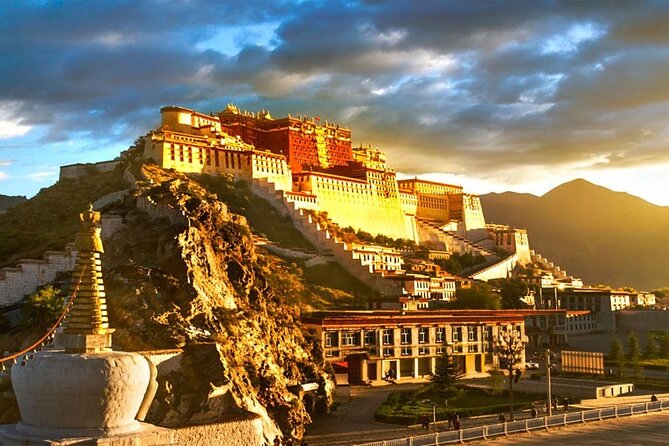
The first full Lhasa sightseeing day focuses on some of the city’s best-known landmarks. Potala Palace, the former winter palace of the Dalai Lama, is the headline visit.
Potala Palace also gives you a wide view over Lhasa town. Its scale and position make it more than an attractive building. It helps explain the political and religious importance of the city.
The day also includes Norbulingka Palace, the Barkhor Bazaar, and the Tibet Museum. Together, these stops provide different angles on Tibetan culture. Norbulingka adds another palace setting, while Barkhor brings you into the city’s traditional religious and commercial center.
The Tibet Museum is useful for context, especially after several days of seeing monasteries and historic sites. It can help connect objects, buildings, religious practice, and political history.
You should expect guided sightseeing rather than a completely free day. That is a fair trade for a short trip, especially when an English-speaking Tibetan guide is included. The guide can help you understand what you are seeing instead of leaving you with a string of impressive buildings and no explanation.
Day 7: Drepung, Sera, and Jokhang Temple
The second Lhasa sightseeing day visits Drepung Monastery, Sera Monastery, and Jokhang Temple. Drepung dates to the 14th century and was once described as the world’s largest monastery, with as many as 10,000 monks housed there in the past.
Drepung gives you a strong sense of the scale of Tibetan monastic life. Its history is tied to learning and religious authority, and the visit adds depth to the palaces seen the day before.
Sera Monastery offers another important comparison. Seeing two major monasteries in Lhasa allows you to notice differences in setting and character, even if the schedule does not provide a long independent visit at each one.
Jokhang Temple is among the most important religious sites in Lhasa, and its location near Barkhor makes it a natural part of understanding the city’s spiritual center. This is a full cultural day, not a casual city walk.
The schedule names the major stops but does not specify how long you spend at each. If one site matters especially to you, ask the guide about the day’s timing. A group of up to 30 people may need clear coordination at entrances and meeting points.
Day 8: Leaving Lhasa
After breakfast, you check out and continue toward either Kathmandu or mainland China. The drive is described as scenic, but the exact onward arrangements are not included in the tour price.
This final day is important when you budget. Airfare or train fare for any sector is excluded, and the package also does not include a flight from Lhasa or transport onward unless it is arranged separately.
The route works best if you have already decided where you are going next. If you return to Kathmandu, allow room in your wider schedule for delays or changes caused by border, road, weather, or political conditions. The operator specifically excludes disturbances beyond its control.
What the $1,300 price really covers
At $1,300 per person, the package offers reasonable value for a guided overland route with permits and sightseeing included. You receive twin-sharing accommodation on a bed-and-breakfast basis, seven breakfasts, transport by van or bus, an English-speaking Tibetan guide, monastery entry fees, and the Tibet Travel Permit.
Those inclusions matter. Permits are not a small side issue for a Tibet trip, and having the operator handle the Tibet Travel Permit removes a major administrative burden. Group transport and twin rooms also help keep the cost below a private journey.
You still need to budget for:
- Lunch and dinner
- Visa fees
- Airfare or train fares
- Drinks and personal expenses
- Tips
- A single supplement if you want your own room
The price is strongest for someone happy to share a room and vehicle. If you are traveling alone and require a single room, the extra supplement can change the final cost. If you want private transport or more hotel choice, this fixed departure is probably not the right format.
The people behind the arrangements
The strongest praise for Outshine Adventure centers on organization and personal support. Asmita is described as a particularly helpful contact who prepared people for the trip and made arrangements easy to handle.
Gokul is also praised for coordinating the Nepal and Tibet portion of a wider journey. One person specifically valued his English and Spanish, which may be useful if you prefer help in either language.
These details matter because Tibet permits and border travel can be stressful to arrange alone. The company’s role appears to extend beyond selling a seat on a bus. It helps organize the practical pieces, which is valuable when your original passport must be provided at least three working days in advance and booking confirmation is required at least 15 working days before departure.
Still, you should ask clear questions before paying. Confirm your exact departure date, onward transport, room arrangement, visa costs, and what happens if border conditions change.
Who should book this Tibet overland tour?
I would recommend this trip to you if you want:
- A lower-cost way to see Tibet from Kathmandu
- A fixed group itinerary with transport already arranged
- Major monasteries and palaces in a short period
- Mountain passes, Everest views, Yamdrok Tso, and river scenery
- Help with Tibet permits and local arrangements
- A shared-room and shared-vehicle travel style
I would hesitate if you need a slow schedule, private transport, guaranteed Everest visibility, or a fully independent itinerary. The high passes and early starts also make this a poor match for anyone who dislikes long road journeys or may struggle with altitude.
The group limit of 30 is not tiny. You will gain the price advantage of a shared departure, but you may lose some flexibility at meals, sightseeing stops, and border procedures.
Booking, cancellation, and practical timing
Confirmation is provided at booking, and most people can take part according to the supplied tour information. The meeting time is 5:15 a.m., so arrange your morning carefully.
For permits, provide your original passport at least three working days in advance. The booking confirmation must be made at least 15 working days before the Tibet tour. These deadlines are worth treating seriously because last-minute paperwork may not be possible.
You can receive a full refund if you cancel at least six full days before the experience starts. A cancellation made two to six full days before departure receives a 50 percent refund. Less than two full days before the start means no refund, and changes inside that period are not accepted.
Should you book it?
Book this tour if you want a practical, organized introduction to Tibet and you are willing to accept long drives, shared transport, high passes, and a tight eight-day schedule. The combination of Everest scenery, Yamdrok Tso, Shigatse, Gyantse, and two days in Lhasa gives you a lot for the price.
I would book only after confirming the border route and onward travel arrangements. If you are comfortable with the physical demands and the excluded costs, Outshine Adventure’s permit help and well-praised staff make this a sensible group option. If you want more freedom or comfort, spend more on a private trip and add extra days.
FAQ
How long is the Tibet overland tour?
The tour lasts approximately eight days, including the drive from Kathmandu, sightseeing in Tibet, and onward travel on the final day.
Where does the tour begin?
It begins in Kathmandu, Nepal, with a stated start time of 5:15 a.m.
Is pickup offered?
Yes, pickup is offered.
What is the tour price?
The listed price is $1,300 per person.
What type of accommodation is included?
Twin-sharing rooms are included according to the itinerary, on a bed-and-breakfast basis.
Is breakfast included?
Yes. Seven breakfasts are included.
Is a guide included?
Yes. An English-speaking Tibetan guide is included.
Is transportation included?
Transportation according to the itinerary is included by van or bus.
Are monastery entrance fees included?
Yes. Monastery entrance fees are included.
Is the Tibet Travel Permit included?
Yes. The Tibet Travel Permit is included, but you must provide your original passport at least three working days in advance, and booking confirmation is required at least 15 working days before the Tibet tour.
New in the Kathmandu listings
- Traditional Momo Making Class★ 5.0 · 10 reviews
- Kathmandu: Ancient City Kirtipur & Pharping Monastery Tour★ 5.0 · 2 reviews
- Kathmandu to Pokhara Premium sofa bus ticket★ 4.0 · 17 reviews
- Women Empowerment Project(Nepali cooking class & jewelry workshop★ 5.0 · 15 reviews
- 7-Day Langtang Valley Trek from Kathmandu★ 5.0 · 1 review
- Kathmandu 2 Nights 3 Days Chitwan Jungle Safari Tour★ 5.0 · 9 reviews
- Yoga Experience Day Trip with Private Transfer From Kathmandu★ 4.0 · 2 reviews
- Wildlife Adventure in Chitwan Nepal★ 4.0 · 4 reviews
Tours, compared.
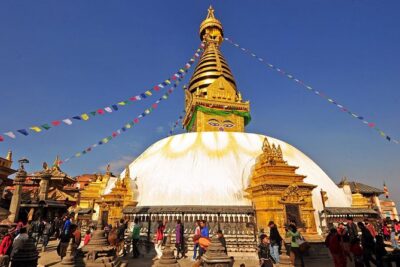
Private Kathmandu Sightseeing Tour | UNESCO World Heritage sites
Read our review →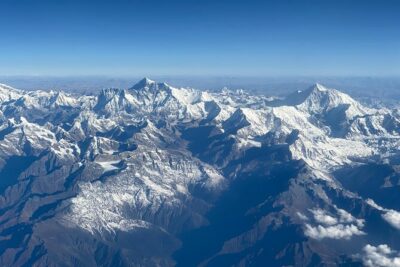
Everest Base Camp Helicopter Tour landing at Everest View Hotel
Read our review →
Full Day 7 UNESCO Tour with Lunch – Private/Group
Read our review →
Full Day Top 4 UNESCO Tour with Lunch – Private/Group
Read our review →
Full-Day 7 UNESCO Tour with Lunch – Private/Group
Read our review →