REVIEW · TOURS
From Kathmandu: Bungamati and Khokana Village Tour
Quiet villages tell Kathmandu’s story. This short outing takes you to Bungamati and Khokana, two traditional Newari settlements where pedestrian lanes, temples, ponds, and working village life replace the capital’s noise. I like the focus on local culture, and I especially like that the tour can run as a private group with hotel pickup.
The Rato Machhindranath Temple gives the visit a strong religious focus, while Khokana’s mustard oil tradition adds an everyday detail that keeps the tour from becoming a parade of monuments. The main drawback is the guide commentary: one verified booking praised the Russian-speaking local guide and the low price, but found the explanations less detailed than those of another guide.
In This Review
- Key points to know before you go
- Why Bungamati and Khokana make a good short escape
- Bungamati and the story of Rato Machhindranath
- Khokana’s mustard oil tradition and village lanes
- Karya Binayak Temple and the protector of Khokana
- The Culture Museum and Dey Pukha pond
- Timing, transport, and what the $55 covers
- The guide matters more than the schedule
- Who will enjoy this village tour?
- Should you book Bungamati and Khokana?
- FAQ
- Where are Bungamati and Khokana located?
- How long does the tour last?
- What is the main sight in Bungamati?
- What is Khokana known for?
- Is the tour private?
- Which languages are available?
- Is hotel pickup included?
- Is food included?
- Are entrance fees included?
- What is the cancellation policy?
Key points to know before you go
- Bungamati’s Rato Machhindranath Temple is the tour’s main religious and architectural highlight.
- Khokana is known for mustard oil production, offering a glimpse of village work and local tradition.
- The narrow village streets are pedestrian-only, so you explore on foot rather than from a vehicle.
- The tour includes hotel pickup, drop-off, a local guide, and mineral water, but food and entrance fees cost extra.
- Guiding is available in English, Spanish, Italian, and Russian, with private groups offered.
- The stated duration needs checking, since the activity is advertised as three hours while the itinerary also lists a four-hour Kathmandu visit.
Why Bungamati and Khokana make a good short escape
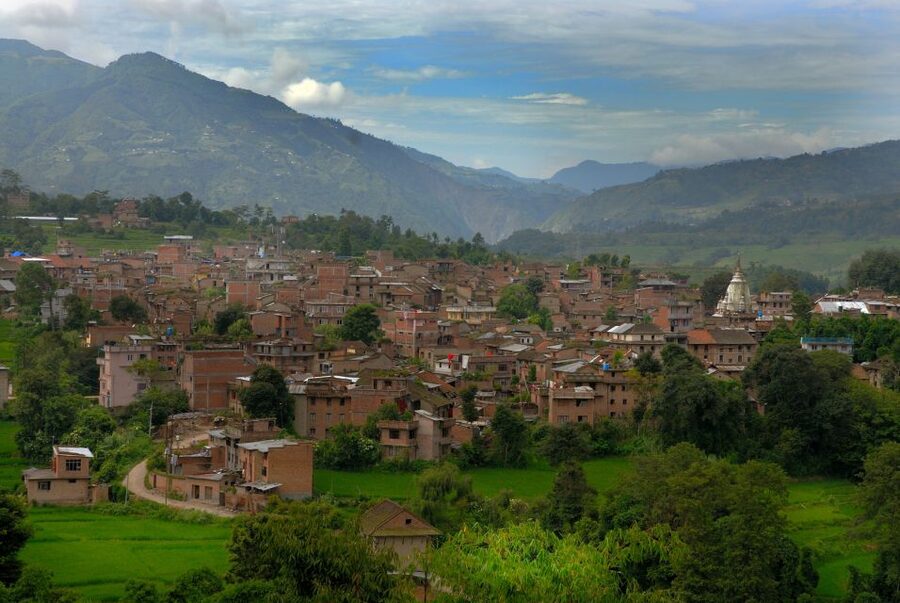
Kathmandu can fill every hour with traffic, temples, shops, and noise. Bungamati and Khokana offer a different pace, while remaining close enough for a short half-day outing. This is not a mountain excursion or a long rural journey. It is a cultural visit to two Newari villages in the Bagmati area, around the southern side of the Kathmandu Valley.
That short length is useful if you have only a few days in Nepal. You can fit the tour around a longer sightseeing plan, an airport transfer, or a free morning in Thamel. It also suits you if you want to see how traditional settlements relate to religious practice and daily work, not just visit the best-known sights inside Kathmandu.
The experience has a clear local focus. You walk through old village streets, learn about Hindu and Buddhist customs, and visit temples connected with the communities. The setting is more intimate than a major city attraction, although you should not expect every stop to offer a full museum-style explanation.
The price is $55 per person. That is fair if you value private transport, hotel pickup and drop-off, and a guide for a short excursion. It is less compelling if you already have transport in the Kathmandu Valley or prefer to explore at your own pace. Since food and entrance fees are not included, keep a little extra money available.
A short list of alternatives around Kathmandu
- Everest Base Camp Trek – 14 Days
★ 5.0 · 1,499 reviews - Private Kathmandu Sightseeing Tour | UNESCO World Heritage sites
★ 5.0 · 756 reviews - Everest Base Camp Helicopter Tour landing at Everest View Hotel
★ 5.0 · 668 reviews
Bungamati and the story of Rato Machhindranath
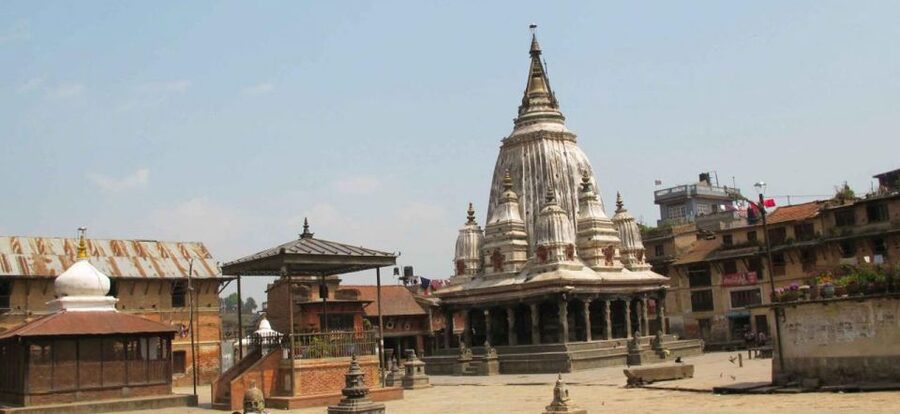
Bungamati is described as a classical medieval Newari village across the Bagmati River from Chobar. Its identity is tied closely to Rato Machhindranath, a deity associated with a major religious tradition in the Kathmandu Valley.
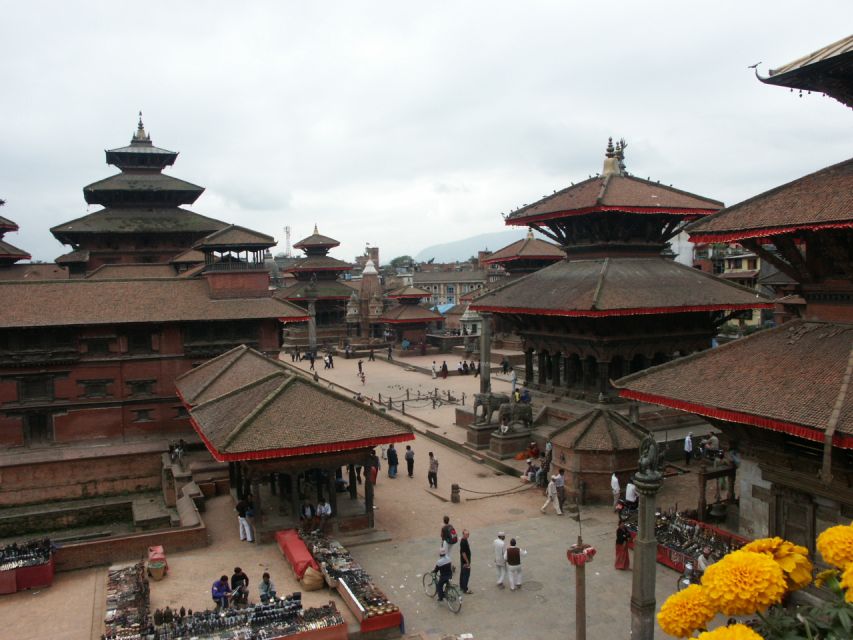
The Rato Machhindranath Temple is the central reason to visit. The temple is richly ornamented, and the guide explains the deity and the religious customs connected with the site. The tour also links Rato Machhindranath with Kamaru Kamakhya, from where the deity is believed to have been brought to Kathmandu.
That story gives the temple more meaning than a quick photo stop. You are not simply looking at carved wood and religious decoration. You are hearing how a deity became part of the religious life of the valley, and how Hindu and Buddhist practices are understood in Nepal.
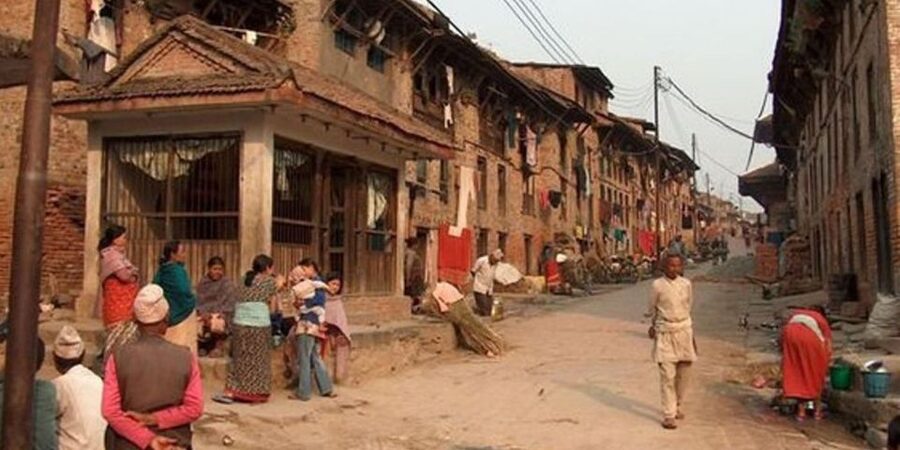
Bungamati’s streets are another attraction. They are pedestrian-only, which makes walking the natural way to see the village. You can look for local woodcarving and observe the shape of a traditional Newari settlement without the constant interruption of passing vehicles.
The tour description suggests visiting before the area becomes more crowded with tourists. That matters because narrow lanes and small temple spaces are more enjoyable when you can move at an easy pace. Still, I would not book this as a guaranteed empty-village experience. The timing and the day of your visit will affect how quiet Bungamati feels.
For the best experience, listen for the connection between the built setting and the religious life around it. Ask your guide to explain the carvings, the temple’s role, and how the deity is understood in both Hindu and Buddhist contexts. The excursion becomes much more useful when you treat Bungamati as a living community rather than an outdoor monument.
Khokana’s mustard oil tradition and village lanes
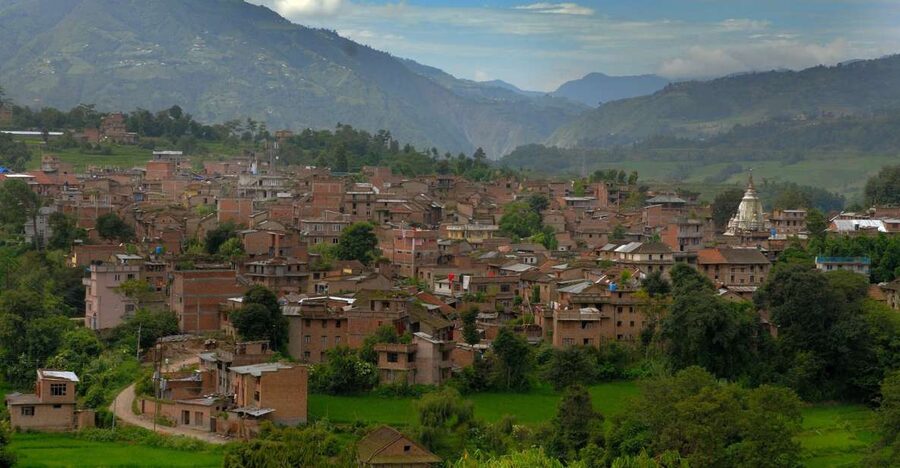
Khokana lies about eight kilometers south of Kathmandu, on the outskirts of Patan. It is a small Newari village known for the production of mustard oil. That detail gives the stop a practical edge: you are learning about a local product and a traditional form of work, not only admiring old buildings.
The village is tiny, so the visit should feel focused rather than sprawling. You can walk through its traditional streets and see how the village’s religious sites and communal spaces fit together. The tour is designed to show you local life outside Nepal’s capital, and Khokana is the place where that aim is clearest.
The mustard oil tradition may be especially interesting if you want a cultural detail you can carry home. Temples are impressive, but food and household products often explain a community just as well. The tour does not promise a food tasting or a cooking session, so you should view this as an introduction to the village’s production tradition, not a hands-on workshop.
Khokana also gives the guide room to explain how Hindu and Buddhist practices appear in Newari communities. The supplied information does not lay out every ritual or custom you will see, so ask direct questions. A good question here is how the village’s religious sites relate to daily community life.
The narrow streets can make the stop pleasant and manageable, but they also mean that the tour is primarily on foot once you arrive. Wear shoes suited to walking and bring water. One bottle of mineral water is included, though you may want more if the day is hot.
Karya Binayak Temple and the protector of Khokana
The Karya Binayak Temple, also written as Karya Binak in the tour information, is widely revered as the protector deity of Khokana town. It is an important stop because it connects the village with a protective religious figure, rather than presenting the community only as a collection of old streets.
You can visit the temple around the village and on the way to Khokana. The exact order may depend on the route and timing, so do not expect a rigid sequence. What matters is the contrast between the two religious focuses: Rato Machhindranath is central to Bungamati, while Karya Binayak is tied closely to Khokana’s identity.
A local guide can help you understand the difference between simply seeing a shrine and recognizing its place in community life. The tour promises discussion of Hindu and Buddhist practices, but the depth of that discussion may vary by guide. This is the point where your questions make a real difference.
A verified French booking from April 2022 gives a useful warning. The Russian-speaking guide was a local Nepali, and the traveler appreciated receiving the tour alone at the group-tour price when there were no other participants. The criticism was that the information did not go as deeply as an earlier guide’s explanation.
That makes the tour a good match for a curious visitor who wants a local introduction, but perhaps not for someone seeking an academic-level lecture on Newari religion. If detailed interpretation is your top priority, confirm the guide language and ask how much time will be spent explaining the temples before booking.
A completely different way to spend the day:
- Half day cooking class in Thamel kathmandu
★ 5.0 · 607 reviews - Everest Base Camp Trekking
★ 5.0 · 485 reviews - Nagarkot Sunrise View and Day Hiking from Kathmandu
★ 5.0 · 471 reviews - Kathmandu: Full Day 7 UNESCO Tour with Lunch – Private/Group
★ 5.0 · 415 reviews
The Culture Museum and Dey Pukha pond
The Bungamati Culture Museum adds a more structured stop to a tour otherwise based around streets and temples. Museums can help you place what you see in context, especially if you have not previously encountered Newari art, customs, or village life.
The available information does not specify the museum’s collection or the length of the visit. Treat it as a useful cultural stop rather than planning your entire outing around it. Entrance fees are not included, so ask your guide about the current cost before entering.
Dey Pukha, the central pond, offers another view of village organization. A central pond is not just a scenic pause. It can help you see how public spaces sit within a traditional settlement, even if the tour does not provide a full explanation of its original use.
I like these two stops because they break up the temple visits. The museum can provide background, while the pond helps you read the village itself. Together with the pedestrian lanes and woodcarving, they give the outing more variety than a simple temple transfer.
Timing, transport, and what the $55 covers
Pickup is available from Thamel, Friendship Nepal Tours and Travels, or Tribhuvan International Airport. Hotel pickup is included, and drop-off is available at the same three locations. That arrangement is convenient if you are staying in Thamel or connecting the outing with an airport plan.
The published duration is three hours, but the itinerary also refers to a four-hour guided Kathmandu visit. I would confirm the exact length and starting time before paying, particularly if you have a flight, another tour, or a fixed hotel departure. The difference may reflect a scheduling variation, but the information is not fully consistent.
The tour includes:
- Hotel pickup and drop-off
- A local English-speaking guide
- One bottle of mineral water
Food and entrance fees are not included. Since the visit is short, the lack of a meal is not a major problem. You can eat before or after the tour, but you should ask about entrance costs for the museum and temples if you want to keep your budget exact.
The guide language options are English, Spanish, Italian, and Russian. The activity is also available as a private group. Private operation can be valuable here because the villages are compact and the religious sites benefit from a slower explanation. The strongest evidence for that value comes from the solo booking that kept the group price even when no other participants joined.
At $55, I see the tour as a convenience purchase. You are paying for transport, a guide, and a planned route to two places that can be awkward to combine without local help. If you have already arranged a driver and enjoy researching temples on your own, the price may feel high. If you want a simple escape from Kathmandu with cultural interpretation, it is easier to justify.
The guide matters more than the schedule
This is a guide-led experience, so the quality of explanation will shape your opinion more than the number of stops. The itinerary is straightforward: Bungamati, Rato Machhindranath, Khokana, Karya Binayak, the museum, and Dey Pukha. The real value comes from understanding what those places mean.
The available feedback is balanced. The guide was praised for being a local Nepali who spoke Russian, and the solo arrangement was considered a strong value. The weakness was limited depth in the cultural material.
You can improve the experience by preparing a few questions. Ask about the relationship between Hindu and Buddhist practices, the story of Rato Machhindranath and Kamaru Kamakhya, the role of Karya Binayak as Khokana’s protector, and the history of mustard oil production in the village. This helps turn a basic sightseeing route into a more informative conversation.
Language choice is also worth checking. English, Spanish, Italian, and Russian are listed, but you should confirm which language your specific guide will use. If your interest is temple symbolism or Newari culture, say so at the start rather than waiting for the guide to guess.
Who will enjoy this village tour?
I would recommend this outing to you if you want:
- A short break from Kathmandu
- Traditional Newari village settings
- Temple visits with a local guide
- A look at woodcarving and mustard oil production
- Hotel transport without arranging a separate driver
- A private or potentially very small group
- An introduction to both Hindu and Buddhist practices in Nepal
It may not suit you if you want a full-day cultural study, extensive time at each monument, food included, or guaranteed expert-level historical commentary. The three-hour format keeps the tour convenient, but it also limits how much detail the guide can provide.
It is also not the best choice if you dislike walking through narrow village lanes. The streets in Bungamati are pedestrian-only, and the key sights are experienced on foot. The tour information does not provide accessibility details, so ask the operator directly if that is important for you.
Booking flexibility is a plus. You can cancel up to 24 hours in advance for a full refund, and the reserve-now, pay-later option lets you hold a place without paying immediately. Those policies are useful when your Nepal plans are still shifting, though they do not change the tour’s basic limitations.
Should you book Bungamati and Khokana?
Book it if you want a compact, culture-focused outing with transport and a local guide. Bungamati’s Rato Machhindranath Temple, Khokana’s mustard oil tradition, Karya Binayak Temple, the museum, and Dey Pukha pond give you several distinct points of interest in a short time.
I would book with two expectations. First, confirm whether your visit will last three or four hours. Second, ask about the guide’s language and the level of cultural detail you want. If you accept that the commentary may be introductory rather than highly academic, the $55 price offers a practical way to see village life beyond Kathmandu.
FAQ
Where are Bungamati and Khokana located?
Bungamati lies across the Bagmati River from Chobar. Khokana is about eight kilometers south of Kathmandu, on the outskirts of Patan.
How long does the tour last?
The activity is advertised as three hours. The itinerary also lists a four-hour guided Kathmandu visit, so confirm the exact duration and schedule before booking.
What is the main sight in Bungamati?
The main sight is the richly ornamented Rato Machhindranath Temple. The guide explains the deity and its connection with Kamaru Kamakhya.
What is Khokana known for?
Khokana is known for producing mustard oil. The tour introduces you to this traditional village industry.
Is the tour private?
A private group is available. The experience can also operate with a very small group, depending on bookings.
Which languages are available?
Guiding is listed in English, Spanish, Italian, and Russian.
Is hotel pickup included?
Yes. Hotel pickup and drop-off are included. Pickup and drop-off points include Thamel, Friendship Nepal Tours and Travels, and Tribhuvan International Airport.
Is food included?
No. Food is not included in the tour price.
Are entrance fees included?
No. Entrance fees are not included.
What is the cancellation policy?
You can cancel up to 24 hours in advance for a full refund. You can also reserve now and pay later.
New in the Kathmandu listings
- Traditional Momo Making Class★ 5.0 · 10 reviews
- Kathmandu: Ancient City Kirtipur & Pharping Monastery Tour★ 5.0 · 2 reviews
- Kathmandu to Pokhara Premium sofa bus ticket★ 4.0 · 17 reviews
- Women Empowerment Project(Nepali cooking class & jewelry workshop★ 5.0 · 15 reviews
- 7-Day Langtang Valley Trek from Kathmandu★ 5.0 · 1 review
- Kathmandu 2 Nights 3 Days Chitwan Jungle Safari Tour★ 5.0 · 9 reviews
- Yoga Experience Day Trip with Private Transfer From Kathmandu★ 4.0 · 2 reviews
- Wildlife Adventure in Chitwan Nepal★ 4.0 · 4 reviews
Tours, compared.
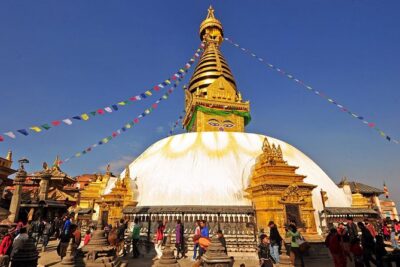
Private Kathmandu Sightseeing Tour | UNESCO World Heritage sites
Read our review →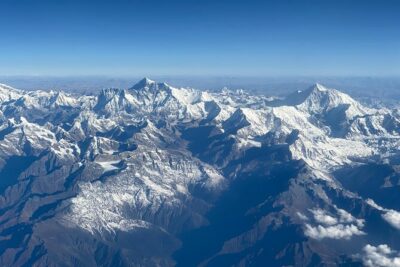
Everest Base Camp Helicopter Tour landing at Everest View Hotel
Read our review →
Full Day 7 UNESCO Tour with Lunch – Private/Group
Read our review →
Full Day Top 4 UNESCO Tour with Lunch – Private/Group
Read our review →
Full-Day 7 UNESCO Tour with Lunch – Private/Group
Read our review →