
REVIEW · ANNAPURNA CIRCUIT TREKS
Annapurna Circuit Trek with Tilicho Lake (16 Days)
High passes, sacred lakes, and changing mountain views. This 16-day Annapurna Circuit trek adds a demanding side trip to Tilicho Lake before crossing Thorong La Pass at 5,416 meters. I like the careful acclimatization plan, especially the full day in Manang, and I like the mix of private and shared transport that keeps the price at $1,800 rather than pushing it higher. The main caution is that meals, drinking water, personal gear, and travel insurance are not included, so your final cost will be higher.
I also appreciate the small maximum group of 14, the two-to-one porter arrangement, and the extra assistant guide for every five people. Communication from Prashant and support from guides including Raj Rai, Suman, Prem, and Pemba Sherpa have drawn especially warm praise. Still, this is a serious high-altitude trek, not a gentle sightseeing holiday, and the long road transfers can test your patience before and after the walking begins.
In This Review
- Key points before you book
- What this 16-day Annapurna route actually offers
- Days 1 and 2: Kathmandu to Dharapani by road
- Days 3 and 4: Pine forests, Chame, and Upper Pisang
- Days 5 and 6: Manang and a useful acclimatization day
- Days 7 to 9: Siri Kharka and Tilicho Lake
- Days 10 and 11: Yak Kharka to Thorong Phedi
- Day 12: Thorong La and the descent to Muktinath
- Days 13 and 14: Kagbeni, Jomsom, Beni, and Pokhara
- Days 15 and 16: Phewa Lake and the return to Kathmandu
- What the $1,800 price includes, and what it leaves out
- Who should book this trek?
- Should you book the Annapurna Circuit with Tilicho Lake?
- FAQ
- How long is the Annapurna Circuit with Tilicho Lake trek?
- What is the highest point on the trek?
- Is airport pickup included?
- What transportation is used?
- Are meals included?
- Is drinking water included?
- Is travel insurance included?
- What is the group size?
Key points before you book
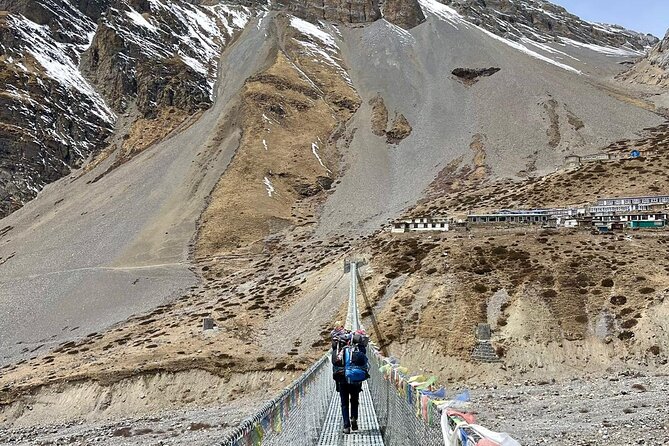
- Tilicho Lake at 4,919 meters: A demanding detour brings you to one of the world’s highest accessible alpine lakes.
- Thorong La at 5,416 meters: The pre-dawn crossing is the physical high point of the trip.
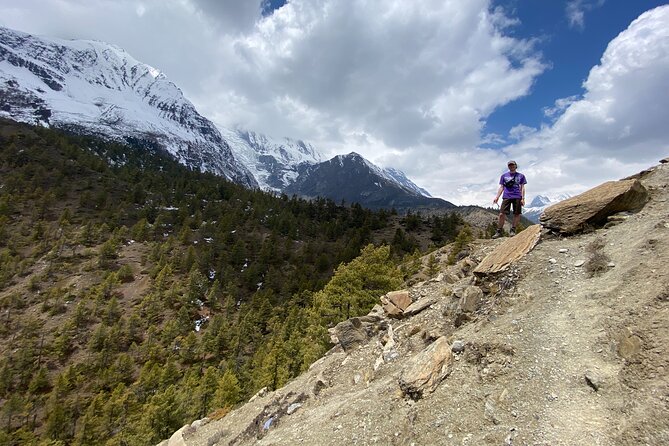
- Built-in acclimatization: You spend a full day in Manang before heading toward Tilicho Lake and the pass.
- Small group support: The group is capped at 14, with porters working at a two-to-one ratio and assistant guides at five-to-one.
- Real village-to-village trekking: You sleep in standard teahouses and pass through Gurung, Manangi, Tibetan-influenced, and Thakali communities.
- Pokhara finish: After the high trails, two nights around Phewa Lake provide a welcome softer landing.
What this 16-day Annapurna route actually offers
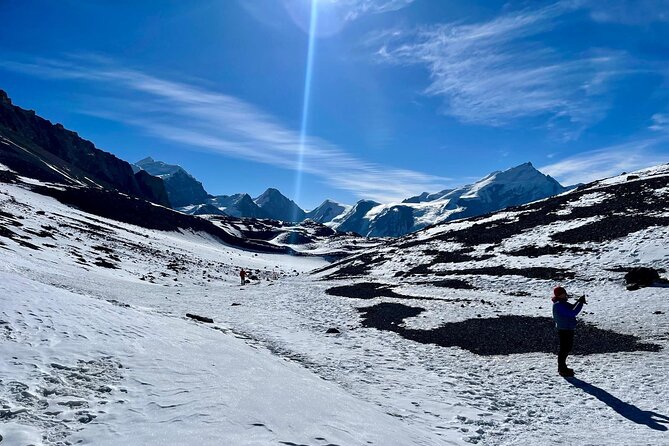
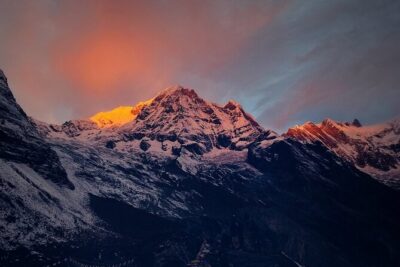
The Annapurna Circuit is appealing because it keeps changing. You begin among green hills and river valleys, climb through pine and juniper, reach the dry high country around Manang, cross a major Himalayan pass, then descend toward the desert-like valleys of Mustang.
Adding Tilicho Lake makes the route harder but also more memorable. Instead of simply following the main circuit, you spend several days on a remote side trail above Khangsar and Siri Kharka. That extra altitude demands sensible pacing. Here, the schedule gives you a full acclimatization day in Manang before the serious climb begins.
I see this as a good choice for someone who wants a classic Himalayan trek but also wants one exceptional side trip. You get mountain scenery, village life, monasteries, pilgrimage sites, and a proper high-pass challenge in one organized package.
More Annapurna Circuit treks:
- Annapurna Circuit Trek with Tilicho Lake
★ 5.0 · 368 reviews - Annapurna Circuit Trek
★ 5.0 · 94 reviews - Annapurna Circuit Trek
★ 5.0 · 35 reviews
Days 1 and 2: Kathmandu to Dharapani by road
Your trip begins with airport pickup at Tribhuvan International Airport and transfer to a three-star hotel in Thamel. Breakfast is included at the Kathmandu hotel, and you have the first day to settle in, rest, or walk the colorful streets nearby.
The second day is mostly a road journey. Private transportation takes you from Kathmandu to Besisahar, with stops at Trishuli, Mugling, and Besisahar. Trishuli offers dramatic river views along the Prithvi Highway, while Mugling is a noisy highway junction where buses, trucks, tea stalls, and snack sellers all compete for space.
Besisahar sits at 760 meters and marks the practical beginning of the Annapurna Circuit. From there, a shared jeep continues to Dharapani at 1,960 meters. This final stretch can be rough and slow, and the road journey takes much of the day.
That is the first important reality check. You are not walking from Kathmandu into the mountains. You are using roads to reach the trailhead, and the transport is part of the adventure. The combination of private vehicle, shared jeep, public bus, and tourist bus keeps the arrangement affordable, but it does not promise a polished coach experience at every stage.
Days 3 and 4: Pine forests, Chame, and Upper Pisang
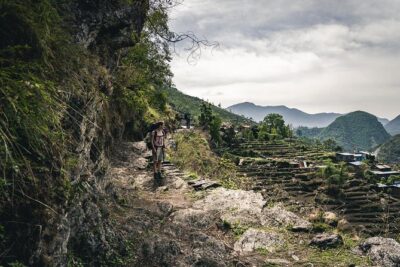
The walking begins at Dharapani, where the route passes through Tachi Bagarchhap, also called Bagarchhap, at about 2,160 meters. Whitewashed houses, Buddhist chortens, and pine-covered slopes signal the transition from lower mountain villages toward the Tibetan-influenced upper valley.
You continue to Chame at 2,670 meters, the administrative center of Manang District. The village combines traditional architecture with useful modern conveniences, making it a practical overnight stop. The ascent is steady, and the forested sections offer shade before the route grows more open and alpine.
Day 4 brings you to Bharatang at 2,850 meters. Its apple orchards and small juice farms offer a pleasant change from the forest trail. After that, the route continues to Pisang.
Upper Pisang, at 3,300 meters, is the more dramatic choice, perched above the Marsyangdi River with views toward Annapurna II and Pisang Peak. The high route through villages such as Ghyaru and Ngawal is more rewarding for views, but it also requires more effort than simply following the lower trail.
I like this part because the scenery changes without needing a separate excursion. Rivers, forests, stone villages, cliffs, and snowy peaks arrive one after another. You should also expect your pace to slow as the air thins.
Days 5 and 6: Manang and a useful acclimatization day
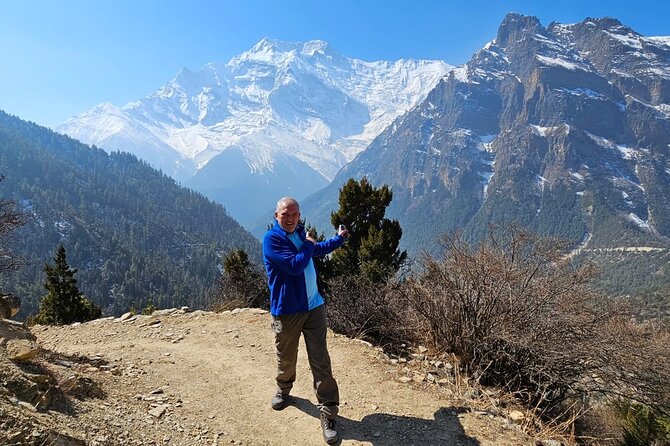
Manang, at 3,540 meters, is the cultural and trekking center of the route. It sits beneath Annapurna III and Gangapurna and gives you a chance to adjust before the itinerary moves into genuinely high country.
The schedule includes a full acclimatization day here. That is one of the strongest parts of the plan. Your guide can help you choose among three possible hikes: a short, steep climb, a longer outing, or another option suited to your condition.
Do not treat this as a wasted rest day. A short walk at altitude, followed by time to recover, is more useful than racing onward. I would use this day to check your clothing, batteries, water treatment, and cold-weather layers. The higher section will offer fewer comforts and more demanding trail conditions.
Manang is also a good place to notice the cultural change. The architecture, prayer features, and dry mountain setting feel very different from the lower Marsyangdi Valley. You are not just climbing toward a pass. You are moving into a distinct Himalayan region.
More walking in the hills of Kathmandu:
- Everest Base Camp Trek – 14 Days
★ 5.0 · 1,499 reviews - Everest Base Camp Trekking
★ 5.0 · 485 reviews - Nagarkot Sunrise View and Day Hiking from Kathmandu
★ 5.0 · 471 reviews - Everest Base Camp Trekking – 13 Day
★ 5.0 · 365 reviews
Days 7 to 9: Siri Kharka and Tilicho Lake
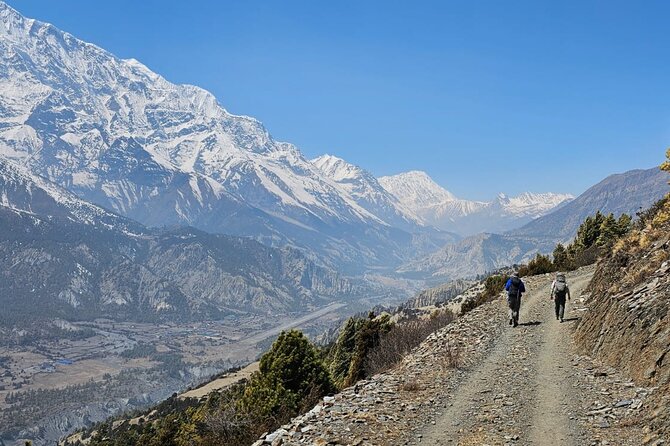
From Manang, the route heads toward Siri Kharka, listed at 4,060 meters. The trail climbs through juniper shrubs and reaches a ridge with broad views of Gangapurna and the Chulu range.
Siri Kharka is remote and exposed. The route is not technically described as a climbing trip, but the altitude and rough trail make this a demanding section. You should be ready for cold nights, basic accommodation, and a day that feels harder than its distance might suggest.
The following day reaches Tilicho Base Camp at 4,150 meters. The path is short but intense, with narrow sections beside landslide-prone slopes and glacier-carved terrain. This is where sturdy footwear and careful attention matter most.
Day 9 is devoted to Tilicho Lake at 4,919 meters. The lake is sacred in both Hindu and Buddhist traditions and sits below snow-covered peaks, including Tilicho Peak. The listed stop is only 45 minutes, but reaching the lake is the real purpose of the day. Conditions may affect how long you can comfortably remain there.
Tilicho is the emotional high point for many people on this route, but it is not a casual photo stop. The altitude is serious, and you should tell your guide immediately if you develop a headache, nausea, unusual tiredness, or other signs of altitude trouble. Good planning helps, but no schedule can remove the effects of thin air.
Days 10 and 11: Yak Kharka to Thorong Phedi
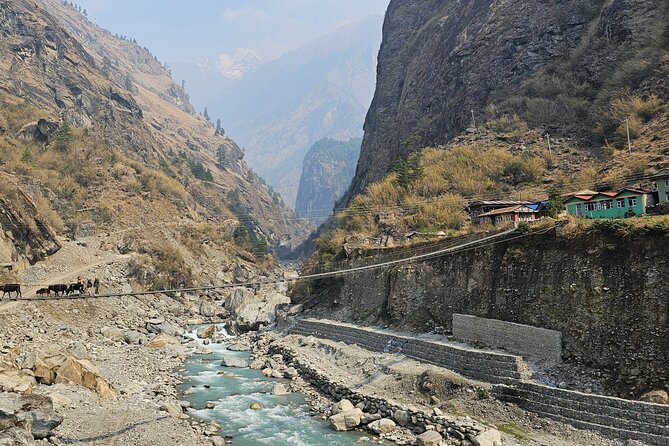
After the Tilicho section, the route continues toward Yak Kharka at about 4,050 meters. The path includes a descent to Khangsar before climbing again, so this is not simply a straight uphill day.
Yak Kharka functions as a staging point before the pass. The settlement is basic and high, with the surrounding country becoming increasingly dry and open. You have now left the greener lower valleys well behind.
The next stop is Thorong Phedi at 4,540 meters, the base of the pass. The trail rises along barren ridges, and the overnight stay prepares you for the early start ahead.
This is another section where the support system matters. A government-licensed, first-aid-trained guide leads the trek, while porters carry overnight bags at a two-to-one ratio. You still need to carry your daily essentials, including water, layers, medication, and snacks, but you do not need to haul your full pack.
Day 12: Thorong La and the descent to Muktinath
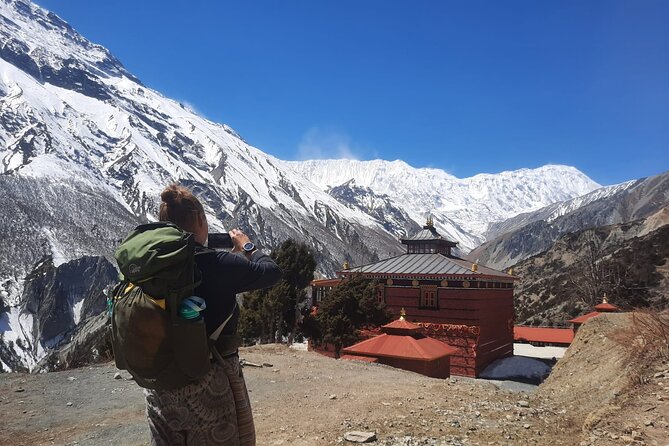
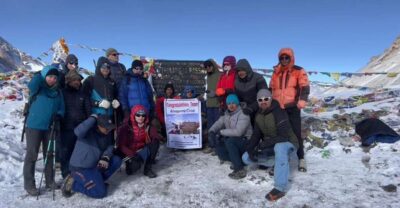
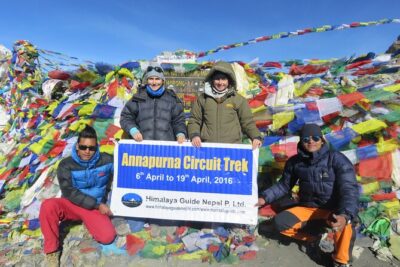
Crossing Thorong La at 5,416 meters is the hardest day of the trek. You start before dawn and climb more than 900 meters from Thorong Phedi. The ascent is strenuous, cold, and slow, particularly if wind or snow affects the trail.
At the top, the reward is a major Himalayan achievement and wide mountain views. Then comes the long descent to Muktinath at 3,760 meters, about 1,600 meters lower.
Muktinath is one of Nepal’s most important pilgrimage places, respected by both Hindus and Buddhists. Its religious importance gives the day more meaning than simply reaching the next lodge. The descent, however, can be hard on knees and feet, so trekking poles are worth considering if you use them.
You should not book this trek based only on the impressive altitude number. The pass requires strong fitness, steady walking, and a willingness to follow the guide’s advice. The company requires a good physical fitness level, and that is entirely reasonable.
Days 13 and 14: Kagbeni, Jomsom, Beni, and Pokhara
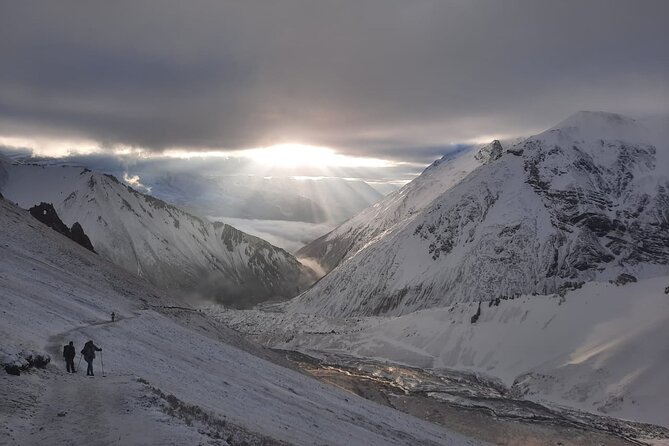
From Muktinath, the route continues to Kagbeni at 2,810 meters. This old settlement sits where the Kali Gandaki and Jhong rivers meet and marks the gateway to Upper Mustang.
Kagbeni’s narrow stone lanes and red-walled monastery give the village a distinctly historic feel. It is a fine place to slow down after the pass and notice the difference between the high Thorong region and the Mustang side of the circuit.
You then follow the windswept Kali Gandaki River to Jomsom at 2,720 meters. The route descends through wide, dry valleys, and strong winds can make the walk feel more exposed than the altitude suggests.
Day 14 uses a public bus from Jomsom toward Pokhara, with stops around Kalopani and Beni. Kalopani, at 2,530 meters, brings greener vegetation and a sharp contrast to the dry country above. Beni, at 850 meters, is a busy river market town and the first major urban center on the return journey.
The long bus ride to Pokhara may be tiring, especially after two weeks of walking. Still, it provides a useful transition from mountain villages to road travel. You arrive at Lakeside Pokhara, where a three-star hotel and breakfast are included.
Days 15 and 16: Phewa Lake and the return to Kathmandu
Pokhara is the trip’s recovery period. At 822 meters, it feels warm and easy after Thorong La, and the city offers views toward Machapuchare and the Annapurna range.
You have time to rest around Phewa Lake before taking a tourist bus back to Kathmandu on Day 15. The journey covers about 200 kilometers along the Prithvi Highway and takes much of the day.
Your final morning allows a few hours in Thamel before airport transfer, depending on your flight time. Airport pickup and drop-off are included, as are Kathmandu hotel transfers connected with the bus journey.
What the $1,800 price includes, and what it leaves out
At $1,800 per person, the price is fair for a 16-day organized trek with airport transfers, Kathmandu and Pokhara hotels, teahouse lodging, permits, guides, porters, and ground transport. The small group limit also adds value. You are not paying only for a route description. You are paying for coordination in a remote area where missed transport or poor pacing can cause real trouble.
The porter arrangement is especially useful. One porter serves two trekkers, and an assistant guide is assigned for every five people. Crew insurance is included, along with the Annapurna Conservation Area Permit, TIMS Permit, government fees listed in the package, and a completion certificate.
Read the exclusions carefully. International airfare is not included, and travel insurance must cover emergency evacuation and the highest altitude reached. You also pay for trekking meals, drinking water, hot showers, charging, and Wi-Fi in most teahouses.
There is also a separate $50 government fee listed among the exclusions, so ask for clarification before paying. Personal trekking equipment and tips are your responsibility, as are extra nights or rescue costs caused by weather, delays, or emergencies.
Who should book this trek?
I would recommend it to a fit hiker who wants a classic Nepal route with a more demanding high-altitude addition. It suits someone who values village contact, changing scenery, organized support, and the security of a guide and porter team.
I would not choose it for a first mountain holiday if you dislike long road transfers, basic teahouses, cold nights, or uncertain conditions. The 16-day schedule is well paced on paper, but altitude affects every person differently.
The maximum group of 14 is a sensible compromise. You get the social side of a group trek without being part of a huge procession. The guide’s role is important here, especially during the Manang acclimatization day, the Tilicho section, and the Thorong La crossing.
Should you book the Annapurna Circuit with Tilicho Lake?
Book it if you want one demanding Nepal trip that combines the Annapurna Circuit, Tilicho Lake, Thorong La, Muktinath, Mustang, and Pokhara. The strongest reasons are the acclimatization day, the porter support, the small group size, and the range of scenery packed into 16 days.
Before booking, budget beyond the headline price for meals, water, insurance, gear, tips, and possible delays. If you arrive fit, accept basic conditions, and respect the altitude, this is a well-supported way to tackle one of Nepal’s great long-distance treks.
FAQ
How long is the Annapurna Circuit with Tilicho Lake trek?
The experience lasts approximately 16 days, including arrival and departure days, road transfers, trekking days, and stays in Kathmandu and Pokhara.
What is the highest point on the trek?
Thorong La Pass is the highest point at 5,416 meters. Tilicho Lake reaches 4,919 meters.
Is airport pickup included?
Yes. Airport pickup and drop-off in Kathmandu are included.
What transportation is used?
The trip includes private transport from Kathmandu to Besisahar, a shared jeep from Besisahar to Dharapani, a public bus from Jomsom to Pokhara, and a tourist bus from Pokhara to Kathmandu.
Are meals included?
Hotel breakfasts in Kathmandu and Pokhara are included, along with two dinners. Meals during the trek are not included.
Is drinking water included?
No. You need to pay for drinking water or bring a filter bottle or purification tablets.
Is travel insurance included?
No. You must arrange travel insurance that covers emergency evacuation and the highest altitude reached on the trek.
What is the group size?
The maximum group size is 14 people. One porter is provided for every two trekkers, and one assistant guide is provided for every five trekkers.
New in the Kathmandu listings
- Traditional Momo Making Class★ 5.0 · 10 reviews
- Kathmandu: Ancient City Kirtipur & Pharping Monastery Tour★ 5.0 · 2 reviews
- Kathmandu to Pokhara Premium sofa bus ticket★ 4.0 · 17 reviews
- Women Empowerment Project(Nepali cooking class & jewelry workshop★ 5.0 · 15 reviews
- 7-Day Langtang Valley Trek from Kathmandu★ 5.0 · 1 review
- Kathmandu 2 Nights 3 Days Chitwan Jungle Safari Tour★ 5.0 · 9 reviews
- Yoga Experience Day Trip with Private Transfer From Kathmandu★ 4.0 · 2 reviews
- Wildlife Adventure in Chitwan Nepal★ 4.0 · 4 reviews
Annapurna Circuit Treks, compared.
15-Day Private Annapurna Circuit Trek from Kathmandu
Read our review →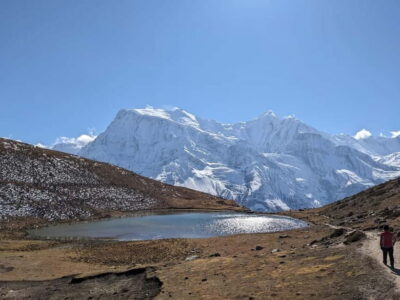
Browse the lists this tour appears in